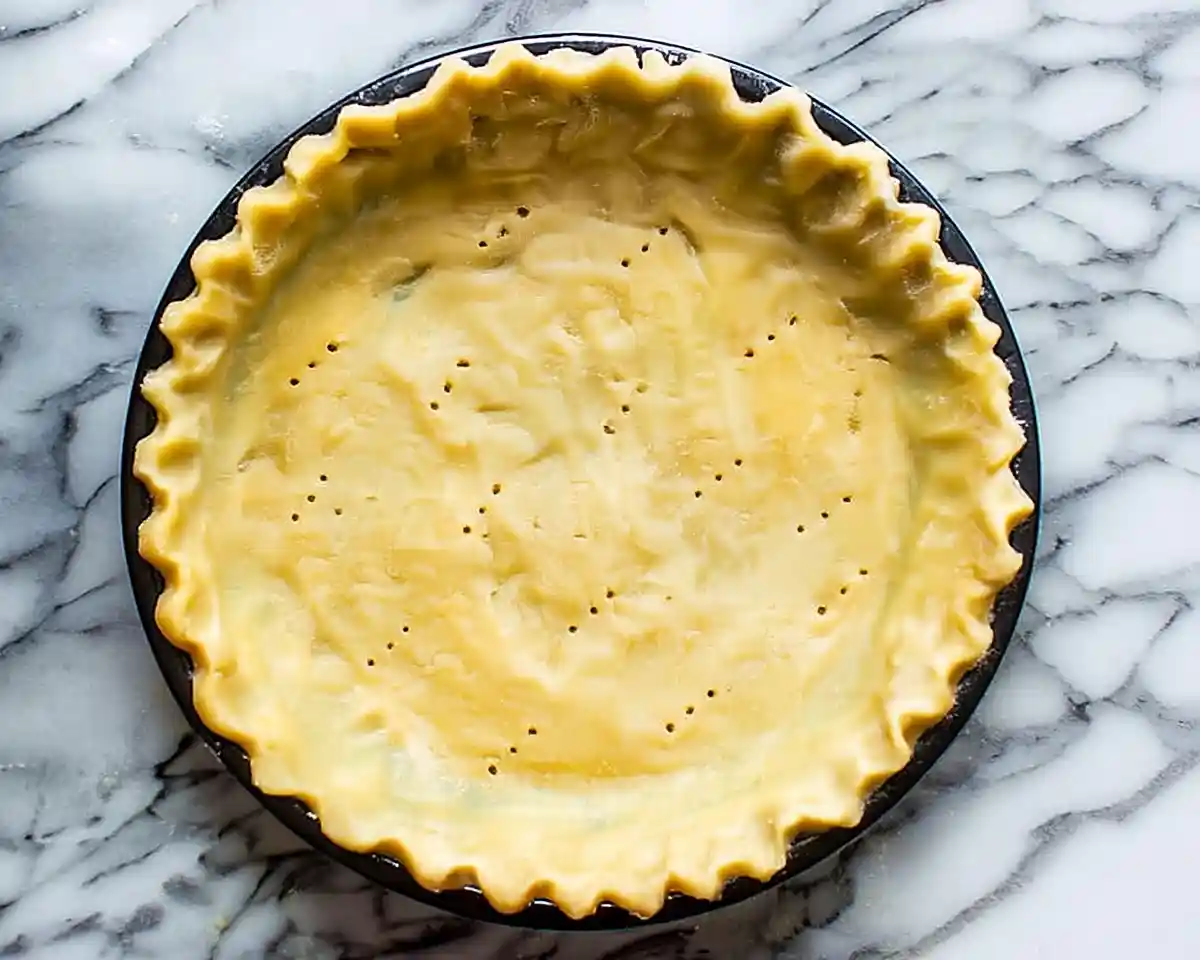
Almond Flour Pie Crust
Master the perfect almond flour pie crust in minutes! Gluten-free, grain-free & naturally sweet. Works for savory pies, quiches & desserts. No blind baking headaches!
I’ll never forget the first time I tried making an almond flour pie crust without having to blind bake it three times or watch it shrink like a deflated balloon. I was skeptical—pie crust isn’t exactly known for being forgiving, especially when you’re working without traditional wheat flour. But then I tried this recipe, and everything changed.
What makes this almond flour pie dough so magical isn’t just that it actually works. It’s that it comes together in minutes, requires just five ingredients, and tastes almost buttery and nutty in a way that makes you wonder why you ever fussed with regular pie crust. Whether you’re gluten-free by necessity or by choice, this gluten-free almond pie crust delivers all the flavor without the drama.
Table of Contents
Why This Crust Changes Everything
Once you have a reliable gluten-free almond flour pie crust in your recipe arsenal, pie night stops being stressful and becomes something you actually look forward to. No shrinking, no soggy bottoms, no mystery techniques that never quite work the way they’re supposed to.
Man, oh man, the freedom of a foolproof crust is something special. Whether you’re deep into the gluten-free lifestyle or just exploring alternatives, this recipe proves that you don’t need wheat flour to create something absolutely delicious.
Almond Flour Pie Crust
Equipment
- Large mixing bowl
- Whisk
- 9-inch pie plate
- Oven
- Wire rack
Ingredients
Base Ingredients
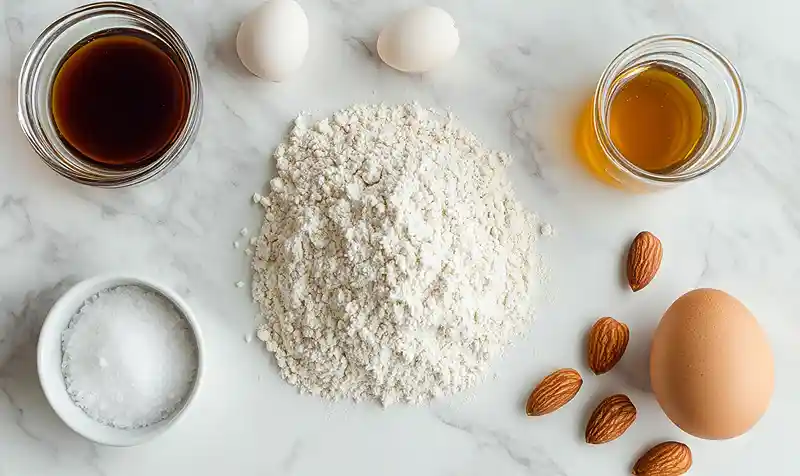
- 2½ cups Almond flour, blanched 240g; use blanched for best results
- ½ teaspoon Salt Helps balance flavors
- 2 tablespoons Maple syrup Omit for savory pies and quiches
- 3 tablespoons Coconut oil or butter, melted or softened See notes for coconut oil specifics
- 1 large Egg See notes for egg-free alternatives (flax egg)
Instructions
- Add your almond flour and salt to a large mixing bowl and whisk together until everything is evenly distributed. This takes just a minute and ensures your salt won’t create pockets of saltiness in your finished crust. You’re creating a neutral base that’ll work beautifully with either sweet or savory fillings.
- Stir in the maple syrup (if you’re making a sweet almond flour pie—skip this for quiches and savory options) and your melted coconut oil or butter. Mix until the texture becomes soft and sandy, almost like coarse breadcrumbs. I always use my hands here because it’s faster and honestly more satisfying than any spoon could be.
- Add your egg to the mixture and stir until a soft, cohesive dough forms. The dough might feel a little oily at this point, and that’s perfectly normal—don’t be tempted to add more almond flour or your crust will become dense and tough. The oil is what creates that tender, slightly crumbly texture that makes this almond flour pastry so special.
- Transfer your dough to a 9-inch pie plate and use your hands to gently press it into the bottom and sides, creating an even layer about ¼-inch thick. Work from the center outward, and don’t stress about it being perfect—the slight rustic texture actually looks beautiful and holds up better than overly-fussed edges.
- For a crust with filling, preheat your oven to 350°F and bake for 10 minutes—this par-bakes the bottom so it doesn’t get soggy. If you’re making a fully-baked crust for a no-bake filling (like chocolate mousse or cream), bake for 20 minutes until golden. Either way, you’ll smell that toasted almond fragrance that fills your kitchen with pure joy.
Notes
Ingredients For Almond Flour Pie Crust
| Ingredient | Amount |
|---|---|
| Almond flour, blanched | 2½ cups (240g) |
| Salt | ½ teaspoon |
| Maple syrup (omit for savory) | 2 tablespoons |
| Coconut oil or butter, melted or softened | 3 tablespoons |
| Egg (see notes for egg-free option) | 1 large |
Instructions For Almond Flour Pie Crust
Step 1: Combine Your Dry Ingredients
Add your almond flour and salt to a large mixing bowl and whisk together until everything is evenly distributed. This takes just a minute and ensures your salt won’t create pockets of saltiness in your finished crust. You’re creating a neutral base that’ll work beautifully with either sweet or savory fillings.
Step 2: Add Your Wet Ingredients
Stir in the maple syrup (if you’re making a sweet almond flour pie—skip this for quiches and savory options) and your melted coconut oil or butter. Mix until the texture becomes soft and sandy, almost like coarse breadcrumbs. I always use my hands here because it’s faster and honestly more satisfying than any spoon could be.
Step 3: Bring the Dough Together
Add your egg to the mixture and stir until a soft, cohesive dough forms. The dough might feel a little oily at this point, and that’s perfectly normal—don’t be tempted to add more almond flour or your crust will become dense and tough. The oil is what creates that tender, slightly crumbly texture that makes this almond flour pastry so special.
Step 4: Press Into Your Pie Plate
Transfer your dough to a 9-inch pie plate and use your hands to gently press it into the bottom and sides, creating an even layer about ¼-inch thick. Work from the center outward, and don’t stress about it being perfect—the slight rustic texture actually looks beautiful and holds up better than overly-fussed edges.
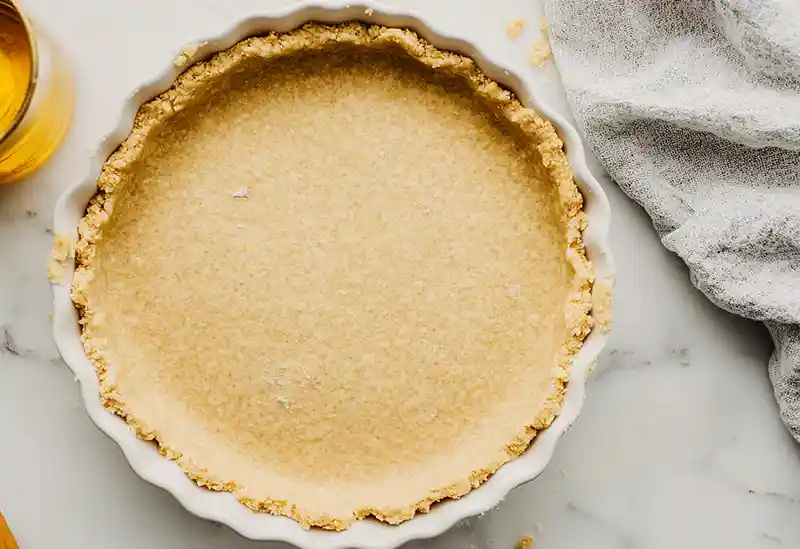
Step 5: Par-Bake or Fully Bake
For a crust with filling, preheat your oven to 350°F and bake for 10 minutes—this par-bakes the bottom so it doesn’t get soggy. If you’re making a fully-baked crust for a no-bake filling (like chocolate mousse or cream), bake for 20 minutes until golden. Either way, you’ll smell that toasted almond fragrance that fills your kitchen with pure joy.
Substitutions for Your Gluten Free Almond Pie Crust
Butter Instead of Coconut Oil
Swap the coconut oil for unsalted butter in equal amounts—use softened butter if you prefer a more tender crust. The flavor will be richer and more classic, though the crust might be slightly more delicate. Both versions are equally delicious, so choose based on what sounds good to you.
Dairy-Free or Vegan Adaptation
Use vegan butter or refined coconut oil and replace the egg with a flax egg (1 tablespoon ground flaxseed mixed with 3 tablespoons water, set for 10 minutes). The texture will be slightly more crumbly but still holds together beautifully and tastes incredible.
Add Extra Flavor Depth
Try stirring in ½ teaspoon vanilla extract, a pinch of cinnamon, or even a tablespoon of almond butter for extra richness. These additions complement the natural almond flavor without overpowering it and work especially well in sweet pie applications.
Honey or Coconut Sugar for Sweetness
If you don’t have maple syrup, use raw honey or coconut sugar in equal amounts. Each brings its own subtle sweetness and works beautifully with both sweet and savory fillings.
Looking for fillings that work beautifully with this almond flour pie crust? Try our protein-packed breakfast quiche ideas that pair wonderfully with this savory crust version.
Want more gluten-free baking foundations? Explore our simple breakfast alternatives that use similar clean ingredients and straightforward techniques.
Troubleshooting Tips
Crust Feels Too Oily or Wet
This is actually a feature, not a bug! Almond flour naturally has more oil than wheat flour, so your dough will feel different from what you’re used to. If it’s genuinely too wet to work with, refrigerate it for 15 minutes and it’ll be much easier to press into the pan.
Crust Cracking or Crumbling When You Press It
Your dough might be too dry or you might have added extra almond flour without meaning to. Try adding another teaspoon of melted coconut oil and mixing again. If it’s still crumbly, wet your hands slightly and use that moisture to help bind the dough.
Bottom Gets Soggy Despite Par-Baking
Make sure you’re par-baking for the full 10 minutes—this creates a slight crust on the bottom that protects against moisture. You can also brush the baked crust lightly with a beaten egg white before adding your filling for extra protection.
Crust Burning on the Edges
Your oven might run hot, or you’re baking longer than needed. For the second round of baking (if you’re baking the full crust), check at 15 minutes—it might be done before 20. Every oven is different, so watch for that beautiful golden-brown color rather than relying solely on time.
Storage & Meal Prep
Storing Unbaked Dough
Press your dough into the pie plate, wrap tightly with plastic wrap, and refrigerate for up to 3 days. You can also freeze it for up to 1 month—just thaw overnight in the fridge before baking. This is seriously convenient for busy weeks when you want pie without the stress.
Storing Baked Crust
Cool your baked crust completely on a wire rack, then cover loosely and store at room temperature for 1 day, or in the refrigerator for up to 4 days. You can also freeze a baked crust for up to 2 months—wrap it well to protect from freezer burn.
Serving Suggestions & Pairings
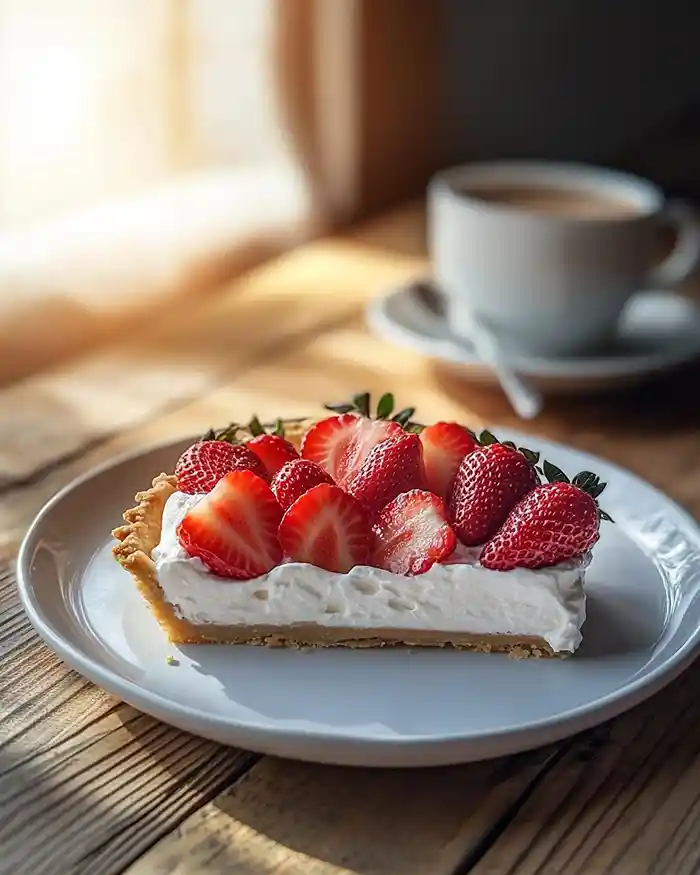
This almond flour pie crust works beautifully with cream-based fillings like custard or chocolate mousse, where its nutty flavor really shines. It also pairs wonderfully with savory quiche fillings, broccoli cheddar combinations, or Mediterranean vegetable medleys.
For a classic pairing, try a simple apple or berry filling with cinnamon and a drizzle of honey. You know, the versatility is honestly what I love most—one crust, endless possibilities depending on what your family loves.
Variations & Dietary Adjustments
Sweetened Version for Dessert Pies
Increase the maple syrup to 3 tablespoons and add ½ teaspoon vanilla extract for a slightly sweeter crust that pairs perfectly with fruit pies or cream-based desserts. The extra sweetness makes it feel more like a traditional pie crust.
Savory Herb Crust for Quiches
Skip the maple syrup entirely and add ½ teaspoon dried herbs (thyme, rosemary, or Italian seasoning) to your almond flour. This creates a savory foundation that complements vegetable and egg-based fillings beautifully.
Kid-Friendly Extra-Sweet Version
Well, kids absolutely love this pie crust, especially when you let them help press the dough into the pan! Add an extra tablespoon of maple syrup and a pinch of cinnamon, then let them fill it with chocolate, berries, or their favorite fruit.
Nut-Free Alternative
If someone in your family has a nut allergy, you can substitute sunflower seed flour for almond flour in equal amounts. The texture will be slightly different, but it still works and tastes delicious with a more subtle flavor.
FAQs About Almond Flour Pie Crust
Can you make an almond flour pie crust without eggs?
Absolutely! Use a flax egg (1 tablespoon ground flaxseed plus 3 tablespoons water, mixed and set for 10 minutes) as a one-to-one replacement. The crust will be slightly crumbly but still holds together beautifully and tastes wonderful.
How do you keep an almond flour pie crust from getting soggy?
Par-bake your crust for 10 minutes at 350°F before adding any wet filling—this creates a protective layer on the bottom. You can also brush the baked crust with a beaten egg white for extra moisture protection.
What’s the difference between blind baking and par-baking?
Blind baking uses pie weights to prevent puffing, while par-baking simply means a quick initial bake. For this almond flour pie, par-baking without weights works perfectly and saves you a step!
Best way to store unbaked almond flour pie dough?
Wrap your dough directly in the pie plate with plastic wrap and refrigerate for up to 3 days, or freeze for up to 1 month. Thaw frozen dough overnight in the fridge before baking.
Why does almond flour pie crust taste slightly different from wheat crust?
Almond flour has natural oils and a subtle nuttiness that wheat doesn’t have, which is actually a beautiful flavor advantage. Many people find it richer and more interesting than traditional crust!
Can you use regular almond flour or does it need to be blanched?
Blanched almond flour (with skins removed) creates a lighter color and slightly more neutral flavor, which works best for this recipe. Regular almond flour will work but may create a slightly darker, grittier texture.
Final Thoughts
This almond flour pie crust is proof that gluten-free baking doesn’t have to be complicated or disappointing. Five ingredients, five steps, and you’ve got a crust that’s flaky, nutty, and ready to showcase whatever filling your heart desires.
Give it a try for your next pie, quiche, or tart and let me know what filling combination becomes your household favorite. Happy baking, friend!