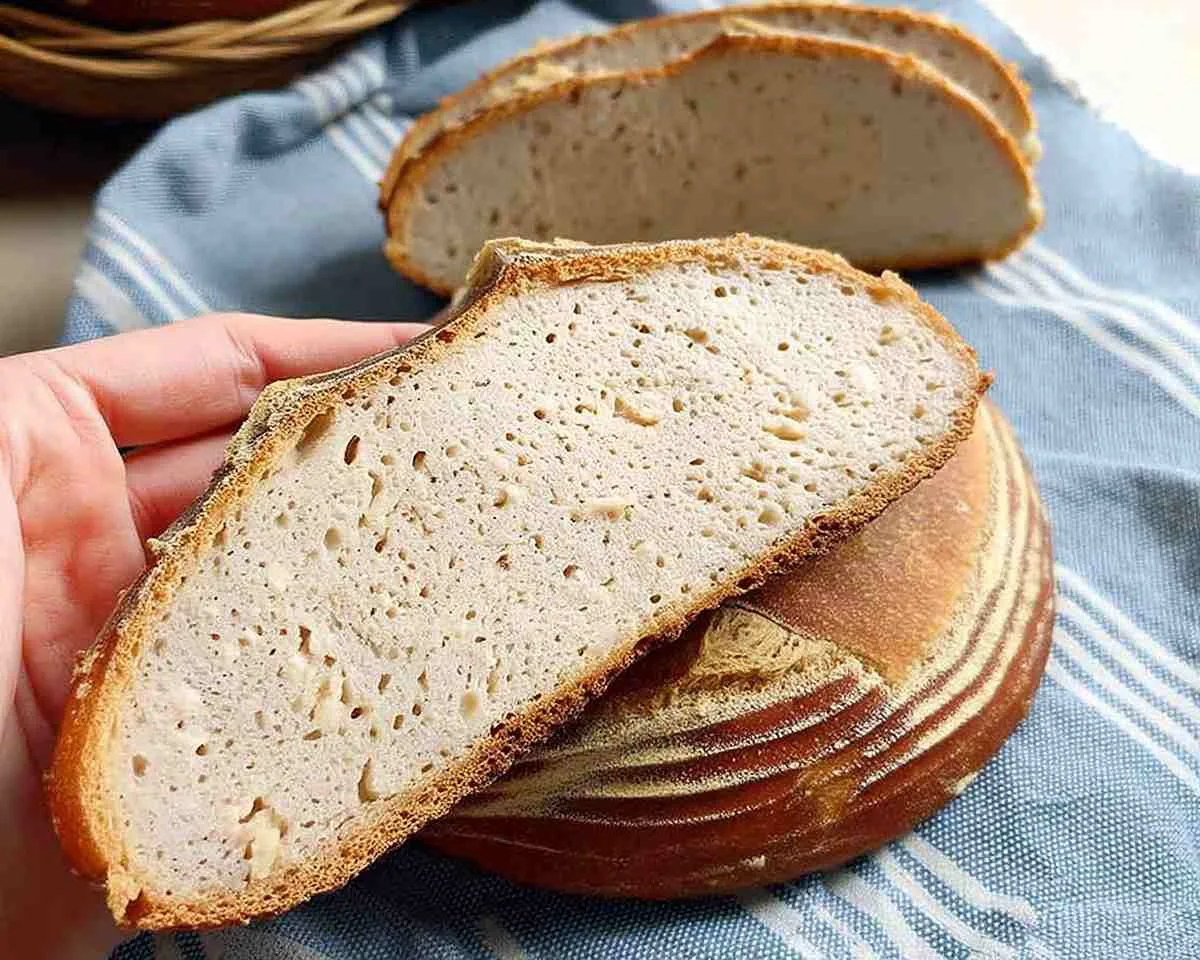
Brown Rice Flour Sourdough Recipe
Make authentic brown rice flour sourdough with this easy recipe! 100% gluten-free bread with crusty exterior and soft interior. Perfect for beginners.
I’ll never forget the first time I pulled a golden loaf of gluten-free sourdough from my oven. The crust crackled as it cooled, filling my kitchen with that unmistakable tangy aroma I thought I’d given up forever when I went gluten-free three years ago.
Here’s the truth: making a brown rice flour sourdough recipe doesn’t have to be intimidating. I know sourdough has this reputation for being fussy and complicated, but this version? It’s surprisingly forgiving. You don’t need fancy equipment or years of baking experience—just a Dutch oven, some patience, and the willingness to try something amazing.
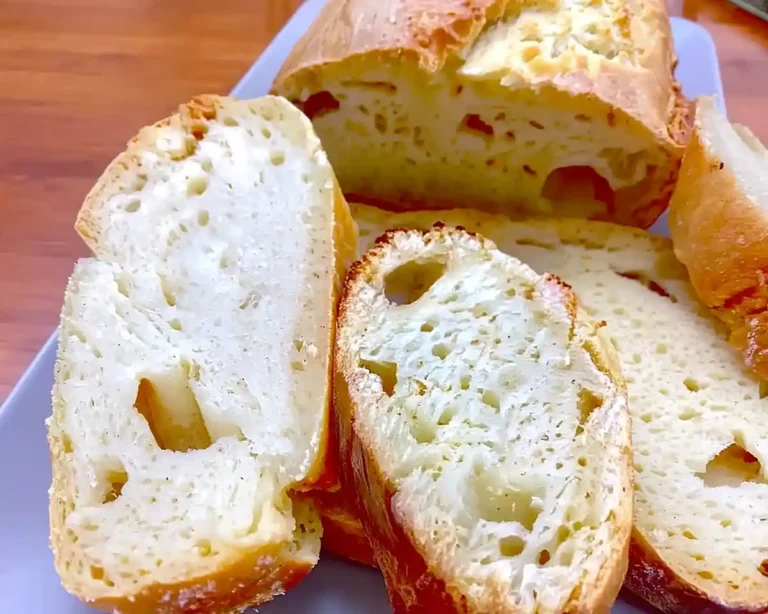
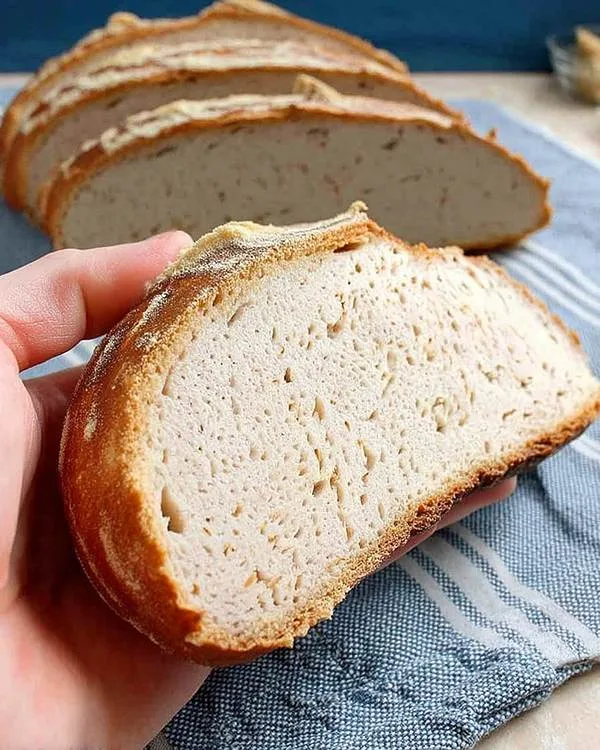
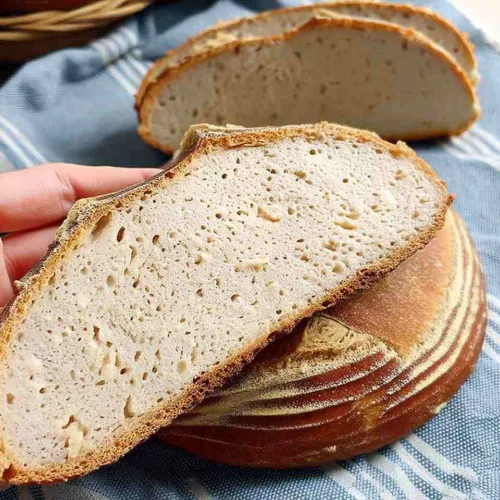
This 100% brown rice sourdough bread delivers everything you’re craving: that signature tangy flavor, a crackling crust that shatters when you slice it, and a tender crumb that actually holds together for sandwiches. No more crumbly gluten-free bread that falls apart the moment you spread butter on it.
Table of Contents
Brown Rice Flour Sourdough Recipe Ingredients
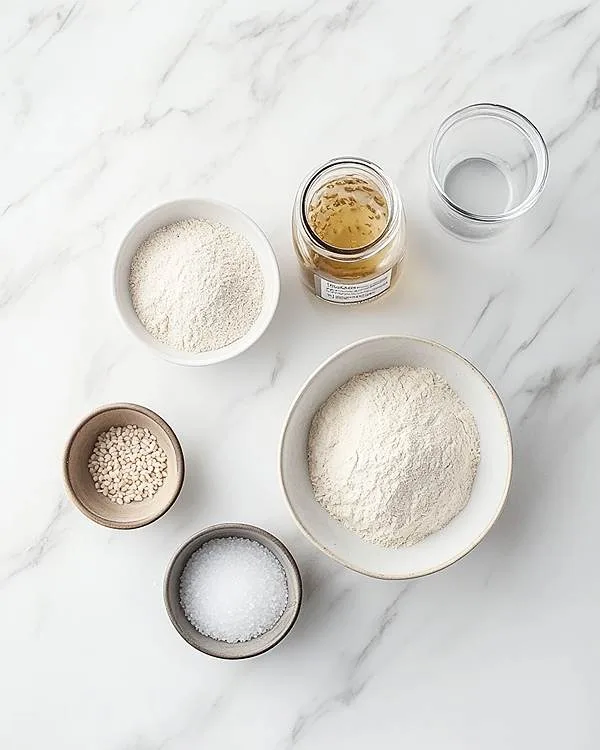
Wet Ingredients:
- 22 grams whole psyllium husks
- 415 grams warm water (not hot)
- 15 grams sugar (honey or maple syrup can be used instead)
- 70 grams active sourdough starter
Dry Ingredients:
- 360 grams brown rice flour (superfine)
- 12 grams salt
- 2 teaspoons baking powder (check the label to make sure it’s gluten-free)
Instructions
Mix the Dough:
- Add 22g of psyllium husk to a medium-sized bowl along with 415g of warm water. Whisk the mixture until incorporated. Add 15g of sugar to the psyllium mix. Set the bowl aside for a couple of minutes to let the psyllium gel form.
- Add 360g of brown rice flour, 2 teaspoons baking powder, and 12g of salt to a large mixing bowl. Whisk everything together. Once the psyllium gel starts to thicken, add both the psyllium mix and your active sourdough starter to the bowl with the dry ingredients.
- Mix the dough by hand or use an electric mixer with dough hooks. Continue mixing until all of the ingredients are evenly incorporated and you have a cohesive dough.
Shape the Loaf & Ferment:
- Wash your hands and turn the dough onto a lightly floured working surface. Shape the dough into a ball and flatten it slightly with your hands.
- Fold each side of the dough onto itself: take the top and fold it onto the center, then repeat with the bottom and both sides. This builds structure in your brown rice flour sourdough recipe.
- Flip the loaf onto the other side and shape it into a ball once again by turning the dough around and tucking it under itself. If you want to add seeds to the top, turn the dough top side down onto a plate covered with sesame or linseeds.
- Transfer the loaf into a proofing basket (or a mixing bowl lined with a well-floured kitchen towel). Cover with a kitchen towel and let it ferment and proof for about 5 hours at room temperature, or 12 to 18 hours in the refrigerator.
- The dough should puff up and rise somewhat, but it won’t double in size like wheat bread. The proofing time depends largely on your kitchen temperature.
Bake:
- Once the dough is done proofing, gently turn it over onto a working surface. Carefully tuck the sides of the loaf under itself by turning it in a circle with your hands—this creates a taller, more beautiful loaf.
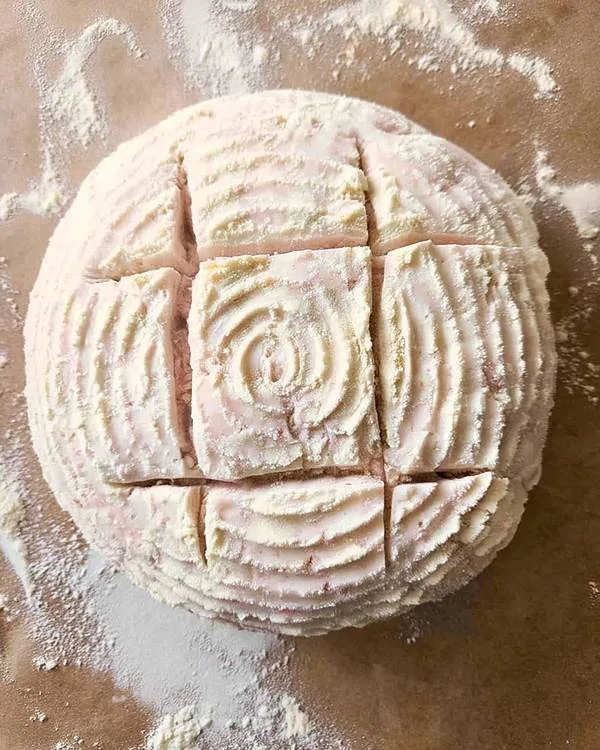
- Turn the bread onto a piece of parchment paper and score it with a razor or sharp knife. You can make one large cut or create a decorative pattern!
- Lower the parchment paper with the bread into your Dutch oven and cover with the lid. Place the bread into a cold oven and start preheating to 450°F/230°C. Once the oven reaches temperature, start your timer and bake for 40 minutes.
- Remove the bread from the Dutch oven and place it directly onto the oven rack. Turn the temperature down to 350°F/175°C and bake for another 30 minutes until deeply golden.
Cool:
- Take the bread out and let it sit on a cooling rack until no longer warm to the touch. This is crucial—don’t cut the bread too soon, or it will be gummy inside. Use a serrated knife to slice your gluten-free sourdough. Enjoy!
Why This Brown Rice Flour Sourdough Recipe Works
Brown rice flour creates a surprisingly authentic sourdough experience. Unlike white rice flour, brown rice retains the bran and germ, giving your bread more fiber, nutrients, and a lovely nutty flavor that complements the sourdough tang beautifully.
The psyllium husk is your secret weapon here. It creates structure and elasticity that gluten-free flours naturally lack. When mixed with water, psyllium forms a gel that binds everything together and gives you that satisfying, bread-like texture.
Starting in a cold oven is intentional. This gentle temperature increase allows the bread to rise more before the crust sets, giving you better oven spring and a lighter crumb. Trust the process—it makes a real difference in your 100% brown rice sourdough bread.
The baking powder gives a little extra lift, working alongside your sourdough starter. While traditional sourdough purists might raise an eyebrow, this small addition helps gluten-free dough achieve better rise and texture. According to sourdough fermentation research, the fermentation process still develops those complex flavors and beneficial properties we love about sourdough.
Substitutions & Swaps
Flour alternatives: This recipe is specifically designed for superfine brown rice flour. Regular brown rice flour will work but may create a grittier texture. I don’t recommend substituting with other gluten-free flours as they behave quite differently.
Psyllium options: Whole psyllium husks work best. Psyllium husk powder can be used, but reduce the amount to about 15 grams since powder is more concentrated. Avoid colored psyllium as it can tint your bread purple.
Sweetener flexibility: The sugar feeds your sourdough starter and balances the tang. Honey, maple syrup, or coconut sugar all work equally well in this brown rice flour sourdough recipe. If you’re avoiding all sweeteners, you can omit it, but fermentation may take slightly longer.
Starter substitutes: Your starter should be active and bubbly. If you’re maintaining a wheat-based starter, you can still use it in this gluten-free recipe—just feed it with brown rice flour a few times before baking to avoid cross-contamination.
Seeds and toppings: Sesame seeds, linseeds (flax), sunflower seeds, or pumpkin seeds all work beautifully on top. You can also brush with olive oil and sprinkle with sea salt before baking.
Troubleshooting Tips
Bread too dense? Your starter might not have been active enough. Make sure it’s bubbly and has doubled in size before using. Also check that your baking powder is fresh—it loses potency over time.
Gummy interior? You probably cut into the bread too soon. I know it’s tempting, but gluten-free sourdough needs to cool completely—at least 2-3 hours. The interior continues to set as it cools.
Dough too sticky? Add a tablespoon of brown rice flour at a time until manageable. Different flour brands absorb moisture differently, so minor adjustments are normal when making brown rice and sesame sourdough bread.
Crust too hard? Reduce the final baking time by 5-10 minutes. Every oven runs a bit differently. You want a deep golden color, not dark brown.
Didn’t rise much? Check your kitchen temperature. If it’s below 70°F, fermentation will take longer. Try placing the covered dough in a slightly warm oven (just the light on) or near a warm spot in your kitchen.
Scoring caused deflation? Your dough might have over-proofed. Next time, try reducing fermentation time by an hour. The dough should feel springy when gently poked, not overly soft or wobbly.
Bread cracked on sides? This usually means the crust set before the interior finished expanding. The cold oven start should prevent this, but if it happens, make deeper scores next time to give steam an escape route.
Storage & Meal Prep
This gluten-free sourdough has different storage needs than wheat bread, but it keeps surprisingly well when handled properly.
Room temperature: Store in a bread box or paper bag for 2-3 days. Avoid plastic bags at room temperature—they trap moisture and make the crust soft and potentially moldy.
Refrigerator: Slice and store in an airtight container or plastic bag for up to one week. The crust will soften in the fridge, but toasting brings it back to life.
Freezer-friendly: This is your best option for long-term storage. Slice the completely cooled bread, then freeze in a freezer bag with parchment paper between slices. It’ll keep for up to 3 months. Toast frozen slices straight from the freezer—no thawing needed!
Refreshing day-old bread: Spritz the crust lightly with water and warm in a 350°F oven for 5-7 minutes. This revives the crust beautifully for your brown rice flour sourdough recipe.
Make-ahead strategy: You can prepare the dough in the evening and let it ferment overnight in the refrigerator. In the morning, let it sit at room temperature for 30 minutes before shaping and baking.
Pre-slicing tip: Once completely cool, slice the entire loaf. Keep what you’ll eat in 2-3 days at room temperature and freeze the rest immediately. This prevents any portion from drying out.
Serving Suggestions
Honestly, the first slice warm from the oven with butter melting into it is pure magic. But here are more ways to enjoy your brown rice sourdough:
Classic sandwiches: This bread actually holds together for sandwiches! Try it with deli meats, cheese, lettuce, and tomato. The sturdy texture won’t fall apart by lunchtime.
Toast perfection: Thick slices toasted until golden, then topped with avocado, a fried egg, and everything bagel seasoning. My favorite weekend breakfast right there.
Soup companion: Slice and toast for dipping into tomato soup, chili, or your favorite stew. The crust holds up beautifully to liquid without getting soggy immediately.
Open-faced favorites: Top with ricotta, honey, and fresh figs. Or try smoked salmon, cream cheese, and capers. The tangy sourdough flavor pairs wonderfully with rich toppings.
French toast transformation: Day-old 100% brown rice sourdough bread makes incredible French toast. The sturdy texture soaks up the egg mixture without falling apart.
Breadcrumbs: Dry out leftover pieces and pulse in a food processor for gluten-free breadcrumbs. Use them for coating chicken taquitos or topping casseroles.
Panzanella salad: Cube day-old bread, toast it, and toss with tomatoes, cucumber, red onion, basil, and vinaigrette. The bread absorbs the dressing while maintaining some texture.
Variations & Dietary Adjustments
Seeds throughout: Fold 2-3 tablespoons of sunflower seeds, pumpkin seeds, or sesame seeds into the dough before shaping. This adds nutrition and delightful crunch to your gluten-free sourdough.
Herb and garlic version: Mix in 2 teaspoons dried Italian herbs and 1 teaspoon garlic powder with the dry ingredients. Amazing for serving alongside pasta or salad.
Sweet cinnamon raisin: Add 1 tablespoon cinnamon and ½ cup raisins to the dough. Reduce salt to 1 teaspoon. Perfect for breakfast toast with butter.
Olive and rosemary: Fold in ⅓ cup chopped kalamata olives and 1 tablespoon fresh rosemary. Very Mediterranean and sophisticated for your brown rice and sesame sourdough bread.
Seeded crust: Before baking, brush the scored top with water or olive oil and sprinkle generously with mixed seeds. Creates a bakery-worthy presentation.
Mini loaves: Divide dough in half and bake in two smaller Dutch ovens or loaf pans. Reduce baking time to 30 minutes covered at 450°F, then 20 minutes uncovered at 350°F.
Dairy-free confirmed: This recipe is naturally dairy-free when using maple syrup or sugar instead of honey. Perfect for families managing multiple allergies.
Nut-free: Unlike many gluten-free breads that rely on almond flour, this brown rice flour sourdough recipe is completely nut-free, making it safe for school lunches.
Brown Rice Flour Sourdough Recipe FAQs
Can you use brown flour for sourdough?
If by “brown flour” you mean whole wheat flour, that’s a completely different recipe. This brown rice flour sourdough recipe is 100% gluten-free and won’t work with wheat flour. However, if you mean brown rice flour specifically, then yes—this entire recipe is built around it!
Can you use brown rice flour to make bread?
Definitely! Brown rice flour makes excellent gluten-free bread, especially when combined with psyllium husk for binding. The key is using superfine brown rice flour and adding something for structure (like psyllium or xanthan gum). This 100% brown rice sourdough bread proves brown rice flour can create authentic, satisfying loaves.
Can I use brown rice flour for sourdough?
Absolutely! Brown rice flour works beautifully for gluten-free sourdough. It provides structure, nutrition, and a lovely nutty flavor. Use superfine brown rice flour for the best texture. The bran in brown rice actually helps create a more authentic bread-like crumb compared to white rice flour.
Is rice flour good for sourdough starter?
Yes, rice flour is excellent for maintaining a gluten-free sourdough starter. Brown rice flour specifically provides nutrients that feed the wild yeasts and bacteria. Many people with celiac disease maintain their starters exclusively with brown rice flour. Just keep feeding it consistently, and it’ll become wonderfully active.
Final Thoughts
Making this brown rice flour sourdough recipe has completely changed my gluten-free baking game. There’s something deeply satisfying about pulling a crusty, golden loaf from your oven that looks and tastes like “real” bread.
I remember the first few months after my celiac diagnosis, thinking I’d never enjoy good bread again. Store-bought gluten-free bread was expensive and honestly pretty disappointing—crumbly, cardboard-like, nothing you’d actually crave. But this? This is bread worth getting excited about.
Your first loaf might not be perfect, and that’s completely okay. Sourdough baking is part science, part art, and every oven and kitchen is different. But even an imperfect loaf of homemade brown rice sourdough beats anything you’ll find in stores.
If you’re looking for more gluten-free baking inspiration, try our easy protein gluten-free bread for a quicker everyday option.
Now grab your starter, measure out that brown rice flour, and let’s make some magic. Your kitchen is about to smell absolutely incredible.
100% Brown Rice Flour Sourdough Recipe (No Wheat!)
Equipment
- Medium-sized mixing bowl
- Large mixing bowl
- Whisk
- Electric mixer with dough hooks (optional)
- Proofing basket or mixing bowl with kitchen towel
- Kitchen towel
- Parchment paper
- Dutch oven with lid
- Razor blade or sharp knife for scoring
- Cooling rack
- Serrated knife
Ingredients
Wet Ingredients
- 22 grams whole psyllium husks
- 415 grams warm water not hot
- 15 grams sugar honey or maple syrup can be used instead
- 70 grams active sourdough starter
Dry Ingredients
- 360 grams brown rice flour superfine
- 12 grams salt
- 2 teaspoons baking powder check the label to make sure it’s gluten-free
Instructions
- Add 22g of psyllium husk to a medium-sized bowl along with 415g of warm water. Whisk the mixture until incorporated. Add 15g of sugar to the psyllium mix. Set the bowl aside for a couple of minutes to let the psyllium gel form.
- Add 360g of brown rice flour, 2 teaspoons baking powder, and 12g of salt to a large mixing bowl. Whisk everything together. Once the psyllium gel starts to thicken, add both the psyllium mix and your active sourdough starter to the bowl with the dry ingredients.
- Mix the dough by hand or use an electric mixer with dough hooks. Continue mixing until all of the ingredients are evenly incorporated and you have a cohesive dough.
- Wash your hands and turn the dough onto a lightly floured working surface. Shape the dough into a ball and flatten it slightly with your hands.
- Fold each side of the dough onto itself: take the top and fold it onto the center, then repeat with the bottom and both sides. This builds structure in your brown rice flour sourdough recipe.
- Flip the loaf onto the other side and shape it into a ball once again by turning the dough around and tucking it under itself. If you want to add seeds to the top, turn the dough top side down onto a plate covered with sesame or linseeds.
- Transfer the loaf into a proofing basket (or a mixing bowl lined with a well-floured kitchen towel). Cover with a kitchen towel and let it ferment and proof for about 5 hours at room temperature, or 12 to 18 hours in the refrigerator.
- The dough should puff up and rise somewhat, but it won’t double in size like wheat bread. The proofing time depends largely on your kitchen temperature.
- Once the dough is done proofing, gently turn it over onto a working surface. Carefully tuck the sides of the loaf under itself by turning it in a circle with your hands—this creates a taller, more beautiful loaf.
- Turn the bread onto a piece of parchment paper and score it with a razor or sharp knife. You can make one large cut or create a decorative pattern!
- Lower the parchment paper with the bread into your Dutch oven and cover with the lid. Place the bread into a cold oven and start preheating to 450°F/230°C. Once the oven reaches temperature, start your timer and bake for 40 minutes.
- Remove the bread from the Dutch oven and place it directly onto the oven rack. Turn the temperature down to 350°F/175°C and bake for another 30 minutes until deeply golden.
- Take the bread out and let it sit on a cooling rack until no longer warm to the touch. This is crucial—don’t cut the bread too soon, or it will be gummy inside. Use a serrated knife to slice your gluten-free sourdough. Enjoy!