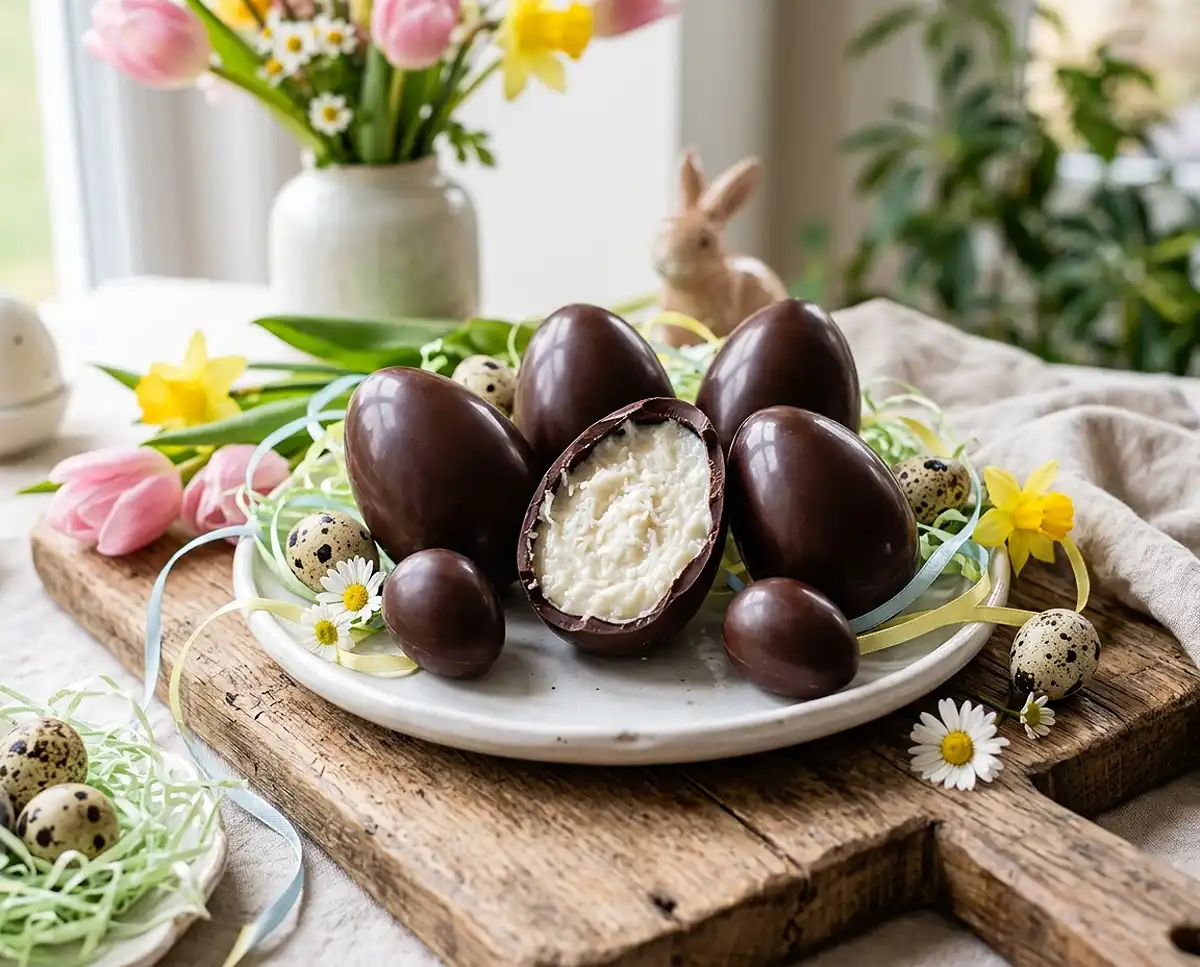
Dairy-Free Chocolate Easter Eggs
Dairy-Free Chocolate Easter Eggs made with coconut, raw cacao, and honey. Vegan, naturally sweetened, and ready in 20 minutes—no tempering required!
Three years ago, my son came home from school heartbroken because he couldn’t eat the Easter eggs at the class party. We’d just discovered his dairy allergy, and every store-bought option had milk ingredients hidden somewhere on the label.
Well… I decided right then to figure out how to make dairy-free chocolate easter eggs at home—and after a few messy kitchen experiments (my first batch was so oily it refused to set!), I cracked the code. These homemade chocolate eggs taste richer than anything you’ll find in a foil wrapper, and they come together faster than a trip to the grocery store.
You know… there’s something deeply satisfying about knowing exactly what’s in your family’s Easter basket. These homemade chocolate eggs prove that allergen-friendly doesn’t mean flavor-free—and once you taste them, you might never go back to store-bought.
Why You’ll Love These Dairy-Free Chocolate Easter Eggs
- Texture perfection: Smooth, creamy, and melt-in-your-mouth soft—like expensive European chocolate without the dairy or soy lecithin
- Beginner-friendly: No double boilers, no tempering thermometers, no risk of seizing—just blend, mold, and chill
- Allergen-adaptable: Naturally dairy-free, gluten-free, and easily made vegan by swapping honey for brown rice syrup or maple syrup
- Perfect for: Easter baskets, spring potlucks, homemade gifts, or any time you want a healthier chocolate treat that actually tastes indulgent
The Secret to Perfect Homemade Chocolate Eggs
Why this recipe works when store-bought fails:
- Coconut butter base: Blending desiccated coconut until it turns into butter creates a creamy, stable fat that mimics cocoa butter’s texture without any dairy—this is the key to that professional mouthfeel, as explained in King Arthur Baking’s guide to chocolate science.
- Raw cacao powder: Unlike Dutch-processed cocoa, raw cacao retains its natural antioxidants and gives these dairy free chocolate eggs a deep, slightly fruity chocolate flavor that doesn’t need milk to taste rich.
- Honey as binder: The natural sugars in honey help emulsify the coconut fat and cacao powder, preventing separation and giving the mixture just enough sweetness without overpowering the chocolate.
- Silicone mold magic: Flexible silicone molds release these eggs cleanly without greasing, and their smooth interior creates a glossy finish that looks bakery-quality.
Table of Contents
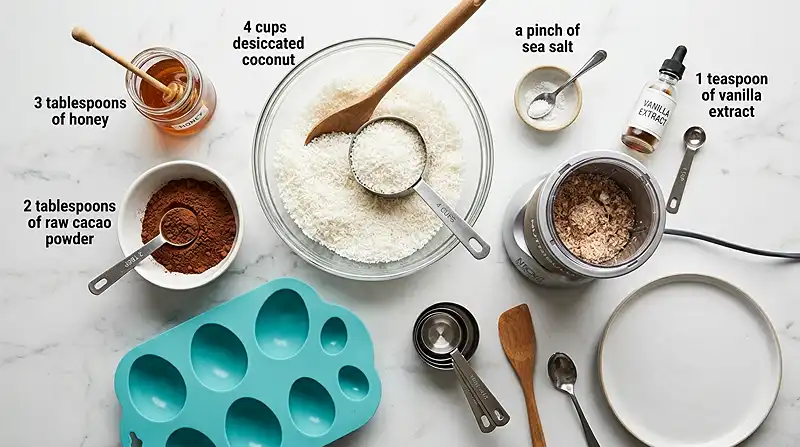
Ingredients
| Ingredient | Amount | Notes |
|---|---|---|
| Desiccated coconut | 4 cups | Or use 1 cup coconut butter (store-bought or homemade) |
| Honey | 3 tablespoons | Or substitute brown rice syrup for vegan; maple syrup works too |
| Raw cacao powder | 2 tablespoons | Not cocoa powder—raw cacao has richer flavor and more nutrients |
| Salt | Pinch | Optional but enhances the chocolate flavor beautifully |
| Vanilla extract | 1 teaspoon | Use pure extract, not imitation, for best flavor |
Step-by-Step Instructions
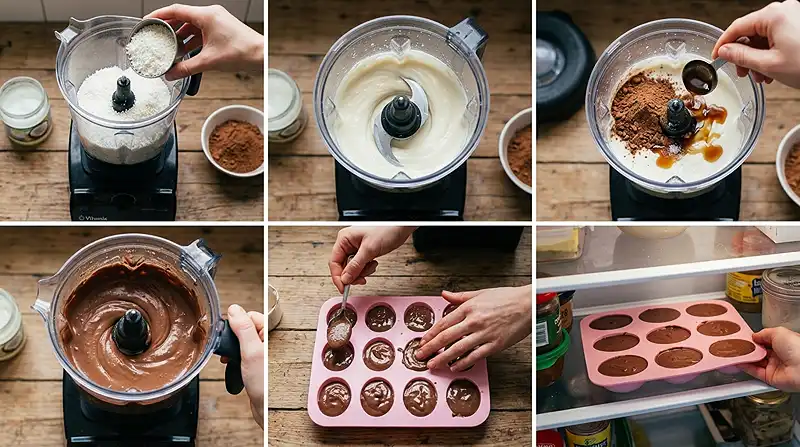
1. Make the coconut butter (if using desiccated coconut).
If you’re using desiccated coconut, pop it in your high-speed food processor and blend on high until it resembles melted white chocolate—this takes 8-12 minutes, so be patient. The coconut will go from shredded to flour-like, then clumpy, and finally turn into a smooth, pourable butter. If you’re using store-bought coconut butter, blend it as well for 30-60 seconds to loosen it up a bit before adding the remaining ingredients.
Pro Tip: Stop the processor every 2-3 minutes to scrape down the sides and give the motor a break—overheating can make the coconut taste bitter.
2. Add the chocolate ingredients.
Add the honey (or brown rice syrup), raw cacao powder, salt, and vanilla extract into the food processor with the coconut butter. Blend until it’s all combined and resembles smooth milk chocolate—about 1-2 minutes. The mixture should be thick but pourable, like warm ganache.
Sensory cue: The aroma is pure chocolate bliss—rich, slightly sweet, with a hint of coconut and vanilla that smells like a tropical candy bar.
3. Fill the molds.
Spoon teaspoons of the chocolatey mixture into silicone Easter egg molds (or any small candy molds you have on hand). Use your fingers or the back of a small spoon to gently press down and smooth over the tops so the chocolate fills every corner of the mold evenly.
Pro Tip: Tap the mold gently on the counter a few times to release any air bubbles—this gives you a smooth, professional finish on the bottom of each egg.
4. Chill until set.
Place the filled molds in the fridge to set for at least 15-20 minutes. The eggs are ready when they’re firm to the touch and pop out of the molds easily without bending or leaving residue. If they’re still soft, give them another 5-10 minutes.
Sensory cue: When you press gently on the surface, it should feel solid and cool—like a bar of real chocolate, not soft fudge.
5. Unmold and enjoy.
Carefully pop each dairy-free chocolate easter egg out of the mold by pressing up from the bottom. If they stick, place the mold in the freezer for 5 minutes to firm them up further, then try again.
Pro Tip: Wrap each egg individually in colorful foil or parchment paper for a festive Easter basket presentation—kids love unwrapping them!
Make It Your Own: Substitutions & Variations
Swap the honey for brown rice syrup or maple syrup to make these completely vegan easter candy. Brown rice syrup has a milder sweetness and thicker consistency, so your eggs will be a bit firmer, while maple syrup adds a subtle caramel note that pairs beautifully with chocolate.
Use pre-made coconut butter if you don’t have time to blend desiccated coconut—just make sure it’s unsweetened and at room temperature so it blends easily. Brands like Artisana or Nutiva work perfectly and save you about 10 minutes of processing time.
Add mix-ins for texture by folding in 2-3 tablespoons of finely chopped nuts, shredded coconut, or freeze-dried raspberries after blending. These homemade chocolate eggs become even more interesting with a little crunch or tang.
Man, oh man… you can also customize the flavor by adding ½ teaspoon of peppermint extract, orange zest, or a pinch of espresso powder to the mixture before molding. It turns these into gourmet vegan Easter candy that tastes like it came from a fancy chocolatier.
Common Problems & Solutions
Problem: My coconut won’t turn into butter—it’s just stuck in the flour stage.
Solution: Keep blending! It takes 8-12 minutes in a high-speed processor, and the oils will eventually release and turn it creamy.
Explanation: If your processor isn’t powerful enough, try adding 1 tablespoon of melted coconut oil to help it along. The heat from blending is what releases the natural oils, so patience is key—don’t give up at the flour stage.
Problem: The mixture is too oily and won’t set.
Solution: Add 1-2 more tablespoons of raw cacao powder and blend again, then re-chill.
Explanation: This usually happens if your coconut butter is too warm when you start or if you over-blended it. The extra cacao absorbs excess oil and helps the mixture firm up properly.
Problem: The eggs are too hard and crumbly.
Solution: Next time, add an extra tablespoon of honey or a teaspoon of coconut oil to the mixture before molding.
Explanation: Desiccated coconut varies in fat content by brand—some are drier than others. The added moisture from honey or oil gives you that smooth, melt-in-your-mouth texture.
Problem: The chocolate tastes too bitter.
Solution: Increase the honey to 4-5 tablespoons or add 1 tablespoon of coconut sugar to the mixture.
Explanation: Raw cacao is less processed than cocoa powder, so it’s naturally more bitter. Adjusting the sweetener balances the flavor without losing the health benefits of raw cacao, which retains its antioxidants and minerals.
Storage & Meal Prep
| Method | Duration | Notes |
|---|---|---|
| Counter | 3-4 days | Store in an airtight container in a cool, dry place; avoid heat above 75°F |
| Fridge | 2 weeks | Best texture when stored chilled; let sit 5 minutes before eating for creamier mouthfeel |
| Freezer | 3 months | Layer between parchment to prevent sticking; thaw 10 minutes or eat frozen for a firmer treat |
These dairy-free chocolate easter eggs actually taste better after 24 hours in the fridge—the flavors meld and deepen, and the texture becomes even more luxurious. Make a big batch for Easter weekend and store them in layers separated by parchment paper in a sealed container. No reheating needed—just grab and enjoy whenever a chocolate craving hits.
Dairy-Free Chocolate Easter Eggs FAQs
Which Easter eggs are dairy-free?
Most commercial Easter eggs contain milk powder or milk fat, but brands like Enjoy Life, Hu Kitchen, and Lily’s offer dairy-free options. However, these homemade chocolate eggs are your best bet for allergen-friendly candy—you control every ingredient, and they taste fresher and richer than anything you’ll find in stores. Look for “vegan” or “dairy-free” labels when shopping, but always double-check the ingredient list for hidden dairy derivatives like whey or casein.
Is dairy-free chocolate possible?
Yes—high-quality dark chocolate (70% cacao or higher) is often naturally dairy-free, and you can easily make it at home with coconut and cacao. The key is using a creamy fat source like coconut butter or coconut oil to replace the cocoa butter and milk fat found in traditional chocolate. These vegan easter candy treats prove you don’t need dairy to get that smooth, melt-in-your-mouth texture.
Are there any healthy dairy-free Easter eggs?
Absolutely—these homemade versions use unrefined sweeteners, raw cacao (rich in antioxidants and magnesium), and coconut (a source of healthy fats). Unlike store-bought candy loaded with refined sugar, soy lecithin, and artificial flavors, these eggs give you real ingredients you can pronounce. They’re naturally gluten-free and grain-free, making them perfect for Paleo or Whole30-friendly celebrations.
Are any Easter eggs vegan?
Yes—swap the honey for brown rice syrup or maple syrup to make these completely vegan. Many brands like Endangered Species and Theo Chocolate also offer vegan dark chocolate Easter eggs, but they can be pricey. Making them at home with coconut and raw cacao is more affordable and lets you customize the sweetness and flavor to your family’s taste.
Which chocolates are dairy-free?
Dark chocolate bars from brands like Ghirardelli (60% and above), Enjoy Life, and Green & Black’s are typically dairy-free, but always check labels. For Easter treats specifically, make your own to guarantee they’re safe—these homemade chocolate eggs are foolproof and take less time than driving to a specialty store. Plus, you can mold them into any shape you want, not just eggs!
Serving Suggestions

These dairy-free chocolate easter eggs are a showstopper in any Easter basket, especially when nestled among gluten-free robin’s egg nest cookies and pastel-wrapped jelly beans. Arrange them on a platter alongside fresh strawberries for a simple spring dessert, or tuck a few into lunch boxes throughout the week for a healthier chocolate fix. They’re also perfect for gifting—wrap them in clear cellophane bags with a ribbon, and you’ve got a thoughtful homemade present that beats store-bought candy every time.
If you’re hosting Easter brunch, serve these homemade chocolate eggs as part of a dessert board with gluten-free smoked salmon pinwheels and asparagus prosciutto bundles for a balanced spread of sweet and savory. The rich chocolate provides a satisfying finish after lighter spring flavors, and guests always appreciate the allergen-friendly option.
Let’s Hear From You!
Give these dairy-free chocolate easter eggs a try this spring and let me know how they turn out! Did you make them vegan with maple syrup or add a fun mix-in? I’d love to hear your creative twists in the comments below. And if you love them as much as my family does (we’ve made three batches already this month!), please pin this recipe on Pinterest so you can find it again next Easter—and so your friends with food allergies can discover it, too. Happy egg-making!
Dairy-Free Chocolate Easter Eggs
Equipment
- High-speed food processor
- Silicone Easter egg molds
- Measuring cups and spoons
- Spatula
- Small spoon
Ingredients
- 4 cups desiccated coconut or use 1 cup coconut butter (store-bought or homemade)
- 3 tablespoons honey or substitute brown rice syrup or maple syrup for vegan
- 2 tablespoons raw cacao powder not cocoa powder—raw cacao has richer flavor
- 1 pinch salt optional but enhances chocolate flavor
- 1 teaspoon vanilla extract use pure extract, not imitation
Instructions
- If you’re using desiccated coconut, pop it in your high-speed food processor and blend on high until it resembles melted white chocolate—this takes 8-12 minutes, so be patient. The coconut will go from shredded to flour-like, then clumpy, and finally turn into a smooth, pourable butter. If you’re using store-bought coconut butter, blend it as well for 30-60 seconds to loosen it up a bit before adding the remaining ingredients. Stop the processor every 2-3 minutes to scrape down the sides and give the motor a break—overheating can make the coconut taste bitter.
- Add the honey (or brown rice syrup), raw cacao powder, salt, and vanilla extract into the food processor with the coconut butter. Blend until it’s all combined and resembles smooth milk chocolate—about 1-2 minutes. The mixture should be thick but pourable, like warm ganache. The aroma is pure chocolate bliss—rich, slightly sweet, with a hint of coconut and vanilla that smells like a tropical candy bar.
- Spoon teaspoons of the chocolatey mixture into silicone Easter egg molds (or any small candy molds you have on hand). Use your fingers or the back of a small spoon to gently press down and smooth over the tops so the chocolate fills every corner of the mold evenly. Tap the mold gently on the counter a few times to release any air bubbles—this gives you a smooth, professional finish on the bottom of each egg.
- Place the filled molds in the fridge to set for at least 15-20 minutes. The eggs are ready when they’re firm to the touch and pop out of the molds easily without bending or leaving residue. If they’re still soft, give them another 5-10 minutes. When you press gently on the surface, it should feel solid and cool—like a bar of real chocolate, not soft fudge.
- Carefully pop each dairy-free chocolate easter egg out of the mold by pressing up from the bottom. If they stick, place the mold in the freezer for 5 minutes to firm them up further, then try again. Wrap each egg individually in colorful foil or parchment paper for a festive Easter basket presentation—kids love unwrapping them!