Dairy Free Lemon Curd
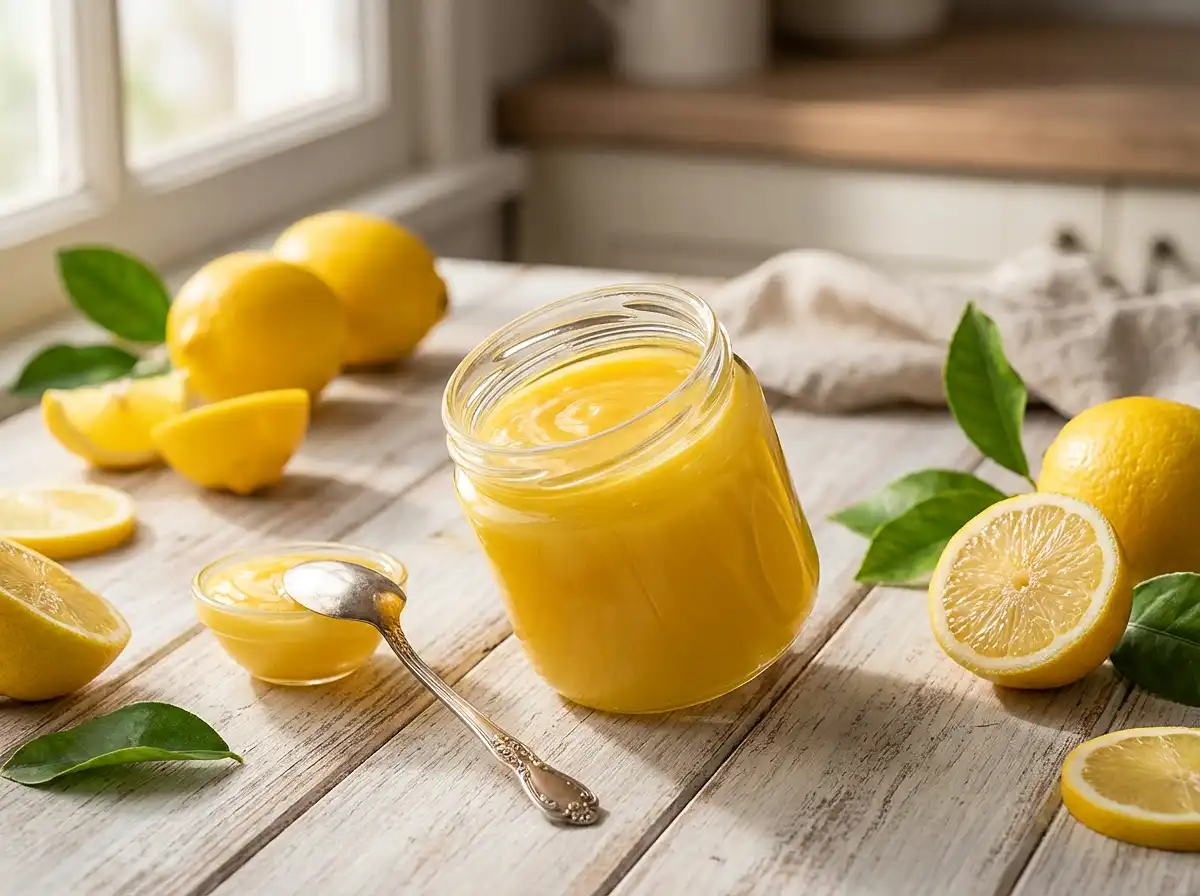
This dairy free lemon curd uses coconut oil instead of butter for a silky, tangy spread that’s perfect for tarts, toast, and gluten free desserts. Ready in 15 minutes!
When Life Gives You Lemons (and a Dairy Sensitivity)
Honestly? I almost gave up on lemon curd entirely when I went dairy free. Every recipe I tried either tasted like a coconut candle or curdled into sad, lumpy soup. Then one rainy Sunday — the kind where you just want to putter around the kitchen in fuzzy socks — I cracked the code on this dairy free lemon curd, and I genuinely gasped when I tasted it.
Well… here’s the thing nobody tells you about ditching butter in curd: it can actually taste more lemony without dairy muting those bright citrus notes. This version uses melted coconut oil for that luscious, velvety richness, and the result is so smooth it practically glides off the spoon. It’s sunshine in a jar, friends.
Whether you’re spooning it into a dairy free lemon tart, swirling it over pancakes for a lazy Easter brunch, or eating it straight from the bowl (no judgment here), this five-ingredient recipe is about to become your new kitchen staple. And if you’re just starting out on your gluten-free journey, this lemon curd dessert is a gorgeous confidence builder — because it’s genuinely hard to mess up.
Why This Dairy Free Lemon Curd Works So Beautifully
Traditional lemon curd relies on butter for its signature richness, but coconut oil steps in seamlessly here. When melted and whisked into eggs and sugar over gentle heat, it creates a body and sheen that rivals any butter-based version. The Harvard T.H. Chan School of Public Health’s overview of coconut oil notes that while it’s high in saturated fat, its unique medium-chain fatty acid structure gives it that solid-at-room-temperature quality — which is exactly why your dairy free lemon curd sets up so beautifully once chilled.
The secret weapon, though, is rubbing the lemon zest directly into the sugar with your fingertips. This releases all those fragrant essential oils trapped in the peel, and the aroma that blooms from the bowl is as bright and intoxicating as walking through a lemon grove. It’s a tiny step that makes a massive difference in flavor depth.
Table of Contents
Ingredients
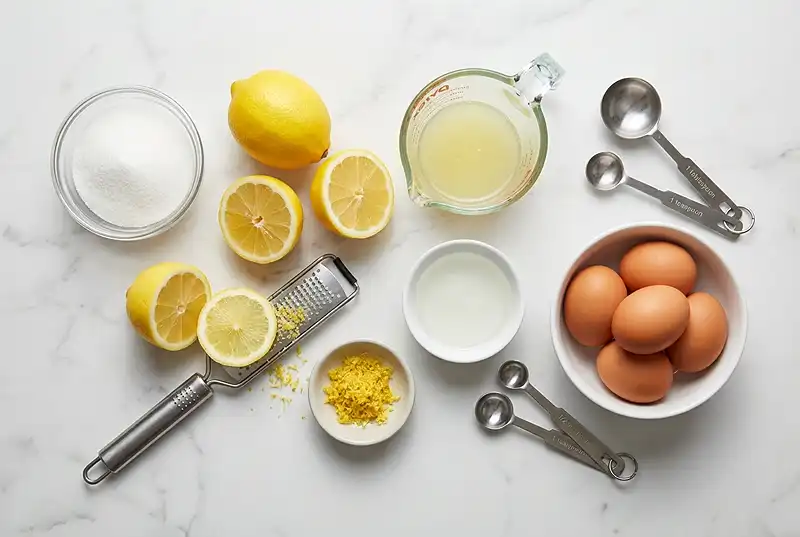
Everything you need for this dairy free lemon curd fits on one short list — no specialty store trip required.
| Ingredient | Amount | Notes |
|---|---|---|
| Caster or white sugar | 110 g (½ cup) | Caster dissolves fastest |
| Fresh lemons | 1–2 large | For zest and juice |
| Fresh lemon juice | 180 ml (¾ cup) | About 4–5 lemons |
| Coconut oil, melted | 125 ml (½ cup) | Use refined for neutral flavor |
| Extra large eggs | 4 | 45–55 g each, weighed out of shell |
A quick note on coconut oil: Refined coconut oil has virtually no coconut taste, so your lemon curd dessert will taste purely of lemon. Unrefined (virgin) coconut oil adds a subtle tropical hint — lovely if you enjoy that, but it will shift the flavor profile.
Instructions
Step 1: Infuse the Sugar with Lemon Zest
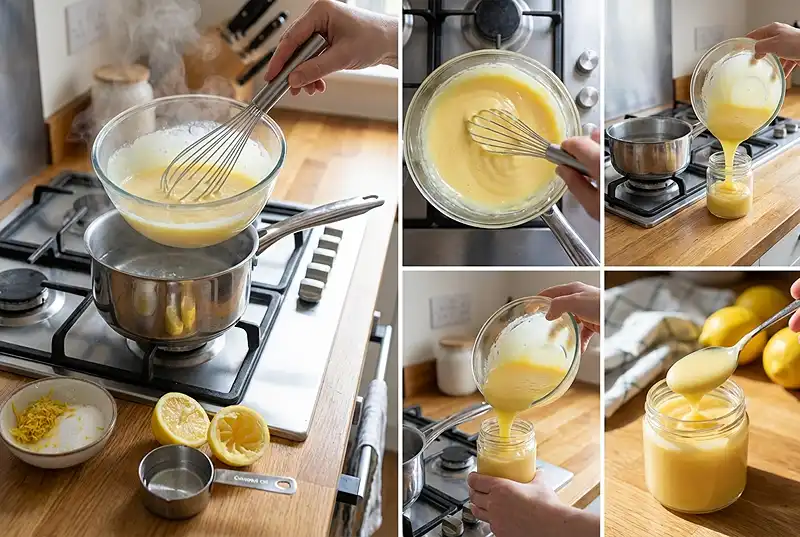
Place the sugar and lemon zest in a medium heatproof bowl. Use your fingertips to rub the zest into the sugar for about 30 seconds — you’ll feel the granules turning slightly damp and the most incredible citrus perfume will fill your kitchen. This simple technique extracts maximum lemon oil and gives your dairy free lemon curd an intensity that juice alone can’t achieve.
Set the bowl over a small saucepan about one-quarter filled with water, placed over low-medium heat. Make sure the bottom of the bowl doesn’t touch the water — you want gentle, indirect steam heat, not a rolling boil underneath.
Step 2: Whisk in the Remaining Ingredients
Add the lemon juice, melted coconut oil, and eggs to the bowl. Whisk steadily to combine — it’ll look a little separated and sloshy at first, and that’s completely normal. Don’t panic.
Keep whisking gently for 5 to 10 minutes. You’re watching for the moment the mixture transforms from thin and frothy into something noticeably thicker that coats the back of a spoon. When you drag your finger across the coated spoon and the line holds without dripping, your dairy free lemon curd is done. Remove it from the heat immediately.
If you’re feeling cautious, plunge the bowl’s base into an ice bath or a dish of cold water. This halts the cooking instantly and prevents any chance of the eggs scrambling from residual heat.
Step 3: Cool and Store
Press a sheet of plastic wrap directly onto the surface of the curd — flush against the curd itself, not stretched over the bowl. This prevents a thick skin from forming on top as it cools, which is a trick I wish someone had told me years ago.
Pop the bowl into the fridge and let it cool completely. The curd will continue to thicken as it chills, setting into that gorgeous, spoonable consistency you’re after. Once cooled, transfer it to a clean, airtight jar or container for storage.
Smart Substitutions
Coconut oil swap: If coconut isn’t your thing, vegan butter (like Miyoko’s or Earth Balance) works as a one-to-one replacement in this dairy free lemon curd. Melt it first and whisk it in the same way. The texture will be slightly different — a touch more opaque — but the tanginess stays spot on.
Sugar alternatives: Maple syrup or honey can replace caster sugar if you prefer less refined sweeteners. Use about ¾ the amount and expect a slightly thinner curd, plus a hint of the sweetener’s own flavor woven through your lemon curd dessert.
Egg-free options: For an egg-free version, some bakers use cornstarch or arrowroot as a thickener with aquafaba. The texture won’t be identical, but it gets you close. Just know this changes the recipe significantly, so treat it as an experiment rather than a guaranteed swap.
Lime or grapefruit variation: Swap the lemon juice and zest for lime or pink grapefruit to create an entirely different citrus curd. The ratios stay the same, and you’ll end up with a beautiful dairy free curd that’s perfect for summer tarts and pavlovas.
Troubleshooting Tips
The curd isn’t thickening: Your heat might be too low. Nudge it up slightly and keep whisking — patience is key with this dairy free lemon curd. It can take the full 10 minutes, especially if your eggs are cold from the fridge.
I see tiny scrambled egg bits: The heat crept up too high. Don’t toss it — just pour the curd through a fine-mesh sieve into a clean bowl, and those bits will catch in the strainer. You’ll never know the difference once it’s chilled and smooth.
It tastes too coconutty: You likely used virgin (unrefined) coconut oil. Next time, switch to refined coconut oil for a completely neutral flavor in your lemon curd dessert. The good news is that the coconut taste mellows considerably after a night in the fridge.
The curd formed a skin on top: This happens when air reaches the surface during cooling. Gently peel it off — the curd underneath is perfectly fine. Next time, remember to press that plastic wrap directly onto the surface before refrigerating.
Storage Advice
Refrigerator Storage
Your dairy free lemon curd keeps beautifully in an airtight glass jar in the fridge for up to one week. The flavor actually deepens and rounds out after a day or two, so don’t feel rushed to use it all immediately. Always use a clean spoon when scooping to avoid introducing bacteria.
Freezing for Later
You know… this curd freezes remarkably well, which makes it a fantastic make-ahead staple. Pour it into silicone ice cube molds or small freezer-safe containers and freeze for up to three months. Thaw overnight in the fridge and give it a quick stir to restore that silky consistency. Having portions ready to go means a dairy free lemon tart is never more than a thaw away.
Serving Suggestions and Pairings
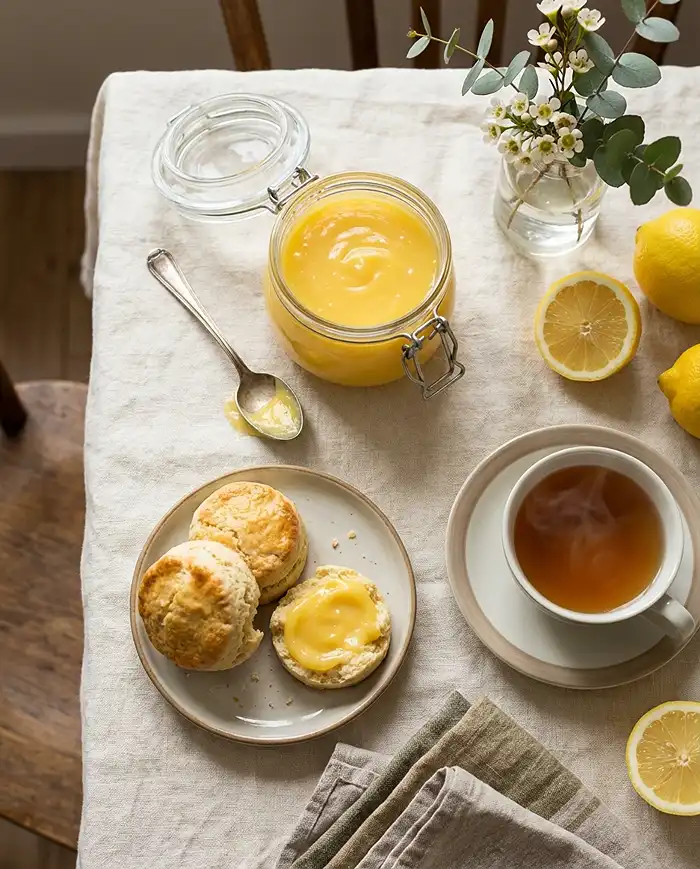
This dairy free lemon curd is wildly versatile — honestly, I’ve yet to find something it doesn’t improve. Spread it on warm toast or scones for breakfast, dollop it over coconut yogurt with fresh berries, or pile it into a gluten free tart shell for a stunning dessert with almost zero effort.
It’s also a dreamy filling for layer cakes, crêpes, and thumbprint cookies. If you love bold flavor pairings, try layering it with fresh raspberries and whipped coconut cream for a quick parfait that looks like you spent an hour on it. For a savory-sweet contrast, serve it alongside our zesty gluten-free cowboy caviar at your next dinner party — the brightness of the curd alongside something savory is unexpectedly wonderful.
Variations and Dietary Adjustments
Kid-Friendly Lemon Curd Treats
Little ones tend to love this dairy free lemon curd stirred into warm oatmeal or spread on rice cakes for an after-school snack. If the tartness is too intense for younger palates, add an extra tablespoon of sugar to soften the pucker. You can also freeze it into popsicle molds mixed with a splash of coconut milk for a refreshing summer treat.
Dairy Free Lemon Tart
Pour the chilled curd into a pre-baked gluten free tart shell — you can use a simple press-in crust made from almond flour, coconut oil, and a pinch of salt. Chill for at least two hours until set, then top with fresh berries or a dusting of powdered sugar. This dairy free lemon tart is elegant enough for holidays yet simple enough for a Tuesday night craving.
Passion Fruit or Berry Swirl
Man, oh man… fold a few tablespoons of passion fruit pulp or berry compote into the finished curd for a marbled, tropical twist. The natural acidity of passion fruit plays beautifully against the lemon, and it turns the most gorgeous shade of golden-pink. It’s a showstopper if you’re filling a gluten free tart for a special occasion.
Refined Sugar-Free Version
Swap the caster sugar for coconut sugar or a granulated monk fruit blend. The curd will have a slightly deeper, almost caramel-amber color with coconut sugar, but the tangy lemon flavor still shines through. This adjustment makes your lemon curd dessert friendlier for anyone watching their sugar intake without losing that indulgent feeling.
Dairy Free Lemon Curd FAQs
What can you substitute for butter in lemon curd?
Melted coconut oil is the best butter replacement for dairy free lemon curd because it solidifies when chilled, giving the curd its signature thick, spoonable texture. Vegan butter also works well as a one-to-one swap. Both options deliver the richness you’d expect from traditional curd.
Can you make dairy free curd?
Absolutely — and this recipe proves just how simple it is. By replacing butter with coconut oil, you get a luscious dairy free lemon curd that’s virtually indistinguishable from the classic version. The technique stays exactly the same; only the fat source changes.
Can you buy dairy free lemon curd?
Some specialty stores and online retailers do carry dairy free lemon curd, but options can be limited and pricey. Making it at home takes about 15 minutes, costs a fraction of store-bought, and lets you control the sweetness and ingredients completely. According to the Celiac Disease Foundation’s guide to safe ingredient sourcing, preparing foods at home is often the most reliable way to ensure they meet your dietary needs.
What is dairy free curd?
Dairy free curd is simply traditional fruit curd — typically made with eggs, sugar, citrus, and fat — prepared without butter or any dairy products. In this recipe, coconut oil provides the creamy richness instead. The result is a smooth, tangy spread that’s safe for anyone avoiding dairy while still tasting wonderfully indulgent.
Best way to use leftover lemon curd?
Swirl it into morning yogurt, spread it on our indulgent gluten-free brookies, or use it as a filling between cake layers. It’s also beautiful piped into cupcakes or folded into whipped coconut cream for a quick mousse. Leftover dairy free lemon curd rarely stays leftover for long around here.
You’ve Got This
Making dairy free lemon curd from scratch is one of those small kitchen victories that feels so much bigger than the effort involved. Five ingredients, one bowl, fifteen minutes — and you’ve got a jar of liquid sunshine that transforms everything it touches.
Whether you’re filling a dairy free lemon tart for a birthday celebration, dolloping it onto toast on a quiet morning, or packing it into meal prep for the week ahead, this recipe has your back. Pair it with something savory like our crowd-pleasing gluten-free marry me salmon for a dinner that feels truly special from start to finish.
Dairy Free Lemon Curd
Equipment
- Medium Heatproof Bowl
- Small saucepan
- Whisk
- Fine-mesh sieve
- Plastic wrap
- Airtight Glass Jar or Container
Ingredients
Dairy Free Lemon Curd
- 110 g caster or white sugar ½ cup
- 1-2 large lemons for zest
- 180 ml fresh lemon juice ¾ cup, about 4-5 lemons
- 125 ml coconut oil, melted ½ cup; use refined for neutral flavor
- 4 extra large eggs 45-55g per egg, weighed out of shell
Instructions
- Place the sugar and lemon zest in a medium heatproof bowl. Use your fingertips to rub the zest into the sugar for about 30 seconds until the granules turn slightly damp and release a fragrant citrus aroma. Set the bowl over a small saucepan about one-quarter filled with water, placed over low-medium heat. Make sure the bottom of the bowl doesn’t touch the water.
- Add the lemon juice, melted coconut oil, and eggs to the bowl and whisk steadily to combine. Keep whisking gently for 5 to 10 minutes until the mixture thickens and coats the back of a spoon — drag your finger across the coated spoon and the line should hold without dripping. Remove from the heat immediately. If you’re cautious, plunge the bowl’s base into an ice bath or cold water to stop the cooking.
- Press a sheet of plastic wrap directly onto the surface of the curd, flush against the curd itself, to prevent a skin from forming. Place the bowl in the fridge and allow to cool completely. Once cooled, transfer to a clean, airtight jar or container. Use within one week or freeze for up to three months.