Dairy-Free Pavlova
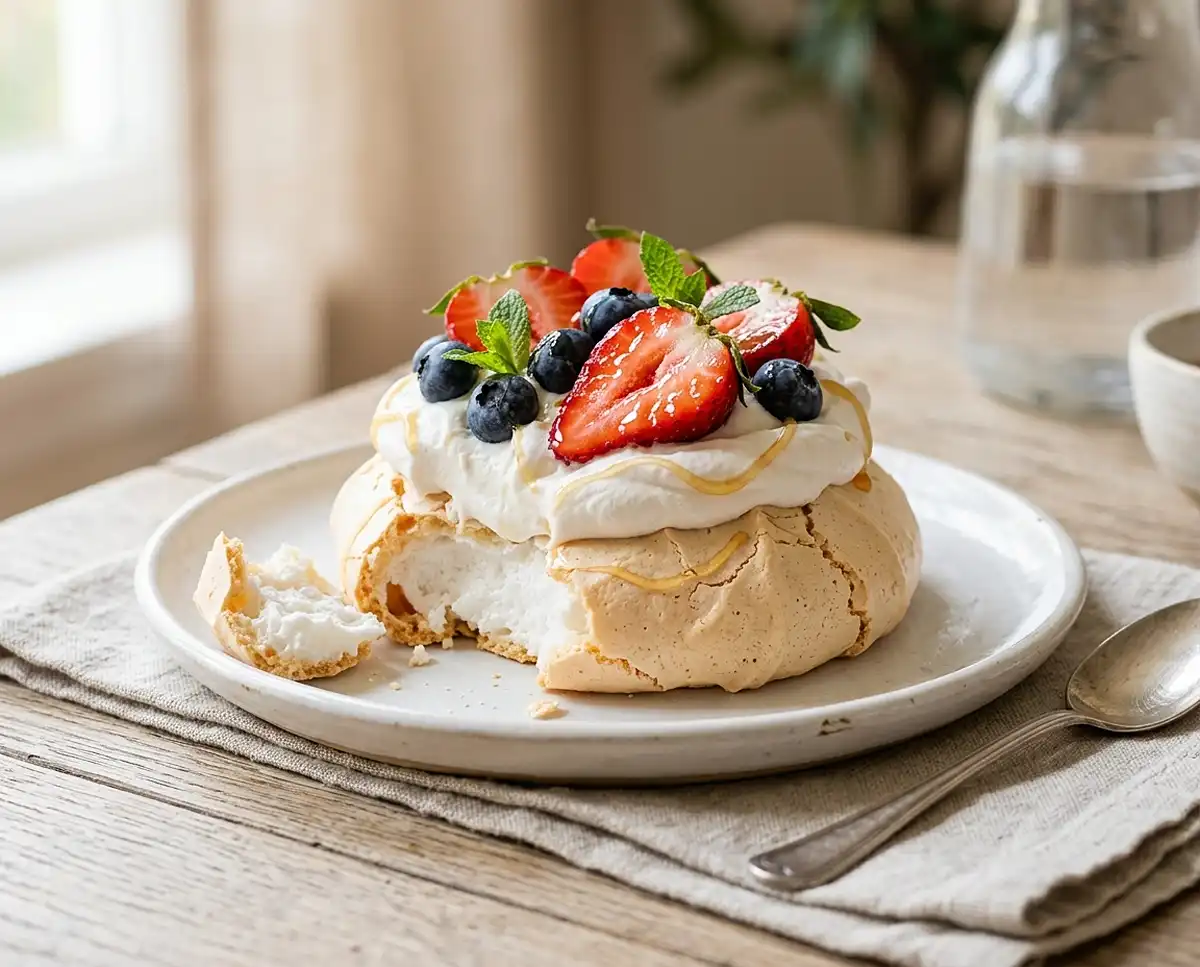
Dairy-Free Pavlova with crispy meringue shell, fluffy coconut cream, and fresh berries. Gluten-free Easter showstopper in 90 minutes!
Three years ago, I attempted my first pavlova for Easter brunch and watched in horror as the meringues deflated into sticky puddles the moment I opened the oven door. That deflating disaster taught me that dairy-free pavlova isn’t about fancy techniques or expensive ingredients—it’s about patience, room-temperature eggs, and never, ever opening that oven door until the full cooling time is up.
Have you ever cracked into a meringue shell that shatters like delicate porcelain, then spooned through coconut whipped cream so fluffy it dissolves on your tongue?
Why You’ll Love This Dairy-Free Pavlova
- Crispy shell with a marshmallow-soft center—the cornstarch and vinegar create that signature chewy middle while the slow bake sets the exterior into a shattering crust
- Naturally gluten-free and dairy-free—meringue is made from egg whites and sugar, and coconut cream whips into stiff peaks just like heavy cream
- Make-ahead friendly with minimal active time—the oven does all the work while you prep other dishes or relax with guests
- Stunning presentation that looks like it came from a French patisserie but requires only basic mixing and spooning skills
The Secret to Perfect Dairy-Free Pavlova
Room-temperature egg whites whip up to triple their original volume. Cold eggs from the fridge contain less air and take longer to reach stiff peaks, resulting in a denser, less stable meringue. According to King Arthur Baking’s meringue science guide, egg whites at 70°F (room temperature) create the most stable foam because the proteins unfold more easily and trap air bubbles efficiently.
Adding sugar gradually—one tablespoon at a time—prevents grainy meringue. Dumping all the sugar in at once doesn’t give it time to dissolve into the egg whites, leaving you with a gritty texture and weeping meringues that leak syrup. The slow addition over 7-8 minutes allows the sugar crystals to dissolve completely, creating a glossy, stable meringue that holds its shape during baking.
Cornstarch and vinegar are the secret to that chewy center. Cornstarch absorbs excess moisture and stabilizes the meringue structure, while the acid from vinegar strengthens the egg white proteins and prevents over-coagulation. This combination creates the signature pavlova texture—crispy on the outside, soft and marshmallow-like inside—that distinguishes it from purely crispy meringue cookies.
Cooling in the oven with the door closed prevents cracking. Sudden temperature changes cause the meringue to contract rapidly, creating cracks and sometimes complete collapse. Leaving the pavlovas in the turned-off oven for a full hour allows them to cool gradually and set completely, minimizing cracks and ensuring that crispy-chewy texture.
Table of Contents
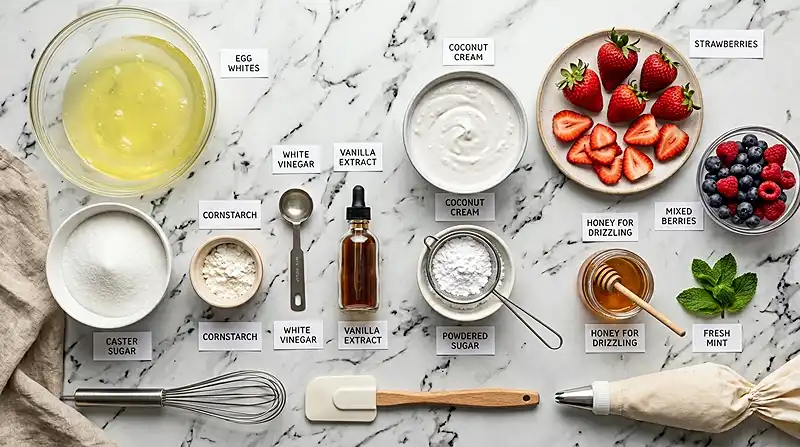
Ingredients
| For the Pavlovas | Amount | Notes |
|---|---|---|
| Large egg whites | 6 (225ml) | Room temperature; see note |
| Superfine sugar (caster sugar) | 1 cup (220-250g) | Adjust to taste |
| Cornstarch | 1 tablespoon | See notes |
| White vinegar | 1-1½ teaspoons | White wine or apple cider vinegar work |
| Vanilla extract | ½ teaspoon | Optional but recommended |
| For the Toppings | Amount | Notes |
|---|---|---|
| Canned coconut cream | 13 ounces | Chilled overnight |
| Powdered sugar | 2 tablespoons | Or sugar substitute |
| Vanilla extract | ½ teaspoon | |
| Sliced strawberries | ½-⅔ cup | Plus additional fruit of choice |
| Honey or maple syrup | Optional | For drizzling |
| Fresh mint leaves | Optional | For garnish |
Pro Tip: Separate eggs while they’re cold (it’s easier), then let the egg whites sit at room temperature for 30-60 minutes before whipping. Make sure not a single drop of yolk gets into the whites—even a tiny bit of fat will prevent them from reaching stiff peaks.
Step-by-Step Instructions
Make the Meringue
1. Prep the oven and baking tray.
Preheat your oven to 300°F (150°C) and line a large baking tray with parchment paper or a silicone baking mat. Don’t skip the liner—meringue sticks stubbornly to bare metal pans. Set aside.
2. Whip the egg whites to stiff peaks.
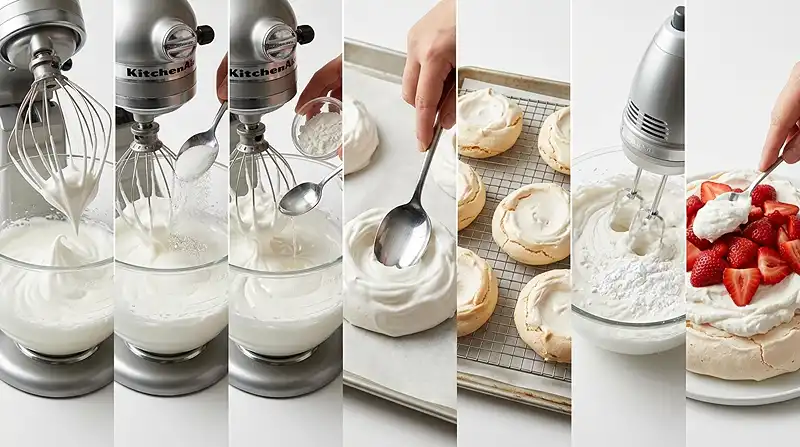
Add the room-temperature egg whites to the bowl of a stand mixer fitted with the whisk attachment (or use a large bowl and hand mixer). Whisk on medium-high speed for 2-3 minutes, until stiff peaks form—when you lift the whisk, the peaks should stand straight up without drooping.
3. Add the sugar gradually.
With the mixer still running on medium-high, add the superfine sugar 1 tablespoon at a time, letting the mixer run for 20 seconds between each addition before adding more. This gradual process takes 7-8 minutes total, but it’s crucial for dissolving the sugar completely. The meringue should look stiff, glossy, and almost marshmallow-like by the end—it should hold a firm peak and feel smooth (not grainy) when rubbed between your fingers.
4. Add the stabilizers.
Scrape down the sides of the bowl with a rubber spatula to incorporate any stray sugar or egg white. Add the white vinegar, cornstarch, and vanilla extract. Return the mixer to medium-high speed and whip for 2 more minutes until the mixture is glossy, smooth, and fully combined. The meringue should look like shiny white clouds.
5. Shape the pavlovas.
Use a large spoon or ice cream scoop to dollop 6-7 rounds of meringue onto the prepared baking tray, spacing them about 2 inches apart. Each mound should be 3-4 inches in diameter. Use the back of the spoon to create a small indentation (crevice) in the center of each meringue—this is where you’ll pile the coconut cream later.
Bake and Cool
6. Reduce the temperature and bake.
Reduce the oven temperature to 250°F (120°C) and immediately place the tray in the oven. Bake for 45 minutes to 1 hour, until the pavlovas are dry to the touch and very lightly golden on the edges. Mini pavlovas like these bake faster than one large pavlova, so start checking at 45 minutes—they should feel crisp on the outside but still have a slight give when pressed gently.
7. Cool in the oven with the door closed.
Turn off the oven but do not open the door. Let the pavlovas cool inside the oven for a full hour—this gradual cooling prevents cracking and sets the structure. Man, oh man… it’s tempting to peek, but opening that door early will ruin all your hard work. After an hour, the pavlovas should be completely cool, dry, and crisp on the outside with a soft, chewy center.
Make the Coconut Whipped Cream
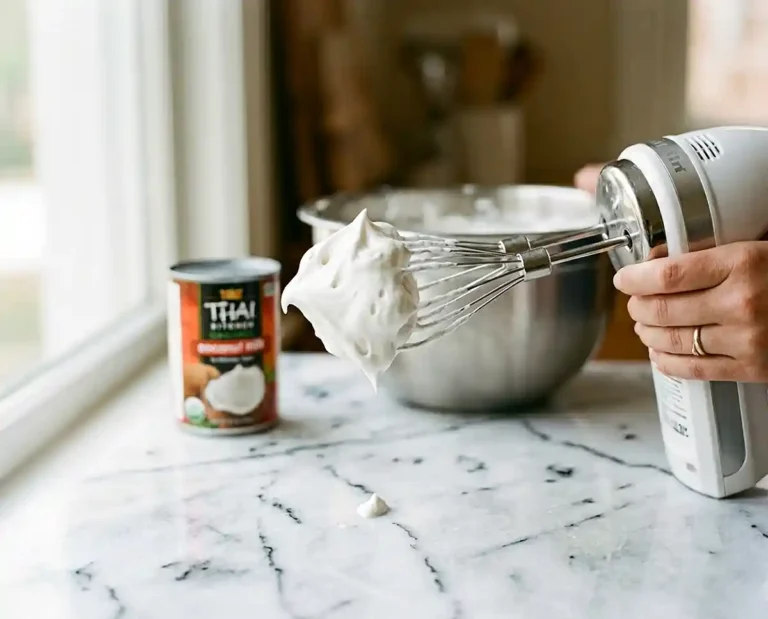
8. Whip the coconut cream.
While the pavlovas are cooling, make the topping. Scoop the chilled coconut cream into the cold bowl of a stand mixer or use a hand mixer with a cold bowl. Add the powdered sugar and vanilla extract. Whip on medium-high speed for 2-3 minutes, until stiff peaks form and the cream looks thick and spreadable. Coconut whipped cream is heavier than dairy whipped cream and may cause some cracking when you add it to the pavlovas—that’s normal and adds to the rustic charm.
Assemble and Serve
9. Top the pavlovas.
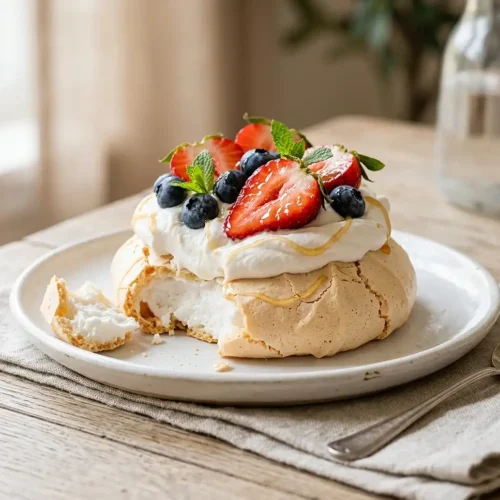
Once the pavlovas are completely cool, gently spread or pipe the coconut whipped cream into the center of each one, filling the indentation you made earlier. Top with sliced strawberries and any additional fresh fruit you like—kiwi, blueberries, mango, or passion fruit all work beautifully. Drizzle with a little honey or maple syrup if desired, and garnish with fresh mint leaves for a pop of color.
10. Serve immediately or store.
Pavlovas are best served within a few hours of topping—the coconut cream will eventually soften the meringue shell, so assemble them just before serving for the crispiest texture. Store any extra whipped coconut cream covered tightly in the refrigerator for up to 24 hours.
Make It Your Own (Substitutions & Variations)
Try different fruit toppings. Well… strawberries are classic, but this meringue dessert works with any fruit you love—try passion fruit pulp for tropical flair, fresh raspberries for tartness, or caramelized peaches for a summer twist. The fruit’s acidity balances the sweet meringue beautifully.
Make it nut-free (it already is!). This recipe is naturally nut-free as written—just make sure your vanilla extract is pure and doesn’t contain any almond or nut-based fillers. Perfect for serving at schools or gatherings where nut allergies are a concern.
Add lemon or almond extract for different flavors. Swap the vanilla extract for lemon extract in the meringue for a bright, citrusy flavor, or use almond extract for a subtle nutty note that pairs especially well with stone fruits like cherries or peaches.
Make one large pavlova instead of individual ones. Spoon all the meringue into one 8-9 inch round on the baking tray, creating a shallow well in the center. Bake at 250°F for 1 hour 15 minutes to 1 hour 30 minutes, then cool in the oven for 1 hour. Top with all the coconut cream and fruit for a dramatic centerpiece dessert.
Use aquafaba for a vegan version. Replace the 6 egg whites with ¾ cup (180ml) of aquafaba (the liquid from a can of chickpeas). Whip it the same way, adding sugar gradually—it takes about 10-12 minutes to reach stiff peaks instead of 7-8, but the result is remarkably similar to egg-based meringue.
Common Problems & Solutions
Problem: My meringue won’t reach stiff peaks.
Solution: There’s fat in your bowl or a trace of egg yolk in the whites. Even a tiny bit of fat prevents egg whites from whipping properly. Wash your bowl and whisk in hot, soapy water, rinse thoroughly, and dry completely before trying again. Make sure your eggs are at room temperature and that you separated them carefully—no yolk contamination.
Problem: The pavlovas cracked badly during baking.
Solution: You either opened the oven door too early or there was a sudden temperature change. Never open the oven during baking or cooling—even a quick peek releases steam and causes temperature fluctuations that crack the meringue. Also, make sure your oven isn’t running too hot—use an oven thermometer to verify the actual temperature.
Problem: The meringue is weeping (leaking syrup).
Solution: You didn’t dissolve the sugar completely or you overbaked them. Make sure to add the sugar gradually over 7-8 minutes and whip until the meringue feels completely smooth between your fingers. Overbaking at too high a temperature also causes weeping—stick to 250°F and check at 45 minutes for mini pavlovas.
Problem: The pavlovas are chewy all the way through, not crispy.
Solution: You didn’t bake them long enough or your oven was too cool. The exterior should be dry and crisp to the touch before you turn off the oven. If they’re still soft after the full baking time, turn the oven back on to 250°F for another 15 minutes, then cool again with the door closed.
Problem: The coconut cream won’t whip.
Solution: Your coconut cream wasn’t cold enough or you bought coconut milk instead of coconut cream. Chill the can in the fridge overnight so the cream solidifies and separates from the liquid. Use only the thick cream on top—don’t shake the can before opening. If your cream is too thin, refrigerate the bowl and whisk for 10 minutes, then try whipping again.
Storage & Meal Prep
| Method | Duration | Notes |
|---|---|---|
| Counter | 2-3 days | Store unfilled meringues in airtight container |
| Refrigerator | 1 day | Filled pavlovas soften quickly |
| Freezer | Not recommended | Meringue absorbs moisture and becomes sticky |
The meringue shells themselves can be made up to 3 days ahead and stored in an airtight container at room temperature—they’ll stay crispy as long as they’re protected from humidity. Whip the coconut cream and add the fruit just before serving for the best texture.
Meal prep tip: Make the meringues a day or two before your party, then store them in an airtight container lined with paper towels (to absorb any moisture). Chill the coconut cream overnight, then whip it and assemble the pavlovas right before serving. This way you can enjoy your guests instead of being stuck in the kitchen.
Dairy-Free Pavlova FAQs
Can you make pavlova dairy free?
Yes, this entire recipe is dairy-free as written. Traditional pavlova uses dairy whipped cream for topping, but coconut cream whips into stiff peaks just like heavy cream and tastes incredibly rich without any dairy products. The meringue base is naturally dairy-free (it’s just egg whites and sugar).
What is a dairy free cream alternative for pavlova?
Coconut cream is the best dairy-free alternative for pavlova topping. Use full-fat canned coconut cream (not coconut milk) that’s been chilled overnight—the thick cream separates from the liquid and whips into fluffy peaks. Other options include cashew cream or oat-based whipping cream, though they don’t whip as stiffly as coconut.
What can you use instead of cream in pavlova?
Besides coconut cream, you can use Greek yogurt (not dairy-free but tangy and thick), cashew cream (blend soaked cashews with a little water), or even lemon curd for a different flavor profile. According to the Vegetarian Society’s dairy alternatives guide, coconut cream has the closest texture to dairy whipped cream.
Can you make a pavlova without eggs?
Yes, use aquafaba (chickpea brine) instead of egg whites. Use ¾ cup (180ml) of aquafaba to replace 6 egg whites—drain it from a can of chickpeas and whip it the same way, adding sugar gradually. It takes a bit longer to reach stiff peaks (10-12 minutes), but it creates a vegan meringue that’s remarkably similar to the traditional version.
Are meringue dairy free?
Yes, traditional meringue is made from only egg whites, sugar, and sometimes acid (like vinegar) or cornstarch—no dairy at all. However, the topping for pavlova traditionally includes dairy whipped cream, so you need to use a dairy-free alternative like coconut cream (as in this recipe) to keep the entire dessert dairy-free.
Serving Suggestions
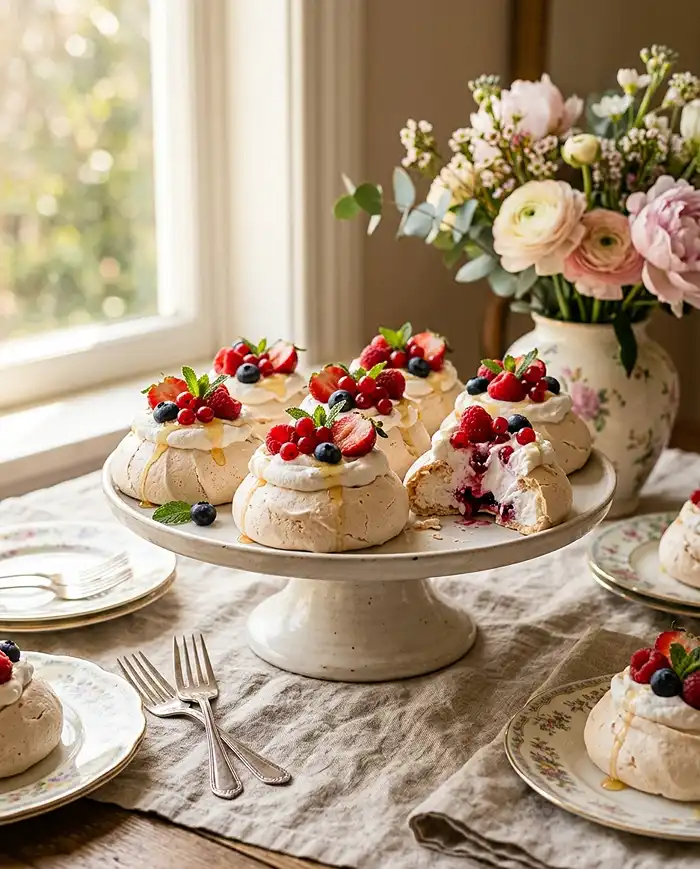
Serve this dairy-free pavlova as the stunning finale to your Easter brunch alongside gluten-free spinach strawberry salad for a light, fresh meal. The meringue’s sweetness pairs beautifully with the savory richness of gluten-free prime rib roast if you’re planning a full holiday dinner.
For a complete spring dessert spread, offer individual pavlovas alongside gluten-free coconut cream pie for guests who want something more traditional. The combination of crispy meringue, fluffy coconut cream, and fresh berries makes this dessert feel celebratory without being too heavy after a big meal.
Ready to Make Your Best Pavlova?
This pavlova dairy free recipe has become my secret weapon for impressing guests—it looks like you spent hours in the kitchen when you really just whisked egg whites and let the oven do the work. The crispy-chewy texture and cloud-light coconut cream create a dessert that’s as beautiful as it is delicious, and the fact that it’s naturally gluten-free and dairy-free means everyone at the table can enjoy it.
Try these individual pavlovas this weekend and let me know in the comments what fruit you topped them with—did you go classic with strawberries, or experiment with tropical fruits? Pin this to your gluten-free Easter desserts board on Pinterest so you can find it again when spring rolls around, and don’t forget to rate it below if it becomes your new go-to showstopper!
Dairy-Free Pavlova
Equipment
- Stand mixer or hand mixer
- Large baking tray
- Parchment paper or silicone baking mat
- Rubber spatula
- Large spoon or ice cream scoop
- Whisk attachment
- Mixing bowls
- Oven thermometer (recommended)
Ingredients
For the Pavlovas
- 6 large egg whites 225ml; room temperature
- 1 cup superfine sugar caster sugar; 220-250g; adjust to taste
- 1 tablespoon cornstarch
- 1-1 ½ teaspoons white vinegar white wine or apple cider vinegar work
- ½ teaspoon vanilla extract optional but recommended
For the Toppings
- 13 ounces canned coconut cream chilled overnight
- 2 tablespoons powdered sugar or sugar substitute
- ½ teaspoon vanilla extract
- ½ to ⅔ cup sliced strawberries plus additional fruit of choice
- honey or maple syrup optional; for drizzling
- fresh mint leaves optional; for garnish
Instructions
- Preheat your oven to 300°F (150°C) and line a large baking tray with parchment paper or a silicone baking mat. Set aside.
- Add the room-temperature egg whites to the bowl of a stand mixer fitted with the whisk attachment (or use a large bowl and hand mixer). Whisk on medium-high speed for 2-3 minutes, until stiff peaks form—when you lift the whisk, the peaks should stand straight up without drooping.
- With the mixer still running on medium-high, add the superfine sugar 1 tablespoon at a time, letting the mixer run for 20 seconds between each addition. This gradual process takes 7-8 minutes total. The meringue should look stiff, glossy, and almost marshmallow-like by the end.
- Scrape down the sides of the bowl with a rubber spatula. Add the white vinegar, cornstarch, and vanilla extract. Return the mixer to medium-high speed and whip for 2 more minutes until the mixture is glossy, smooth, and fully combined.
- Use a large spoon or ice cream scoop to dollop 6-7 rounds of meringue onto the prepared baking tray, spacing them about 2 inches apart. Each mound should be 3-4 inches in diameter. Use the back of the spoon to create a small indentation in the center of each meringue.
- Reduce the oven temperature to 250°F (120°C) and immediately place the tray in the oven. Bake for 45 minutes to 1 hour, until the pavlovas are dry to the touch and very lightly golden on the edges. They should feel crisp on the outside but still have a slight give when pressed gently.
- Turn off the oven but do not open the door. Let the pavlovas cool inside the oven for a full hour. After an hour, the pavlovas should be completely cool, dry, and crisp on the outside with a soft, chewy center.
- While the pavlovas are cooling, make the topping. Scoop the chilled coconut cream into the cold bowl of a stand mixer or use a hand mixer with a cold bowl. Add the powdered sugar and vanilla extract. Whip on medium-high speed for 2-3 minutes, until stiff peaks form and the cream looks thick and spreadable.
- Once the pavlovas are completely cool, gently spread or pipe the coconut whipped cream into the center of each one. Top with sliced strawberries and any additional fresh fruit. Drizzle with honey or maple syrup if desired, and garnish with fresh mint leaves.