Dairy Free Seared Steak
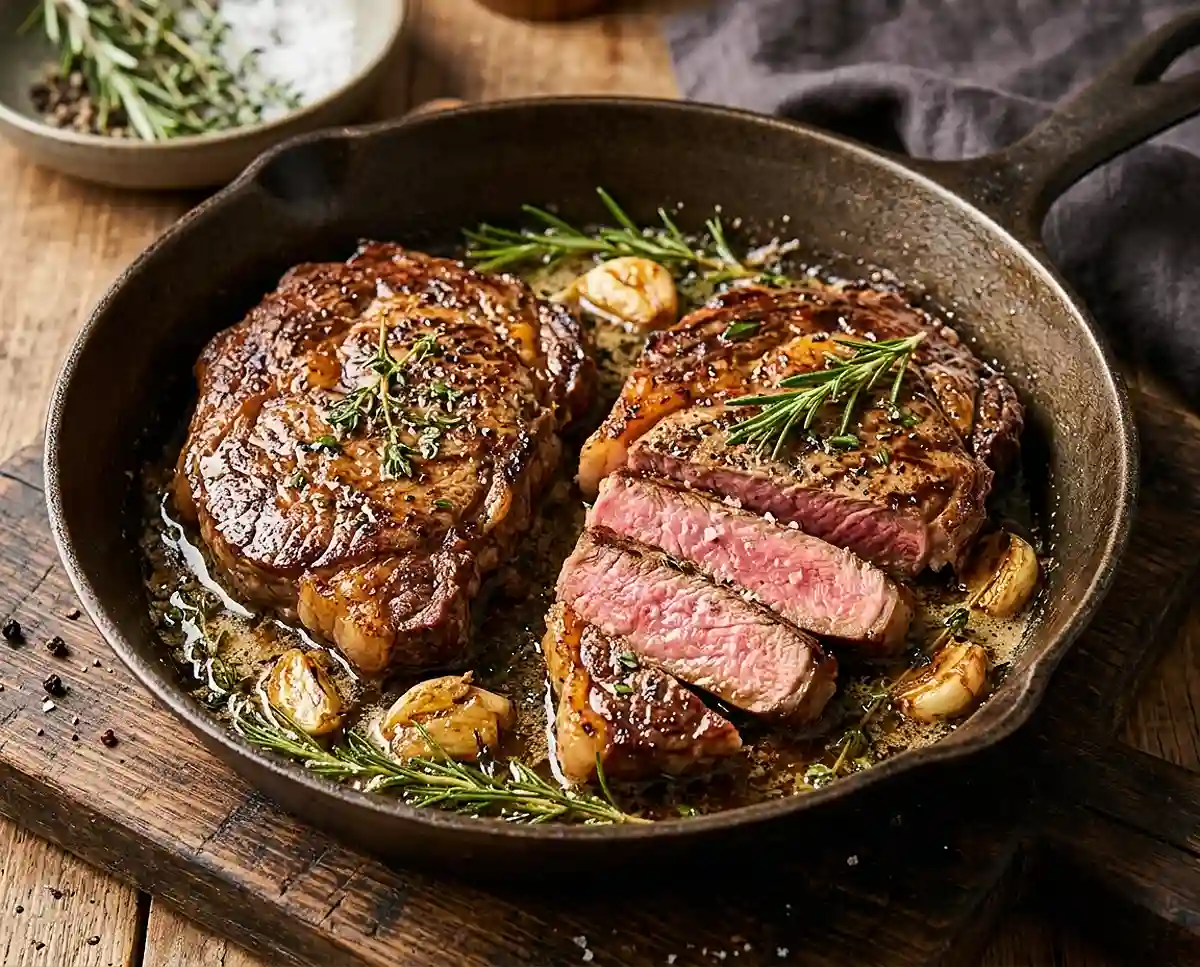
Dairy Free Seared Steak with Garlic Herb Butter—crispy crust, juicy center, aromatic basting. Restaurant flavor in 15 minutes with cast iron!
Three years ago, I tried to impress my dairy-free brother-in-law with a fancy steak dinner and ended up serving him a gray, rubbery piece of meat that bounced off his plate like a hockey puck. I’d skipped the sear, used cold meat straight from the fridge, and basically committed every steak crime possible.
That disaster taught me that making dairy-free seared steak with garlic herb butter isn’t about expensive cuts or fancy equipment—it’s about high heat, patience, and that final butter-basting step that transforms good steak into restaurant-worthy perfection.
Why You’ll Love This Dairy-Free Seared Steak
- Restaurant-quality crust and flavor with a mahogany-brown exterior and juicy, medium-rare center—no grill required
- 15 minutes from start to finish using just one cast iron skillet and pantry staples you probably already have
- Dairy-free garlic herb butter that tastes so rich and aromatic, no one will guess it’s made without real butter
- Foolproof technique that works for beginners—the two-minute sear on each side takes the guesswork out of timing and prevents overcooking
The Secret to Perfect Dairy-Free Seared Steak
Room-temperature steak is the foundation of even cooking. Cold steak straight from the fridge will overcook on the outside before the center warms up, creating that dreaded gray band of overcooked meat. According to Serious Eats’ steak science guide, letting steak sit at room temperature for 30-60 minutes before cooking ensures the interior cooks at the same rate as the exterior, giving you edge-to-edge pink perfection.
High heat and a dry surface create the Maillard reaction. Patting the steak completely dry with paper towels removes surface moisture that would steam the meat instead of searing it. When dry meat hits a screaming-hot pan, the proteins and sugars undergo the Maillard reaction—a chemical transformation that creates hundreds of flavor compounds and that coveted brown crust.
Butter-basting infuses flavor while keeping the steak juicy. After the initial sear, adding dairy-free butter with smashed garlic and fresh herbs creates an aromatic fat that you spoon over the steak repeatedly. This butter basted steak technique (called arroser in French kitchens) bastes the top surface, adds moisture, and infuses every bite with garlic and herb flavor without masking the beef.
Resting redistributes the juices. When you cut into steak immediately after cooking, the juices run out onto the cutting board and you’re left with dry meat. The USDA’s meat safety guidelines confirm that a 5-minute rest allows the muscle fibers to relax and reabsorb moisture, ensuring every slice is tender and juicy.
Table of Contents
Dairy Free Seared Steak Ingredients
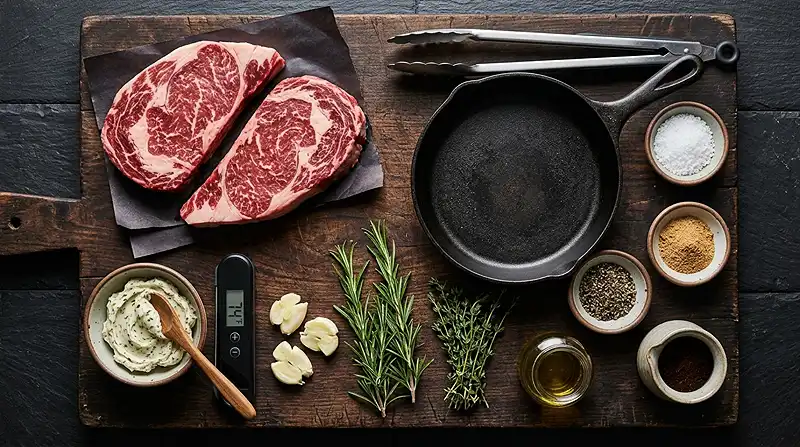
| Ingredient | Amount | Notes |
|---|---|---|
| Ribeye steaks (room temperature) | 2 | Or New York strip; 1-1½ inches thick |
| Dairy-free butter | 5 tablespoons | Miyoko’s or Earth Balance work best |
| Garlic cloves (peeled and smashed) | 3 | Smashing releases more flavor than mincing |
| Fresh rosemary | 2 sprigs | Woody herbs withstand high heat |
| Fresh thyme | 5 sprigs | Adds floral, earthy notes |
| Kosher salt | ½ teaspoon | Per steak; use coarse salt for better crust |
| Black pepper | ½ teaspoon | Freshly ground for best flavor |
| Umami powder | ½ teaspoon | Optional; adds savory depth |
| Olive oil | 1 tablespoon | High smoke point for searing |
Pro Tip: Choose steaks that are at least 1 inch thick—thinner cuts overcook before developing a proper crust. Ribeye has the most marbling and stays juiciest, but New York strip or sirloin work beautifully too.
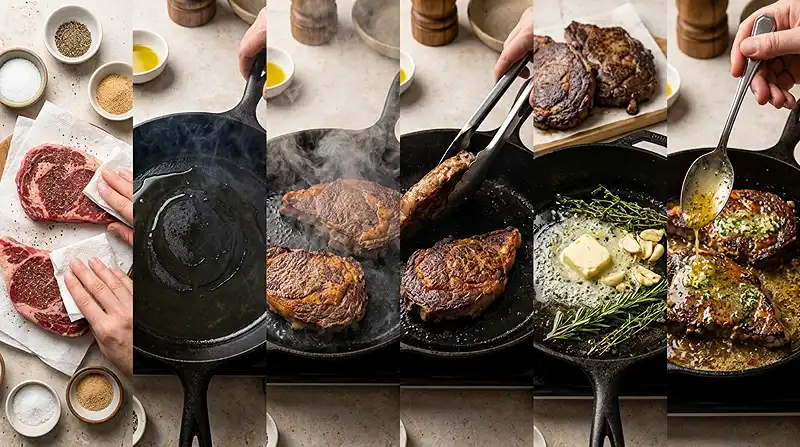
Step-by-Step Instructions
1. Bring the steaks to room temperature.
Remove the ribeye steaks from the refrigerator 30-60 minutes before cooking and let them sit on the counter, loosely covered. This ensures the center cooks evenly with the exterior instead of staying cold and raw while the outside overcooks.
2. Heat the skillet until smoking hot.
Place a large cast iron skillet (or heavy stainless steel pan) over high heat and let it preheat for 3-5 minutes until it’s screaming hot—you should see wisps of smoke rising from the surface. Add the olive oil and swirl to coat the bottom evenly.
3. Season and dry the steaks.
Pat both sides of the steaks completely dry with paper towels—this step is critical for developing that caramelized crust. Season both sides generously with kosher salt, black pepper, and umami powder, pressing the seasonings into the meat with your fingers.
4. Sear the first side for 2 minutes.
Carefully lay the steaks into the hot pan away from you to avoid splattering oil. Don’t move them, don’t press them, don’t touch them—just let them sear undisturbed for exactly 2 minutes. You should hear a loud sizzle immediately; if not, your pan wasn’t hot enough. The steak will release easily when a crust has formed.
5. Flip and sear the second side for 2 minutes.
Use tongs to flip the steaks and sear the second side for 2 minutes, or until they reach your desired doneness (thinner steaks will cook faster, thicker ones may need an extra 30-60 seconds per side). For medium-rare, the internal temperature should be 125-130°F when you remove them from the pan—they’ll continue cooking as they rest.
6. Remove the steaks and make the herb butter.
Transfer the seared steaks to a plate or cutting board to rest. Reduce the heat to medium and add the dairy-free butter, smashed garlic cloves, rosemary sprigs, and thyme sprigs to the hot pan. The butter will melt and sizzle, and the garlic should just begin to turn golden and fragrant—about 1 minute.
7. Baste the steaks with the herb butter.
Return the steaks to the pan along with any accumulated juices from the resting plate. Tilt the pan slightly so the melted herb butter pools on one side, then use a large spoon to scoop up the butter and drizzle it over the top of the steaks repeatedly for 1-2 minutes. Man, oh man… watching that golden butter cascade over the beef and smelling the garlic and herbs is the best part of cooking steak. This butter basted steak technique adds incredible flavor and keeps the surface moist.
8. Rest and slice.
Transfer the steaks to a clean cutting board and let them rest for 5 minutes before slicing—this allows the juices to redistribute throughout the meat instead of running out when you cut into it. Slice against the grain (perpendicular to the muscle fibers) for the most tender bites.
9. Serve with the herb butter.
Arrange the sliced steak on plates and spoon the garlic-herb butter from the pan over the top, making sure each portion gets some of those golden garlic cloves and crispy herb bits. The butter will melt into the meat and create a rich, aromatic sauce that tastes like it came from a Michelin-starred kitchen.
Make It Your Own (Substitutions & Variations)
Try different cuts of steak. Ribeye is the most forgiving because of its high fat content, but New York strip, sirloin, or even flank steak work with this method. Adjust the cooking time based on thickness—thinner cuts like flank need only 90 seconds per side, while thick bone-in ribeyes may need 3 minutes per side.
Swap the herbs for different flavors. Rosemary and thyme are classic, but try fresh sage and oregano for an Italian twist, or cilantro and lime zest for a Southwestern vibe. Well… you can even add a sprig of tarragon for a French-inspired herb butter that’s slightly anise-flavored and sophisticated.
Make it extra savory with compound butter. Mix softened dairy-free butter with minced garlic, chopped fresh herbs, lemon zest, and a pinch of salt ahead of time, then roll it into a log and refrigerate. Slice off a round and place it on top of the hot steak to melt—it’s like having restaurant steak butter service at home.
Add a finishing sauce. After basting, deglaze the pan with ¼ cup of red wine or beef broth, scraping up the browned bits, and reduce it by half to create a quick pan sauce. Pour this over the sliced steak for an extra layer of richness.
Cook for a crowd. This method scales perfectly—you can cook 4 steaks in a large pan using the same technique, or work in batches and keep the cooked steaks warm in a 200°F oven while you finish the rest.
Common Problems & Solutions
Problem: My steak is gray and steamed, not browned.
Solution: Your pan wasn’t hot enough or the steak was too wet. Preheat the skillet for a full 3-5 minutes until it’s smoking, and pat the steak completely dry with paper towels before seasoning—any surface moisture will cause steaming instead of searing. Also, make sure you’re not overcrowding the pan; if the steaks touch, they’ll steam each other.
Problem: The outside is burnt but the inside is raw.
Solution: Your heat was too high or your steak was too thick. If using steaks over 1½ inches thick, sear them on high heat for 2 minutes per side, then transfer the whole pan to a 400°F oven for 3-5 minutes to finish cooking the center. Use an instant-read thermometer to check doneness (125°F for medium-rare).
Problem: The steak is tough and chewy.
Solution: You either overcooked it or sliced with the grain instead of against it. Aim for an internal temperature of 125-130°F for medium-rare—any higher and the proteins seize up and squeeze out moisture. When slicing, look for the direction the muscle fibers run and cut perpendicular to them; this shortens the fibers and makes each bite more tender.
Problem: The garlic burned and tastes bitter.
Solution: You added the garlic to the hot pan before reducing the heat, or you left it in too long. Always reduce the heat to medium before adding the butter and aromatics, and only let the garlic turn lightly golden (about 1 minute)—dark brown or black garlic is acrid and bitter.
Problem: The dairy-free butter separated or looks oily.
Solution: You overheated it or chose a low-quality brand. Dairy-free butter can separate at very high temperatures, so reduce the heat to medium before adding it. Brands like Miyoko’s and Earth Balance have better emulsifiers and hold together better than generic store brands.
Storage & Meal Prep
| Method | Duration | Notes |
|---|---|---|
| Counter | Up to 2 hours | Cover loosely; best enjoyed fresh |
| Refrigerator | 3-4 days | Store in airtight container; reheat gently |
| Freezer | 2-3 months | Wrap tightly in foil, then freezer bag; thaw in fridge overnight |
To reheat leftover steak without overcooking it, place slices in a low oven (250°F) for 10-15 minutes, or sear quickly in a hot pan for 30 seconds per side—microwaving will turn it gray and rubbery. Leftover steak is incredible sliced thin for salads, grain bowls, or steak sandwiches the next day.
Meal prep tip: You can prep the dairy-free herb butter up to a week ahead—just mix the softened butter with minced garlic and chopped herbs, roll it into a log in plastic wrap, and refrigerate. Slice off a round to melt over each freshly cooked steak for instant flavor.
Dairy Free Seared Steak FAQs
Can I use a regular pan instead of cast iron?
Yes, any heavy-bottomed skillet works—stainless steel is great, but avoid nonstick pans because they can’t handle the high heat needed for a proper sear. Cast iron is ideal because it retains heat evenly and creates the best crust, but a thick stainless pan runs a close second.
What’s the best internal temperature for medium-rare steak?
Aim for 125-130°F when you remove it from the pan—the temperature will rise another 5 degrees as it rests, landing you at a perfect 130-135°F. Use an instant-read thermometer inserted into the thickest part (avoiding bone or fat) for the most accurate reading.
Can I make this without the umami powder?
Absolutely—it’s optional and just adds extra savory depth. If you don’t have it, a tiny sprinkle of soy sauce or Worcestershire sauce (check for gluten-free versions) brushed on before searing works similarly. Or just skip it entirely; salt and pepper are the foundation of great steak seasoning.
How do I know when the pan is hot enough?
Hold your hand about 6 inches above the pan—if you can only hold it there for 1-2 seconds before it’s uncomfortably hot, you’re ready. Or flick a drop of water into the pan; if it evaporates instantly in a puff of steam, you’ve reached the right temperature.
What should I serve with this dairy-free seared steak?
Roasted vegetables, mashed potatoes (make them dairy-free with olive oil or dairy-free butter), a crisp green salad, or garlic bread all pair beautifully. For a complete meal, check out gluten-free Tuscan butter salmon for seafood lovers or gluten-free chia pudding parfait for a light dessert.
Serving Suggestions
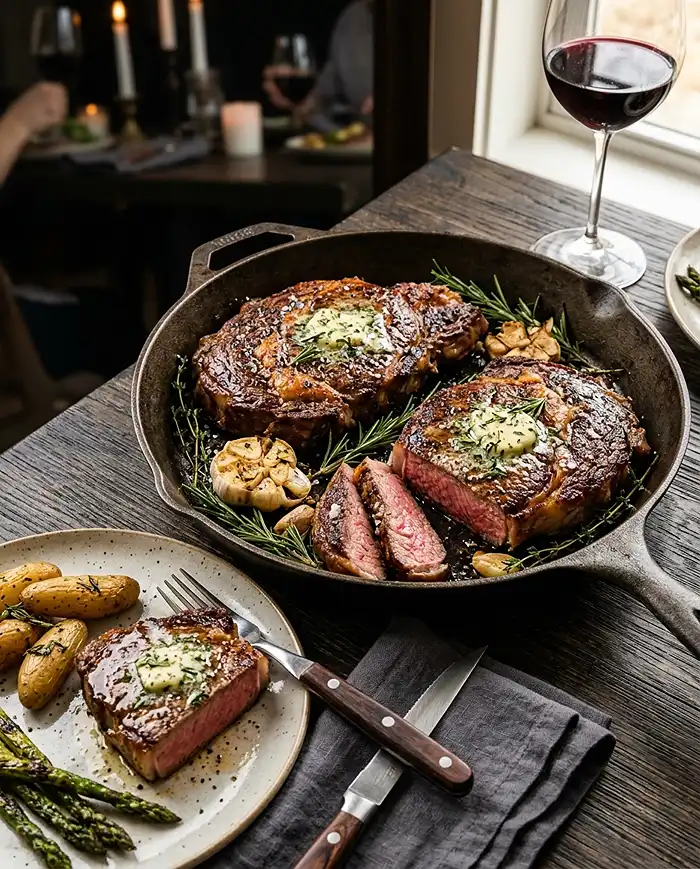
Serve this dairy-free seared steak with garlic herb butter alongside roasted asparagus, creamy mashed potatoes, or a wedge salad with dairy-free ranch for a classic steakhouse dinner at home. It’s the perfect centerpiece for Father’s Day, Valentine’s Day, or any date night when you want to impress without spending hours in the kitchen. The leftovers make an incredible steak salad the next day—just slice the cold steak thin and toss it with mixed greens, cherry tomatoes, and balsamic vinaigrette.
For a complete gluten-free and dairy-free menu, pair this with gluten-free Tuscan butter salmon if you’re serving a surf-and-turf spread, or start with gluten-free Dubai chocolate bars for a decadent dessert that’ll have everyone talking. Round out the meal with a light gluten-free chia pudding parfait for guests who want something sweet but not too heavy.
Ready to Cook Restaurant-Quality Steak at Home?
This dairy-free seared steak with garlic herb butter has saved countless dinners in our house—it’s my secret weapon when I need something impressive but don’t have time to fuss. The two-minute sear and butter-basting technique takes all the guesswork out of cooking steak, and that aromatic herb butter makes everyone think you spent hours instead of 15 minutes.
Try this recipe this weekend and let me know in the comments which cut you used and how it turned out—did you go with ribeye for maximum richness, or keep it lean with sirloin? Pin this to your gluten-free dinner ideas board on Pinterest so you can find it again when you need a special meal fast, and don’t forget to rate it below if it becomes your new go-to cast iron steak method!
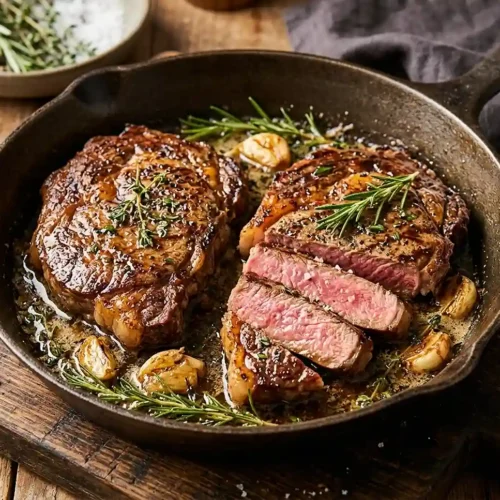
Dairy-Free Seared Steak with Garlic Herb Butter
Equipment
- Large cast iron skillet or heavy stainless steel pan
- Tongs
- Paper towels
- Large spoon for basting
- Instant-read thermometer (optional)
- Cutting board
- Sharp knife
Ingredients
- 2 ribeye steaks room temperature, 1-1½ inches thick
- 5 tablespoons dairy-free butter Miyoko’s or Earth Balance recommended
- 3 garlic cloves peeled and smashed
- 2 sprigs fresh rosemary
- 5 sprigs fresh thyme
- ½ teaspoon kosher salt
- ½ teaspoon black pepper
- ½ teaspoon umami powder optional
- 1 tablespoon olive oil
Instructions
- Remove the ribeye steaks from the refrigerator 30-60 minutes before cooking and let them sit on the counter, loosely covered, to bring them to room temperature.
- Place a large cast iron skillet over high heat and let it preheat for 3-5 minutes until screaming hot and wisps of smoke rise from the surface. Add the olive oil and swirl to coat the bottom evenly.
- Pat both sides of the steaks completely dry with paper towels. Season both sides generously with kosher salt, black pepper, and umami powder, pressing the seasonings into the meat with your fingers.
- Carefully lay the steaks into the hot pan away from you to avoid splattering. Don’t move them—let them sear undisturbed for exactly 2 minutes. You should hear a loud sizzle immediately.
- Use tongs to flip the steaks and sear the second side for 2 minutes, or until they reach your desired doneness (thinner steaks cook faster; thicker ones may need an extra 30-60 seconds per side). For medium-rare, the internal temperature should be 125-130°F.
- Transfer the seared steaks to a plate or cutting board to rest. Reduce the heat to medium and add the dairy-free butter, smashed garlic cloves, rosemary sprigs, and thyme sprigs to the hot pan. Let the butter melt and the garlic begin to turn golden and fragrant, about 1 minute.
- Return the steaks to the pan along with any accumulated juices. Tilt the pan slightly so the melted herb butter pools on one side, then use a large spoon to scoop up the butter and drizzle it over the top of the steaks repeatedly for 1-2 minutes.
- Transfer the steaks to a clean cutting board and let them rest for 5 minutes. This allows the juices to redistribute throughout the meat.
- Slice the steak against the grain (perpendicular to the muscle fibers) for the most tender bites. Arrange the sliced steak on plates and spoon the garlic-herb butter from the pan over the top, including the golden garlic cloves and crispy herb bits.