Deviled Eggs Recipe
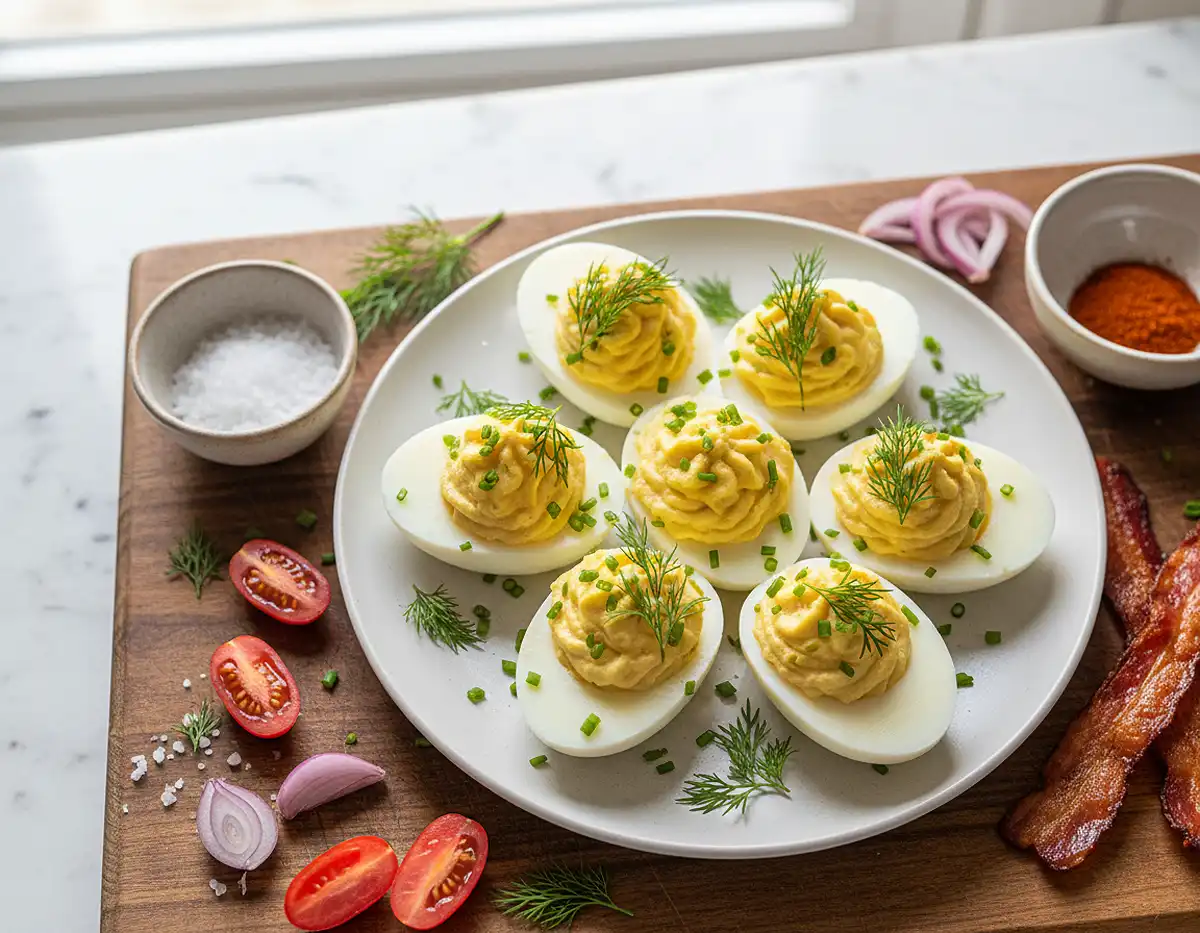
Deviled eggs are the elevated party snack your gathering needs. This foolproof recipe delivers creamy yolk filling with a tangy twist every time.
You know what never fails at a family gathering? Deviled eggs. They’re the first thing to disappear from the table—whether it’s Easter brunch, a summer cookout, or Thanksgiving appetizers.
I’ll never forget the first time I made deviled eggs for my husband’s family reunion. I was so nervous about getting them just right, but honestly? This recipe made me look like a kitchen genius. The creamy yolk filling was so smooth and tangy that people kept asking for my “secret.”
Here’s the thing about deviled eggs: they’re way easier than they look. This classic recipe uses simple ingredients you probably already have, and the result is that perfect balance of rich, creamy, and just a little bit zippy. Whether you’re a gluten-free beginner or just looking for a reliable elevated party snack, these beauties have your back.
Table of Contents
Ingredients
| Ingredient | Amount |
|---|---|
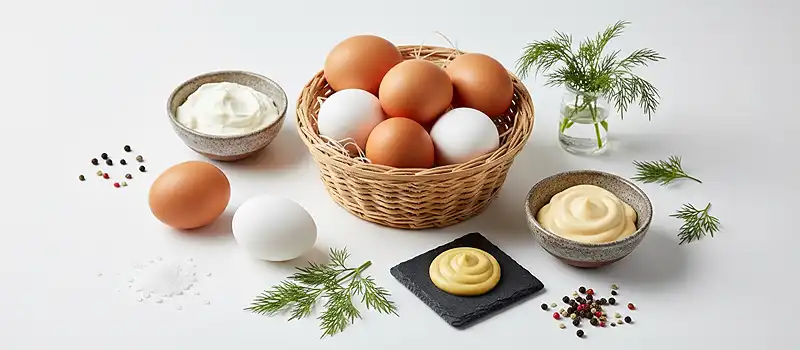
| Eggs, rinsed and dried | 6 large |
| Crème fraîche | 3 tablespoons |
| Mayonnaise | 2 tablespoons |
| Dijon mustard | 1 teaspoon |
| Salt | ¼ teaspoon |
| Cracked black pepper | ¼ teaspoon |
| Small dill fronds, for topping | 12 |
Instructions
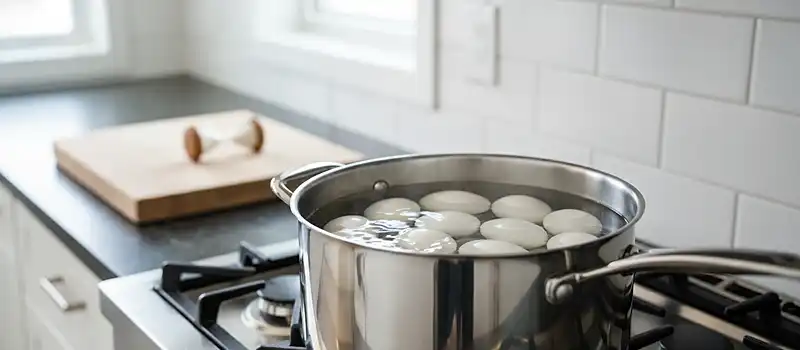
Step 1: Add the eggs to a small saucepan and cover with cold water. The water should cover the eggs by about 1 inch to ensure even cooking. Bring to a rolling boil over medium-high heat, then immediately remove from the heat and cover the pan with a tight-fitting lid for 10 to 12 minutes.
Step 2: Immediately remove the eggs from the hot water using a slotted spoon and plunge them into a bath of ice and water. This stops the cooking process and makes peeling so much easier. Allow the eggs to cool completely, about 5 minutes, until they’re cool to the touch.
Step 3: Once cooled, gently tap each egg on the counter and roll to crack the shell all over, then peel under cool running water. Slice each egg in half lengthwise and carefully remove the yolks, placing them into a small bowl while keeping the whites intact.
Step 4: Mash the yolks with a fork until they’re very finely crumbled with no lumps remaining—this is key for that silky texture. Add the mayonnaise, crème fraîche, Dijon mustard, and salt, then stir vigorously until the mixture transforms into a smooth, creamy filling that’s almost fluffy. Taste and add more salt if you’d like a little extra punch.
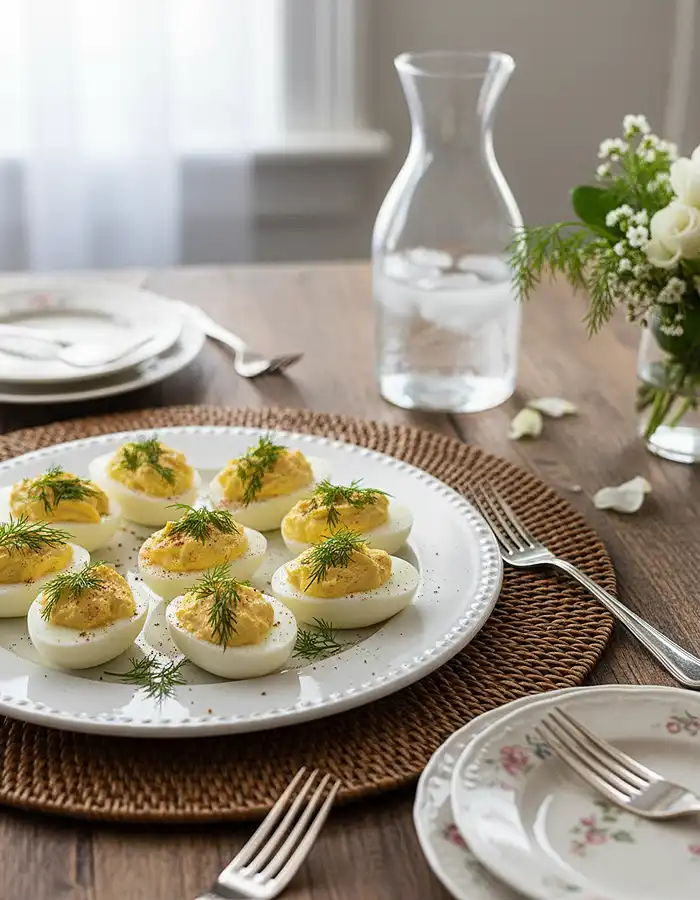
Step 5: Spoon or pipe the creamy yolk filling into the empty egg white halves until all 12 halves are generously filled. Crack fresh black pepper on top of each deviled egg, then finish with a small dill frond for that classic garnish and a pop of freshness.
Substitutions
Instead of crème fraîche: You can use sour cream or Greek yogurt for a similar tangy richness in your deviled eggs. The texture will be just as creamy, though Greek yogurt adds a bit more protein if that’s your thing.
For a dairy-free version: Swap the crème fraîche for additional mayonnaise (use a total of 5 tablespoons) and make sure your mayo is dairy-free. The filling will still be luxuriously smooth and satisfying.
Yellow mustard instead of Dijon: Classic yellow mustard works beautifully if that’s what you have on hand. It gives these deviled eggs that traditional 1940s mainstay flavor many people grew up loving.
Fresh herbs: No dill? Try fresh chives, parsley, or even tiny basil leaves as inventive twists on the classic garnish. Each brings its own personality to this elevated party snack.
Troubleshooting
Eggs won’t peel smoothly? Older eggs (about a week old) peel much easier than super fresh ones. If you’re stuck with fresh eggs, adding a teaspoon of baking soda to the boiling water can help loosen those stubborn shells.
Yolk filling too thick? Add an extra tablespoon of crème fraîche or a tiny splash of pickle juice to thin it out. You want a consistency that’s creamy enough to pipe but thick enough to hold its shape in the egg whites.
Green ring around the yolks? That happens when eggs are overcooked or not cooled quickly enough. It’s totally safe to eat, but the ice bath trick prevents it and keeps your deviled eggs looking picture-perfect.
Filling tastes bland? Don’t be shy with the salt and mustard! According to trusted culinary science research, eggs need more seasoning than you think because the proteins can mute flavors.
Storage
Store your deviled eggs in an airtight container in the refrigerator for up to 2 days. Place a slightly damp paper towel over them before sealing to keep the filling from drying out, and they’ll stay creamy and delicious.
For best results, add the dill fronds and black pepper right before serving rather than in advance. This keeps everything looking fresh and the herbs from wilting.
Serving Suggestions
Serve these deviled eggs on a pretty platter alongside fresh veggies, crackers, or as part of a larger appetizer spread. They pair beautifully with sparkling water, white wine, or even a crisp rosé at your next gathering.
Man, oh man, these also make an excellent protein-packed snack for meal prep! Keep a few in the fridge for a quick bite between meetings or after a workout.
Variations
Bacon deviled eggs: Crumble crispy bacon over the top instead of dill for a smoky, savory twist that always disappears fast. You can even mix a tablespoon of bacon bits right into the creamy yolk filling for maximum bacon flavor.
Spicy kick: Add a pinch of smoked paprika or cayenne pepper to the filling, or top with a thin slice of jalapeño. These inventive twists transform classic deviled eggs into something with a little heat.
Avocado deviled eggs: Mash half an avocado into the yolk mixture for extra creaminess and healthy fats. This variation is naturally dairy-free if you skip the crème fraîche and use all mayo.
Kid-friendly version: Replace the Dijon with a tiny bit of honey mustard and skip the black pepper. Kids love the slightly sweet flavor, and it’s a great way to get them eating protein at parties.
Deviled Eggs Recipe FAQs
What makes a deviled egg deviled?
The term “deviled” refers to the spicy or zesty seasoning—usually mustard or hot sauce—that gives the filling its tangy kick. It’s been used in cooking since the 18th century to describe foods with bold, piquant flavors.
Can I make deviled eggs ahead of time?
Absolutely! You can prep these up to one day ahead and store them covered in the fridge. Just wait to add the final garnishes like pepper and dill until right before serving so everything looks fresh.
How do I get perfectly centered yolks?
Store your eggs on their sides in the carton for a day before boiling. Gently stir the water during the first minute of boiling to help the yolks settle in the center as they cook.
Why do they call it devilled eggs?
The culinary term “deviled” has been around since the 1700s and originally meant highly seasoned or spicy. According to authoritative food history sources, it was used to describe any dish with bold mustard, pepper, or hot seasonings.
More Gluten-Free Favorites
Looking for more crowd-pleasing appetizers and sides? Try my vibrant strawberry rhubarb chia jam perfect for spreading on gluten-free crackers, or branch out with these Indonesian pork satay skewers with rica-rica sambal for adventurous party menus.
Well… if you’re planning a full meal, this creamy gluten-free salmon pasta is always a showstopper. These deviled eggs make the perfect starter before diving into something heartier.
Final Thoughts
These classic deviled eggs prove that simple ingredients can create something truly special. Whether you’re new to gluten-free cooking or a seasoned pro, this recipe delivers every single time with minimal fuss and maximum flavor. The creamy, tangy filling paired with those herbaceous dill fronds? That’s the kind of elevated party snack that makes people think you spent hours in the kitchen when it really only took about 20 minutes.

Deviled Eggs Recipe
Equipment
- Small saucepan
- Slotted spoon
- Small bowl
- Fork
- Serving platter
Ingredients
- 6 large eggs rinsed and dried
- 3 tablespoons crème fraîche
- 2 tablespoons mayonnaise
- 1 teaspoon Dijon mustard
- ¼ teaspoon salt
- ¼ teaspoon cracked black pepper
- 12 small dill fronds for topping
Instructions
- Add the eggs to a small saucepan and cover with cold water. The water should cover the eggs by about 1 inch to ensure even cooking. Bring to a rolling boil over medium-high heat, then immediately remove from the heat and cover the pan with a tight-fitting lid for 10 to 12 minutes.
- Immediately remove the eggs from the hot water using a slotted spoon and plunge them into a bath of ice and water. This stops the cooking process and makes peeling so much easier. Allow the eggs to cool completely, about 5 minutes, until they’re cool to the touch.
- Once cooled, gently tap each egg on the counter and roll to crack the shell all over, then peel under cool running water. Slice each egg in half lengthwise and carefully remove the yolks, placing them into a small bowl while keeping the whites intact.
- Mash the yolks with a fork until they’re very finely crumbled with no lumps remaining—this is key for that silky texture. Add the mayonnaise, crème fraîche, Dijon mustard, and salt, then stir vigorously until the mixture transforms into a smooth, creamy filling that’s almost fluffy. Taste and add more salt if you’d like a little extra punch.
- Spoon or pipe the creamy yolk filling into the empty egg white halves until all 12 halves are generously filled. Crack fresh black pepper on top of each deviled egg, then finish with a small dill frond for that classic garnish and a pop of freshness.