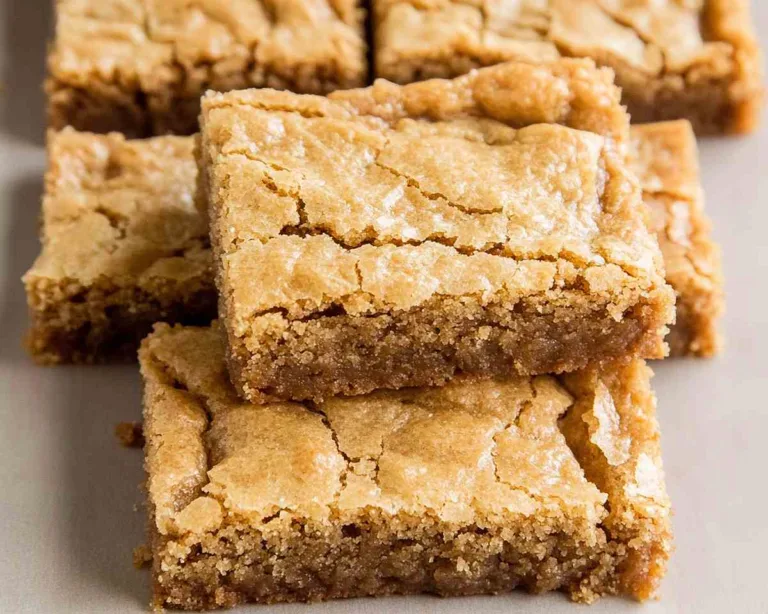

Gluten-Free Almond Croissants
These Gluten-Free Almond Croissants feature tender yeasted dough and rich almond paste filling. A dreamy French breakfast ready in about 3 hours!
Well… few things in life compare to biting into a warm almond croissant fresh from the oven—that tender, buttery pastry giving way to sweet, fragrant almond filling, topped with a snow-dusting of powdered sugar. For years after my celiac diagnosis, I walked past bakery windows with a heavy heart, convinced that this particular pleasure was forever out of reach.
What transforms a simple pastry into something worth savoring slowly with your morning coffee? Is it the rich almond paste hiding inside, the satisfying contrast of tender dough and crunchy sliced almonds, or simply the joy of eating something beautiful that you made yourself? These Gluten-Free Almond Croissants deliver all of the above—a French breakfast experience that proves going gluten-free never means going without.
Table of Contents
Quick Overview
- Prep Time: 25 minutes
- Rise Time: 2½ hours (total)
- Bake Time: 20 minutes
- Total Time: 3 hours 15 minutes
- Yield: 8 croissants
- Diet: Gluten-free
Why This Recipe Works
- Xanthan gum mimics gluten’s structure – providing the elasticity and binding that allows the dough to stretch, hold shape, and rise properly without wheat flour.
- Proper yeast activation ensures good rise – proofing the yeast in warm milk confirms it’s alive and creates the light, airy texture essential for croissant-style pastry.
- Homemade almond paste outshines store-bought – freshly made filling has brighter almond flavor, better texture, and no preservatives or artificial ingredients.
- Double rise develops flavor and texture – the initial rise builds complexity while the second rise after shaping creates the final puff and tenderness.
Ingredients
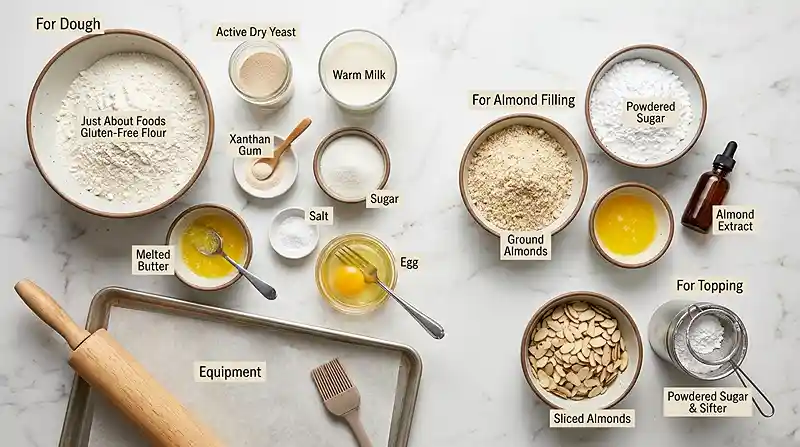
| Component | Amount | Notes |
|---|---|---|
| Croissant Dough | ||
| Gluten-free all-purpose flour | 2½ cups | Just About Foods brand recommended |
| Xanthan gum | 1 tsp | Skip if your flour blend already contains it |
| Salt | 1 tsp | |
| Sugar | 1 Tbsp | Feeds the yeast and adds subtle sweetness |
| Active dry yeast | 1 Tbsp | Approximately one standard packet |
| Warm milk | 1 cup | About 40°C/105°F—warm to touch, not hot |
| Unsalted butter | ¼ cup | Melted and cooled slightly |
| Egg | 1 large | For egg wash |
| Almond Filling | ||
| Ground almonds | ½ cup | Finely ground almond flour works perfectly |
| Powdered sugar | ¼ cup | Sifted for smooth filling |
| Unsalted butter | ¼ cup | Melted |
| Almond extract | 1 tsp | Pure extract for authentic flavor |
| Topping | ||
| Sliced almonds | ¼ cup | For decoration |
| Powdered sugar | As needed | For dusting before serving |
Step-by-Step Instructions
1. Activate the Yeast
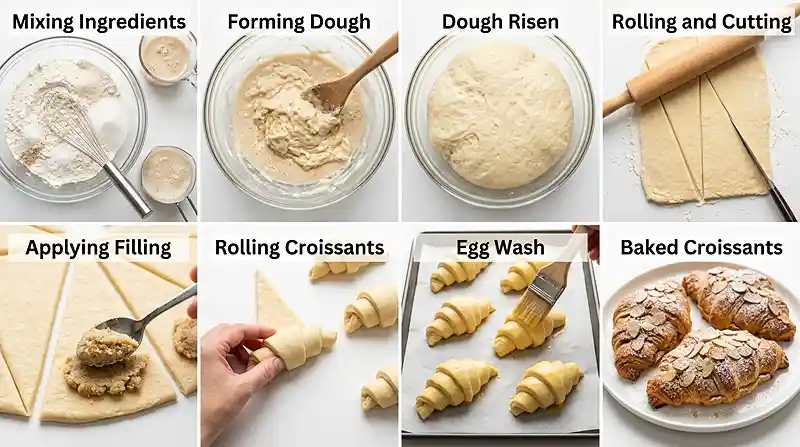
Pour the warm milk (approximately 40°C/105°F) into a small bowl. The temperature is crucial—too hot kills the yeast, too cold won’t wake it up. It should feel comfortably warm on your inner wrist, like a baby’s bath water. Sprinkle the active dry yeast over the surface and stir gently. Let sit undisturbed for 5 minutes until the mixture becomes frothy and smells pleasantly yeasty—this confirms your yeast is alive and ready to work.
Pro Tip: If your yeast doesn’t foam after 5 minutes, it’s likely dead. Start over with fresh yeast rather than proceeding with inactive yeast, which will result in flat, dense pastries.
2. Combine the Dry Ingredients
In a large mixing bowl, whisk together the gluten-free all-purpose flour, xanthan gum, salt, and sugar until evenly distributed. Creating a uniform dry mixture ensures the xanthan gum disperses properly throughout the dough—clumps of xanthan can create gummy spots in your finished pastry.
3. Form the Dough
Pour the frothy yeast mixture into the dry ingredients, followed by the melted butter. Using a wooden spoon or sturdy spatula, stir until everything comes together into a sticky, shaggy dough. Man, oh man… gluten-free dough always looks messier than wheat dough at this stage, and that’s perfectly normal. Don’t be tempted to add more flour—the stickiness is essential for proper texture.
Mix for another minute or two until no dry flour remains and the dough is cohesive, even if still quite tacky.
4. First Rise
Cover the bowl with a clean kitchen towel or plastic wrap. Place in a warm, draft-free location—inside an oven with just the light on, near (not on) a warm stove, or in a sunny spot works well. Let the dough rise for 1-2 hours, or until it has visibly doubled in size.
Rising time varies based on ambient temperature and yeast freshness. In a warm kitchen (75°F+), expect closer to 1 hour. In a cooler environment, allow the full 2 hours. Patience here pays off with better texture and flavor.
5. Prepare the Almond Filling
While the dough rises, make your almond paste. In a medium bowl, combine the ground almonds, powdered sugar, melted butter, and almond extract. Stir vigorously until completely smooth and combined—the mixture should resemble soft marzipan with a spreadable consistency. You know… this filling is dangerously delicious on its own, so try to save enough for the croissants.
Set aside at room temperature. If it stiffens, a few seconds in the microwave will restore its spreadability.
6. Prepare for Baking
Preheat your oven to 180°C (350°F) and line a large baking sheet with parchment paper. Clear a work surface and have extra gluten-free flour ready for rolling.
7. Roll Out the Dough
Generously flour your work surface with gluten-free flour. Turn out the risen dough—it will be soft and slightly sticky. Dust the top with more flour and use a rolling pin to roll into a large rectangle approximately 30×40 cm (12×16 inches). The dough should be about 5mm (¼ inch) thick.
Gluten-free dough tears more easily than wheat dough. Work gently, and if it tears, simply press the edges back together—it’s very forgiving and no one will see small repairs in the finished product.
8. Cut and Fill
Using a sharp knife or pizza cutter, cut the rectangle into 8 triangles. The easiest method: cut the rectangle in half lengthwise, then cut each half into 4 triangles by making diagonal cuts. Each triangle should have a wide base (approximately 10 cm/4 inches).
Place about 1 tablespoon of almond filling at the wide base of each triangle, leaving a small margin at the edges to prevent leakage during baking.
9. Shape the Croissants
Starting from the filled base, roll each triangle toward the point, keeping the roll snug but not too tight—overly tight rolling can cause the croissants to burst during baking. Once rolled, gently curve the ends inward toward each other to create the classic crescent shape.
Place shaped croissants on the prepared baking sheet, spacing them at least 2 inches apart to allow for spreading and rising.
10. Egg Wash and Second Rise
Beat the egg in a small bowl until smooth. Using a pastry brush, gently brush each croissant with egg wash, covering all exposed surfaces. This creates the beautiful golden color and slight sheen that makes bakery pastries so appealing.
Cover the croissants loosely with a kitchen towel or plastic wrap. Let rise for an additional 30 minutes—they should look puffy and slightly larger, though not doubled.
11. Bake Until Golden
Remove the covering. If desired, brush with a second light coating of egg wash for extra shine. Sprinkle sliced almonds generously over the top of each croissant, pressing gently so they adhere.
Bake in the preheated oven for 15-20 minutes, until the croissants are deep golden brown all over. The color should be rich and appetizing, not pale. Rotate the baking sheet halfway through for even browning if your oven has hot spots.
12. Cool and Finish
Remove from the oven and let the croissants cool on the baking sheet for 5-10 minutes—they’re extremely delicate when hot. Transfer carefully to a wire cooling rack.
Just before serving, dust generously with powdered sugar, letting it fall like snow over the sliced almonds. Serve warm or at room temperature. These are absolutely best enjoyed the day they’re baked, ideally within a few hours of coming out of the oven.
Substitutions & Variations
This French breakfast pastry adapts beautifully to different dietary needs and flavor preferences. Here are ways to customize your Gluten-Free Almond Croissants:
Vegan Pastry Version: This recipe transforms easily into a vegan pastry. Replace the butter (both in dough and filling) with high-quality vegan butter like Miyoko’s or Earth Balance. Substitute the warm milk with oat milk or almond milk. For the egg wash, mix 2 tablespoons maple syrup with 1 tablespoon non-dairy milk—this creates a lovely golden finish.
Chocolate Almond Croissants: Add 1-2 tablespoons of dark cocoa powder to the almond filling, or place a row of dark chocolate chips alongside the almond paste before rolling. The combination is absolutely decadent.
Different Flour Blends: While Just About Foods is recommended, other quality GF all-purpose blends work well. Bob’s Red Mill 1-to-1, King Arthur Measure for Measure, and Cup4Cup all produce good results. Verify your blend contains xanthan gum or add it as directed.
Pain aux Amandes Style: Well… for the traditional “twice-baked” French version, bake plain croissants first. Once cooled, slice horizontally, fill generously with almond paste, close, spread more paste on top, add almonds, and bake again at 175°C (350°F) for 8-10 minutes.
Orange Blossom Variation: Add ½ teaspoon orange blossom water and 1 teaspoon orange zest to the almond filling for a fragrant Mediterranean twist.
Hazelnut Version: Substitute ground hazelnuts for the almonds and use hazelnut extract instead of almond extract. Top with chopped hazelnuts and a drizzle of chocolate.
Simpler Shapes: If triangles frustrate you, roll portions of dough into balls, flatten, add filling to center, pinch closed, and bake seam-side down. Less traditional but equally delicious.
Expert Troubleshooting
Creating perfect gluten-free croissants takes practice. Here’s how to troubleshoot common issues:
Dough Didn’t Rise: The yeast was likely inactive (dead or too old) or the milk was too hot and killed it. Always proof yeast first—if it doesn’t foam within 5 minutes, discard and start with fresh yeast. Ideal milk temperature is 40-43°C (105-110°F). Using a kitchen thermometer removes guesswork.
Dough Too Sticky to Roll: GF dough is naturally stickier than wheat dough. Use generous amounts of flour when rolling and work with well-floured hands. If truly unmanageable, refrigerate the dough for 20-30 minutes to firm it up before rolling.
Croissants Spread Flat: The second rise may have gone too long, or the dough was too warm. Keep shaped croissants in a cooler area if your kitchen runs warm, and don’t exceed 30-40 minutes for the second rise. Also verify your oven is properly preheated.
Croissants Are Dense: Insufficient rising is the usual cause. Ensure your yeast is fresh and active, your rising spot is warm enough, and you allow adequate time for the dough to double. Gluten-free doughs sometimes need longer rise times than their wheat counterparts.
Croissants Are Pale: They need more time in the oven, or your egg wash was too thin. Bake until genuinely golden brown, not just “done.” A light second coating of egg wash before baking helps with color. You can also brush with butter immediately after baking for extra sheen.
Almond Filling Leaked Out: Overstuffing is the usual culprit. Use only 1 tablespoon of filling per croissant, positioned away from the edges. Rolling too loosely can also cause leakage—aim for snug (not tight) rolls.
Almonds Burning Before Croissants Are Done: Tent loosely with aluminum foil halfway through baking to protect the toppings while the interior finishes cooking.
Storage & Meal Prep
| Storage Method | Duration | Notes |
|---|---|---|
| Room temperature, airtight container | 1-2 days | Best texture; can refresh in warm oven |
| Refrigerated, airtight container | 3-4 days | Will firm up; warm before serving |
| Frozen (baked) | Up to 2 months | Wrap individually; thaw at room temp |
| Frozen (unbaked, shaped) | Up to 1 month | Thaw overnight in fridge, let rise, then bake |
These Gluten-Free Almond Croissants are undeniably best fresh from the oven, but smart prep strategies make them achievable even on busy mornings. For next-day fresh croissants, complete all steps through shaping, place on the baking sheet, cover tightly with plastic wrap, and refrigerate overnight. In the morning, let them sit at room temperature for 45-60 minutes to rise and warm up, then bake as directed.
To refresh day-old croissants, place them in a 175°C (350°F) oven for 5-7 minutes until warmed through and slightly crispy on the outside. They won’t be identical to fresh, but they’ll be delicious.
The almond filling can be made up to a week ahead and refrigerated—bring to room temperature before using.
FAQs About Gluten-Free Almond Croissants
Does a traditional almond croissant have gluten?
Yes, traditional almond croissants are made with wheat-based laminated dough (pâte feuilletée) that relies on gluten for its characteristic flaky layers. They are not safe for those with celiac disease or gluten sensitivity. This recipe provides a gluten-free alternative that captures the essence and flavor of the classic French pastry.
Can croissants be made gluten-free?
Absolutely! While gluten-free croissants won’t achieve the exact laminated, shatteringly flaky texture of traditional French croissants (that requires gluten’s elasticity), they can be tender, flavorful, and genuinely satisfying. This yeasted dough approach creates a soft, slightly chewy interior with a golden exterior that delivers the croissant experience beautifully.
What is the filling inside an almond croissant called?
The filling is called frangipane or crème d’amande (almond cream). Traditional frangipane typically includes ground almonds, sugar, butter, eggs, and almond extract. This recipe uses a simplified eggless almond paste that’s easier to prepare and works perfectly for filling. Some French bakeries use marzipan, which is similar but denser.
Is almond flour okay for celiac disease?
Yes, pure almond flour is naturally gluten-free—it’s simply blanched almonds ground into flour with no wheat content whatsoever. However, cross-contamination can occur during processing if shared equipment is used. According to the Celiac Disease Foundation, those with celiac disease should look for almond flour specifically labeled certified gluten-free to ensure it was processed in a dedicated facility.
Can you get gluten-free croissants commercially?
Gluten-free croissants are becoming more available but remain relatively rare. Some specialty bakeries and brands (like Schar) offer frozen or fresh options, though quality varies significantly. Homemade versions like this recipe often deliver superior flavor and texture while being more cost-effective.
Serving Suggestions

These Gluten-Free Almond Croissants deserve the full French breakfast treatment. Serve warm alongside a café au lait, cappuccino, or strong French press coffee—the bitterness of good coffee perfectly balances the sweet almond filling. Add a small bowl of fresh berries or sliced stone fruit for brightness and color.
For a complete brunch spread perfect for Easter morning or Mother’s Day, pair these croissants with Gluten-Free Quiche Lorraine for a savory counterpoint. The combination of flaky pastry, rich egg custard, and sweet almond croissants creates a memorable meal. A simple Gluten-Free Avocado Toast Bar offers a lighter, fresher option alongside for guests who prefer savory.
These pastries also make impressive gifts—wrap them in cellophane bags tied with ribbon, nestle them in a pretty box lined with parchment, or arrange on a tray for hostess gifts. For dinner parties, serve as a dessert course with vanilla ice cream or alongside Gluten-Free Shrimp Scampi for an elegant French-Italian fusion dinner followed by a sweet finish.
Final Thoughts
There’s something deeply satisfying about pulling a tray of golden, fragrant croissants from your own oven—especially when you once believed such pleasures were off the table forever. These Gluten-Free Almond Croissants aren’t just a substitute for something you can’t have; they’re a delicious creation in their own right, worthy of slow Saturday mornings and special celebrations.
Let’s Connect!
Have you tried making Gluten-Free Almond Croissants? I’d love to hear about your experience! Share your photos, tips, and creative variations in the comments below, or tag me on social media. If this recipe brought a little French bakery magic to your gluten-free kitchen, please share it with friends or pin it for your next special brunch. Your support helps our community grow and inspires more recipes like this one!

Gluten-Free Almond Croissants
Equipment
- Large mixing bowl
- Small bowl
- Medium bowl
- Rolling Pin
- Baking sheet
- Parchment paper
- Pastry brush
- Clean kitchen towel or plastic wrap
- Wire cooling rack
- Sharp knife or pizza cutter
Ingredients
Croissant Dough
- 2½ cups gluten-free all-purpose flour Just About Foods brand recommended
- 1 tsp xanthan gum omit if flour blend already contains it
- 1 tsp salt
- 1 Tbsp sugar
- 1 Tbsp active dry yeast approximately one packet
- 1 cup warm milk approximately 40°C/105°F
- ¼ cup unsalted butter melted and slightly cooled
- 1 large egg for egg wash
Almond Filling
- ½ cup ground almonds finely ground almond flour works well
- ¼ cup powdered sugar sifted
- ¼ cup unsalted butter melted
- 1 tsp almond extract pure extract recommended
Topping
- ¼ cup sliced almonds for decoration
- powdered sugar for dusting before serving
Instructions
- In a large bowl, whisk together the gluten-free all-purpose flour, xanthan gum, salt, and sugar until evenly combined.
- In a separate small bowl, dissolve the yeast in the warm milk (approximately 40°C/105°F). Let it sit for 5 minutes until frothy and bubbly, confirming the yeast is active.
- Add the yeast mixture and melted butter to the dry ingredients. Mix until a sticky dough forms. Cover the bowl with a clean towel and let rise in a warm spot for 1-2 hours, or until doubled in size.
- While the dough rises, prepare the almond filling. In another bowl, mix together the ground almonds, powdered sugar, melted butter, and almond extract until smooth and combined. Set aside.
- Preheat the oven to 180°C (350°F) and line a baking sheet with parchment paper. Once the dough has risen, roll it out on a lightly floured surface into a large rectangle approximately 30×40 cm (12×16 inches).
- Cut the dough into 8 triangles. Place about 1 tablespoon of the almond filling at the wide base of each triangle. Roll up the dough from the base toward the point to form croissant shapes, curving the ends inward to create crescents.
- Place the shaped croissants on the prepared baking sheet, leaving space between them. Beat the egg and brush each croissant with the egg wash. Cover loosely and allow them to rise for an additional 30 minutes.
- Sprinkle sliced almonds over the tops of the croissants. Bake in the preheated oven for 15-20 minutes, or until deep golden brown all over.
- Remove from the oven and let cool slightly on the baking sheet. Transfer to a wire rack, dust generously with powdered sugar, and serve warm. Best enjoyed the same day.