Gluten-Free Baked Salmon
This gluten-free baked salmon is tender, flaky, and ready in just 15 minutes! Simple oven salmon with lemon and garlic for busy weeknight dinners.
Remember those weeknights when you need something healthy on the table in under 20 minutes, but you’re too tired to think? That’s exactly when this gluten-free baked salmon recipe becomes your best friend.
I’ll never forget the first time I realized that perfectly cooked oven salmon didn’t require fancy techniques or complicated ingredients—just good fish, a hot oven, and a simple seasoning mix. The best part? Salmon is naturally gluten-free, so you don’t have to worry about hidden ingredients or cross-contamination when you’re cooking it at home.
This lemon salmon comes together so quickly that you’ll have it prepped and in the oven before your rice finishes cooking. With just a handful of pantry staples and about 15 minutes of oven time, you’ll have a restaurant-quality dinner that’s perfectly safe for anyone following a gluten-free diet. Whether you’re new to gluten-free cooking or just looking for a reliable weeknight protein, this baked salmon gluten free recipe is about to become your go-to.
Table of Contents
Ingredients
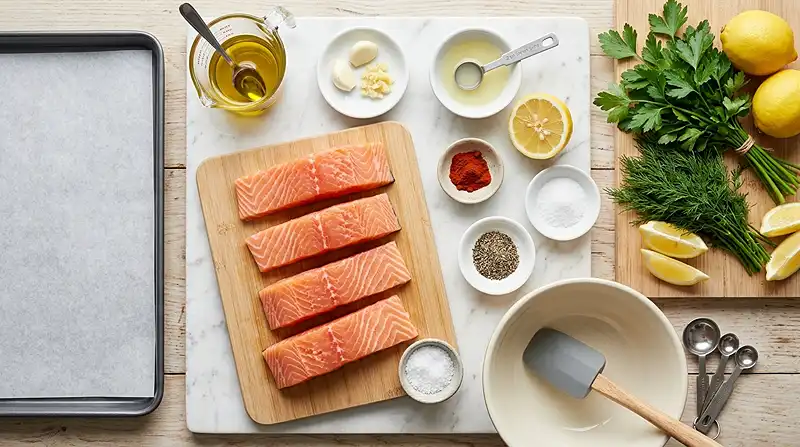
Here’s everything you’ll need for this simple and delicious gluten-free baked salmon. I love how short this list is!
| Ingredient | Amount |
|---|---|
| Salmon fillets (6-ounce each) | 4 |
| Avocado oil | 2 tablespoons |
| Garlic cloves, grated or pressed | 2 |
| Fresh lemon juice | 2 teaspoons |
| Paprika | 1/2 teaspoon |
| Kosher salt | 1 teaspoon |
| Black pepper | 1/4 teaspoon |
| Fresh parsley and dill | For serving |
| Lemon wedges | For serving |
Servings: 4
Instructions
Step 1: Preheat and Prep
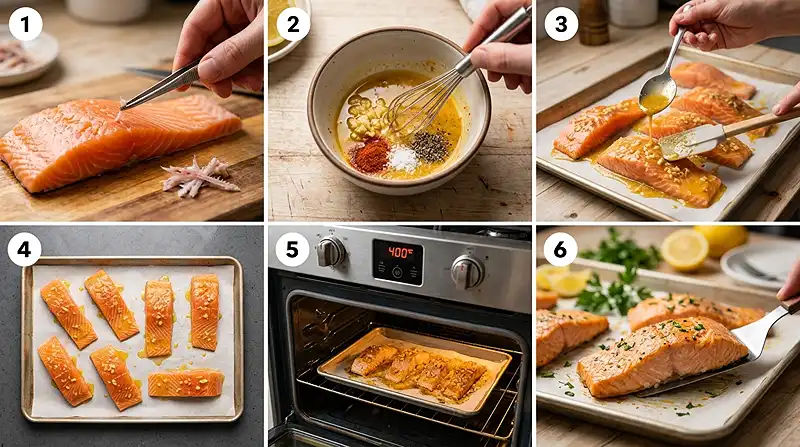
Preheat your oven to 400°F so it’s nice and hot when your salmon is ready to go in. While it’s heating, run your fingers gently over the salmon fillets to check for any pin bones—if you find any, use tweezers or clean needle-nose pliers to pull them out. This takes just a minute but makes eating so much more enjoyable!
Step 2: Make the Seasoning Mixture
In a small bowl, whisk together the avocado oil, grated or pressed garlic, fresh lemon juice, paprika, kosher salt, and black pepper until everything is beautifully combined and fragrant. The smell of that fresh garlic mixing with the bright lemon juice is absolutely mouthwatering—it’s one of those simple combinations that just works perfectly for baked salmon gluten free dishes.
Step 3: Season the Salmon
Place your salmon fillets skin-side down in a baking dish or on a rimmed sheet pan, spacing them evenly so they cook uniformly. Drizzle the avocado oil mixture over each fillet, then use your hands or a silicone spatula to coat them evenly, making sure some of those aromatic garlic bits sit right on top of each piece. Don’t be shy here—you want every bite of this oven salmon to be packed with flavor!
Step 4: Bake to Perfection
Slide the pan into your preheated oven and bake for 12-15 minutes, depending on the thickness of your fillets and how you like your salmon cooked. The fish should flake easily with a fork and register 145°F on an instant-read thermometer when it’s fully cooked, though I often pull mine at 135-140°F for a slightly more tender, moist center. You’ll know it’s ready when the color has changed from translucent to opaque and the flesh feels firm but still gives slightly when pressed.
Step 5: Garnish and Serve
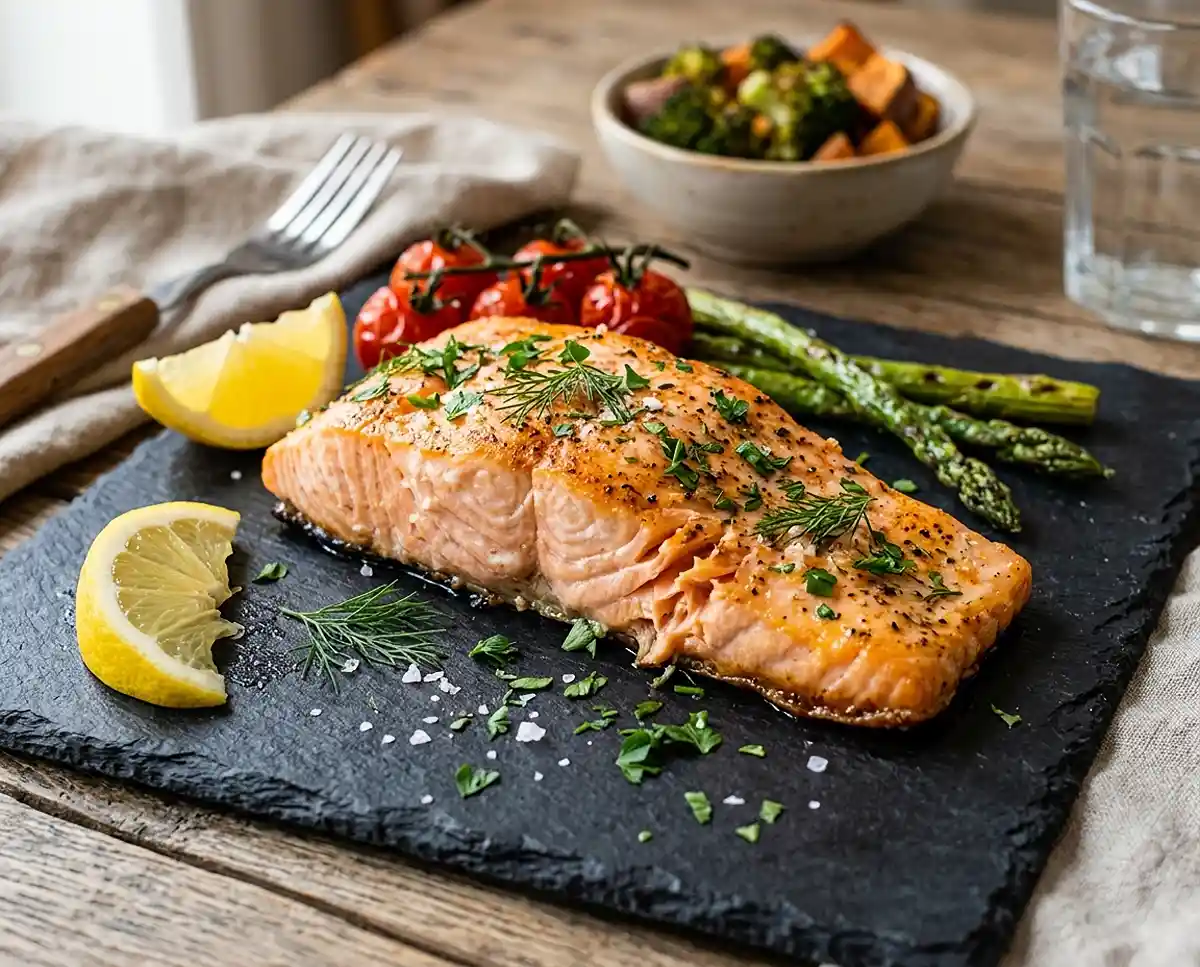
Remove your perfectly cooked lemon salmon from the oven and let it rest for just a minute or two. Sprinkle fresh parsley and dill over the top for a pop of color and herbaceous freshness, then serve immediately with lemon wedges on the side for squeezing. Well, I promise you’ll feel like a professional chef when you bring this beautiful, aromatic dish to the table!
Substitutions
Oil Alternatives: If you don’t have avocado oil on hand, olive oil works beautifully in this gluten-free baked salmon recipe. You could also use melted ghee or butter if you’re not dairy-free, which adds a lovely richness to the finished dish.
Garlic Options: Fresh garlic really makes this oven salmon shine, but in a pinch you can use 1/2 teaspoon of garlic powder mixed into the oil. Just know that the flavor won’t be quite as bright and pungent as fresh cloves.
Citrus Swaps: Lemon is classic, but lime juice creates a slightly more tropical vibe that’s equally delicious. You could even try orange juice for a sweeter, more mellow citrus note that pairs wonderfully with the paprika.
Seasoning Variations: The paprika adds a subtle smokiness and gorgeous color, but you can swap it for smoked paprika for more depth, or try cumin, dried herbs, or even a pinch of cayenne if you like heat. Just make sure any spice blends you use are certified gluten-free to keep this baked salmon gluten free.
Troubleshooting Tips
Dry Salmon: This usually means your fish cooked too long or at too high a temperature. According to research on optimal cooking temperatures from the USDA Food Safety guidelines, salmon is safe at 145°F, but pulling it a few degrees earlier keeps it incredibly moist since it continues cooking as it rests.
White Stuff on Salmon: That white substance is albumin, a protein that coagulates when heated, and it’s completely harmless and normal. It appears more on salmon that’s been frozen or cooked at higher temperatures, but it doesn’t affect the taste of your gluten-free baked salmon at all.
Fishy Smell: Fresh salmon should smell like the ocean—clean and slightly briny—never strongly fishy. If your fish has an overpowering odor before cooking, it’s not fresh enough, so exchange it if possible or try soaking it in milk for 20 minutes to mellow the flavor.
Sticking to the Pan: Even with the skin on, salmon can stick if your pan isn’t properly prepared. Line your baking dish with parchment paper or give it a light coating of oil before adding the fish to ensure your oven salmon releases easily when it’s done.
Storage and Meal Prep
Store leftover gluten-free baked salmon in an airtight container in the refrigerator for up to 3 days. It’s fantastic cold in salads, on top of grain bowls, or even flaked into scrambled eggs for a protein-packed breakfast.
For meal prep, you can portion the seasoned raw salmon into individual containers and refrigerate for up to 24 hours before baking. Just pull one out, let it sit at room temperature for 10 minutes, then pop it in the oven when you’re ready to eat—dinner in 15 minutes flat!
Serving Suggestions
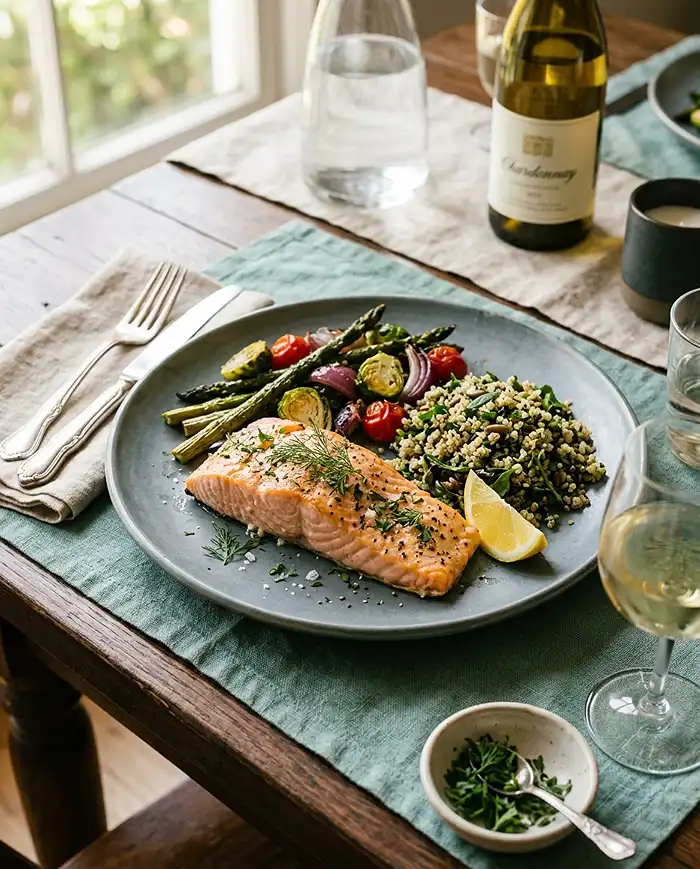
This lemon salmon pairs beautifully with roasted vegetables, cauliflower rice, or a simple green salad for a complete, nourishing meal. The bright, garlicky flavors work with just about any side dish you can imagine.
You know what’s absolutely divine? Serving this baked salmon gluten free alongside my creamy gluten-free tzatziki sauce for a Mediterranean-inspired dinner that feels special enough for company. The cool, tangy yogurt sauce complements the warm, lemony fish perfectly.
Try tucking flaked leftover oven salmon into lettuce wraps with avocado, cucumber, and a drizzle of sesame oil for an easy lunch. It’s also wonderful tossed with gluten-free pasta, cherry tomatoes, and fresh basil for a quick salmon pasta dish that tastes like summer.
Variations and Dietary Adjustments
Asian-Inspired Version: Replace the lemon juice with rice vinegar and add 1 tablespoon of gluten-free tamari plus 1 teaspoon of fresh grated ginger to your oil mixture. Garnish with sesame seeds and sliced green onions for a flavor profile that’ll transport you straight to your favorite sushi restaurant.
Mediterranean Twist: Mix in 1 teaspoon of dried oregano, add some sliced cherry tomatoes and kalamata olives around the salmon before baking, and finish with crumbled feta cheese if you’re not dairy-free. This variation is perfect for summer gatherings or Fourth of July cookouts when you want something special but don’t want to stand over a hot grill.
Cajun-Style: Swap the paprika for 1 tablespoon of gluten-free Cajun seasoning and add a pinch of cayenne for this spicy gluten-free baked salmon that’s got some serious kick. Serve it with creamy coleslaw and corn on the cob for a Southern-inspired feast.
Honey Mustard Glaze: Whisk 1 tablespoon of honey and 1 tablespoon of Dijon mustard into your oil mixture for a sweet-and-tangy lemon salmon that kids absolutely adore. The glaze caramelizes slightly in the oven, creating irresistible crispy edges.
Dairy-Free Butter Basting: Man, oh man, if you want restaurant-level results, try adding 2 tablespoons of dairy-free butter to the pan halfway through cooking and spooning it over the fish every few minutes. The butter bastes the salmon as it melts, creating an incredibly rich and tender finished dish.
Gluten-Free Baked Salmon FAQs
Can a celiac person eat salmon?
Absolutely! Fresh salmon is naturally gluten-free and completely safe for anyone with celiac disease or gluten sensitivity. Just make sure you’re using gluten-free seasonings and that your fish hasn’t been processed on shared equipment with breaded products—buying from a trusted fishmonger or checking labels on packaged salmon ensures your baked salmon gluten free stays safe.
What seasoning is good for baked salmon?
The garlic, lemon, and paprika combination in this recipe is classic for a reason, but salmon is incredibly versatile. Dill, thyme, rosemary, cumin, coriander, or even everything bagel seasoning (check for gluten-free certification) all work beautifully on oven salmon.
Why soak salmon in water before cooking?
Some people soak salmon in cold water or milk to remove any residual fishy smell, especially if the fish has been frozen. However, with fresh, high-quality salmon, you really don’t need to do this—just pat it dry with paper towels before seasoning for the best texture on your gluten-free baked salmon.
How does Gordon Ramsay cook salmon in the oven?
Gordon Ramsay’s technique involves searing salmon in a hot pan skin-side down first, then finishing it in a hot oven for just a few minutes. While his method creates beautifully crispy skin, this simpler baked salmon gluten free recipe achieves tender, flavorful results without the extra step—perfect for busy weeknights!
What are 6 foods celiacs should avoid?
People with celiac disease must avoid wheat, barley, rye, standard oats (unless certified gluten-free), triticale, and malt in all their forms. The beauty of this lemon salmon recipe is that it uses only naturally gluten-free ingredients, making it a safe, stress-free dinner option for anyone managing celiac disease or gluten intolerance.
This gluten-free baked salmon has rescued countless weeknight dinners at my house, and I have a feeling it’s about to do the same for yours. There’s something so satisfying about a meal that’s this healthy, this delicious, and this ridiculously easy to pull together on even your most chaotic evenings.
The lemony, garlicky aroma that fills your kitchen while this oven salmon bakes is as comforting as a warm hug—seriously, your family will start gravitating toward the kitchen before you even call them for dinner. And because salmon is naturally packed with omega-3 fatty acids and protein, you can feel really good about serving this baked salmon gluten free to your loved ones.
Whether you’re cooking for one or feeding a crowd, this lemon salmon scales beautifully and always delivers consistent, foolproof results. Pair it with my delightful gluten-free almond cookies for dessert and maybe scoop some creamy dairy-free ice cream after dinner to round out your totally gluten-free feast.
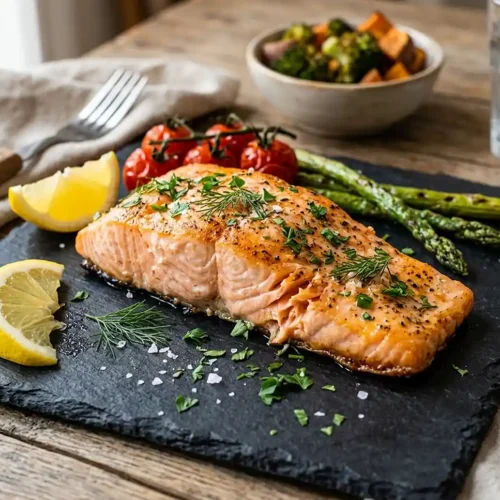
Gluten-Free Baked Salmon
Equipment
- Oven
- Baking dish or rimmed sheet pan
- Small mixing bowl
- Whisk
- Silicone spatula or hands
- Instant-read thermometer (optional)
- Tweezers or needle-nose pliers (for bones)
Ingredients
- 4 salmon fillets 6-ounce each
- 2 tablespoons avocado oil
- 2 cloves garlic grated or pressed
- 2 teaspoons fresh lemon juice
- ½ teaspoon paprika
- 1 teaspoon kosher salt
- ¼ teaspoon black pepper
- fresh parsley and dill for serving
- lemon wedges for serving
Instructions
- Preheat your oven to 400°F so it’s nice and hot when your salmon is ready to go in. While it’s heating, run your fingers gently over the salmon fillets to check for any pin bones—if you find any, use tweezers or clean needle-nose pliers to pull them out. This takes just a minute but makes eating so much more enjoyable!
- In a small bowl, whisk together the avocado oil, grated or pressed garlic, fresh lemon juice, paprika, kosher salt, and black pepper until everything is beautifully combined and fragrant. The smell of that fresh garlic mixing with the bright lemon juice is absolutely mouthwatering—it’s one of those simple combinations that just works perfectly for baked salmon gluten free dishes.
- Place your salmon fillets skin-side down in a baking dish or on a rimmed sheet pan, spacing them evenly so they cook uniformly. Drizzle the avocado oil mixture over each fillet, then use your hands or a silicone spatula to coat them evenly, making sure some of those aromatic garlic bits sit right on top of each piece. Don’t be shy here—you want every bite of this oven salmon to be packed with flavor!
- Slide the pan into your preheated oven and bake for 12-15 minutes, depending on the thickness of your fillets and how you like your salmon cooked. The fish should flake easily with a fork and register 145°F on an instant-read thermometer when it’s fully cooked, though I often pull mine at 135-140°F for a slightly more tender, moist center. You’ll know it’s ready when the color has changed from translucent to opaque and the flesh feels firm but still gives slightly when pressed.
- Remove your perfectly cooked lemon salmon from the oven and let it rest for just a minute or two. Sprinkle fresh parsley and dill over the top for a pop of color and herbaceous freshness, then serve immediately with lemon wedges on the side for squeezing. Well, I promise you’ll feel like a professional chef when you bring this beautiful, aromatic dish to the table!