![Gluten-Free Bao Buns [Steamed Chinese Baozi]](https://www.grainlesslife.com/wp-content/uploads/2025/12/Gluten-Free-Bao-Buns-Steamed-Chinese-Baozi.webp "Gluten-Free Bao Buns [Steamed Chinese Baozi] 1")
Gluten-Free Bao Buns [Steamed Chinese Baozi]
Learn how to make tender gluten-free bao buns at home! This steamed Chinese baozi recipe is beginner-friendly, dairy-free, and absolutely delicious.
You know what I thought was impossible before going gluten-free? Making my own bao buns. Those soft, pillowy steamed dumplings in a basket that practically melt in your mouth seemed like something only restaurant chefs could master.
But here’s the thing—gluten-free bao buns are totally doable at home, and I’m going to walk you through every single step.
I’ll never forget the first time I successfully steamed a batch of homemade baozi. My kitchen smelled like a dim sum restaurant, and when I peeled back that bamboo steamer lid, I actually squealed with joy. The dough had puffed up beautifully, and each bun was tender and cloud-like. My kids devoured them faster than I could make the next batch!
This gluten-free baozi recipe uses simple ingredients and straightforward techniques that work. Whether you’re craving steamed dumplings in a basket for a weekend project or want to learn how to make bamboo dumplings that rival your favorite takeout spot, I’ve got you covered. Let’s make some magic happen in your kitchen.
Table of Contents
![Gluten-Free Bao Buns [Steamed Chinese Baozi]](https://www.grainlesslife.com/wp-content/uploads/2025/12/Gluten-Free-Bao-Buns-Steamed-Chinese-Baozi-500x500.webp "Gluten-Free Bao Buns [Steamed Chinese Baozi] 2")
Gluten-Free Bao Buns (Steamed Chinese Baozi)
Equipment
- Bamboo steamer or steamer basket
- Large mixing bowl
- Large skillet
- Rolling Pin
- Kitchen towel
- Large pot
Ingredients
Dough
- 2 ¼ cups gluten-free flour plus more for dusting
- 1 ½ tsp active dry yeast
- 1 ½ tsp granulated sugar
- 1 cup warm water
- ¼ tsp baking soda
- 1 tsp salt
Meat Filling
- 1 cup ground pork or mushrooms for vegetarian
- ¼ cup napa cabbage diced
- ¼ cup carrot thinly sliced
- 2 cloves garlic minced
- 1 tbsp ginger minced
- 2 tbsp gluten-free soy sauce
- 1 tbsp rice vinegar
- 1 tbsp sesame oil
- 2 tbsp sesame seeds optional, for garnish
Instructions
- Combine warm water with yeast and sugar in a large bowl. Mix with a fork until well combined, then set this aside to allow the yeast to activate for about 10-15 minutes. You’ll know it’s ready when you see tiny bubbles forming on the surface.
- Once the yeast-water mixture is bubbling happily, slowly add in your gluten-free flour. Mix with a spatula or wooden spoon until the flour is fully incorporated and you have a shaggy dough.
- Lightly flour a flat surface and turn your bao bun dough out onto it. Using your hands, knead the dough until it becomes smooth and elastic, about 5-7 minutes. The texture should feel soft and slightly springy when you press it with your finger.
- Once your dough is elastic and smooth, roll it into a large sphere and place it back in your bowl. Cover with a clean kitchen towel and let it rest for at least 1 hour at room temperature, or keep it in the refrigerator overnight for a slower, more flavorful rise.
- While the dough is resting, make your filling. Set a large skillet to medium heat and add your sesame oil, followed by the diced cabbage, sliced carrot, minced garlic, and ginger. Cook for 3-4 minutes until the vegetables soften and become fragrant.
- Next, add your ground pork (or chopped mushrooms for a vegetarian version) and cook for about 10 minutes, breaking up the meat with a wooden spoon. You want the pork fully cooked through with no pink remaining.
- Add your gluten-free soy sauce and rice vinegar, stirring to combine. Taste and adjust seasonings as necessary. Transfer the filling to a bowl and refrigerate until it’s time to stuff your buns.
- Once the dough has doubled in size (typically takes at least 1 hour or more, depending on your kitchen temperature), turn it out onto a lightly floured surface. Roll it into a log shape and divide your dough into 12-14 equal-sized pieces using a sharp knife or bench scraper.
- Fill a small bowl with water to keep nearby. Roll out each individual piece into a round disc about ⅛ inch thick and 3-4 inches in diameter. If the dough feels dry or starts cracking, dab your fingers with water to help soften it.
- To fill your gluten-free bao buns, place a round dough disc in one hand and add a generous spoonful of your meat mixture into the center. Using your other hand, carefully pinch the dough around the filling, creating pleats as you rotate the bun.
- Using either a bamboo steamer or steamer basket, set a pot of water to boil with at least 2 inches of water covering the bottom. Line your steamer with parchment paper circles or cabbage leaves to prevent sticking.
- Set your buns in the basket, leaving about 1 inch of space between each one since they’ll expand during steaming. Steam with the lid on for about 8 minutes over medium-high heat. The buns should look puffy and set.
- After 8 minutes, turn the heat off and leave the buns in the steamer with the lid on for an additional 1-2 minutes. This prevents the buns from collapsing when exposed to cooler air. Serve warm with optional sesame seeds sprinkled on top and enjoy immediately!
Notes
Ingredients
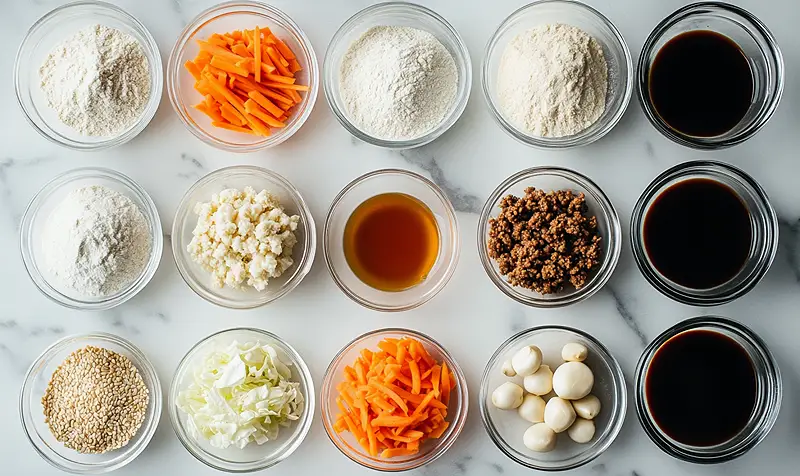
| Dough | Meat Filling |
|---|---|
| 2 ¼ cups gluten-free flour, plus more for dusting | 1 cup ground pork (or mushrooms for vegetarian) |
| 1 ½ tsp active dry yeast | ¼ cup diced napa cabbage |
| 1 ½ tsp granulated sugar | ¼ cup thinly sliced carrot |
| 1 cup warm water | 2 cloves garlic, minced |
| ¼ tsp baking soda | 1 tbsp ginger, minced |
| 1 tsp salt | 2 tbsp gluten-free soy sauce |
| 1 tbsp rice vinegar | |
| 1 tbsp sesame oil | |
| 2 tbsp sesame seeds (optional, for garnish) |
Instructions
Making the Bao Dough (First Proof)
Step 1: Combine warm water with yeast and sugar in a large bowl. Mix with a fork until well combined, then set this aside to allow the yeast to activate for about 10-15 minutes. You’ll know it’s ready when you see tiny bubbles forming on the surface—that’s your yeast waking up and getting to work!
Step 2: Once the yeast-water mixture is bubbling happily, slowly add in your gluten-free flour. Mix with a spatula or wooden spoon until the flour is fully incorporated and you have a shaggy dough. Don’t worry if it looks a bit rough at this stage—that’s totally normal.
Step 3: Lightly flour a flat surface and turn your bao bun dough out onto it. Using your hands, knead the dough until it becomes smooth and elastic, about 5-7 minutes. The texture should feel soft and slightly springy when you press it with your finger.
Step 4: Once your dough is elastic and smooth, roll it into a large sphere and place it back in your bowl. Cover with a clean kitchen towel and let it rest for at least 1 hour at room temperature, or keep it in the refrigerator overnight for a slower, more flavorful rise.
Making the Filling
Step 5: While the dough is resting, make your filling. Set a large skillet to medium heat and add your sesame oil, followed by the diced cabbage, sliced carrot, minced garlic, and ginger. Cook for 3-4 minutes until the vegetables soften and become fragrant—your kitchen will smell amazing.
Step 6: Next, add your ground pork (or chopped mushrooms for a vegetarian baozi recipe) and cook for about 10 minutes, breaking up the meat with a wooden spoon. You want the pork fully cooked through with no pink remaining.
Step 7: Add your gluten-free soy sauce and rice vinegar, stirring to combine. Taste and adjust seasonings as necessary—sometimes I add a pinch more salt or a dash of extra sesame oil. Transfer the filling to a bowl and refrigerate until it’s time to stuff your buns.
Shaping & Stuffing the Buns
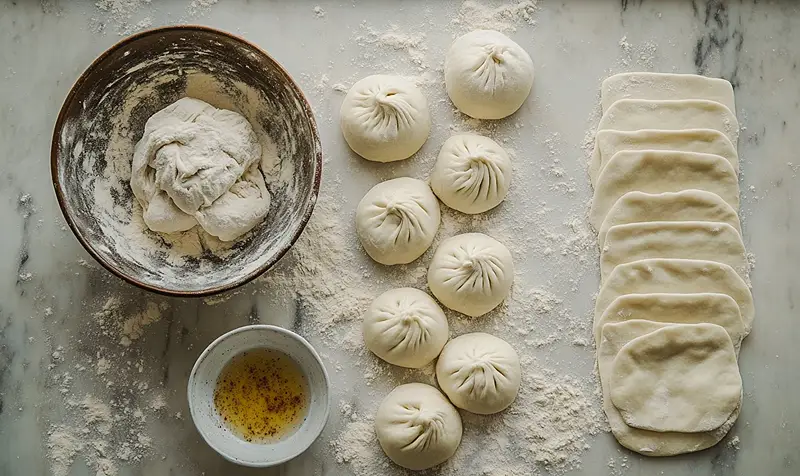
Step 8: Once the dough has doubled in size (typically takes at least 1 hour or more, depending on your kitchen temperature), turn it out onto a lightly floured surface. Roll it into a log shape and divide your dough into 12-14 equal-sized pieces using a sharp knife or bench scraper.
Step 9: Fill a small bowl with water to keep nearby—this helps when working with the dough. Roll out each individual piece into a round disc about ⅛ inch thick and 3-4 inches in diameter. If the dough feels dry or starts cracking, dab your fingers with water to help soften it.
Step 10: To fill your gluten-free bao buns, place a round dough disc in one hand and add a generous spoonful of your meat mixture into the center. Using your other hand, carefully pinch the dough around the filling, creating pleats as you rotate the bun. Well… this takes practice, so don’t worry if your first few look a little wonky—they’ll still taste incredible!
Steaming
Step 11: Using either a bamboo steamer or steamer basket (this is the traditional way for steamed dumplings in a basket), set a pot of water to boil with at least 2 inches of water covering the bottom. Line your steamer with parchment paper circles or cabbage leaves to prevent sticking.
Step 12: Set your buns in the basket, leaving about 1 inch of space between each one since they’ll expand during steaming. Steam with the lid on for about 8 minutes over medium-high heat. The buns should look puffy and set.
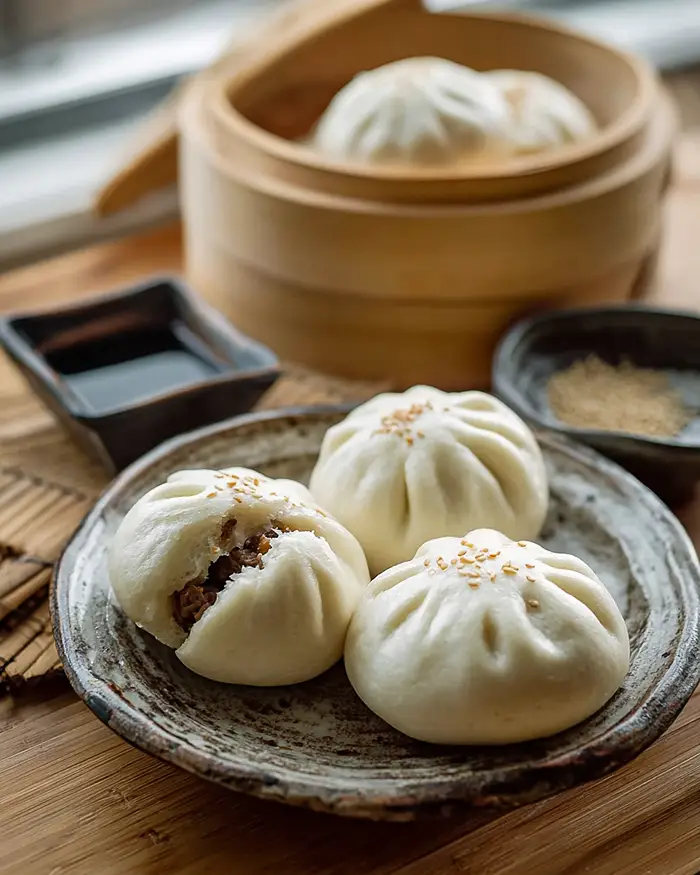
Step 13: After 8 minutes, turn the heat off and leave the buns in the steamer with the lid on for an additional 1-2 minutes. This prevents the buns from collapsing when exposed to cooler air. Serve warm with optional sesame seeds sprinkled on top and enjoy immediately!
Substitutions
Gluten-Free Flour Blend: I recommend using a quality all-purpose gluten-free flour blend that contains xanthan gum for the best texture. If your blend doesn’t include xanthan gum, add ½ teaspoon to help bind the dough. Bob’s Red Mill 1-to-1 or King Arthur Measure for Measure work beautifully in this baozi recipe.
Protein Options: Ground pork is traditional, but ground chicken, turkey, or even finely chopped shiitake mushrooms create delicious variations. For a complete vegetarian version, try firm tofu crumbled and seasoned with extra soy sauce and sesame oil.
Dairy-Free Needs: This recipe is naturally dairy-free, making it perfect for multiple dietary needs. Just double-check that your gluten-free flour blend doesn’t contain any hidden dairy ingredients—most don’t, but it’s always worth verifying.
Yeast Alternative: If you can’t find active dry yeast, instant yeast works just as well in this recipe. You can skip the activation step and mix it directly with the dry ingredients, though I like seeing those bubbles for peace of mind!
Troubleshooting
Dough Too Sticky: Gluten-free dough can be trickier to handle than wheat-based versions. If your dough feels impossibly sticky, dust your hands and work surface with more gluten-free flour, adding just a tablespoon at a time. The dough should be soft but manageable.
Buns Not Rising: Make sure your yeast is fresh and your water temperature is just right—around 105-110°F is ideal. Too hot, and you’ll kill the yeast; too cold, and it won’t activate properly. Also, give your dough plenty of time to rise in a warm, draft-free spot.
Pleating Problems: Man, oh man, the pleating takes practice, and that’s okay! If you’re struggling with creating perfect pleats, simply fold the dough over the filling and pinch the edges together to seal. They might not look Instagram-perfect, but they’ll taste just as amazing.
Buns Collapsing After Steaming: This happens when you remove the lid too quickly and expose the hot buns to cold air. Always turn off the heat and let them rest with the lid on for 1-2 minutes before uncovering. According to expert baking science resources, this gradual temperature change prevents structural collapse.
Storage
Store leftover gluten-free bao buns in an airtight container in the refrigerator for up to 3 days. To reheat, simply steam them for 3-4 minutes until warmed through—they’ll taste freshly made! You can also freeze uncooked stuffed buns on a parchment-lined baking sheet, then transfer to freezer bags for up to 2 months.
For meal prep, I love making a double batch on Sunday and freezing half. Just steam them from frozen, adding an extra 2-3 minutes to the cooking time. It’s like having your own personal dim sum cart ready whenever you need a quick lunch or snack!
Serving Suggestions
Serve your homemade steamed dumplings in a basket with small dishes of gluten-free soy sauce, chili oil, or rice vinegar for dipping. I like to add thinly sliced scallions and extra sesame seeds on the side for guests to customize their experience. These gluten-free baozi are perfect for weekend brunch or as an impressive appetizer for Chinese New Year celebrations.
Pair them with a simple cucumber salad, quick gluten-free egg noodles in broth, or even a warming lentil potato curry for a complete Asian-inspired meal. They also work wonderfully alongside crispy sweet potato hash browns for a fun fusion breakfast!
Variations
Char Siu Bao Style: Swap the ground pork for diced Chinese BBQ pork (char siu) mixed with a touch of hoisin sauce and honey for that classic sweet-savory flavor. This is my kids’ absolute favorite variation, especially during summer cookouts.
Vegetable-Forward Version: Create a completely plant-based filling using finely chopped shiitake mushrooms, bok choy, water chestnuts, and bamboo shoots seasoned with gluten-free soy sauce and sesame oil. This version is lighter but still incredibly satisfying and flavorful.
Spicy Kick: Add 1-2 teaspoons of sriracha or chili garlic sauce to your filling mixture for buns with some heat. You can also serve them with spicy dipping sauces on the side for those who like to control their spice level.
Sweet Bao Buns: For dessert, skip the savory filling entirely and stuff your buns with sweetened red bean paste, Nutella (check for gluten-free certification), or even a simple cinnamon-sugar butter mixture. Steam the same way and dust with powdered sugar before serving.
Gluten-Free Bao Buns [Steamed Chinese Baozi] FAQs
Can bao buns be gluten-free?
Absolutely! Gluten-free bao buns are completely possible with the right flour blend and technique. The key is using a quality all-purpose gluten-free flour that contains xanthan gum, which helps create that soft, pillowy texture we all love in traditional baozi.
What is baozi dough made of?
Traditional baozi recipe dough uses wheat flour, yeast, water, and sometimes a touch of sugar and baking powder. Our gluten-free version swaps wheat flour for a gluten-free blend while keeping the same leavening agents to achieve that signature fluffy texture.
What is the difference between steamed buns and bao buns?
The terms are often used interchangeably! “Bao” means “bun” in Mandarin, so “bao buns” is technically redundant but commonly used in English. Steamed buns can refer to both filled buns (baozi) and plain buns (mantou), while bao typically means the filled variety.
Is bao made of rice flour?
Traditional bao is made with wheat flour, not rice flour. However, some gluten-free versions do use rice flour blends, though they can turn out denser. I prefer using a well-balanced gluten-free all-purpose blend that mimics wheat flour’s properties for the best results.
Best way to prevent sticking in bamboo steamers?
Line your bamboo steamer with parchment paper circles (cut with a few holes for steam circulation) or use large cabbage or lettuce leaves as a natural non-stick layer. This traditional method for making bamboo dumplings works beautifully and adds a subtle vegetal flavor. Light brushing of sesame oil on the steamer surface also helps!
How can I tell when my bao buns are fully steamed?
Your gluten-free baozi are ready when they look puffy, feel springy to a gentle touch, and the dough appears set rather than sticky or raw. The buns should have roughly doubled in size and feel light when you pick them up with tongs—they’re as light and fluffy as a cloud when done perfectly!
These gluten-free bao buns prove that you don’t need wheat to create restaurant-quality steamed dumplings at home. With a little patience and practice, you’ll be making these pillowy baozi for family dinners, meal prep, and special occasions. The joy of pulling back that steamer lid to reveal perfect homemade buns never gets old—trust me on this one!