
Gluten-Free Cake
Learn how to bake the perfect gluten-free cake that rivals any traditional dessert. This moist, fudgy recipe uses simple ingredients and proven techniques—ideal for busy families and gluten-free beginners.
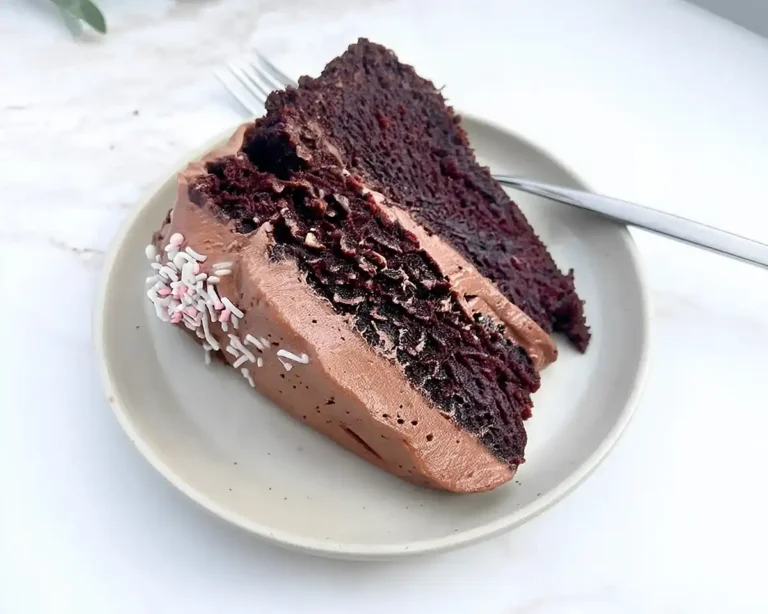
You know that moment when someone says they can’t eat gluten, and you freeze because you’re convinced all your favorite desserts are off limits? Well, I’m here to flip that script. This chocolate gluten-free cake has been my go-to for years, and honestly, most people can’t even tell it’s gluten-free. It’s rich, moist, and comes together in about an hour—no fancy equipment required.
I created this recipe after my sister went gluten-free, and I was determined not to let her miss out on birthday cake. After a few (okay, maybe more than a few) attempts, I landed on this beauty: a deeply chocolatey gluten-free cake that stays tender for days. The secret? Using a high-quality gluten-free flour blend and embracing the boiling water technique that keeps the crumb impossibly soft.
This gluten-free cake deserves a spot on your regular rotation, whether you’re baking for dietary needs or simply want something delicious. I promise you won’t regret it.
Table of Contents
Ingredients
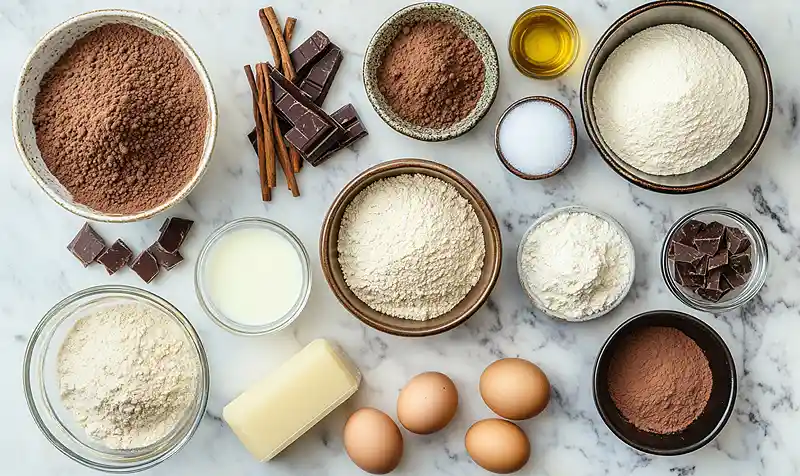
| Ingredient | Amount |
|---|---|
| All-purpose gluten-free flour (Cup4Cup recommended) | 2 cups (292 g) |
| Granulated sugar | 2 cups (400 g) |
| Unsweetened baking cocoa (Dutch-processed) | ¾ cup (75 g) |
| Baking powder | 2 teaspoons |
| Baking soda | 1½ teaspoons |
| Salt | 1 teaspoon |
| Milk or non-dairy milk | 1 cup (245 g) |
| Oil (any preferred) | ½ cup (107 g) |
| Large eggs | 2 |
| Vanilla extract | 2 teaspoons |
| Boiling water | 1 cup (240 g) |
Instructions
Step 1: Prep Your Pans
Preheat your oven to 350°F. Spray two 9-inch round cake pans with cooking spray, then line the bottoms with cut-to-size parchment paper. Give that parchment a quick spray of cooking spray too—this prevents sticking and makes flipping easier.
Step 2: Combine Dry Ingredients
In a large bowl, add your gluten-free flour, sugar, cocoa powder, baking powder, baking soda, and salt. Whisk everything together until you don’t see any streaks of cocoa or lumps. If you’re using a stand mixer, use the paddle attachment and mix until the dry ingredients are completely combined.
Step 3: Add Wet Ingredients
Pour in your milk, oil, eggs, and vanilla. Mix on medium speed until well combined—the batter should look smooth and unified with no visible streaks. You’re creating a solid foundation here, so don’t rush this step.
Step 4: Add the Game-Changing Boiling Water
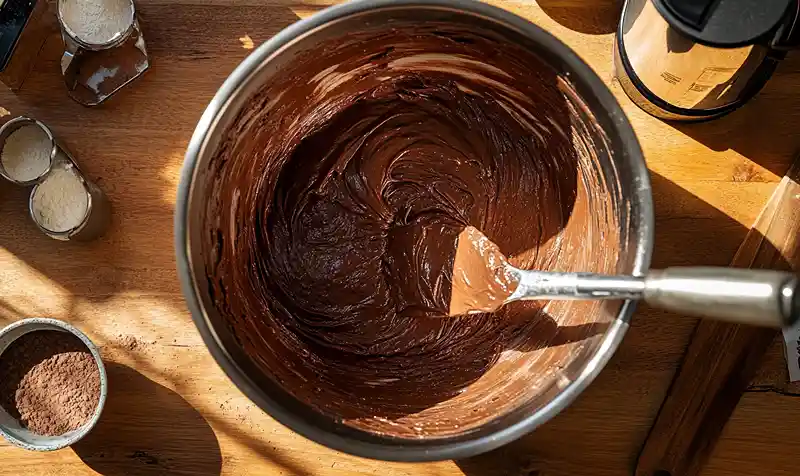
This is where the magic happens. Reduce your mixer to low speed and slowly add the boiling water to the batter. The batter will look thinner—that’s exactly right. Once all the water is incorporated, turn the speed up to high and mix for a full minute. This creates that impossibly moist, fudgy texture you’re after.
Step 5: Bake Until Perfect
Divide the batter evenly between your two prepared pans. Bake for 30–35 minutes, until a toothpick inserted in the center comes out clean or with just a few moist crumbs clinging to it.
Step 6: Cool Completely
Let the cakes cool in their pans for 10 minutes—this prevents them from breaking apart. Then turn them out onto wire racks to cool completely. Wait until they’re room temperature before frosting; trust me, this patience pays off.
Substitutions for Your Chocolate Cake Dessert
Gluten-Free Flour Swaps
Cup4Cup is genuinely my top pick for this gluten-free cake because it bakes so consistently, but King Arthur 1-to-1 or Bob’s Red Mill 1-to-1 work beautifully too. Any high-quality gluten-free blend with xanthan gum included will give you reliable results. Avoid measuring flour by scooping directly from the bag—it compacts and throws off your measurements.
Milk Alternatives
This gluten-free cake works wonderfully with whole milk, 2%, or any non-dairy option like oat, almond, or cashew milk. Coconut milk adds a subtle richness, though it may slightly alter the chocolate flavor. Keep the measurement the same regardless of your choice.
Oil Options
Vegetable oil, canola oil, or avocado oil all perform equally well in this recipe. Coconut oil can work if you’re looking for a slight tropical undertone, though neutral oils let the chocolate shine.
Egg Alternatives
For a vegan gluten-free cake, replace each egg with ¼ cup aquafaba (liquid from canned chickpeas) or a commercial egg replacer. The texture will be slightly denser, but it’s still delicious.
The best part? Once you nail this one, you’ll have the confidence to experiment with other gluten-free desserts. Check out our complete gluten-free cookie collection, explore easy dairy-free dessert ideas, or master some beginner-friendly baking tips to keep expanding your repertoire.
Troubleshooting Your Gluten-free Chocolate Cake Slice
Cake Turned Out Dry
If your cake isn’t as moist as you’d hoped, it’s likely overbaked. Next time, check for doneness starting at 28 minutes rather than waiting the full 35. A toothpick should have just a few moist crumbs—not come out completely clean. You can also ensure you’re measuring flour correctly by spooning it into your measuring cup and leveling off, not scooping directly from the bag.
Cake Sank in the Middle
This usually means either the oven temperature was off or the batter was underbaked. Invest in an oven thermometer to verify your oven runs at the correct temperature, as many ovens are off by 25 degrees or more. Also, make sure you’re not opening the oven door before the 30-minute mark.
Dense Crumb Instead of Light and Fluffy
Overmixing after you add the boiling water can cause this. Mix only until the water is fully incorporated, then stop—you don’t want to overwork the gluten-free batter. Additionally, using a gluten-free flour without xanthan gum can result in a denser cake.
Crumbly Texture When Cutting
Let your cake cool completely before frosting or cutting—cutting warm cake causes crumbles. If the issue persists, your flour blend might be too heavy; consider switching to one specifically designed for cakes.
Storage & Meal Prep Tips
Storing Your Finished Gluten-Free Cake
Keep your frosted cake covered with plastic wrap at room temperature for up to three days. The gluten-free cake actually stays incredibly moist thanks to that boiling water technique, so it holds beautifully. If you’re storing it longer, wrap it tightly and refrigerate for up to five days.
Freezing for Later
You can freeze unfrosted cake layers wrapped in plastic wrap and aluminum foil for up to two months. Thaw them at room temperature for about an hour before frosting. For a quicker option, bake and cool completely, then freeze individual slices in an airtight container for grab-and-go desserts throughout the month.
Make-Ahead Magic
Bake your cake layers the day before your event and store them wrapped at room temperature. Frost it the morning of your celebration to keep everything fresh. This strategy takes pressure off party day and lets you focus on enjoying time with family.
Serving Suggestions & Pairings
Frosting this gluten-free cake is where personality comes in. A fluffy vanilla buttercream lets the chocolate shine, while chocolate buttercream doubles down on the decadence. You can also go simple with a dusting of powdered sugar if you’re short on time.
Pair slices with cold milk, strong coffee, or a scoop of vanilla ice cream for a show-stopping dessert. At holiday gatherings, this gluten-free cake has become the dessert everyone requests—I’ve made it for birthdays, anniversaries, and just because it’s a Tuesday. Consider topping with fresh berries, chocolate shavings, or a drizzle of ganache for extra wow factor without extra effort.
Variations & Dietary Adjustments
Dairy-Free Version
Simply swap your milk for a non-dairy alternative (oat or almond work best) and use dairy-free butter in your frosting. The cake itself stays just as moist and chocolatey. You’ll have a fully dairy-free gluten-free cake that tastes every bit as indulgent as the original.
Kid-Friendly Celebration Cake
Man, oh man, kids go wild for this chocolate gluten-free cake. Consider frosting it with a fun buttercream tinted with food coloring, adding sprinkles, or topping with mini chocolate chips. You could also use chocolate ganache for a smoother, more elegant finish that appeals to both kids and grown-ups.
Double-Chocolate Intensity
For serious chocolate lovers, add an extra ¼ cup of unsweetened cocoa powder to the dry ingredients and reduce the gluten-free flour by 2 tablespoons. The result is a richer, more intense gluten-free cake that still bakes perfectly.
Mini Cupcake Version
This batter adapts beautifully to cupcake tins—divide evenly among 24 lined cups and bake for 18–20 minutes. They’re perfect for lunch boxes or individual dessert servings. Well, you could even make them ahead and freeze them unfrosted for busy-week emergencies.
FAQs About Gluten-Free Cake
What exactly does gluten-free mean, and why does it matter for this cake?
Gluten is a protein found in wheat, barley, and rye that gives traditional baked goods structure. People with celiac disease or gluten sensitivity need to avoid it completely, while others simply choose to limit it for digestive comfort or personal preference. This gluten-free cake delivers all the texture and taste of traditional chocolate cake without triggering any dietary concerns.
Can I bake gluten-free cakes if I’ve never tried before?
Absolutely—you don’t need special skills or fancy equipment. This recipe is genuinely beginner-friendly; the boiling water technique does most of the heavy lifting for you. As long as you measure ingredients carefully (especially your gluten-free flour), follow the steps, and resist opening the oven door early, you’ll nail it.
How do I replace flour for gluten-free baking in my favorite recipes?
A reliable gluten-free flour blend with xanthan gum included (like Cup4Cup) typically substitutes 1-to-1 for all-purpose flour in most recipes. However, gluten-free baking sometimes needs tweaks—this chocolate cake recipe is already formulated for success with gluten-free flour. For other recipes, check the flour brand’s conversion guidance or consult authoritative baking science resources for specific swap advice.
Are gluten-free cakes healthy?
This gluten-free cake is made with whole eggs, real cocoa, and simple ingredients—it’s nutritious within reason, though it’s still a dessert meant for enjoyment, not everyday eating. If you’re concerned about sugar content, you could experiment with reducing it slightly (though it affects texture). The key is balanced enjoyment: serve slices, savor them, and feel good about treating yourself and your family to something homemade.
What is a gluten-free cake, exactly?
It’s a cake made without wheat, barley, or rye flour—the usual culprits for gluten. Instead, it uses specially formulated gluten-free flour blends that behave similarly to traditional flour but are safe for anyone avoiding gluten. This chocolate gluten-free cake tastes identical to traditional versions and bakes with the same ease.
Do M&S do a gluten-free cake?
M&S does offer pre-made gluten-free cakes in their stores, but honestly, homemade cakes like this one taste fresher and let you customize frosting and flavors exactly how you want them. You’ll also save money and get the satisfaction of baking from scratch.
Final Thoughts
You know, baking a gluten-free cake doesn’t have to feel complicated or stressful. This recipe proves that dietary needs and delicious desserts go hand in hand beautifully. Whether you’re baking for yourself, your family, or someone special in your life, this chocolate gluten-free cake shows up every single time.
Happy baking, and let me know how your cake turns out—I’d love to hear about it!
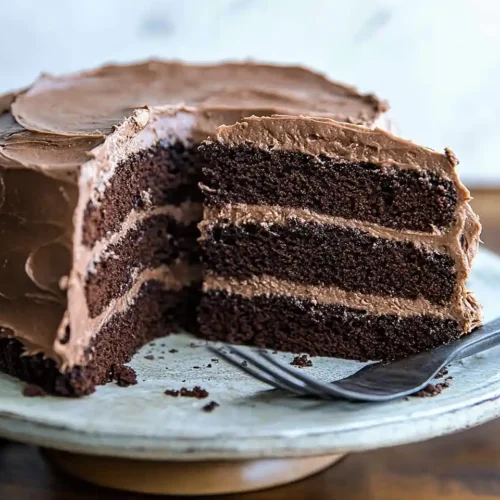
Easy Gluten-Free Cake
Equipment
- Two 9-inch round cake pans
- Cooking spray
- Parchment paper
- Large mixing bowl
- Stand mixer or hand mixer
- Paddle attachment
- Whisk
- Wire racks
- Toothpick
Ingredients
Dry Ingredients
- 2 cups All-purpose gluten-free flour 292g; Cup4Cup recommended
- 2 cups Granulated sugar 400g
- ¾ cup Unsweetened baking cocoa 75g; Dutch-processed preferred
- 2 teaspoons Baking powder
- 1½ teaspoons Baking soda
- 1 teaspoon Salt
Wet Ingredients
- 1 cup Milk or non-dairy milk 245g
- ½ cup Oil 107g; any preferred
- 2 large Eggs
- 2 teaspoons Vanilla extract
- 1 cup Boiling water 240g
Instructions
- Step 1: Prep Your Pans
Preheat your oven to 350°F. Spray two 9-inch round cake pans with cooking spray, then line the bottoms with cut-to-size parchment paper. Give that parchment a quick spray of cooking spray too—this prevents sticking and makes flipping easier. - Step 2: Combine Dry Ingredients
In a large bowl, add your gluten-free flour, sugar, cocoa powder, baking powder, baking soda, and salt. Whisk everything together until you don’t see any streaks of cocoa or lumps. If you’re using a stand mixer, use the paddle attachment and mix until the dry ingredients are completely combined. - Step 3: Add Wet Ingredients
Pour in your milk, oil, eggs, and vanilla. Mix on medium speed until well combined—the batter should look smooth and unified with no visible streaks. You’re creating a solid foundation here, so don’t rush this step. - Step 4: Add the Game-Changing Boiling Water
This is where the magic happens. Reduce your mixer to low speed and slowly add the boiling water to the batter. The batter will look thinner—that’s exactly right. Once all the water is incorporated, turn the speed up to high and mix for a full minute. This creates that impossibly moist, fudgy texture you’re after. - Step 5: Bake Until Perfect
Divide the batter evenly between your two prepared pans. Bake for 30–35 minutes, until a toothpick inserted in the center comes out clean or with just a few moist crumbs clinging to it. - Step 6: Cool Completely
Let the cakes cool in their pans for 10 minutes—this prevents them from breaking apart. Then turn them out onto wire racks to cool completely. Wait until they’re room temperature before frosting; trust me, this patience pays off.