Gluten-Free Caprese Salad Cups
Gluten-Free Caprese Salad Cups with tomatoes, mozzarella & basil—ready in 10 minutes for an elegant Italian appetizer.
Last summer, I brought a platter of these gluten-free caprese salad cups to a neighborhood potluck and watched three people photograph them before taking their first bite. One guest—a professional event planner—asked if I’d catered them from a fancy Italian restaurant, then couldn’t believe me when I said I’d assembled them in my kitchen in less than 15 minutes that morning.
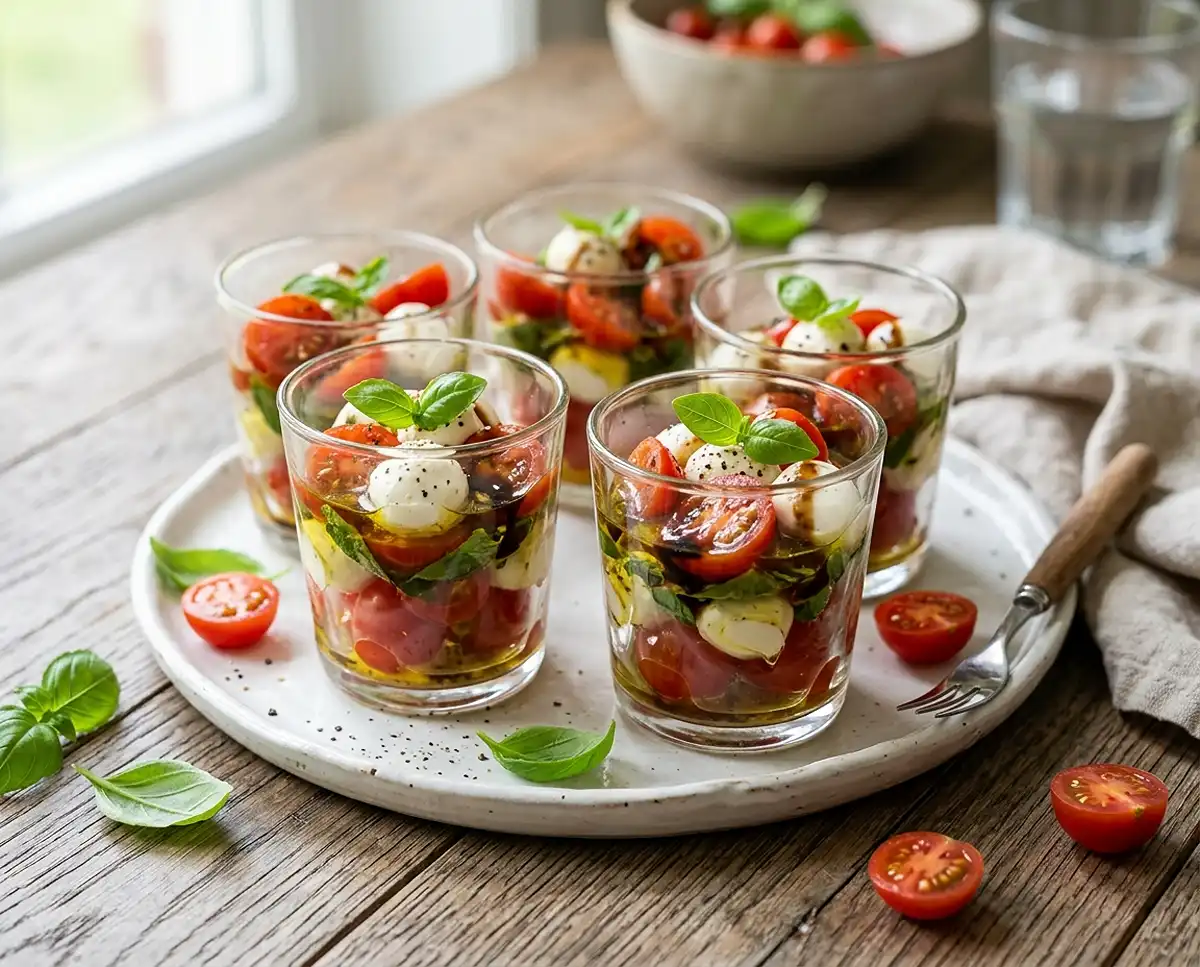
The beauty of these caprese cups is that they take the classic Italian caprese salad (tomato, mozzarella, basil) and transform it into individual portions that look like you spent hours on presentation. You know, there’s something about serving food in individual cups or glasses that instantly elevates it from “salad” to “sophisticated appetizer,” and honestly, can you think of an easier way to impress guests without turning on your oven?
Why You’ll Love These Gluten-Free Caprese Salad Cups
- No cooking required: Simply layer fresh ingredients into small cups—no baking, no stovetop work, no temperature monitoring—just assembly that takes 10 minutes from start to finish.
- Naturally gluten-free: Fresh tomatoes, mozzarella, basil, olive oil, and balsamic glaze are all naturally gluten-free ingredients (as long as your balsamic glaze is certified), making this a safe appetizer for everyone.
- Customizable portions: Individual cups make serving and portion control effortless—guests can grab one or two without hovering over a communal platter, and you control exactly how much each person gets.
- Looks expensive, costs pennies: Cherry tomatoes, fresh mozzarella balls, and basil from your garden (or grocery store) create a presentation that rivals high-end catering at a fraction of the cost.
The Secret to Perfect Gluten-Free Caprese Salad Cups
Fresh mozzarella is non-negotiable: Bocconcini (cherry-sized) or ciliegine (slightly smaller) fresh mozzarella balls have a soft, creamy texture and mild flavor that melts on your tongue, while pre-shredded or low-moisture mozzarella is rubbery and bland. According to trusted Italian culinary resources, fresh mozzarella is stored in water or brine to maintain moisture and should feel soft and slightly squishy when you squeeze it gently.
Certified gluten-free balsamic glaze prevents accidents: Traditional balsamic vinegar is naturally gluten-free, but many commercial balsamic glazes add thickeners or flavorings that can contain hidden gluten. Always check labels for “certified gluten-free” or make your own by simmering ½ cup balsamic vinegar in a small saucepan over medium heat for 10-15 minutes until it reduces to a thick, syrupy consistency.
Layering order creates visual impact: Starting with tomatoes on the bottom (their bright red color shows through clear cups), then mozzarella (white contrast), then basil leaves (green accent), then drizzling oil and glaze on top creates distinct layers that photograph beautifully and ensure every bite contains all the flavors.
Serving temperature matters: Caprese salad tastes best when the ingredients are cool but not refrigerator-cold—room temperature or lightly chilled (10-15 minutes in the fridge) allows the flavors to bloom and the olive oil to stay fluid instead of solidifying. Well, you want that silky oil to coat your tongue, not clump up like cold butter.
Table of Contents
Ingredients
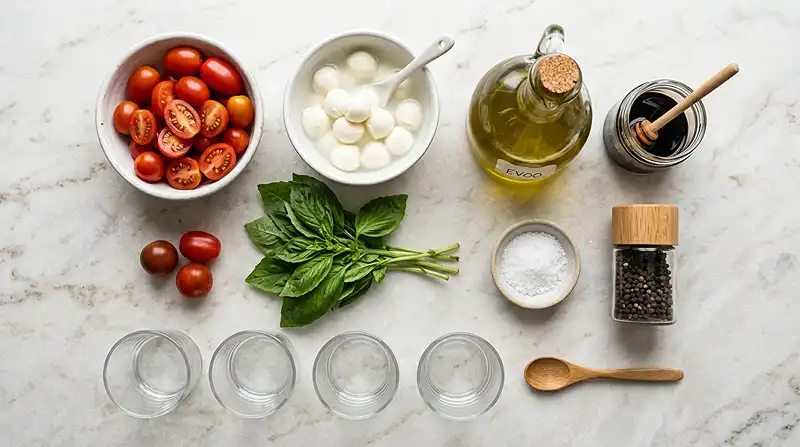
Main Ingredients:
- 1 cup cherry or grape tomatoes, halved
- 1 cup fresh mozzarella balls (bocconcini or ciliegine)
- Fresh basil leaves (about 1 cup loosely packed, or 12-16 leaves)
For Dressing:
- 2 tablespoons extra virgin olive oil
- 1-2 tablespoons balsamic glaze (certified gluten-free)
- Salt, to taste (start with ¼ teaspoon)
- Freshly ground black pepper, to taste
Note: Make sure your balsamic glaze is labeled “gluten-free”—brands like Nonna Pia’s, Trader Joe’s, and Colavita offer gluten-free versions. If you can’t find certified gluten-free balsamic glaze, use plain balsamic vinegar (which is naturally gluten-free) or make your own reduction.
Step-by-Step Instructions
1. Prep your ingredients
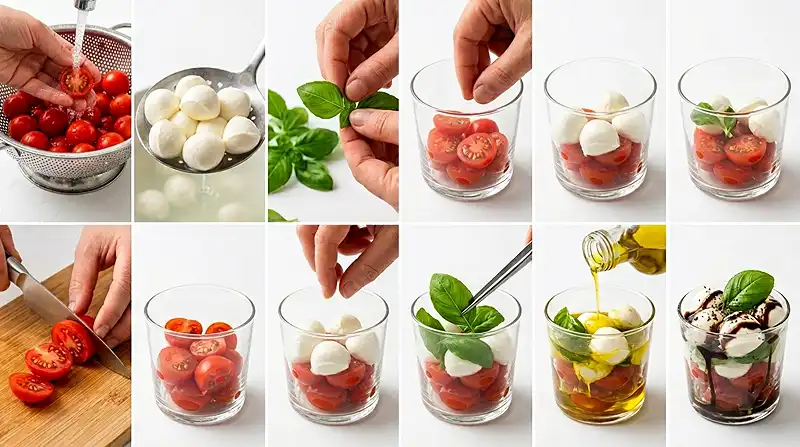
Wash and thoroughly dry 1 cup cherry or grape tomatoes, then slice them in half lengthwise through the stem end. Drain 1 cup fresh mozzarella balls (bocconcini or ciliegine) from their brine and pat them dry with paper towels—excess moisture will dilute your dressing and make the cups watery.
2. Prepare the basil
Wash and dry about 12-16 fresh basil leaves (roughly 1 cup loosely packed). Gently tear larger leaves into smaller pieces if needed, or leave small leaves whole—tearing releases the aromatic oils better than cutting with a knife, which can bruise the delicate leaves and cause browning.
3. Layer the tomatoes
Arrange 4-6 small appetizer cups, clear glasses, or shot glasses on your serving tray. Place 3-4 tomato halves (cut side up if possible) in the bottom of each cup as your first layer—the bright red color creates a beautiful base that shows through clear vessels.
4. Add the mozzarella
Drop 2-3 fresh mozzarella balls on top of the tomatoes in each cup, distributing them evenly. The white mozzarella against red tomatoes creates that classic caprese color contrast—each layer should be distinct and visible from the side of the glass.
5. Tuck in the basil
Add 2-3 small basil leaves (or pieces of larger leaves) to each cup, tucking them between the mozzarella balls and against the sides of the glass so they’re visible. The green basil completes the Italian flag color scheme (red, white, green) that makes caprese salad so visually striking.
6. Season and dress
Drizzle about ½ tablespoon extra virgin olive oil over each cup, then add a light sprinkle of salt (just a pinch per cup) and a few grinds of fresh black pepper. The olive oil should coat everything with a glossy sheen—as luxurious as liquid gold dripping down the layers.
7. Finish with balsamic glaze
Using a spoon, drizzle about ½ tablespoon balsamic glaze in a zigzag pattern over the top of each cup. The thick, syrupy glaze clings to the ingredients instead of pooling at the bottom, creating those Instagram-worthy drips down the sides of the glass.
8. Serve or chill
Serve immediately at room temperature for maximum flavor, or cover the cups loosely with plastic wrap and refrigerate for 10-15 minutes if you want a cooler, more refreshing appetizer. Don’t chill longer than 30 minutes or the tomatoes will become watery and the oil will solidify.
Pro Tip: For the cleanest presentation, wipe any drips or fingerprints off the outside of your serving glasses with a damp cloth before arranging them on your platter—this small detail makes them look professionally catered.
Make It Your Own
Try different tomato varieties: Swap cherry tomatoes for heirloom cherry tomatoes (yellow, orange, or purple for rainbow colors), sun-dried tomatoes (for concentrated flavor), or roasted cherry tomatoes (roast at 400°F for 15 minutes for deeper sweetness). Mixing multiple tomato colors in each cup creates a stunning visual effect.
Add protein or texture: Layer in 1-2 slices of gluten-free prosciutto, crispy gluten-free pancetta, grilled chicken strips, or cooked gluten-free pasta (like small shells or penne) to turn these appetizer cups into a heartier salad course. A sprinkle of toasted pine nuts or slivered almonds adds a delightful crunch.
Change up the cheese: Replace fresh mozzarella with burrata (even creamier and more luxurious), diced fresh ricotta salata (firmer and saltier), or small cubes of aged Parmesan for a sharper flavor. You know, burrata is basically mozzarella’s fancy cousin—it has a creamy center that oozes when you cut into it.
Make it vegan: Use dairy-free mozzarella balls (brands like Miyoko’s or Kite Hill make great alternatives) or skip the cheese entirely and add marinated artichoke hearts, roasted red peppers, or avocado chunks for richness. The combination of tomatoes, basil, and good olive oil is satisfying even without dairy.
Create a pesto drizzle: Instead of (or in addition to) balsamic glaze, drizzle homemade or store-bought gluten-free basil pesto over the top for an extra herbaceous punch. Mix 1 tablespoon pesto with 1 tablespoon olive oil to thin it to drizzling consistency.
Common Problems & Solutions
Tomatoes release too much liquid and make cups watery
Your tomatoes were very ripe or juicy, or you assembled the cups too far in advance. Pat the cut tomatoes dry with paper towels after slicing, and assemble the cups no more than 1-2 hours before serving—the salt in your seasoning will draw out moisture from the tomatoes over time, so timing is crucial for crisp, fresh cups.
Balsamic glaze is too thick and won’t drizzle
Your glaze was stored in the refrigerator and has thickened from the cold, or you reduced it too much if you made it homemade. Microwave the glaze for 5-10 seconds to warm it slightly and thin it to drizzling consistency, or add a teaspoon of balsamic vinegar and stir to loosen it up.
Olive oil solidifies and looks cloudy
You refrigerated the cups and the cold temperature caused the olive oil to solidify (this is normal for extra virgin olive oil below 40°F). Let the cups sit at room temperature for 15-20 minutes before serving—the oil will return to its liquid, golden state and the flavors will brighten up again.
Basil leaves turn brown or black on the edges
You cut the basil with a knife instead of tearing it by hand, or you assembled the cups several hours in advance and the basil oxidized. Man, oh man, basil is delicate—always tear it gently with your fingers at the last possible moment before serving to minimize bruising and browning.
Mozzarella tastes bland or rubbery
You used low-moisture or pre-shredded mozzarella instead of fresh mozzarella packed in water or brine. Fresh mozzarella (bocconcini or ciliegine) is essential for authentic caprese flavor—it should be soft, milky, and slightly sweet, not firm and rubbery like the mozzarella you’d put on pizza.
Storage & Meal Prep
| Method | Duration | Notes |
|---|---|---|
| Counter | 1-2 hours | Best served within 2 hours of assembly |
| Refrigerator | 4-6 hours | Cover loosely; bring to room temp before serving |
| Freezer | Not recommended | Fresh ingredients don’t freeze well |
Storage tips: These gluten-free caprese salad cups taste best when served within 1-2 hours of assembly, while the tomatoes are still firm and the basil is bright green. If you must make them ahead, assemble the cups up to 4-6 hours in advance, cover loosely with plastic wrap, and refrigerate—but add the basil, salt, and dressings (olive oil and balsamic glaze) in the last 30 minutes before serving to keep everything fresh.
Meal-prep strategy: Prep all your ingredients separately the day before—halve the tomatoes, drain and dry the mozzarella, wash the basil—and store each component in separate airtight containers in the fridge. Assemble the cups the morning of your event or party, then add the dressings just before guests arrive for maximum freshness and visual appeal.
Gluten-Free Caprese Salad Cups FAQs
Can I use regular mozzarella instead of fresh mozzarella balls?
No, regular low-moisture mozzarella (the kind used for pizza) has a completely different texture and flavor—it’s firm, rubbery, and designed to melt rather than be eaten fresh. Fresh mozzarella balls (bocconcini or ciliegine) are soft, creamy, and mild, which is essential for authentic caprese flavor. Look for them in the specialty cheese section, usually packed in water or brine.
How do I know if my balsamic glaze is gluten-free?
Check the ingredient label for wheat, barley, malt, or any grain-based thickeners—pure balsamic vinegar is naturally gluten-free, but many commercial glazes add modified food starch or other additives that may contain gluten. Look for products specifically labeled “certified gluten-free” or make your own by reducing plain balsamic vinegar. Brands like Nonna Pia’s and Colavita are reliable gluten-free options.
What’s the difference between balsamic vinegar and balsamic glaze?
Balsamic vinegar is thin and pourable (like any vinegar), while balsamic glaze is thick and syrupy—it’s made by reducing balsamic vinegar with sugar or grape must until it reaches a honey-like consistency that drizzles and clings to food. You can use plain balsamic vinegar in caprese salad, but glaze creates that beautiful, Instagram-worthy drizzle and has a sweeter, more concentrated flavor.
Can I make these caprese cups without individual serving glasses?
Yes, arrange all the ingredients on a large serving platter or board in the same layered fashion—tomatoes on the bottom, mozzarella balls scattered on top, basil leaves tucked around, then drizzle everything with olive oil and balsamic glaze. The individual cups just make serving and portion control easier, but a communal platter works for casual gatherings where people can spear ingredients with toothpicks.
Why do my caprese cups look watery after sitting for a while?
Tomatoes release juice over time, especially when salted—the osmotic pressure from the salt draws moisture out of the tomato cells and into the bottom of your cups. To minimize this, assemble the cups no more than 1-2 hours before serving, add salt at the last possible moment, and choose firm, slightly underripe tomatoes rather than very soft, juicy ones.
Serving Suggestions
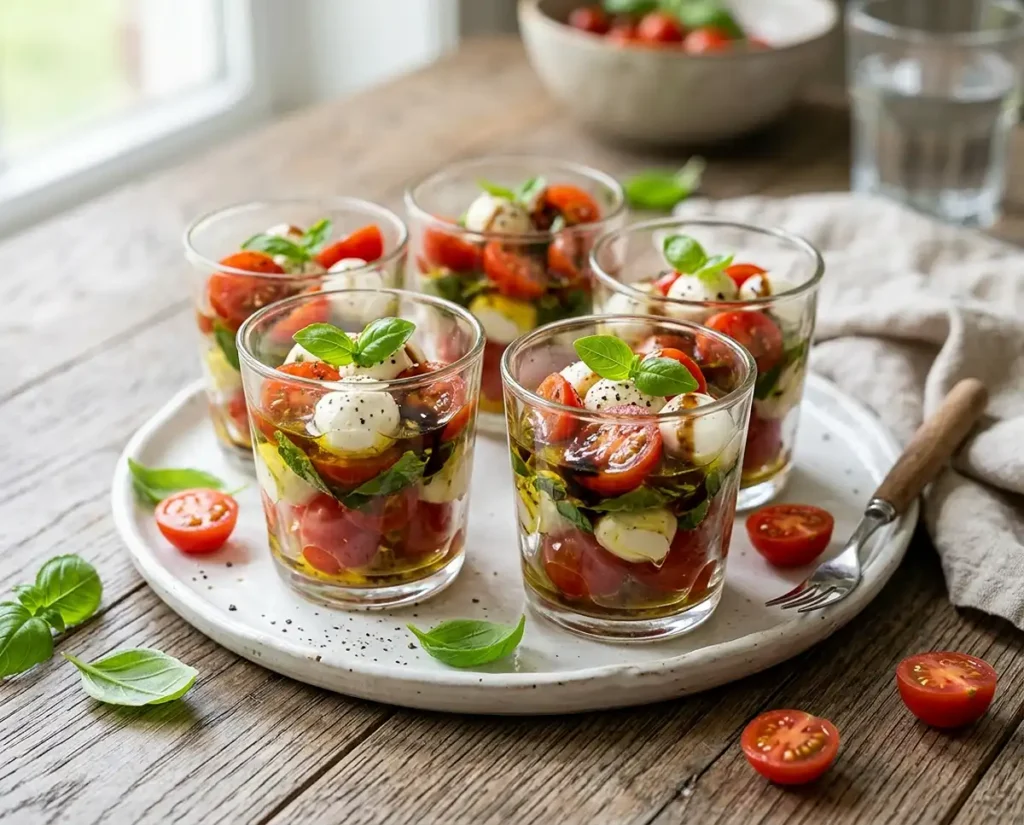
Serve these gluten-free caprese salad cups at summer barbecues, Fourth of July parties, bridal showers, or Italian-themed dinner parties where you want a light, refreshing starter that won’t fill people up before the main course. They’re also fantastic for cocktail parties, baby showers, or holiday appetizer spreads—the individual portions mean guests can easily grab one while mingling without needing plates or utensils beyond a small spoon.
For a complete gluten-free Italian menu, pair the caprese cups with gluten-free mushroom risotto as your main course and finish with gluten-free strawberry cheesecake bites or gluten-free chocolate truffles for dessert—it’s a menu that showcases fresh, simple flavors and requires minimal time in the kitchen.
Create These Show-Stopping Cups Today
Give these gluten-free caprese salad cups a try for your next gathering and let me know if they steal the show like they always do at mine! Pin this recipe for summer entertaining, and drop a comment below about your favorite way to serve caprese.
Rate the recipe after you make it, and share photos of your beautiful cups with the community—I love seeing everyone’s creative presentations. These cups prove that gluten-free appetizers can be just as elegant, fresh, and crowd-pleasing as any traditional recipe.
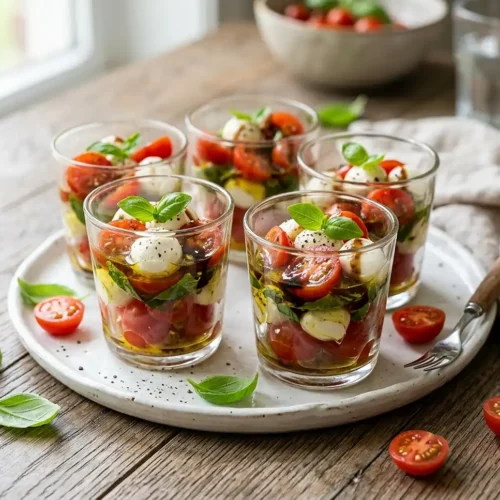
Gluten-Free Caprese Salad Cups
Equipment
- Small appetizer cups or shot glasses
- Knife
- Cutting board
- Paper towels
- Serving tray or platter
- Spoon for drizzling
Ingredients
Main Ingredients
- 1 cup Cherry or grape tomatoes halved
- 1 cup Fresh mozzarella balls bocconcini or ciliegine
- 1 cup Fresh basil leaves loosely packed, about 12-16 leaves
For Dressing
- 2 tablespoons Extra virgin olive oil
- 1-2 tablespoons Balsamic glaze certified gluten-free
- Salt to taste, start with ¼ teaspoon
- Freshly ground black pepper to taste
Instructions
- Wash and thoroughly dry 1 cup cherry or grape tomatoes, then slice them in half lengthwise through the stem end. Drain 1 cup fresh mozzarella balls (bocconcini or ciliegine) from their brine and pat them dry with paper towels—excess moisture will dilute your dressing and make the cups watery.
- Wash and dry about 12-16 fresh basil leaves (roughly 1 cup loosely packed). Gently tear larger leaves into smaller pieces if needed, or leave small leaves whole—tearing releases the aromatic oils better than cutting with a knife, which can bruise the delicate leaves and cause browning.
- Arrange 4-6 small appetizer cups, clear glasses, or shot glasses on your serving tray. Place 3-4 tomato halves (cut side up if possible) in the bottom of each cup as your first layer—the bright red color creates a beautiful base that shows through clear vessels.
- Drop 2-3 fresh mozzarella balls on top of the tomatoes in each cup, distributing them evenly. The white mozzarella against red tomatoes creates that classic caprese color contrast—each layer should be distinct and visible from the side of the glass.
- Add 2-3 small basil leaves (or pieces of larger leaves) to each cup, tucking them between the mozzarella balls and against the sides of the glass so they’re visible. The green basil completes the Italian flag color scheme (red, white, green) that makes caprese salad so visually striking.
- Drizzle about ½ tablespoon extra virgin olive oil over each cup, then add a light sprinkle of salt (just a pinch per cup) and a few grinds of fresh black pepper. The olive oil should coat everything with a glossy sheen.
- Using a spoon, drizzle about ½ tablespoon balsamic glaze in a zigzag pattern over the top of each cup. The thick, syrupy glaze clings to the ingredients instead of pooling at the bottom, creating those Instagram-worthy drips down the sides of the glass.
- Serve immediately at room temperature for maximum flavor, or cover the cups loosely with plastic wrap and refrigerate for 10-15 minutes if you want a cooler, more refreshing appetizer. Don’t chill longer than 30 minutes or the tomatoes will become watery and the oil will solidify.