Gluten-Free Cucumber Cups
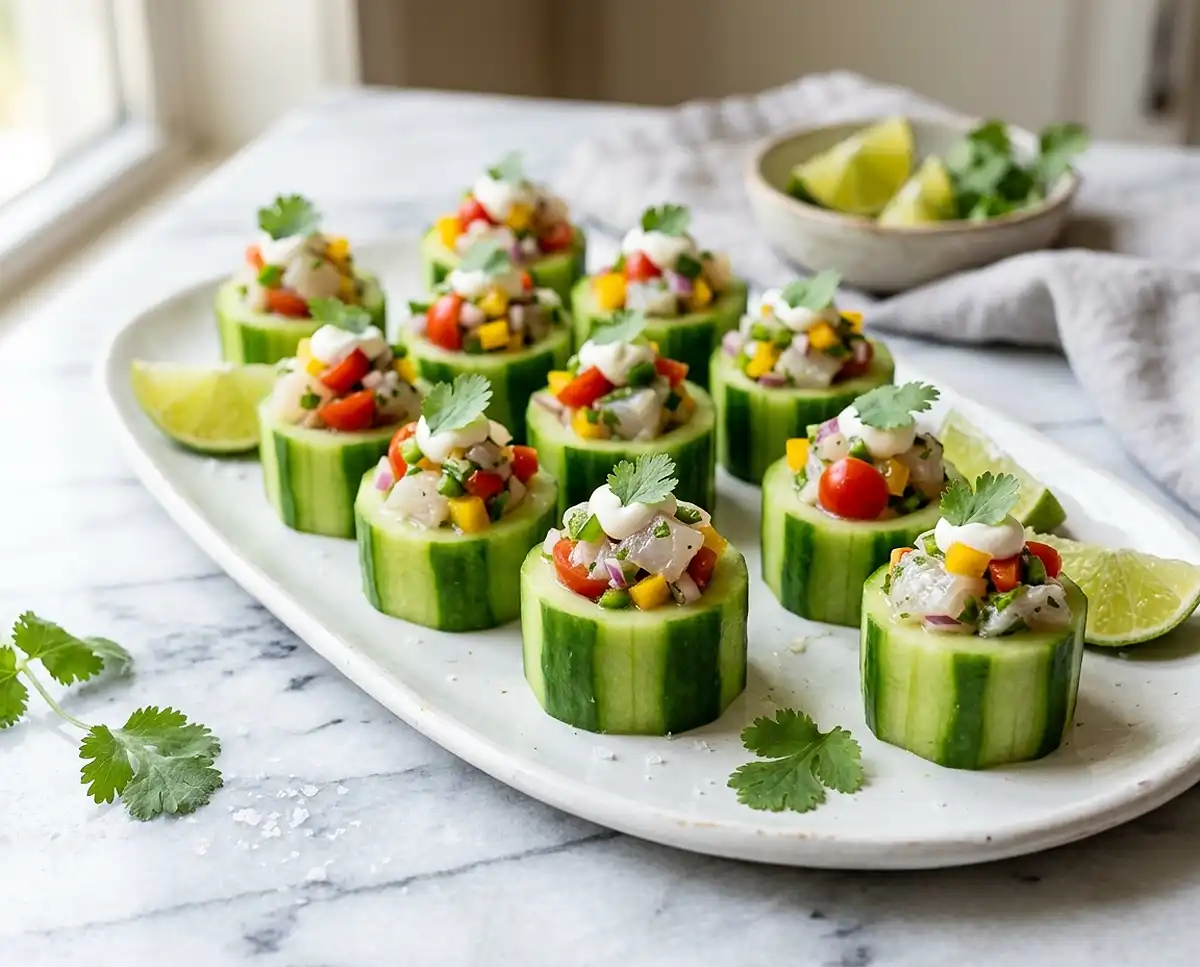
Gluten-Free Cucumber Cups filled with citrus-marinated ceviche—ready in 1 hour for an elegant appetizer that’s naturally low-carb.
Last summer, I brought a platter of these gluten-free cucumber cups to a Fourth of July cookout and watched them disappear in under ten minutes. Three guests asked for the recipe, and one person was shocked to learn they were eating raw fish—the bright lime marinade “cooks” the sea bass so perfectly that even seafood skeptics went back for seconds.
The genius of these cucumber cups is that they’re naturally gluten-free, grain-free, and incredibly light—crisp cucumber shells cradle tangy, fresh ceviche that tastes like the best beach vacation you’ve ever taken. You know, there’s something about that combination of citrus, cilantro, and cool cucumber that makes every bite feel like a celebration, whether you’re hosting a fancy dinner party or just craving a healthy afternoon snack.
Why You’ll Love These Gluten-Free Cucumber Cups
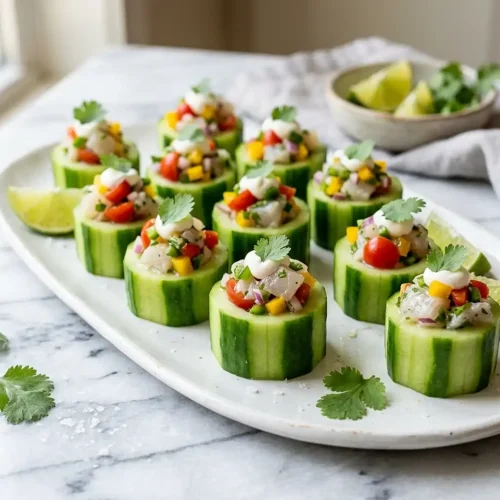
- Restaurant-quality presentation: Individual cucumber vessels filled with jewel-toned ceviche look as stunning as anything you’d get at a high-end seafood restaurant—your guests will think you spent hours on them.
- Naturally gluten-free and low-carb: No need for crackers, chips, or bread—the cucumber is your edible serving vessel, making this appetizer safe for celiacs, keto dieters, and anyone watching carbs.
- Make-ahead friendly: The ceviche marinates in the fridge for at least an hour (up to 4 hours), and you can prep the cucumber cups a few hours ahead—just assemble right before serving to keep everything crisp.
- Light but satisfying: Each bite delivers protein from the sea bass, crunch from vegetables, and bright acidity from lime juice—it’s refreshing enough for hot summer days but substantial enough that people actually feel fed.
The Secret to Perfect Gluten-Free Cucumber Cups
Lime juice “cooks” the fish through acid: Fresh lime juice denatures the proteins in raw fish through a process called denaturation, turning the translucent flesh opaque and firm without any heat. According to trusted food science research on ceviche, the fish is safe to eat once it’s marinated for at least 30 minutes to 1 hour (depending on the size of your dice)—look for an opaque appearance all the way through.
Fresh, sushi-grade fish is non-negotiable: Use only the freshest fish labeled “sushi-grade” or “sashimi-grade” from a reputable fishmonger, since you’re eating it raw. Striped bass, halibut, snapper, or sea bass work beautifully—avoid oily fish like salmon or tuna for ceviche, as their strong flavors overpower the delicate citrus marinade.
Cucumber cups stay crisp with proper prep: Trimming the rind with a round cutter and scooping out a shallow pocket (not cutting all the way through) creates stable vessels that won’t leak or get soggy. Well, the key is scooping just deep enough to hold the ceviche but leaving enough cucumber wall to maintain structure and crunch.
Marinating time affects texture: One hour in lime juice gives you tender, slightly firm fish with a bright citrus punch, while 3-4 hours creates a more “cooked” texture that’s softer and more opaque. Don’t marinate longer than 4 hours, or the fish will turn mushy and overly acidic—timing is everything in ceviche.
Table of Contents
Ingredients
For the Ceviche:
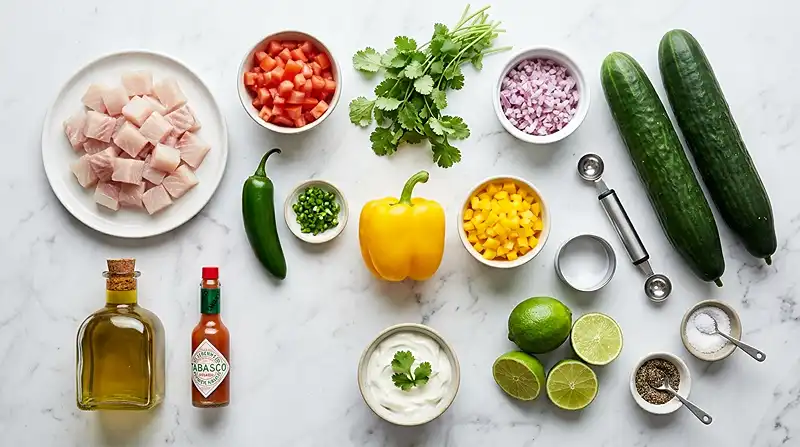
- 8 oz fresh raw fish fillet (such as striped bass), finely diced into ¼-inch cubes
- 1 medium seeded tomato, finely diced
- 1 tablespoon chopped cilantro
- 1 tablespoon minced red onion
- ½ jalapeño, minced (remove seeds for less heat)
- ¼ yellow bell pepper, finely diced
- ½ tablespoon olive oil
- 3 drops Tabasco sauce
- 3 tablespoons fresh lime juice (from 1-2 limes)
- Kosher salt and freshly ground black pepper, to taste
For the Cucumber Cups:
- 2 large cucumbers (English or Persian cucumbers work best)
- Fresh cilantro leaves for garnish
- Sour cream (optional, for garnish)
Note: Make sure your fish is labeled “sushi-grade” or “sashimi-grade” and purchased from a trusted source. Ask your fishmonger when it was delivered—ideally within 24 hours of purchase. This recipe yields approximately 30 cucumber cups (15 servings of 2 cups each).
Step-by-Step Instructions
Prepare the Ceviche
1. Combine the ceviche ingredients
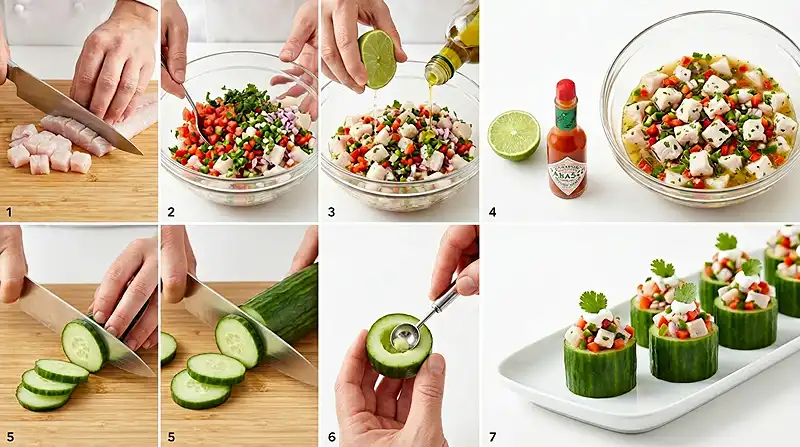
In a medium glass or stainless steel bowl (not aluminum, which reacts with acid), combine the 8 oz finely diced sea bass, 1 diced seeded tomato, 1 tablespoon chopped cilantro, 1 tablespoon minced red onion, ½ minced jalapeño, ¼ diced yellow bell pepper, ½ tablespoon olive oil, and 3 drops Tabasco sauce. Toss everything together gently.
2. Add lime juice and season
Pour 3 tablespoons fresh lime juice over the fish mixture and toss gently to coat every piece of fish—the lime juice needs direct contact with all surfaces to “cook” properly. Season with kosher salt and freshly ground black pepper to taste (start with ½ teaspoon salt and adjust after tasting).
3. Marinate in the refrigerator
Cover the bowl tightly with plastic wrap and refrigerate for at least 1 hour, stirring occasionally every 20 minutes to ensure even marination. Look at the fish as it marinates—you’ll see the translucent flesh gradually turn opaque and white, signaling that the acid is denaturing the proteins. You’re looking for a solid, cooked appearance all the way through the center of each fish cube.
Prepare the Cucumber Cups
4. Slice the cucumbers
Wash the 2 large cucumbers and slice them into thirty ½-inch-thick rounds using a sharp knife and cutting board. Try to make the slices as uniform as possible so they sit flat on your serving platter.
5. Trim and scoop the cups
Using a round cookie cutter or biscuit cutter (about 2 inches in diameter), trim each cucumber slice to remove the dark green rind, leaving a clean, light green edge. With a melon baller, scoop out a shallow pocket in the middle of each cucumber slice—aim for about ¼-inch deep, and be careful not to cut all the way through to the bottom. Man, oh man, that melon baller makes this step so much easier than trying to carve pockets with a spoon.
Assemble and Serve
6. Fill the cups just before serving
Right before your guests arrive (or within 30 minutes of serving), use a small spoon to fill each cucumber cup with about 1 tablespoon of the marinated ceviche, mounding it slightly in the center. The fish should look completely opaque with no translucent bits remaining.
7. Garnish and present
If desired, add a small dot of sour cream on top of each ceviche cup and place a single fresh cilantro leaf as garnish. Arrange the filled cups on a serving platter and serve immediately while the cucumber is still crisp and the ceviche is ice-cold.
Pro Tip: Keep the filled cucumber cups in the refrigerator until the last possible moment before serving—warmth will make the cucumbers release water and get soggy, and the ceviche tastes best when it’s almost icy cold.
Make It Your Own
Try different fish varieties: Swap striped bass for halibut, red snapper, mahi-mahi, or even fresh shrimp (peeled, deveined, and chopped)—all work beautifully in ceviche and have mild flavors that pair well with lime. Shrimp actually “cook” faster in citrus (20-30 minutes instead of 1 hour), so check them earlier to avoid an overly firm texture.
Go Mediterranean with tzatziki filling: Instead of ceviche, fill your cucumber cups with Greek tzatziki (yogurt, cucumber, garlic, dill, lemon), crumbled feta, and diced kalamata olives for a completely different but equally impressive gluten-free appetizer. This version doesn’t require any marinating time and is perfect if raw fish isn’t your thing.
Add tropical fruit: Stir in ¼ cup finely diced mango or pineapple to the ceviche for a sweet-tart tropical twist that pairs beautifully with the lime and cilantro. The fruit adds natural sweetness that balances the acidity and makes the whole dish feel even more summery.
Make it spicier or milder: Double the jalapeño for serious heat lovers, or skip it entirely and use just the Tabasco for a milder kick. You can also add a pinch of cayenne pepper or use serrano peppers (which are hotter than jalapeños) if you want maximum spice.
Create Asian-inspired cups: Replace the Latin flavors with an Asian marinade—use rice vinegar instead of lime juice, add minced ginger and garlic, swap cilantro for fresh basil, and drizzle with gluten-free tamari or coconut aminos. Top with toasted sesame seeds instead of sour cream for a completely different flavor profile.
Common Problems & Solutions
Fish stays translucent and doesn’t look “cooked”
Your dice was too large, or you didn’t marinate long enough. Cut the fish into smaller ¼-inch cubes (not ½-inch chunks) so the lime juice can penetrate more quickly, and marinate for the full hour (or up to 2 hours if your pieces are on the larger side). Stir the ceviche every 20 minutes to ensure even exposure to the acidic marinade.
Ceviche tastes too acidic or sour
You over-marinated the fish or used too much lime juice. Don’t exceed 4 hours of marination time, and measure the lime juice precisely—too much acid makes the fish taste sharp and unpleasant. You can balance excess acidity by adding a pinch of sugar or stirring in a tablespoon of diced avocado, which adds creaminess and mellows the tartness.
Cucumber cups get watery and soggy
You filled them too far in advance, or you scooped the pockets too deep and hit the seedy center (which contains more water). Scoop shallow pockets that leave at least ¼ inch of cucumber flesh at the bottom, and fill the cups no more than 30 minutes before serving. If you see water pooling, gently blot the cucumber cups with a paper towel before filling.
Fish has a strong “fishy” smell
Your fish wasn’t fresh enough—raw fish for ceviche should smell clean, like the ocean, with absolutely no ammonia or “fishy” odor. Always buy sushi-grade fish from a reputable source on the day you plan to use it, and keep it ice-cold until you’re ready to dice and marinate. If you detect any off smell, don’t use the fish—it’s not safe for raw consumption.
Cucumber cups won’t stand upright on the platter
The slices are too thin or cut at an angle instead of straight across. Cut the cucumbers into full ½-inch-thick slices (not thinner), and make sure your knife cuts are perpendicular to the cucumber so each slice has two flat, parallel sides. If a few cups still tip over, trim a tiny bit off the bottom to create a flat base.
Storage & Meal Prep
| Method | Duration | Notes |
|---|---|---|
| Counter | Not recommended | Keep ceviche and cups refrigerated at all times |
| Refrigerator | 24 hours | Store ceviche and cups separately; assemble before serving |
| Freezer | Not recommended | Raw fish ceviche and fresh cucumber don’t freeze well |
Meal-prep strategy: Make the ceviche up to 24 hours in advance (it actually tastes better after marinating overnight), and prep the cucumber cups up to 4 hours ahead—store them in an airtight container lined with damp paper towels to keep them from drying out. Assemble the filled cups no more than 30 minutes before serving for maximum crunch and freshness.
No-waste ideas: If you have leftover ceviche, serve it in lettuce cups, over gluten-free tortilla chips, or on top of a green salad for lunch the next day. Extra cucumber cups can be filled with hummus, guacamole, or cream cheese spreads for a quick snack.
Gluten-Free Cucumber Cups FAQs
Can I use cooked shrimp instead of raw fish?
Yes, pre-cooked shrimp work great if you’re nervous about raw fish—just chop them into small pieces and toss with the lime juice mixture for 30 minutes to absorb the flavors. The texture will be firmer since the shrimp are already cooked, but the bright, citrusy taste will be similar and it’s a safer option for people with compromised immune systems or pregnant guests.
How do I know if my fish is fresh enough for ceviche?
Fresh, sushi-grade fish should smell clean and ocean-like (not fishy), have firm, glossy flesh that springs back when touched, and should be kept on ice at the fish counter. Ask your fishmonger when it was delivered and tell them you’re making ceviche—they’ll steer you toward the freshest options and may even dice it for you. If the fish smells even slightly off or has a slimy texture, don’t use it for raw preparations.
What’s the best way to cut cucumbers into perfect slices?
Use a sharp chef’s knife and a stable cutting board, and cut straight down in one smooth motion (don’t saw back and forth, which creates uneven edges). Measure the first slice with a ruler to get a ½-inch thickness, then use it as a visual guide for the remaining slices. English cucumbers work best because they have fewer seeds and a more uniform diameter than regular cucumbers.
Can I make these cucumber cups without raw fish?
Absolutely—fill them with gluten-free mango salsa, Greek tzatziki, smoked salmon with cream cheese, chicken salad, tuna salad, or even a Mediterranean-inspired filling with hummus, feta, and sundried tomatoes. The cucumber cups are just edible vessels, so you can fill them with any gluten-free mixture you love.
Why did my ceviche turn mushy instead of firm?
You marinated the fish for too long (more than 4 hours), or your dice was too small and the acid broke down the proteins too much. Aim for ¼-inch cubes and check the texture at the 1-hour mark—once the fish looks completely opaque with no translucent center, it’s ready to serve. Over-marination causes the fish to lose its tender texture and become mealy or mushy.
Serving Suggestions

Serve these gluten-free cucumber cups as an elegant starter for dinner parties, summer cookouts, or Christmas Eve appetizer spreads when you want something light and refreshing before a heavy meal. They pair beautifully with gluten-free Thai basil chicken for an Asian-Latin fusion menu, or alongside other light appetizers like gluten-free mango salsa and crudités.
For a complete seafood feast, serve the ceviche cups with grilled fish tacos, gluten-free dairy-free panna cotta topped with fresh berries for dessert, and ice-cold margaritas—it’s a menu that works for Fourth of July, summer birthdays, or any occasion that calls for fresh, vibrant flavors.
Impress Your Guests with Fresh Ceviche Tonight
Give these gluten-free cucumber cups a try for your next gathering and let me know if they disappear as fast as mine always do! Pin this recipe for summer entertaining, and drop a comment below about your favorite way to serve ceviche.
Rate the recipe after you make it, and share photos of your beautiful cucumber cups with the community—I love seeing everyone’s creative garnishes. These appetizers prove that elegant, gluten-free entertaining doesn’t require crackers, bread, or hours in the kitchen.
Gluten-Free Cucumber Cups
Equipment
- Medium glass or stainless steel bowl
- Sharp knife
- Cutting board
- Round cookie cutter or biscuit cutter (2-inch diameter)
- Melon baller
- Measuring spoons
- Plastic wrap
- Small spoon for filling
- Serving platter
Ingredients
For the Ceviche
- 8 oz Fresh raw fish fillet such as striped bass, finely diced into ¼-inch cubes, sushi-grade
- 1 Medium tomato seeded and finely diced
- 1 tablespoon Cilantro chopped
- 1 tablespoon Red onion minced
- ½ Jalapeño minced, remove seeds for less heat
- ¼ Yellow bell pepper finely diced
- ½ tablespoon Olive oil
- 3 drops Tabasco sauce
- 3 tablespoons Fresh lime juice from 1-2 limes
- Kosher salt to taste
- Freshly ground black pepper to taste
For the Cucumber Cups
- 2 Large cucumbers English or Persian cucumbers work best, cut into thirty ½-inch-thick slices
- Fresh cilantro leaves for garnish
- Sour cream optional, for garnish
Instructions
- In a medium glass or stainless steel bowl (not aluminum, which reacts with acid), combine the 8 oz finely diced sea bass, 1 diced seeded tomato, 1 tablespoon chopped cilantro, 1 tablespoon minced red onion, ½ minced jalapeño, ¼ diced yellow bell pepper, ½ tablespoon olive oil, and 3 drops Tabasco sauce. Toss everything together gently.
- Pour 3 tablespoons fresh lime juice over the fish mixture and toss gently to coat every piece of fish—the lime juice needs direct contact with all surfaces to “cook” properly. Season with kosher salt and freshly ground black pepper to taste (start with ½ teaspoon salt and adjust after tasting).
- Cover the bowl tightly with plastic wrap and refrigerate for at least 1 hour, stirring occasionally every 20 minutes to ensure even marination. Look at the fish as it marinates—you’ll see the translucent flesh gradually turn opaque and white, signaling that the acid is denaturing the proteins. You’re looking for a solid, cooked appearance all the way through the center of each fish cube.
- Wash the 2 large cucumbers and slice them into thirty ½-inch-thick rounds using a sharp knife and cutting board. Try to make the slices as uniform as possible so they sit flat on your serving platter.
- Using a round cookie cutter or biscuit cutter (about 2 inches in diameter), trim each cucumber slice to remove the dark green rind, leaving a clean, light green edge. With a melon baller, scoop out a shallow pocket in the middle of each cucumber slice—aim for about ¼-inch deep, and be careful not to cut all the way through to the bottom.
- Right before your guests arrive (or within 30 minutes of serving), use a small spoon to fill each cucumber cup with about 1 tablespoon of the marinated ceviche, mounding it slightly in the center. The fish should look completely opaque with no translucent bits remaining.
- If desired, add a small dot of sour cream on top of each ceviche cup and place a single fresh cilantro leaf as garnish. Arrange the filled cups on a serving platter and serve immediately while the cucumber is still crisp and the ceviche is ice-cold.