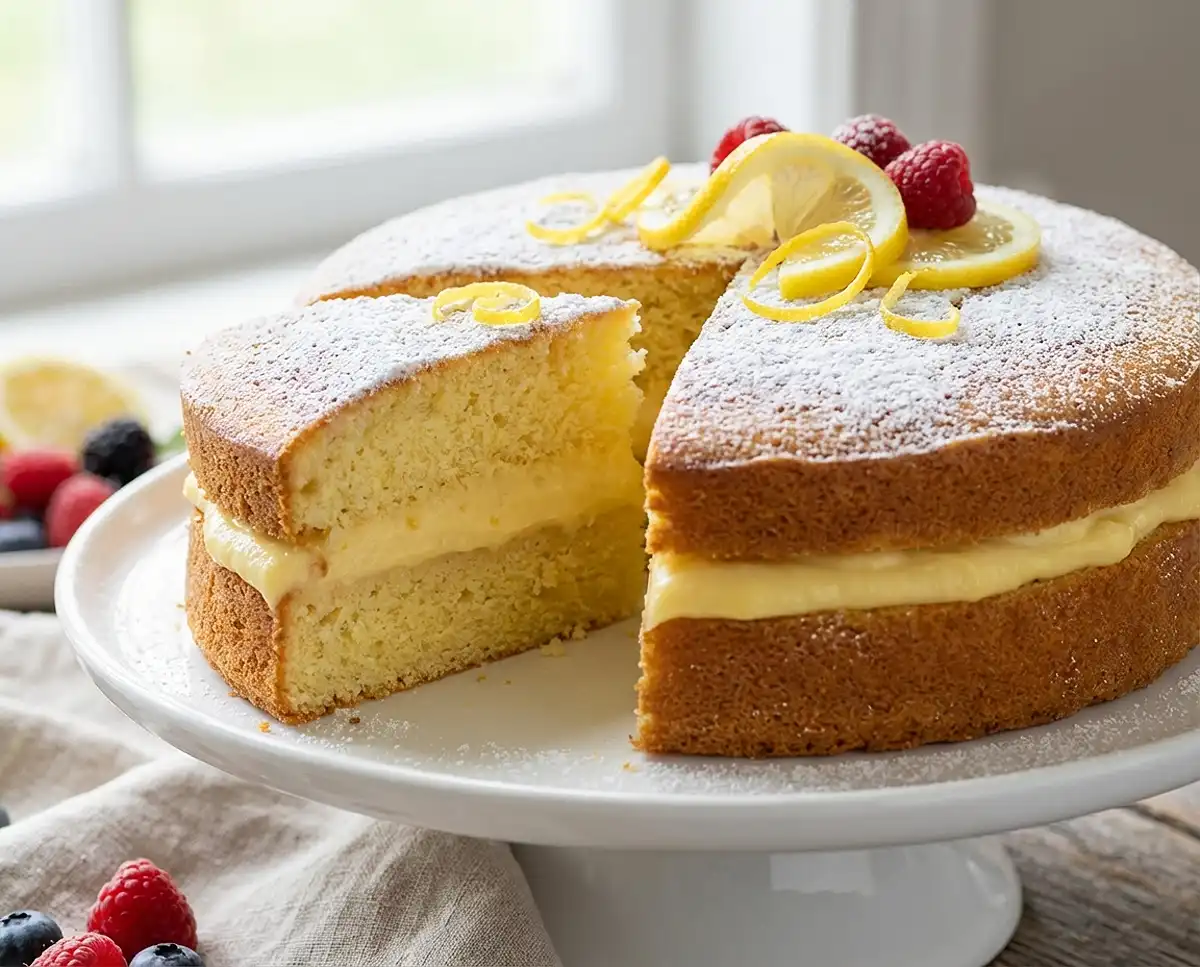
Gluten-Free Dairy-Free Mimosa Cake
Gluten-Free Dairy-Free Mimosa Cake (Italian Spring Dessert!) with fluffy sponge and lemon custard. Perfect for Mother’s Day—naturally GF & DF!
Last Mother’s Day, I attempted an Italian Mimosa Cake for my mom’s surprise brunch and ended up with a flat, rubbery disaster because I deflated the egg whites while folding in the flour. After watching her politely eat a slice and compliment my “effort,” I spent weeks perfecting this Gluten-Free Mimosa Cake until I got that cloud-like sponge and silky lemon custard just right.
The name comes from the cake’s resemblance to bright yellow mimosa flowers (not the champagne cocktail), and it’s traditionally served in Italy on International Women’s Day. You know how some gluten-free cakes taste dense and gummy? This one is so airy and delicate it practically melts on your tongue, with layers of lemony custard that taste like springtime in every bite.
Why You’ll Love This Mimosa Cake
- Light as air with silky lemon custard: The sponge is fluffy and tender thanks to whipped egg whites, while the custard adds tangy creaminess that contrasts beautifully with the cake’s subtle sweetness
- Intermediate-friendly with clear folding technique: The trickiest part is folding the egg whites without deflating them—I’ll show you exactly how to do it so your cake rises tall and stays soft
- Dairy-free adaptable: Use almond milk in the custard and skip the butter (this cake doesn’t need it), and you’ve got a dessert that’s safe for lactose-intolerant guests
- Make-ahead marvel: Assemble the cake a day in advance, refrigerate, and the flavors deepen while the texture stays perfectly moist—ideal for stress-free entertaining
The Secret to Perfect Gluten-Free Mimosa Cake
Whipping egg whites to soft peaks (not stiff) and folding them in three additions keeps the batter airy. Overbeaten egg whites turn dry and grainy, which makes them harder to fold in without deflating. Soft peaks (where the tips curl over gently) blend more easily into the batter and create a tender, springy crumb instead of a rubbery one.
Using a combination of gluten-free flour blend and cornflour mimics the delicate structure of Italian “00” flour. According to trusted gluten-free baking science from King Arthur Baking, cornflour (cornstarch) lightens the texture of gluten-free cakes and prevents them from tasting gritty or heavy. The blend provides structure, while the cornflour keeps everything tender and cake-like.
Tempering the egg yolks when making custard prevents curdling and creates a smooth, luxurious filling. If you pour hot milk directly into cold egg yolks, they’ll scramble instantly. Slowly whisking a bit of hot milk into the yolks first warms them gradually, so when you add the rest, the custard stays silky and lump-free.
Brushing the cake layers with lemon syrup adds moisture and enhances the citrus flavor without making the cake soggy. Gluten-free sponges can dry out quickly, and the syrup keeps every bite moist while infusing the cake with subtle lemon and vanilla notes. The key is brushing it on while the cake is still slightly warm so it absorbs evenly.
Table of Contents
Ingredients
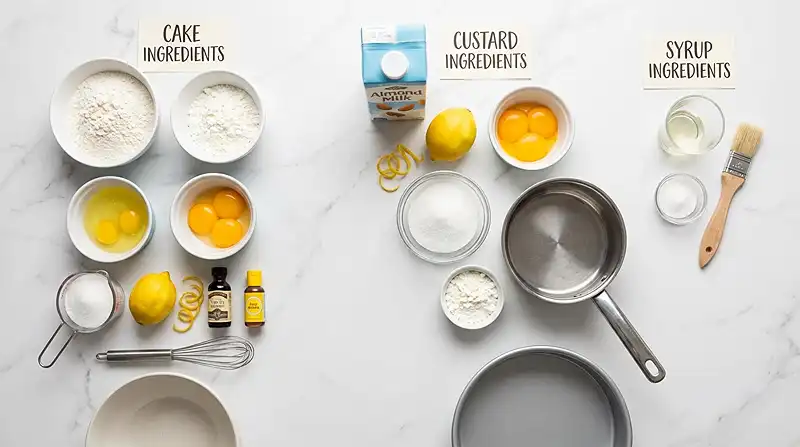
For the Cake
| Ingredient | Amount | Notes |
|---|---|---|
| Gluten-free flour blend | 200 g (about 1⅔ cups) | Bob’s Red Mill 1-to-1 or King Arthur Measure for Measure |
| Cornflour (cornstarch) | 120 g (about 1 cup) | Fine cornstarch, not coarse |
| Large eggs | 8 | Separated into whites and yolks |
| Caster sugar (superfine) | 250 g (about 1¼ cups) | Divided: half for whites, half for yolks |
| Lemon zest | From 1 lemon | Finely grated |
| Vanilla extract | 2 tsp | Pure vanilla, not imitation |
| Optional: lemon extract | ½ tsp | For extra citrus punch |
| Optional: yellow food coloring | 2-3 drops | To mimic traditional mimosa flower color |
For the Custard (Crema Pasticcera)
| Ingredient | Amount | Notes |
|---|---|---|
| Unsweetened almond milk | 500 ml (about 2 cups) | Or whole milk if not dairy-free |
| Lemon zest | From 1 lemon | Infuses the milk with citrus |
| Egg yolks | 5 (about 125 g) | Save the whites for another use |
| Caster sugar | 130 g (about ⅔ cup) | |
| Cornflour (cornstarch) | 1 tbsp | Thickens the custard |
For the Syrup
| Ingredient | Amount | Notes |
|---|---|---|
| White rum or orange juice | 30 g (about 2 tbsp) | Orange juice for alcohol-free version |
| Caster sugar | 35 g (about 3 tbsp) | Dissolves into the liquid |
Step-by-Step Instructions
Bake the Cake
Step 1: Preheat and Prep
Preheat your oven to 350°F (175°C) and position the rack in the center. Grease a 9-inch round or 9×13-inch rectangular cake pan with softened butter (or cooking spray), then line the bottom with parchment paper. This double-insurance prevents sticking and makes unmolding easy.
Step 2: Whip the Egg Whites
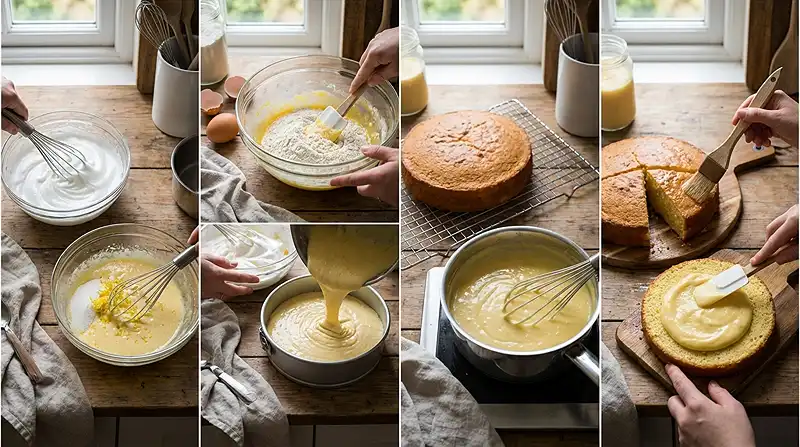
In a large, spotlessly clean mixing bowl (any grease will prevent the whites from whipping), beat 8 egg whites with an electric mixer on medium speed until they start to foam. Gradually add 125 g (half the sugar) one tablespoon at a time, increasing the speed to medium-high. Beat until soft peaks form—when you lift the beaters, the peaks should curl over gently at the tips, not stand straight up. This takes about 4-5 minutes.
Pro Tip: Room-temperature egg whites whip faster and higher than cold ones. Let your eggs sit out for 20-30 minutes before separating them.
Step 3: Beat the Egg Yolks
In another large bowl, whisk 8 egg yolks with the remaining 125 g sugar, lemon zest, 2 tsp vanilla extract (and optional ½ tsp lemon extract) using an electric mixer on medium-high speed for about 5-6 minutes. The mixture should turn pale yellow, thick, and ribbony—when you lift the beaters, the batter should fall in thick ribbons that hold their shape for a few seconds before dissolving back into the bowl.
Pro Tip: This step incorporates air into the yolks, which helps the cake rise even before you add the egg whites.
Step 4: Fold in the Dry Ingredients
In a separate bowl, sift together 200 g gluten-free flour blend and 120 g cornflour to remove any lumps. Gently fold the dry mixture into the egg yolk mixture in three additions using a wide spatula, cutting through the center and scooping up from the bottom. Use broad, sweeping motions and stop as soon as you don’t see dry flour streaks—overmixing will make the cake dense.
Step 5: Fold in the Egg Whites
Add about one-third of the whipped egg whites to the yolk-flour mixture and fold gently to lighten the batter. Then add the remaining whites in two more additions, folding carefully with the same sweeping motion. The batter should look fluffy and voluminous, with no large streaks of egg white remaining. It’s okay if you see a few small wisps—better slightly under-folded than deflated from overmixing.
Pro Tip: Turn the bowl as you fold so you’re working from different angles, which helps incorporate the whites more evenly without deflating them.
Step 6: Bake
Pour the batter into the prepared pan and smooth the surface gently with a spatula. Tap the pan lightly on the counter once or twice to release any large air bubbles. Bake for 25-30 minutes (check at 25 if using a rectangular pan, 28-30 for a round pan) until the cake is golden, springs back when lightly touched, and a skewer inserted into the center comes out clean. Let the cake cool in the pan for 10 minutes, then turn it out onto a wire rack to cool completely—at least 1 hour.
Pro Tip: Don’t open the oven door during the first 20 minutes of baking or the cake may collapse from the temperature drop.
Make the Custard
Step 7: Infuse the Milk
In a medium saucepan, combine 500 ml unsweetened almond milk (or whole milk) and the zest of 1 lemon. Heat over medium-low heat until the milk is hot and steaming but not boiling—you’ll see small bubbles forming around the edges. Remove from heat and let the lemon zest steep for 5 minutes to infuse the milk with citrus flavor.
Step 8: Temper the Egg Yolks
In a separate bowl, whisk together 5 egg yolks, 130 g sugar, and 1 tbsp cornflour until smooth and pale yellow. Slowly pour about ¼ cup of the hot milk into the yolk mixture while whisking constantly—this is called tempering, and it gradually raises the temperature of the yolks so they don’t scramble. Once the yolks are warmed, gradually whisk in the rest of the hot milk.
Pro Tip: Pour the milk in a thin stream (not all at once) and whisk vigorously to keep the eggs moving and prevent curdling.
Step 9: Cook the Custard
Pour the tempered mixture back into the saucepan and cook over low heat, stirring constantly with a wooden spoon or silicone spatula. The custard will thicken gradually over about 5-7 minutes—it’s ready when it coats the back of the spoon thickly and you can draw a line through it with your finger that stays clean. Remove from heat immediately, strain through a fine-mesh sieve to remove the lemon zest and any cooked egg bits, then transfer to a bowl and press plastic wrap directly onto the surface to prevent a skin from forming. Let it cool to room temperature, then refrigerate until cold.
Pro Tip: If you see the custard starting to bubble or steam, pull it off the heat immediately—boiling will make it grainy and curdled.
Prepare the Syrup
Step 10: Make the Syrup
In a small saucepan, combine 30 g white rum (or orange juice for alcohol-free) and 35 g sugar. Heat over low heat, stirring constantly, until the sugar dissolves completely and the liquid is clear. Remove from heat and let it cool to room temperature—it should be thin and pourable, not thick like simple syrup.
Assemble the Cake
Step 11: Slice and Brush
Once the cake is completely cool, use a long serrated knife to slice it horizontally into two even layers. Place the bottom layer on a serving plate or cake board. Brush the top generously with the lemon syrup using a pastry brush—you want the cake to absorb the moisture without becoming soggy. Use about half the syrup on this layer.
Step 12: Add the Custard
Spread the cooled lemon custard evenly over the bottom cake layer, leaving about a ½-inch border around the edges (the custard will spread slightly when you add the top layer). The custard should be about ½ to ¾ inch thick—use all of it for maximum lemon flavor.
Step 13: Top and Finish
Place the second cake layer on top of the custard, pressing down gently so it adheres. Brush the top lightly with the remaining syrup. If you want the traditional mimosa look, cut the very top crust of the cake into small cubes and scatter them over the surface to resemble mimosa flowers. Alternatively, dust the top with powdered sugar, add lemon zest curls, or garnish with fresh berries.
Step 14: Chill and Serve
Cover the assembled cake loosely with plastic wrap and refrigerate for at least 2-3 hours (or up to overnight) before serving. This chilling time allows the flavors to meld and the syrup to soak in, creating a moist, cohesive cake. Let it sit at room temperature for 10-15 minutes before slicing so the custard softens slightly.
Make It Your Own
Make it dairy-free throughout. Well… you’ve already got almond milk in the custard, so just skip greasing the pan with butter and use cooking spray instead. The cake batter itself doesn’t contain any dairy, which makes this naturally dairy-free-friendly—just double-check that your gluten-free flour blend doesn’t contain milk powder (most don’t).
Swap the lemon for orange or lime. Orange zest and orange juice in the custard and syrup create a sweeter, more mellow flavor that’s less tangy than lemon. Lime adds a tropical, slightly sharper twist that pairs beautifully with the vanilla. Use the same amounts of zest and juice as the recipe calls for.
Add a layer of fresh fruit. Sliced strawberries, raspberries, or peaches layered between the custard and the top cake layer add juicy bursts of sweetness and make the cake even more festive. Pat the fruit dry with paper towels before adding it so the extra moisture doesn’t make the cake soggy.
Try a different extract for flavor variation. Almond extract (use ½ tsp) instead of vanilla gives the cake a subtle, nutty sweetness that’s classic in Italian baking. Orange extract pairs beautifully with the lemon custard and adds depth without overpowering the citrus.
Common Problems & Solutions
Problem: The cake sank in the middle or turned out dense.
Solution: You deflated the egg whites by folding too vigorously, or you overmixed the batter after adding the dry ingredients. Fold gently using broad, sweeping motions—think of it like tucking a blanket around the batter, not stirring soup. Also, make sure your oven temperature is accurate (use an oven thermometer) and don’t open the door during the first 20 minutes of baking.
Problem: The custard is lumpy or curdled.
Solution: You either didn’t temper the eggs properly, or you let the custard boil. Always whisk a small amount of hot milk into the yolks first to warm them gradually, and cook the custard over low heat, stirring constantly. Man, oh man, if you see it starting to bubble, pull it off the heat immediately—a few seconds of boiling can ruin the texture.
Problem: The cake is dry and crumbly.
Solution: You overbaked it, or you didn’t brush enough syrup onto the layers. Check the cake at 25 minutes and pull it as soon as a skewer comes out clean—even one extra minute in the oven can dry out gluten-free cakes. Brush the layers generously with syrup while the cake is still slightly warm so it absorbs more moisture.
Problem: The custard is too thin and won’t set.
Solution: You didn’t cook it long enough to activate the cornflour. The custard needs to reach about 170-180°F to thicken properly—it should coat the back of a spoon thickly when it’s done. If it’s already made and too thin, return it to the stove and cook for another 2-3 minutes, stirring constantly, until it thickens.
Storage & Meal Prep
| Method | Duration | Notes |
|---|---|---|
| Counter | 2 hours max | Only if serving within a few hours |
| Fridge | 3-4 days | Airtight container; best within 2 days |
| Freezer | 1 month | Wrap tightly; texture may change slightly |
Store assembled cake in the refrigerator covered loosely with plastic wrap or in an airtight container. The custard and syrup keep the cake moist, but the texture is best within the first 2 days—after that, the sponge can start to absorb too much moisture and turn slightly soggy.
Freeze individual slices for easy serving. Wrap each slice tightly in plastic wrap, then place them in a freezer bag. Thaw overnight in the fridge before serving—the texture will be slightly denser than fresh, but the flavor stays intact.
Gluten-Free Dairy-Free Mimosa Cake FAQs
Can I use regular all-purpose flour instead of gluten-free?
Yes, but the texture will change slightly.
What’s the best gluten-free flour blend for this cake?
Bob’s Red Mill 1-to-1 Baking Flour or King Arthur Measure for Measure work beautifully.
Can I make the custard ahead of time?
Absolutely—it’s actually better made a day in advance.
Why did my egg whites deflate when I folded them in?
You either overbeat them to stiff peaks, or you stirred instead of folding.
Is this cake truly dairy-free?
Yes, if you use almond milk (or another plant-based milk) in the custard and skip the butter for greasing.
Serving Suggestions
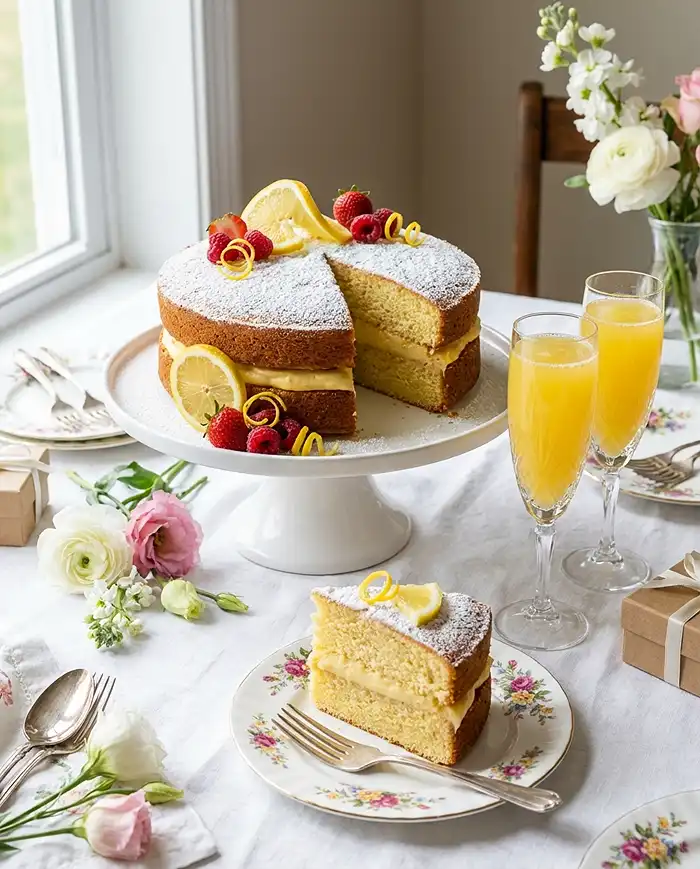
Serve this Gluten-Free Mimosa Cake at Mother’s Day brunch, Easter dinner, spring birthdays, or any celebration when you want an elegant dessert that tastes like sunshine and flowers. Slice it into wedges and serve with fresh berries, a dollop of whipped cream (dairy or coconut), or a simple cup of espresso to balance the sweetness. The bright yellow color and delicate lemon flavor make it feel like a special-occasion cake without being overly rich or heavy.
Pair it with Gluten-Free Brie and Fig Crostini for an elegant appetizer spread, or serve it alongside Gluten-Free Cloud Bread and Gluten-Free Cottage Cheese Toast for a complete brunch table that accommodates gluten-free guests beautifully.
Give this Gluten-Free Mimosa Cake a try for your next celebration and watch it become your new go-to spring dessert. If you come up with a creative flavor variation or have questions about folding technique, drop a comment below—I’d love to hear how you made it your own! Pin this recipe on Pinterest so you never lose it, and don’t forget to rate it if it becomes your new showstopper.
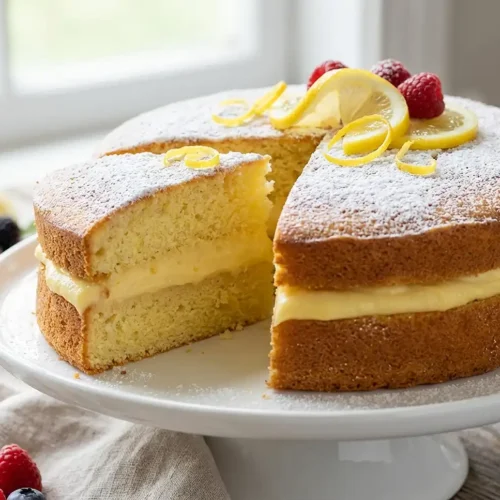
Mimosa Cake
Equipment
- 9-inch round or 9×13-inch rectangular cake pan
- Parchment paper
- Electric mixer
- 3 large mixing bowls
- Sifter or fine mesh strainer
- Wide spatula
- Medium saucepan
- Whisk
- Fine mesh strainer
- Small saucepan
- Long serrated knife
- Pastry brush
- Wire cooling rack
Ingredients
For the Cake
- 200 g gluten-free flour blend about 1⅔ cups; Bob’s Red Mill 1-to-1 or King Arthur Measure for Measure
- 120 g cornflour about 1 cup; fine cornstarch, not coarse
- 8 large eggs separated into whites and yolks
- 250 g caster sugar about 1¼ cups; divided: half for whites, half for yolks
- 1 whole lemon zest only, finely grated
- 2 tsp vanilla extract pure vanilla, not imitation
- ½ tsp lemon extract optional, for extra citrus punch
- 2-3 drops yellow food coloring optional, to mimic traditional mimosa flower color
For the Custard (Crema Pasticcera)
- 500 ml unsweetened almond milk about 2 cups; or whole milk if not dairy-free
- 1 whole lemon zest only; infuses the milk with citrus
- 5 whole egg yolks about 125 g; save the whites for another use
- 130 g caster sugar about ⅔ cup
- 1 tbsp cornflour thickens the custard
For the Syrup
- 30 g white rum or orange juice about 2 tbsp; orange juice for alcohol-free version
- 35 g caster sugar about 3 tbsp; dissolves into the liquid
Instructions
- Bake the Cake – Step 1: Preheat and Prep
Preheat your oven to 350°F (175°C) and position the rack in the center. Grease a 9-inch round or 9×13-inch rectangular cake pan with softened butter (or cooking spray), then line the bottom with parchment paper. This double-insurance prevents sticking and makes unmolding easy. - Bake the Cake – Step 2: Whip the Egg Whites
In a large, spotlessly clean mixing bowl (any grease will prevent the whites from whipping), beat 8 egg whites with an electric mixer on medium speed until they start to foam. Gradually add 125 g (half the sugar) one tablespoon at a time, increasing the speed to medium-high. Beat until soft peaks form—when you lift the beaters, the peaks should curl over gently at the tips, not stand straight up. This takes about 4-5 minutes.
Pro Tip: Room-temperature egg whites whip faster and higher than cold ones. Let your eggs sit out for 20-30 minutes before separating them. - Bake the Cake – Step 3: Beat the Egg Yolks
In another large bowl, whisk 8 egg yolks with the remaining 125 g sugar, lemon zest, 2 tsp vanilla extract (and optional ½ tsp lemon extract) using an electric mixer on medium-high speed for about 5-6 minutes. The mixture should turn pale yellow, thick, and ribbony—when you lift the beaters, the batter should fall in thick ribbons that hold their shape for a few seconds before dissolving back into the bowl.
Pro Tip: This step incorporates air into the yolks, which helps the cake rise even before you add the egg whites. - Bake the Cake – Step 4: Fold in the Dry Ingredients
In a separate bowl, sift together 200 g gluten-free flour blend and 120 g cornflour to remove any lumps. Gently fold the dry mixture into the egg yolk mixture in three additions using a wide spatula, cutting through the center and scooping up from the bottom. Use broad, sweeping motions and stop as soon as you don’t see dry flour streaks—overmixing will make the cake dense. - Bake the Cake – Step 5: Fold in the Egg Whites
Add about one-third of the whipped egg whites to the yolk-flour mixture and fold gently to lighten the batter. Then add the remaining whites in two more additions, folding carefully with the same sweeping motion. The batter should look fluffy and voluminous, with no large streaks of egg white remaining. It’s okay if you see a few small wisps—better slightly under-folded than deflated from overmixing.
Pro Tip: Turn the bowl as you fold so you’re working from different angles, which helps incorporate the whites more evenly without deflating them. - Bake the Cake – Step 6: Bake
Pour the batter into the prepared pan and smooth the surface gently with a spatula. Tap the pan lightly on the counter once or twice to release any large air bubbles. Bake for 25-30 minutes (check at 25 if using a rectangular pan, 28-30 for a round pan) until the cake is golden, springs back when lightly touched, and a skewer inserted into the center comes out clean. Let the cake cool in the pan for 10 minutes, then turn it out onto a wire rack to cool completely—at least 1 hour.
Pro Tip: Don’t open the oven door during the first 20 minutes of baking or the cake may collapse from the temperature drop. - Make the Custard – Step 7: Infuse the Milk
In a medium saucepan, combine 500 ml unsweetened almond milk (or whole milk) and the zest of 1 lemon. Heat over medium-low heat until the milk is hot and steaming but not boiling—you’ll see small bubbles forming around the edges. Remove from heat and let the lemon zest steep for 5 minutes to infuse the milk with citrus flavor. - Make the Custard – Step 8: Temper the Egg Yolks
In a separate bowl, whisk together 5 egg yolks, 130 g sugar, and 1 tbsp cornflour until smooth and pale yellow. Slowly pour about ¼ cup of the hot milk into the yolk mixture while whisking constantly—this is called tempering, and it gradually raises the temperature of the yolks so they don’t scramble. Once the yolks are warmed, gradually whisk in the rest of the hot milk.
Pro Tip: Pour the milk in a thin stream (not all at once) and whisk vigorously to keep the eggs moving and prevent curdling. - Make the Custard – Step 9: Cook the Custard
Pour the tempered mixture back into the saucepan and cook over low heat, stirring constantly with a wooden spoon or silicone spatula. The custard will thicken gradually over about 5-7 minutes—it’s ready when it coats the back of the spoon thickly and you can draw a line through it with your finger that stays clean. Remove from heat immediately, strain through a fine-mesh sieve to remove the lemon zest and any cooked egg bits, then transfer to a bowl and press plastic wrap directly onto the surface to prevent a skin from forming. Let it cool to room temperature, then refrigerate until cold.
Pro Tip: If you see the custard starting to bubble or steam, pull it off the heat immediately—boiling will make it grainy and curdled. - Prepare the Syrup – Step 10: Make the Syrup
In a small saucepan, combine 30 g white rum (or orange juice for alcohol-free) and 35 g sugar. Heat over low heat, stirring constantly, until the sugar dissolves completely and the liquid is clear. Remove from heat and let it cool to room temperature—it should be thin and pourable, not thick like simple syrup. - Assemble the Cake – Step 11: Slice and Brush
Once the cake is completely cool, use a long serrated knife to slice it horizontally into two even layers. Place the bottom layer on a serving plate or cake board. Brush the top generously with the lemon syrup using a pastry brush—you want the cake to absorb the moisture without becoming soggy. Use about half the syrup on this layer. - Assemble the Cake – Step 12: Add the Custard
Spread the cooled lemon custard evenly over the bottom cake layer, leaving about a ½-inch border around the edges (the custard will spread slightly when you add the top layer). The custard should be about ½ to ¾ inch thick—use all of it for maximum lemon flavor. - Assemble the Cake – Step 13: Top and Finish
Place the second cake layer on top of the custard, pressing down gently so it adheres. Brush the top lightly with the remaining syrup. If you want the traditional mimosa look, cut the very top crust of the cake into small cubes and scatter them over the surface to resemble mimosa flowers. Alternatively, dust the top with powdered sugar, add lemon zest curls, or garnish with fresh berries. - Assemble the Cake – Step 14: Chill and Serve
Cover the assembled cake loosely with plastic wrap and refrigerate for at least 2-3 hours (or up to overnight) before serving. This chilling time allows the flavors to meld and the syrup to soak in, creating a moist, cohesive cake. Let it sit at room temperature for 10-15 minutes before slicing so the custard softens slightly.