Gluten-Free Dairy-Free Panna Cotta
This gluten-free dairy-free panna cotta features silky coconut-based custard with four elegant topping options. A stunning Italian dessert ready for any special occasion!
I served my first panna cotta at a dinner party fifteen years ago, before my dairy-free days, and watched guests close their eyes in pure bliss with every spoonful. That creamy, barely-set wobble, the way it melted on the tongue—it was the definition of elegant dessert. When I could no longer eat dairy, I genuinely thought those moments were behind me.
Well… after extensive testing with various non-dairy milks, I’m thrilled to report that coconut panna cotta can be every bit as luxurious as the original. The silky texture, the delicate sweetness, that signature gentle quiver when you tap the plate—all achievable without a drop of cream.
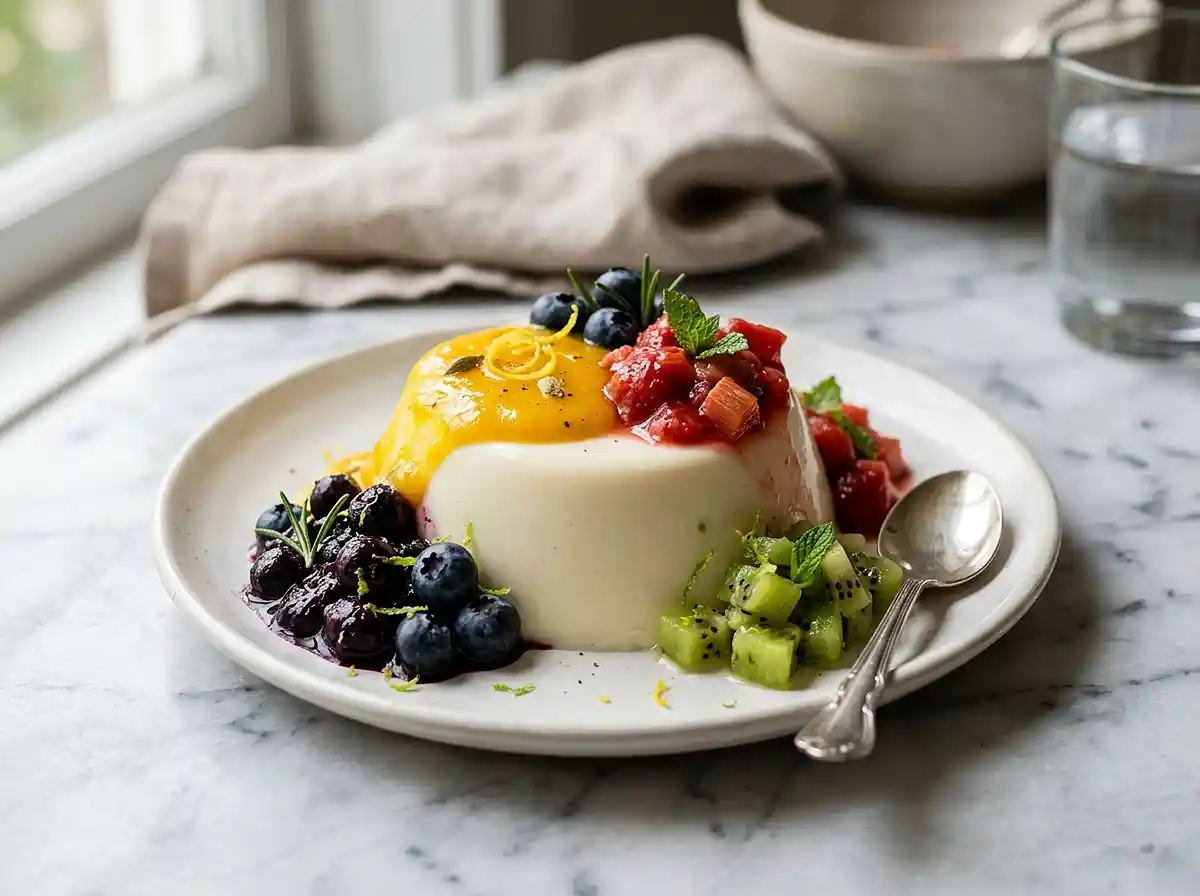
This gluten-free dairy-free panna cotta comes with four distinctly different toppings, from tropical mango cardamom to sophisticated blueberry rosemary lime. Why limit yourself to one flavor when you can create a dessert spread that impresses every palate at the table? There’s something wonderfully elegant about offering guests their choice of beautiful, jewel-toned compotes.
Table of Contents
Why You’ll Love This Gluten-Free Dairy-Free Panna Cotta
Completely free of dairy, gluten, and major allergens – impressive Italian dessert accessible to nearly every dietary restriction.
Make-ahead perfection for stress-free entertaining – prepare up to three days in advance and simply add toppings before serving.
Four stunning topping options included – mango cardamom, strawberry rhubarb, blueberry rosemary, and kiwi mint give you endless variety from one base recipe.
That signature panna cotta wobble, achieved dairy-free – proper gelatin technique creates the silky, barely-set texture that defines this classic.
The Secret to Perfect Coconut Panna Cotta
Blooming the gelatin is absolutely non-negotiable. Sprinkling gelatin over cold water and letting it sit creates a uniform texture when heated. Skip this step and you’ll have rubbery clumps floating in your dessert. According to Serious Eats’ gelatin guide, proper blooming ensures gelatin dissolves completely and sets evenly.
The milk temperature matters more than you think. Too hot and you risk weakening the gelatin’s setting power; too cold and it won’t dissolve properly. A gentle simmer—not a rolling boil—is the sweet spot.
Greasing the molds enables flawless unmolding. A thin coating of coconut oil creates a barrier that allows the panna cotta to release cleanly. Without it, you’ll struggle with stuck edges and torn surfaces.
Full-fat dairy-free milk produces the creamiest results. Thin, low-fat alternatives create a watery texture that doesn’t deliver that luxurious mouthfeel panna cotta demands. Macadamia, oat, or full-fat coconut milk work beautifully.
Ingredients
Panna Cotta Base
- 1/2 ounce powdered gelatin (2 packets, scant 2 tablespoons)
- 6 tablespoons cold water
- 4 cups dairy-free milk (I used Milkadamia)
- 1 cup granulated sugar (200 g)
- 1 teaspoon kosher salt
- 2 tablespoons vanilla extract (25 g)
- Coconut oil for greasing molds
Mango Lemon Cardamom Topping
- 1 cup kesar mango pulp (canned and unsweetened)
- 1/4 teaspoon freshly-ground cardamom
- 2 teaspoons lemon juice
- Lemon zest for garnish
Strawberry Rhubarb Compote
- 2 cups diced strawberries (178 g)
- 2 cups diced rhubarb (178 g)
- 1/3 cup granulated sugar (66 g)
- Pinch of salt
Blueberry Rosemary Lime Compote
- 1 1/2 cups blueberries (220 g)
- 1 sprig of fresh rosemary
- 3 tablespoons granulated sugar
- 2 teaspoons lime juice
- Pinch of salt
- Lime zest for garnish
Kiwi Mint Topping
- 1 cup diced kiwi (160 g)
- 5 mint leaves, chopped
- 1 tablespoon granulated sugar
Equipment You’ll Need
Twelve 4-ounce ramekins or similar molds are ideal for portion control and elegant presentation. You’ll also need a medium saucepan for heating the milk, a small bowl for blooming gelatin, a whisk, measuring cups and spoons, and small saucepans for cooking the compotes.
Pro Tip: Silicone molds release panna cotta more easily than ceramic ramekins. If using traditional ramekins, greasing thoroughly is essential.
Step-by-Step Instructions
Prepare Your Molds
Lightly grease twelve 4-ounce ramekins or molds with a thin coating of coconut oil. Use a paper towel to spread the oil evenly across the bottom and up the sides—you want complete coverage but not a thick layer that will affect taste.
Set the prepared molds on a baking sheet or tray for easy transport to the refrigerator later.
Bloom the Gelatin
Pour 6 tablespoons of cold water into a small bowl. Sprinkle the gelatin evenly over the surface of the water—don’t dump it in a pile.
Let the gelatin sit undisturbed for 5 minutes. It will absorb the water and transform from powdery to a soft, spongy mass. This “bloomed” gelatin dissolves smoothly when heated.
You know… rushing this step is tempting, but those 5 minutes make the difference between silky panna cotta and grainy disaster.
Heat the Milk Mixture
Combine the dairy-free milk, granulated sugar, kosher salt, and vanilla extract in a medium saucepan. Whisk everything together until well combined.
Place over medium heat and warm gradually, whisking occasionally to help the sugar dissolve. Bring to a low simmer—you’ll see tiny bubbles around the edges and wisps of steam, but not a rolling boil.
Once simmering and all sugar has dissolved completely, remove from heat immediately. Let the mixture sit for 1 minute to cool slightly—this prevents the hot liquid from weakening the gelatin.
Incorporate the Gelatin
Add the bloomed gelatin to the warm milk mixture. Whisk continuously until the gelatin dissolves completely—this takes about 1-2 minutes of steady whisking.
The mixture should look smooth and unified, with no visible gelatin bits or clumps. Run a spatula along the bottom of the pot to check for any undissolved pieces.
Pro Tip: If you spot stubborn gelatin bits, return the pot to very low heat briefly while whisking. Never boil the mixture once gelatin is added.
Pour and Chill
Carefully pour the panna cotta mixture into your prepared molds, dividing evenly. Each ramekin should be about three-quarters full.
Place the tray of filled molds in the refrigerator. Chill for at least 4 hours—overnight is even better. The panna cotta needs this time to set completely. It should quiver gently when touched but hold its shape.
Prepare Your Toppings
While the panna cotta sets, prepare whichever topping(s) you’ve chosen. All can be made ahead and refrigerated.
Mango Lemon Cardamom: Simply combine the mango pulp with the ground cardamom and lemon juice in a small bowl. Stir well. This no-cook topping stores refrigerated for up to 5 days.
Strawberry Rhubarb Compote: Combine the diced strawberries, rhubarb, sugar, and salt in a medium saucepan over medium heat. Cook for 10 minutes, stirring occasionally, until the fruit breaks down and the mixture thickens to your liking. Man, oh man… the kitchen smells incredible during this step. Let cool completely before using.
Blueberry Rosemary Lime Compote: Combine the blueberries, whole rosemary sprig, sugar, lime juice, and salt in a small saucepan over medium heat. Cook for 10 minutes until the berries burst and the compote thickens. Remove the rosemary sprig before serving. Let cool completely.
Kiwi Mint: Combine the diced kiwi, chopped mint, and sugar in a small bowl. Let sit for 5-10 minutes before serving—the sugar draws out the kiwis’ natural juices, creating a light syrup.
Unmold (Optional)
For the most elegant presentation, unmold each panna cotta onto individual serving plates. This step is optional—serving in the ramekins is equally beautiful.
Run a thin knife or offset spatula around the top edge of each panna cotta to break the suction seal. Don’t cut deep—just gently separate the edge from the ramekin.
Fill a small bowl with hot (not boiling) water. Dip the bottom of one ramekin in the water for 10-15 seconds, being extremely careful not to let any water touch the panna cotta itself.
Invert the ramekin onto a serving plate and give a gentle shake. The panna cotta should release with a satisfying wobble. If it resists, repeat the warm water dip for a few more seconds.
Serve
Spoon your chosen topping generously over each panna cotta. For the mango topping, add a sprinkle of lemon zest. For the blueberry version, finish with lime zest.
Serve immediately—the toppings will slowly slide down once applied, which is beautiful but means timing matters for photography.
Make It Your Own
Full-fat coconut milk creates the richest version. Well… swap the dairy-free milk for two cans of full-fat coconut milk plus enough water to reach 4 cups. The result tastes more like traditional panna cotta—decadent and creamy.
Reduce the sugar for a less sweet dessert. Cut the sugar to 2/3 cup for a more sophisticated, less cloying panna cotta that lets the vanilla and toppings shine.
Infuse the milk with additional flavors. Steep earl grey tea bags, lavender buds, or citrus zest in the warm milk for 15 minutes before adding gelatin. Strain before proceeding.
Add espresso for mocha panna cotta. Whisk 2 tablespoons instant espresso powder into the milk mixture. Top with dairy-free chocolate shavings instead of fruit compote.
Transform leftovers into parfaits. Cube any leftover panna cotta and layer in glasses with compote and granola for a textural breakfast treat.
Create a holiday version with pumpkin. Replace 1 cup of the dairy-free milk with pumpkin puree and add pumpkin pie spice. Top with maple-candied pecans.
Common Problems & Solutions
Problem: The panna cotta didn’t set properly.
The gelatin-to-liquid ratio was off, the gelatin wasn’t fully bloomed, or it wasn’t completely dissolved. Ensure you use the full amount of gelatin specified and bloom for the complete 5 minutes. Whisk thoroughly when adding to warm milk.
Problem: There are rubbery bits or clumps in the texture.
The gelatin didn’t dissolve completely before pouring. Next time, whisk longer and check for bits along the pot bottom. If the milk cooled too much before adding gelatin, it won’t dissolve properly.
Problem: The panna cotta is too firm and bouncy.
Too much gelatin or too long a chilling time can create rubbery results. Use the exact measurements specified. For softer set, chill for the minimum 4 hours rather than overnight.
Problem: The panna cotta stuck to the mold during unmolding.
The mold wasn’t greased adequately, or the warm water dip was too brief. Grease thoroughly next time, and don’t be afraid to hold the ramekin in warm water for the full 15 seconds.
Problem: The compote is too watery.
It didn’t cook long enough to reduce and thicken. Return it to the heat and simmer until it coats a spoon nicely. Some fruits release more liquid than others—adjust sugar and cooking time accordingly.
Storage & Meal Prep
| Component | Method | Duration | Notes |
|---|---|---|---|
| Panna cotta (in molds) | Refrigerator | 3-4 days | Cover with plastic wrap |
| Mango topping | Refrigerator | 5 days | Store in airtight container |
| Cooked compotes | Refrigerator | 7-10 days | Flavors improve overnight |
| Kiwi mint topping | Refrigerator | 1 day | Make fresh for best color |
| Assembled panna cotta | Refrigerator | 4-6 hours | Topping slides over time |
This elegant dessert is ideal for make-ahead entertaining. Prepare the panna cotta base and cooked compotes up to 3 days before your event. Store the panna cotta covered in their molds, and refrigerate compotes separately.
Unmold and top just before serving for the most beautiful presentation. If you must plate in advance, expect the toppings to spread slightly—still delicious, just less photogenic.
Your Questions Answered
Can panna cotta be dairy-free?
Absolutely. Traditional panna cotta relies on cream for richness, but full-fat dairy-free milks—especially macadamia, oat, or coconut—replicate that silky texture beautifully. The gelatin provides the same signature wobble regardless of milk type. This recipe proves dairy-free panna cotta can be every bit as luxurious.
Is panna cotta gluten-free?
Yes, traditional panna cotta is naturally gluten-free since it contains only cream (or dairy-free milk), sugar, and gelatin—no flour or grains involved. Always verify that any flavoring extracts you use are certified gluten-free, and check topping ingredients if using store-bought components.
What is a good substitute for cream in panna cotta?
Full-fat coconut milk is the most popular substitute, creating rich, creamy results. Macadamia milk (like Milkadamia used here) offers a neutral flavor and silky texture. Cashew cream, oat milk, and even full-fat soy milk work well. Avoid thin, low-fat alternatives that produce watery results.
Is mango panna cotta gluten-free?
Mango itself is completely gluten-free, and when combined with this gluten-free panna cotta base, the entire dessert remains safe. Verify that your canned mango pulp contains no additives or thickeners containing gluten—most are simply pureed fruit.
What’s surprisingly not gluten-free?
Many products contain hidden gluten: certain vanilla extracts (some use grain alcohol), flavored non-dairy milks with malt, some store-bought fruit toppings with thickeners, and even certain gelatin brands. For this recipe, verify your vanilla extract and dairy-free milk are certified gluten-free.
What dairy is in traditional panna cotta?
Classic Italian panna cotta contains heavy cream as its primary ingredient—the name literally translates to “cooked cream.” Some recipes add milk to lighten the texture. This recipe eliminates all dairy by using plant-based milk, creating an equally delicious but allergen-friendly version.
Serving Suggestions
This gluten-free dairy-free panna cotta makes a stunning finale to any special dinner party. The jiggly, pristine white dessert topped with vibrant fruit compotes creates a visual presentation that looks far more complex than it actually is.
For a dessert course featuring variety, prepare all four toppings and let guests choose their favorite—or serve a tasting flight with smaller portions of each. The visual contrast of orange mango, ruby strawberry-rhubarb, purple blueberry, and green kiwi creates an Instagram-worthy spread.
Pair this Italian dessert with after-dinner espresso or a sweet dessert wine. For a complete gluten-free menu, serve following a savory main course and alongside other elegant options like dairy-free chocolate avocado mousse. If you’re featuring the strawberry-rhubarb compote, consider gluten-free strawberry rhubarb pie for those wanting a more substantial dessert option. Complete your spread with nostalgic favorites like gluten-free oatmeal cream pies.
Let’s Get Creating!
There’s something deeply satisfying about setting a quivering, pristine panna cotta before guests and watching their eyes widen. The fact that it’s completely dairy-free makes the moment even sweeter—proof that dietary restrictions don’t mean sacrificing elegance or flavor.
I’d love to see your panna cotta creations! Share your photos on Pinterest and tell me in the comments which topping was your favorite. Did you try the blueberry rosemary combination? Create your own flavor variation? Your experiments inspire other home cooks to tackle this beautiful Italian dessert.
Gluten-Free Dairy-Free Panna Cotta
Equipment
- Twelve 4-ounce ramekins or molds
- Medium saucepan
- Small bowl
- Whisk
- Baking sheet or tray
- Small saucepans for compotes
- Thin Knife or Offset Spatula
Ingredients
Panna Cotta Base
- ½ ounce powdered gelatin 2 packets, scant 2 tablespoons
- 6 tablespoons cold water
- 4 cups dairy-free milk I used Milkadamia (32 oz)
- 1 cup granulated sugar 200 g
- 1 teaspoon kosher salt
- 2 tablespoons vanilla extract 25 g
Mango Lemon Cardamom Topping
- 1 cup kesar mango pulp canned and unsweetened
- ¼ teaspoon cardamom freshly ground
- 2 teaspoons lemon juice
- lemon zest for garnish
Strawberry Rhubarb Compote
- 2 cups strawberries diced (178 g)
- 2 cups rhubarb diced (178 g)
- ⅓ cup granulated sugar 66 g
- pinch salt
Blueberry Rosemary Lime Compote
- 1 ½ cups blueberries 220 g
- 1 sprig fresh rosemary
- 3 tablespoons granulated sugar
- 2 teaspoons lime juice
- pinch salt
- lime zest for garnish
Kiwi Mint Topping
- 1 cup kiwi diced (160 g)
- 5 mint leaves chopped
- 1 tablespoon granulated sugar
Instructions
- Grease twelve 4-ounce ramekins or molds with a thin coating of coconut oil. Set on a baking sheet for easy transport.
- In a small bowl, combine the gelatin and cold water. Stir to combine, then let sit for 5 minutes to bloom.
- In a medium pot, combine the dairy-free milk, sugar, kosher salt, and vanilla extract. Whisk together and heat to a low simmer over medium heat.
- Once simmering and all sugar is dissolved, remove from heat and let sit for 1 minute to cool slightly.
- Add the bloomed gelatin mixture to the warm milk and whisk continuously until the gelatin is fully dissolved, about 1-2 minutes.
- Pour the mixture evenly into the prepared molds. Chill in the refrigerator for at least 4 hours (or overnight) until fully set.
- To demold: Run a thin knife around the top edge, dip the bottom of each ramekin in hot water for 10-15 seconds, then invert onto a serving plate and shake gently to release.
- For mango topping: Combine mango pulp with cardamom and lemon juice. Sprinkle with lemon zest to serve.
- For strawberry rhubarb: Cook strawberries, rhubarb, sugar, and salt in a saucepan for 10 minutes over medium heat until thickened. Cool before using.
- For blueberry rosemary lime: Cook blueberries, rosemary sprig, sugar, lime juice, and salt for 10 minutes until thickened. Remove rosemary, cool, and garnish with lime zest.
- For kiwi mint: Combine diced kiwi, chopped mint, and sugar. Let sit 5-10 minutes to release juices before serving.
- Top each panna cotta with your desired compote or topping. Serve immediately.