Gluten-Free Easter Basket Cupcakes
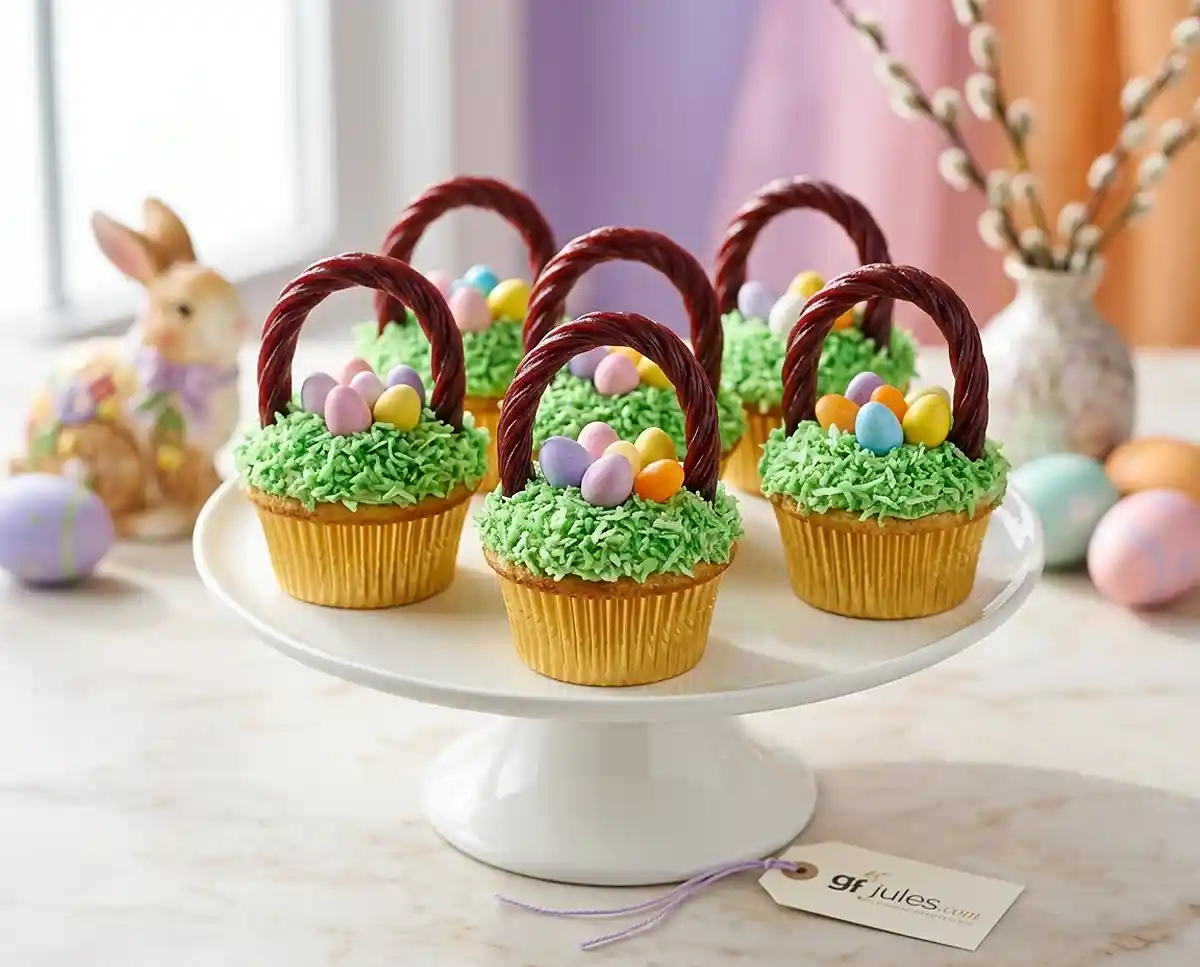
These gluten-free Easter basket cupcakes feature fluffy vanilla cake topped with fondant basket weave and candy eggs. Perfect decorated cupcakes for your spring celebration!
My daughter’s face when she saw her first Easter basket cupcake is permanently etched in my memory. She was four, convinced the tiny fondant handle was actually edible magic. Watching her carefully pick off each candy egg before demolishing the cupcake itself taught me something important about holiday baking—presentation matters just as much as taste.
Well… creating show-stopping decorated cupcakes that happen to be gluten-free used to feel impossible. Store-bought mixes crumbled, homemade attempts tasted like cardboard, and don’t even get me started on the texture issues.
These spring cupcakes changed everything in my kitchen. They’re tender, perfectly domed, and sturdy enough to handle all the fondant basket decorations your creative heart desires. Ready to become the hero of your Easter dessert table?
Table of Contents
Why You’ll Love These Gluten-Free Easter Basket Cupcakes
Light, fluffy texture that rivals any bakery cupcake – the powdered milk adds tenderness while keeping everything stable for decorating.
Versatile base recipe with chocolate variation included – make half vanilla, half chocolate for variety on your dessert spread.
Dairy-free and egg-free adaptations built right in – no separate recipe hunting needed for allergy-friendly versions.
Perfect canvas for creative Easter decorating – the flat, slightly domed tops hold frosting and fondant beautifully without cracking or crumbling.
The Secret to Perfect Decorated Cupcakes
Powdered milk creates that bakery-style crumb. This ingredient adds milk proteins without extra liquid, resulting in a tender yet structured cupcake that won’t fall apart when you’re piping intricate frosting designs. It’s the secret weapon professional gluten-free bakers don’t always share.
Creaming butter and sugar properly is non-negotiable. Those 3-4 minutes of beating incorporate tiny air bubbles that expand during baking, creating lift without relying on gluten structure. Your mixture should look almost white and feel like wet sand between your fingers.
Alternating wet and dry ingredients prevents overmixing. According to King Arthur Baking’s gluten-free techniques guide, adding flour all at once can develop too much structure from the xanthan gum in most blends, resulting in gummy cupcakes.
Room temperature ingredients emulsify properly. Cold eggs or milk can cause the batter to break, leaving you with a curdled mess that bakes unevenly. Pull everything out 30 minutes before starting.
Ingredients
Dry Ingredients
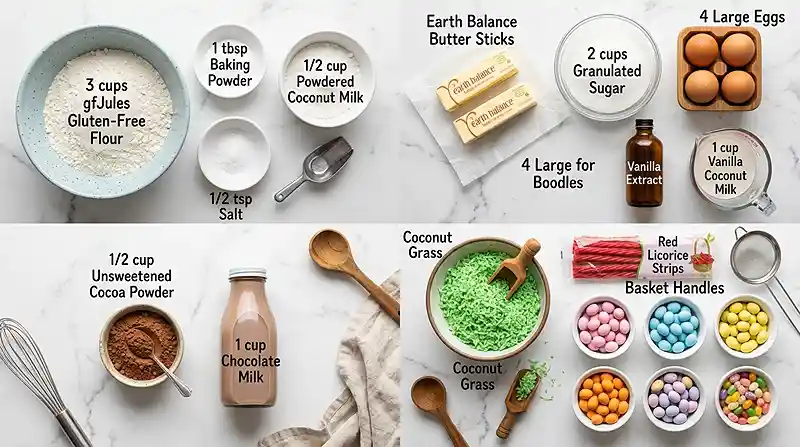
- 3 cups (405 g) gfJules Gluten-Free All Purpose Flour
- 1 tablespoon baking powder
- 1/4 cup powdered milk (dairy or non-dairy alternative like coconut milk powder)
- 1/4 teaspoon salt
Wet Ingredients
- 1/2 cup butter or non-dairy alternative (like Earth Balance Buttery Sticks)
- 2 cups granulated cane sugar
- 4 large eggs (see notes for egg-free option)
- 2 teaspoons pure vanilla extract
- 1 cup milk or non-dairy alternative (like vanilla coconut, soy, hemp, or rice milk)
For Chocolate Variation
- 1/4 cup cocoa powder (add to dry ingredients)
- Replace 1 cup milk with 1 1/4 cup chocolate milk (dairy or non-dairy)
For Decorating (Optional)
- Buttercream or cream cheese frosting
- Green-tinted coconut for grass
- Fondant for basket weave and handles
- Candy eggs or jelly beans
Step-by-Step Instructions
Prepare Your Pans and Oven
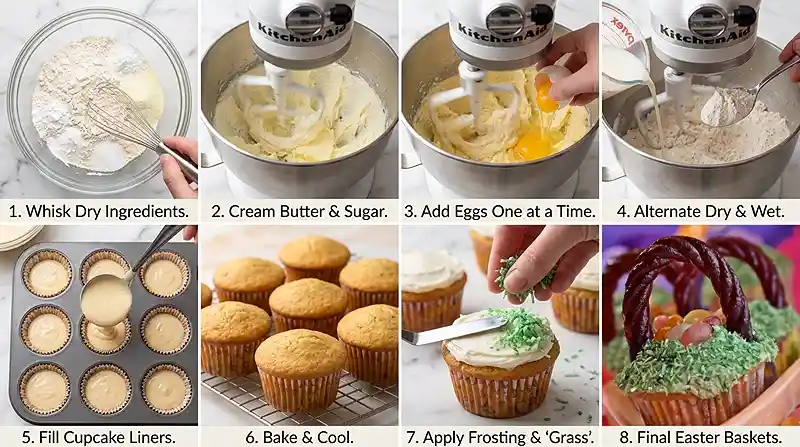
Preheat your oven to 350°F for a static oven or 325°F for convection. Line 24-28 cupcake pans with paper liners, or lightly oil the cups if you prefer naked cupcakes.
Pro Tip: Use light-colored pans for even browning. Dark pans absorb more heat and can over-brown the edges before the centers set.
Mix the Dry Ingredients
Whisk together the flour, powdered milk, baking powder, and salt in a medium bowl until evenly combined. If making chocolate cupcakes, add the cocoa powder here and whisk thoroughly to eliminate any lumps. Set this bowl aside.
Cream the Butter and Sugar
In a large mixing bowl, combine the butter and sugar. Beat with your mixer’s paddle attachment until the mixture transforms—you’re looking for very light and fluffy, approximately 3-4 minutes on medium-high speed.
The color should lighten considerably, and the texture should feel almost like fine, wet sand when rubbed between your fingers. This step creates the foundation for tender cupcakes, so don’t rush it.
Add the Eggs and Vanilla
Add the eggs one at a time, beating well after each addition. Scrape down the sides of the bowl between eggs to ensure everything incorporates evenly.
Mix in the vanilla extract with the last egg addition. The batter may look slightly curdled at this point—that’s completely normal and will smooth out when the flour joins the party.
Combine Wet and Dry
Slowly add the milk, alternating with the flour mixture in three additions. Start and end with the dry ingredients: flour, milk, flour, milk, flour. Beat briefly between each addition, just until combined.
Pro Tip: Overmixing at this stage is the enemy. Stop as soon as you no longer see dry flour streaks—a few small lumps are preferable to a tough cupcake.
Fill and Bake
Beat until smooth, then divide the batter evenly among the prepared pans. Fill each liner about two-thirds full for perfectly domed tops.
Bake for 20 minutes, then test for doneness by inserting a toothpick or cake tester into the center. It should come out clean with very few crumbs attached. Add time in 2-minute increments if the centers still look wet.
Cool Completely Before Decorating
Let cupcakes cool in the pans for 5 minutes, then transfer to a wire rack to cool completely—at least 1 hour. Warm cupcakes will melt your frosting and make fondant decorations slide right off.
Alternatively, wrap cooled cupcakes in plastic wrap and freeze for up to 3 months. Frozen cupcakes are actually easier to frost because they produce fewer crumbs.
Creating the Easter Basket Design
The Grass Base
Tint shredded coconut with green food coloring by placing it in a sealed bag with 2-3 drops of gel color and shaking vigorously. Frost each cupcake with a thin layer of buttercream, then press coconut “grass” onto the top.
Fondant Basket Weave
Roll fondant to 1/8-inch thickness and cut thin strips. Weave them together on a silicone mat, then drape over the cupcake sides, trimming excess at the base. The basket should look like it’s cradling the grass.
You know… this step takes practice. My first attempts looked more like abstract art than baskets, but your fifth cupcake will look leagues better than your first.
Handles and Eggs
Roll a thin fondant rope for the handle, curving it into a U-shape. Let it dry for 30 minutes on a curved surface (a rolling pin works great) before inserting both ends into the cupcake top.
Nestle candy eggs or jelly beans into the coconut grass. Pastel colors give that classic Easter look, but robin’s egg blue malted milk balls add sophisticated charm for adult gatherings.
Make It Your Own
Lemon variation brightens the whole recipe. Replace vanilla extract with 1 tablespoon fresh lemon juice and 2 teaspoons lemon zest. The citrus cuts through the sweetness beautifully and pairs perfectly with spring celebrations.
For egg-free cupcakes, use a commercial replacer. Replace each egg with the equivalent amount of your preferred egg replacer mixed according to package directions. Bob’s Red Mill Egg Replacer or flax eggs (1 tablespoon ground flax + 3 tablespoons water per egg) work well in this recipe.
Coconut milk creates the most tender dairy-free version. The fat content mimics whole milk closely. Avoid using rice milk as your primary liquid—it’s too thin and produces dry cupcakes.
Man, oh man… the chocolate variation is worth making at least once. Use chocolate almond milk for double chocolate intensity, and top with chocolate buttercream for a crowd-pleasing alternative to vanilla.
Carrot cake spices transform these for older kids. Add 1 teaspoon cinnamon, 1/2 teaspoon nutmeg, and 1/4 teaspoon ginger to the dry ingredients. Top with cream cheese frosting and orange fondant carrots instead of Easter baskets.
Common Problems & Solutions
Problem: Cupcakes sink in the middle after baking.
Your oven temperature may be off, or you opened the door too early. Invest in an oven thermometer and avoid peeking until at least 18 minutes have passed. The structure needs time to set before temperature fluctuations occur.
Problem: The tops are cracked or peaked instead of smooth.
The oven was too hot, causing the outside to set before the inside finished rising. Lower your temperature by 25°F and extend baking time slightly. Convection ovens especially need that temperature reduction.
Problem: Cupcakes are gummy or dense inside.
Well… this usually means underbaking or overmixing. The toothpick test should show just a few moist crumbs, not wet batter. If they’re fully baked but still gummy, reduce mixing time when adding the flour.
Problem: Frosting keeps sliding off.
Your cupcakes weren’t fully cooled, or your frosting is too soft. Refrigerate frosted cupcakes for 15 minutes to set the base layer before adding fondant decorations.
Problem: The fondant cracks when shaping.
Fondant that’s too cold or too dry will crack. Knead it for several minutes to warm it up, and add a tiny amount of vegetable shortening if it remains stiff. Work in a warm room away from air conditioning vents.
Storage & Meal Prep
| Method | Duration | Notes |
|---|---|---|
| Counter (unfrosted) | 2-3 days | Airtight container, room temperature |
| Counter (frosted) | 1-2 days | Buttercream only; avoid refrigerating fondant |
| Refrigerator (unfrosted) | 5-7 days | Wrap individually, bring to room temp before serving |
| Freezer (unfrosted) | 2-3 months | Double-wrap in plastic, then foil |
For Easter entertaining, bake cupcakes up to one week ahead and freeze unfrosted. Thaw overnight in the refrigerator, then bring to room temperature before decorating. This actually makes frosting easier—cold cupcakes produce fewer crumbs.
Decorated cupcakes with fondant should stay at room temperature. Refrigeration causes condensation that makes fondant sticky and colors bleed.
FAQs About Gluten-Free Easter Basket Cupcakes
Can I use a different gluten-free flour blend for these decorated cupcakes?
Yes, but results vary significantly between brands. Look for a blend containing xanthan gum with a 1:1 substitution ratio. Bob’s Red Mill 1-to-1 and King Arthur Measure for Measure work well, though gfJules produces the lightest texture in my testing.
How far in advance can I make gluten-free Easter basket cupcakes?
Bake cupcakes 2-3 days ahead and store airtight at room temperature, or freeze for up to 3 months. Decorate the morning of your event for the freshest presentation. Fondant decorations can be made 1-2 weeks ahead and stored in an airtight container.
Why did my cupcakes turn out dry?
Overbaking is the most common culprit. Gluten-free baked goods dry out faster than traditional versions, so start checking at 18 minutes. Also ensure you measured flour correctly—too much flour creates dry, crumbly results. Spoon flour into your measuring cup rather than scooping.
What’s the best frosting for spring cupcakes with fondant decorations?
American buttercream (butter, powdered sugar, vanilla, cream) provides the sturdiest base for fondant. Swiss meringue buttercream tastes more refined but can be too soft in warm environments. Avoid whipped cream frostings entirely—they won’t support decorations.
Can these cupcakes be made completely allergen-free?
Absolutely. Use dairy-free butter and milk alternatives as specified, egg replacer for the eggs, and ensure your flour blend is certified gluten-free. For nut allergies, choose soy or oat milk instead of almond-based alternatives.
Serving Suggestions
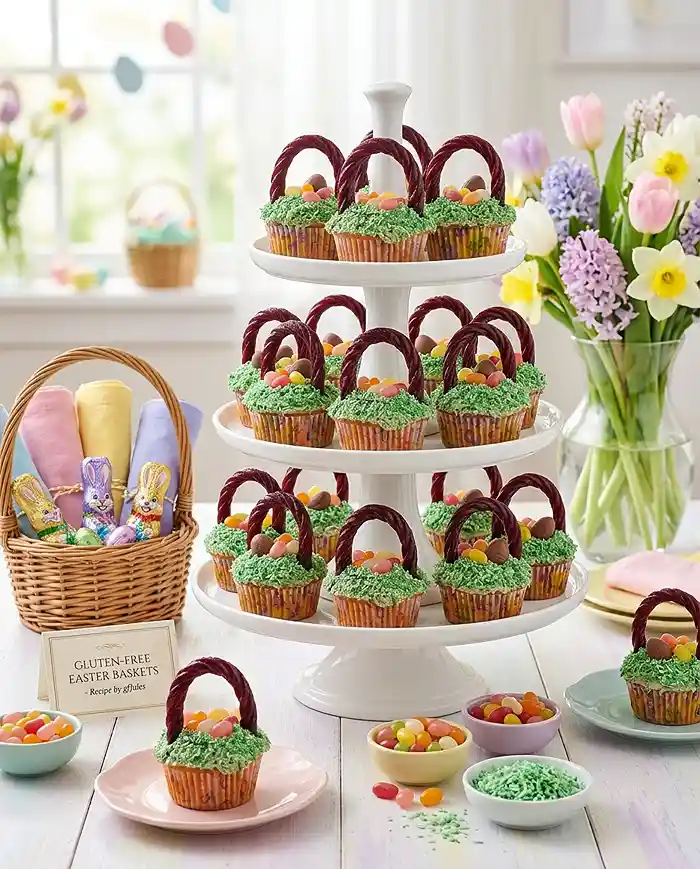
These gluten-free Easter basket cupcakes steal the show at any spring celebration—from church potlucks to backyard egg hunts. Arrange them on a tiered stand surrounded by pastel candy eggs for maximum visual impact.
For your complete Easter menu, serve these alongside gluten-free resurrection rolls for breakfast, honey glazed carrots with your main course, and savory lamb meatballs as an appetizer.
Kids especially love being involved in the decorating process. Set up a decorating station with pre-baked cupcakes, frosting, coconut grass, and candy eggs for an interactive activity that keeps little hands busy while adults prep the main meal.
Let’s Get Baking!
I can’t wait to see your gluten-free Easter basket cupcakes! Whether you go all-out with fondant weaving or keep things simple with coconut grass and candy eggs, these cupcakes will be the star of your Easter dessert table.
Drop a comment below sharing your favorite decorating techniques or any substitutions you tried. And if you snap a photo of your creations, tag us on Pinterest—I love seeing how creative this community gets with holiday baking!
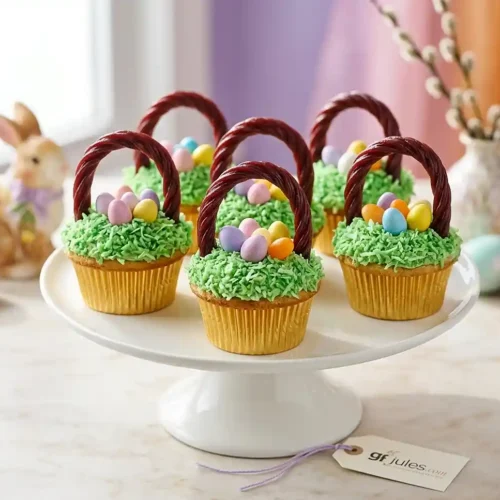
Gluten-Free Easter Basket Cupcakes
Equipment
- 24-28 cup muffin pans
- Cupcake liners
- Stand mixer or hand mixer with paddle attachment
- Large mixing bowl
- Medium mixing bowl
- Whisk
- Rubber spatula
- Wire cooling rack
- Toothpick or Cake Tester
Ingredients
Dry Ingredients
- 3 cups gfJules Gluten-Free All Purpose Flour 405 g
- 1 tablespoon baking powder
- ¼ cup powdered milk dairy or non-dairy alternative like coconut milk powder
- ¼ teaspoon salt
Wet Ingredients
- ½ cup butter or non-dairy alternative like Earth Balance Buttery Sticks
- 2 cups granulated cane sugar
- 4 large eggs see notes for egg-free option
- 2 teaspoons pure vanilla extract
- 1 cup milk or non-dairy alternative like vanilla coconut, soy, hemp, or rice milk
For Chocolate Variation
- ¼ cup cocoa powder add to dry ingredients
- 1 ¼ cups chocolate milk dairy or non-dairy, replaces the 1 cup regular milk
Instructions
- Preheat oven to 350°F for a static oven or 325°F for convection. Line 24-28 cupcake pans with paper liners, or lightly oil the cups.
- Whisk together the flour, powdered milk, baking powder, and salt in a medium bowl until evenly combined. If making chocolate cupcakes, add the cocoa powder here and whisk thoroughly. Set aside.
- In a large mixing bowl, combine the butter and sugar. Beat with your mixer’s paddle attachment until very light and fluffy, approximately 3-4 minutes on medium-high speed.
- Add the eggs one at a time, beating well after each addition. Mix in the vanilla extract with the last egg addition.
- Slowly add the milk, alternating with the flour mixture in three additions. Start and end with the dry ingredients. Beat briefly between each addition, just until combined.
- Beat until smooth and divide the batter evenly among the prepared pans, filling each liner about two-thirds full.
- Bake for 20 minutes, then test for doneness by inserting a toothpick or cake tester in the center. It should come out clean with very few crumbs attached. Add time in 2-minute increments if necessary.
- Let cupcakes cool in pans for 5 minutes, then transfer to a wire rack to cool completely—at least 1 hour. Frost only when fully cooled, or wrap in plastic and freeze until ready to use.