Gluten-Free Easter Lamb Cake
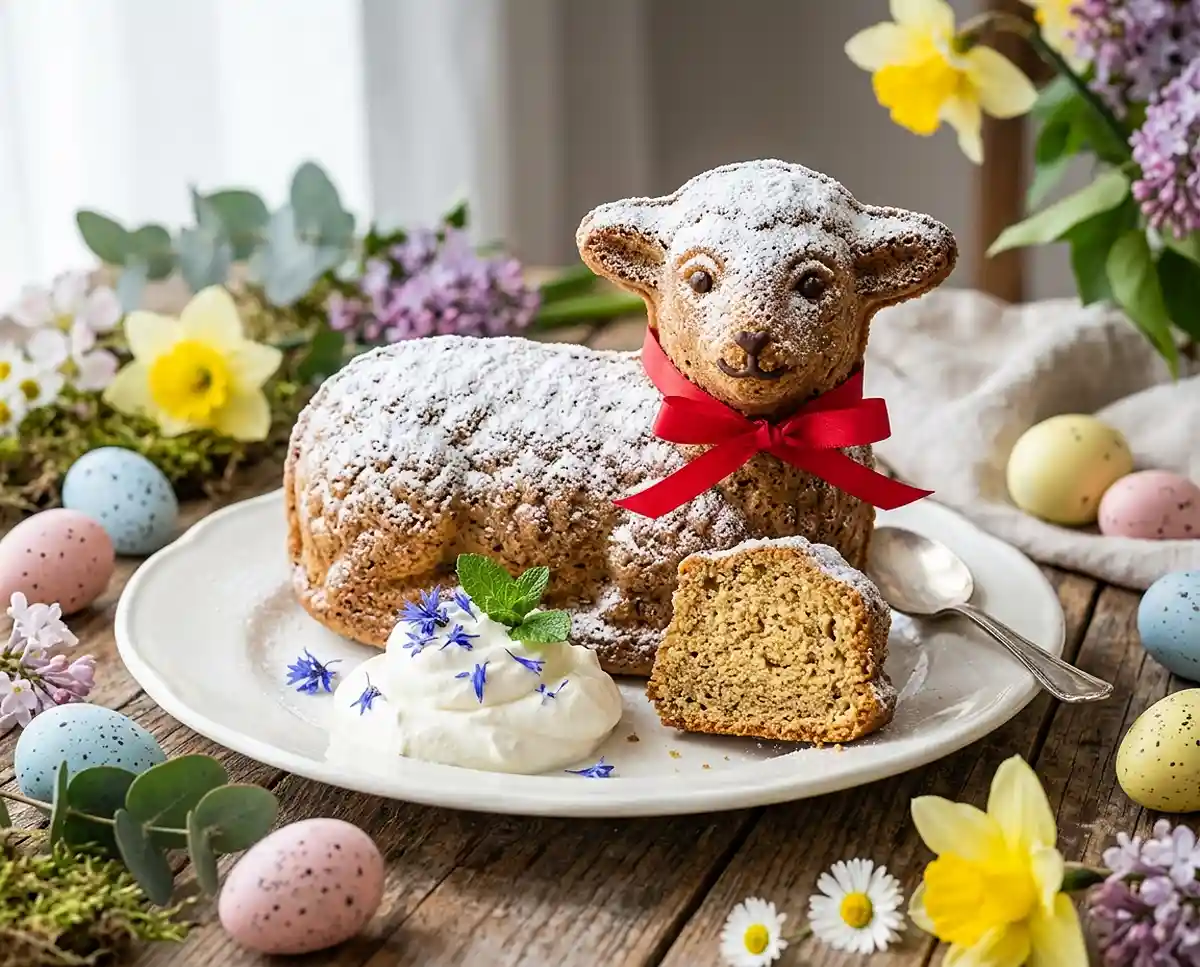
Gluten-Free Easter Lamb Cake with teff flour, hazelnuts, and vanilla. Soft, shaped centerpiece cake ready in 50 minutes for holiday tables!
Five years ago, I attempted my first Easter lamb cake using a vintage mold I found at a thrift store and ended up with a lopsided, crumbling mess that looked more like a deflated sheep than a springtime symbol.
That disaster taught me that gluten-free Easter lamb cake isn’t about fancy ingredients or professional baking skills—it’s about whipping the eggs long enough to create structure, folding gently to preserve those precious air bubbles, and trusting that teff flour and hazelnut meal can create a tender crumb without any wheat.
Have you ever sliced into a shaped cake so soft it dissolves on your tongue like sweetened clouds, leaving behind just a hint of toasted hazelnut and vanilla?
Why You’ll Love This Gluten-Free Easter Lamb Cake
- Soft, tender crumb that melts in your mouth—the combination of teff flour and hazelnut meal creates a cake as delicate as traditional wheat versions without any gritty texture
- Naturally gluten-free with wholesome ingredients—teff flour adds a subtle nutty flavor and essential nutrients while tapioca starch keeps the texture light
- Impressive presentation with minimal decorating—the lamb mold does all the work, and a simple dusting of powdered sugar creates that iconic fluffy-wool look
- Make-ahead friendly and perfect for busy holiday mornings—bake it the day before and dust with sugar just before serving
The Secret to Perfect Gluten-Free Easter Lamb Cake
Whipping the eggs for 15 minutes creates the structure that gluten would normally provide. In traditional wheat-based cakes, gluten strands trap air bubbles and provide lift, but gluten-free baking requires a different approach. According to King Arthur Baking’s guide to gluten-free cakes, extended beating of eggs incorporates maximum air and creates a stable foam that holds up during baking, compensating for the lack of gluten’s elastic network.
Teff flour adds moisture and a subtle nutty sweetness. Teff is an ancient Ethiopian grain that’s naturally gluten-free and has a mild, slightly sweet flavor that pairs beautifully with vanilla and hazelnuts. It’s also high in protein and iron, making this Easter centerpiece more nutritious than cakes made with white rice flour alone.
Folding gently with a rubber spatula preserves the air bubbles. After whipping the eggs for 15 minutes, you’ve created millions of tiny air pockets that will make the cake rise and stay tender. Stirring vigorously or using an electric mixer at this stage will deflate those bubbles, resulting in a dense, heavy cake. The folding motion—cutting down through the center and sweeping up the sides—gently incorporates the dry ingredients without losing the airiness.
Hazelnut meal adds richness and helps bind the batter. Ground hazelnuts contribute healthy fats that keep the cake moist, plus they add a subtle nutty flavor that elevates this beyond a basic vanilla cake. The oils in the nuts also help emulsify the batter, creating a smoother texture than flour alone would provide.
Table of Contents
Ingredients
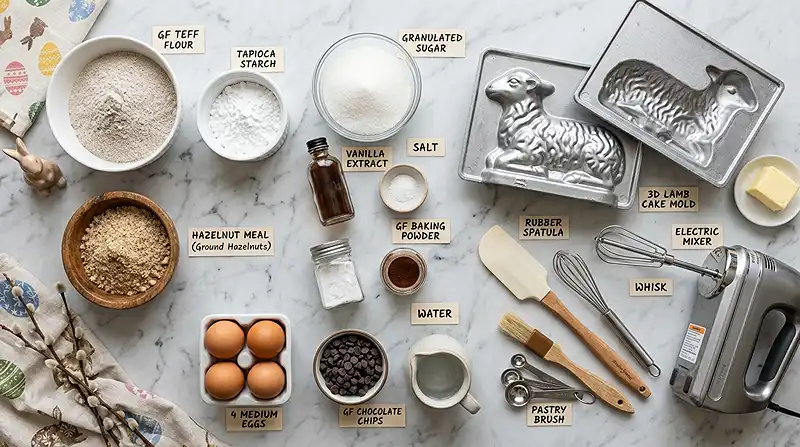
| Flour-Starch-Mix | Amount | Notes |
|---|---|---|
| Finely ground teff flour | 100g (≈ ¾ cup) | Whole grain; Bob’s Red Mill brand works well |
| Tapioca starch | 30g (≈ ¼ cup) | Also called tapioca flour |
| Hazelnut meal | 70g (≈ ¾ cup) | Ground hazelnuts; grind fresh for best flavor |
| Baking powder | ½ teaspoon | Gluten-free certified |
| Vanilla sugar | 2 teaspoons | Or ½ teaspoon vanilla extract |
| Chocolate chips | ½ cup | Optional; use gluten-free chips |
| Egg-Sugar-Mix | Amount | Notes |
|---|---|---|
| Medium eggs | 4 | Room temperature; see note |
| Granulated sugar | 200g (≈ 1 cup + 1 tablespoon) | |
| Water | 2 tablespoons | Helps sugar dissolve |
| Salt | ⅛ teaspoon | Enhances flavor |
Pro Tip: If you don’t have vanilla sugar (common in Europe but rare in the US), substitute ½ teaspoon of pure vanilla extract added to the egg mixture. Bring eggs to room temperature by letting them sit on the counter for 30-60 minutes before starting.
Step-by-Step Instructions
Prep and Mix
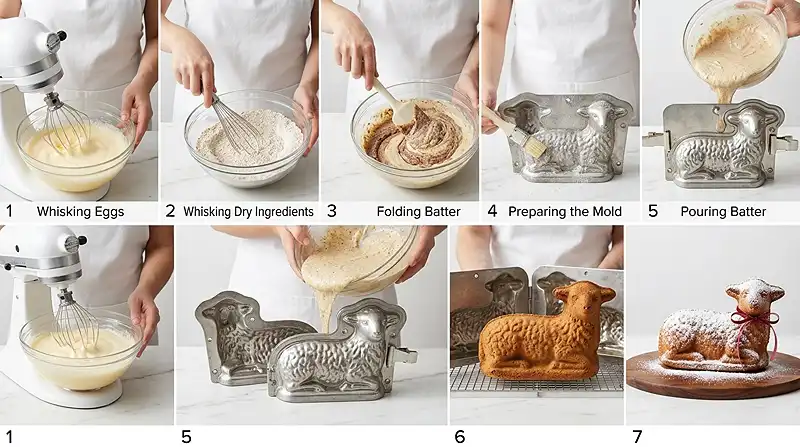
1. Preheat and prepare the mold.
Preheat your oven to 180°C (360°F). Generously butter your Easter lamb baking mold (both halves if it’s a two-piece mold), making sure to get into all the crevices—ears, legs, tail, and face details. Dust the buttered mold with a light coating of gluten-free flour, tapping out any excess. This step is crucial for releasing the cake cleanly after baking.
2. Whip the egg-sugar mixture.
Place the 4 eggs, 200g sugar, 2 tablespoons water, and ⅛ teaspoon salt in a large mixing bowl. Using an electric mixer on medium-high speed, beat for 10-15 minutes until the mixture is very pale yellow, has tripled in volume, and falls in thick ribbons when you lift the beaters. This extended beating is what gives the cake its structure—don’t rush it. The mixture should look almost mousse-like and hold a figure-8 shape on the surface for a few seconds before dissolving.
3. Prepare the flour-starch mixture.
While the eggs are whipping (or before you start), place the teff flour, tapioca starch, freshly ground hazelnut meal, baking powder, and vanilla sugar in a medium bowl. Whisk thoroughly for 30-60 seconds until everything is evenly distributed and no lumps remain. If using chocolate chips, set them aside to fold in at the end.
Fold and Bake
4. Fold the dry ingredients into the egg mixture.
Add the flour-starch mixture to the whipped egg mixture in three additions. Use a rubber spatula to gently fold after each addition, using a cutting-down-and-sweeping-up motion. Cut down through the center of the bowl, scrape along the bottom, and sweep up the side, rotating the bowl as you go. Fold just until no dry streaks remain—you should still see the batter looking light and airy. If using chocolate chips, fold them in gently after the flour is incorporated.
5. Fill the mold and bake.
Pour the batter into the prepared lamb mold, filling it about ¾ full to leave room for rising. If using a two-piece mold, fill the bottom half, then carefully clamp the top half in place, making sure the seal is tight. Place the filled mold on a baking sheet (to catch any drips) and bake for 35 minutes, until the cake is golden brown and a toothpick inserted into the thickest part (usually the body) comes out clean or with just a few moist crumbs.
6. Cool and unmold.
Remove the mold from the oven and let it cool on a wire rack for 10 minutes. If using a two-piece mold, carefully unclamp and remove the top half. Let the cake cool in the bottom half of the mold for another 5 minutes, then gently invert onto a serving platter. The cake should release easily if you buttered and floured the mold properly. Man, oh man… that moment when the lamb comes out perfectly shaped with all its details intact never gets old.
7. Dust and serve.
Once the cake is completely cool (about 30 minutes), place powdered sugar in a fine-mesh sieve and dust it generously over the lamb, covering the entire surface to create that fluffy white wool effect. Serve with freshly whipped cream on the side.
Make It Your Own (Substitutions & Variations)
Try different nut meals for varied flavors. Well… if you can’t find hazelnut meal or someone has a tree nut allergy, you can substitute almond meal (for a milder flavor) or even sunflower seed meal (for a nut-free version). The texture stays remarkably similar because the oils and proteins in seeds and nuts perform the same function in gluten-free baking.
Add citrus zest for a brighter flavor. Fold in 1 tablespoon of finely grated lemon or orange zest along with the dry ingredients for a springtime citrus note that cuts through the richness of the hazelnuts. This makes the cake feel lighter and more refreshing—perfect for Easter brunch.
Make it chocolate. Replace 2 tablespoons of the teff flour with unsweetened cocoa powder for a chocolate-hazelnut lamb cake gluten free that tastes like Nutella in cake form. You can also fold in ½ cup of mini chocolate chips for extra richness.
Use a different shaped mold. If you don’t have a lamb mold, this batter works beautifully in a bundt pan, loaf pan, or even a standard 9-inch round cake pan. Adjust the baking time—bundt pans need about 40-45 minutes, loaf pans 45-50 minutes, and round pans 30-35 minutes. Always test with a toothpick for doneness.
Make it dairy-free for the topping. Instead of traditional whipped cream, serve with coconut whipped cream (the kind you make from chilled canned coconut cream) for a completely dairy-free Easter dessert.
Common Problems & Solutions
Problem: My lamb cake is dense and heavy, not soft.
Solution: You either didn’t beat the eggs long enough or you stirred instead of folding when adding the flour. Beat the egg mixture for the full 15 minutes until it’s tripled in volume and falls in thick ribbons—this creates the air structure the cake needs. When adding the dry ingredients, use a gentle folding motion with a rubber spatula, not stirring or mixing, to preserve those air bubbles.
Problem: The cake stuck to the mold and broke when I tried to unmold it.
Solution: You didn’t butter and flour the mold thoroughly enough, or you tried to unmold it too soon. Make sure every crevice—especially the ears, legs, and face details—is well coated with butter and a light dusting of flour. Let the cake cool in the mold for 15 minutes total before attempting to unmold; if it’s still sticking, run a thin knife around the edges to loosen it.
Problem: The cake is dry and crumbly.
Solution: You overbaked it or didn’t measure the teff flour accurately. Pull the cake when a toothpick comes out with a few moist crumbs, not completely clean—it will continue to set as it cools. Teff flour is dense, so if you packed it into the measuring cup, you may have used too much; for the most accurate results, weigh it (100g).
Problem: The bottom of the lamb is soggy.
Solution: You didn’t let the batter rest before baking, or your oven temperature was too low. This batter should go straight into the oven after mixing to maintain the air bubbles. If your oven runs cool, use an oven thermometer to verify the actual temperature and adjust accordingly—360°F is crucial for proper rising and browning.
Problem: The cake has a gritty texture.
Solution: Your hazelnut meal wasn’t ground finely enough, or you used old teff flour. Grind hazelnuts to a fine meal (almost powder-like) using a food processor or spice grinder—you should barely feel any grit between your fingers. Old teff flour can also develop an off flavor and texture, so make sure yours is fresh and stored in a cool, dark place.
Storage & Meal Prep
| Method | Duration | Notes |
|---|---|---|
| Counter | 2-3 days | Store in airtight container; dust with sugar just before serving |
| Refrigerator | 5-7 days | Wrap tightly; bring to room temp 1 hour before serving |
| Freezer | 2-3 months | Wrap in plastic, then foil; thaw overnight in fridge |
This shaped cake actually tastes better the day after baking once the flavors meld together and the texture becomes even more tender. Store it undus ted with powdered sugar—the sugar will dissolve if stored on the cake, so always dust with sugar right before serving.
Meal prep tip: Bake the lamb cake 1-2 days before Easter, wrap it tightly in plastic wrap once completely cool, and store at room temperature. On Easter morning, dust it with powdered sugar and place it on your serving platter—this way you’re not stressed about baking on the holiday itself.
Gluten-Free Easter Lamb Cake FAQs
Can I make this without a lamb mold?
Yes, this batter works perfectly in any cake pan—try a bundt pan for an elegant ring shape, a loaf pan for easy slicing, or a 9-inch round cake pan for a simple layer cake. Adjust the baking time accordingly (bundt: 40-45 min; loaf: 45-50 min; round: 30-35 min) and test with a toothpick for doneness.
What can I use instead of teff flour?
You can substitute sorghum flour, millet flour, or even a gluten-free all-purpose blend (like Bob’s Red Mill 1:1). Teff has a distinctive mild sweetness that’s hard to replicate exactly, but other whole-grain gluten-free flours will give you a similar tender texture. According to the Celiac Disease Foundation’s gluten-free grains guide, teff is naturally high in protein and iron, making it nutritionally superior to white rice flour blends.
Can I make this nut-free?
Yes, replace the hazelnut meal with sunflower seed meal for a nut-free version. Grind raw sunflower seeds in a food processor until they’re the texture of fine cornmeal. The flavor will be slightly less rich, but the texture and moisture level stay very similar. Make sure to use certified gluten-free baking powder if you’re avoiding nuts due to allergies.
How do I know when the cake is done?
Insert a toothpick into the thickest part of the lamb (usually the body or hindquarters). It should come out clean or with just a few moist crumbs clinging to it—not wet batter. The cake should also be pulling away slightly from the sides of the mold and feel springy when touched gently.
Can I double this recipe?
Yes, double all ingredients and bake in two lamb molds or use a larger mold if you have one. Keep the baking time the same for standard-sized molds (35 minutes), but check at 30 minutes to avoid overbaking. Larger molds may need 45-50 minutes.
Serving Suggestions
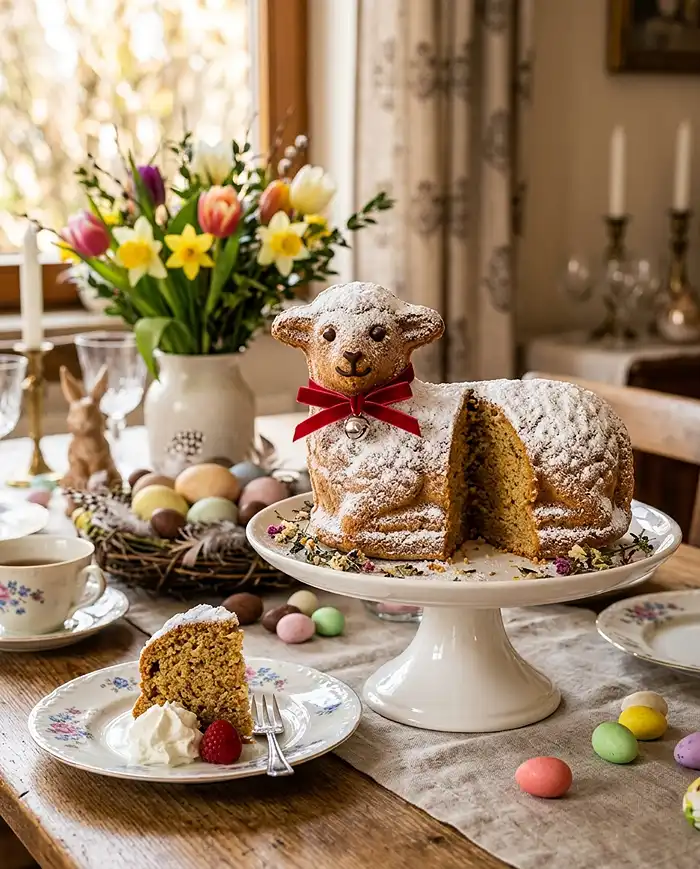
Serve this gluten-free Easter lamb cake as the centerpiece of your Easter brunch table alongside gluten-free spinach strawberry salad for a fresh, light contrast. The soft, vanilla-scented cake pairs beautifully with the savory richness of gluten-free prime rib roast if you’re planning a full holiday dinner.
For a complete spring dessert spread, offer slices of lamb cake alongside dairy-free pavlova topped with fresh berries for guests who want something lighter. The combination of traditional shaped cake and elegant meringue dessert makes your Easter table feel both festive and thoughtful.
Ready to Bake Your Easter Tradition?
This Easter lamb cake recipe has become our family’s non-negotiable holiday tradition—it’s the first thing my kids ask about when Easter approaches, and the soft, hazelnut-scented cake never fails to make the table feel special. The whipping and folding technique might seem fussy the first time, but once you see that perfect lamb shape emerge from the mold, you’ll understand why it’s worth the effort.
Try this lamb cake gluten free version this spring and let me know in the comments if you made any fun variations—did you add citrus zest, fold in chocolate chips, or use a different nut meal? Pin this to your gluten-free Easter recipes board on Pinterest so you can find it again next year, and don’t forget to rate it below if it becomes part of your family’s holiday tradition!
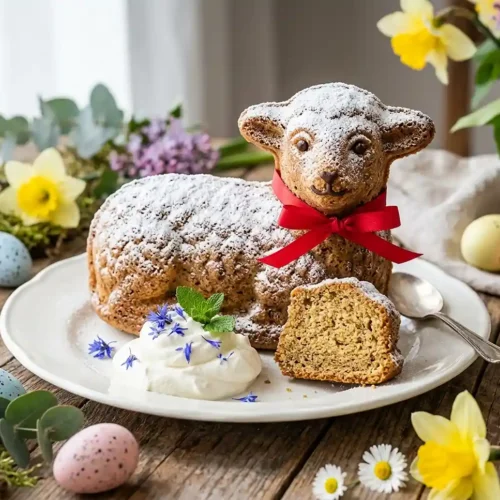
Gluten-Free Easter Lamb Cake
Equipment
- Lamb-shaped cake mold
- Stand mixer or hand mixer
- Large mixing bowl
- Medium mixing bowl
- Whisk
- Spatula
- Kitchen scale
- Measuring cups and spoons
- Toothpick
- Wire cooling rack
- Fine mesh sieve for dusting
Ingredients
For the Cake
- 100 g Teff flour approximately ¾ cup
- 30 g Tapioca starch ¼ cup
- 70 g Hazelnut meal ¾ cup, finely ground
- ½ tsp Gluten-free baking powder certified gluten-free
- 2 tsp Vanilla sugar or ½ tsp vanilla extract
- ½ cup Chocolate chips optional, gluten-free
- 4 Large eggs room temperature
- 200 g Granulated sugar approximately 1 cup + 1 Tbsp
- 2 Tbsp Water
- ⅛ tsp Salt
For Serving
- Powdered sugar for dusting
- Whipped cream optional, or dairy-free coconut whipped cream
Instructions
- Preheat the oven to 180 °C (360 °F). Generously butter and flour your lamb-shaped cake mold, ensuring all crevices are well coated to prevent sticking.
- In a large mixing bowl, combine the 4 room-temperature eggs, 200 g granulated sugar, 2 Tbsp water, and ⅛ tsp salt. Using a stand mixer or hand mixer, whip on high speed for 10–15 minutes until the mixture is pale yellow, tripled in volume, and falls in thick ribbons when you lift the beaters. This step is crucial for creating a light, airy texture.
- In a separate medium bowl, whisk together 100 g teff flour, 30 g tapioca starch, 70 g hazelnut meal, ½ tsp gluten-free baking powder, and 2 tsp vanilla sugar (or ½ tsp vanilla extract) for 30–60 seconds until well combined and no lumps remain.
- Gently fold the dry mixture into the whipped egg foam in three additions, using a spatula with a cutting-down-and-sweeping-up motion. Rotate the bowl as you fold to preserve as much air as possible. If using chocolate chips, gently fold in ½ cup at the end.
- Pour the batter into the prepared lamb mold, filling it about ¾ full to allow room for rising. Tap the mold gently on the counter to release any large air bubbles.
- Bake for 35 minutes, or until a toothpick inserted into the thickest part comes out clean and the top is golden. Avoid opening the oven door during the first 25 minutes to prevent collapse.
- Remove the cake from the oven and let it cool in the mold for 10 minutes. Carefully unmold the lamb onto a wire cooling rack and let it cool for an additional 5 minutes on its side, then flip it upright. Allow it to cool completely for about 30 minutes before dusting.
- Once fully cooled, dust the lamb cake generously with powdered sugar using a fine-mesh sieve. Serve with whipped cream or dairy-free coconut whipped cream on the side.