Gluten-Free Green Smoothie Bowl
Meta Description: This gluten-free green smoothie bowl blends avocado, banana, berries, and spinach into a thick, creamy healthy breakfast. Dairy-free, vegan, and ready in just 5 minutes!
I used to be the person who skipped breakfast entirely, grabbing coffee and calling it a meal. Then my energy crashes around 10 AM became impossible to ignore. My nutritionist suggested smoothie bowls, and I’ll admit—I was skeptical. Drinking my vegetables sounded awful.
Well… that first spoonful changed everything. Unlike sippable smoothies that disappear in seconds, a smoothie bowl forces you to slow down. You actually sit, spoon each bite, add crunchy toppings, and feel like you’re eating real food. Because you are.
This gluten-free green smoothie bowl became my weekday morning savior. Five minutes from refrigerator to table, packed with healthy fats, fiber, and enough greens to make my doctor proud. How can something this nutritious taste like a creamy berry dessert?
Table of Contents
Why You’ll Love This Gluten-Free Green Smoothie Bowl
Naturally gluten-free, dairy-free, and vegan – no substitutions needed, just whole foods blended into breakfast perfection.
Thick, spoonable texture that feels satisfying – the avocado creates creaminess while frozen fruit keeps everything thick enough to eat with a spoon.
Hidden spinach you genuinely can’t taste – the berries and banana completely mask any green flavor while delivering all the nutritional benefits.
Endlessly customizable with your favorite toppings – make it different every single day with whatever you have in your kitchen.
The Secret to Perfect Spinach Smoothie Bowls
Frozen fruit is non-negotiable for proper thickness. Fresh fruit creates a thin, drinkable smoothie rather than a spoonable bowl. Freeze your banana overnight if you only have fresh, or add extra frozen berries to compensate.
Less liquid equals thicker results. Start with just 1 cup of coconut water—you can always add more, but you can’t take it back. According to Harvard’s Nutrition Source, smoothie bowls should be thick enough that a spoon stands upright in the center.
Ripe avocado transforms the texture completely. Underripe avocado creates a waxy, unpleasant mouthfeel. Look for avocados that yield slightly to gentle pressure. The creamy fats also help your body absorb the fat-soluble vitamins from the spinach.
Blend in stages for the smoothest results. Add leafy greens first with the liquid, blend until completely smooth, then add remaining ingredients. This prevents stringy spinach bits from ruining your silky bowl.
Ingredients
Smoothie Base
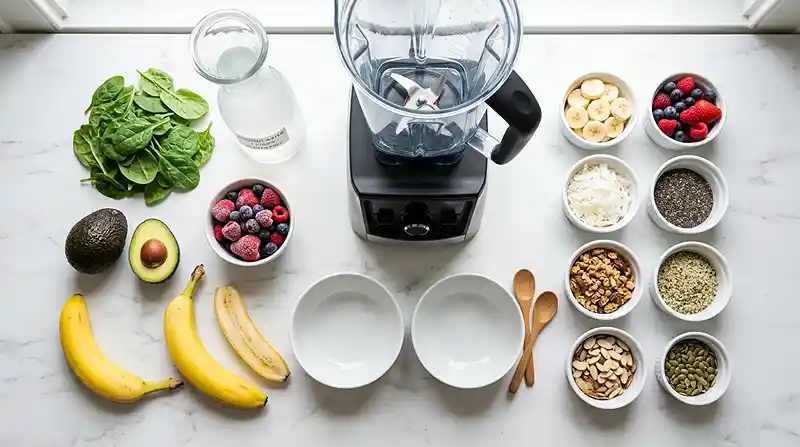
- 1 ripe avocado
- 1 banana (frozen preferred)
- 1 cup frozen berries (mixed berries, blueberries, or strawberries)
- 3 large handfuls organic spinach (about 3 cups packed)
- 1 to 1 1/2 cups coconut water
Suggested Toppings (Optional)
- Fresh berries
- Sliced banana
- Granola (certified gluten-free)
- Chia seeds
- Hemp hearts
- Shredded coconut
- Nut butter drizzle
- Cacao nibs
Equipment You’ll Need
A high-powered blender produces the smoothest results—Vitamix, Blendtec, or Ninja all work beautifully. Standard blenders work but may require more liquid and longer blending time. You’ll also need a spatula for scraping down the sides and your favorite breakfast bowls for serving.
Pro Tip: Wide, shallow bowls showcase toppings better than deep bowls and keep your smoothie colder longer since there’s more surface area.
Step-by-Step Instructions
Prepare Your Ingredients
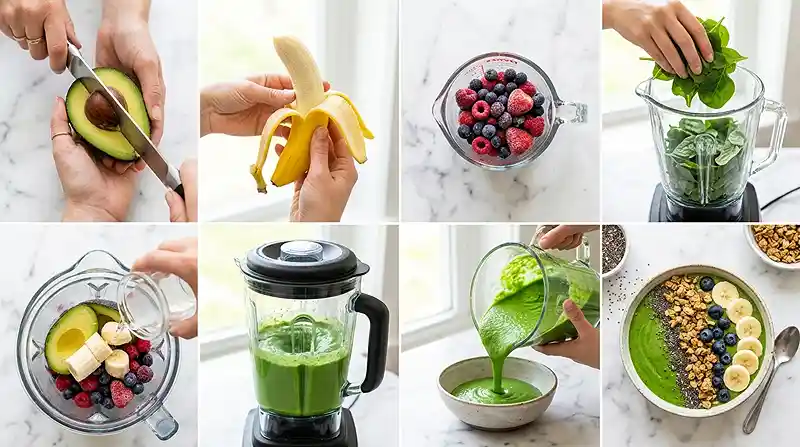
Halve the avocado and remove the pit. Scoop the flesh directly into your blender—no need to slice it first since everything gets pulverized anyway.
If your banana isn’t frozen, break it into chunks before adding. Frozen bananas can go in whole or in pieces depending on your blender’s power.
Measure out your frozen berries and spinach. Pack the spinach firmly when measuring—those three large handfuls should compress down to about 3 cups.
Blend to Creamy Perfection
Add the spinach and 1 cup coconut water to the blender first. Blend on high for 30-45 seconds until the spinach is completely liquefied with no visible pieces.
Add the avocado, banana, and frozen berries. Blend again, stopping to scrape down the sides as needed. The mixture should be very thick—thicker than a regular smoothie.
You know… if your blender struggles, add coconut water one tablespoon at a time. Resist the urge to pour in half a cup—you’ll end up with soup instead of a spoonable bowl.
Check the Consistency
The perfect smoothie bowl consistency holds its shape when you tilt the blender. It should pour slowly, like soft-serve ice cream, and mound slightly in the bowl rather than settling flat.
Too thin? Add more frozen fruit or a few ice cubes and blend briefly. Too thick to blend? Add coconut water one tablespoon at a time until the blades can move freely.
Serve Immediately
Pour the smoothie into two bowls, dividing evenly. Work quickly—smoothie bowls begin melting the moment they leave the blender.
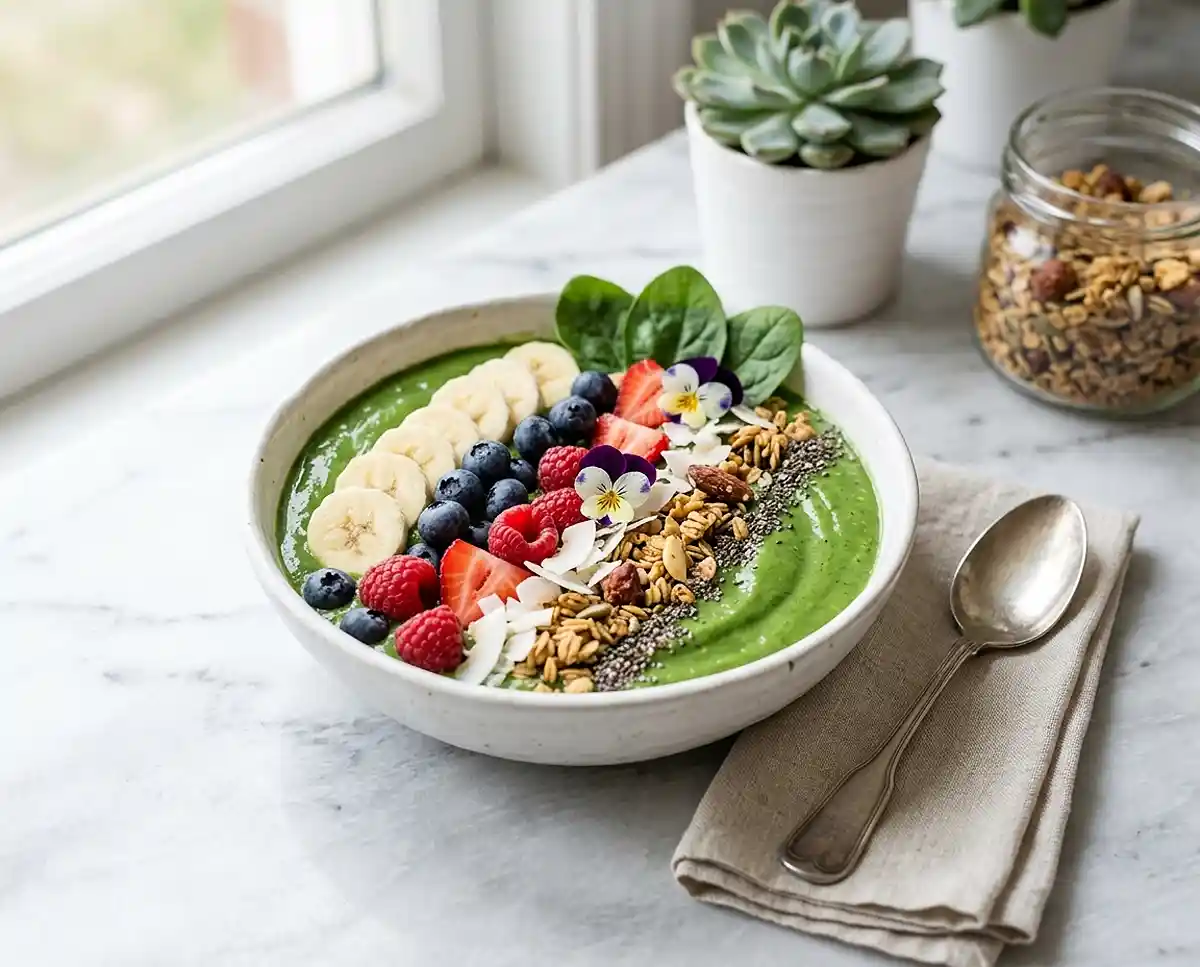
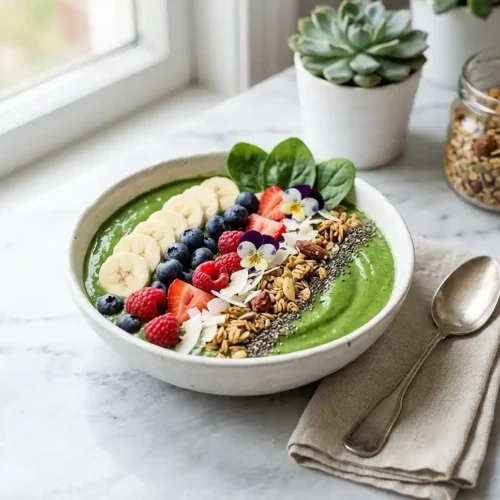
Arrange your toppings in neat rows or scattered artfully across the surface. Man, oh man… this is where you can really get creative. The contrast of crunchy toppings against the creamy base makes every bite interesting.
Serve immediately with a spoon. Smoothie bowls don’t wait for anyone.
Make It Your Own
Swap the berries for tropical vibes. Frozen mango and pineapple create a sunshine-yellow bowl that tastes like vacation. Add a splash of lime juice and top with toasted coconut for full tropical effect.
Boost the protein for post-workout recovery. Add a scoop of your favorite plant-based protein powder or 2 tablespoons of hemp hearts directly into the blender. Nut butter swirled on top adds both protein and healthy fats.
Make it chocolatey without guilt. Well… add 2 tablespoons of raw cacao powder and an extra frozen banana. The result tastes like chocolate ice cream but packs a nutritional punch. Top with cacao nibs for extra crunch.
Different greens change the nutrition profile. Kale is more nutrient-dense but has a stronger flavor—start with half spinach, half kale until you adjust. Baby spinach is mildest, mature spinach slightly more earthy.
Coconut milk creates extra creaminess. Substitute half the coconut water with full-fat coconut milk for a richer, more dessert-like bowl. This works especially well with chocolate or tropical variations.
Add natural sweetness if needed. A tablespoon of maple syrup, a couple of pitted dates, or a drizzle of honey (if not strictly vegan) can balance any bitterness from the greens.
Common Problems & Solutions
Problem: The smoothie bowl is too thin and runny.
You added too much liquid or didn’t use enough frozen ingredients. Next time, start with less coconut water and use frozen banana instead of fresh. To salvage a thin bowl, add a few ice cubes and blend briefly—or pour it into a glass and drink it as a regular smoothie.
Problem: I can taste the spinach and it’s unpleasant.
The berries and banana should completely mask the spinach flavor. If you’re tasting greens, add more frozen fruit or a tablespoon of nut butter to mask it. Make sure you’re using baby spinach, which is milder than mature leaves.
Problem: The bowl is brown instead of green.
Certain berry combinations overpower the green color. Blueberries especially create brown or purple-gray results. For a vibrant green bowl, use strawberries or skip berries entirely in favor of mango or pineapple.
Problem: My blender can’t handle the frozen fruit.
Add liquid first, then frozen ingredients gradually. Let everything sit for 2-3 minutes to soften slightly before blending. Use the tamper if your blender has one, and work in pulses rather than continuous blending.
Problem: The bowl melts before I finish eating.
Chill your bowls in the freezer for 10 minutes before serving. Use frozen toppings when possible. Work quickly when assembling, and serve immediately. On hot days, eat faster—smoothie bowls are meant to be consumed within 10-15 minutes.
Storage & Meal Prep
| Method | Duration | Notes |
|---|---|---|
| Immediate | Best quality | Serve within 10 minutes of blending |
| Refrigerator | Not recommended | Separates and browns quickly |
| Freezer (smoothie packs) | 2-3 months | Pre-portion ingredients in bags, add liquid when ready |
Smoothie bowls don’t store well once blended—the texture degrades rapidly and oxidation turns everything brown. For meal prep, create freezer smoothie packs instead.
Freezer Pack Method: Portion avocado chunks, banana pieces, berries, and spinach into individual freezer bags. In the morning, dump one pack into the blender, add coconut water, and blend. Total time: under 3 minutes.
Store toppings separately in airtight containers. Granola stays fresh at room temperature for 2 weeks, while seeds and nuts last months in cool, dark pantries.
Your Questions Answered
Can acai bowls be gluten-free?
Pure acai berries are naturally gluten-free, so acai bowls themselves contain no gluten. The risk comes from toppings, particularly granola, which often contains wheat. Always verify your granola is certified gluten-free, or use naturally gluten-free toppings like fresh fruit, coconut, nuts, and seeds.
What not to put in a green smoothie?
Avoid raw cruciferous vegetables in large quantities (raw kale or broccoli can be hard to digest), artificial sweeteners that may cause digestive upset, dairy products that can conflict with acidic fruits, and too many high-sugar additions like juice or flavored yogurt. Also skip ice cream or sherbet—they defeat the healthy purpose.
What smoothies are gluten-free?
Most homemade smoothies are naturally gluten-free since they contain only fruits, vegetables, and liquids. Potential gluten sources include protein powders (check labels), oats (must be certified gluten-free), granola toppings, and certain flavored yogurts. When purchasing pre-made smoothies, always ask about ingredients and cross-contamination.
Is a smoothie ok for GERD?
This dairy-free green smoothie bowl may work well for some GERD sufferers since it avoids common triggers like dairy and citrus. However, high-fiber foods and acidic fruits can aggravate symptoms in some people. Start with small portions, avoid very cold temperatures, and skip acidic toppings. Consult your healthcare provider for personalized advice.
What is surprisingly not gluten-free?
Many products contain hidden gluten: soy sauce, some oat products, imitation crab, beer, certain candies, processed meats, flavored chips, some medications, and even some lipsticks. For smoothie bowls specifically, watch for protein powders, commercial granola, flavored coconut water, and certain nut butters that may have additives.
What is the difference between a smoothie bowl and an acai bowl?
Acai bowls specifically use acai berry puree as the primary base, while smoothie bowls can feature any fruit or vegetable combination. Both are thick, spoonable, and topped with similar garnishes. This green smoothie bowl uses spinach and mixed berries rather than acai, making it more accessible since acai can be expensive and harder to find.
Serving Suggestions
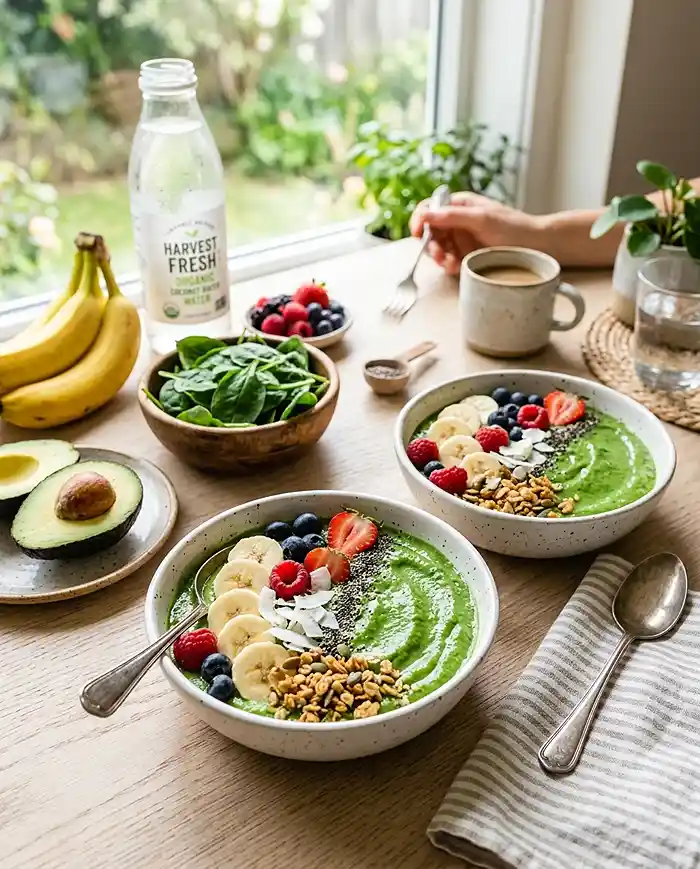
This gluten-free green smoothie bowl works beautifully as a healthy breakfast to start your day or a refreshing afternoon snack when energy dips. The combination of healthy fats from avocado, natural sugars from fruit, and fiber from spinach provides sustained energy without the crash.
For a complete morning meal, enjoy alongside a cup of green tea or coffee. If you’re feeding a crowd at weekend brunch, set up a topping bar with various options so everyone can customize their own bowl.
Balance your day with other nutritious gluten-free meals like a gluten-free rainbow rice Buddha bowl for lunch or gluten-free cauliflower steaks for dinner. For special occasions, pair your healthy breakfast with festive treats like gluten-free Italian Easter bread.
Let’s Get Blending!
There’s something deeply satisfying about starting your day with a bowl of vibrant, nutrient-packed food that actually tastes good. No choking down bitter green juice, no forcing yourself to eat dry health food—just creamy, berry-kissed deliciousness that happens to be incredibly good for you.
I’d love to see your smoothie bowl creations! Share your photos on Pinterest and tell me in the comments what toppings you chose. Did you try the tropical variation? Add chocolate? Your combinations inspire other readers to experiment in their own kitchens.
Gluten-Free Green Smoothie Bowl
Equipment
- High-Powered Blender
- Spatula
- Serving bowls
- Measuring cups
Ingredients
Smoothie Base
- 1 ripe avocado
- 1 banana frozen preferred
- 1 cup frozen berries mixed berries, blueberries, or strawberries
- 3 large handfuls organic spinach about 3 cups packed
- 1-1½ cups coconut water
Suggested Toppings (Optional)
- fresh berries
- sliced banana
- gluten-free granola certified gluten-free
- chia seeds
- hemp hearts
- shredded coconut
- nut butter drizzle
- cacao nibs
Instructions
- Halve the avocado, remove the pit, and scoop the flesh directly into your blender.
- Add the spinach and 1 cup coconut water to the blender. Blend on high for 30-45 seconds until the spinach is completely liquefied with no visible pieces.
- Add the banana and frozen berries to the blender. Blend again, stopping to scrape down the sides as needed, until very thick and creamy.
- Check the consistency—it should be thick enough that a spoon stands upright. Add more coconut water one tablespoon at a time only if needed to blend.
- Pour the smoothie into two bowls, dividing evenly. The mixture should mound slightly rather than settling flat.
- Arrange your chosen toppings across the surface. Serve immediately with a spoon—smoothie bowls are best enjoyed right away.