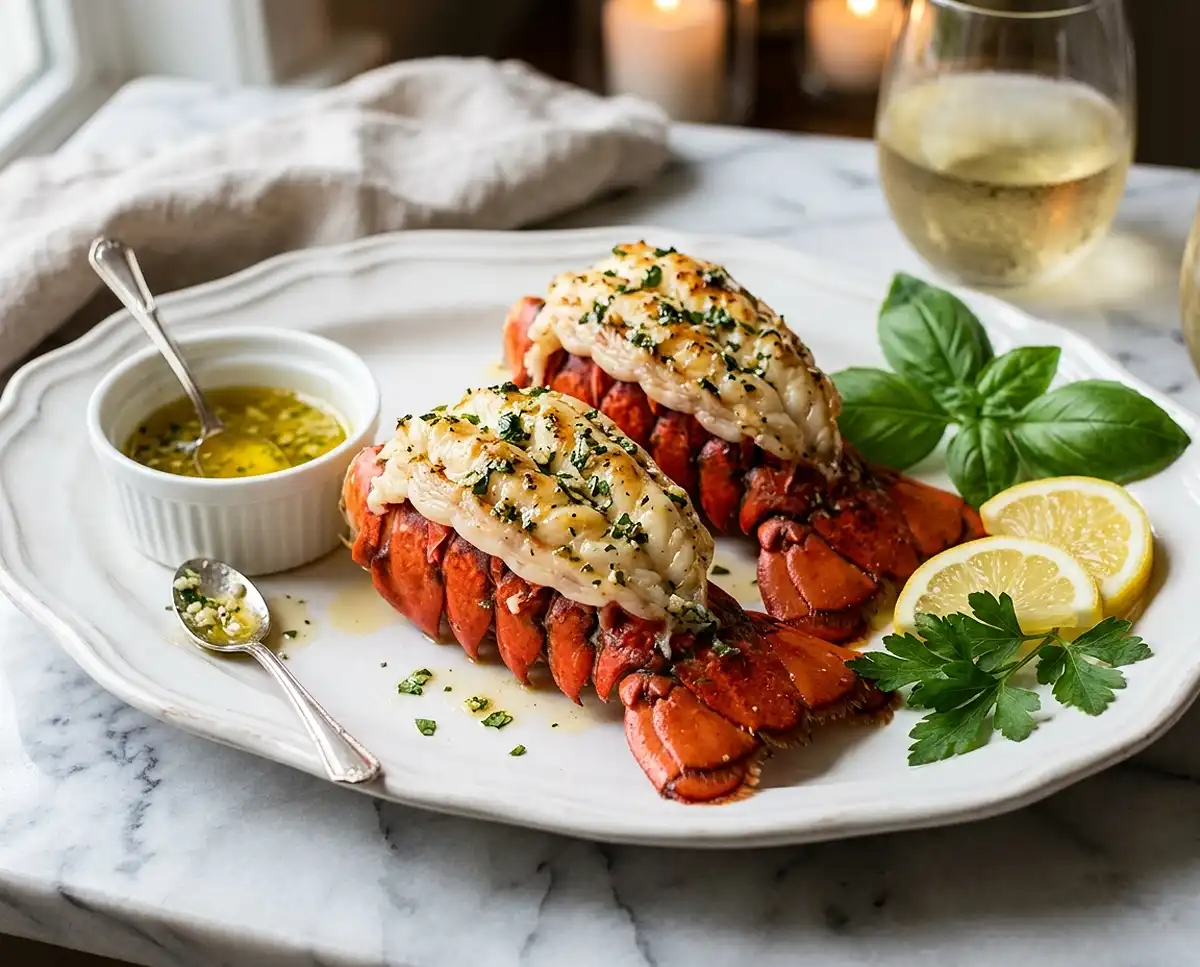
Gluten-Free Herb Butter Lobster Tails
Gluten-Free Herb Butter Lobster Tails with garlic, lemon & basil—broiled in 10 minutes for an elegant special occasion dinner.
Three years ago, I attempted to make lobster tails for our anniversary dinner and ended up with rubbery, overcooked meat because I didn’t understand the butterfly technique or proper broiling time. My husband still ate it with a smile, but I knew I’d failed—until I learned that cutting the shell correctly, pulling the meat on top, and broiling for exactly 10 minutes transforms lobster from intimidating restaurant fare into a foolproof home celebration.
The magic of these gluten-free herb butter lobster tails is that they look and taste like something you’d pay $40 per plate for at a steakhouse, but they’re naturally gluten-free and come together in under 15 minutes. The combination of garlic, lemon, and fresh basil in melted butter creates a sauce that’s as luxurious as silk draping over sweet, tender lobster meat—and honestly, can you think of a more impressive dish that requires zero gluten-containing ingredients?
Why You’ll Love These Gluten-Free Herb Butter Lobster Tails
- Naturally gluten-free luxury: Lobster, butter, garlic, lemon, and fresh herbs are all naturally gluten-free ingredients, making this an elegant special occasion meal that’s safe for celiacs without any substitutions or compromises.
- Foolproof butterflying technique: Cutting the shell lengthwise and pulling the meat on top (while leaving it attached at the tail) creates that restaurant “presentation” look and ensures the meat cooks evenly under the broiler.
- Ready in 10 minutes under the broiler: High heat from the broiler cooks the lobster quickly, caramelizing the butter and keeping the meat tender and juicy instead of tough and rubbery.
- Impressive for date nights and holidays: This dish screams “special occasion”—perfect for Valentine’s Day, anniversaries, New Year’s Eve, or any time you want to create a restaurant experience at home.
The Secret to Perfect Gluten-Free Herb Butter Lobster Tails
Butterflying creates even cooking and dramatic presentation: Cutting through the top shell and pulling the lobster meat up and over (while keeping it attached at the tail end) exposes the meat directly to the broiler’s heat, which cooks it faster and more evenly than leaving it inside the shell. According to trusted seafood cooking guides, this technique also prevents the tail from curling during cooking, which can lead to uneven doneness.
Cracking the underside prevents curling: The lobster’s natural instinct is to curl up when heated, which tightens the meat and makes it tough. Flipping the tail over and gently cracking the segmented boning on the underside (using firm but controlled pressure with your hands) prevents this curling and ensures the tail stays flat and cooks evenly.
High heat for exactly 10 minutes: Broiling on high for 10 minutes (for standard 5-6 oz lobster tails) is the sweet spot—the meat turns from translucent gray to opaque white without overcooking into rubbery toughness. You know, the meat should reach 140-145°F internal temperature, which is when the proteins have just set but still retain moisture and that signature sweet lobster flavor.
Herb butter adds moisture and flavor: Whisking melted butter with minced garlic, lemon juice, and fresh basil creates an aromatic sauce that bastes the lobster as it cooks, keeping it moist while infusing it with complementary flavors. The extra tablespoon of room-temperature butter placed on top of each tail melts slowly during broiling, creating a self-basting effect.
Table of Contents
Ingredients
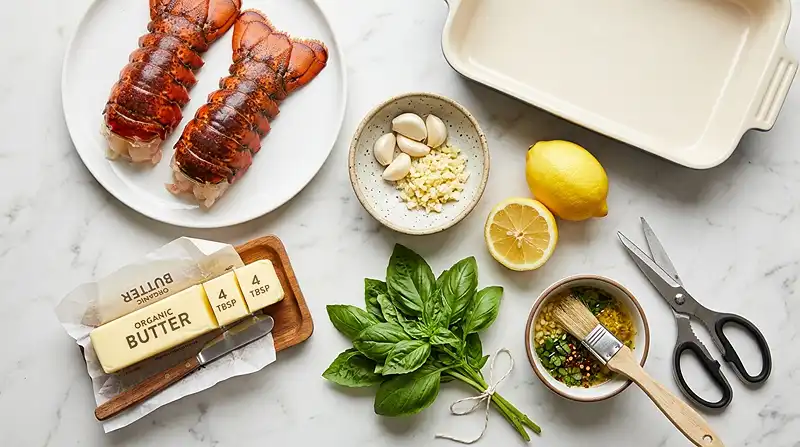
Main Ingredients:
- 2 lobster tails (5-6 oz each, fresh or frozen and thawed)
- 4 tablespoons butter (plus extra for serving)
- 2 cloves garlic, minced
- Juice of ½ lemon, strained (about 1½ tablespoons)
- ½ tablespoon fresh basil, finely chopped
Note: Make sure your butter is real butter (not margarine) and check any pre-made garlic products to ensure they’re gluten-free. Fresh garlic, fresh lemon juice, and fresh basil are all naturally gluten-free—no hidden ingredients to worry about.
Step-by-Step Instructions
1. Preheat the broiler
Set your oven’s broiler to high and position the oven rack about 6-8 inches below the heating element. Let it preheat for 5 minutes while you prepare the lobster tails—a hot broiler is essential for quick, even cooking.
2. Butterfly the lobster tails
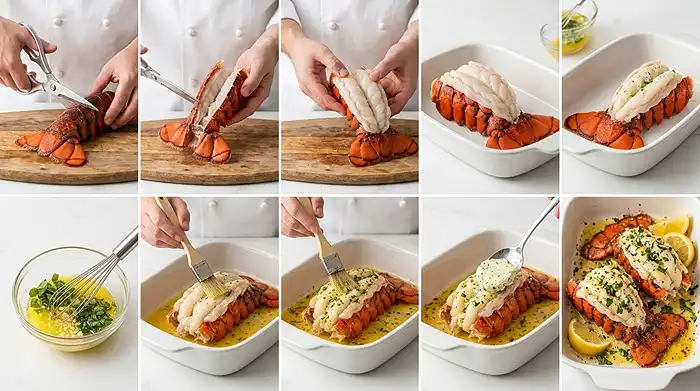
Using sharp kitchen scissors, cut through the top (rounded, harder) side of the shell lengthwise down the center, starting from the wide end and cutting all the way down to the tail flipper—but don’t cut through the flipper itself. Make sure you’re cutting through the shell only, not the meat underneath.
3. Crack the underside
Flip each lobster tail over so the softer, segmented underside is facing up. Using both hands, apply firm but gentle pressure to crack the boning segments along the underside—you’ll hear small cracking sounds. Man, oh man, be careful here because the shell edges can be sharp, but this step prevents the tail from curling into a tight ball during cooking.
4. Pull the meat up
Flip the tails back over to the top shell side. Gently work your fingers under the meat to separate it from the inside of the shell, pulling it up and out while keeping it attached at the tail flipper end. Rest the meat on top of the shell in a dramatic, elevated position—this is the classic “butterfly” presentation.
5. Prepare the herb butter
In a small microwave-safe bowl, melt 2 tablespoons of butter (about 20-30 seconds in the microwave). Whisk in the 2 cloves minced garlic, juice of ½ strained lemon, and ½ tablespoon finely chopped fresh basil until everything is well combined and emulsified.
6. Arrange and butter the tails
Place the butterflied lobster tails in a baking dish or on a broiler-safe pan. Brush or pour the herb butter mixture generously over the exposed lobster meat, making sure to coat every surface. Place 1 tablespoon of room-temperature butter directly on top of each tail—it will melt slowly during cooking.
7. Broil for exactly 10 minutes
Slide the baking dish under the preheated broiler and cook for 10 minutes without opening the oven door. Watch for the meat to turn from translucent gray/blue to opaque white, and look for the edges to just start caramelizing slightly—this visual cue tells you the lobster is done.
8. Rest and serve
Remove the lobster tails from the oven and let them rest for 2-3 minutes (the carryover heat will finish cooking them to perfection). Sprinkle with additional fresh chopped basil if desired, and serve immediately with extra melted butter on the side for dipping.
Pro Tip: If you’re nervous about overcooking, check the internal temperature with an instant-read thermometer inserted into the thickest part of the meat—you’re looking for 140-145°F. Anything above 145°F starts to get rubbery and tough.
Make It Your Own
Try different herb combinations: Replace the basil with fresh tarragon (classic French pairing with shellfish), fresh thyme, fresh parsley, or a combination of all three for a more complex herb profile. A pinch of cayenne pepper or red pepper flakes adds a subtle heat that complements the sweetness of lobster.
Add white wine for elegance: Replace 1 tablespoon of the melted butter with 1 tablespoon dry white wine in your herb butter mixture for a more refined, restaurant-style sauce. The acidity from the wine brightens all the flavors and cuts through the richness.
Make it dairy-free: Substitute the butter with ghee (clarified butter, which is naturally dairy-free), or use a high-quality vegan butter like Miyoko’s for a fully dairy-free version. Well, the flavor will be slightly different, but you’ll still get that rich, luxurious coating on the lobster.
Create a garlic-parmesan crust: Mix 2 tablespoons melted butter with 2 tablespoons gluten-free breadcrumbs, 1 tablespoon grated Parmesan, and minced garlic, then spread this mixture on top of the butterflied tails before broiling. You’ll get a crispy, golden crust that adds texture contrast.
Scale up for a crowd: This recipe easily multiplies—just butterfly as many tails as you need (allowing 1-2 per person depending on size), arrange them in a large baking dish, and double or triple the herb butter accordingly. Broiling time stays the same since you’re cooking individual tails.
Common Problems & Solutions
Lobster meat is rubbery and tough
You overcooked it by broiling for too long or your broiler was too hot and cooked the outside before the inside was done. Stick to exactly 10 minutes for standard 5-6 oz tails, and if your tails are smaller (3-4 oz), reduce the time to 7-8 minutes. The meat should be opaque white but still tender—if it’s pulling away from the shell and looking dry, it’s overdone.
Tail curls up into a tight ball during cooking
You didn’t crack the underside boning thoroughly enough, or you skipped that step entirely. Before broiling, flip the tail over and apply firm pressure along the segmented underside until you hear and feel small cracks—this breaks the structure that causes curling and keeps the tail flat.
Meat sticks to the shell and won’t pull out
The lobster tails were frozen and not fully thawed, or you’re being too timid when separating the meat. Thaw frozen lobster tails completely in the refrigerator overnight before butterflying, and use your fingers to firmly but gently work under the meat, loosening all the connective tissue while keeping it attached at the tail end.
Herb butter tastes too garlicky or too lemony
You used garlic powder instead of fresh minced garlic (which is more concentrated and harsh), or you added too much lemon juice. Stick to exactly 2 cloves of fresh minced garlic and the juice of ½ lemon (strained to remove pulp)—you want the butter to enhance the lobster, not overpower its delicate sweetness.
Lobster meat is undercooked and translucent in the center
Your broiler wasn’t fully preheated, your oven rack was too far from the heating element, or your lobster tails were larger than 5-6 oz. Always preheat the broiler for at least 5 minutes, position the rack 6-8 inches below the element, and add 2-3 minutes of cooking time for every additional ounce above 6 oz.
Storage & Meal Prep
| Method | Duration | Notes |
|---|---|---|
| Counter | Not recommended | Lobster must stay cold or be eaten immediately |
| Refrigerator | 1-2 days | Store in airtight container; best eaten fresh |
| Freezer | Not recommended | Cooked lobster becomes rubbery when frozen and thawed |
Storage tips: These gluten-free herb butter lobster tails taste best when served immediately after broiling, while the meat is hot and the butter is still melted and aromatic. If you have leftovers, store them in an airtight container in the refrigerator for up to 2 days, but note that reheated lobster will never be as tender and sweet as freshly cooked.
Meal-prep strategy: You can butterfly the raw lobster tails up to 4 hours ahead of time—keep them covered in the refrigerator until you’re ready to broil. Mix the herb butter ahead as well and store it in the fridge, then simply brush it on the tails and broil when it’s time to eat. This makes weeknight special dinners much more manageable.
Gluten-Free Herb Butter Lobster Tails FAQs
Can I use frozen lobster tails for this recipe?
Yes, frozen lobster tails work beautifully as long as you thaw them completely first—place them in the refrigerator for 8-10 hours or overnight until fully defrosted. Never try to butterfly or cook frozen lobster tails because they won’t cook evenly and the meat will be tough. Pat the thawed tails dry with paper towels before butterflying to remove excess moisture.
How do I know when the lobster is done cooking?
The meat should be completely opaque white (no translucent gray or blue spots remaining) and should reach an internal temperature of 140-145°F when checked with an instant-read thermometer in the thickest part. The texture should be firm but still tender—if you can pull the meat apart with a fork and it springs back slightly, it’s perfect.
What’s the best way to cut the lobster shell without hurting myself?
Use sharp kitchen scissors (not dull ones, which require more force and slip more easily) and cut slowly and deliberately through the hard top shell. Keep your non-cutting hand away from the shell edges, which can be very sharp, and apply steady pressure rather than trying to hack through quickly. If the scissors won’t cut, your blade may be dull—sharpen them or use a different pair.
Can I bake these lobster tails instead of broiling?
Yes, you can bake them at 425°F for 12-15 minutes (depending on size) until the meat is opaque and registers 140-145°F internally. Broiling gives you more caramelization and color on top, but baking is gentler and harder to overcook—it’s a good option if you’re nervous about the timing or if your broiler runs very hot.
Why does my herb butter separate or look greasy?
The butter was too hot when you added the lemon juice, or you didn’t whisk vigorously enough to create an emulsion. Let the melted butter cool for 30 seconds before adding the lemon juice and garlic, then whisk continuously for 10-15 seconds to combine everything into a smooth, cohesive sauce that clings to the lobster instead of pooling.
Serving Suggestions
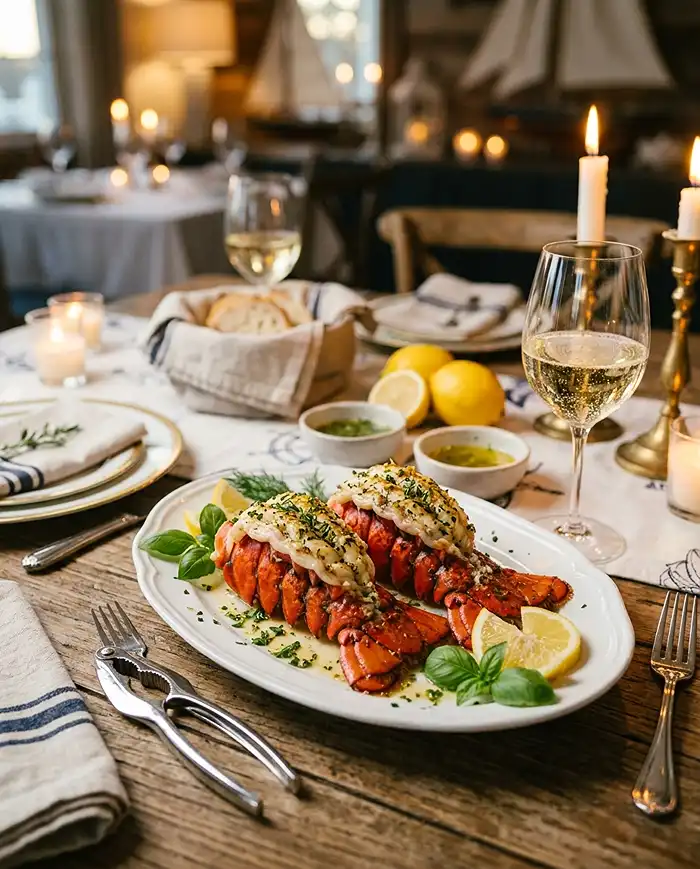
Serve these gluten-free herb butter lobster tails for Valentine’s Day dinners, anniversary celebrations, New Year’s Eve feasts, or any time you want to create a restaurant-quality meal at home without leaving your kitchen. They pair beautifully with classic steakhouse sides like baked potatoes, roasted asparagus, or a crisp Caesar salad (made with gluten-free croutons), and a glass of chilled white wine or champagne completes the elegant experience.
For a complete gluten-free celebration menu, start with gluten-free caprese salad cups as an appetizer, serve the lobster tails as your main course alongside gluten-free mushroom risotto, and finish with gluten-free rose water pistachio cake for dessert—it’s a menu that proves gluten-free dining can be just as luxurious and special as any traditional celebration.
Create Your Own Restaurant Experience Tonight
Give these gluten-free herb butter lobster tails a try for your next special occasion and let me know if they make you feel like you’re dining at a five-star restaurant! Pin this recipe for date nights and celebrations, and drop a comment below about your favorite way to serve lobster.
Rate the recipe after you make it, and share photos of your beautiful presentation with the community—I love seeing everyone’s plating creativity. These lobster tails prove that gluten-free cooking can be just as elegant, impressive, and crave-worthy as any traditional seafood dish.
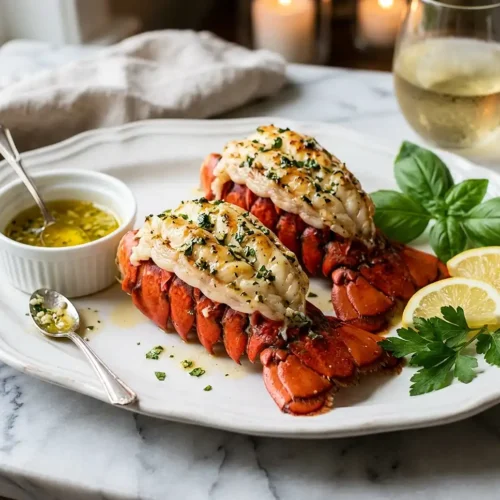
Gluten-Free Herb Butter Lobster Tails
Equipment
- Kitchen scissors
- Baking dish or broiler-safe pan
- Small microwave-safe bowl
- Whisk
- Pastry brush
- Instant-read thermometer (optional)
Ingredients
Main Ingredients
- 2 Lobster tails 5-6 oz each, fresh or frozen and thawed
- 4 tablespoons Butter plus extra for serving
- 2 cloves Garlic minced
- ½ Lemon juice strained, about 1½ tablespoons
- ½ tablespoon Fresh basil finely chopped, plus extra for garnish
Instructions
- Set your oven’s broiler to high and position the oven rack about 6-8 inches below the heating element. Let it preheat for 5 minutes while you prepare the lobster tails—a hot broiler is essential for quick, even cooking.
- Using sharp kitchen scissors, cut through the top (rounded, harder) side of the shell lengthwise down the center, starting from the wide end and cutting all the way down to the tail flipper—but don’t cut through the flipper itself. Make sure you’re cutting through the shell only, not the meat underneath.
- Flip each lobster tail over so the softer, segmented underside is facing up. Using both hands, apply firm but gentle pressure to crack the boning segments along the underside—you’ll hear small cracking sounds. Be careful here because the shell edges can be sharp, but this step prevents the tail from curling into a tight ball during cooking.
- Flip the tails back over to the top shell side. Gently work your fingers under the meat to separate it from the inside of the shell, pulling it up and out while keeping it attached at the tail flipper end. Rest the meat on top of the shell in a dramatic, elevated position—this is the classic “butterfly” presentation.
- In a small microwave-safe bowl, melt 2 tablespoons of butter (about 20-30 seconds in the microwave). Whisk in the 2 cloves minced garlic, juice of ½ strained lemon, and ½ tablespoon finely chopped fresh basil until everything is well combined and emulsified.
- Place the butterflied lobster tails in a baking dish or on a broiler-safe pan. Brush or pour the herb butter mixture generously over the exposed lobster meat, making sure to coat every surface. Place 1 tablespoon of room-temperature butter directly on top of each tail—it will melt slowly during cooking.
- Slide the baking dish under the preheated broiler and cook for 10 minutes without opening the oven door. Watch for the meat to turn from translucent gray/blue to opaque white, and look for the edges to just start caramelizing slightly—this visual cue tells you the lobster is done.
- Remove the lobster tails from the oven and let them rest for 2-3 minutes (the carryover heat will finish cooking them to perfection). Sprinkle with additional fresh chopped basil if desired, and serve immediately with extra melted butter on the side for dipping.