Gluten-Free Herb Roasted Chicken
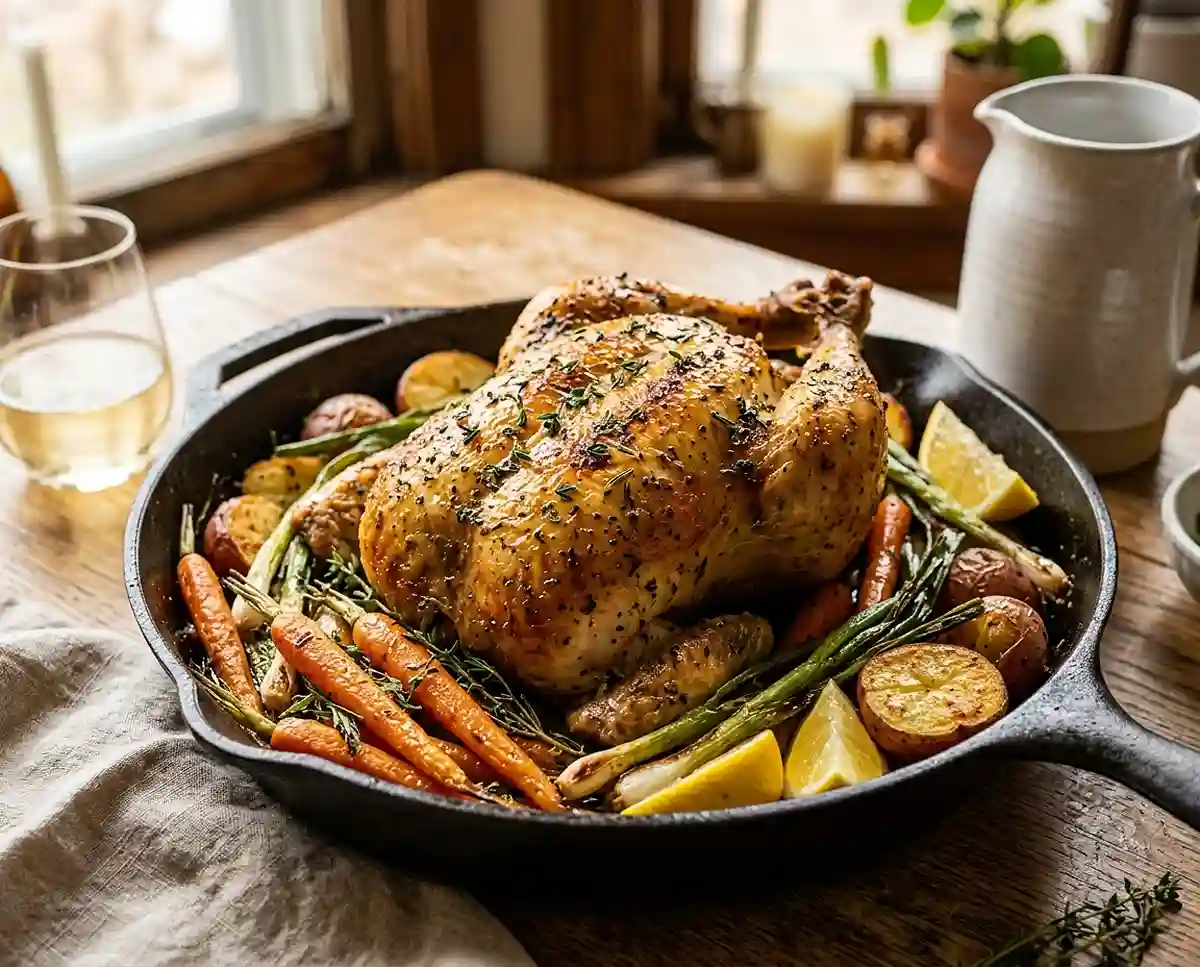
Gluten-Free Herb Roasted Chicken with Spring Vegetables—crispy skin, tender meat, roasted potatoes, carrots, and scallions. One pan, naturally gluten-free!
The first time I tried to roast a whole chicken, I panicked halfway through and kept opening the oven door to check on it—big mistake. The temperature dropped so much that the skin never got crispy, and the inside took forever to cook through.
Well… after that disaster, I learned that patience and a good meat thermometer are your best friends when roasting poultry. Now this gluten-free herb roasted chicken with spring vegetables is my go-to Sunday dinner, and it’s foolproof: one pan, minimal prep, and the house smells like a farmhouse kitchen in the best way possible.
You know… there’s something deeply comforting about pulling a whole roasted bird out of the oven, surrounded by perfectly tender vegetables, and knowing you made a complete meal in one pan. It’s the kind of dinner that makes you feel like you’ve got your life together—even if you’re just winging it.
Why You’ll Love This Gluten-Free Herb Roasted Chicken with Spring Vegetables
- Texture perfection: Crispy, golden chicken skin that crackles when you bite into it, paired with juicy, tender meat and vegetables that are caramelized on the outside and soft inside—like a high-end restaurant roast at home
- Beginner-friendly: Minimal hands-on time; just season, roast, add vegetables halfway through, and let the oven do the work—perfect for busy weeknights or relaxed Sunday dinners
- Naturally gluten-free: No flour, no breadcrumbs, no hidden gluten—just whole chicken, fresh herbs, olive oil, and seasonal vegetables that everyone can enjoy
- Perfect for: Sunday family dinners, Easter celebrations, meal prep (leftovers reheat beautifully), or any time you want an impressive spring chicken dinner without the stress
The Secret to Perfect Herb Roasted Chicken Gluten Free
Why this recipe works when others turn dry or rubbery:
- Scoring the onion releases aromatics: Placing a scored onion in the chicken cavity allows moisture and flavor to steam from the inside out, keeping the meat juicy while infusing it with sweet, caramelized onion notes.
- Thyme rub creates a herb crust: Rubbing fresh minced thyme directly onto the skin (along with olive oil) helps the herbs adhere and caramelize during roasting, creating a fragrant, golden crust that’s packed with flavor.
- Two-stage roasting for perfect vegetables: Roasting the chicken alone for 30 minutes allows the skin to start crisping before adding the vegetables—this prevents the veggies from turning mushy and ensures everything finishes at the same time.
- Lemon adds brightness and tenderizes: Squeezing fresh lemon juice over the chicken at the start and finish brightens the rich, savory flavors and helps tenderize the meat thanks to its natural acidity—according to USDA food safety guidelines, chicken should reach an internal temperature of 165°F, and the lemon ensures it stays moist even at that safe temperature.
Table of Contents
Ingredients
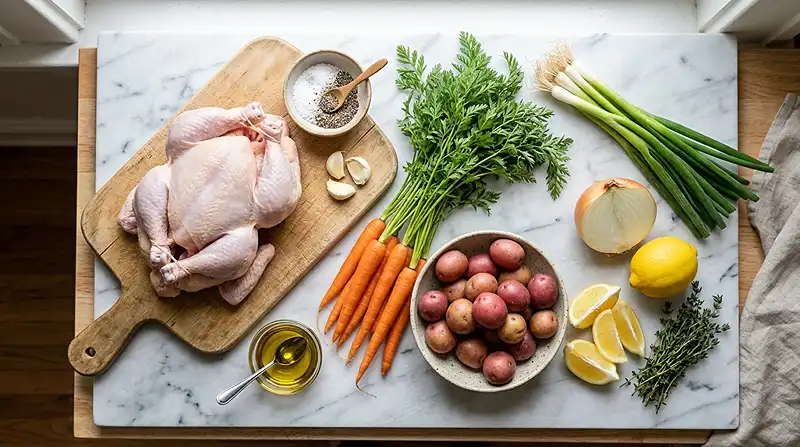
| Ingredient | Amount | Notes |
|---|---|---|
| Whole fresh roasting chicken | 1 (about 4-5 lbs) | Look for organic or pasture-raised if possible for best flavor |
| Kosher salt | To taste | Coarse salt helps create crispy skin |
| Freshly ground black pepper | To taste | Use a pepper grinder for the freshest flavor |
| Garlic cloves | 2, crushed | Fresh garlic is essential; don’t use powder |
| Lemon | 1, quartered | Use a fresh lemon, not bottled juice |
| Large onion | 1, halved | Yellow or white onion works best |
| Extra-virgin olive oil | 3 tablespoons | High-quality olive oil adds richness |
| Small red potatoes | 1 pound | Baby red potatoes or fingerlings work too |
| Scallions | 1 bunch | Also called green onions |
| Baby carrots | 1 bunch | Fresh baby carrots with tops, or use regular carrots cut into sticks |
| Fresh thyme | ¼ cup, minced | About 2-3 sprigs; use fresh, not dried |
Step-by-Step Instructions
1. Preheat the oven and prep the chicken.
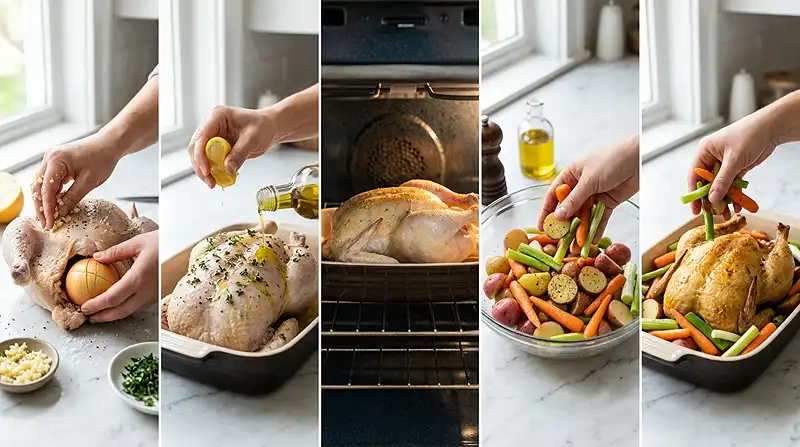
Preheat your oven to 350°F. Rinse the whole chicken inside and out under cold water, then pat it completely dry with paper towels—this is crucial for crispy skin. Rub the crushed garlic all over the outside of the chicken, getting into every crevice. Season generously with kosher salt and freshly ground black pepper on all sides.
Pro Tip: Dry skin is the secret to crispy, golden chicken. If you have time, let the seasoned chicken sit uncovered in the fridge for 1-2 hours (or overnight) to dry out the skin even more—this step is optional but makes a huge difference.
2. Stuff the cavity.
Score the halved onion by making a few shallow cuts across the cut side (this helps release moisture and flavor), then place both halves inside the chicken cavity. This creates an aromatic steam bath from the inside that keeps the meat tender and adds a subtle sweetness.
Sensory cue: The raw garlic will smell pungent and sharp—almost spicy—but it mellows into a sweet, nutty aroma as it roasts.
3. Season and prepare for roasting.
Place the chicken skin-side up (breast up) in a large baking dish or roasting pan—make sure it’s large enough to accommodate the vegetables you’ll add later. Squeeze half of the quartered lemon over the chicken, letting the juice run over the skin and into the pan. Drizzle 1 tablespoon of olive oil over the chicken and rub it in evenly, then sprinkle the minced fresh thyme all over, pressing it gently into the skin so it sticks.
Pro Tip: Save the squeezed lemon halves and toss them into the pan—they’ll caramelize and add even more citrusy aroma to the dish.
4. Roast the chicken for 30 minutes.
Place the baking dish in the preheated oven and roast the chicken alone for 30 minutes. This head start allows the skin to begin crisping and the fat to render before you add the vegetables, which helps prevent steaming.
Sensory cue: After 20 minutes, your kitchen will start to smell incredible—like roasting garlic, herbs, and buttery chicken skin all mingling together.
5. Prep the vegetables.
While the chicken is roasting, cut the small red potatoes in half (leave tiny ones whole if you prefer) and cut the scallions into thirds (white, middle, and green parts). If your baby carrots are very thick, you can halve them lengthwise, but thin ones can stay whole. Toss the potatoes, carrots, scallions, and the remaining 2 tablespoons of olive oil in a bowl, and season generously with salt and pepper.
Pro Tip: Don’t skip the oil on the vegetables—it helps them caramelize and prevents them from drying out in the oven.
6. Add the vegetables and continue roasting.
After the initial 30 minutes, carefully remove the chicken from the oven (the pan will be hot and full of sizzling juices). Scatter the seasoned vegetables around the chicken in the pan, tucking them into the juices as much as possible. Return the pan to the oven and continue roasting for about 35-45 more minutes, until the vegetables are tender and golden, and the chicken is cooked through.
Sensory cue: You’ll know the chicken is done when the skin is deep golden brown, the legs wiggle easily in their sockets, and a meat thermometer inserted into the thickest part of the thigh (not touching bone) reads 165°F.
7. Finish with lemon and rest.
Once the chicken is fully cooked and the vegetables are tender, remove the pan from the oven. Squeeze the remaining lemon quarters over the chicken and vegetables, and season everything with a final pinch of salt. Let the chicken rest for 10 minutes before carving—this allows the juices to redistribute so every bite is moist and flavorful.
Pro Tip: Use the resting time to make a quick pan sauce: pour the drippings into a small saucepan, skim off excess fat, and simmer for 2-3 minutes to concentrate the flavors. Drizzle over the carved chicken for extra richness.
8. Carve and serve.
Transfer the chicken to a cutting board and carve it into pieces (breasts, thighs, drumsticks, wings). Arrange the meat on a platter with the roasted vegetables scattered around, and drizzle any remaining pan juices over the top. Serve hot and enjoy the compliments!
Make It Your Own: Substitutions & Variations
Swap the baby carrots for parsnips, turnips, or halved fennel bulbs for a different flavor profile. Parsnips add a sweet, earthy note, turnips are slightly peppery, and fennel brings a mild licorice flavor that pairs beautifully with the thyme and lemon.
Use sweet potatoes instead of red potatoes for a sweeter, creamier side that caramelizes beautifully. Cut them into 1-inch chunks and toss with the olive oil—they’ll roast in the same amount of time as regular potatoes.
Try different herbs if thyme isn’t your favorite. Fresh rosemary and sage are classic with roasted chicken, or you could use a mix of parsley, oregano, and basil for a more Mediterranean vibe. Just keep the total amount of herbs around ¼ cup minced.
Man, oh man… you can also add a head of garlic (cut in half crosswise) to the roasting pan along with the vegetables. The cloves turn soft, sweet, and spreadable—perfect for smearing on crusty gluten-free bread or stirring into mashed potatoes.
Common Problems & Solutions
Problem: The chicken skin didn’t get crispy.
Solution: Make sure you pat the chicken completely dry before seasoning, and don’t crowd the vegetables too closely around it. You can also increase the oven temperature to 425°F for the last 10 minutes to crisp the skin.
Explanation: Moisture is the enemy of crispy skin. If the chicken is wet when it goes into the oven, the water will steam instead of roast, leaving you with rubbery skin. Spacing the vegetables out also prevents steam buildup.
Problem: The chicken is done but the vegetables are still hard.
Solution: Cut the vegetables smaller next time (potatoes in quarters, not halves), or give them a 10-minute head start in the oven before adding the chicken.
Explanation: Dense vegetables like potatoes and carrots take longer to cook than chicken. Cutting them smaller increases the surface area and speeds up roasting.
Problem: The meat is dry and overcooked.
Solution: Use a meat thermometer and pull the chicken out of the oven as soon as it reaches 165°F in the thickest part of the thigh. Don’t rely on cooking time alone—ovens vary.
Explanation: Overcooking is the number one reason chicken turns dry. The USDA safe temperature is 165°F, so there’s no need to cook it beyond that point. Resting the chicken also helps retain moisture.
Problem: The garlic and herbs burned.
Solution: Tent the chicken loosely with foil after the first 30 minutes if the top is browning too quickly, or reduce the oven temperature to 325°F.
Explanation: Fresh garlic and herbs can scorch at high heat, especially if your oven runs hot. A foil tent protects them while the meat continues to cook through.
Storage & Meal Prep
| Method | Duration | Notes |
|---|---|---|
| Counter | 2 hours max | Only safe while cooling; refrigerate as soon as it reaches room temperature |
| Fridge | 3-4 days | Store chicken and vegetables separately in airtight containers |
| Freezer | 3 months | Shred or slice chicken before freezing; vegetables don’t freeze well |
Leftover herb roasted chicken gluten free is meal-prep gold. Shred or slice the meat and use it in salads, grain bowls, tacos, or sandwiches throughout the week. The roasted vegetables reheat beautifully in a skillet with a drizzle of olive oil or in the microwave for 1-2 minutes. Save the chicken bones and scraps to make homemade stock—simmer them with water, celery, carrots, and onion for 2-3 hours for a rich, gelatinous broth that’s perfect for soups.
Gluten-Free Herb Roasted Chicken FAQs
Can I use chicken breasts or thighs instead of a whole chicken?
Yes, but adjust the cooking time—bone-in thighs take about 40-45 minutes total at 375°F, and boneless breasts take 25-30 minutes at 400°F. The vegetables will still work the same way; just add them halfway through the adjusted cooking time. Whole chickens are more forgiving and flavorful because the bones and skin keep the meat moist, but pieces work in a pinch.
How do I know when the chicken is fully cooked?
Insert an instant-read meat thermometer into the thickest part of the thigh (not touching bone)—it should read 165°F for safe consumption. The juices should also run clear when you pierce the meat, and the legs should wiggle easily in their sockets. Don’t rely on color alone; dark meat can look pink even when fully cooked.
What if I don’t have fresh thyme?
You can use 1 tablespoon of dried thyme instead, but reduce the amount since dried herbs are more concentrated. Other fresh herbs like rosemary, sage, or oregano work beautifully too. If you don’t have any herbs, the chicken will still taste great with just garlic, lemon, salt, and pepper.
Can I make this in a slow cooker or Instant Pot?
Yes, but you won’t get crispy skin. For a slow cooker, season the chicken and cook on low for 6-8 hours or high for 3-4 hours; add the vegetables during the last hour. For an Instant Pot, use the pressure cook function for 25 minutes with 1 cup of broth, then broil the chicken in the oven for 5 minutes to crisp the skin.
Is this recipe dairy-free?
Yes, this one pan chicken recipe is naturally dairy-free—there’s no butter, cream, or cheese. It’s also gluten-free, grain-free, and Paleo-friendly, making it perfect for families with multiple dietary restrictions. Just make sure your seasonings and oils are certified gluten-free if you have celiac disease.
Serving Suggestions
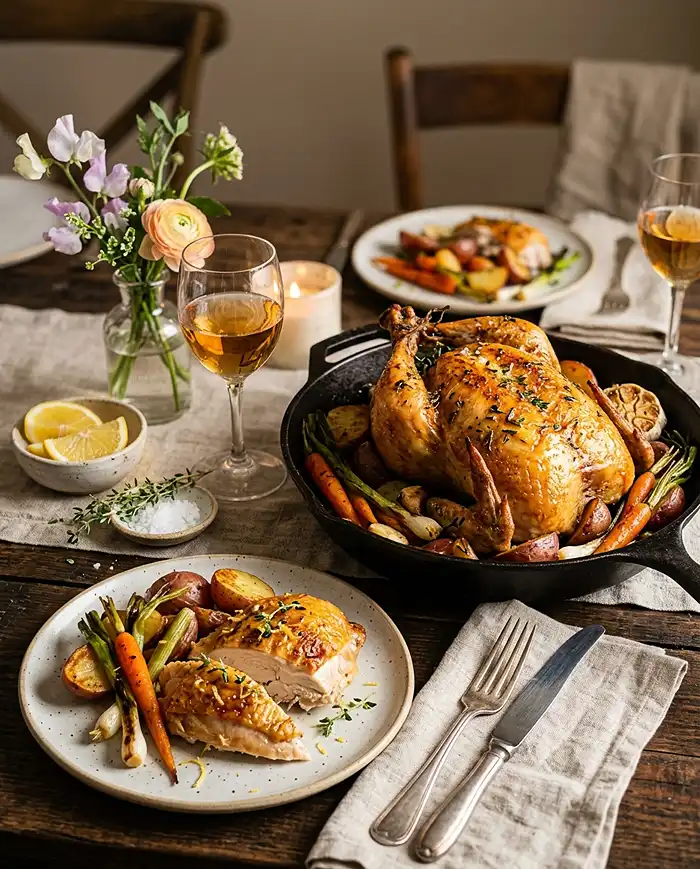
This gluten-free herb roasted chicken with spring vegetables is a complete meal on its own, but it’s also stunning on an Easter or Mother’s Day table alongside gluten-free simnel cake for dessert. Serve it with crusty gluten-free bread for soaking up the pan juices, or pair it with a simple green salad dressed with lemon vinaigrette to echo the citrus in the chicken. If you’re hosting a spring brunch, this roast pairs beautifully with gluten-free lavender lemon shortbread for a sweet finish, and you can even use leftover chicken to make sandwiches the next day.
For a complete spring celebration menu, start with a light appetizer like fresh crudités with hummus, serve this herb roasted chicken as the main, and finish with dairy-free chocolate Easter eggs for a dessert that everyone can enjoy. The combination of savory roasted meat, sweet caramelized vegetables, and bright lemon makes this a meal that feels special without being fussy.
Let’s Hear From You!
Give this gluten-free herb roasted chicken with spring vegetables a try this weekend and let me know how it turns out! Did you use the classic thyme and garlic or experiment with different herbs? I’d love to hear your favorite variations in the comments below. And if you love this one-pan wonder as much as we do (it’s been on repeat at our house all spring!), please pin this recipe on Pinterest so you can find it again for Sunday dinners, Easter, or any time you want a meal that looks and tastes like you spent hours in the kitchen—even though you didn’t. Happy roasting!
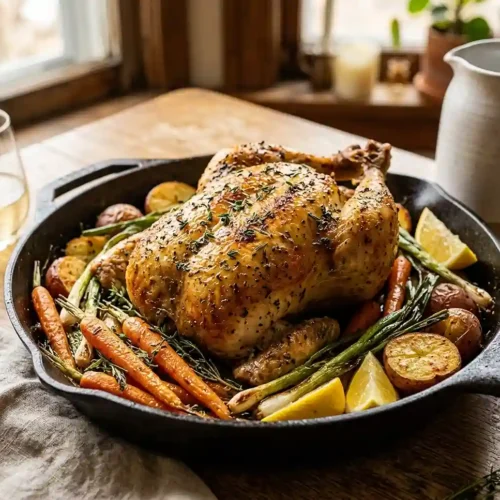
Gluten-Free Herb Roasted Chicken with Spring Vegetables
Equipment
- Large baking dish or roasting pan
- Paper towels
- Small bowl
- Instant-read meat thermometer
- Cutting board
- Chef’s knife
- Carving knife
- Serving platter
Ingredients
- 1 whole fresh roasting chicken about 4-5 lbs; organic or pasture-raised preferred
- kosher salt to taste
- freshly ground black pepper to taste
- 2 cloves garlic crushed
- 1 lemon quartered
- 1 large onion halved and scored
- 3 tablespoons extra-virgin olive oil divided
- 1 pound small red potatoes halved
- 1 bunch scallions cut into thirds
- 1 bunch baby carrots fresh with tops, or regular carrots cut into sticks
- ¼ cup fresh thyme minced (about 2-3 sprigs)
Instructions
- Preheat your oven to 350°F. Rinse the whole chicken inside and out under cold water, then pat it completely dry with paper towels—this is crucial for crispy skin. Rub the crushed garlic all over the outside of the chicken, getting into every crevice. Season generously with kosher salt and freshly ground black pepper on all sides. Dry skin is the secret to crispy, golden chicken. If you have time, let the seasoned chicken sit uncovered in the fridge for 1-2 hours (or overnight) to dry out the skin even more—this step is optional but makes a huge difference.
- Score the halved onion by making a few shallow cuts across the cut side (this helps release moisture and flavor), then place both halves inside the chicken cavity. This creates an aromatic steam bath from the inside that keeps the meat tender and adds a subtle sweetness. The raw garlic will smell pungent and sharp—almost spicy—but it mellows into a sweet, nutty aroma as it roasts.
- Place the chicken skin-side up (breast up) in a large baking dish or roasting pan—make sure it’s large enough to accommodate the vegetables you’ll add later. Squeeze half of the quartered lemon over the chicken, letting the juice run over the skin and into the pan. Drizzle 1 tablespoon of olive oil over the chicken and rub it in evenly, then sprinkle the minced fresh thyme all over, pressing it gently into the skin so it sticks. Save the squeezed lemon halves and toss them into the pan—they’ll caramelize and add even more citrusy aroma to the dish.
- Place the baking dish in the preheated oven and roast the chicken alone for 30 minutes. This head start allows the skin to begin crisping and the fat to render before you add the vegetables, which helps prevent steaming. After 20 minutes, your kitchen will start to smell incredible—like roasting garlic, herbs, and buttery chicken skin all mingling together.
- While the chicken is roasting, cut the small red potatoes in half (leave tiny ones whole if you prefer) and cut the scallions into thirds (white, middle, and green parts). If your baby carrots are very thick, you can halve them lengthwise, but thin ones can stay whole. Toss the potatoes, carrots, scallions, and the remaining 2 tablespoons of olive oil in a bowl, and season generously with salt and pepper. Don’t skip the oil on the vegetables—it helps them caramelize and prevents them from drying out in the oven.
- After the initial 30 minutes, carefully remove the chicken from the oven (the pan will be hot and full of sizzling juices). Scatter the seasoned vegetables around the chicken in the pan, tucking them into the juices as much as possible. Return the pan to the oven and continue roasting for about 35-45 more minutes, until the vegetables are tender and golden, and the chicken is cooked through. You’ll know the chicken is done when the skin is deep golden brown, the legs wiggle easily in their sockets, and a meat thermometer inserted into the thickest part of the thigh (not touching bone) reads 165°F.
- Once the chicken is fully cooked and the vegetables are tender, remove the pan from the oven. Squeeze the remaining lemon quarters over the chicken and vegetables, and season everything with a final pinch of salt. Let the chicken rest for 10 minutes before carving—this allows the juices to redistribute so every bite is moist and flavorful. Use the resting time to make a quick pan sauce: pour the drippings into a small saucepan, skim off excess fat, and simmer for 2-3 minutes to concentrate the flavors. Drizzle over the carved chicken for extra richness.
- Transfer the chicken to a cutting board and carve it into pieces (breasts, thighs, drumsticks, wings). Arrange the meat on a platter with the roasted vegetables scattered around, and drizzle any remaining pan juices over the top. Serve hot and enjoy the compliments!