Gluten-Free Honey Garlic Salmon
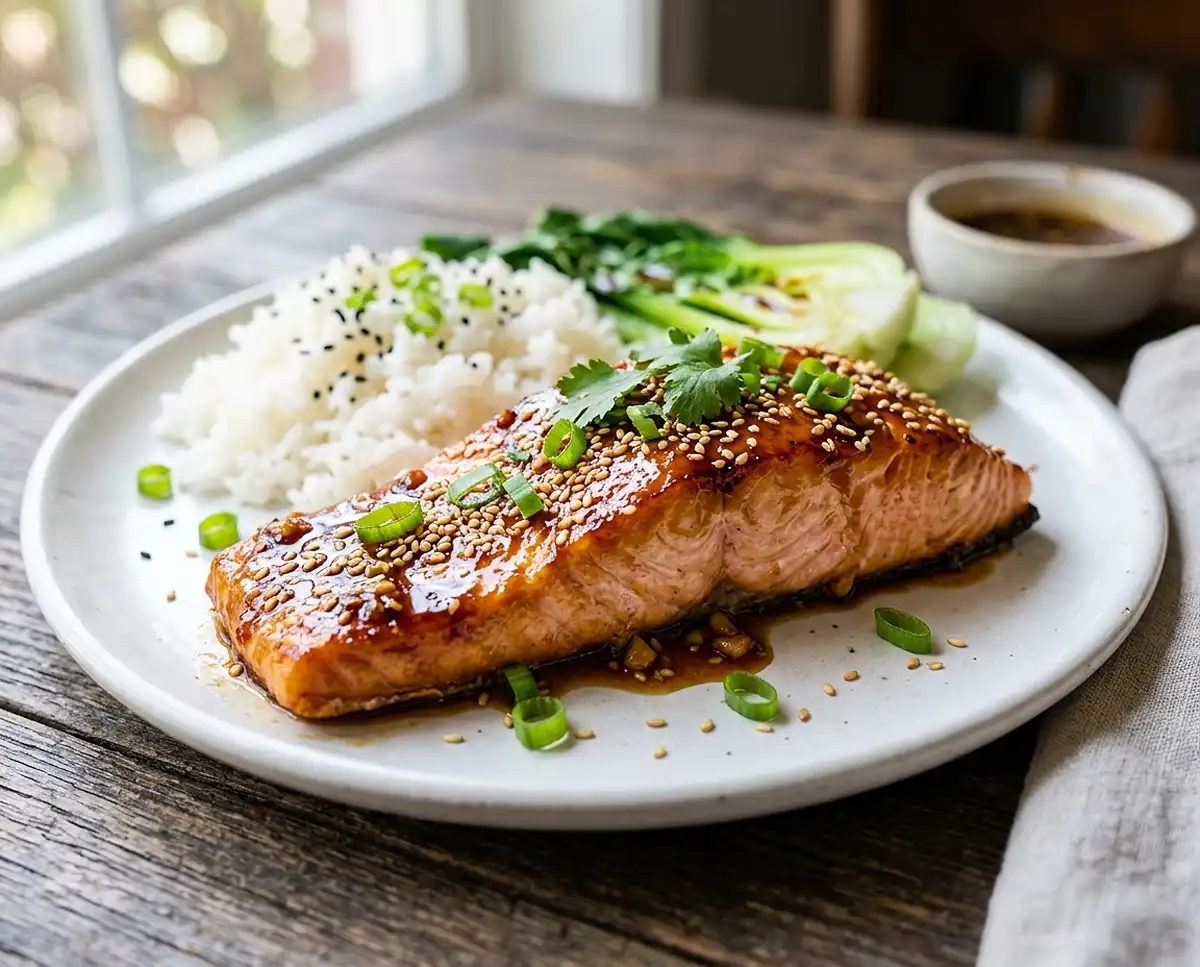
This gluten-free honey garlic salmon is sweet, sticky, and restaurant-quality! Easy glazed salmon ready in 20 minutes with just 10 ingredients.
I’ll never forget the first time I tried making honey garlic salmon at home—I was so excited about the recipe I found online, but halfway through I realized the sauce called for regular soy sauce, which definitely wasn’t gluten-free. I’d already started cooking, so I frantically googled substitutes while my salmon sat there getting dry. That disaster taught me to always check ingredients before I start, and now I’ve perfected this gluten-free version that’s honestly better than any restaurant version I’ve ever had.
The glossy honey garlic glaze caramelizes on top of the salmon, creating this incredible sweet-savory crust that’s sticky like warm taffy but balanced with garlic and ginger. You know what? The best part is how fast this comes together—from fridge to table in about 20 minutes, which makes it perfect for those nights when you need something special but don’t have time to fuss.
Why You’ll Love This Gluten-Free Honey Garlic Salmon
- Restaurant flavor at home: That sticky, caramelized glaze rivals any Asian fusion restaurant—without the cross-contamination worries
- Beginner-friendly technique: If you can sear salmon and whisk a sauce, you can make this sweet salmon shine
- Naturally gluten-free options: Works with tamari or coconut aminos so everyone can enjoy it safely
- Quick weeknight winner: Ready in 20 minutes total, making it ideal for busy families who still want something impressive
The Secret to Perfect Gluten-Free Honey Garlic Salmon
Room temperature salmon cooks evenly: Taking salmon out of the fridge 15-20 minutes before cooking ensures the center cooks through without overcooking the edges. This prevents that dreaded dry exterior with raw middle situation that ruins so many salmon dinners.
Cornstarch creates the glaze: Whisking cornstarch with water before adding it to your sauce creates a glossy, thick glaze that clings to the salmon instead of sliding off. According to trusted culinary science from Serious Eats, cornstarch-thickened sauces provide better coating than flour-based ones for fish.
High heat sear locks in moisture: Starting with a screaming hot skillet creates a flavorful crust in minutes while keeping the interior tender and flaky. That initial sear is what gives this honey garlic salmon gluten free its restaurant-quality texture.
Finishing in the oven prevents burning: Moving from stovetop to oven lets you glaze the salmon without scorching the honey, which would turn bitter. The gentle oven heat also ensures even cooking throughout the fillet.
Table of Contents
Ingredients
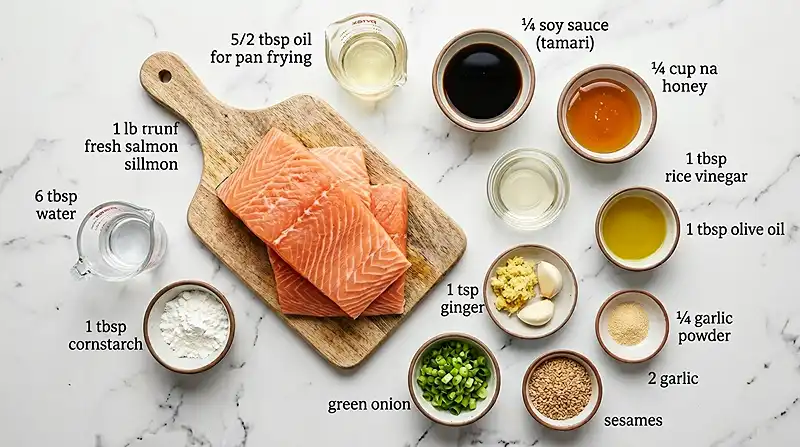
| Ingredient | Amount | Notes |
|---|---|---|
| Salmon fillets | 1 pound | Skin on, preferably center-cut |
| Neutral oil | ½ tablespoon | For pan frying |
| Soy sauce | ¼ cup | Use tamari or coconut aminos for gluten-free |
| Honey | ¼ cup | Raw or regular |
| Rice vinegar | 1 tablespoon | Adds tanginess |
| Olive oil | 1 tablespoon | For the sauce |
| Garlic powder | ¼ teaspoon | Enhances fresh garlic |
| Garlic cloves | 2 | Freshly grated |
| Fresh ginger | 1 teaspoon | Grated |
| Cornstarch | 1 tablespoon | Creates glossy glaze |
| Water | 6 tablespoons | For cornstarch slurry |
| Green onions | For garnish | Minced |
| Sesame seeds | For garnish | Toasted |
Serves: 4
Step-by-Step Instructions
Prep the Salmon
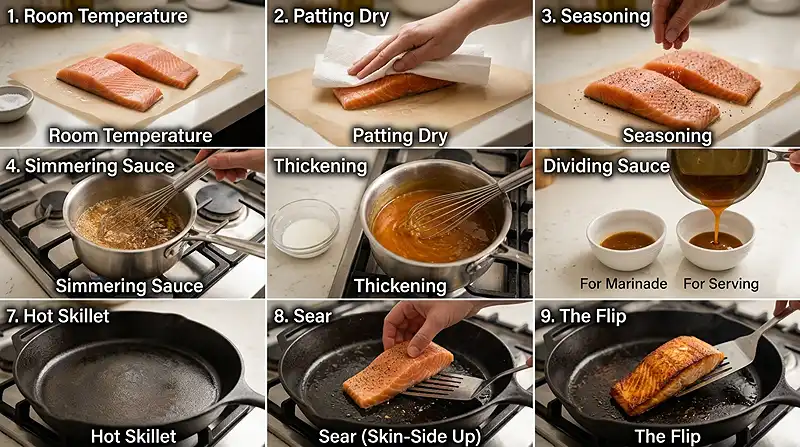
Place the salmon on a plate on the counter and let it come to room temperature for 15-20 minutes—this is also the time it takes your oven to preheat, so you’re not wasting any time. Pat the fillets completely dry with paper towels (moisture is the enemy of a good sear), then rub neutral oil on all sides and sprinkle with kosher salt.
Preheat and Prepare
Preheat your oven to 400°F while you make the sauce. This temperature is hot enough to finish cooking the salmon quickly without drying it out, creating that tender, flaky texture we’re after in this glazed salmon.
Make the Honey Garlic Sauce
In a small saucepan, combine the soy sauce (or tamari for guaranteed gluten-free), honey, rice vinegar, olive oil, garlic powder, grated ginger, and grated garlic over medium heat. Bring everything to a simmer, then reduce the heat to low—you’ll notice the honey dissolving and the whole kitchen starting to smell incredible, like a mix of sweet honey and pungent garlic.
Pro Tip: Grate your garlic and ginger on a microplane instead of mincing them—this releases more flavor and creates a smoother sauce without chunks.
Thicken the Glaze
In a small bowl, whisk together the water and cornstarch until completely smooth with no lumps. Pour this slurry into your simmering sauce and whisk constantly until the sauce thickens noticeably, about 1 minute—it should coat the back of a spoon and look glossy, almost like melted caramel. Remove from heat immediately and divide into two bowls: one with 3 tablespoons (for glazing during cooking) and one with the remainder (for serving).
Sear the Salmon
When your oven is fully preheated, heat a dry oven-proof skillet over high heat until it’s screaming hot—you should see wisps of smoke. Place the salmon skin side up onto the hot skillet and resist the urge to move it around. Cook without touching for 2-3 minutes to sear the top, until you can see a layer of cooked flesh creeping up from the bottom and the salmon releases easily from the pan.
Pro Tip: If your salmon sticks when you try to flip it, it’s not ready yet. Well-seared fish naturally releases from the pan when a proper crust forms.
Glaze and Finish
Turn off the heat and use a thin spatula to carefully flip the salmon so it’s skin side down. Brush the top and sides generously with the reserved 3 tablespoons of honey garlic sauce—it should sizzle slightly and start caramelizing immediately, filling your kitchen with that sweet-savory aroma.
Bake to Perfection
Place the skillet in the oven and bake for 3-5 minutes depending on the thickness of your fillets, until just cooked through. The internal temperature should read 125-130°F at the thickest point—this gives you salmon that’s tender and slightly translucent in the center, not dry and chalky. Man, oh man, the difference between 130°F and 140°F is huge, so use a thermometer if you have one.
Serve and Garnish
Use a hot pad to remove the skillet from the oven (that handle is dangerously hot!). Spoon the remaining honey garlic sauce over the top—I typically use another 3 tablespoons, but you can adjust based on how saucy you like your sweet salmon. Sprinkle with toasted sesame seeds and chopped green onions for color and crunch, then serve immediately while the glaze is still sticky and warm.
Make It Your Own
Spicy kick: Add 1-2 teaspoons of sriracha or red pepper flakes to the sauce for a sweet-spicy version. The heat balances the honey beautifully and makes this honey garlic salmon gluten free even more addictive for those who love bold flavors.
Citrus twist: Swap the rice vinegar for fresh lime or orange juice to brighten the glaze. The citrus cuts through the richness of the salmon and adds a refreshing note that’s especially nice in summer.
Teriyaki style: Add 2 tablespoons of mirin (Japanese sweet rice wine) to the sauce for a more traditional teriyaki flavor profile. This creates a slightly more complex glaze that tastes like your favorite Japanese steakhouse.
Maple version: Replace the honey with pure maple syrup for a different kind of sweetness that pairs incredibly well with the garlic and ginger. Well, I actually prefer this version in fall when I’m craving those cozy, warming flavors.
Bourbon glaze: Add 2 tablespoons of bourbon to the sauce before thickening for a grown-up twist. The alcohol cooks off but leaves behind a subtle smokiness that makes this glazed salmon taste extra sophisticated.
Common Problems & Solutions
Salmon sticks to the pan: Your skillet wasn’t hot enough before adding the fish. Heat the pan until you see wisps of smoke and a drop of water instantly sizzles and evaporates—that’s when you know it’s ready for the salmon.
Sauce is too thin: You either didn’t whisk the cornstarch slurry thoroughly (leaving lumps) or didn’t cook it long enough after adding it. Simmer the sauce for an extra 30 seconds while whisking constantly, and it should thicken right up for your honey garlic salmon gluten free.
Overcooked and dry: You left it in the oven too long or started with cold salmon. Remember, carryover cooking will bring the internal temp up another 5 degrees even after removing from heat, so pull it at 125-130°F, not 140°F.
Burnt glaze: The honey scorched because your oven temperature was too high or you glazed the salmon before flipping it. Always glaze after flipping, and if your oven runs hot, drop the temp to 375°F to prevent burning the sugars.
Skin won’t crisp: The skin was wet when you started cooking, or it didn’t spend enough time on high heat. Pat the salmon completely dry and make sure that final flip lands it skin-side down on the hot skillet before going into the oven.
Storage & Meal Prep
| Method | Duration | Notes |
|---|---|---|
| Counter | 2 hours max | Not recommended for longer |
| Fridge | 3-4 days | Store sauce separately |
| Freezer | 2 months | Freeze before glazing |
Leftover sweet salmon reheats beautifully in a 300°F oven for 8-10 minutes, though I actually love it cold on salads or in grain bowls the next day. Store the extra sauce separately so you can add a fresh drizzle when reheating—it brings the dish back to life.
For meal prep, you can make the honey garlic sauce up to 2 weeks ahead and keep it refrigerated. Just cook the salmon fresh when you’re ready to eat—it only takes 15 minutes from start to finish, so there’s really no need to cook it in advance.
Gluten-Free Honey Garlic Salmon FAQs
Can I use frozen salmon for this recipe?
Yes, but thaw it completely first in the refrigerator overnight. Frozen salmon releases excess moisture during cooking, which prevents proper searing and makes your gluten-free honey garlic salmon soggy instead of caramelized. Pat it extra dry before cooking.
What’s the best type of salmon to use?
King (Chinook) or Sockeye salmon work best because of their higher fat content, which stays moist during cooking. Coho and Atlantic salmon also work well, but avoid pink salmon as it’s too lean and tends to dry out with this high-heat method.
How do I know if my soy sauce is really gluten-free?
Regular soy sauce contains wheat, so you must use tamari (which is usually gluten-free but always check the label) or coconut aminos. Look for a “gluten-free” certification on the bottle—brands like San-J, Kikkoman Gluten-Free, and Coconut Secret are reliably safe for this honey garlic salmon gluten free.
Why did my glaze slide right off the salmon?
The cornstarch wasn’t cooked long enough to activate its thickening power, or you added too much water to the slurry. The sauce needs to thicken to a maple syrup consistency before it’ll properly coat the fish—if it’s still runny, simmer it longer while whisking.
Can I make this without an oven-proof skillet?
Absolutely—sear the salmon in a regular skillet, then transfer it to a foil-lined baking sheet for the oven portion. You’ll get the same results, just with an extra dish to wash. Just make sure to use a thin spatula so the salmon doesn’t fall apart during the transfer.
Serving Suggestions
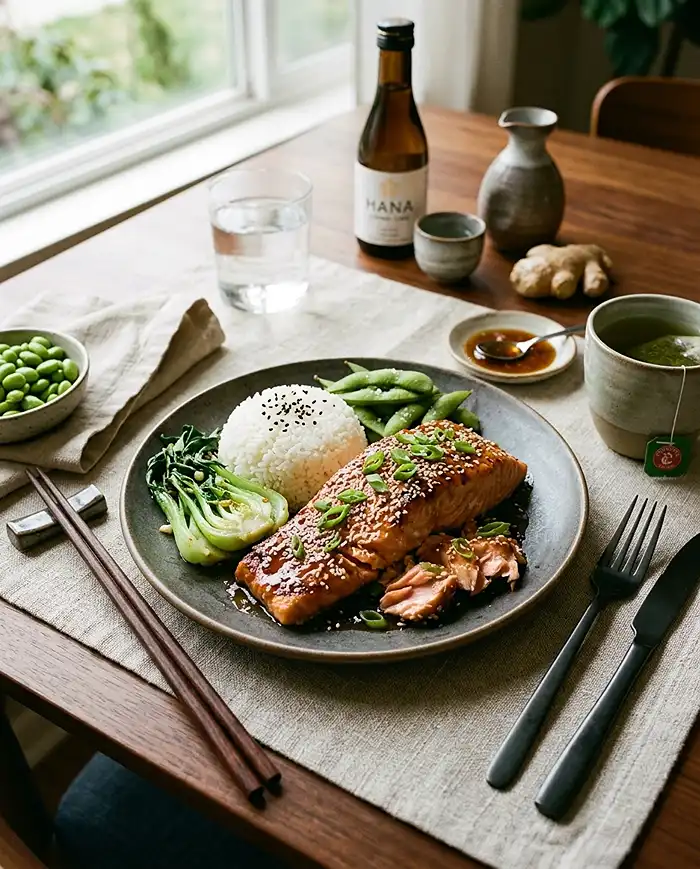
This glazed salmon is stunning served over jasmine rice or cauliflower rice to soak up that extra sauce, with steamed broccoli or snap peas on the side. For a complete Asian-inspired meal, pair it with my cheesy gluten-free quesadilla as an unexpected fusion appetizer, or serve it at your next holiday gathering alongside flavorful gluten-free chicken enchiladas for a surf-and-turf feast.
The sweet, sticky glaze also makes this honey garlic salmon gluten free a hit at Easter brunch or Mother’s Day dinner—it’s fancy enough to feel special but easy enough that you won’t stress in the kitchen. Finish the meal with my delicate gluten-free pistachio cookies for a light, not-too-sweet dessert that complements the savory main perfectly.
Ready to Cook?
This gluten-free honey garlic salmon proves that weeknight dinners don’t have to be boring or complicated to be impressive. With a handful of ingredients and 20 minutes, you can create restaurant-quality glazed salmon that’ll have everyone asking for seconds.
I’d love to hear how yours turns out! Drop a comment below with any modifications you try, and if you love this recipe, please rate it and share it on Pinterest so other gluten-free families can find it too. Now go heat up that skillet—dinner’s about to get seriously good!
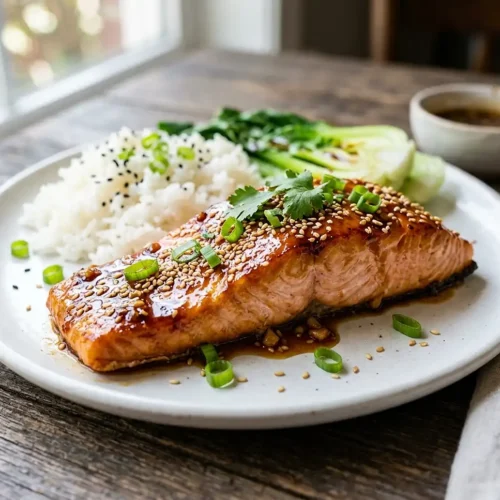
Gluten-Free Honey Garlic Salmon
Equipment
- Oven-proof skillet
- Small saucepan
- Small bowl
- Whisk
- Thin spatula
- Microplane or grater
- Instant-read thermometer (optional)
- Hot pad
- Basting brush
Ingredients
- 1 pound salmon fillets skin on
- ½ tablespoon neutral oil for pan frying
- kosher salt to taste
- ¼ cup soy sauce or tamari or coconut aminos for gluten-free
- ¼ cup honey
- 1 tablespoon rice vinegar
- 1 tablespoon olive oil
- ¼ teaspoon garlic powder
- 2 garlic cloves grated
- 1 teaspoon fresh grated ginger
- 1 tablespoon cornstarch
- 6 tablespoons water
For the Garnish
- green onions minced
- sesame seeds toasted
Instructions
- Place the salmon on a plate on the counter and let it come to room temperature for 15-20 minutes—this is also the time it takes your oven to preheat, so you’re not wasting any time. Pat the fillets completely dry with paper towels (moisture is the enemy of a good sear), then rub neutral oil on all sides and sprinkle with kosher salt.
- Preheat your oven to 400°F while you make the sauce. This temperature is hot enough to finish cooking the salmon quickly without drying it out, creating that tender, flaky texture we’re after in this glazed salmon.
- In a small saucepan, combine the soy sauce (or tamari for guaranteed gluten-free), honey, rice vinegar, olive oil, garlic powder, grated ginger, and grated garlic over medium heat. Bring everything to a simmer, then reduce the heat to low—you’ll notice the honey dissolving and the whole kitchen starting to smell incredible, like a mix of sweet honey and pungent garlic.
- In a small bowl, whisk together the water and cornstarch until completely smooth with no lumps. Pour this slurry into your simmering sauce and whisk constantly until the sauce thickens noticeably, about 1 minute—it should coat the back of a spoon and look glossy, almost like melted caramel. Remove from heat immediately and divide into two bowls: one with 3 tablespoons (for glazing during cooking) and one with the remainder (for serving).
- When your oven is fully preheated, heat a dry oven-proof skillet over high heat until it’s screaming hot—you should see wisps of smoke. Place the salmon skin side up onto the hot skillet and resist the urge to move it around. Cook without touching for 2-3 minutes to sear the top, until you can see a layer of cooked flesh creeping up from the bottom and the salmon releases easily from the pan.
- Turn off the heat and use a thin spatula to carefully flip the salmon so it’s skin side down. Brush the top and sides generously with the reserved 3 tablespoons of honey garlic sauce—it should sizzle slightly and start caramelizing immediately, filling your kitchen with that sweet-savory aroma.
- Place the skillet in the oven and bake for 3-5 minutes depending on the thickness of your fillets, until just cooked through. The internal temperature should read 125-130°F at the thickest point—this gives you salmon that’s tender and slightly translucent in the center, not dry and chalky. Man, oh man, the difference between 130°F and 140°F is huge, so use a thermometer if you have one.
- Use a hot pad to remove the skillet from the oven (that handle is dangerously hot!). Spoon the remaining honey garlic sauce over the top—I typically use another 3 tablespoons, but you can adjust based on how saucy you like your sweet salmon. Sprinkle with toasted sesame seeds and chopped green onions for color and crunch, then serve immediately while the glaze is still sticky and warm.