Gluten-Free Honey Glazed Carrots
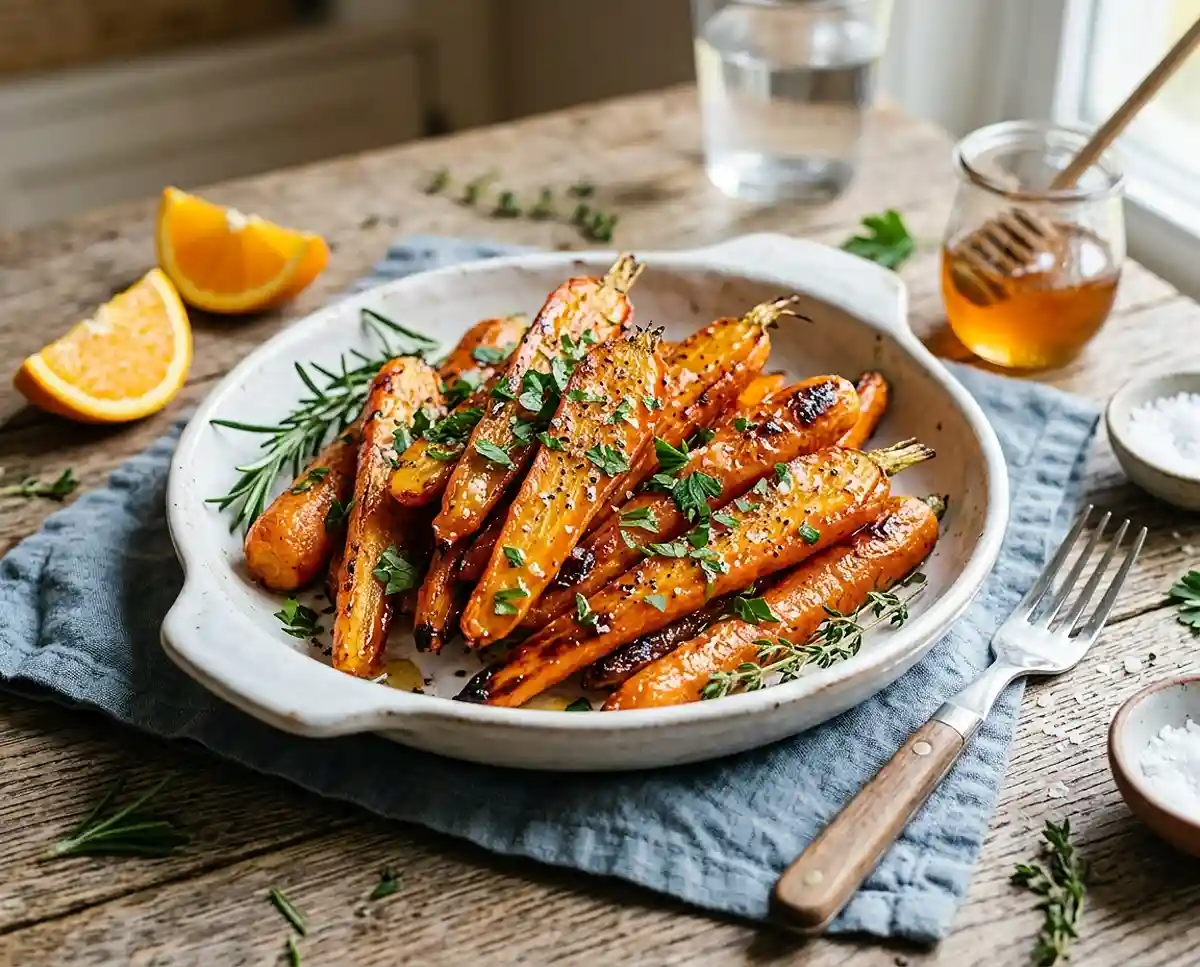
Gluten-Free Honey Glazed Carrots with orange, rosemary, and butter. Fork-tender roasted perfection—ready in 30 minutes for Easter dinner!
Three Easters ago, I confidently threw baby carrots into a roasting pan, drizzled them with honey straight from the bottle, and cranked the oven to 450°F thinking “higher heat equals faster cooking.” Twenty minutes later, I pulled out a tray of burnt, sticky vegetables that tasted like charcoal dipped in sugar syrup.
That disaster taught me that gluten-free honey glazed carrots aren’t about shortcuts—they’re about building a proper glaze with butter, citrus, and aromatics that coats each piece evenly and caramelizes into a golden, glossy finish.
Why You’ll Love These Gluten-Free Honey Glazed Carrots
- Caramelized edges with fork-tender centers that taste like candy but count as vegetables—the high oven heat creates deep browning while the glaze keeps them moist
- Naturally gluten-free with zero substitutions—carrots, honey, butter, and fresh herbs are all safe ingredients that need no modifications
- 30 minutes from start to finish including the 5-minute stovetop glaze, making this the perfect last-minute side when you’re juggling multiple dishes
- Elegant enough for Easter dinner but simple enough for weeknight meals—the orange-rosemary glaze elevates humble carrots into something company-worthy
The Secret to Perfect Gluten-Free Honey Glazed Carrots
Building the glaze on the stovetop before roasting infuses every drop with flavor. Simply drizzling raw honey over carrots won’t distribute evenly or develop the complex flavors you want. According to Serious Eats’ guide to glazed vegetables, melting butter with honey, aromatics, and citrus creates an emulsified sauce that clings to each piece and caramelizes beautifully in the oven.
Cutting carrots into uniform 3-inch pieces ensures even cooking. Thin carrots can stay whole or be halved lengthwise, but thick ones need to be split so they cook at the same rate as smaller pieces. This prevents some carrots from turning mushy while others stay raw in the center—every piece should be fork-tender at exactly the same time.
High oven temperature (425°F) caramelizes the natural sugars without steaming. Roasting at lower temperatures will cook the carrots through but won’t create those golden-brown edges that add depth and sweetness. The parchment-lined baking sheet prevents sticking and makes cleanup effortless, while arranging carrots in a single layer ensures hot air circulates around each piece.
Discarding the garlic and rosemary after infusing prevents burnt, bitter flavors. Whole garlic cloves and rosemary sprigs release their essential oils into the butter-honey mixture during the stovetop stage, but they’ll burn and turn acrid if left in during the 20-minute roast. Removing them before tossing the carrots ensures you get all the flavor with none of the bitterness.
Table of Contents
Ingredients
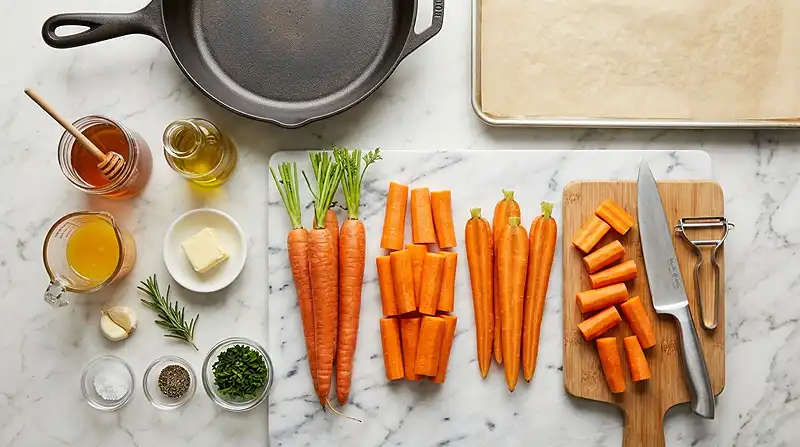
| Ingredient | Amount | Notes |
|---|---|---|
| Garlic clove | 1 | Peeled and smashed |
| Fresh rosemary | 1 sprig | Woody herb; dried won’t work |
| Good-quality honey | 3 tablespoons | Use pure honey, not corn syrup blend |
| Fresh orange juice | 2 tablespoons + 2 teaspoons | Freshly squeezed, about ½ orange |
| Extra-virgin olive oil | 2 tablespoons | |
| Unsalted butter | 2 tablespoons | Room temperature cuts melting time |
| Kosher salt | ½ teaspoon | Plus more for finishing |
| Freshly ground black pepper | ½ teaspoon | |
| Carrots | 1 to 1½ lbs | Peeled, halved lengthwise if thick, cut into 3-inch pieces |
| Fresh parsley | For serving | Finely chopped |
Pro Tip: Choose carrots that are similar in diameter so they cook evenly. If you’re using a mix of thick and thin carrots, halve the thick ones lengthwise but leave the thin ones whole—this creates uniform thickness across all pieces.
Step-by-Step Instructions
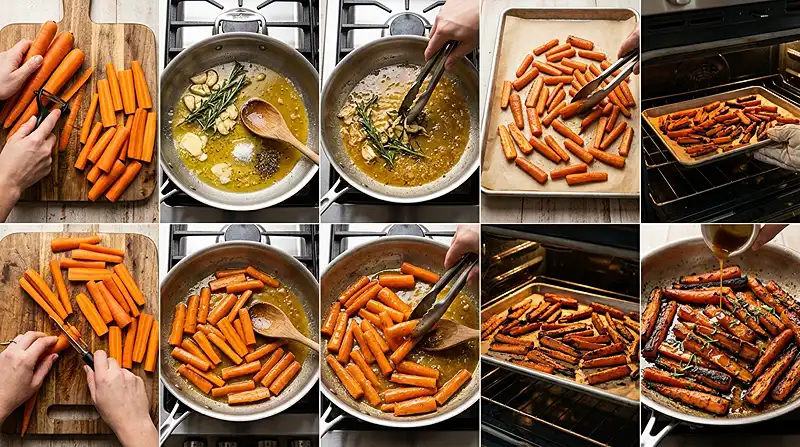
1. Preheat the oven and prep the glaze.
Arrange a rack in the upper third of your oven and preheat to 425°F. Line a large baking sheet with parchment paper and set aside. In a large skillet over medium-low heat, combine the smashed garlic clove, rosemary sprig, honey, orange juice, olive oil, butter, salt, and pepper.
2. Infuse the glaze.
Cook the mixture, stirring occasionally with a wooden spoon or silicone spatula, for about 5 minutes until the butter is completely melted and the sauce has thickened slightly—it should look glossy and coat the back of the spoon. The kitchen will smell incredible, like a combination of citrus grove and herb garden. Remove the skillet from the heat and use tongs or a slotted spoon to fish out and discard the garlic clove and rosemary sprig.
3. Coat the carrots.
Add the prepared carrot pieces to the warm glaze in the skillet and toss gently with tongs or a large spoon until every piece is evenly coated. The glaze should cling to the carrots like a shiny, amber-colored jacket—if it pools at the bottom of the pan, you haven’t tossed enough.
4. Arrange on the baking sheet.
Transfer the glazed carrots to the parchment-lined baking sheet, spreading them out in a single layer with space between each piece. Don’t overlap them or they’ll steam instead of roast, and you’ll miss out on those caramelized edges.
5. Roast until fork-tender.
Slide the baking sheet into the upper third of the preheated oven and roast for 20-23 minutes, tossing the carrots gently with a spatula halfway through (around the 10-minute mark). The carrots are done when they’re fork-tender—a fork should slide in easily with just a little resistance—and the edges are starting to turn golden brown and slightly caramelized. Man, oh man… that moment when you pull them out and see those glossy, bronzed edges is pure satisfaction.
6. Cool and garnish.
Transfer the baking sheet to a wire rack and let the carrots cool for 2-3 minutes—this allows the glaze to set slightly so it’s not too runny. Sprinkle with finely chopped fresh parsley and a little extra kosher salt to brighten the sweetness, then transfer to a serving platter.
Make It Your Own (Substitutions & Variations)
Swap the rosemary for thyme or sage. Fresh thyme adds a more delicate, floral note, while sage brings an earthy, slightly peppery flavor that pairs beautifully with the sweetness of honey. Use the same amount (1 sprig) and follow the exact same method—just remember to discard it before roasting.
Make it dairy-free with olive oil or vegan butter. Replace the 2 tablespoons of butter with an equal amount of extra-virgin olive oil (for a total of 4 tablespoons oil), or use dairy-free butter like Miyoko’s or Earth Balance. The texture stays nearly identical, though you’ll lose some of that rich, buttery depth.
Try maple syrup instead of honey. Pure maple syrup creates a deeper, more caramel-like flavor that’s less floral than honey. Use the exact same amount (3 tablespoons) and expect a slightly darker glaze with more molasses notes.
Add warming spices for a fall twist. Well… if you want to turn these roasted carrots into a Thanksgiving side, stir ¼ teaspoon of ground cinnamon and a pinch of nutmeg into the glaze before adding the carrots. The warm spices complement the orange and honey beautifully and make the dish feel more autumnal.
Use baby carrots for a shortcut. Pre-peeled baby carrots (not the “baby-cut” kind, but actual young carrots) work perfectly—just skip the peeling and cutting step. They may roast a few minutes faster (18-20 minutes), so start checking at 18 minutes to avoid overcooking.
Common Problems & Solutions
Problem: My carrots are mushy and overcooked.
Solution: You either roasted them too long or cut them too thin. Check carrots at the 20-minute mark by piercing one with a fork—there should be slight resistance, not complete softness. If they’re thin (less than ½ inch diameter), reduce roasting time to 18-20 minutes and check frequently.
Problem: The glaze burned and tastes bitter.
Solution: Your oven was too hot, or you forgot to remove the garlic and rosemary before roasting. Always use an oven thermometer to verify your oven’s actual temperature—many ovens run 25-50°F hotter than the dial indicates. If you left the aromatics in, they definitely burned and turned acrid; next time, remember to fish them out after the stovetop infusion.
Problem: The carrots are still hard and crunchy after 23 minutes.
Solution: They were cut too thick or your oven temperature was too low. Thick carrots (over 1 inch diameter) need to be halved lengthwise before cutting into 3-inch pieces to create uniform thickness. If your oven runs cool, increase the temperature to 450°F or extend roasting time by 5-minute increments, checking for tenderness after each interval.
Problem: The glaze pooled at the bottom of the pan instead of sticking to the carrots.
Solution: You didn’t toss the carrots thoroughly in the glaze, or the glaze was too thin. Make sure to cook the stovetop glaze for the full 5 minutes so it thickens slightly—it should coat the back of a spoon, not run off like water. Toss the carrots aggressively in the skillet until every piece is completely coated before transferring to the baking sheet.
Problem: My carrots are browning unevenly.
Solution: They were overcrowded on the baking sheet or you didn’t toss them halfway through. Spread carrots out in a true single layer with space between pieces—if they touch, they’ll steam each other and brown poorly. Always toss at the 10-minute mark to ensure all sides get exposure to direct heat.
Storage & Meal Prep
| Method | Duration | Notes |
|---|---|---|
| Counter | Up to 2 hours | Cover loosely; best served warm |
| Refrigerator | 3-4 days | Store in airtight container; reheat gently |
| Freezer | Not recommended | Carrots become mushy when thawed |
To reheat leftover honey glazed carrots gluten free, spread them on a baking sheet and warm in a 350°F oven for 8-10 minutes until heated through. You can also microwave them in a covered dish for 1-2 minutes at 50% power, though they’ll lose some of their caramelized edges.
Meal prep tip: You can prep the glaze up to 2 days ahead—just store it in the fridge and gently rewarm it on the stovetop before tossing with fresh carrots. The carrots themselves don’t hold up as well when fully cooked and reheated, so I recommend only making them the day you plan to serve them.
Gluten-Free Honey Glazed Carrots FAQs
Can I use pre-cut baby carrots?
Yes, but choose whole baby carrots (young, small carrots) rather than “baby-cut” carrots (large carrots cut into nubs). Whole baby carrots will roast more evenly and have better texture. They may cook a few minutes faster, so start checking at 18 minutes.
What’s the best type of honey for this recipe?
Use a mild, light-colored honey like clover, orange blossom, or wildflower for the most balanced sweetness. According to the National Honey Board’s flavor guide, dark honeys like buckwheat or manuka can overpower the delicate orange and rosemary flavors. Save those for stronger-flavored dishes.
Can I make this without butter?
Yes, replace the butter with an additional 2 tablespoons of olive oil or use dairy-free butter. The glaze will be slightly less rich and glossy, but the flavor stays delicious and the carrots will still caramelize beautifully.
How do I know when the carrots are done?
Pierce the thickest part of a carrot with a fork—it should slide in with just a little resistance, not complete mushiness. The edges should be starting to brown and caramelize, and the glaze should look thick and glossy, not runny.
Can I double this recipe for a crowd?
Absolutely, but use two baking sheets so the carrots aren’t crowded—overcrowding causes steaming instead of roasting. Double all ingredients except the garlic and rosemary (1 clove and 1 sprig are enough even for a double batch). Rotate the pans halfway through for even browning.
Serving Suggestions
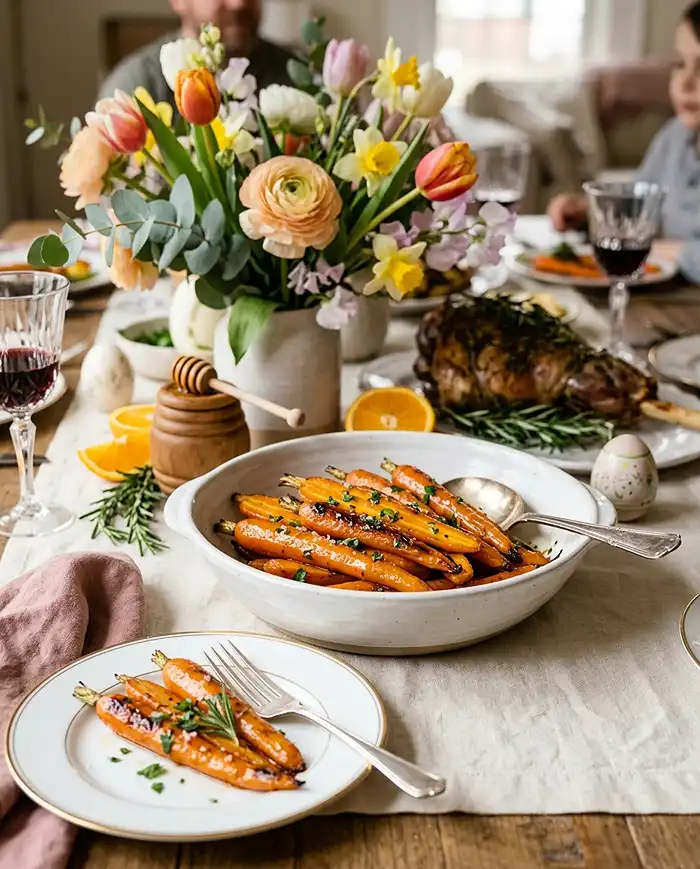
Serve these gluten-free honey glazed carrots alongside your Easter ham, roasted turkey, or leg of lamb for a vibrant pop of color and sweetness on the holiday table. They pair beautifully with creamy mashed potatoes, green beans, and a crisp salad for a complete spring feast. The orange-rosemary glaze also makes them a natural companion to grilled chicken or roasted pork chops for weeknight dinners.
For a complete gluten-free Easter menu, start with gluten-free spring mix garden salad for a light, fresh opener, serve these carrots alongside your main protein, and finish with gluten-free Easter egg bark or gluten-free resurrection rolls for a sweet ending. The combination of bright vegetables, rich main courses, and playful desserts makes for a holiday spread everyone will remember.
Ready to Roast Your Best Honey Glazed Carrots?
These honey glazed carrots gluten free have saved countless dinners at our house—they’re foolproof, beautiful, and taste like you spent hours when you really only spent 30 minutes. The orange-rosemary glaze creates a flavor combination that’s both familiar and elevated, and those caramelized edges always disappear first from the serving platter.
Try these roasted carrots this weekend and let me know in the comments if you made any fun variations—did you use maple syrup instead of honey, or swap in thyme for the rosemary? Pin this to your gluten-free side dish board on Pinterest so you can find it again when Easter rolls around, and don’t forget to rate it below if it becomes your new go-to vegetable recipe!
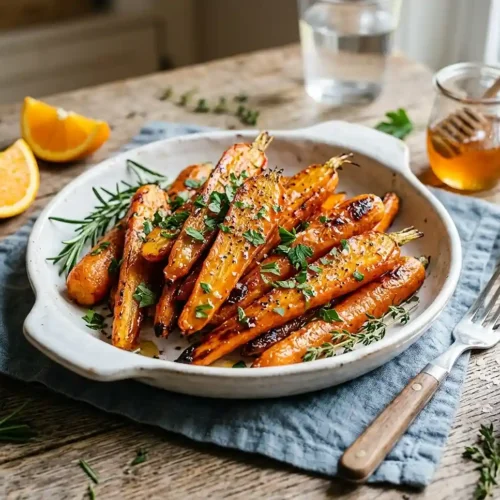
Gluten-Free Honey Glazed Carrots
Equipment
- Large skillet
- Large baking sheet
- Parchment paper
- Wooden spoon or silicone spatula
- Tongs
- Vegetable peeler
- Chef’s knife
- Wire cooling rack
- Oven thermometer (optional)
Ingredients
- 1 garlic clove peeled and smashed
- 1 sprig fresh rosemary
- 3 tablespoons honey good-quality, pure honey
- 2 tablespoons fresh orange juice plus 2 teaspoons; about 1/2 orange
- 2 tablespoons extra-virgin olive oil
- 2 tablespoons unsalted butter room temperature
- ½ teaspoon kosher salt plus more for finishing
- ½ teaspoon freshly ground black pepper
- 1 to 1 ½ pounds carrots peeled, halved lengthwise if thick, cut crosswise into 3-inch pieces
- fresh parsley finely chopped, for serving
Instructions
- Arrange a rack in the upper third of your oven and preheat to 425°F. Line a large baking sheet with parchment paper and set aside. In a large skillet over medium-low heat, combine the smashed garlic clove, rosemary sprig, honey, orange juice, olive oil, butter, salt, and pepper.
- Cook the mixture, stirring occasionally with a wooden spoon or silicone spatula, for about 5 minutes until the butter is completely melted and the sauce has thickened slightly—it should look glossy and coat the back of the spoon. Remove the skillet from the heat and use tongs or a slotted spoon to fish out and discard the garlic clove and rosemary sprig.
- Add the prepared carrot pieces to the warm glaze in the skillet and toss gently with tongs or a large spoon until every piece is evenly coated. The glaze should cling to the carrots like a shiny, amber-colored jacket.
- Transfer the glazed carrots to the parchment-lined baking sheet, spreading them out in a single layer with space between each piece. Don’t overlap them or they’ll steam instead of roast.
- Slide the baking sheet into the upper third of the preheated oven and roast for 20-23 minutes, tossing the carrots gently with a spatula halfway through (around the 10-minute mark). The carrots are done when they’re fork-tender and the edges are starting to turn golden brown and slightly caramelized.
- Transfer the baking sheet to a wire rack and let the carrots cool for 2-3 minutes. Sprinkle with finely chopped fresh parsley and a little extra kosher salt, then transfer to a serving platter.