Gluten-Free Hot Cross Buns
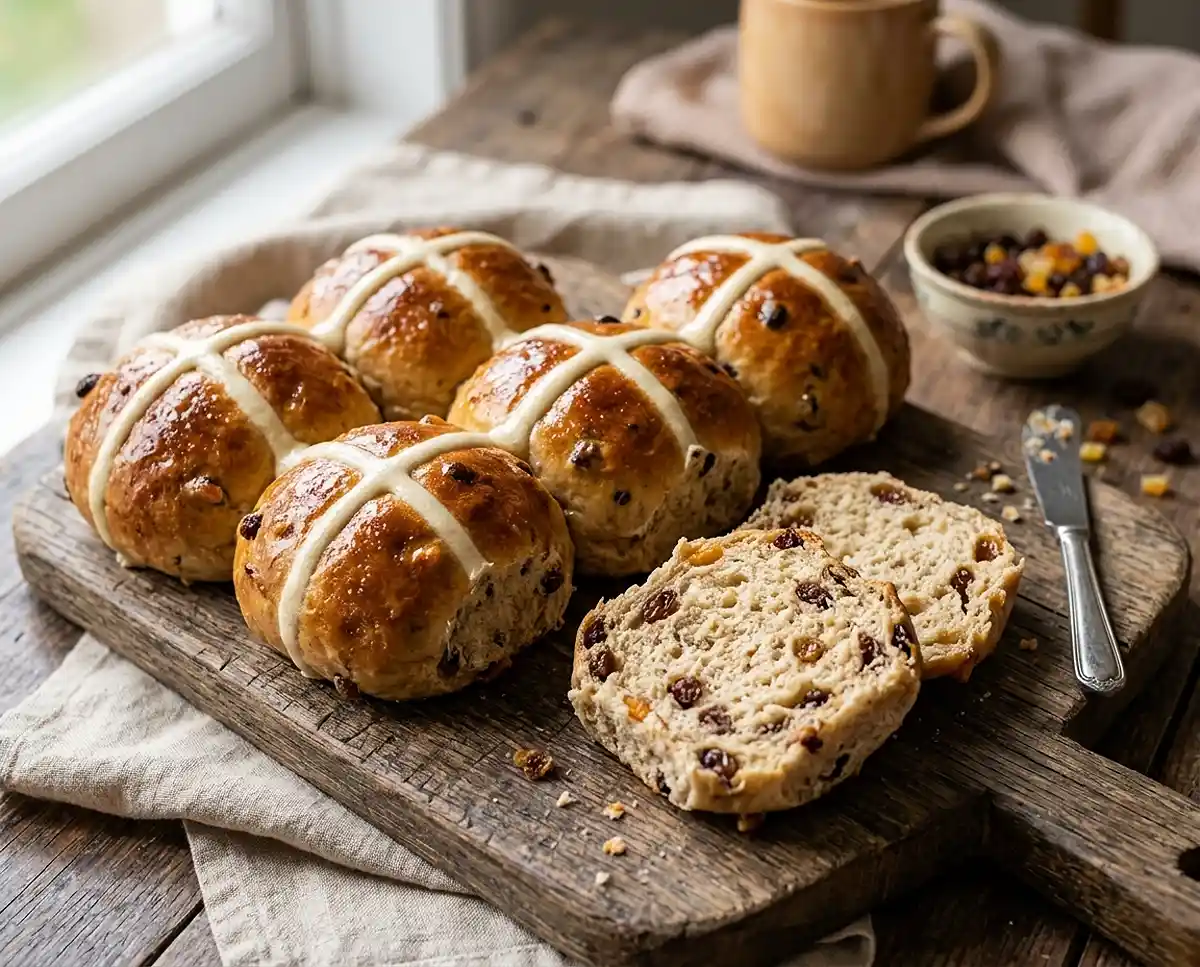
These gluten-free hot cross buns are soft, spiced, and bakery-quality! Easy Easter bread that actually rises beautifully in just 90 minutes.
I’ll never forget my first attempt at making gluten-free hot cross buns for Easter—they came out of the oven looking more like hockey pucks than the soft, pillowy spiced buns I’d imagined. They were dense, flat, and honestly, kind of sad.
But after years of experimenting with different flour combinations, hydration levels, and proofing techniques, I finally cracked the code to hot cross buns that rise beautifully, have that signature soft crumb, and taste just like the traditional version I grew up eating.
These gluten-free hot cross buns are everything you want in Easter bread—tender and slightly sweet, fragrant with cinnamon and studded with plump sultanas and candied peel. You know what? The texture is so close to wheat-based buns that my gluten-eating family couldn’t tell the difference, and they disappeared within hours of coming out of the oven.
Why You’ll Love These Gluten-Free Hot Cross Buns
- Actually rises: The psyllium husk and yeast combination creates impressive oven spring that rivals traditional wheat buns
- Soft and tender crumb: That perfect balance of structure and fluffiness you’d never guess was gluten-free
- Make-ahead friendly: Perfect for Easter morning since you can prep components the day before
- Naturally dairy-free option: Easy to swap milk and butter for plant-based alternatives without sacrificing texture
The Secret to Perfect Gluten-Free Hot Cross Buns
Psyllium husk provides structure: This fiber creates an elastic, bread-like texture that mimics gluten’s binding properties. According to trusted gluten-free baking science from King Arthur Baking, psyllium husk is one of the most effective gluten replacers for yeast breads.
Multiple flours create complexity: The combination of tapioca starch for lightness, millet flour for tenderness, and sorghum flour for structure creates a balanced crumb that doesn’t taste “gluten-free.” Single-flour approaches always result in gummy or crumbly hot cross buns gluten free.
Steam maximizes oven spring: Starting with high heat and steam helps the buns puff up dramatically before the crust sets. This professional baker’s trick is what gives these Easter bread rolls their impressive height and soft crust.
Proper spacing prevents heavy buns: Leaving space between buns during proofing allows moisture to evaporate, preventing that dense, wet texture that plagues many gluten-free yeast breads. Crowded buns steam each other and stay heavy.
Table of Contents
Ingredients
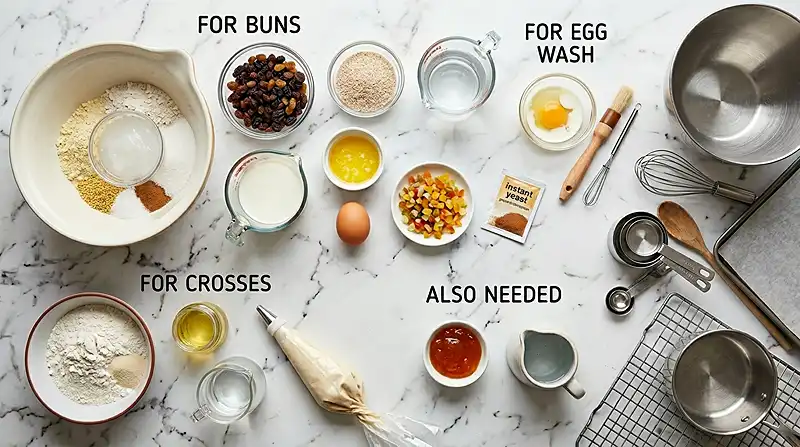
For Gluten-Free Hot Cross Buns:
| Ingredient | Amount | Notes |
|---|---|---|
| Sultanas or raisins | 85 g (½ cup) | |
| Whole psyllium husk | 16 g (3 tbsp) | 14g if using powder |
| Warm water | 260 g (1 cup + 1½ tbsp) | |
| Tapioca starch | 230 g (2 cups) | Can sub arrowroot, cornstarch, or potato starch |
| Millet flour | 160 g (1 cup + 3 tbsp) | Can sub brown rice flour |
| Sorghum flour | 70 g (⅓ cup + 3½ tbsp) | Can sub buckwheat, white teff, or GF oat flour |
| Granulated sugar | 50 g (¼ cup) | |
| Xanthan gum | 8 g (1 tbsp) | |
| Salt | 8 g (1¼ tsp) | |
| Instant yeast | 8 g (2½ tsp) | 10g if using active dry |
| Ground cinnamon | 1 tsp | |
| Whole milk | 140 g (½ cup + 1½ tbsp) | Warmed |
| Unsalted butter | 30 g (¼ stick) | Melted |
| Large egg | 1 | Room temperature |
| Mixed candied peel | 90 g (½ cup, 3 oz) | Lemon and orange |
For Egg Wash:
- 1 large egg
- 15 g (1 tbsp) whole milk
For Crosses:
- 50 g (⅓ cup + 1 tbsp) GF flour blend
- ¼ tsp xanthan gum (omit if flour contains it)
- 10 g (2 tsp) sunflower oil
- 60 g (¼ cup) water
For Glaze:
- 50 g (2½ tbsp) apricot jam
- 8 g (½ tbsp) water
Makes: 8 generous buns
Step-by-Step Instructions
Prep and Rehydrate Fruit
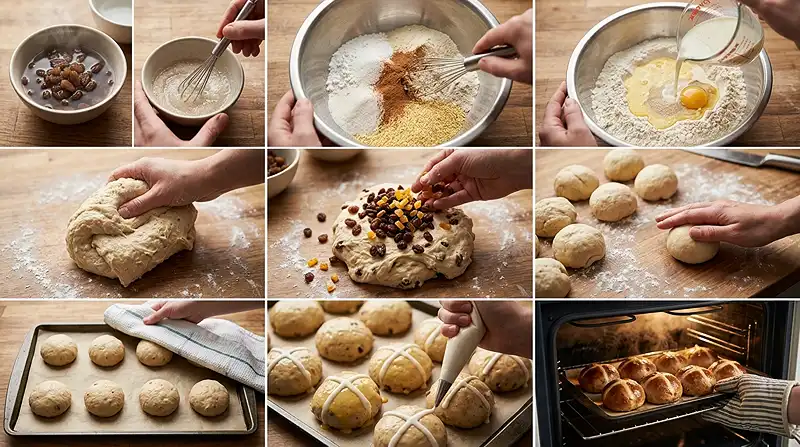
Line a large baking sheet with parchment paper and set aside. Pour boiling water over the sultanas in a small bowl until completely covered, then let them soak for 10 minutes to plump up. Drain thoroughly and squeeze out excess water with your hands—waterlogged fruit will make your spiced buns soggy.
Make the Psyllium Gel
Whisk the psyllium husk and warm water together in a small bowl—you’ll see it thicken into a gel within 15 seconds. This gel is what gives your gluten-free hot cross buns that stretchy, bread-like texture. Set aside while you mix the dry ingredients.
Pro Tip: Use whole psyllium husk if possible rather than powder—it creates a lighter texture and doesn’t turn the dough purple like some psyllium powders can.
Combine Dry Ingredients
In a large bowl (or stand mixer bowl), whisk together the tapioca starch, millet flour, sorghum flour, sugar, xanthan gum, salt, yeast, and cinnamon until evenly distributed. Make a well in the center of the dry ingredients—this is where you’ll add all your wet ingredients.
Mix the Dough
Pour the warm milk, melted butter, egg, and psyllium gel into the well you created. Using a wooden spoon or stand mixer with dough hook, mix vigorously until the dough starts coming together—it’ll look shaggy at first but will come together with persistent mixing. Scrape down the sides of the bowl to ensure no dry flour pockets remain.
Knead by hand (or with your mixer) until you have a smooth, homogeneous dough with no dry patches. The final dough should be soft and slightly sticky but should pull away from the bowl sides—it’ll feel more like thick cake batter than traditional bread dough, which is normal for hot cross buns gluten free.
Pro Tip: If using active dry yeast instead of instant, activate it first by mixing with the warm milk and a teaspoon of sugar, then let it sit 5-10 minutes until foamy before adding to the dough.
Add Fruit and Peel
Gently fold in the drained sultanas and mixed candied peel, kneading just until they’re evenly distributed throughout the dough. Don’t overmix here—you want the fruit pieces intact, not smashed into the dough.
Shape the Buns
Transfer the dough onto a generously floured surface (use millet flour or your GF blend) and gently knead it into a ball. Roll it into a log shape and use a scale to divide it into 8 equal pieces—each should weigh about 110-115 grams for uniform Easter bread rolls.
Shape each piece into a smooth ball by cupping your hand over the dough and rolling it in circles on your work surface. The tension created by your hand against the counter will pull the dough into a tight ball with a smooth top. Don’t worry if they’re not perfectly smooth—the high fruit content makes that tricky, and they’ll smooth out more as they bake.
Proof the Buns
Place the shaped buns on your lined baking sheet, spacing them at least ¾ inch (2cm) apart—don’t crowd them or they’ll steam each other and stay dense. Cover lightly with plastic wrap and proof in a warm spot for 1 hour to 1 hour 15 minutes, until approximately doubled in size. They should puff up nicely but not be completely fused together like cinnamon rolls would be.
While they proof, position an oven rack in the center and place an empty baking tray on the bottom rack. Preheat your oven to 430°F (220°C)—this high temperature is crucial for maximum oven spring in your gluten-free hot cross buns.
Pro Tip: Create a warm proofing environment by turning your oven on for 1 minute, then turning it off and placing the covered buns inside. The residual warmth is perfect for encouraging rise.
Prepare Crosses and Egg Wash
While the buns proof, make your egg wash by whisking the egg and milk together until smooth. For the cross mixture, whisk together the GF flour blend, xanthan gum, oil, and water until you get a smooth, pipeable consistency—it should be viscous but flow easily. Transfer to a piping bag fitted with a small round tip.
Apply Egg Wash and Pipe Crosses
Once proofed, gently brush the entire surface of each bun with egg wash—this creates that beautiful golden sheen. Pipe the cross mixture in straight lines along one direction, then perpendicular lines in the other direction to create the signature crosses. Man, oh man, this is the fun part that makes them look so professional!
Pro Tip: If your cross mixture is too thick to pipe smoothly, thin it with a bit more water. If it’s too runny, add more flour. It’s better to err on the side of runny—thick crosses can bake up hard and unpleasant.
Bake with Steam
Boil water in a kettle while transferring your buns to the hot oven. Immediately pour the boiling water into the empty baking tray at the bottom of the oven, then quickly close the door and reduce the temperature to 400°F (200°C). The blast of steam combined with high heat creates impressive oven spring that makes these spiced buns rise beautifully.
After 10 minutes, carefully remove the water tray—you don’t want steam for the entire bake or the buns will be too heavy. Continue baking for another 20-25 minutes until deep golden brown. If they’re browning too quickly, tent loosely with foil (shiny side up) and continue baking.
Glaze While Hot
The moment your hot cross buns gluten free come out of the oven, slide them off the baking sheet and parchment onto a wire rack. Heat the apricot jam with water until runny, then immediately brush it over the hot buns—this softens the crust and adds a gorgeous glossy finish plus extra flavor. Let them cool until just warm before serving for the best texture.
Make It Your Own
Dairy-free version: Replace the milk with warm almond, oat, or soy milk, and swap the butter for coconut oil or vegan butter. The texture stays remarkably similar, making these Easter bread rolls accessible to more people at your celebration.
Chocolate chip twist: Replace the sultanas and candied peel with 150g of dairy-free chocolate chips for a more kid-friendly version. Well, they’re not traditional, but my kids devour these chocolate versions even faster than the classic spiced buns.
Orange-cranberry variation: Use dried cranberries instead of sultanas and add 2 teaspoons of orange zest to the dough for a tangy, festive twist. The bright orange flavor pairs beautifully with the cinnamon and makes your gluten-free hot cross buns taste extra special.
Sugar-free option: Replace the granulated sugar with an equal amount of coconut sugar or monk fruit sweetener, and use sugar-free jam for the glaze. The texture will be slightly different but still tender and satisfying.
Extra spice: Add ¼ teaspoon each of ground nutmeg, allspice, and cardamom along with the cinnamon for a more complex, aromatic spice profile. This creates hot cross buns gluten free that taste like they came from a fancy bakery.
Common Problems & Solutions
Buns didn’t rise: Your yeast was dead (expired or killed by too-hot liquid), or your proofing environment was too cold. Always check yeast expiration dates, and proof the dough in a spot that’s 75-80°F for best results with Easter bread.
Dense, heavy texture: The buns were crowded too closely during proofing, trapping moisture, or the steam tray stayed in the oven too long. Space them at least ¾ inch apart and remove the steam after exactly 10 minutes to allow proper moisture evaporation.
Crosses sank into dough: Your cross mixture was too thin, or you applied them before the egg wash was dry. The egg wash needs a minute to set slightly before piping, and the cross mixture should be thick enough to sit on top rather than sink into your spiced buns.
Dry, crumbly buns: You added too much flour during shaping, or overbaked them. The dough should remain soft and slightly sticky—don’t be tempted to add extra flour beyond what’s needed for shaping, and pull them from the oven when just golden, not dark brown.
Gummy interior: The buns didn’t bake long enough, or were stored in an airtight container while still warm. Always bake until deep golden brown (internal temp should be 200°F), and let them cool completely on a wire rack before storing your gluten-free hot cross buns.
Storage & Meal Prep
| Method | Duration | Notes |
|---|---|---|
| Counter | 2-3 days | Airtight container, room temp |
| Fridge | 5-7 days | Bring to room temp or toast |
| Freezer | 2-3 months | Wrap individually, thaw overnight |
Reheat these Easter bread rolls in a 300°F oven for 5-7 minutes to restore that fresh-baked softness, or toast split buns and slather with butter for an incredible breakfast. You can also make the dough the night before, shape the buns, cover tightly, and refrigerate overnight—just let them come to room temperature and finish proofing in the morning before baking.
Leftover buns (if there are any!) make incredible bread pudding or French toast. Cube them, soak in a custard mixture, and bake for a dessert that showcases those warm spices beautifully.
Gluten-Free Hot Cross Buns FAQs
Can I make these without psyllium husk?
Unfortunately, no—psyllium husk is essential for creating the structure and rise in these gluten-free hot cross buns. Without it, the buns will be flat and dense. Chia seeds or flax don’t work as substitutes here because they don’t provide the same binding and moisture-retention properties.
Why do my hot cross buns look bumpy?
The high fruit content and lack of gluten naturally create a slightly textured surface, which is completely normal. As the buns bake and experience oven spring, the surface smooths out somewhat, and the egg wash and glaze help create a more uniform appearance on your spiced buns.
What’s the best way to tell when they’re done?
They should be deep golden brown all over (not pale), feel firm when tapped on top, and register 200°F on an instant-read thermometer inserted into the center. Underbaked gluten-free breads turn gummy, so don’t pull them early even if they look done.
Can I use a bread machine?
While you can mix the dough in a bread machine on the dough setting, you’ll still need to shape and proof the buns manually. The unique requirements of Easter bread—specifically the shaping and proper spacing—don’t translate well to fully automated bread machine cycles.
How do I prevent the crosses from getting too hard?
Make sure your cross mixture is on the thinner side (pourable but viscous), and don’t overbake the buns. Hard crosses usually result from a mixture that’s too thick or baking the buns until they’re too dark. The crosses should be slightly chewy, not crunchy.
Serving Suggestions
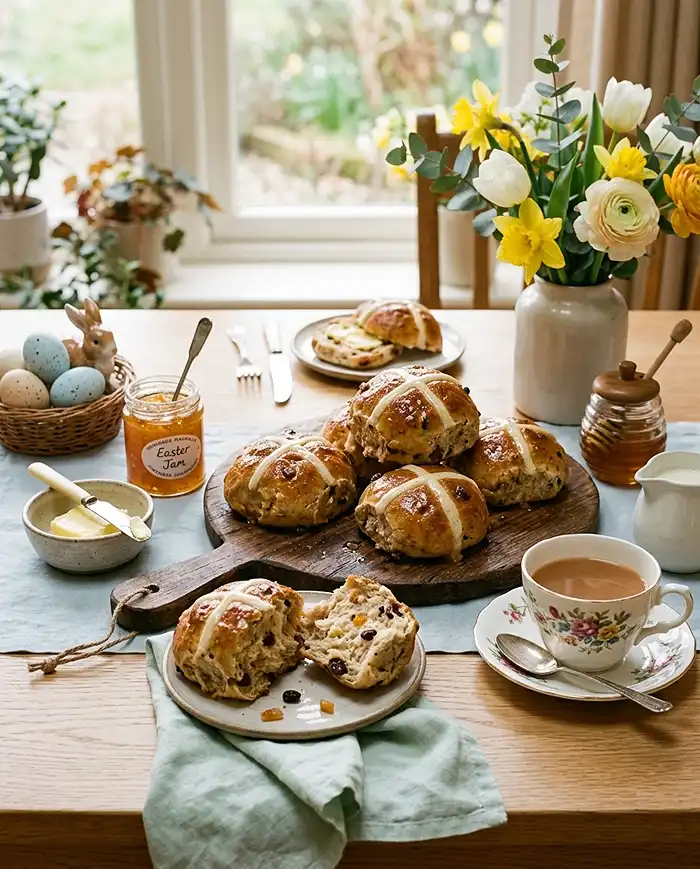
These gluten-free hot cross buns are traditional Easter breakfast fare, served warm with butter melting into every crevice. Toast them the next day and spread with cream cheese for an indulgent treat, or serve them alongside a festive brunch spread with my vibrant gluten-free vegan tofu poke bowl for an unexpectedly delicious sweet-savory combination.
For a complete Easter celebration menu, serve these hot cross buns gluten free with elegant gluten-free baked brie bites as appetizers, and finish the meal with creamy dairy-free nice cream for a dessert that accommodates all your guests’ dietary needs.
Ready to Bake?
These gluten-free hot cross buns prove that you don’t have to miss out on beloved Easter traditions just because you’re avoiding gluten. With the right flour combination, proper technique, and a little patience during proofing, you can create spiced buns that rival any bakery version—and your gluten-eating friends will never know the difference.
I’d love to hear how your baking adventure goes! Drop a comment below with your favorite variations or any questions, and please rate this recipe if you try it. Don’t forget to pin this to your Pinterest boards so you can find it again next Easter—because trust me, once your family tastes these tender, aromatic Easter bread rolls, they’ll be requesting them every year!
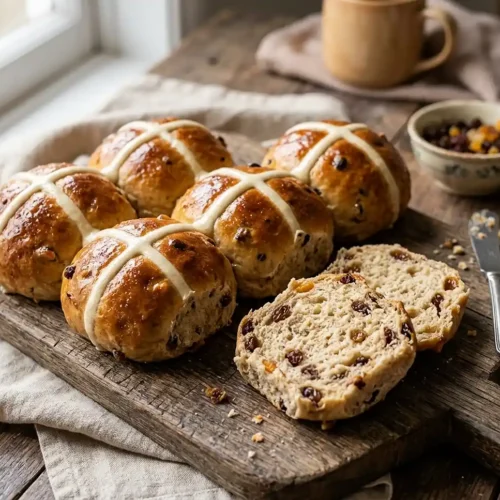
Gluten-Free Hot Cross Buns
Equipment
- Large baking sheet
- Parchment paper
- Small bowls
- Large mixing bowl or stand mixer
- Wooden spoon or dough hook
- Kitchen scale
- Plastic wrap
- Baking tray (for steam)
- Piping bag with small round tip
- Pastry brush
- Wire cooling rack
- Instant-read thermometer (optional)
Ingredients
For Gluten-Free Hot Cross Buns
- 85 g sultanas or raisins 1/2 cup
- 16 g whole psyllium husk 3 tbsp, or 14g if using powder
- 260 g warm water 1 cup + 1 1/2 tbsp
- 230 g tapioca starch 2 cups, can sub arrowroot, cornstarch, or potato starch
- 160 g millet flour 1 cup + 3 tbsp, plus extra for flouring, can sub brown rice flour
- 70 g sorghum flour 1/3 cup + 3 1/2 tbsp, can sub buckwheat, white teff, or GF oat flour
- 50 g granulated sugar 1/4 cup
- 8 g xanthan gum 1 tbsp
- 8 g salt 1 1/4 tsp
- 8 g instant yeast 2 1/2 tsp, or 10g if using active dry
- 1 tsp ground cinnamon
- 140 g whole milk 1/2 cup + 1 1/2 tbsp, warmed
- 30 g unsalted butter 1/4 stick, melted
- 1 large egg room temperature
- 90 g mixed candied lemon and orange peel about 1/2 cup, 3 oz
For Egg Wash
- 1 large egg
- 15 g whole milk 1 tbsp
For Crosses
- 50 g plain gluten-free flour blend 1/3 cup + 1 tbsp
- ¼ tsp xanthan gum omit if flour contains it
- 10 g sunflower oil 2 tsp
- 60 g water 1/4 cup
For Glaze
- 50 g apricot jam 2 1/2 tbsp
- 8 g water 1/2 tbsp
Instructions
- Line a large baking sheet with parchment paper and set aside. Pour boiling water over the sultanas in a small bowl until completely covered, then let them soak for 10 minutes to plump up. Drain thoroughly and squeeze out excess water with your hands—waterlogged fruit will make your spiced buns soggy.
- Whisk the psyllium husk and warm water together in a small bowl—you’ll see it thicken into a gel within 15 seconds. This gel is what gives your gluten-free hot cross buns that stretchy, bread-like texture. Set aside while you mix the dry ingredients.
- In a large bowl (or stand mixer bowl), whisk together the tapioca starch, millet flour, sorghum flour, sugar, xanthan gum, salt, yeast, and cinnamon until evenly distributed. Make a well in the center of the dry ingredients—this is where you’ll add all your wet ingredients.
- Pour the warm milk, melted butter, egg, and psyllium gel into the well you created. Using a wooden spoon or stand mixer with dough hook, mix vigorously until the dough starts coming together—it’ll look shaggy at first but will come together with persistent mixing. Scrape down the sides of the bowl to ensure no dry flour pockets remain.
- Knead by hand (or with your mixer) until you have a smooth, homogeneous dough with no dry patches. The final dough should be soft and slightly sticky but should pull away from the bowl sides—it’ll feel more like thick cake batter than traditional bread dough, which is normal for hot cross buns gluten free.
- Gently fold in the drained sultanas and mixed candied peel, kneading just until they’re evenly distributed throughout the dough. Don’t overmix here—you want the fruit pieces intact, not smashed into the dough.
- Transfer the dough onto a generously floured surface (use millet flour or your GF blend) and gently knead it into a ball. Roll it into a log shape and use a scale to divide it into 8 equal pieces—each should weigh about 110-115 grams for uniform Easter bread rolls.
- Shape each piece into a smooth ball by cupping your hand over the dough and rolling it in circles on your work surface. The tension created by your hand against the counter will pull the dough into a tight ball with a smooth top. Don’t worry if they’re not perfectly smooth—the high fruit content makes that tricky, and they’ll smooth out more as they bake.
- Place the shaped buns on your lined baking sheet, spacing them at least 3/4 inch (2cm) apart—don’t crowd them or they’ll steam each other and stay dense. Cover lightly with plastic wrap and proof in a warm spot for 1 hour to 1 hour 15 minutes, until approximately doubled in size. They should puff up nicely but not be completely fused together like cinnamon rolls would be.
- While they proof, position an oven rack in the center and place an empty baking tray on the bottom rack. Preheat your oven to 430°F (220°C)—this high temperature is crucial for maximum oven spring in your gluten-free hot cross buns.
- While the buns proof, make your egg wash by whisking the egg and milk together until smooth. For the cross mixture, whisk together the GF flour blend, xanthan gum, oil, and water until you get a smooth, pipeable consistency—it should be viscous but flow easily. Transfer to a piping bag fitted with a small round tip.
- Once proofed, gently brush the entire surface of each bun with egg wash—this creates that beautiful golden sheen. Pipe the cross mixture in straight lines along one direction, then perpendicular lines in the other direction to create the signature crosses. Man, oh man, this is the fun part that makes them look so professional!
- Boil water in a kettle while transferring your buns to the hot oven. Immediately pour the boiling water into the empty baking tray at the bottom of the oven, then quickly close the door and reduce the temperature to 400°F (200°C). The blast of steam combined with high heat creates impressive oven spring that makes these spiced buns rise beautifully.
- After 10 minutes, carefully remove the water tray—you don’t want steam for the entire bake or the buns will be too heavy. Continue baking for another 20-25 minutes until deep golden brown. If they’re browning too quickly, tent loosely with foil (shiny side up) and continue baking.
- The moment your hot cross buns gluten free come out of the oven, slide them off the baking sheet and parchment onto a wire rack. Heat the apricot jam with water until runny, then immediately brush it over the hot buns—this softens the crust and adds a gorgeous glossy finish plus extra flavor. Let them cool until just warm before serving for the best texture.