Gluten-Free Korean BBQ Beef Bowls
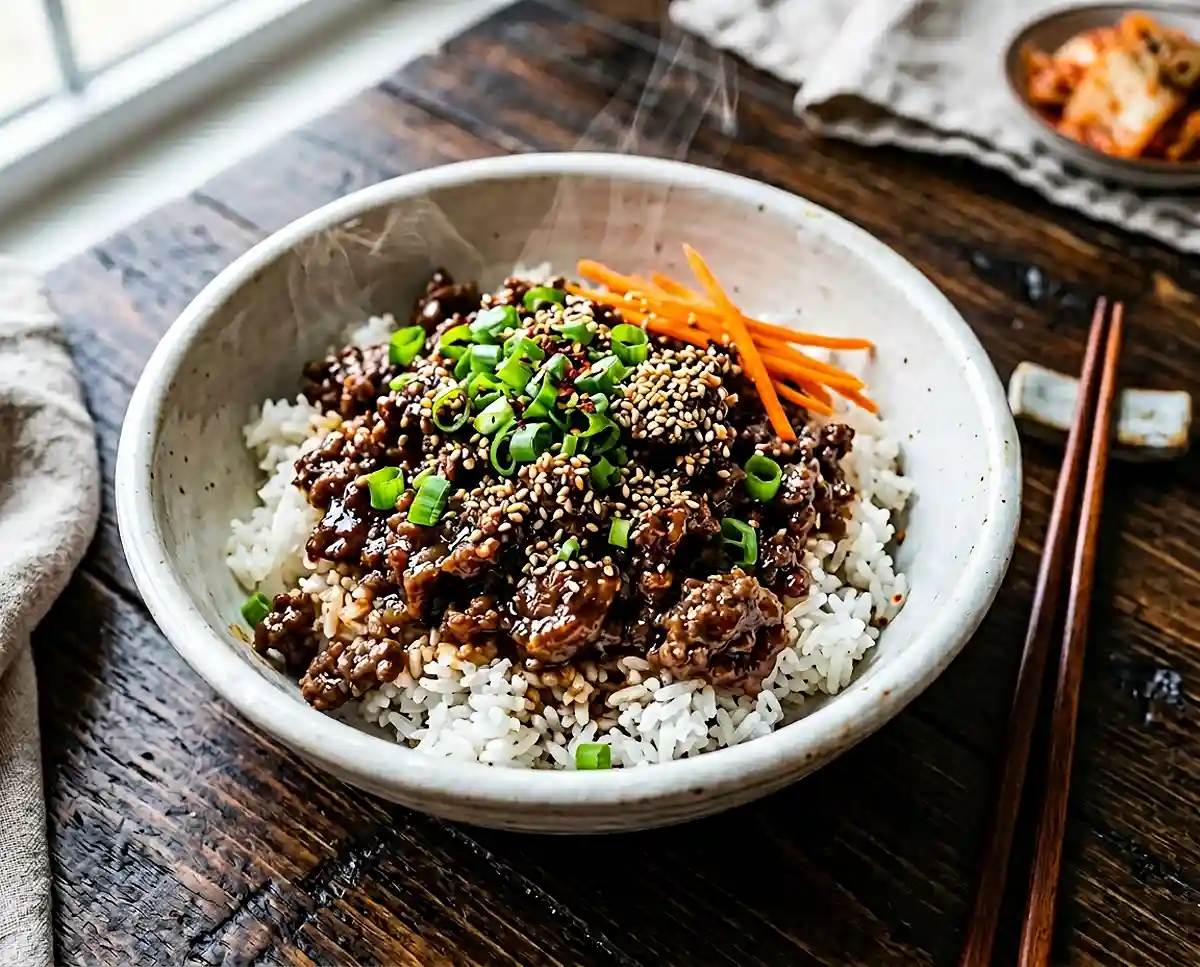
Gluten-Free Korean BBQ Beef Bowls with savory coconut aminos sauce & sesame—ready in 25 minutes for a restaurant-quality dinner.
Two years ago, I ordered Korean beef bowls at a food hall and ended up violently sick for three days because the “gluten-free” sauce they promised contained hidden soy sauce with wheat. That frustrating experience drove me to perfect these gluten-free Korean BBQ beef bowls at home, and now they’re my family’s most-requested weeknight dinner—my teenage son literally does a happy dance when he sees me pull out the ground beef.
The beauty of this gluten-free gochujang beef bowl is that coconut aminos replace traditional soy sauce seamlessly, delivering that rich, umami-packed flavor without any wheat or gluten. The homemade Korean BBQ sauce comes together in under 10 minutes, coating tender ground beef in a glossy, slightly sweet glaze that clings to every grain of rice—and honestly, can you think of a better way to satisfy takeout cravings without leaving your kitchen?
Why You’ll Love These Gluten-Free Korean BBQ Beef Bowls
- Weeknight-friendly timing: From raw ingredients to dinner table in just 25 minutes, with simple one-pan cooking that means minimal cleanup—perfect for busy Tuesday nights when you’re too tired for complicated recipes.
- Bold, restaurant-quality flavor: The homemade Korean BBQ sauce combines sesame oil, garlic, ginger, and coconut aminos for a savory-sweet glaze that tastes as complex as your favorite Korean restaurant but is naturally gluten-free and soy-free.
- Customizable base and toppings: Serve over white rice, brown rice, jasmine rice, or cauliflower rice depending on your dietary needs, then add whatever fresh vegetables you have on hand for crunch and color.
- Budget-friendly protein: Ground beef is significantly cheaper than ribeye or short ribs but still delivers that satisfying, meaty Korean BBQ experience—one pound feeds four people when stretched over rice and vegetables.
The Secret to Perfect Gluten-Free Korean BBQ Beef Bowls
Coconut aminos replace soy sauce flawlessly: Coconut aminos are made from fermented coconut sap and taste remarkably similar to soy sauce but are naturally gluten-free, soy-free, and slightly sweeter. According to trusted gluten-free ingredient research, coconut aminos are safe for celiacs and provide the same umami depth that makes Korean BBQ sauce so crave-worthy.
Cornstarch thickens the sauce to coating consistency: Whisking cornstarch with water creates a slurry that, when added to the simmering sauce, transforms thin liquid into a glossy, thick glaze that clings to the beef instead of pooling at the bottom of your bowl. This technique (called a “cornstarch slurry”) is standard in Asian cooking and prevents lumps that form when you add dry cornstarch directly to hot liquid.
Draining the beef prevents greasy sauce: Cooking the ground beef first, then draining off the excess fat before adding the sauce, ensures your Korean BBQ beef bowls taste clean and savory instead of oily and heavy. Grass-fed beef typically has less fat than conventional beef, but draining is still essential to prevent the sauce from breaking or looking slick.
Simmering the sauce for 10 minutes concentrates flavors: Reducing the sauce over low heat after it boils allows the garlic and ginger to mellow, the vinegar’s sharpness to soften, and all the flavors to meld into a balanced, complex glaze. Well, rushing this step results in a sauce that tastes one-dimensional and harsh instead of harmonious and restaurant-quality.
Table of Contents
Ingredients
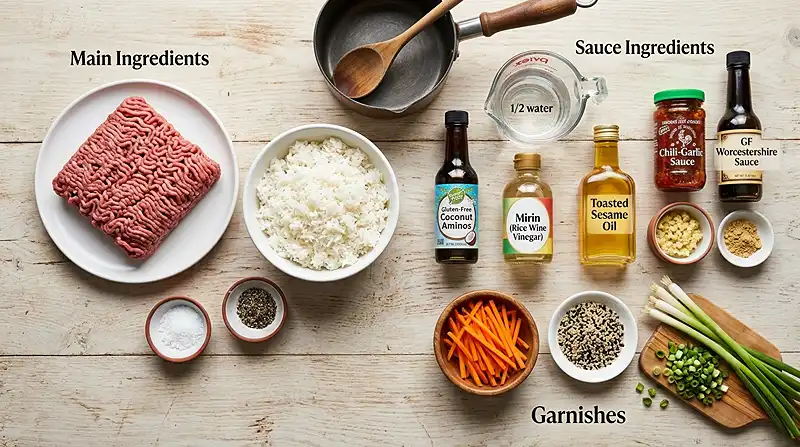
For the Beef:
- 1 pound grass-fed ground beef
- ¼ teaspoon salt
- ¼ teaspoon black pepper
- 2 cups cooked long grain rice (brown, white, or jasmine)
For the Korean BBQ Sauce:
- 3 teaspoons minced garlic (about 3 cloves)
- 1 tablespoon cornstarch
- 1 tablespoon water
- 2 teaspoons rice wine vinegar or mirin
- 2 teaspoons sesame oil
- ¼ teaspoon chili-garlic sauce (like sambal oelek)
- 3 tablespoons Worcestershire sauce (certified gluten-free)
- 3 tablespoons gluten-free and soy-free coconut aminos
- ¼ teaspoon ground ginger
For Garnish:
- 1 carrot, sliced or julienned
- 1 tablespoon sesame seeds (white or black)
- 2 scallions, chopped
Note: Make sure your Worcestershire sauce is certified gluten-free—many brands contain malt vinegar (made from barley). Lea & Perrins and French’s offer gluten-free versions. Coconut aminos brands like Coconut Secret and Trader Joe’s are naturally gluten-free and soy-free.
Step-by-Step Instructions
Cook the Beef
1. Brown the ground beef
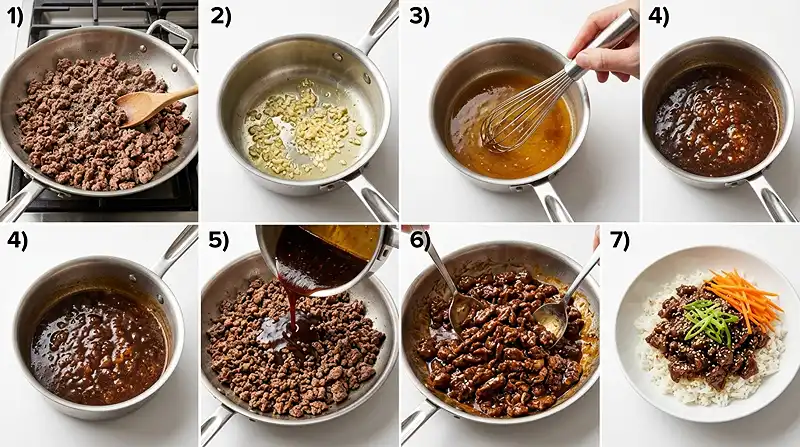
In a large skillet over medium heat, add the 1 pound grass-fed ground beef and season with ¼ teaspoon salt and ¼ teaspoon black pepper. Cook for 7-8 minutes, breaking up the meat with a wooden spoon or spatula, until no longer pink and the beef is fully cooked through—you should see no red or pink spots remaining.
2. Drain the excess fat
Carefully drain off the rendered fat from the skillet by tilting it over a bowl or paper towel-lined plate (never pour grease down your drain). Return the drained beef to the skillet and reduce the heat to low while you make the sauce.
Make the Korean BBQ Sauce
3. Cook the garlic base
In a small saucepan over medium heat, add the 3 teaspoons minced garlic and cook for 2 minutes, stirring constantly, until fragrant and just starting to turn golden—don’t let it burn or it will taste bitter. You’ll smell that characteristic roasted garlic aroma filling your kitchen.
4. Create the cornstarch slurry
Add the 1 tablespoon cornstarch directly to the pan with the garlic and stir constantly for 1 minute to cook off the raw starch taste. In a small bowl, whisk together 1 tablespoon water with the cornstarch mixture until smooth and lump-free.
5. Build the sauce
Add 2 teaspoons rice wine vinegar (or mirin), 2 teaspoons sesame oil, 3 tablespoons coconut aminos, 3 tablespoons gluten-free Worcestershire sauce, ¼ teaspoon chili-garlic sauce, and ¼ teaspoon ground ginger to the saucepan. Stir everything together until well combined and bring to a boil over medium-high heat—the mixture will bubble vigorously.
6. Simmer and thicken
Once boiling, immediately reduce the heat to low and let the sauce simmer for 10 minutes, stirring occasionally, until it thickens to a glossy, syrup-like consistency that coats the back of a spoon. The sauce should reduce by about one-third and darken slightly as the flavors concentrate.
Assemble the Korean BBQ Beef Bowls
7. Combine beef and sauce
Pour the hot Korean BBQ sauce over the cooked and drained ground beef in the large skillet. Stir to coat every piece of meat in the sauce, then simmer over low heat for 2-3 minutes until heated through and the sauce clings to the beef like a shiny glaze.
8. Build the bowls
Divide the 2 cups cooked rice among four serving bowls. Top each bowl with an equal portion of the Korean BBQ beef (about ¾ cup per bowl). Garnish with the julienned carrot, a sprinkle of sesame seeds, and chopped scallions for color, crunch, and fresh onion bite.
Pro Tip: For extra authenticity, add a fried egg on top of each bowl (the runny yolk mixing with the sauce and rice is absolutely heavenly), or serve with kimchi on the side for that traditional Korean banchan experience.
Make It Your Own
Try different proteins: Swap ground beef for ground turkey, ground pork, or ground chicken—all cook in the same amount of time and absorb the Korean BBQ sauce beautifully. You can also use thinly sliced ribeye, sirloin, or flank steak (marinate for 30 minutes, then quickly sear in a hot pan for 2-3 minutes per side).
Adjust the heat level: Double or triple the chili-garlic sauce for serious heat lovers, or skip it entirely for a mild, kid-friendly version that still has tons of flavor from the garlic, ginger, and sesame oil. You know, adding a drizzle of gochujang (Korean red pepper paste) after cooking gives you authentic spicy-sweet complexity if you can find a gluten-free brand.
Change up the rice base: Use brown rice for more fiber and nutrients, jasmine rice for fragrant floral notes, or cauliflower rice for a low-carb, keto-friendly option that still soaks up all that savory sauce. Quinoa or forbidden black rice also work beautifully if you want to change the texture and appearance.
Add more vegetables: Stir in 2 cups of fresh or frozen vegetables (snap peas, broccoli florets, bell peppers, zucchini, or baby bok choy) during the last 3 minutes of simmering the beef and sauce—they’ll steam-cook quickly and bulk up the meal. Shredded cabbage, cucumber slices, or pickled daikon radish also make great fresh, crunchy toppings.
Make it meal-prep friendly: Cook a double or triple batch of the beef and sauce on Sunday, portion it into individual containers with rice and veggies, and you’ve got grab-and-go lunches for the entire week. The flavors actually improve after a day in the fridge as everything melds together.
Common Problems & Solutions
Sauce is too thin and watery
You didn’t simmer it long enough, or you added too much water to the cornstarch slurry. Let the sauce reduce for the full 10 minutes over low heat, stirring occasionally, until it coats the back of a spoon and looks glossy. If it’s still thin, mix another ½ tablespoon cornstarch with ½ tablespoon cold water and stir it in, then simmer for 2 more minutes.
Beef tastes greasy instead of savory
You skipped draining the fat after browning the beef, or you used ground beef with a very high fat percentage (like 80/20 instead of 90/10 or grass-fed). Always drain off the rendered fat before adding the sauce—this step is non-negotiable for a clean-tasting, restaurant-quality bowl.
Sauce tastes too salty or too sweet
Coconut aminos are naturally sweeter than soy sauce, and some brands are sweeter than others. If your sauce tastes too sweet, add an extra tablespoon of rice wine vinegar to balance it out. If it’s too salty, add ½ teaspoon honey or a splash more sesame oil to round out the flavors.
Garlic burned and tastes bitter
Your heat was too high during step 3, or you cooked the garlic longer than 2 minutes before adding the other ingredients. Man, oh man, garlic goes from golden and fragrant to burnt and acrid in a matter of seconds—keep the heat at medium and watch it closely, stirring constantly.
Rice is mushy or undercooked
This has nothing to do with the recipe itself, but proper rice texture is crucial for Korean BBQ bowls. Follow the package directions for your specific rice type—jasmine and white rice need a 1:1.5 rice-to-water ratio and 15-18 minutes cooking time, while brown rice needs 1:2.5 and 40-45 minutes. Let rice rest for 5 minutes after cooking with the lid on before fluffing.
Storage & Meal Prep
| Method | Duration | Notes |
|---|---|---|
| Counter | Up to 2 hours | Covered; best served fresh |
| Refrigerator | 4-5 days | Store in airtight container; reheat gently |
| Freezer | Up to 3 months | Freeze beef and sauce separately from rice |
Reheating tips: Reheat refrigerated Korean BBQ beef bowls in the microwave for 2-3 minutes on medium power, adding a splash of water or broth to prevent drying out. Stovetop reheating works even better—warm the beef and sauce in a skillet over medium-low heat, stirring occasionally, until heated through and the sauce is glossy again.
Meal-prep strategy: Cook the beef and sauce on Sunday and portion it into four containers. Store cooked rice separately in meal-prep containers, then microwave the beef and rice together when you’re ready to eat. Add fresh garnishes (carrots, scallions, sesame seeds) right before eating so they stay crunchy and vibrant instead of wilting in the fridge.
Gluten-Free Korean BBQ Beef Bowls FAQs
Can I use regular soy sauce instead of coconut aminos?
No, traditional soy sauce contains wheat and is not gluten-free—it will cause reactions in people with celiac disease or gluten sensitivity. Coconut aminos are the only truly gluten-free and soy-free substitute that delivers similar umami flavor, though gluten-free tamari (made without wheat) also works if you’re not avoiding soy.
What’s the best rice for Korean BBQ beef bowls?
Jasmine rice is my personal favorite because its slightly sticky texture and floral aroma complement the bold Korean BBQ sauce perfectly. Short-grain white rice (like sushi rice) is also traditional and creates a stickier base that holds the sauce well. Brown rice adds nutty flavor and more fiber, while cauliflower rice makes the dish low-carb and keto-friendly.
Can I make this recipe without Worcestershire sauce?
Yes, just replace the 3 tablespoons Worcestershire sauce with an additional 3 tablespoons coconut aminos plus 1 teaspoon apple cider vinegar—this maintains the tangy, umami-rich depth without the specific Worcestershire flavor. The result will taste slightly different but still satisfying and delicious.
How do I know if my Worcestershire sauce is gluten-free?
Check the ingredient label for “malt vinegar,” “barley,” or “wheat”—these ingredients contain gluten and are common in traditional Worcestershire sauce. Look for brands specifically labeled “gluten-free” like Lea & Perrins (the US version is gluten-free, but the UK version is not) or French’s, and when in doubt, contact the manufacturer.
Why does my Korean BBQ beef bowl taste different from restaurant versions?
Restaurant Korean BBQ typically uses gochujang (fermented red pepper paste) for heat and fermented depth, plus they often marinate thinly sliced beef in the sauce for hours. This simplified weeknight version uses ground beef and quick-cooking ingredients for speed, so the flavor profile is slightly different—add 1-2 tablespoons gluten-free gochujang to the sauce if you want that authentic restaurant taste.
Serving Suggestions
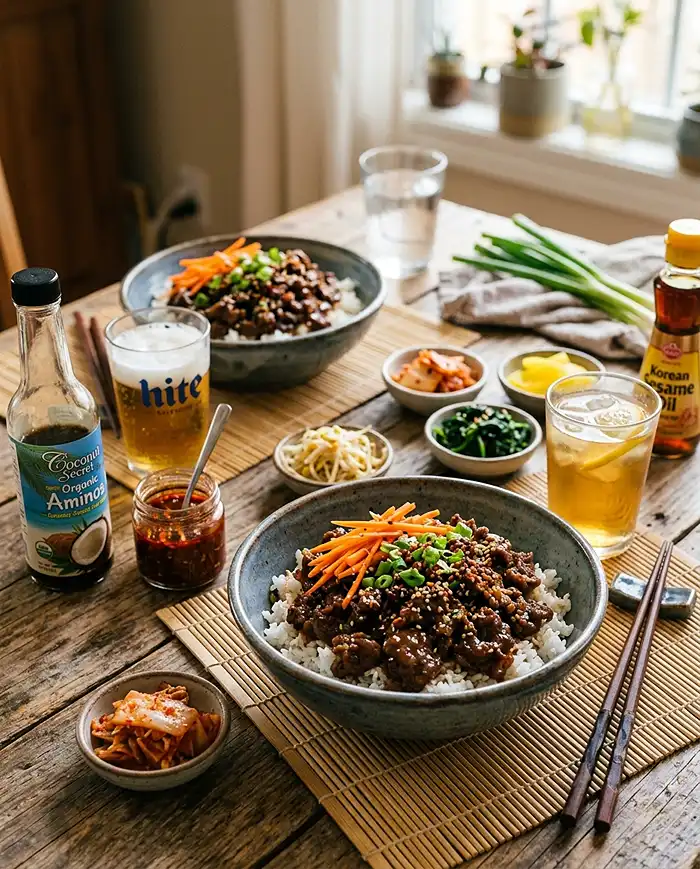
Serve these gluten-free Korean BBQ beef bowls for busy weeknight dinners when you need something satisfying fast, or make a double batch for meal prep lunches that taste better than any takeout. They’re also fantastic for casual dinner parties or game day gatherings—set up a DIY bowl bar with different toppings (kimchi, pickled vegetables, fried eggs, sriracha, cucumber slices) and let guests build their own.
For a complete Asian-inspired menu, pair the beef bowls with cucumber salad, miso soup, or gluten-free dairy-free matcha latte cookies for dessert. The combination of savory-sweet bowls and light, refreshing sides creates a balanced meal that’s perfect for family dinners or casual entertaining.
Bring Korean BBQ Home Tonight
Give these gluten-free Korean BBQ beef bowls a try this week and let me know if they cure your takeout cravings like they did for mine! Pin this recipe for your weeknight dinner rotation, and drop a comment below about your favorite bowl toppings.
Rate the recipe after you make it, and share photos of your colorful bowls with the community—I love seeing everyone’s creative garnishes. These bowls prove that eating gluten-free doesn’t mean giving up the bold, crave-worthy flavors that make dinner exciting.
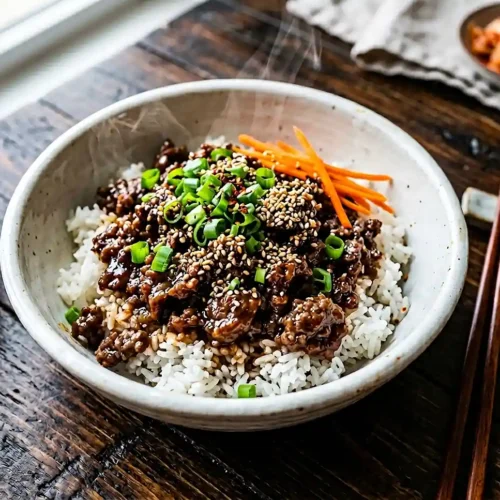
Gluten-Free Korean BBQ Beef Bowls
Equipment
- Large skillet
- Small saucepan
- Wooden spoon or spatula
- Small bowl
- Whisk
- Measuring spoons and cups
- Knife and cutting board
Ingredients
For the Beef
- 1 pound Grass-fed ground beef
- ¼ teaspoon Salt
- ¼ teaspoon Black pepper
- 2 cups Cooked long grain rice brown, white, or jasmine
For the Korean BBQ Sauce
- 3 teaspoons Garlic minced, about 3 cloves
- 1 tablespoon Cornstarch
- 1 tablespoon Water
- 2 teaspoons Rice wine vinegar or mirin
- 2 teaspoons Sesame oil
- ¼ teaspoon Chili-garlic sauce like sambal oelek
- 3 tablespoons Worcestershire sauce certified gluten-free
- 3 tablespoons Coconut aminos gluten-free and soy-free
- ¼ teaspoon Ground ginger
For Garnish
- 1 Carrot sliced or julienned
- 1 tablespoon Sesame seeds white or black
- 2 Scallions chopped
Instructions
- In a large skillet over medium heat, add the 1 pound grass-fed ground beef and season with ¼ teaspoon salt and ¼ teaspoon black pepper. Cook for 7-8 minutes, breaking up the meat with a wooden spoon or spatula, until no longer pink and the beef is fully cooked through—you should see no red or pink spots remaining.
- Carefully drain off the rendered fat from the skillet by tilting it over a bowl or paper towel-lined plate (never pour grease down your drain). Return the drained beef to the skillet and reduce the heat to low while you make the sauce.
- In a small saucepan over medium heat, add the 3 teaspoons minced garlic and cook for 2 minutes, stirring constantly, until fragrant and just starting to turn golden—don’t let it burn or it will taste bitter. You’ll smell that characteristic roasted garlic aroma filling your kitchen.
- Add the 1 tablespoon cornstarch directly to the pan with the garlic and stir constantly for 1 minute to cook off the raw starch taste. In a small bowl, whisk together 1 tablespoon water with the cornstarch mixture until smooth and lump-free.
- Add 2 teaspoons rice wine vinegar (or mirin), 2 teaspoons sesame oil, 3 tablespoons coconut aminos, 3 tablespoons gluten-free Worcestershire sauce, ¼ teaspoon chili-garlic sauce, and ¼ teaspoon ground ginger to the saucepan. Stir everything together until well combined and bring to a boil over medium-high heat—the mixture will bubble vigorously.
- Once boiling, immediately reduce the heat to low and let the sauce simmer for 10 minutes, stirring occasionally, until it thickens to a glossy, syrup-like consistency that coats the back of a spoon. The sauce should reduce by about one-third and darken slightly as the flavors concentrate.
- Pour the hot Korean BBQ sauce over the cooked and drained ground beef in the large skillet. Stir to coat every piece of meat in the sauce, then simmer over low heat for 2-3 minutes until heated through and the sauce clings to the beef like a shiny glaze.
- Divide the 2 cups cooked rice among four serving bowls. Top each bowl with an equal portion of the Korean BBQ beef (about ¾ cup per bowl). Garnish with the julienned carrot, a sprinkle of sesame seeds, and chopped scallions for color, crunch, and fresh onion bite.