Gluten-Free Lamb Meatballs
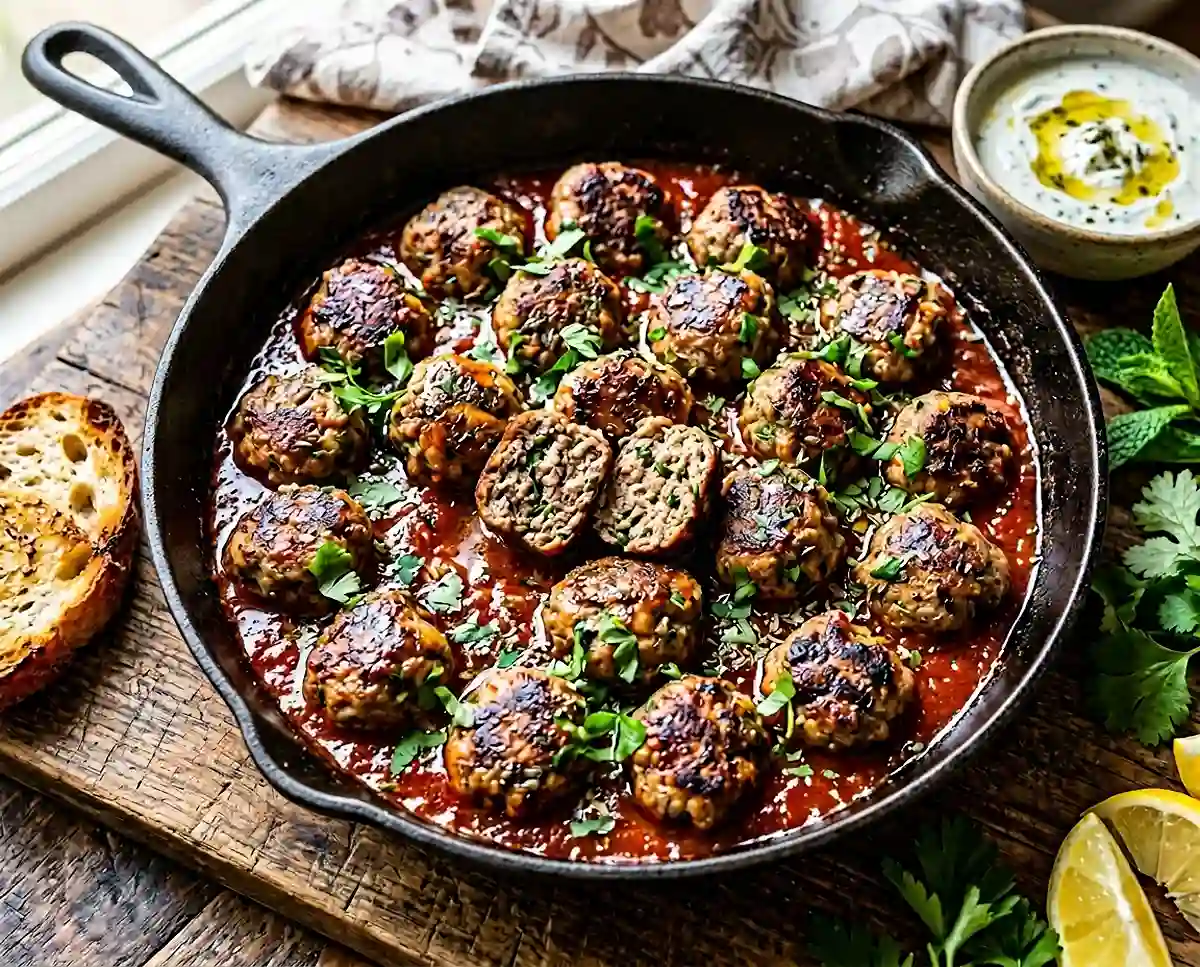
Gluten-Free Lamb Meatballs with herbs, cinnamon, and nomato sauce. Greek-inspired, tender, and ready in 30 minutes for easy weeknight dinners!
Two years ago, I tried making lamb meatballs for a dinner party and dumped breadcrumbs into the mixture without thinking—only to realize halfway through that my celiac friend was coming and I’d just contaminated the entire batch.
That panic-fueled disaster taught me that gluten-free lamb meatballs don’t need fillers or binders to stay tender and juicy—in fact, they’re better without them. The ground lamb’s natural fat content holds everything together beautifully, and fresh herbs add all the moisture you need.
Why You’ll Love These Gluten-Free Lamb Meatballs
- Tender, juicy texture without breadcrumbs—the ground lamb’s fat content and herb paste keep them moist and flavorful without any gluten-based fillers
- Naturally gluten-free and nightshade-free—using nomato sauce instead of tomato makes this AIP-friendly and perfect for sensitive stomachs
- 30-minute weeknight dinner from start to finish, including prep and simmering time
- Warm Mediterranean spices like cinnamon and fresh mint create a flavor profile that’s both comforting and exotic—like biting into a spiced, herb-studded cloud
The Secret to Perfect Gluten-Free Lamb Meatballs
Processing the herbs and aromatics into a paste distributes flavor throughout every bite. Finely chopping by hand leaves uneven chunks of onion and garlic, but pulsing them in a food processor creates a uniform paste that binds to the meat and releases moisture as the meatballs cook. According to Serious Eats’ meatball science guide, this technique also helps break down the onion’s cell walls, releasing pectin that acts as a natural binder.
Searing the meatballs first locks in juices and creates a flavorful crust. Skipping the sear and dropping raw meatballs straight into sauce makes them pale, steamed, and bland. A good sear caramelizes the proteins on the surface through the Maillard reaction, creating hundreds of flavor compounds while sealing in moisture—the browned bits (fond) left in the pan also add depth to your sauce.
Cinnamon in savory lamb dishes is a classic Mediterranean technique. The warm spice balances the richness of the lamb without making it taste like dessert—it’s the same principle used in Moroccan tagines and Greek moussaka. Just ½ teaspoon in the sauce and 1 teaspoon in the meat is enough to add complexity without overwhelming the fresh herbs.
Nomato sauce makes this recipe nightshade-free for sensitive stomachs. Nomato sauce uses beets, carrots, and vinegar to mimic the tangy, slightly sweet flavor of tomato sauce without any actual nightshades. This makes these lamb meatballs gluten free perfect for anyone following an AIP (Autoimmune Protocol) diet or dealing with nightshade sensitivities.
Table of Contents
Ingredients
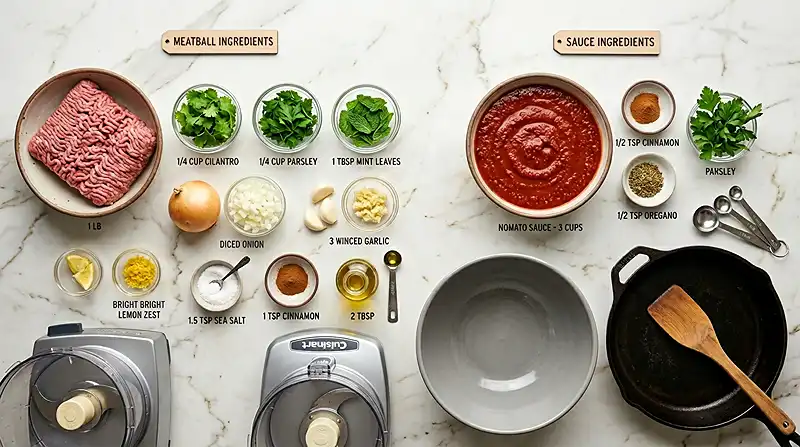
| For the Meatballs | Amount | Notes |
|---|---|---|
| Fresh cilantro | ¼ cup | Chopped; leafy parts only |
| Fresh parsley | ¼ cup | Chopped; flat-leaf preferred |
| Fresh mint | 1 tablespoon | About 3-4 leaves |
| Small yellow onion | 1 | Roughly chopped |
| Garlic cloves | 3 | Peeled |
| Lemon zest | ¼ teaspoon | From 1 lemon; use microplane |
| Ground lamb | 1 lb | 80/20 fat ratio ideal |
| Salt | 1½ teaspoons | Kosher or sea salt |
| Ground cinnamon | 1 teaspoon | |
| Olive oil | 2 tablespoons | For searing |
| For the Sauce | Amount | Notes |
|---|---|---|
| Nomato sauce | 3 cups | Store-bought or homemade |
| Ground cinnamon | ½ teaspoon | |
| Dried oregano | ½ teaspoon | |
| Fresh parsley | For garnish | Finely chopped |
Pro Tip: If you can’t find nomato sauce, you can make a quick version by blending roasted beets, carrots, vinegar, and a pinch of salt—or substitute with regular tomato sauce if nightshades aren’t an issue for you.
Step-by-Step Instructions
Make the Meatballs
1. Process the herb paste.
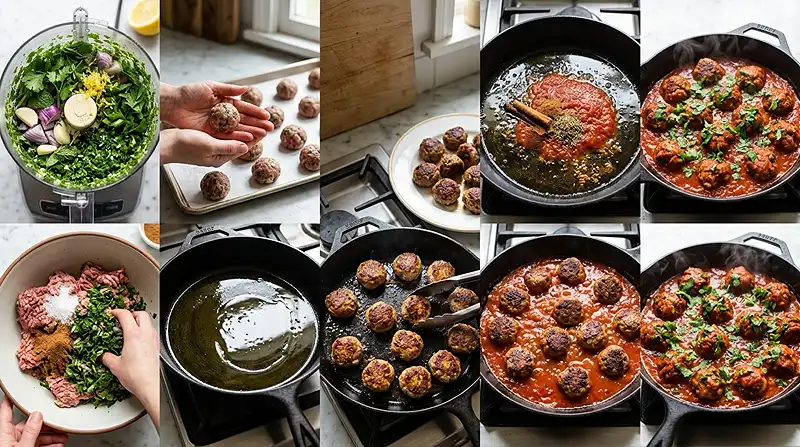
Add the chopped cilantro, parsley, mint, roughly chopped onion, peeled garlic cloves, and lemon zest to a food processor. Pulse 10-15 times, scraping down the sides once or twice, until the onion and garlic are finely diced and the mixture looks like a wet, green paste—you shouldn’t see any large chunks of onion or whole garlic pieces.
2. Mix the meatball mixture.
In a large bowl, combine the ground lamb, salt, cinnamon, and the herb paste from the food processor. Use your hands to gently mix everything together, squishing the meat between your fingers until the herbs are evenly distributed throughout—the mixture should look green-flecked and smell incredible. Don’t overmix or the meatballs will turn dense and tough.
3. Shape the meatballs.
Wet your hands lightly with water (this prevents sticking), then scoop about 2 tablespoons of the mixture and roll it between your palms to form a 1-inch meatball. Place each shaped meatball on a plate or baking sheet. You should get about 16-18 meatballs from this mixture.
4. Sear the meatballs.
Heat the olive oil in a large, deep skillet or cast iron pot over medium heat. Once the oil shimmers (about 2 minutes), carefully add the meatballs in a single layer—don’t overcrowd the pan or they’ll steam instead of sear. Cook for about 5 minutes per side, turning gently with tongs, until each meatball has a deep golden-brown crust on all sides. Man, oh man… that moment when you flip them and see that perfect caramelized crust is pure satisfaction. Transfer the seared meatballs to a plate and set aside.
Make the Sauce and Finish
5. Simmer the nomato sauce.
To the same pan (don’t wipe it out—all those browned bits are flavor gold), add the nomato sauce, ½ teaspoon cinnamon, and dried oregano. Stir well with a wooden spoon, scraping up any stuck-on bits from the bottom of the pan. Bring the sauce to a gentle simmer over low-medium heat—you should see small bubbles breaking the surface but not a violent boil.
6. Cook the meatballs in the sauce.
Return the seared meatballs to the pan, nestling them into the sauce so they’re mostly submerged. Cover the pan with a lid or aluminum foil and let everything simmer gently for 5-7 minutes. This final cooking step finishes the meatballs through to the center while allowing them to absorb some of the sauce’s tangy, aromatic flavors.
7. Serve and garnish.
Remove the pan from the heat and let it sit for 2-3 minutes so the sauce thickens slightly. Transfer the meatballs and sauce to a serving dish, garnish with freshly chopped parsley, and serve warm with your choice of sides.
Make It Your Own (Substitutions & Variations)
Use ground beef or turkey for a milder flavor. Ground lamb has a distinctive, slightly gamey taste that some people love and others find strong. Swapping it for ground beef (preferably 80/20 for moisture) or ground turkey creates a more neutral Greek meatballs flavor that lets the herbs shine through.
Make it with tomato sauce if nightshades are okay. Well… if you’re not avoiding nightshades, regular marinara or crushed tomatoes work beautifully in place of nomato sauce. Use the same amount (3 cups) and follow the exact same method—the tomato’s acidity will be slightly sharper, but the warm cinnamon balances it perfectly.
Add crumbled feta for extra richness. Crumbling ¼ cup of feta cheese into the meatball mixture before shaping adds salty, tangy pockets that melt into creamy surprises. This makes them more indulgent but still keeps them gluten-free.
Try different fresh herbs. Swap the mint for fresh dill or basil if that’s what you have on hand. Dill gives a more pickle-forward, Eastern European vibe, while basil leans Italian. The cilantro and parsley are the backbone, so keep those consistent for the best flavor.
Make them ahead and freeze. Shape the raw meatballs, place them on a parchment-lined baking sheet, and freeze until solid (about 2 hours). Transfer to a freezer bag and store for up to 3 months. When ready to cook, sear them straight from frozen—just add 2-3 extra minutes per side.
Common Problems & Solutions
Problem: My meatballs fell apart during searing.
Solution: You either didn’t mix the herb paste thoroughly into the meat or your pan wasn’t hot enough. The herb paste acts as a binder, so make sure it’s evenly distributed throughout the lamb. Also, let the oil heat fully before adding the meatballs—if the pan is too cool, they’ll stick and tear when you try to flip them.
Problem: The meatballs are dry and crumbly.
Solution: You used ground lamb that was too lean (less than 15% fat) or you overcooked them. Lamb should be at least 80/20 fat ratio to stay juicy—lean lamb dries out quickly. Also, don’t simmer them in the sauce for longer than 7 minutes or they’ll overcook and turn tough.
Problem: The herb paste is watery and won’t bind to the meat.
Solution: You added too much liquid or didn’t drain the herbs after chopping. Make sure the cilantro, parsley, and mint are completely dry before adding them to the food processor. If the paste looks soupy, squeeze it gently in a clean kitchen towel to remove excess moisture before mixing it with the lamb.
Problem: The meatballs taste bland.
Solution: You didn’t add enough salt or you skipped the lemon zest. The 1½ teaspoons of salt might seem like a lot, but lamb is a rich meat that needs proper seasoning. The lemon zest adds brightness that cuts through the fat—don’t skip it or substitute bottled lemon juice, which lacks the essential oils.
Problem: The sauce is too thick or too thin.
Solution: If it’s too thick, thin it with ¼ cup of water or chicken broth at a time until it reaches a pourable consistency. If it’s too thin, simmer it uncovered for 5 extra minutes to reduce and concentrate the flavors. Nomato sauce can vary in thickness depending on the brand, so adjust as needed.
Storage & Meal Prep
| Method | Duration | Notes |
|---|---|---|
| Counter | Up to 2 hours | Cover loosely; best served warm |
| Refrigerator | 3-4 days | Store in airtight container with sauce |
| Freezer | 2-3 months | Freeze cooked or raw; thaw in fridge overnight |
To reheat leftover gluten-free lamb meatballs, place them in a covered skillet with a splash of water or broth over medium-low heat for 8-10 minutes, stirring occasionally, until heated through. You can also microwave them in a covered dish for 2-3 minutes at 50% power, though they’ll lose some of their seared texture.
Meal prep tip: Make a double batch and freeze half—either raw (shaped and frozen on a baking sheet) or cooked (in the sauce). Raw meatballs can be seared straight from frozen; cooked ones just need gentle reheating for quick weeknight dinners.
Gluten-Free Lamb Meatballs FAQs
Can I bake these meatballs instead of searing them?
Yes, place shaped meatballs on a parchment-lined baking sheet and bake at 400°F for 18-20 minutes, flipping once halfway through. You’ll miss some of the caramelized crust and fond for the sauce, but they’ll still be juicy and flavorful.
What’s the best way to serve these lamb meatballs?
Serve them over cauliflower rice, zucchini noodles, or regular gluten-free pasta for a complete meal. They’re also incredible in pita pockets with mint yogurt sauce (mix Greek yogurt with chopped mint, lemon juice, and garlic) and fresh cucumbers.
Can I make this dairy-free?
The meatballs themselves are already dairy-free as written. If you’re serving them with mint yogurt, use dairy-free coconut yogurt or cashew yogurt mixed with fresh mint and lemon juice for the same cooling effect.
How do I know when the meatballs are cooked through?
Cut one open—the center should be barely pink and the juices should run clear. An instant-read thermometer inserted into the center should read 145°F for safe consumption according to USDA guidelines. The final 5-7 minutes of simmering in sauce ensures they’re cooked through without drying out.
Can I use dried herbs instead of fresh?
Fresh herbs are strongly recommended because dried herbs lack the moisture and vibrant flavor that make these meatballs special. If you absolutely must use dried, reduce the amounts to 1 tablespoon dried parsley, 1 tablespoon dried cilantro, and 1 teaspoon dried mint—but expect a more muted flavor.
Serving Suggestions
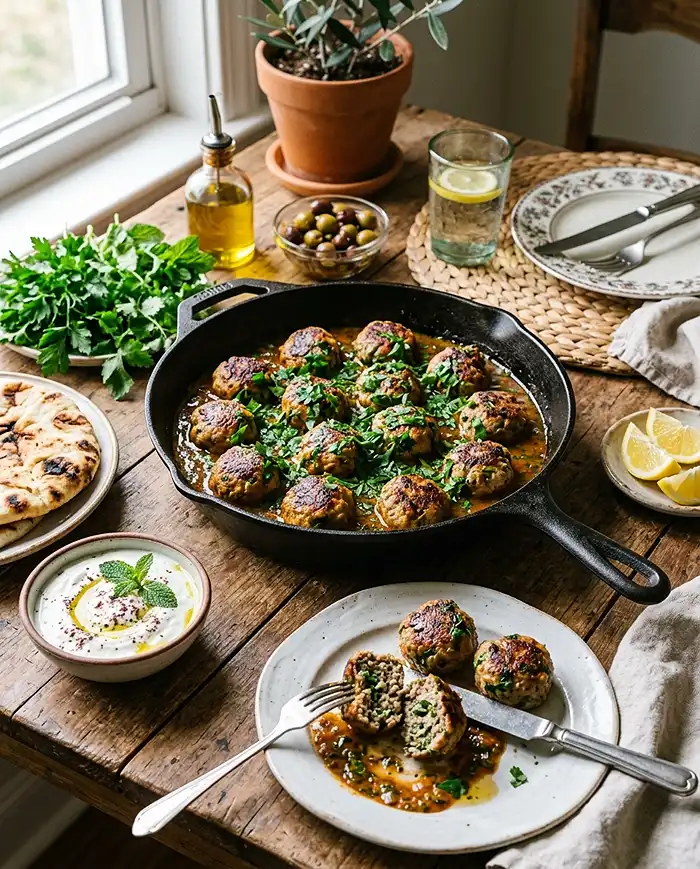
Serve these gluten-free lamb meatballs over a bed of fluffy cauliflower rice or gluten-free orzo for a comforting weeknight dinner that feels special. They’re also perfect for meal prep—pack them in containers with roasted vegetables and a side of mint yogurt for dipping. For Easter dinner or spring gatherings, pair them with gluten-free honey glazed carrots and a crisp Greek salad for a Mediterranean feast.
For a complete gluten-free Mediterranean menu, start with gluten-free Easter egg bark as a sweet appetizer, serve these meatballs as the main course, and finish with gluten-free resurrection rolls for a playful dessert. The combination of warm spices, fresh herbs, and bright flavors makes for a meal everyone will remember.
Ready to Make Your Best Lamb Meatballs?
These lamb meatballs gluten free have become my go-to when I need dinner fast but still want something that tastes homemade and special. The food processor herb paste cuts prep time in half, and that quick sear creates a crust that’s restaurant-quality without any fuss. The nomato sauce adds a unique twist that makes these feel different from every other meatball recipe out there.
Try these Greek meatballs this week and let me know in the comments if you made any fun variations—did you add feta, swap the lamb for beef, or experiment with different herbs? Pin this to your gluten-free dinner board on Pinterest so you can find it again when you need a quick, flavorful meal, and don’t forget to rate it below if it becomes part of your regular rotation!
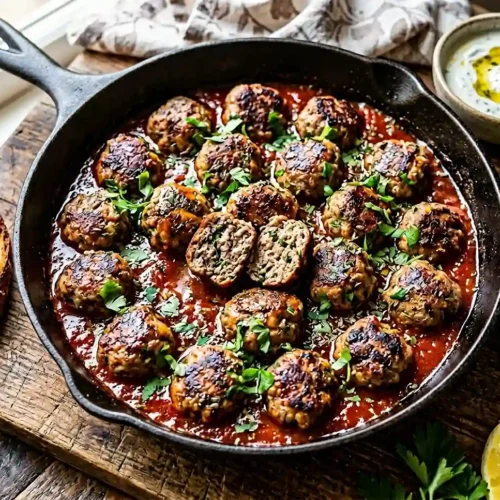
Gluten-Free Lamb Meatballs
Equipment
- Food processor
- Large mixing bowl
- Large deep skillet or cast iron pot
- Tongs
- Plate or baking sheet
- Wooden spoon
- Lid or aluminum foil
- Instant-read thermometer (optional)
Ingredients
For the Meatballs
- ¼ cup fresh cilantro chopped; leafy parts only
- ¼ cup fresh parsley chopped; flat-leaf preferred
- 1 tablespoon fresh mint about 3-4 leaves
- 1 small yellow onion roughly chopped
- 3 garlic cloves peeled
- ¼ teaspoon lemon zest from 1 lemon; use microplane
- 1 lb ground lamb 80/20 fat ratio ideal
- 1 ½ teaspoons salt kosher or sea salt
- 1 teaspoon ground cinnamon
- 2 tablespoons olive oil for searing
For the Sauce
- 3 cups nomato sauce store-bought or homemade
- ½ teaspoon ground cinnamon
- ½ teaspoon dried oregano
- fresh parsley finely chopped, for garnish
Instructions
- Add the chopped cilantro, parsley, mint, roughly chopped onion, peeled garlic cloves, and lemon zest to a food processor. Pulse 10-15 times, scraping down the sides once or twice, until the onion and garlic are finely diced and the mixture looks like a wet, green paste.
- In a large bowl, combine the ground lamb, salt, cinnamon, and the herb paste from the food processor. Use your hands to gently mix everything together until the herbs are evenly distributed throughout. Don’t overmix or the meatballs will turn dense and tough.
- Wet your hands lightly with water, then scoop about 2 tablespoons of the mixture and roll it between your palms to form a 1-inch meatball. Place each shaped meatball on a plate or baking sheet. You should get about 16-18 meatballs.
- Heat the olive oil in a large, deep skillet or cast iron pot over medium heat. Once the oil shimmers (about 2 minutes), carefully add the meatballs in a single layer. Cook for about 5 minutes per side, turning gently with tongs, until each meatball has a deep golden-brown crust on all sides. Transfer the seared meatballs to a plate and set aside.
- To the same pan (don’t wipe it out), add the nomato sauce, 1/2 teaspoon cinnamon, and dried oregano. Stir well with a wooden spoon, scraping up any stuck-on bits from the bottom. Bring the sauce to a gentle simmer over low-medium heat.
- Return the seared meatballs to the pan, nestling them into the sauce so they’re mostly submerged. Cover the pan with a lid or aluminum foil and let everything simmer gently for 5-7 minutes until cooked through.
- Remove the pan from the heat and let it sit for 2-3 minutes so the sauce thickens slightly. Transfer the meatballs and sauce to a serving dish, garnish with freshly chopped parsley, and serve warm.