Gluten-Free Lavender Lemon Shortbread
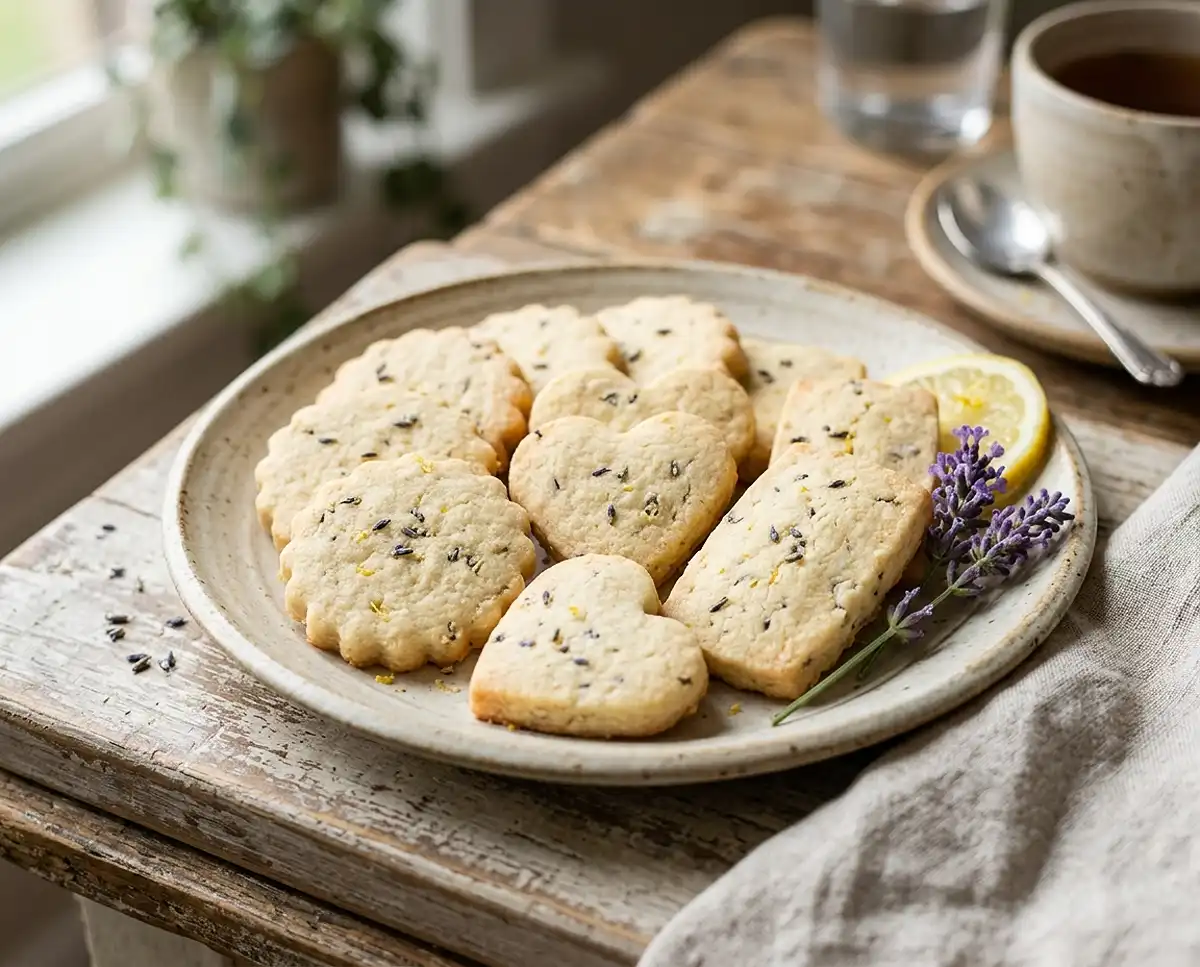
Gluten-Free Lavender Lemon Shortbread cookies with floral lavender, bright citrus, and a tender crumb. Dairy-free option—ready in 30 minutes!
I’ll never forget the first time I tried to make lavender shortbread gluten free—I used way too much lavender and ended up with cookies that tasted like soap. My kids took one bite and politely asked if we could order pizza instead.
Well… after that humbling experience, I learned that lavender is like perfume: a tiny amount creates magic, but too much ruins everything. Now these gluten-free lavender lemon shortbread cookies are our go-to for spring gatherings, Mother’s Day tea parties, and any time we want something that feels fancy but takes less than 30 minutes to make.
You know… there’s something deeply satisfying about pulling a tray of perfectly golden, fragrant spring cookies out of the oven and watching them disappear in minutes. These are the kind of cookies that make people ask for the recipe—and they’ll never guess they’re gluten-free.
Why You’ll Love This Gluten-Free Lavender Lemon Shortbread
- Texture perfection: Buttery, crisp edges with a tender, melt-in-your-mouth center—as light and delicate as a French sablé cookie, never gritty or crumbly
- Beginner-friendly: One-bowl mixing, simple roll-and-cut method, no chilling required before baking—perfect for last-minute entertaining
- Allergen-adaptable: Naturally gluten-free and easily made dairy-free by using coconut oil or vegan butter; refined-sugar-free with maple syrup
- Perfect for: Mother’s Day brunches, spring tea parties, Easter dessert tables, or any time you want an elegant cookie that tastes like sunshine
The Secret to Perfect Lavender Shortbread Gluten Free
Why this recipe works when others turn dry or soapy:
- Classic shortbread ratio adapted: Traditional shortbread follows a 3:2:1 ratio (flour:butter:sugar), as explained in Gluten-Free Cooking School’s guide to cookie ratios, but this recipe uses maple syrup instead of granulated sugar for moisture and a softer texture that gluten-free flour needs.
- Minimal lavender for balance: Just ½ tablespoon of dried culinary lavender flowers provides that signature floral note without overpowering—culinary lavender contains calming compounds that also add a subtle citrusy undertone that pairs perfectly with lemon zest.
- Room-temperature butter is key: Creaming softened butter until fluffy incorporates tiny air pockets that make these lemon lavender cookies tender instead of dense—cold butter won’t emulsify properly with gluten-free flour.
- Hand-kneading develops structure: Working the dough with your hands activates the starches in gluten-free flour and helps the cookies hold together without xanthan gum, preventing that sandy texture gluten-free shortbread often has.
Table of Contents
Ingredients
| Ingredient | Amount | Notes |
|---|---|---|
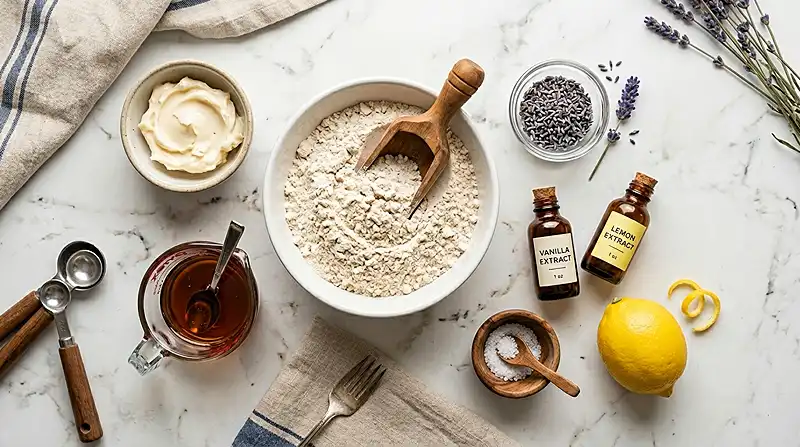
| Non-dairy butter | ½ cup, room temperature | OR coconut oil, softened; use Earth Balance or Miyoko’s for best flavor |
| Maple syrup | ½ cup | Pure maple syrup, not pancake syrup; provides moisture and subtle caramel notes |
| Pure vanilla extract | ½ tsp | Use real extract, not imitation |
| Pure lemon extract | ¼ tsp | Intensifies the citrus flavor; don’t skip this |
| Salt | Dash | Balances sweetness and enhances flavors |
| Gluten-free flour blend | 2¼ cups | Pamela’s Artisan Flour Blend recommended; see notes for DIY blend |
| Lemon zest | 1 lemon | Use a microplane for fine zest; adds bright, fresh citrus |
| Dried lavender flowers | ½ tbsp | Culinary lavender only; grind lightly in a mortar and pestle for even distribution |
DIY Flour Blend: Combine 1½ cups brown rice flour + ½ cup tapioca starch + ¼ cup sweet rice flour + ½ tsp guar gum.
Step-by-Step Instructions
1. Preheat and prep your workspace.
Preheat your oven to 350°F. Line 2 cookie sheets with parchment paper to prevent sticking and ensure even browning. Prepare a rolling area with two additional sheets of parchment paper, and have your cookie cutter(s) handy—spring shapes like flowers, butterflies, or simple circles work beautifully.
Pro Tip: If your kitchen is warm, place your lined baking sheets in the fridge while you prep the dough—this helps the cookies hold their shape better during baking.
2. Cream the butter.
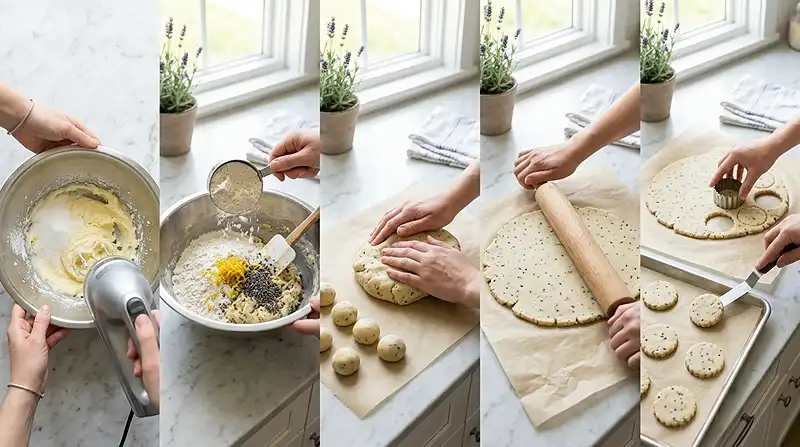
Place the room-temperature non-dairy butter in a large mixing bowl and whip it with a hand mixer or stand mixer on medium-high speed for 2-3 minutes until it’s light, fluffy, and creamy. This step is crucial for creating tender spring cookies—under-creamed butter leads to dense, hard cookies.
Sensory cue: The butter should look pale and airy, almost like soft buttercream frosting, and smell rich and slightly sweet.
3. Add the wet ingredients.
Add the maple syrup, vanilla extract, lemon extract, and a dash of salt to the whipped butter. Mix once again on medium speed for 1-2 minutes to combine everything thoroughly. The mixture will look smooth and glossy, like a thin glaze.
Pro Tip: Scrape down the sides of the bowl halfway through to make sure everything incorporates evenly—pockets of unmixed extract can create uneven flavor.
4. Mix in the dry ingredients.
Add the gluten-free flour blend, lemon zest, and dried lavender flowers to the bowl. Use a wooden spoon to mix gently until the flour is mostly incorporated and you see no dry pockets. The dough will look shaggy and slightly crumbly at this stage—this is normal.
5. Knead the dough by hand.
Get in there with your hands and mix everything together by working the dough for 2-3 minutes until you can shape it into a cohesive ball. Press and fold the dough repeatedly—this kneading activates the starches and helps bind everything together. The consistency should not be sticky but should press together easily when pinched.
Pro Tip: If the dough feels a little sticky, add 1-2 tablespoons more flour; if it’s a little dry and won’t hold together, add 1 tablespoon more maple syrup. Different flour blends vary in absorbency, so trust your hands more than the measuring cup.
6. Divide and flatten the dough.
Shape the dough into 2 equal balls, then flatten each into a disk about 1 inch thick. This makes rolling easier and faster.
7. Roll out the first disk.
Roll out one of the dough balls between two sheets of parchment paper to ⅓ to ½ inch thickness. Rolling between parchment prevents sticking without adding extra flour, which can make the cookies dry. Use even pressure and check frequently to make sure the dough isn’t sticking to the paper.
Sensory cue: The dough will smell like fresh lemon cake with a hint of floral perfume—subtle and sophisticated, not overpowering.
8. Cut and transfer the cookies.
Use a cookie cutter to cut out shapes, pressing straight down without twisting (twisting seals the edges and prevents clean cuts). Carefully peel away the excess dough and use a thin spatula to transfer the cut cookies to the prepared cookie sheets, spacing them ½ inch apart. They won’t spread as they bake, so you can fit quite a few on each sheet.
Pro Tip: If the dough gets too soft while cutting, pop it back in the fridge for 5 minutes to firm up—this makes transferring much easier.
9. Gather scraps and repeat.
Gather up any dough scraps, press them together (don’t overwork them), and roll out again to cut more cookies. Repeat the entire process with the second dough ball until all dough is used up.
10. Bake until golden.
Bake in the preheated oven for approximately 14-15 minutes, until the edges just begin to turn golden and the tops look set but not browned. Don’t overbake—these lavender shortbread gluten free cookies will harden within minutes of cooling, so they should still look slightly soft when you remove them from the oven.
Sensory cue: Your kitchen will smell like a French patisserie—buttery, citrusy, and floral all at once. It’s intoxicating.
11. Cool and enjoy.
Remove the baking sheets from the oven and place them on a cooling rack (or just leave them on the stovetop). Allow the cookies to cool on the sheets for 10 minutes before transferring them to a wire rack—they’ll firm up as they cool. Enjoy them slightly warm or at room temperature with a cup of tea or coffee.
Pro Tip: These cookies are best on day one when they’re at peak tenderness, but they store beautifully for up to a week in an airtight container.
Make It Your Own: Substitutions & Variations
Swap the non-dairy butter for coconut oil (softened but not melted) to make these even more allergen-friendly. Coconut oil gives the cookies a subtle tropical undertone that pairs surprisingly well with lavender and lemon, though the texture will be slightly more crumbly.
Use honey or agave instead of maple syrup if that’s what you have on hand—just know that honey will add a floral sweetness that intensifies the lavender, while agave is more neutral. The texture stays the same regardless of which liquid sweetener you choose.
Try orange zest and rosemary instead of lemon and lavender for a savory-sweet twist that’s more Mediterranean in flavor. Use ½ tablespoon fresh rosemary (finely minced) and the zest of one orange—it’s incredible with afternoon tea or as a cheese board accompaniment.
Man, oh man… you can also dip the cooled cookies halfway into melted dark chocolate and sprinkle with extra lemon zest or edible dried lavender for a bakery-worthy presentation. It turns these simple spring cookies into showstoppers.
Common Problems & Solutions
Problem: My cookies spread too much and lost their shape.
Solution: Make sure your butter is softened but not melted, and chill the cut cookies on the baking sheet for 10 minutes before baking if your kitchen is warm.
Explanation: Gluten-free shortbread relies on solid fat to hold its shape. If the butter is too soft or the dough is warm, the cookies will spread before the starches have a chance to set in the oven.
Problem: The cookies taste too much like lavender or soap.
Solution: Next time, use only ¼ tablespoon of lavender or grind it more finely so it distributes evenly without concentrated pockets.
Explanation: Lavender is incredibly potent—a little goes a long way. If you bite into a whole lavender bud, it can taste soapy or perfume-like. Grinding it lightly and using sparingly keeps the flavor delicate and floral.
Problem: The dough is too crumbly and won’t hold together.
Solution: Add 1-2 tablespoons more maple syrup or a tiny splash of non-dairy milk, then knead the dough vigorously for another minute.
Explanation: Gluten-free flour blends vary wildly in absorbency. Brown rice flour, in particular, is very thirsty and may need extra liquid. The kneading helps activate the starches that act as binders in the absence of gluten.
Problem: The cookies are too hard or dry.
Solution: Check your oven temperature with an oven thermometer—it might be running hot. Also, make sure you’re pulling them out when the edges are just barely golden.
Explanation: Gluten-free cookies continue to firm up as they cool, so what looks underdone in the oven is often perfect once cooled. Overbaking by even 2-3 minutes can turn these lemon lavender cookies from tender to rock-hard.
Storage & Meal Prep
| Method | Duration | Notes |
|---|---|---|
| Counter | 5-7 days | Store in an airtight container with parchment between layers to prevent sticking |
| Fridge | 2 weeks | Texture stays tender; bring to room temperature 10 minutes before serving |
| Freezer | 3 months | Freeze baked cookies in a single layer, then transfer to a freezer bag; thaw at room temperature |
These gluten-free lavender lemon shortbread cookies are at their absolute best within the first 2-3 days when the lemon flavor is brightest and the texture is most tender. However, they keep beautifully for up to a week if stored properly—just make sure the container is truly airtight or they’ll absorb moisture and lose their crisp edges. You can also freeze the unbaked dough for up to 3 months: roll it out, cut the shapes, freeze them on a baking sheet until solid, then transfer to a freezer bag. Bake from frozen, adding 2-3 extra minutes to the baking time.
Gluten-Free Lavender Lemon Shortbread FAQs
Can I use fresh lavender instead of dried?
Yes, but use half the amount—¼ tablespoon—because fresh lavender is more potent and can taste grassy if overused. Dried culinary lavender has a more concentrated, mellow flavor that’s ideal for baking. If you’re harvesting from your own garden, make sure it’s a culinary variety like English lavender (Lavandula angustifolia) and hasn’t been treated with pesticides.
How do I know if I’m using culinary lavender?
Culinary lavender is labeled as food-grade and comes from specific varieties with lower camphor content, making it safe and pleasant to eat. You can find it at specialty spice shops, health food stores, or online. Never use lavender from a craft store or garden center unless it’s specifically labeled as culinary—those may contain chemicals or have a bitter, soapy flavor.
Why do my gluten-free cookies always turn out crumbly?
Gluten-free shortbread needs proper fat-to-flour ratios and thorough kneading to develop structure since there’s no gluten to bind everything together. Creaming the butter until fluffy, kneading the dough by hand for at least 2-3 minutes, and not overbaking are the three secrets to tender, cohesive lavender shortbread gluten free. Also, make sure your flour blend contains a binder like guar gum or xanthan gum—without it, cookies will fall apart.
Can I make these with regular butter instead of dairy-free?
Absolutely—regular unsalted butter works perfectly and gives a slightly richer flavor. Just make sure it’s at true room temperature (soft enough to leave a fingerprint but not greasy or melted). If you prefer salted butter, skip the pinch of salt in the recipe to avoid oversalting.
What other flavor combinations work well with this shortbread base?
Try orange zest with cardamom, lime zest with fresh mint, or almond extract with chopped pistachios for equally stunning spring cookies. You could also go seasonal: add cinnamon and nutmeg for fall, or peppermint extract and crushed candy canes for winter. This is a versatile base recipe that takes on whatever flavors you love.
Serving Suggestions
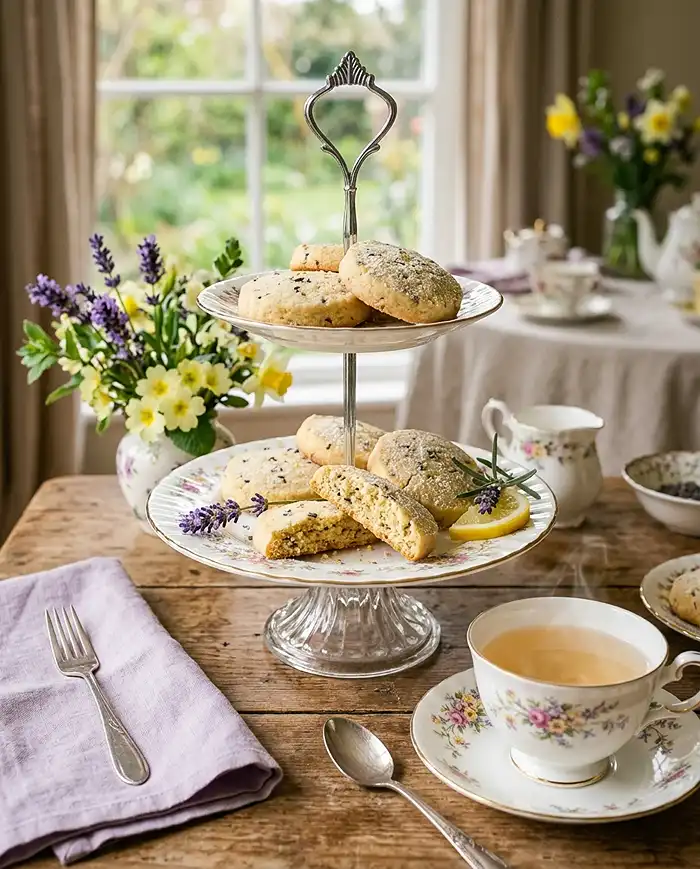
These gluten-free lavender lemon shortbread cookies are showstoppers at Mother’s Day brunch, especially when served alongside gluten-free simnel cake and a pot of Earl Grey or chamomile tea. Arrange them on a tiered cake stand with fresh berries and dairy-free chocolate Easter eggs for a stunning spring dessert table that feels elegant but effortless. They’re also lovely as afternoon tea cookies or tucked into gift boxes for hostess gifts—wrap them in clear cellophane tied with a lavender ribbon for a thoughtful homemade present.
For a savory-sweet pairing, serve these lemon lavender cookies with a cheese board featuring soft goat cheese, honey, and gluten-free smoked salmon pinwheels. The bright citrus and floral notes cut through the richness of the cheese and create a balanced spring menu that impresses guests without stressing you out.
Let’s Hear From You!
Give these gluten-free lavender lemon shortbread cookies a try this spring and let me know how they turn out! Did you use the classic lavender-lemon combo or try a different flavor twist? I’d love to hear your creative variations in the comments below. And if you love them as much as we do (they disappear within an hour at our house!), please pin this recipe on Pinterest so you can find it again for Mother’s Day, Easter, or any time you need a cookie that tastes like sunshine. Happy baking!
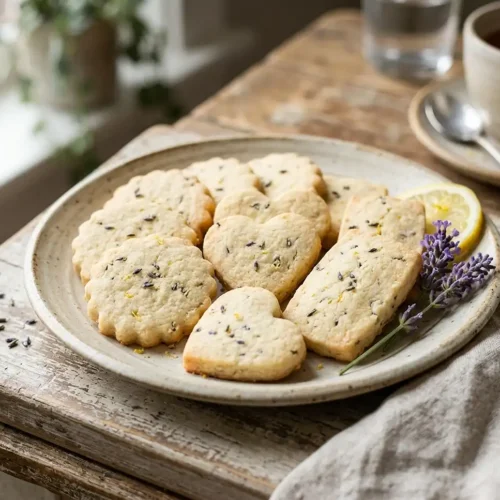
Gluten-Free Lavender Lemon Shortbread
Equipment
- 2 cookie sheets
- Parchment paper
- Large mixing bowl
- Hand mixer or stand mixer
- Wooden spoon
- Rolling Pin
- Cookie cutters
- Thin spatula
- Cooling rack
- Microplane or zester
Ingredients
- ½ cup non-dairy butter at room temperature OR coconut oil, softened; use Earth Balance or Miyoko’s
- ½ cup maple syrup pure maple syrup, not pancake syrup
- ½ tsp pure vanilla extract
- ¼ tsp pure lemon extract
- 1 dash salt
- 2 ¼ cups gluten-free flour blend Pamela’s Artisan Flour Blend recommended; or DIY: 1½ cups brown rice flour + ½ cup tapioca starch + ¼ cup sweet rice flour + ½ tsp guar gum
- 1 lemon zest only
- ½ tbsp dried lavender flowers culinary lavender only; grind lightly in mortar and pestle
Instructions
- Preheat your oven to 350°F. Line 2 cookie sheets with parchment paper to prevent sticking and ensure even browning. Prepare a rolling area with two additional sheets of parchment paper, and have your cookie cutter(s) handy—spring shapes like flowers, butterflies, or simple circles work beautifully. If your kitchen is warm, place your lined baking sheets in the fridge while you prep the dough—this helps the cookies hold their shape better during baking.
- Place the room-temperature non-dairy butter in a large mixing bowl and whip it with a hand mixer or stand mixer on medium-high speed for 2-3 minutes until it’s light, fluffy, and creamy. This step is crucial for creating tender cookies—under-creamed butter leads to dense, hard cookies. The butter should look pale and airy, almost like soft buttercream frosting, and smell rich and slightly sweet.
- Add the maple syrup, vanilla extract, lemon extract, and a dash of salt to the whipped butter. Mix once again on medium speed for 1-2 minutes to combine everything thoroughly. The mixture will look smooth and glossy, like a thin glaze. Scrape down the sides of the bowl halfway through to make sure everything incorporates evenly—pockets of unmixed extract can create uneven flavor.
- Add the gluten-free flour blend, lemon zest, and dried lavender flowers to the bowl. Use a wooden spoon to mix gently until the flour is mostly incorporated and you see no dry pockets. The dough will look shaggy and slightly crumbly at this stage—this is normal.
- Get in there with your hands and mix everything together by working the dough for 2-3 minutes until you can shape it into a cohesive ball. Press and fold the dough repeatedly—this kneading activates the starches and helps bind everything together. The consistency should not be sticky but should press together easily when pinched. If the dough feels a little sticky, add 1-2 tablespoons more flour; if it’s a little dry and won’t hold together, add 1 tablespoon more maple syrup. Different flour blends vary in absorbency, so trust your hands more than the measuring cup.
- Shape the dough into 2 equal balls, then flatten each into a disk about 1 inch thick. This makes rolling easier and faster.
- Roll out one of the dough balls between two sheets of parchment paper to ⅓ to ½ inch thickness. Rolling between parchment prevents sticking without adding extra flour, which can make the cookies dry. Use even pressure and check frequently to make sure the dough isn’t sticking to the paper. The dough will smell like fresh lemon cake with a hint of floral perfume—subtle and sophisticated, not overpowering.
- Use a cookie cutter to cut out shapes, pressing straight down without twisting (twisting seals the edges and prevents clean cuts). Carefully peel away the excess dough and use a thin spatula to transfer the cut cookies to the prepared cookie sheets, spacing them ½ inch apart. They won’t spread as they bake, so you can fit quite a few on each sheet. If the dough gets too soft while cutting, pop it back in the fridge for 5 minutes to firm up—this makes transferring much easier.
- Gather up any dough scraps, press them together (don’t overwork them), and roll out again to cut more cookies. Repeat the entire process with the second dough ball until all dough is used up.
- Bake in the preheated oven for approximately 14-15 minutes, until the edges just begin to turn golden and the tops look set but not browned. Don’t overbake—these cookies will harden within minutes of cooling, so they should still look slightly soft when you remove them from the oven. Your kitchen will smell like a French patisserie—buttery, citrusy, and floral all at once.
- Remove the baking sheets from the oven and place them on a cooling rack (or just leave them on the stovetop). Allow the cookies to cool on the sheets for 10 minutes before transferring them to a wire rack—they’ll firm up as they cool. Enjoy them slightly warm or at room temperature with a cup of tea or coffee. These cookies are best on day one when they’re at peak tenderness, but they store beautifully for up to a week in an airtight container.