Gluten-Free Leg of Lamb with Mint
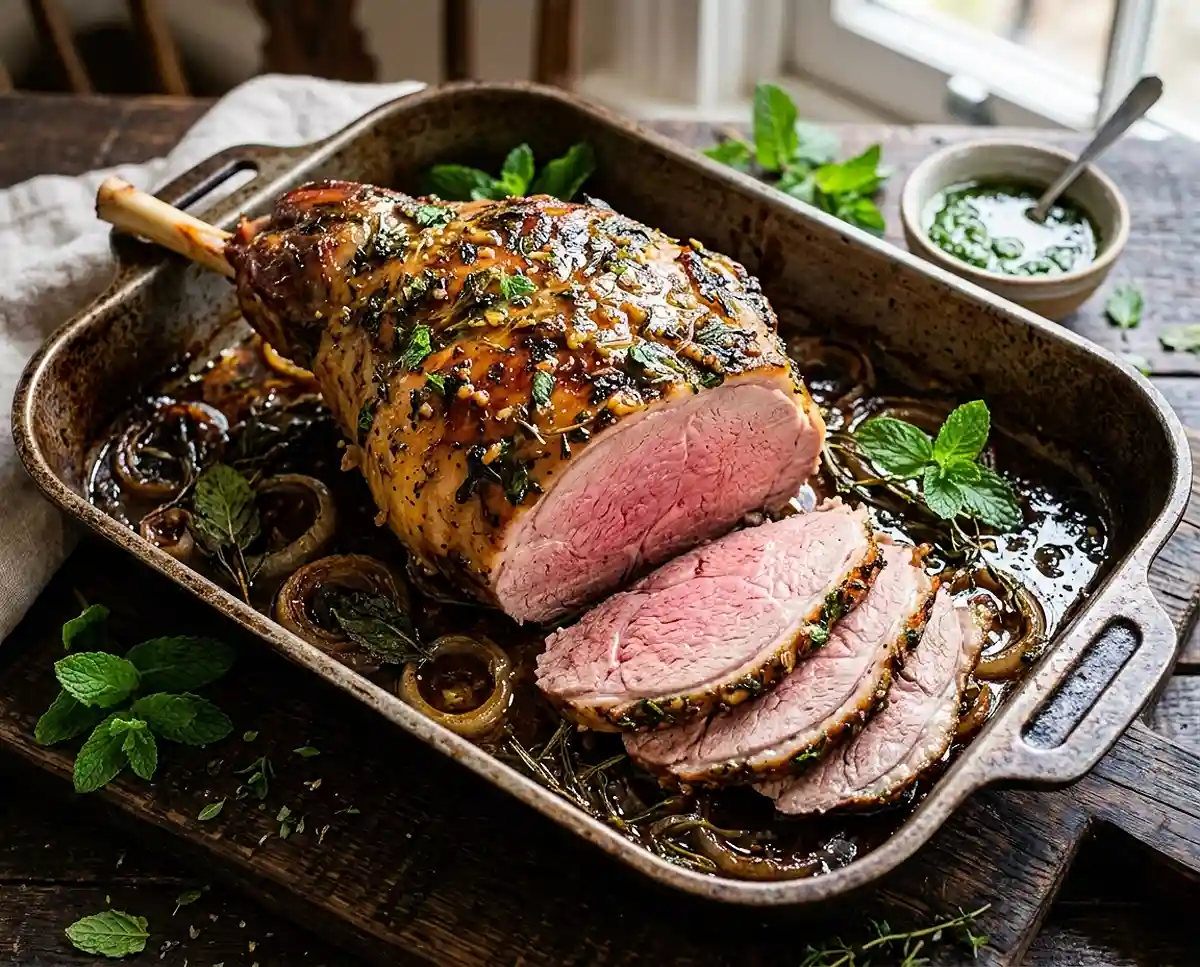
Gluten-Free Leg of Lamb with Mint—honey-Dijon glaze, slow-roasted perfection. Tender, flavorful Easter dinner ready in 6 hours!
Five years ago, I volunteered to host Easter dinner for the first time and decided to roast a leg of lamb to impress my extended family. I cranked the oven to 400°F thinking “hotter equals faster,” and three hours later I carved into a piece of meat so dry and tough it could’ve doubled as a doorstop.
That disaster taught me that gluten-free leg of lamb with mint isn’t about high heat or shortcuts—it’s about low-and-slow roasting at 230°F until the meat is so tender it falls off the bone with a gentle nudge from your fork.
Why You’ll Love This Gluten-Free Leg of Lamb
- Melt-in-your-mouth tender texture that requires zero effort to chew—the low 230°F oven breaks down collagen slowly without drying out the meat
- Naturally gluten-free with no substitutions needed—Dijon mustard, honey, fresh mint, and chicken stock create a flavor-packed glaze without any wheat-based ingredients
- Hands-off cooking method that gives you six hours to prep sides, set the table, and actually enjoy your guests instead of babysitting the stove
- Impressive Easter centerpiece that serves 8-10 people and makes everyone think you spent days in the kitchen when you only spent 15 minutes on active prep
The Secret to Perfect Gluten-Free Leg of Lamb
Low-and-slow roasting at 230°F breaks down tough muscle fibers without drying out the meat. Lamb leg is a working muscle with lots of connective tissue that turns tough and chewy when cooked quickly at high heat. According to Serious Eats’ roasting science guide, cooking lamb at temperatures below 250°F gives collagen time to convert into gelatin, creating that fall-apart tender texture while keeping the meat juicy and pink inside.
Basting 3-4 times during the six-hour roast creates a caramelized crust. Each time you drizzle the honey-Dijon glaze over the lamb, the sugars in the honey caramelize slightly and build up layers of flavor and color. This technique also keeps the surface moist and prevents the outer layer from drying out during the long cooking time.
Fresh mint in both the marinade and the roasting pan infuses every bite. Mint is the classic pairing with lamb because its bright, cooling flavor cuts through the richness of the meat. Placing fresh mint sprigs under the lamb and mixing chopped mint into the glaze ensures the herb’s essential oils permeate the meat from both the inside and outside as it roasts.
Starting with a bed of onions and mint prevents the bottom from burning. The sliced onions and mint sprigs create a protective layer between the meat and the hot roasting pan, preventing scorching while adding aromatic flavor to the pan drippings. These drippings, enriched with chicken stock, become the base for an incredible gluten-free gravy.
Table of Contents
Ingredients
| Ingredient | Amount | Notes |
|---|---|---|
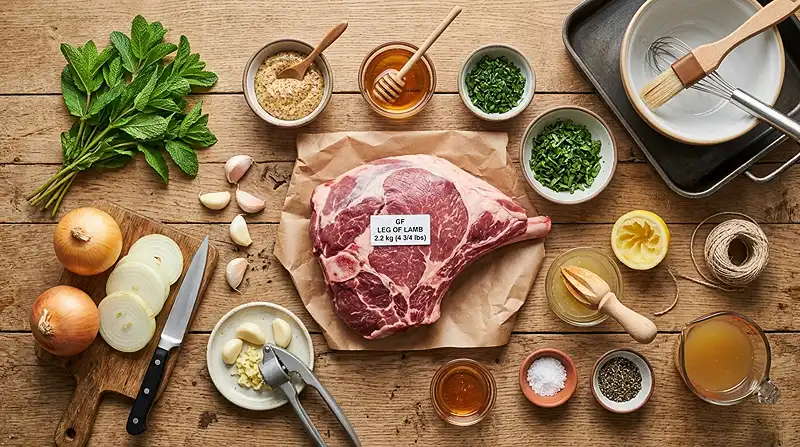
| Leg of lamb | 2.2 kg (4¾ lbs) | Bone-in or boneless; trim excess fat |
| Yellow onion | 1 large | Sliced into rings |
| Fresh mint | 1 bunch | About 18g; reserve some for garnish |
| Garlic cloves | 6 | Pressed or minced |
| Lemon juice | ½ lemon | Freshly squeezed, about 2 tablespoons |
| Dijon mustard | 45 ml (3 tablespoons) | Check label for gluten-free certification |
| Honey | 45 ml (3 tablespoons) | Pure honey, not corn syrup blend |
| Fresh mint (chopped) | 60 ml (4 tablespoons) | Finely chopped; from the same bunch |
| Salt | 2.5 ml (½ teaspoon) | Kosher or sea salt |
| Black pepper | To taste | Freshly ground |
| Chicken stock | 250 ml (1 cup) | Gluten-free; check labels carefully |
Pro Tip: Always check your Dijon mustard and chicken stock labels for hidden gluten. Some brands use wheat flour as a thickener or barley malt for flavoring. Brands like Grey Poupon Dijon and Pacific Foods chicken broth are reliably gluten-free.
Step-by-Step Instructions
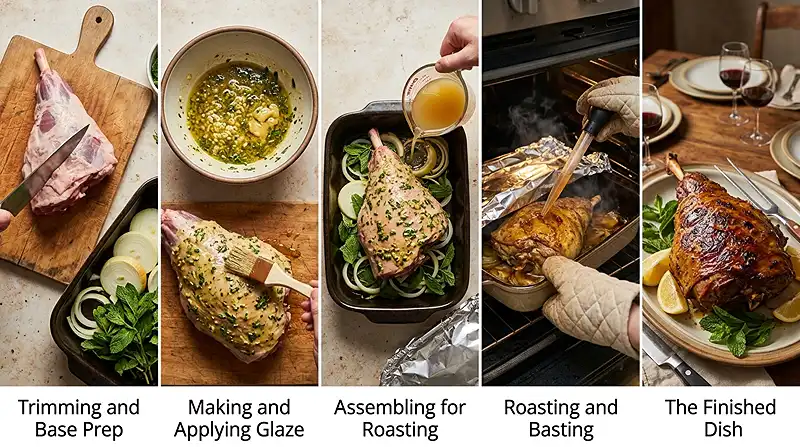
1. Trim the lamb and prep the roasting pan.
Using a sharp knife, carefully trim any excess fat from the surface of the leg of lamb—leave a thin layer (about ¼ inch) for flavor, but remove thick chunks that won’t render during the slow roast. Scatter the sliced onion rings and several sprigs of fresh mint across the bottom of a large roasting pan to create an aromatic bed.
2. Make the honey-Dijon-mint glaze.
In a medium bowl, combine the pressed or minced garlic, lemon juice, Dijon mustard, honey, finely chopped mint, salt, and freshly ground black pepper. Whisk everything together until smooth and emulsified—the mixture should look like a thick, glossy marinade that clings to a spoon.
3. Coat the lamb with the glaze.
Place the trimmed leg of lamb on top of the onion and mint bed in the roasting pan. Use a basting brush or your hands (wear food-safe gloves) to spread the honey-Dijon-mint glaze evenly over the entire surface of the lamb, making sure every inch is coated. Get the glaze into any crevices and folds in the meat for maximum flavor.
4. Add the chicken stock and cover.
Pour the chicken stock into the bottom of the roasting pan around (not over) the lamb—this creates steam and keeps the meat moist while also forming the base of your pan gravy. Cover the roasting pan tightly with aluminum foil or a fitted lid to trap the moisture inside.
5. Slow roast at 230°F for 6 hours.
Place the covered roasting pan on the center rack of your oven preheated to 110°C (230°F). Set a timer for 6 hours and resist the urge to open the oven door frequently—each time you open it, you lose precious heat and moisture. The low temperature will gently break down the connective tissue, transforming the lamb into something that’s impossibly tender and juicy.
6. Baste 3-4 times during roasting.
Every 90 minutes to 2 hours, carefully remove the roasting pan from the oven, uncover it, and use a large spoon or basting bulb to drizzle the pan juices over the top of the lamb. This basting process builds up layers of flavor and helps create that beautiful caramelized crust. Man, oh man… the smell of honey, garlic, and mint wafting through your kitchen during those basting sessions is pure heaven. Re-cover the pan each time and return it to the oven.
7. Check for doneness and rest.
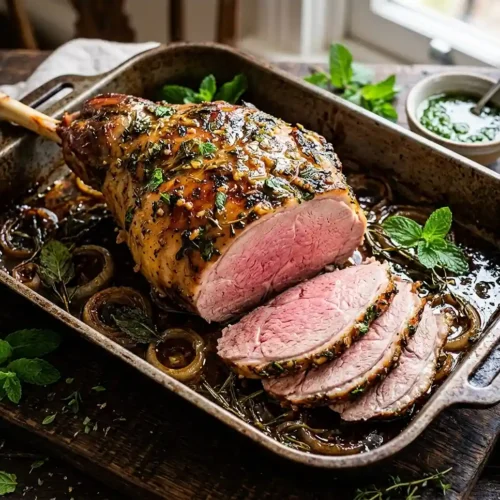
After 6 hours, the lamb should be fork-tender—you should be able to pull apart the meat easily with two forks. An instant-read thermometer inserted into the thickest part should read 145°F for medium-rare or 160°F for medium. Transfer the lamb to a cutting board, tent it loosely with foil, and let it rest for 15-20 minutes before carving. This resting period allows the juices to redistribute throughout the meat instead of running out onto the cutting board.
8. Make a quick pan gravy (optional).
While the lamb rests, strain the pan drippings through a fine-mesh sieve into a small saucepan, pressing on the onions and mint to extract all the flavor. Skim off excess fat from the surface, then simmer the liquid over medium heat for 5-10 minutes until it reduces slightly and thickens. Season with salt and pepper to taste—this makes an incredible gluten-free gravy to drizzle over sliced lamb.
Make It Your Own (Substitutions & Variations)
Try different herb combinations. While mint is the classic pairing, rosemary and thyme create a more savory, Mediterranean-style roast lamb. Use the same quantities (3 tablespoons chopped fresh rosemary and 1 tablespoon fresh thyme) in place of the mint, and add a splash of red wine to the chicken stock for depth.
Make it dairy-free (it already is!). This leg of lamb gluten free recipe is naturally dairy-free as written—just double-check that your Dijon mustard doesn’t contain any milk products (most don’t, but always verify). Serve it with dairy-free mashed potatoes and roasted vegetables for a completely allergen-friendly feast.
Add Middle Eastern spices for a different flavor profile. Well… if you want to take this lamb in a more exotic direction, mix 1 teaspoon ground cumin, ½ teaspoon smoked paprika, and ¼ teaspoon cinnamon into the honey-Dijon glaze. The warm spices pair beautifully with lamb and create a dish that feels more Moroccan than British.
Use lamb shoulder instead of leg. Lamb shoulder is fattier and even more forgiving during long, slow cooking—it’s virtually impossible to dry out. Use the exact same method and timing; the shoulder will fall apart into succulent shreds that are perfect for serving over rice or in pita pockets.
Make it in a slow cooker. If you don’t want to tie up your oven for six hours, prepare the lamb the same way but cook it in a large slow cooker on low for 8-10 hours. The texture will be similar, though you’ll miss out on some of the caramelization that happens in the oven.
Common Problems & Solutions
Problem: My lamb is tough and chewy, not tender.
Solution: You either cooked it at too high a temperature or didn’t cook it long enough. Lamb leg needs the full six hours at 230°F to break down the collagen—rushing it at 350°F for 2-3 hours will give you tough, dry meat. If your oven runs hot, use an oven thermometer to verify the actual temperature and adjust accordingly.
Problem: The outside is burnt but the inside is undercooked.
Solution: Your oven temperature was too high, or you forgot to cover the roasting pan. Always cover the pan tightly with foil or a lid to trap steam and prevent the surface from burning. If you want more browning at the end, uncover the pan for the last 30 minutes and raise the temperature to 350°F to caramelize the glaze.
Problem: The pan drippings are too salty or too bland.
Solution: Your chicken stock was either too salty or underseasoned. Always taste your stock before adding it to the pan, and adjust the salt in the recipe accordingly. If the drippings are too salty, dilute them with a bit of water or unsalted stock; if they’re bland, simmer them down to concentrate the flavors and season with salt and pepper.
Problem: The honey-Dijon glaze slid off the lamb during cooking.
Solution: You applied the glaze to wet meat, or you didn’t pat the lamb dry before coating it. Always pat the surface of the meat completely dry with paper towels before spreading the glaze—moisture prevents the glaze from adhering. You can also score the fat cap lightly with a knife to help the glaze penetrate better.
Problem: The meat is falling apart too much and looks messy.
Solution: That’s actually a sign of perfectly cooked lamb! If you want cleaner slices for presentation, reduce the cooking time by 30-60 minutes. The meat will still be tender but will hold its shape better when carved. For family-style serving, embrace the shredded texture—it’s fork-tender and incredibly flavorful.
Storage & Meal Prep
| Method | Duration | Notes |
|---|---|---|
| Counter | Up to 2 hours | Cover loosely; best served warm |
| Refrigerator | 3-4 days | Store in airtight container; reheat gently |
| Freezer | 2-3 months | Wrap slices tightly in foil, then freezer bag |
To reheat leftover lamb without drying it out, place slices in a baking dish with a few tablespoons of the reserved pan drippings or chicken stock, cover tightly with foil, and warm in a 300°F oven for 15-20 minutes. Microwaving works in a pinch—heat at 50% power in 30-second bursts to prevent toughening.
Meal prep tip: Leftover lamb is incredible sliced thin for sandwiches, chopped into grain bowls, or shredded and mixed into gluten-free pasta with the pan gravy. You can also freeze individual portions with some of the cooking liquid for quick weeknight dinners later.
Gluten-Free Leg of Lamb with Mint FAQs
Can I use dried mint instead of fresh?
Fresh mint is strongly recommended because dried mint loses much of its bright, aromatic flavor and can taste dusty or medicinal. If you absolutely must use dried, reduce the amount to 1 tablespoon (dried herbs are more concentrated) and expect a less vibrant flavor in the final dish.
What’s the best internal temperature for lamb?
For medium-rare lamb, aim for 145°F in the thickest part; for medium, go to 160°F. According to the USDA’s safe minimum cooking temperatures, lamb is safe to eat at 145°F with a 3-minute rest time, though some people prefer it cooked to 160°F for a less pink center.
Can I make this without honey?
Yes, substitute pure maple syrup or agave nectar in the same amount (3 tablespoons) for the honey. The flavor will be slightly different—maple adds a caramel note while agave is more neutral—but the glaze will still caramelize beautifully and create that sticky, flavorful crust.
How do I know when the lamb is done without a thermometer?
The meat should be fork-tender and pull apart easily when you insert a fork and twist gently. If you meet resistance or the meat feels tough, it needs more time. After six hours at 230°F, the lamb should practically fall off the bone with minimal effort.
Can I cook this faster at a higher temperature?
You can, but you’ll sacrifice tenderness. Roasting at 350°F for 2-3 hours will cook the lamb through, but it won’t have that melt-in-your-mouth texture that comes from the slow breakdown of collagen. If you’re in a rush, use a pressure cooker or Instant Pot—cook on high pressure for 60-75 minutes for similarly tender results.
Serving Suggestions
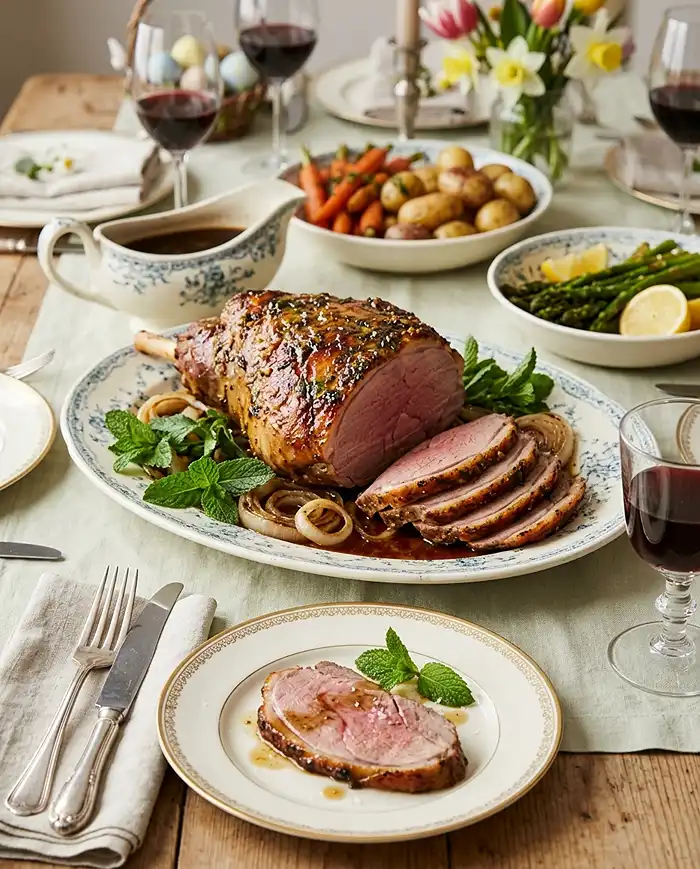
Serve this gluten-free leg of lamb with mint as the star of your Easter dinner table, surrounded by roasted spring vegetables, creamy mashed potatoes, and a crisp green salad. The lamb pairs beautifully with roasted asparagus, honey-glazed carrots, or garlic green beans—anything that highlights the season’s freshness. Don’t forget to drizzle the pan gravy over everything for maximum flavor.
For a complete gluten-free Easter menu, start with gluten-free chia pudding parfaits as a light appetizer, serve the lamb with your favorite sides, and finish with gluten-free Dubai chocolate bars for a decadent dessert. If you want to add a seafood option for guests who don’t eat red meat, gluten-free Tuscan butter salmon makes an elegant alternative.
Ready to Roast Your Best Leg of Lamb?
This leg of lamb gluten free recipe has saved Easter dinner at our house more times than I can count—it’s foolproof, impressive, and gives you hours of hands-off time to spend with family instead of stressing in the kitchen. The honey-Dijon-mint glaze creates a flavor combination that’s both classic and crave-worthy, and that melt-in-your-mouth texture never fails to wow first-time tasters.
Try this roast lamb recipe this spring and let me know in the comments how it turned out—did you stick with the classic mint, or did you experiment with rosemary and wine? Pin this to your gluten-free Easter dinner board on Pinterest so you can find it again when the holiday rolls around, and don’t forget to rate it below if it becomes your new go-to centerpiece!
Gluten-Free Leg of Lamb with Mint
Equipment
- Large roasting pan with lid or aluminum foil
- Sharp knife
- Medium mixing bowl
- Whisk
- Basting brush
- Instant-read thermometer
- Large spoon or basting bulb
- Cutting board
- Fine-mesh sieve (for gravy)
- Small saucepan (for gravy)
Ingredients
- 2.2 kg leg of lamb about 4¾ lbs; bone-in or boneless
- 1 yellow onion large, sliced into rings
- 1 bunch fresh mint about 18g; reserve some for garnish
- 6 garlic cloves pressed or minced
- ½ lemon juiced; about 2 tablespoons
- 45 ml Dijon mustard 3 tablespoons; check for gluten-free certification
- 45 ml honey 3 tablespoons; pure honey
- 60 ml fresh mint 4 tablespoons, finely chopped
- 2.5 ml salt 1/2 teaspoon; kosher or sea salt
- black pepper to taste, freshly ground
- 250 ml chicken stock 1 cup; gluten-free certified
Instructions
- Using a sharp knife, carefully trim any excess fat from the surface of the leg of lamb—leave a thin layer (about ¼ inch) for flavor, but remove thick chunks. Scatter the sliced onion rings and several sprigs of fresh mint across the bottom of a large roasting pan to create an aromatic bed.
- In a medium bowl, combine the pressed or minced garlic, lemon juice, Dijon mustard, honey, finely chopped mint, salt, and freshly ground black pepper. Whisk everything together until smooth and emulsified—the mixture should look like a thick, glossy marinade.
- Place the trimmed leg of lamb on top of the onion and mint bed in the roasting pan. Use a basting brush or your hands to spread the honey-Dijon-mint glaze evenly over the entire surface of the lamb, making sure every inch is coated.
- Pour the chicken stock into the bottom of the roasting pan around (not over) the lamb. Cover the roasting pan tightly with aluminum foil or a fitted lid to trap moisture inside.
- Place the covered roasting pan on the center rack of your oven preheated to 110°C (230°F). Roast for 6 hours. Every 90 minutes to 2 hours, carefully remove the pan, uncover, and baste the lamb by drizzling the pan juices over the top with a large spoon. Re-cover and return to the oven after each basting.
- After 6 hours, check that the lamb is fork-tender and pulls apart easily. An instant-read thermometer inserted into the thickest part should read 145°F for medium-rare or 160°F for medium. Transfer the lamb to a cutting board, tent loosely with foil, and let rest for 15-20 minutes before carving.
- Optional: While the lamb rests, strain the pan drippings through a fine-mesh sieve into a small saucepan, pressing on the onions and mint. Skim excess fat, then simmer over medium heat for 5-10 minutes until slightly thickened. Season with salt and pepper to taste for gluten-free gravy.