Gluten-free Lemon Blueberry Pound Cake
Gluten-Free Lemon Blueberry Pound Cake with bright citrus, juicy berries, and sweet glaze. Dense, bakery-style texture—perfect for spring gatherings!
Two springs ago, I baked a lemon blueberry pound cake for Easter brunch and watched it sink in the middle like a deflated balloon. I’d rushed the mixing, skipped the 10-minute rest, and pulled it out too early—basically broke every rule in the gluten-free baking handbook. That soggy, cratered disaster taught me that gluten-free lemon blueberry pound cake demands patience and precision, but when you get it right, it’s the most tender, citrus-forward cake you’ll ever make.
This recipe delivers that classic bakery-style pound cake texture—dense but not heavy, moist but not gummy—with bursts of fresh blueberries in every slice and a tangy lemon glaze that soaks into all the right places. Whether you’re hosting a Mother’s Day tea, looking for the perfect spring dessert, or just craving something bright and beautiful, this lemon blueberry pound cake gluten free version hits every note. You know… once you master the technique of coating the blueberries in flour and letting the batter rest, you’ll never go back to boxed cake mixes again.
Why You’ll Love This Gluten-Free Lemon Blueberry Pound Cake
- Dense, buttery crumb that slices cleanly without crumbling or falling apart—true pound cake texture that rivals any traditional recipe
- Bright, zingy lemon flavor from fresh zest and juice in both the cake and glaze, balanced by sweet bursts of blueberries in every bite
- 10-minute resting trick that allows the gluten-free flour to fully hydrate, preventing that gummy, undercooked texture that ruins so many gluten-free cakes
- Dairy-free friendly using vegan butter and sour cream, so everyone at your table can enjoy a slice without compromise
The Secret to Perfect Gluten-Free Lemon Blueberry Pound Cake
The 10-minute batter rest before baking is your insurance policy against gumminess. Gluten-free flour absorbs liquid more slowly than wheat flour, and this resting period allows the starches to hydrate fully and the xanthan gum to activate. According to King Arthur Baking’s gluten-free flour guide, letting batter rest improves texture and prevents that raw, gritty mouthfeel that plagues rushed gluten-free bakes.
Coating the blueberries in flour prevents them from sinking to the bottom. The light dusting of gluten-free flour creates a barrier that suspends the berries throughout the batter instead of letting gravity pull them down during baking. This simple step ensures you get blueberries in every slice, not just a purple puddle at the bottom of the loaf.
Low oven temperature (325°F) and long bake time create even, gentle heat. Pound cakes are dense by nature, and baking at a lower temperature for 70-75 minutes allows the center to cook through without over-browning the exterior. This dense cake needs time to set properly—rushing it at a higher temperature will give you a burnt crust and raw middle.
Creaming the butter and sugar for a full 5 minutes builds structure without gluten. This extended beating incorporates air into the batter, creating tiny pockets that expand in the oven and give the cake its characteristic fine, tight crumb. The Celiac Disease Foundation’s baking tips emphasize that mechanical leavening (beating air into batter) is crucial for gluten-free cakes since you can’t rely on gluten strands for lift.
Table of Contents
Ingredients
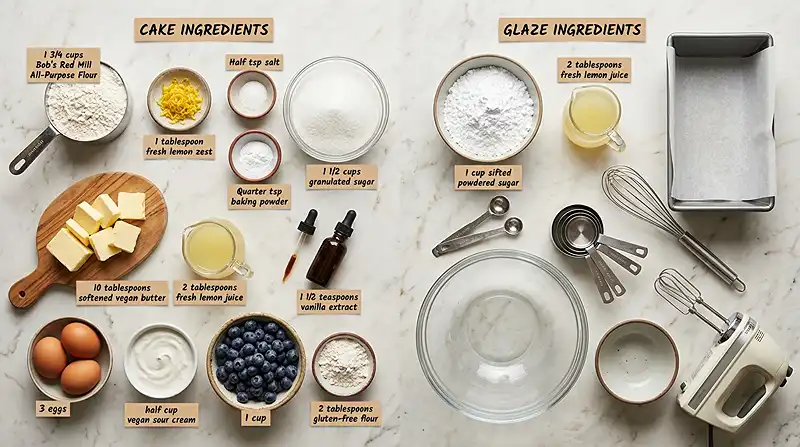
| For the Pound Cake | Amount |
|---|---|
| Gluten-free 1-to-1 flour blend (Bob’s Red Mill) | 1¾ cups + 2 tablespoons |
| Lemon zest | 1 tablespoon |
| Salt | ½ teaspoon |
| Baking powder | ¼ teaspoon |
| Baking soda | ⅛ teaspoon |
| Sugar | 1½ cups |
| Vegan butter (room temperature) | 10 tablespoons |
| Lemon juice | 2 tablespoons |
| Vanilla extract | 1½ teaspoons |
| Large eggs (room temperature) | 3 |
| Vegan sour cream | ½ cup |
| Fresh blueberries | 1 cup |
| For the Lemon Glaze | Amount |
|---|---|
| Powdered sugar (sifted) | 1 cup |
| Lemon juice | 2 tablespoons |
Pro Tip: Room-temperature ingredients are essential for proper emulsification. Cold eggs and butter won’t blend smoothly, creating a lumpy batter that bakes unevenly. Let your eggs and vegan butter sit at room temperature for 30-60 minutes before starting.
Step-by-Step Instructions
Prepare the Pan and Dry Ingredients
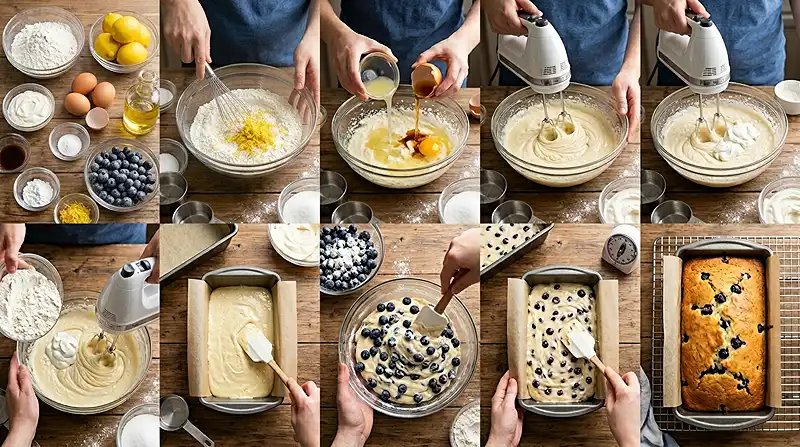
1. Preheat the oven and prep your loaf pan.
Set your oven to 325°F and line a 9×5-inch loaf pan with parchment paper, leaving overhang on the long sides to make lifting the cake out easier. Don’t skip the parchment—gluten-free cakes are delicate and can stick stubbornly to bare metal pans.
2. Whisk together the dry ingredients.
In a small bowl, combine 1¾ cups gluten-free flour, lemon zest, baking powder, baking soda, and salt. Whisk for 30 seconds until the lemon zest is evenly distributed throughout the flour—you should see tiny flecks of yellow throughout. Set this bowl aside while you work on the wet ingredients.
Mix the Batter
3. Cream the butter and sugar.
Add the vegan butter and sugar to the bowl of a stand mixer fitted with the paddle attachment (or use a large bowl and hand mixer). Beat on medium speed for a full 5 minutes, scraping down the bowl halfway through, until the mixture is light, fluffy, and pale in color—it should look almost like whipped frosting. This extended creaming is what gives your citrus cake its tender crumb.
4. Add the lemon juice and vanilla.
Pour in the lemon juice and vanilla extract, then mix on medium speed for 30 seconds until fully incorporated. The mixture may look slightly curdled from the acidic lemon juice—that’s normal and will smooth out when you add the eggs.
5. Beat in the eggs one at a time.
Add the eggs one at a time, beating for a full 60 seconds after each addition before adding the next. Scrape down the bowl after each egg to ensure everything is evenly mixed. The batter should look smooth, glossy, and ribbony when you lift the beaters—this is the emulsification happening in real time.
6. Alternate adding flour and sour cream.
Turn the mixer to the lowest speed. Add half of the flour mixture and mix just until no dry streaks remain, then add half of the vegan sour cream and mix until combined. Repeat with the remaining flour and sour cream, mixing on low speed just until smooth—overmixing at this stage activates the xanthan gum too much and creates a gummy texture.
Add the Blueberries and Bake
7. Spread a plain layer in the pan.
Spread about ¼ of the batter (roughly 1 cup) in an even layer in the bottom of your prepared loaf pan. This plain layer on the bottom prevents blueberries from sinking all the way to the bottom and ensures every slice has an even distribution of berries.
8. Fold in the flour-coated blueberries.
In a small bowl, toss the fresh blueberries with the remaining 2 tablespoons of gluten-free flour until each berry is lightly coated. Gently fold the coated blueberries into the remaining cake batter using a spatula—use a folding motion (cutting down through the center and sweeping up the sides) to avoid crushing the berries.
9. Let the batter rest for 10 minutes.
Spread the blueberry batter over the plain layer in the loaf pan, smoothing the top with a spatula. Let the filled pan sit at room temperature for 10 minutes before baking. This rest period allows the gluten-free flour to absorb the liquid fully, preventing that gummy, underbaked texture that plagues rushed gluten-free cakes.
10. Bake low and slow.
Bake in the preheated 325°F oven for 70-75 minutes, until a toothpick inserted into the center comes out clean or with just a few moist crumbs clinging to it. The top should be deeply golden brown and spring back lightly when touched—if it jiggles like jelly, it needs more time. Well… if you’re worried about over-browning, loosely tent the top with foil after 50 minutes.
11. Cool in the pan, then turn out.
Remove the cake from the oven and let it cool in the pan for 10 minutes on a wire rack. After 10 minutes, use the parchment overhang to lift the cake out of the pan and transfer it to the cooling rack. Let it cool completely (at least 1 hour) before glazing—warm cake will cause the glaze to soak in too much instead of creating that beautiful glossy coating.
Make the Lemon Glaze
12. Whisk together the glaze ingredients.
In a small bowl, whisk together the sifted powdered sugar and 2 tablespoons lemon juice until smooth and runny—it should be thin enough to drizzle but thick enough to cling to the cake. If it’s too thick, add lemon juice ½ teaspoon at a time; if it’s too thin, add more powdered sugar 1 tablespoon at a time.
13. Glaze the cooled cake.
Pour the lemon glaze over the top of the completely cooled cake, letting it drip down the sides naturally. Use a pastry brush to spread any pooled glaze on top and to coat the sides evenly. Let the glaze dry completely (about 30 minutes) before slicing—this sets it into that crackly, sweet coating that makes each slice look bakery-perfect.
Make It Your Own (Substitutions & Variations)
Swap the blueberries for other berries or fruit. Fresh raspberries, diced strawberries, or blackberries all work beautifully in this berry cake base—just make sure to toss them in flour the same way to prevent sinking. Frozen berries work too, but don’t thaw them first or they’ll bleed too much purple juice into the batter.
Make it fully dairy-free or use regular dairy. This recipe already uses vegan butter and sour cream, making it mostly dairy-free (the eggs are the only animal product). If you don’t need it vegan, you can use regular butter and full-fat sour cream for an even richer flavor. You know… I’ve tried both versions dozens of times, and honestly, the vegan butter version is so good that most people can’t tell the difference.
Try different citrus flavors. Swap the lemon zest and juice for lime, orange, or even grapefruit for a different twist on this citrus cake. Orange pairs especially well with cranberries or chocolate chips instead of blueberries, while lime is incredible with fresh strawberries.
Add a cream cheese swirl. Before adding the blueberry batter, drop spoonfuls of sweetened cream cheese (4 oz cream cheese mixed with ¼ cup sugar and 1 egg) on top of the plain layer, then swirl gently with a knife. Pour the blueberry batter over top and bake as directed for a lemon-blueberry-cheesecake hybrid.
Make it into muffins. Divide the batter among 12 lined muffin cups, filling each about ¾ full. Bake at 350°F for 22-25 minutes until a toothpick comes out clean. You’ll get tender, domed muffins perfect for breakfast or brunch.
Common Problems & Solutions
Problem: My cake sank in the middle.
Solution: You either opened the oven door too early or didn’t bake it long enough. Gluten-free cakes are more fragile than traditional cakes during baking, and any sudden temperature drop can cause them to collapse. Don’t open the oven door until at least 60 minutes have passed, and make sure the center is fully set (toothpick comes out clean) before removing it.
Problem: The texture is gummy or underbaked.
Solution: You skipped the 10-minute rest before baking or pulled the cake out too early. That resting period is essential for the gluten-free flour to hydrate properly—without it, the center stays wet and gummy no matter how long you bake it. Always let the batter rest, and bake until a toothpick comes out with just a few moist crumbs, not wet batter.
Problem: All my blueberries sank to the bottom.
Solution: You forgot to toss them in flour, or your batter was too thin. The flour coating helps suspend the berries in the thick batter—without it, they sink like stones. If your batter looks soupy instead of thick and scoopable, your flour blend may not have enough xanthan gum, or you didn’t let it rest long enough to thicken.
Problem: The cake is dry and crumbly.
Solution: You overbaked it or used too much flour. Man, oh man… it’s tempting to leave it in longer because gluten-free cakes take so long to bake, but once that toothpick comes out clean, it’s done. An extra 5-10 minutes turns it from moist to sawdust. Also, make sure you’re measuring flour correctly—scoop and level, don’t pack it into the measuring cup.
Problem: The glaze is too thick or won’t stick.
Solution: If it’s too thick, add more lemon juice ½ teaspoon at a time until it’s pourable. If it slides right off the cake, your cake was still too warm when you glazed it—always wait until it’s completely cool to the touch. You can also add a tablespoon of corn syrup to the glaze to help it stick and stay glossy.
Storage & Meal Prep
| Method | Duration | Notes |
|---|---|---|
| Counter | 3-4 days | Cover tightly with plastic wrap or store in airtight container |
| Refrigerator | 5-7 days | Bring to room temperature 30 minutes before serving for best texture |
| Freezer | 2-3 months | Wrap unglazed cake tightly in plastic wrap, then foil; glaze after thawing |
This dense cake actually tastes better on day two after the flavors have melded together and the glaze has fully soaked into the top. Store it at room temperature for the first few days, then transfer to the fridge if you need to keep it longer.
Make-ahead tip: Bake the cake up to 2 days in advance and store it wrapped tightly at room temperature. Make the glaze and drizzle it on the day you plan to serve for the freshest look and brightest lemon flavor.
Gluten-free Lemon Blueberry Pound Cake FAQs
Can I use regular all-purpose flour instead of gluten-free?
Yes, use 1½ cups (180 grams) of regular all-purpose flour and skip the 10-minute rest—regular flour doesn’t need time to hydrate. The texture will be slightly more tender and less dense than the gluten-free version, but the flavor will be identical.
What’s the best gluten-free flour for this pound cake?
Bob’s Red Mill 1-to-1 Baking Flour or King Arthur Measure for Measure work best because they contain xanthan gum, which provides structure and prevents crumbling. Avoid single-grain flours like rice flour or almond flour—they won’t create the proper pound cake texture.
Can I make this without eggs?
You can try using 3 flax eggs (3 tablespoons ground flaxseed mixed with 9 tablespoons water, let sit 5 minutes) or a commercial egg replacer, but the texture will be denser and less fluffy. Eggs provide lift and structure in pound cakes, so vegan versions are always a bit heavier—still delicious, just different.
Why did my glaze absorb into the cake instead of staying on top?
Your cake was still warm when you glazed it. Pound cake needs to cool completely (at least 1 hour) or the glaze will soak in like syrup instead of forming that beautiful glossy coating on top. If you like the soaked look (some people do!), go ahead and glaze it warm—it’s not wrong, just different.
Can I use frozen blueberries?
Yes, but don’t thaw them first—toss them frozen with the flour and fold them into the batter. Thawed berries release too much juice and turn the batter purple. Frozen berries will add a few extra minutes to the bake time since they cool down the batter slightly.
Serving Suggestions
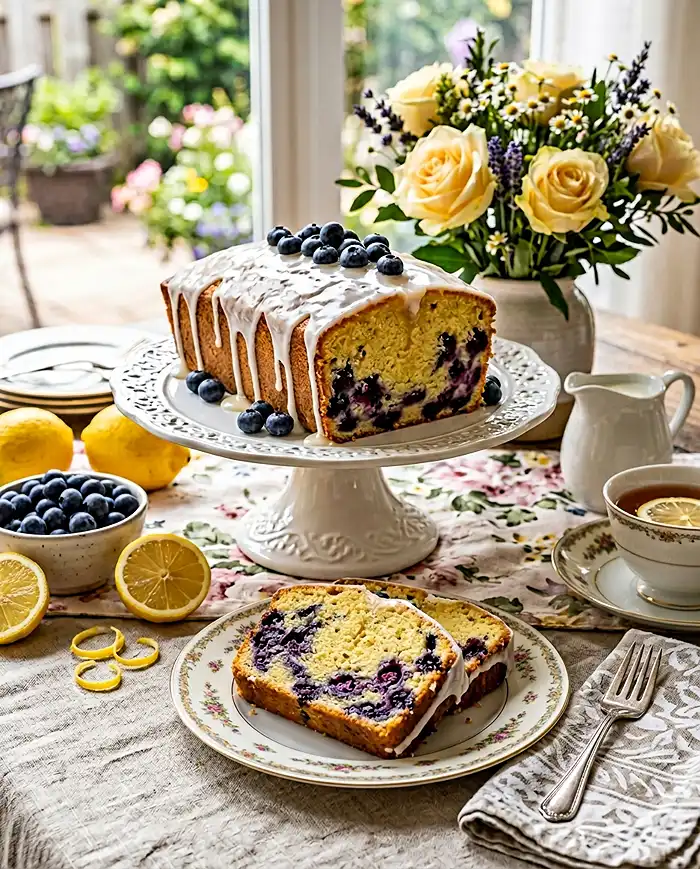
Serve this gluten-free lemon blueberry pound cake at room temperature or slightly warmed with a dollop of whipped cream or vanilla ice cream for an indulgent dessert. It’s perfect for Easter brunch, Mother’s Day tea, or any spring gathering when you want something bright and impressive. Pair it with fresh mint tea or coffee for a complete afternoon treat.
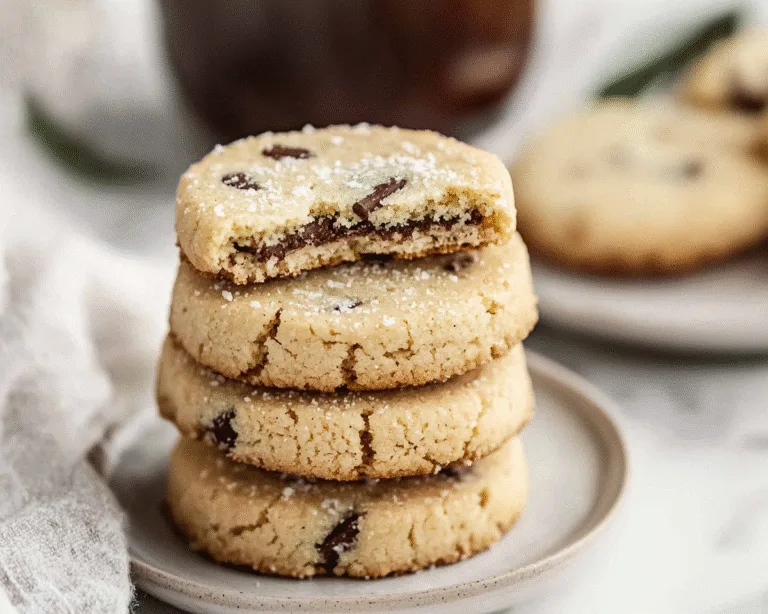
For a complete gluten-free dessert spread, serve slices alongside gluten-free copycat Crumbl sugar cookies and gluten-free protein cookie dough bites for variety. If you’re planning a full brunch menu, round it out with savory options like gluten-free Mediterranean stuffed chicken for a crowd-pleasing meal.
Ready to Bake Your Best Lemon Blueberry Pound Cake?
This lemon blueberry pound cake gluten free recipe has saved more spring brunches and potlucks than I can count—it’s my go-to when I need something that looks impressive, tastes incredible, and happens to be gluten-free without anyone noticing. The 10-minute rest and flour-coated berries are the two tricks that took me years to learn, so please don’t skip them!
Bake this cake this weekend and let me know in the comments which glaze variation you tried—classic lemon, or did you go wild with orange or lime? Pin this recipe to your gluten-free desserts board on Pinterest so you can find it again when spring rolls around, and don’t forget to rate it below if it becomes your new favorite citrus cake!
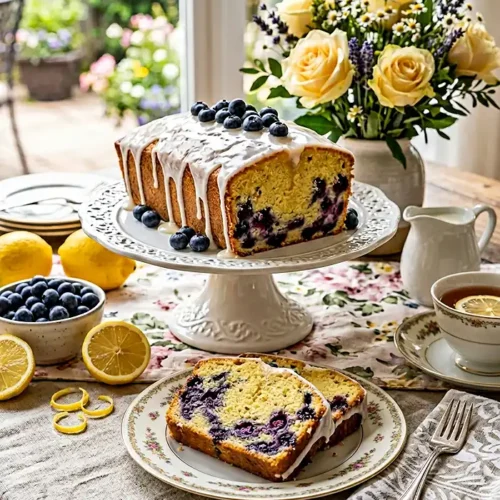
Gluten-Free Lemon Blueberry Pound Cake
Equipment
- 9×5-inch loaf pan
- Parchment paper
- Stand mixer or hand mixer
- Small Mixing Bowls (2)
- Whisk
- Spatula
- Wire cooling rack
- Toothpick
- Pastry brush
- Measuring cups and spoons
Ingredients
For the Pound Cake
- 1 ¾ cups gluten-free 1-to-1 flour blend Bob’s Red Mill recommended
- 1 tablespoon lemon zest
- ½ teaspoon salt
- ¼ teaspoon baking powder
- ⅛ teaspoon baking soda
- 1 ½ cups sugar
- 10 tablespoons vegan butter room temperature
- 2 tablespoons lemon juice
- 1 ½ teaspoons vanilla extract
- 3 large eggs room temperature
- ½ cup vegan sour cream
- 1 cup fresh blueberries
- 2 tablespoons gluten-free 1-to-1 flour blend for coating blueberries
For the Lemon Glaze
- 1 cup powdered sugar sifted
- 2 tablespoons lemon juice
Instructions
- Preheat the oven to 325°F and line a 9×5-inch loaf pan with parchment paper, leaving overhang on the long sides to make lifting the cake out easier.
- In a small bowl, combine 1¾ cups gluten-free flour, lemon zest, baking powder, baking soda, and salt. Whisk for 30 seconds until the lemon zest is evenly distributed throughout the flour. Set aside.
- Add the vegan butter and sugar to the bowl of a stand mixer fitted with the paddle attachment (or use a large bowl and hand mixer). Beat on medium speed for a full 5 minutes, scraping down the bowl halfway through, until the mixture is light, fluffy, and pale in color.
- Pour in the lemon juice and vanilla extract, then mix on medium speed for 30 seconds until fully incorporated. The mixture may look slightly curdled—this is normal.
- Add the eggs one at a time, beating for a full 60 seconds after each addition before adding the next. Scrape down the bowl after each egg. The batter should look smooth, glossy, and ribbony.
- Turn the mixer to the lowest speed. Add half of the flour mixture and mix just until no dry streaks remain, then add half of the vegan sour cream and mix until combined. Repeat with the remaining flour and sour cream, mixing on low speed just until smooth.
- Spread about ¼ of the batter (roughly 1 cup) in an even layer in the bottom of your prepared loaf pan. This plain layer prevents blueberries from sinking to the bottom.
- In a small bowl, toss the fresh blueberries with the remaining 2 tablespoons of gluten-free flour until each berry is lightly coated. Gently fold the coated blueberries into the remaining cake batter using a spatula with a folding motion to avoid crushing the berries.
- Spread the blueberry batter over the plain layer in the loaf pan, smoothing the top with a spatula. Let the filled pan sit at room temperature for 10 minutes before baking. This rest period allows the gluten-free flour to absorb the liquid fully.
- Bake in the preheated 325°F oven for 70-75 minutes, until a toothpick inserted into the center comes out clean or with just a few moist crumbs clinging to it. The top should be deeply golden brown and spring back lightly when touched. If worried about over-browning, loosely tent the top with foil after 50 minutes.
- Remove the cake from the oven and let it cool in the pan for 10 minutes on a wire rack. After 10 minutes, use the parchment overhang to lift the cake out of the pan and transfer it to the cooling rack. Let it cool completely (at least 1 hour) before glazing.
- For the glaze: In a small bowl, whisk together the sifted powdered sugar and 2 tablespoons lemon juice until smooth and runny. If too thick, add lemon juice ½ teaspoon at a time; if too thin, add more powdered sugar 1 tablespoon at a time.
- Pour the lemon glaze over the top of the completely cooled cake, letting it drip down the sides naturally. Use a pastry brush to spread any pooled glaze on top and to coat the sides evenly. Let the glaze dry completely (about 30 minutes) before slicing.