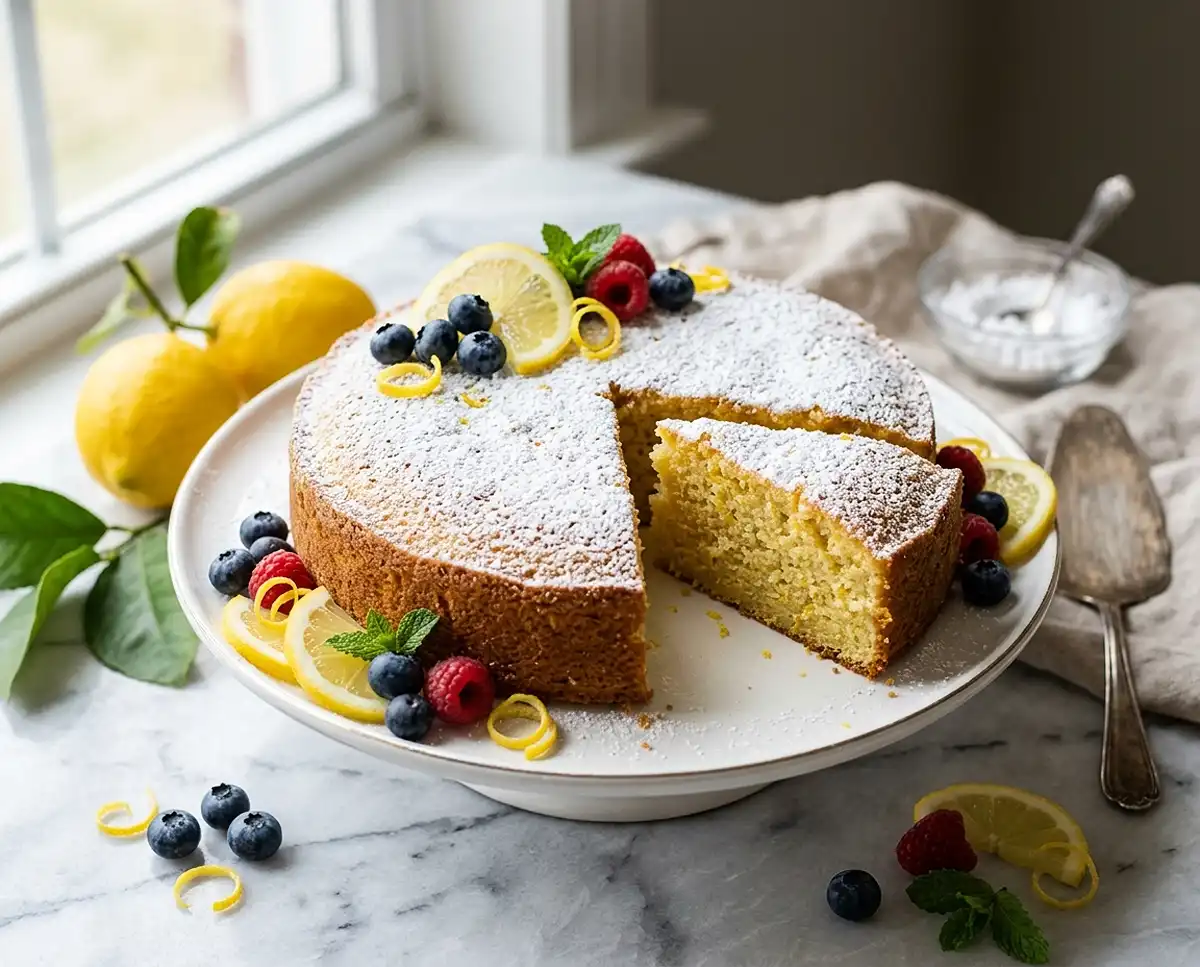
Gluten-Free Lemon Olive Oil Cake
Gluten-Free Lemon Olive Oil Cake with Greek yogurt & fresh lemon zest—moist, tender crumb ready in 40 minutes for an elegant dessert.
Four years ago, I baked this gluten-free lemon olive oil cake for my daughter’s spring birthday party without mentioning it was gluten-free. Three adults asked for the recipe before they even finished their slices, and one of them—a professional baker—refused to believe me when I said it contained no wheat flour until I showed her the empty bag of gluten-free flour in my pantry.
The magic of this Italian-inspired cake is that olive oil and Greek yogurt create a tender, springy crumb that stays incredibly moist for days—no dry, crumbly gluten-free texture here. The bright lemon flavor shines through every bite, and honestly, can you think of a more elegant dessert that requires just one bowl and comes together in under 10 minutes of actual work?
Why You’ll Love This Gluten-Free Lemon Olive Oil Cake
- Unbelievably moist texture: Olive oil and Greek yogurt combine to create a tender, almost pudding-like crumb that melts on your tongue—as soft as the inside of a brioche but with more richness and staying power.
- Simple one-bowl method: No mixer required, no complicated steps, just whisk everything together in one large bowl and pour into your pan—perfect for bakers who want bakery-quality results without the fuss.
- Naturally dairy-free option: The cake itself contains no butter or milk (just Greek yogurt, which can be swapped for dairy-free yogurt), making it easy to serve to guests with multiple dietary restrictions.
- Gets better with time: Unlike most cakes that dry out, this lemon olive oil cake actually improves after a day as the flavors meld and the olive oil keeps the crumb moist and tender—it’s the ultimate make-ahead dessert.
The Secret to Perfect Gluten-Free Lemon Olive Oil Cake
Olive oil replaces butter for superior moisture: Olive oil is a liquid fat (unlike solid butter), which means it coats the flour particles differently and creates a more tender, moist crumb that doesn’t harden when refrigerated. According to trusted baking science research, olive oil cakes stay fresh longer because the oil doesn’t solidify like butter does, keeping the texture soft for days.
Greek yogurt adds tang and structure: The acidity in Greek yogurt reacts with baking soda to create lift and a light, airy texture, while the protein and fat add richness and help the gluten-free flour bind together. Full-fat Greek yogurt works best because the extra fat content contributes to the cake’s tender crumb and prevents dryness.
Fresh lemon juice and zest deliver bright flavor: Using both lemon juice (for acidity and moisture) and lemon zest (for concentrated citrus oils) creates a double layer of lemon flavor that tastes fresh and vibrant instead of artificial. You know, the zest is where all the aromatic oils live, so don’t skip it—it’s what makes this cake taste like you’re sitting in an Italian lemon grove instead of eating a generic lemon dessert.
Precise leavening ratios prevent sinking: The combination of ¾ teaspoon baking soda and a scant ½ teaspoon baking powder (slightly less than a full half teaspoon) is carefully calibrated to lift the cake without over-rising and then collapsing. Too much baking soda or baking powder causes gluten-free cakes to rise too quickly, creating big air pockets that collapse in the oven, leaving you with a sunken center.
Table of Contents
Ingredients
Dry Ingredients:
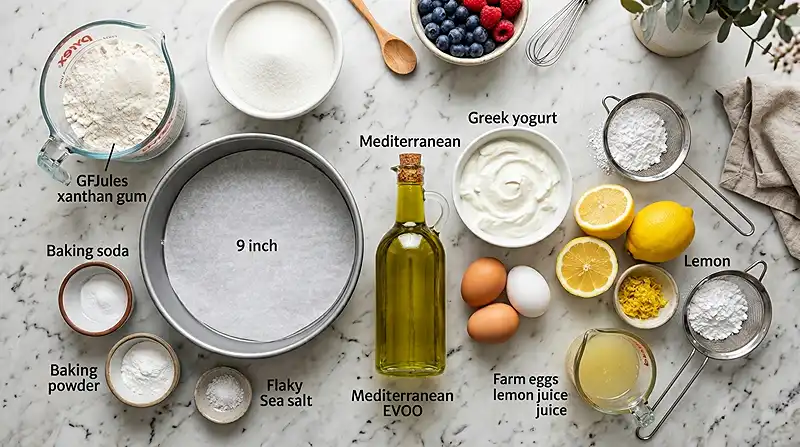
- 2 cups gluten-free all-purpose flour with xanthan gum (we used GF Jules)
- 1 cup granulated sugar
- ¾ teaspoon baking soda
- Scant ½ teaspoon baking powder (¼ teaspoon + ⅛ teaspoon for precision)
- ½ teaspoon salt
Wet Ingredients:
- 1 cup olive oil, plus more for the pan (extra virgin or regular)
- ¾ cup Greek yogurt (full-fat recommended)
- 3 large eggs, room temperature
- 5 tablespoons lemon juice (¼ cup + 1 tablespoon, from about 2 lemons)
- 4 teaspoons lemon zest (from 2 large lemons)
For Finishing:
- Powdered sugar for dusting
- Fresh berries (optional, for serving)
Note: Extra virgin olive oil gives a subtle, fruity olive oil flavor that some people love—if you prefer a more neutral taste, use regular olive oil which has been refined and has a milder flavor. Make sure your gluten-free flour blend contains xanthan gum; if it doesn’t, add 1 teaspoon xanthan gum to the dry ingredients.
Step-by-Step Instructions
1. Preheat and prep the pan
Preheat your oven to 350°F and lightly oil a 9-inch round cake pan with olive oil, making sure to coat the sides and bottom. Cut a round of parchment paper to fit the bottom of the pan, press it in, and oil the parchment as well—this double insurance guarantees the cake will release cleanly without sticking.
2. Mix the dry ingredients
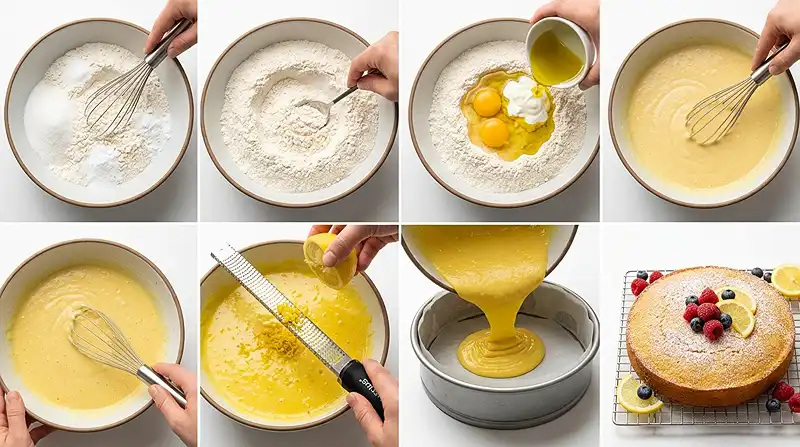
In a large mixing bowl, combine 2 cups gluten-free flour, 1 cup granulated sugar, ¾ teaspoon baking soda, scant ½ teaspoon baking powder, and ½ teaspoon salt. Whisk everything together for 30-45 seconds to evenly distribute the leavening agents and break up any lumps in the flour.
3. Create a well and add wet ingredients
Make a well (a large indentation) in the center of the dry ingredients and add 1 cup olive oil, ¾ cup Greek yogurt, and 3 room-temperature eggs. Using a whisk or wooden spoon, mix everything together from the center outward, gradually incorporating the dry ingredients into the wet until you have a thick, smooth batter with no dry pockets.
4. Add lemon juice and zest
Pour in 5 tablespoons fresh lemon juice and 4 teaspoons lemon zest. Mix gently just until the batter is smooth and uniform—you’ll smell that bright, citrusy aroma immediately. The batter will be fairly thick but pourable, similar to a muffin batter.
5. Bake with foil tenting
Pour the batter into your prepared 9-inch cake pan and smooth the top with a spatula. Bake for 30 minutes, then loosely cover the top with aluminum foil (to prevent over-browning) and continue baking for an additional 7-8 minutes (35-38 minutes total) until a toothpick inserted in the center comes out clean with just a few moist crumbs attached.
6. Cool properly
Let the cake cool in the pan for 30-45 minutes—this gives the structure time to set so it won’t break when you remove it. Turn the pan over onto a wire rack to release the cake, peel off the parchment paper, then use a second rack to flip it right-side up. Let it cool for at least another 30 minutes (or longer) before slicing—warm cake is too delicate and will compress when you cut it.
7. Finish and serve
Dust the cooled cake generously with powdered sugar just before serving. Serve as is for a simple, elegant dessert, or top with fresh berries (strawberries, blueberries, or raspberries) and a dollop of whipped cream or mascarpone for a more luxurious presentation.
Pro Tip: For maximum flavor, make this cake one day ahead and store it tightly wrapped at room temperature—the olive oil keeps it moist while the lemon flavor mellows and becomes more rounded and complex.
Make It Your Own
Use dairy-free yogurt: Replace Greek yogurt with thick dairy-free yogurt like coconut yogurt, cashew yogurt, or almond yogurt (avoid thin, watery varieties). The cake will be slightly less tangy but still moist and tender—just make sure your yogurt is unsweetened so the cake isn’t overly sweet.
Try different citrus flavors: Swap the lemon juice and zest for orange (for a sweeter, more mellow cake), lime (for a tart, tropical twist), or use a combination like lemon-lime or orange-lemon. Blood orange makes a stunning pink-hued cake that’s perfect for spring celebrations.
Add herbs or spices: Stir 2 tablespoons finely chopped fresh rosemary into the batter for a savory-sweet rosemary-lemon cake that pairs beautifully with afternoon tea. A pinch of cardamom or ½ teaspoon vanilla extract also complements the lemon flavor without overpowering it.
Make it into cupcakes or a loaf: Pour the batter into a lined muffin tin (fills about 12 standard cupcakes) and bake at 350°F for 18-22 minutes, or use a 9×5-inch loaf pan and bake for 50-55 minutes. Well, the cupcakes are perfect for portion control and pack beautifully in lunchboxes, while the loaf slices make elegant tea-time treats.
Create a lemon glaze: Whisk together 1 cup powdered sugar with 2-3 tablespoons lemon juice until smooth and pourable, then drizzle over the cooled cake for a sweeter, more glazed finish. Add a drop of yellow food coloring if you want that classic lemon cake look.
Common Problems & Solutions
Cake sinks in the middle after baking
You opened the oven door too early (before 25 minutes), or you used too much baking powder/baking soda which caused the cake to rise too fast and then collapse. Always wait until at least 25 minutes before checking, and measure your leavening agents precisely using the scant measurement for baking powder (slightly less than ½ teaspoon).
Texture is gummy or dense instead of light
Your gluten-free flour blend didn’t contain xanthan gum, or your eggs were cold from the refrigerator (cold eggs don’t emulsify properly with oil). Make sure you use a flour blend with xanthan gum already added, and let your eggs sit at room temperature for 30 minutes before baking so they mix smoothly into the batter.
Top browns too quickly before center is cooked
Your oven runs hot, or you forgot to tent with foil at the 30-minute mark. Man, oh man, covering the cake loosely with foil after 30 minutes is essential to prevent the top from over-browning while the center finishes baking—don’t skip this step or you’ll have a dark crust and a raw middle.
Cake sticks to the pan and breaks when removing
You didn’t oil the pan and parchment paper thoroughly enough, or you tried to remove the cake while it was still too warm. Always oil both the pan and the parchment paper generously, and let the cake cool for a full 30-45 minutes in the pan before attempting to turn it out—patience here saves your beautiful cake from disaster.
Lemon flavor is too subtle or tastes artificial
You used bottled lemon juice instead of fresh, or you skipped the lemon zest. Fresh lemon juice and zest are absolutely non-negotiable in this recipe—bottled juice tastes flat and artificial, while fresh juice has bright, vibrant acidity. The zest contains all the aromatic oils that give the cake its signature lemony perfection.
Storage & Meal Prep
| Method | Duration | Notes |
|---|---|---|
| Counter | 4-5 days | Wrap tightly in plastic wrap or store in airtight container |
| Refrigerator | 7-10 days | Bring to room temp 30 minutes before serving |
| Freezer | Up to 3 months | Wrap in plastic wrap, then foil; thaw at room temp |
Storage tips: Store the unfrosted cake (no powdered sugar yet) wrapped tightly in plastic wrap at room temperature for up to 5 days—the olive oil keeps it incredibly moist. Dust with powdered sugar just before serving so it doesn’t get absorbed into the cake and disappear.
Make-ahead strategy: Bake the cake 1-2 days before your event and store it wrapped at room temperature—it actually tastes better after a day as the flavors meld and the texture becomes even more tender. Freeze unfrosted slices individually wrapped for grab-and-go desserts or unexpected guests.
Gluten-Free Lemon Olive Oil Cake FAQs
Can I use regular all-purpose flour instead of gluten-free flour?
Yes, if you’re not gluten-free, substitute the 2 cups gluten-free flour with 1¾ cups regular all-purpose flour (gluten-free flour absorbs more liquid, so you need less regular flour). The texture will be slightly less tender but still moist and delicious, and you can skip the xanthan gum entirely since wheat flour provides its own structure.
What’s the best gluten-free flour blend for this lemon olive oil cake?
Use a high-quality 1-to-1 gluten-free flour blend that contains xanthan gum, like GF Jules, Bob’s Red Mill 1-to-1, or King Arthur Measure for Measure. Avoid rice flour-only blends (which can be gritty) or blends without xanthan gum (which will make the cake crumbly and dry). The blend should list multiple flours (rice, tapioca, potato starch) plus xanthan gum for the best texture.
Why does my cake taste too olive-oily?
You used a very strong, peppery extra virgin olive oil when the recipe works best with a mild, fruity extra virgin or a regular olive oil. For a more neutral flavor, choose light or regular olive oil (which has been refined and has a very mild taste), or replace up to half the olive oil with a neutral oil like avocado oil or vegetable oil while keeping at least ½ cup olive oil for moisture.
How do I know when the cake is done baking?
Insert a toothpick or cake tester into the center of the cake—it should come out clean or with just a few moist crumbs attached (not wet batter). The edges should pull away slightly from the pan, and the top should spring back when gently pressed. If you have an instant-read thermometer, the internal temperature should be 200-205°F when fully baked.
Can I make this cake in a different pan size?
Yes, you can use an 8-inch square pan (bake 35-40 minutes), a 9×5-inch loaf pan (bake 50-55 minutes), or a 12-cup muffin tin (bake 18-22 minutes). Adjust baking times accordingly and use the toothpick test to check for doneness—smaller portions bake faster, while deeper pans take longer than the original 9-inch round.
Serving Suggestions
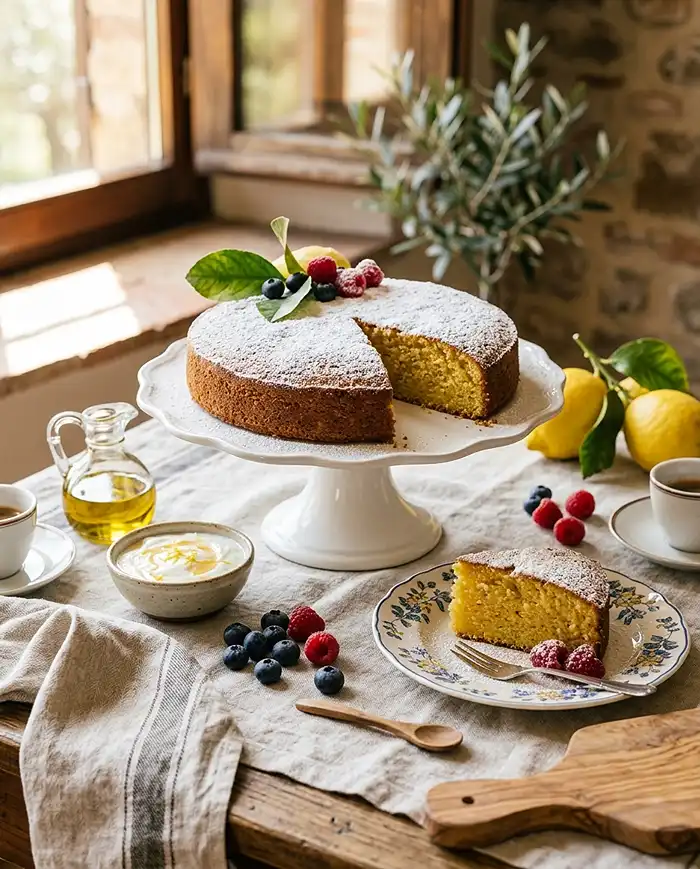
Serve this gluten-free lemon olive oil cake for spring and summer gatherings, Mother’s Day brunch, Easter dessert tables, or as an elegant finish to Italian-inspired dinners. The light lemon flavor pairs beautifully with fresh berries, a dollop of mascarpone cream, or a scoop of vanilla gelato for a restaurant-quality presentation that looks like you spent hours in the kitchen.
For a complete gluten-free dessert spread, pair the cake with gluten-free cinnamon sugar donuts and gluten-free red velvet cheesecake brownies, or serve it alongside gluten-free dairy-free matcha latte cookies for an afternoon tea that showcases the best of gluten-free baking.
Bake This Mediterranean-Inspired Cake Today
Give this gluten-free lemon olive oil cake a try this week and let me know if it becomes your new favorite spring dessert like it did for mine! Pin this recipe for your next special occasion, and drop a comment below about your favorite way to serve it.
Rate the recipe after you make it, and share photos of your beautiful lemon cake with the community—I love seeing everyone’s creative toppings. This cake proves that gluten-free baking can be just as elegant, moist, and crave-worthy as any traditional dessert.
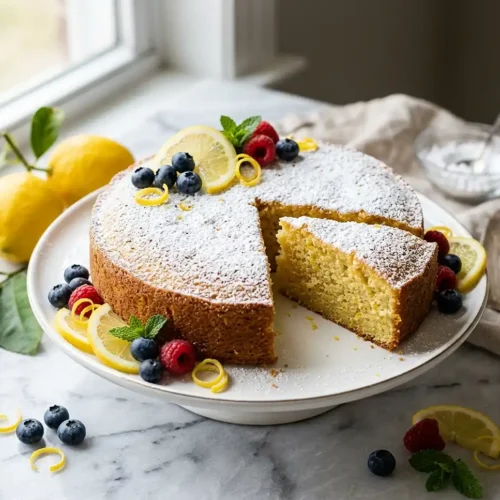
Gluten-Free Lemon Olive Oil Cake
Equipment
- 9-inch round cake pan
- Parchment paper
- Large mixing bowl
- Whisk or wooden spoon
- Measuring cups and spoons
- Zester or microplane
- Wire cooling rack
- Toothpick or Cake Tester
- Aluminum foil
- Spatula
Ingredients
Dry Ingredients
- 2 cups Gluten-free all-purpose flour with xanthan gum, we used GF Jules
- 1 cup Granulated sugar
- ¾ teaspoon Baking soda
- scant ½ teaspoon Baking powder ¼ teaspoon + ⅛ teaspoon for precision
- ½ teaspoon Salt
Wet Ingredients
- 1 cup Olive oil plus more for the pan, extra virgin or regular
- ¾ cup Greek yogurt full-fat recommended
- 3 Large eggs room temperature
- 5 tablespoons Lemon juice ¼ cup + 1 tablespoon, from about 2 lemons, fresh
- 4 teaspoons Lemon zest from 2 large lemons
For Finishing
- Powdered sugar for dusting
- Fresh berries optional, for serving
Instructions
- Preheat your oven to 350°F and lightly oil a 9-inch round cake pan with olive oil, making sure to coat the sides and bottom. Cut a round of parchment paper to fit the bottom of the pan, press it in, and oil the parchment as well—this double insurance guarantees the cake will release cleanly without sticking.
- In a large mixing bowl, combine 2 cups gluten-free flour, 1 cup granulated sugar, ¾ teaspoon baking soda, scant ½ teaspoon baking powder, and ½ teaspoon salt. Whisk everything together for 30-45 seconds to evenly distribute the leavening agents and break up any lumps in the flour.
- Make a well (a large indentation) in the center of the dry ingredients and add 1 cup olive oil, ¾ cup Greek yogurt, and 3 room-temperature eggs. Using a whisk or wooden spoon, mix everything together from the center outward, gradually incorporating the dry ingredients into the wet until you have a thick, smooth batter with no dry pockets.
- Pour in 5 tablespoons fresh lemon juice and 4 teaspoons lemon zest. Mix gently just until the batter is smooth and uniform—you’ll smell that bright, citrusy aroma immediately. The batter will be fairly thick but pourable, similar to a muffin batter.
- Pour the batter into your prepared 9-inch cake pan and smooth the top with a spatula. Bake for 30 minutes, then loosely cover the top with aluminum foil (to prevent over-browning) and continue baking for an additional 7-8 minutes (35-38 minutes total) until a toothpick inserted in the center comes out clean with just a few moist crumbs attached.
- Let the cake cool in the pan for 30-45 minutes—this gives the structure time to set so it won’t break when you remove it. Turn the pan over onto a wire rack to release the cake, peel off the parchment paper, then use a second rack to flip it right-side up. Let it cool for at least another 30 minutes (or longer) before slicing—warm cake is too delicate and will compress when you cut it.
- Dust the cooled cake generously with powdered sugar just before serving. Serve as is for a simple, elegant dessert, or top with fresh berries (strawberries, blueberries, or raspberries) and a dollop of whipped cream or mascarpone for a more luxurious presentation.