
Gluten-Free Lemon Poppy Seed Cake
This gluten-free lemon poppy seed cake is bright, tender, and bursting with citrus! Easy spring cake ready in 45 minutes with simple icing.
I’ll never forget the first time I made a gluten-free lemon poppy seed cake that actually turned out light and fluffy instead of dense and gummy. I’d tried at least five different recipes, and every single one turned into a brick that could double as a doorstop.
The breakthrough came when I discovered that letting the batter rest for 20-30 minutes before baking allows the rice flour to hydrate properly, eliminating that gritty texture that plagues so many gluten-free cakes.
This lemon poppy seed cake gluten free is everything you want in a spring dessert—bright and tangy with just enough sweetness, studded with crunchy poppy seeds, and topped with a silky lemon glaze that soaks into every bite.
You know what? The almond flour adds moisture and richness that keeps this cake tender for days, while the fresh lemon juice and zest create that bold citrus flavor that makes your whole kitchen smell like sunshine.
Why You’ll Love This Gluten-Free Lemon Poppy Seed Cake
- Perfectly moist crumb: The combination of almond flour and coconut oil creates a tender texture that doesn’t dry out after day one
- Beginner-friendly recipe: One-bowl mixing and simple ingredients mean anyone can nail this light lemon cake on the first try
- Naturally dairy-free: Uses plant-based milk and oil so it’s safe for multiple allergies beyond just gluten
- Beautiful presentation: That glossy lemon glaze dripping down the sides looks bakery-professional with zero effort
The Secret to Perfect Gluten-Free Lemon Poppy Seed Cake
Resting the batter eliminates grittiness: Allowing the mixed batter to sit for 20-30 minutes gives the rice flour time to absorb moisture and soften. According to trusted gluten-free baking science from America’s Test Kitchen, this hydration period dramatically improves texture in rice flour-based cakes.
Almond flour adds moisture and structure: The natural oils and protein in almond flour keep this spring cake tender while providing structure that prevents it from crumbling. It also contributes a subtle nutty undertone that complements the bright lemon flavor beautifully.
Fresh lemon juice and zest maximize flavor: Using both the juice and zest gives you layers of citrus flavor—the zest provides aromatic oils while the juice adds tanginess. Bottled lemon juice can’t compete with fresh for creating that vibrant, just-picked taste in your lemon poppy seed cake gluten free.
Room temperature ingredients mix smoothly: Cold eggs and oil don’t emulsify properly, leading to separated batter and dense texture. Bringing everything to room temperature ensures smooth mixing and maximum rise for your light lemon cake.
Table of Contents
Ingredients
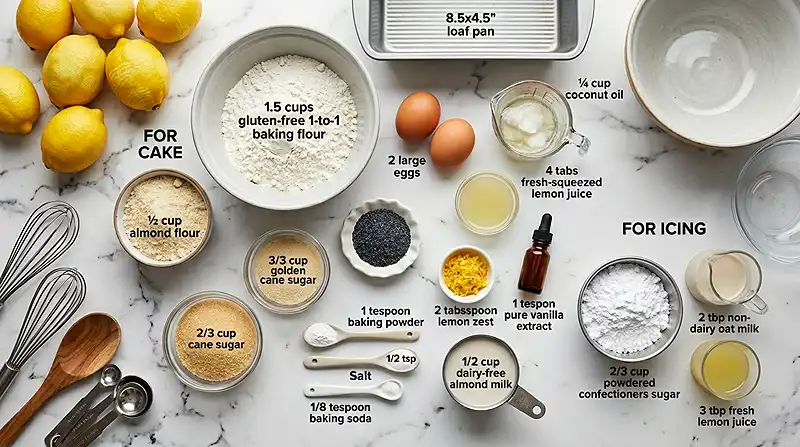
For the Cake:
| Ingredient | Amount | Notes |
|---|---|---|
| Gluten-free flour blend | 1½ cups | See notes for best blends |
| Almond flour | ½ cup | Not almond meal |
| Cane sugar | ⅔ cup | |
| Poppy seeds | 2 tablespoons | |
| Baking powder | 1 teaspoon | Aluminum-free |
| Baking soda | ½ teaspoon | |
| Salt | ⅛ teaspoon | |
| Large eggs | 2 | Room temperature |
| Coconut oil | ¼ cup | Or another neutral oil |
| Lemon juice | 4 tablespoons | Fresh only |
| Lemon zest | 2 tablespoons | About 2 lemons |
| Pure vanilla extract | 1 teaspoon | |
| Dairy-free milk | ½ cup |
For the Icing:
| Ingredient | Amount | Notes |
|---|---|---|
| Powdered sugar | ⅔ cup | |
| Non-dairy milk | 2 tablespoons | |
| Lemon juice | 3 tablespoons | Adjust for thickness |
Serves: 8-10 slices
Special Equipment: 9×5-inch loaf pan, cooling rack
Step-by-Step Instructions
Prep Your Pan and Oven
Preheat your oven to 350°F and generously grease a standard 9×5-inch bread loaf pan with gluten-free baking spray, coconut oil, or butter. Make sure to get into all the corners and up the sides—proper greasing prevents sticking and creates a beautiful golden crust on your gluten-free lemon poppy seed cake.
Pro Tip: Line the bottom with parchment paper for even easier removal. Just cut a strip that fits the length of the pan with enough overhang on the ends to use as handles.
Mix Dry Ingredients
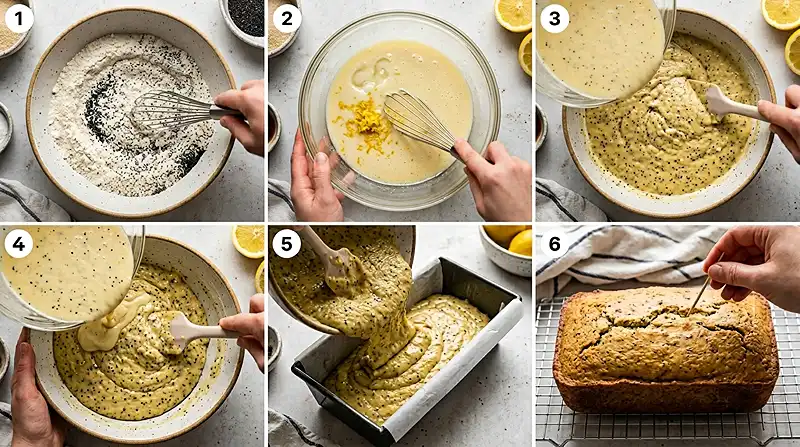
In a large mixing bowl, whisk together 1½ cups gluten-free flour blend, ½ cup almond flour, ⅔ cup cane sugar, 2 tablespoons poppy seeds, 1 teaspoon baking powder, ½ teaspoon baking soda, and ⅛ teaspoon salt. Whisk vigorously for at least 30 seconds to ensure everything is evenly distributed—this is especially important in gluten-free baking where proper mixing prevents pockets of leavening that create uneven rise.
Combine Wet Ingredients
In a smaller bowl, whisk together 2 room-temperature eggs, ¼ cup melted coconut oil (cooled slightly so it doesn’t cook the eggs), 4 tablespoons fresh lemon juice, 2 tablespoons lemon zest, 1 teaspoon vanilla extract, and ½ cup dairy-free milk. If your coconut oil solidified, microwave it for 20 seconds until liquefied, then let it cool for a minute before adding to the other wet ingredients for your spring cake.
Pro Tip: Zest your lemons before juicing them—it’s nearly impossible to zest a juiced lemon half! Roll lemons on the counter with your palm before cutting to release more juice.
Mix Batter Gently
Pour the wet ingredients into the bowl with the dry ingredients and fold them together with a spatula or wooden spoon just until combined—you should see no dry flour pockets, but don’t overmix or your lemon poppy seed cake gluten free will turn out tough and dense. The batter should be thick but pourable, similar to pancake batter.
Rest the Batter (Crucial Step!)
This is the secret to avoiding grittiness—let the mixed batter sit at room temperature for 20-30 minutes before baking. Man, oh man, I know it’s tempting to skip this step when you’re in a hurry, but it makes such a difference! The rice flour in your GF blend needs time to absorb the liquid and soften, transforming from gritty to smooth.
Bake Until Golden
Pour the rested batter into your prepared loaf pan and smooth the top with a spatula. Bake for 30-40 minutes, checking at the 30-minute mark by inserting a toothpick into the center—if it comes out clean or with just a few moist crumbs, your light lemon cake is done. If you see wet batter, continue baking and check every 3-5 minutes.
Pro Tip: Baking time varies significantly based on your pan size and material. Dark metal pans bake faster than light-colored or glass pans, so adjust accordingly.
Cool Completely
Remove the cake from the oven and let it cool in the pan for 10 minutes, then turn it out onto a wire cooling rack. Allow it to cool completely before adding the icing—this takes at least an hour, but patience is crucial! Warm cake will melt the icing into a sticky mess instead of creating that gorgeous glossy glaze on your gluten-free lemon poppy seed cake.
Make and Apply Icing
In a small bowl, whisk together ⅔ cup powdered sugar, 2 tablespoons non-dairy milk, and 3 tablespoons lemon juice until smooth and pourable. The consistency should be like thick cream—add more milk to thin it or more powdered sugar to thicken it. Drizzle or pour the icing over the completely cooled cake, letting it drip naturally down the sides for that bakery-worthy look on your spring cake.
Make It Your Own
Orange poppy seed version: Replace the lemon juice and zest with equal amounts of orange for a sweeter, more mellow citrus flavor. Orange creates a softer, less tangy profile that’s perfect if you find lemon too assertive in your lemon poppy seed cake gluten free.
Blueberry lemon twist: Fold ¾ cup fresh or frozen blueberries (tossed in 1 tablespoon GF flour to prevent sinking) into the batter before baking. The berries burst during baking, creating pockets of jammy sweetness throughout your light lemon cake.
Coconut lime variation: Use lime juice and zest instead of lemon, and fold in ½ cup shredded coconut to the batter. Top with lime icing and toasted coconut for a tropical spin on this spring cake that’s incredible for summer gatherings.
Lavender infusion: Add 1 teaspoon culinary lavender to the wet ingredients and let it steep for 10 minutes before mixing into the batter. Strain out the flowers before combining with dry ingredients—the floral notes pair beautifully with lemon in your gluten-free lemon poppy seed cake.
Glazed instead of iced: Skip the icing and brush the warm cake with a simple syrup made from ¼ cup sugar and ¼ cup lemon juice heated until the sugar dissolves. Well, this creates a shiny, sticky coating that soaks into the cake for extra moisture and intense lemon flavor.
Common Problems & Solutions
Cake is gritty or grainy: You skipped the resting period before baking, or used a flour blend with too much rice flour. Always let the batter rest for at least 20 minutes, and use a flour blend that includes starches like tapioca or potato starch to soften the texture of your lemon poppy seed cake gluten free.
Dense and heavy texture: You overmixed the batter, or your baking powder was expired. Mix just until combined (some small lumps are fine), and always check expiration dates on leavening agents—they lose potency over time and won’t give your spring cake proper rise.
Cake sank in the middle: You opened the oven door too early, or the oven temperature was too low. Don’t peek before 25 minutes of baking time, and use an oven thermometer to verify your actual temperature—many ovens run 25°F cooler than the dial indicates.
Too dry and crumbly: You overbaked it, or measured flour incorrectly. Check for doneness at the early end of the time range, and use the spoon-and-level method for measuring flour rather than scooping directly from the bag, which packs in too much flour and dries out your light lemon cake.
Icing slides off: The cake was still warm when you iced it, or the icing was too thin. Wait until the cake is completely cool to the touch, and make sure your icing is thick enough to coat the back of a spoon—it should flow slowly rather than pour like water off your gluten-free lemon poppy seed cake.
Storage & Meal Prep
| Method | Duration | Notes |
|---|---|---|
| Counter | 2-3 days | Covered, cool spot |
| Fridge | 5-7 days | Airtight container |
| Freezer | 3 months | Wrap tightly, no icing |
This spring cake actually tastes better on day two after the flavors have had time to meld and the moisture distributes evenly throughout. Store it covered at room temperature for 2-3 days, or refrigerate for up to a week—just bring it to room temperature before serving for the best texture.
Freeze individual slices wrapped in plastic wrap and then foil for up to 3 months. Thaw overnight in the fridge or at room temperature for 2 hours. If you’re freezing the whole cake, don’t add the icing until after thawing—freeze it plain, then ice it fresh for the best appearance on your lemon poppy seed cake gluten free.
Gluten-Free Lemon Poppy Seed Cake FAQs
Can I use a different flour blend?
Yes, but results vary significantly between brands. Bob’s Red Mill 1-to-1, King Arthur Measure for Measure, and Cup4Cup all work well in this recipe. Avoid blends that are 100% rice flour or don’t contain xanthan gum—you need that binding agent for proper structure in your spring cake.
What if I don’t have almond flour?
You can replace the almond flour with additional gluten-free flour blend, but the cake will be slightly less moist and tender. Sunflower seed flour works as a nut-free substitute with similar moisture-adding properties in your light lemon cake.
Why is my cake still gritty after resting?
Your flour blend likely contains coarsely ground rice flour. Look for superfine rice flour blends, or pulse your blend in a food processor for 30 seconds before measuring to create a finer texture that won’t be gritty in your gluten-free lemon poppy seed cake.
Can I make this into muffins?
Absolutely! Divide the batter among 12 lined muffin cups and bake for 18-22 minutes at 350°F. Muffins are done when a toothpick inserted in the center comes out clean—they’re perfect for grab-and-go breakfasts throughout the week.
How do I know when the cake is actually done?
A toothpick inserted in the center should come out with just a few moist crumbs—not wet batter, but not bone-dry either. The top should spring back when lightly pressed, and the edges should just be pulling away from the pan sides on your spring cake.
Serving Suggestions

This gluten-free lemon poppy seed cake is stunning served at Easter brunch or Mother’s Day breakfast, sliced thick and plated with fresh berries and a dollop of my fluffy gluten-free coconut whipped cream. The bright lemon flavor also pairs beautifully with afternoon tea or coffee for an elegant mid-day treat.
For a complete spring menu, serve slices alongside my tender gluten-free lemon herb lamb chops for a lemon-themed feast, or offer it as dessert after dinner with my fun gluten-free mini egg blondies for a duo of spring sweets that covers all your Easter hosting needs.
Ready to Bake?
This gluten-free lemon poppy seed cake proves that spring desserts can be bright, light, and completely gluten-free without sacrificing texture or flavor. With simple pantry ingredients and one crucial resting step, you’ll create a light lemon cake that rivals any bakery version—and your gluten-eating guests will never know the difference.
I’d love to hear how yours turns out! Drop a comment below with your favorite variations or any questions, and please rate this recipe if you try it. Don’t forget to pin this to your Pinterest boards so you can find it again when spring celebrations roll around—because trust me, once you taste how moist and flavorful this spring cake is, you’ll be making it all season long!

Gluten-Free Lemon Poppy Seed Cake
Equipment
- 9×5-inch loaf pan
- Large mixing bowl
- Small mixing bowl
- Whisk
- Spatula or wooden spoon
- Wire cooling rack
- Microplane or zester
- Toothpick
Ingredients
For the Cake
- 1 ½ cups gluten-free flour blend see notes for best blends
- ½ cup almond flour not almond meal
- ⅔ cup cane sugar
- 2 tablespoons poppy seeds
- 1 teaspoon baking powder aluminum-free
- ½ teaspoon baking soda
- ⅛ teaspoon salt
- 2 large eggs room temperature
- ¼ cup coconut oil or another neutral oil
- 4 tablespoons lemon juice fresh only
- 2 tablespoons lemon zest about 2 lemons
- 1 teaspoon pure vanilla extract
- ½ cup dairy-free milk
For the Icing
- ⅔ cup powdered sugar
- 2 tablespoons non-dairy milk
- 3 tablespoons lemon juice adjust for thickness
Instructions
- Preheat your oven to 350°F and generously grease a standard 9×5-inch bread loaf pan with gluten-free baking spray, coconut oil, or butter. Make sure to get into all the corners and up the sides—proper greasing prevents sticking and creates a beautiful golden crust on your gluten-free lemon poppy seed cake.
- In a large mixing bowl, whisk together 1 1/2 cups gluten-free flour blend, 1/2 cup almond flour, 2/3 cup cane sugar, 2 tablespoons poppy seeds, 1 teaspoon baking powder, 1/2 teaspoon baking soda, and 1/8 teaspoon salt. Whisk vigorously for at least 30 seconds to ensure everything is evenly distributed—this is especially important in gluten-free baking where proper mixing prevents pockets of leavening that create uneven rise.
- In a smaller bowl, whisk together 2 room-temperature eggs, 1/4 cup melted coconut oil (cooled slightly so it doesn’t cook the eggs), 4 tablespoons fresh lemon juice, 2 tablespoons lemon zest, 1 teaspoon vanilla extract, and 1/2 cup dairy-free milk. If your coconut oil solidified, microwave it for 20 seconds until liquefied, then let it cool for a minute before adding to the other wet ingredients for your spring cake.
- Pour the wet ingredients into the bowl with the dry ingredients and fold them together with a spatula or wooden spoon just until combined—you should see no dry flour pockets, but don’t overmix or your lemon poppy seed cake gluten free will turn out tough and dense. The batter should be thick but pourable, similar to pancake batter.
- This is the secret to avoiding grittiness—let the mixed batter sit at room temperature for 20-30 minutes before baking. Man, oh man, I know it’s tempting to skip this step when you’re in a hurry, but it makes such a difference! The rice flour in your GF blend needs time to absorb the liquid and soften, transforming from gritty to smooth.
- Pour the rested batter into your prepared loaf pan and smooth the top with a spatula. Bake for 30-40 minutes, checking at the 30-minute mark by inserting a toothpick into the center—if it comes out clean or with just a few moist crumbs, your light lemon cake is done. If you see wet batter, continue baking and check every 3-5 minutes.
- Remove the cake from the oven and let it cool in the pan for 10 minutes, then turn it out onto a wire cooling rack. Allow it to cool completely before adding the icing—this takes at least an hour, but patience is crucial! Warm cake will melt the icing into a sticky mess instead of creating that gorgeous glossy glaze on your gluten-free lemon poppy seed cake.
- In a small bowl, whisk together 2/3 cup powdered sugar, 2 tablespoons non-dairy milk, and 3 tablespoons lemon juice until smooth and pourable. The consistency should be like thick cream—add more milk to thin it or more powdered sugar to thicken it. Drizzle or pour the icing over the completely cooled cake, letting it drip naturally down the sides for that bakery-worthy look on your spring cake.