
Gluten Free Lemon Scones
These gluten free lemon scones are tender, flaky, and bursting with citrus flavor. Perfect for breakfast or brunch with simple ingredients!
There’s something magical about the smell of fresh lemon scones baking in the oven on a lazy Sunday morning. The citrus aroma fills your kitchen, the butter gets all golden and crispy on the edges, and suddenly you feel like you’re running a cozy little bakery out of your own home.
I’ll never forget the first time I tried making gluten free lemon scones after going gluten-free. I was convinced they’d turn out flat, crumbly, or just plain sad. But guess what? They were absolutely perfect—flaky on the outside, tender on the inside, and packed with bright lemon flavor that made my taste buds do a happy dance.
These gluten free scone recipes are honestly one of my favorite gluten free flour recipes for baking. They’re simple enough for busy weekday mornings but impressive enough to serve at brunch gatherings or Mother’s Day breakfast. Plus, they come together in about 40 minutes from start to finish, which means you can enjoy warm, buttery European scones without spending your whole morning in the kitchen.
Table of Contents
Ingredients
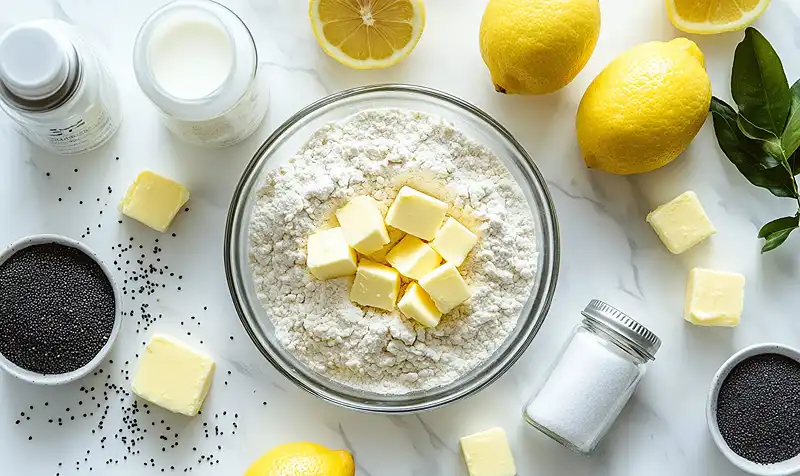
| Ingredient | Amount |
|---|---|
| Lemon zest (from medium lemons) | 2 lemons |
| Granulated sugar | 100 grams |
| Gluten free multipurpose flour | 300 grams |
| Baking powder | 14 grams (1 tablespoon) |
| Poppyseeds | 9 grams (1 tablespoon) |
| Kosher salt | ½ teaspoon |
| Unsalted butter, cold | 113 grams |
| Kefir or buttermilk | 125 grams |
| Large egg | 1 |
| Fresh lemon juice | 25 grams |
| Raw sugar (for topping) | As needed |
| Extra kefir or buttermilk (for brushing) | As needed |
For the Lemon Glaze:
| Ingredient | Amount |
|---|---|
| Powdered sugar | 50 grams |
| Lemon juice | 10-20 grams |
Instructions
Step 1: Line a sheet tray with parchment paper and set it aside. Having everything ready before you start mixing makes the whole process feel like a breeze.
Step 2: In a small bowl, sift or whisk together your gluten free multipurpose flour, baking powder, poppyseeds, and kosher salt. This ensures everything is evenly distributed and helps prevent clumpy spots in your gluten free lemon scones.
Step 3: Combine the granulated sugar and lemon zest in a large bowl. Using your fingers, rub the zest into the sugar—this releases all those lovely citrus oils and creates the most fragrant base you can imagine. It smells absolutely divine!
Step 4: Add the dry ingredients to the lemon zest sugar mixture and stir to combine. You’ll notice how the whole mixture already smells lemony and fresh.
Step 5: Cut your cold butter into smaller pieces and add them to your dry ingredients. Using a fork or your clean hands, work the butter into the dry mixture until it looks very crumbly with pea-sized butter chunks throughout. You can also use a box grater to grate the butter directly into the flour, which keeps everything super cold and makes mixing easier.
Step 6: In a separate bowl, whisk together the kefir, egg, and lemon juice using a fork until frothy. Pour the wet ingredients into the mixture of flour and butter, then gently stir everything together using a spatula. Don’t worry if the dough looks dry and shaggy at first—it will come together beautifully as you work with it.
Step 7: Transfer your gluten free lemon scone dough to the parchment-lined sheet tray and push it together gently. Avoid kneading because that’ll make your scones tough instead of tender and flaky. Shape the dough into a 7×5-inch rectangle about 1 inch tall—if it feels sticky, just dust with a tiny bit more flour.
Step 8: Fold the dough in half and carefully pat it down into a rectangle again. Repeat this folding process two more times for a total of three folds—this creates those gorgeous flaky layers that make European scones so irresistible. If your kitchen is warm or your hands are making the dough sticky, pop it in the fridge for 5-10 minutes between folds.
Step 9: Shape the dough into a 6-inch disk about 1 inch tall. Man, oh man, don’t go thinner than ¾ inch or you’ll end up with flat, sad scones that nobody wants. Place your uncut gluten free lemon poppyseed scones in the fridge for at least 10 minutes—you can even let them chill for up to 12 hours if you’re prepping ahead.
Step 10: While the scone dough is chilling and firming up, preheat your oven to 400°F. This gives your oven plenty of time to reach the right temperature for perfectly golden scones.
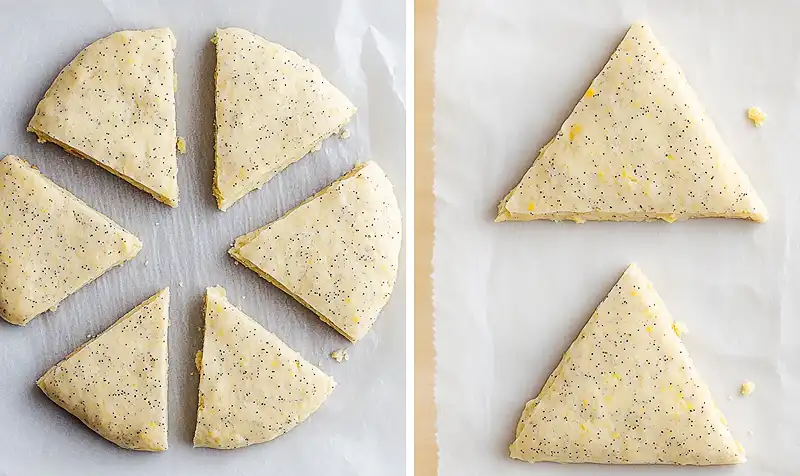
Step 11: When your oven hits 400°F, remove the scone dough from the fridge and use a sharp knife to cut it into eight equally-sized wedges. The easiest method is cutting the circle into quarters, then halving each quarter again—simple geometry, right?
Step 12: Arrange your gluten free lemon poppyseed scones on the prepared sheet tray with a bit of space between each one. Using a pastry brush, lightly brush them with additional kefir and sprinkle with raw sugar for that gorgeous sparkly top.
Step 13: Bake at 400°F for 22-26 minutes until golden brown and puffed up. Remove them from the oven and let them cool on the sheet tray for 10 minutes before transferring to a cooling rack—this helps them set up without falling apart.
Lemon Glaze: While your scones cool, whisk together powdered sugar and lemon juice in a small bowl. If it’s too thick, add a little more lemon juice—just remember that a little goes a long way. Once the scones are completely cool, drizzle with glaze and garnish with extra lemon zest and poppyseeds if you’re feeling fancy.
Substitutions
No kefir on hand? Buttermilk works beautifully in these gluten free scone recipes, or you can make your own by adding 1 tablespoon of lemon juice or white vinegar to regular milk and letting it sit for 5 minutes. This creates that tangy flavor and tender crumb we’re looking for.
Butter alternatives: If you need dairy-free gluten free lemon scones, cold vegan butter sticks work wonderfully. Just make sure whatever you use is very cold so you get those flaky layers.
Flour flexibility: Most quality gluten free flour blends work great for gluten free flour recipes for baking like this. I prefer blends with xanthan gum already included, but if yours doesn’t have it, add ½ teaspoon to the dry ingredients.
Skip the poppyseeds? You absolutely can! These are still delicious lemon scones without them, or you can swap in chia seeds for a fun texture variation.
Troubleshooting
Scones spreading too much? Your butter probably got too warm during mixing. Next time, work quickly and chill the dough a bit longer before baking—cold butter equals flaky, tall scones.
Dry or crumbly texture? Gluten free flour recipes for baking can be finicky about moisture. Add an extra tablespoon of kefir or buttermilk to the dough if it seems super dry. According to trusted gluten-free baking science resources, gluten-free batters and doughs often need slightly more liquid than traditional recipes.
Scones too flat? Make sure your baking powder is fresh (it loses potency after about 6 months), and don’t roll the dough thinner than ¾ inch. Also double-check that you’re measuring flour by weight, not volume, for the most accurate results.
Dense instead of fluffy? Overmixing is usually the culprit. Handle the dough gently and stop mixing as soon as everything comes together—you want to see little butter chunks throughout.
Storage & Meal Prep
These gluten free lemon scones stay fresh at room temperature in an airtight container for 2-3 days. You know, if they last that long in your house! For longer storage, freeze unbaked scones on a sheet tray until solid, then transfer to a freezer bag for up to 3 months—bake from frozen, adding just 3-4 extra minutes to the baking time.
Want to prep ahead for weekend brunch? You can make the dough, shape it into a disk, and refrigerate for up to 12 hours before cutting and baking. This is perfect for Easter morning or Mother’s Day when you want fresh-baked scones without the early morning rush.
Serving Suggestions
Serve these beauties warm with a pat of butter melting into all those flaky layers—it’s simple perfection. They’re also incredible with strawberry jam, lemon curd, or a dollop of whipped cream for a more indulgent treat.
Pair your gluten free lemon scones with hot tea, strong coffee, or even a mimosa for a celebratory brunch. They work wonderfully alongside fresh fruit, scrambled eggs, or as part of a bigger breakfast spread when you’re hosting friends and family.
Variations
Dairy-free version: Swap the butter for cold vegan butter sticks and use a plant-based milk mixed with vinegar instead of kefir. You’ll get the same tender, flaky texture without any dairy.
Berry lovers: Fold in ½ cup of fresh or frozen blueberries or raspberries after mixing the wet and dry ingredients. If you love cranberry-orange combinations, check out these tender cranberry orange scones for another fruity option.
Chocolate chip twist: Add ⅓ cup of mini chocolate chips to the dough for a sweet surprise. It sounds unusual, but lemon and chocolate are a match made in heaven!
Lavender lemon: Mix 1 teaspoon of culinary lavender with the lemon zest and sugar for an elegant, floral variation. It’s fancy enough for a tea party but still totally approachable.
Gluten Free Lemon Scones FAQs
Can I make these scones ahead of time?
Absolutely! Shape the dough, cut into wedges, and freeze them unbaked. When you’re ready, bake straight from frozen at 400°F for 25-28 minutes. Fresh scones whenever you want them!
What’s the best gluten free flour for scone recipes?
I’ve had excellent results with Bob’s Red Mill 1-to-1, King Arthur Measure for Measure, and Cup4Cup. Any quality all-purpose gluten free flour blend with xanthan gum works beautifully for these gluten free flour recipes for baking.
How do I know when my scones are done baking?
They should be golden brown on top and bottom with slightly crispy edges. The centers should feel firm when gently pressed, and a toothpick inserted should come out clean or with just a few moist crumbs.
Why do I need to fold the dough multiple times?
Those folds create layers of butter and dough that puff up during baking, giving you those classic flaky layers you see in European scones. It’s the secret to scone success!
Can I use regular all-purpose flour instead?
Well… you could, but then they wouldn’t be gluten free! If you’re not worried about gluten, regular flour works with the same measurements, but you’ll need slightly less liquid.
Final Thoughts
These gluten free lemon scones prove that you don’t need gluten to create bakery-worthy treats at home. They’re tender, flaky, perfectly sweet, and have just the right amount of tang from all that fresh lemon.
Whether you’re new to gluten free flour recipes for baking or you’ve been at it for years, this recipe is forgiving, flexible, and absolutely delicious. The poppyseeds add a lovely crunch, the glaze brings extra sweetness, and the whole experience feels like a warm hug from your kitchen.
If you’re looking for more ways to use your gluten free baking skills, try these fudgy sourdough brownies or these crispy sourdough discard crackers for savory snacking. Both recipes show just how versatile gluten free baking can be!

Gluten Free Lemon Scones
Equipment
- Sheet tray
- Parchment paper
- Small bowl
- Large bowl
- Fork
- Spatula
- Box Grater (optional)
- Sharp knife
- Pastry brush
- Cooling rack
- Whisk
Ingredients
Scones
- 2 medium lemons Lemon zest
- 100 grams Granulated sugar
- 300 grams Gluten free multipurpose flour
- 14 grams Baking powder 1 tablespoon
- 9 grams Poppyseeds 1 tablespoon
- ½ teaspoon Kosher salt
- 113 grams Unsalted butter cold
- 125 grams Kefir or buttermilk
- 1 Large egg
- 25 grams Fresh lemon juice
- Raw sugar for topping
- Extra kefir or buttermilk for brushing
Lemon Glaze
- 50 grams Powdered sugar
- 10-20 grams Lemon juice
Instructions
- Line a sheet tray with parchment paper and set it aside. Having everything ready before you start mixing makes the whole process feel like a breeze.
- In a small bowl, sift or whisk together your gluten free multipurpose flour, baking powder, poppyseeds, and kosher salt. This ensures everything is evenly distributed and helps prevent clumpy spots in your gluten free lemon scones.
- Combine the granulated sugar and lemon zest in a large bowl. Using your fingers, rub the zest into the sugar—this releases all those lovely citrus oils and creates the most fragrant base you can imagine.
- Add the dry ingredients to the lemon zest sugar mixture and stir to combine. You’ll notice how the whole mixture already smells lemony and fresh.
- Cut your cold butter into smaller pieces and add them to your dry ingredients. Using a fork or your clean hands, work the butter into the dry mixture until it looks very crumbly with pea-sized butter chunks throughout. You can also use a box grater to grate the butter directly into the flour, which keeps everything super cold and makes mixing easier.
- In a separate bowl, whisk together the kefir, egg, and lemon juice using a fork until frothy. Pour the wet ingredients into the mixture of flour and butter, then gently stir everything together using a spatula. Don’t worry if the dough looks dry and shaggy at first—it will come together beautifully as you work with it.
- Transfer your gluten free lemon scone dough to the parchment-lined sheet tray and push it together gently. Avoid kneading because that’ll make your scones tough instead of tender and flaky. Shape the dough into a 7×5-inch rectangle about 1 inch tall—if it feels sticky, just dust with a tiny bit more flour.
- Fold the dough in half and carefully pat it down into a rectangle again. Repeat this folding process two more times for a total of three folds—this creates those gorgeous flaky layers that make European scones so irresistible. If your kitchen is warm or your hands are making the dough sticky, pop it in the fridge for 5-10 minutes between folds.
- Shape the dough into a 6-inch disk about 1 inch tall. Don’t go thinner than ¾ inch or you’ll end up with flat, sad scones. Place your uncut gluten free lemon poppyseed scones in the fridge for at least 10 minutes—you can even let them chill for up to 12 hours if you’re prepping ahead.
- While the scone dough is chilling and firming up, preheat your oven to 400°F. This gives your oven plenty of time to reach the right temperature for perfectly golden scones.
- When your oven hits 400°F, remove the scone dough from the fridge and use a sharp knife to cut it into eight equally-sized wedges. The easiest method is cutting the circle into quarters, then halving each quarter again.
- Arrange your gluten free lemon poppyseed scones on the prepared sheet tray with a bit of space between each one. Using a pastry brush, lightly brush them with additional kefir and sprinkle with raw sugar for that gorgeous sparkly top.
- Bake at 400°F for 22-26 minutes until golden brown and puffed up. Remove them from the oven and let them cool on the sheet tray for 10 minutes before transferring to a cooling rack—this helps them set up without falling apart.
- While your scones cool, whisk together powdered sugar and lemon juice in a small bowl. If it’s too thick, add a little more lemon juice—just remember that a little goes a long way. Once the scones are completely cool, drizzle with glaze and garnish with extra lemon zest and poppyseeds if you’re feeling fancy.