Gluten-Free Mango Salsa
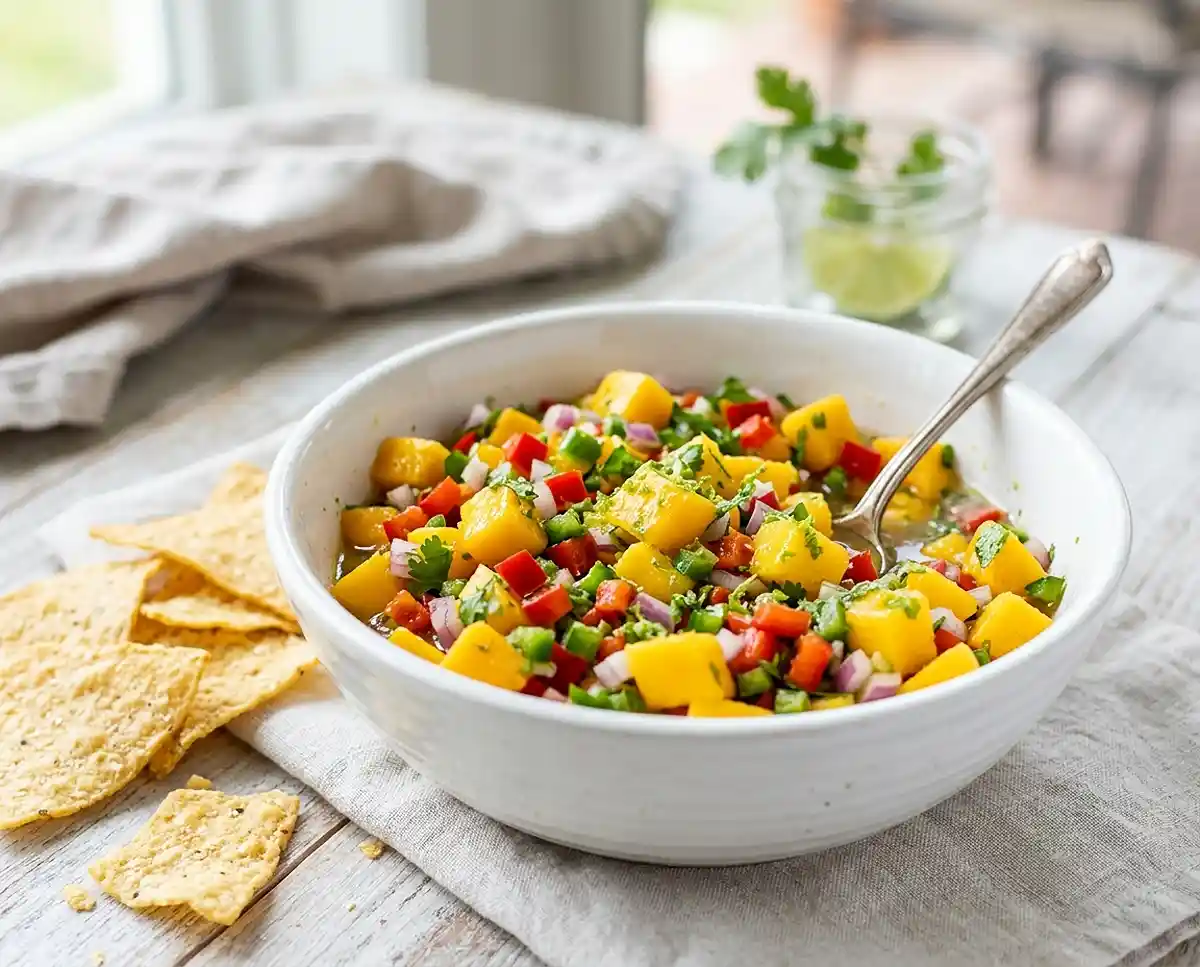
This gluten-free mango salsa combines sweet ripe mangos with red pepper, jalapeño, and fresh lime. Perfect fresh salsa for tortilla chips, fish tacos, or grilled chicken!
The first time I made mango salsa, I honestly felt a little silly. It seemed too easy—just chopping fruit and vegetables, squeezing lime, done. Surely good salsa required more effort, some cooking, something complicated. Then I took the first bite and understood immediately why simplicity wins.
Well… that bowl disappeared in about ten minutes. My husband and I stood at the kitchen counter, chips in hand, unable to stop ourselves. The sweetness of perfectly ripe mango against the heat of jalapeño, the crunch of red pepper, that bright lime cutting through everything—it was summer in a bowl.
This gluten-free mango salsa has since become my most-requested recipe at every cookout, potluck, and taco night. It’s naturally free of every major allergen, impossibly fresh, and comes together faster than you can say “where are the tortilla chips?” What’s not to love about a recipe where the hardest part is choosing a ripe mango?
Table of Contents
Why You’ll Love This Gluten-Free Mango Salsa
Naturally free of all major allergens – no gluten, dairy, nuts, eggs, or soy anywhere near this fruit salsa, making it safe for almost every guest.
Just 15 minutes from cutting board to table – minimal prep, zero cooking, maximum flavor with practically no effort.
Incredibly versatile beyond chips – this fresh salsa elevates grilled fish, tacos, chicken, pork, salads, and grain bowls instantly.
Perfectly balanced sweet-heat-acid profile – ripe mango sweetness, jalapeño warmth, and bright lime create a flavor combination that’s genuinely addictive.
The Secret to Perfect Fruit Salsa
Ripe mangos make or break this recipe. Underripe mangos are firm, fibrous, and lack the honeyed sweetness that defines great mango salsa. Look for mangos that yield slightly to gentle pressure and smell fragrant at the stem end. According to the National Mango Board, a ripe mango’s flesh should be deep golden-orange, not pale yellow.
Uniform dice ensures even flavor distribution. Cut everything to roughly the same size—about 1/2-inch pieces—so every chip scoop delivers the complete experience. Wildly different sizes mean some bites are all mango while others are all onion.
Resting time transforms the flavors. The lime juice gently “cooks” the onion, mellowing its sharpness while drawing out the mango’s natural juices. Ten minutes minimum, but an hour creates even deeper flavor melding.
Fresh lime juice is non-negotiable. Bottled lime juice tastes flat and slightly bitter compared to fresh. One large lime yields about 1/4 cup juice—squeeze it directly over the salsa for maximum brightness.
Ingredients
Fresh Salsa Base
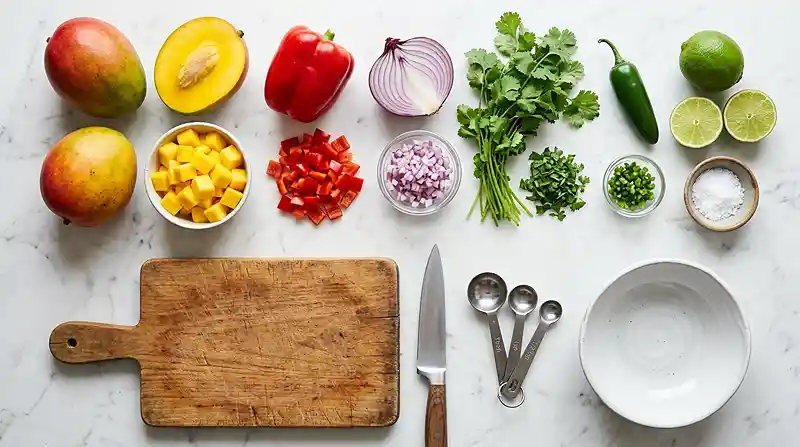
- 3 ripe mangos, diced
- 1 medium red bell pepper, chopped
- 1/2 cup chopped red onion
- 1/4 cup packed fresh cilantro leaves, chopped
- 1 jalapeño, seeded and minced
- 1 large lime, juiced (about 1/4 cup lime juice)
- 1/8 to 1/4 teaspoon salt, to taste
Equipment You’ll Need
A sharp chef’s knife makes mango prep infinitely easier—dull knives slip dangerously on the slick fruit. You’ll also need a sturdy cutting board, a large serving bowl, a citrus juicer or reamer for the lime, and a large spoon for mixing.
Pro Tip: Flexible cutting boards or mats are ideal for transferring chopped ingredients to the bowl without spillage.
Step-by-Step Instructions
How to Cut a Mango
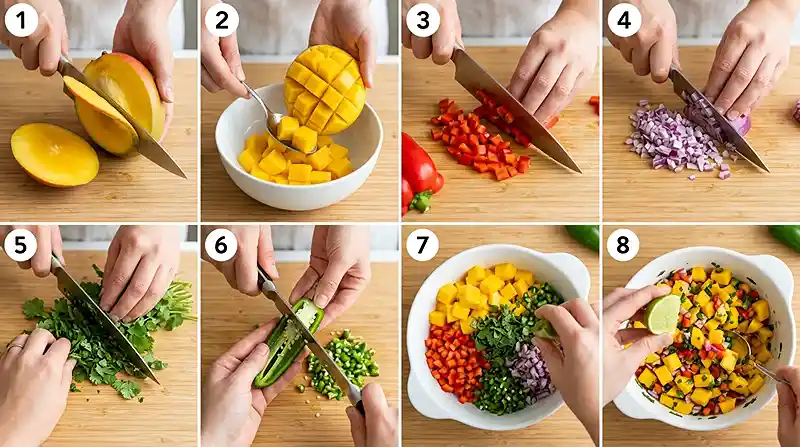
Stand the mango upright on your cutting board. The flat, oblong pit runs vertically through the center. Slice downward about 1/2 inch from the center on each side, following the curve of the pit. You’ll have two “cheeks” plus the pit section.
Score each mango cheek in a crosshatch pattern, cutting through the flesh but not through the skin. Make cuts about 1/2 inch apart in both directions.
Press the skin side upward to invert the mango, pushing the cubes outward. Slice the cubes away from the skin into your serving bowl. Trim any remaining flesh from around the pit.
Repeat with all three mangos. You should end up with approximately 3 cups of diced fruit.
Prepare the Remaining Ingredients
Chop the red bell pepper into pieces roughly matching your mango dice—about 1/2-inch squares. The pepper adds crunch and a subtle sweetness that complements the mango beautifully.
Finely chop the red onion. You want small enough pieces that they distribute evenly throughout without overwhelming any single bite. The 1/2 cup measurement should be loosely packed.
You know… cilantro is polarizing, but it’s essential here. Chop the leaves finely, avoiding the thicker stems which can be bitter. Pack the leaves firmly when measuring to ensure enough herbaceous punch.
For the jalapeño, slice it lengthwise and scrape out the seeds and white membrane with a spoon. These contain most of the heat, so removing them creates mild warmth rather than face-melting spice. Mince the remaining flesh finely.
Pro Tip: Wash your hands thoroughly after handling jalapeño, or wear disposable gloves. Capsaicin lingers on skin and transfers painfully to eyes or sensitive areas.
Combine Everything
Add the diced mango, chopped bell pepper, red onion, cilantro, and minced jalapeño to your serving bowl.
Cut the lime in half and juice it directly over the salsa. Roll the lime firmly against the counter before cutting to release more juice. You should get about 1/4 cup from one large lime.
Using a large spoon, gently fold all the ingredients together until evenly distributed. Take care not to crush the mango pieces—you want them intact, not mashed.
Season and Rest
Add 1/8 teaspoon salt initially, stir, and taste. The salt brightens all the flavors without making the salsa taste salty. Add more gradually until the flavors pop—most batches need the full 1/4 teaspoon.
Cover the bowl and let the salsa rest for at least 10 minutes at room temperature. During this time, the lime juice slightly softens the onion’s bite, the salt draws out fruit juices, and all the flavors marry together.
Man, oh man… if you can wait an hour, the difference is remarkable. The salsa transforms from a collection of ingredients into a unified, harmonious dish.
Serve and Enjoy
Give the salsa one final stir before serving. Some juice will have collected at the bottom—stir it back through or serve with a slotted spoon if you prefer less liquid.
Serve immediately with tortilla chips, or use as a topping for grilled fish, chicken, tacos, or grain bowls. The salsa is best enjoyed the same day for maximum freshness and texture.
Make It Your Own
Add avocado for creamy richness. Fold in one diced ripe avocado just before serving—not earlier, or it will brown and turn mushy. The buttery texture contrasts beautifully with the crisp vegetables.
Swap mango for other tropical fruits. Ripe peaches, nectarines, or pineapple all create delicious variations. Peach salsa pairs especially well with grilled pork, while pineapple loves spicy dishes.
Well… if cilantro tastes soapy to you, substitute fresh mint or basil. The genetic variant that makes cilantro taste like soap affects about 4-14% of people. Mint creates a fresher, brighter salsa, while basil takes things in an Italian direction.
Increase the heat for spice lovers. Leave some jalapeño seeds in, or add a minced serrano or habanero pepper. Start small—you can always add more heat, but you can’t remove it.
Black beans add substance. Fold in one drained and rinsed can of black beans for a heartier salsa that works as a meal component, not just a dip.
Grill the mango for smoky depth. Brush mango halves with oil and grill for 2-3 minutes per side before dicing. The caramelization adds complexity, though you lose some of the fresh brightness.
Common Problems & Solutions
Problem: The salsa tastes flat and bland.
You need more salt, more lime, or both. These two ingredients activate all the other flavors. Add them gradually, tasting after each addition, until the salsa comes alive.
Problem: The mango is too firm and fibrous.
Your mangos weren’t ripe enough. Unfortunately, there’s no fix for an already-made batch. Next time, let mangos ripen at room temperature until they yield to pressure and smell fragrant. Store ripe mangos in the refrigerator to slow further ripening.
Problem: The salsa is too spicy.
You left too many jalapeño seeds or membrane, or your particular pepper was unusually hot (they vary significantly). Add more diced mango to balance the heat, or fold in diced avocado—fat helps neutralize capsaicin’s burn.
Problem: The onion is too sharp and overpowering.
The salsa didn’t rest long enough, or you used too much onion. Next time, let it rest for a full hour. For immediate fixes, rinse chopped onion under cold water before adding—this removes some of the harsh sulfur compounds.
Problem: There’s too much liquid pooling at the bottom.
The mango was very juicy, or the salsa sat too long. Drain excess liquid before serving, or serve with a slotted spoon. Some liquid is normal and delicious for coating chips.
Storage & Meal Prep
| Method | Duration | Notes |
|---|---|---|
| Room temperature | 2 hours | Best for serving at parties |
| Refrigerator | 2-3 days | Texture softens over time; stir before serving |
| Freezer | Not recommended | Mangos turn mushy when thawed |
This fresh salsa is best enjoyed the day it’s made, when textures are crispest and flavors brightest. That said, refrigerated leftovers remain delicious for 2-3 days—they just soften slightly.
For make-ahead convenience, prep all ingredients and store them separately in the refrigerator. Combine and add lime juice just before serving for the freshest texture.
If serving at a party, keep the salsa refrigerated until serving time, then set out at room temperature. Discard after 2 hours in the “danger zone” above 40°F to prevent bacterial growth.
Your Questions Answered
Is mango salsa gluten-free?
This homemade mango salsa is completely gluten-free—all ingredients are whole fruits and vegetables with no gluten-containing additives. When serving with tortilla chips, verify your chips are made from pure corn without wheat additives. Most major brands are gluten-free, but always check labels if you have celiac disease.
Can I make fruit salsa ahead of time?
You can prep ingredients up to a day ahead and store them separately in the refrigerator. Combine everything and add lime juice just before serving for the best texture. Fully assembled salsa stores for 2-3 days but softens progressively.
What do you eat mango salsa with besides chips?
This versatile fresh salsa shines on grilled salmon, mahi-mahi, or shrimp. It’s incredible in fish tacos, spooned over grilled chicken, or served alongside pork tenderloin. Try it on black bean quesadillas, over grain bowls, or even on grilled halloumi cheese for a vegetarian main.
How do I pick a ripe mango?
Gently squeeze the mango—it should yield slightly, like a ripe peach or avocado. Smell the stem end; ripe mangos have a sweet, fragrant aroma. Color isn’t always reliable since varieties differ, but most ripe mangos show some yellow or orange. Avoid mangos that are rock-hard or have wrinkled, mushy skin.
What if I don’t like cilantro?
Fresh mint makes an excellent substitute, creating a brighter, slightly cooling flavor. Flat-leaf parsley works for a milder herbaceous note. Fresh basil takes the salsa in a different but equally delicious direction. Use the same quantity as the original cilantro measurement.
Serving Suggestions
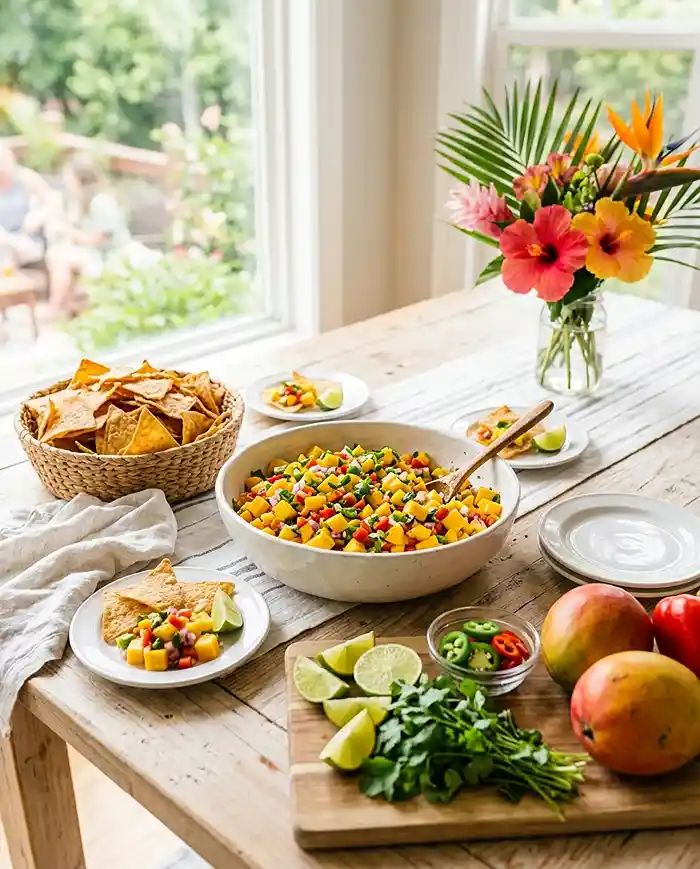
This gluten-free mango salsa transforms simple tortilla chips into party-worthy appetizers. The vibrant orange, red, and green colors create an eye-catching presentation that looks as good as it tastes.
For a complete summer spread, serve alongside guacamole and traditional tomato salsa for a trio of dipping options. The mango version brings sweetness that balances spicier salsas perfectly.
This fruit salsa pairs beautifully with grilled seafood—try it spooned over blackened fish tacos or alongside cedar-planked salmon. For a complete gluten-free dinner party menu, follow the main course with dairy-free chocolate avocado mousse or gluten-free oatmeal cream pies for dessert. And if you want to round out your summer entertaining with a stunning spring dessert, gluten-free strawberry rhubarb pie never disappoints.
Let’s Get Chopping!
There’s something wonderfully satisfying about a recipe this simple producing results this spectacular. No cooking, no complicated techniques, just fresh ingredients combined thoughtfully—proof that sometimes the best recipes are the easiest ones.
I’d love to see your mango salsa creations! Share your photos on Pinterest and tell me in the comments what you served it with. Did you try the grilled mango variation? Add avocado? Your ideas inspire other home cooks to get creative with this versatile fresh salsa.
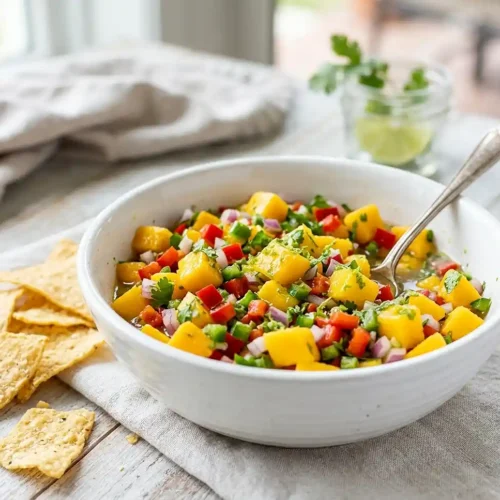
Gluten-Free Mango Salsa
Equipment
- Sharp chef’s knife
- Cutting board
- Large serving bowl
- Citrus juicer or reamer
- Large spoon
Ingredients
Fresh Salsa
- 3 ripe mangos diced (about 3 cups)
- 1 medium red bell pepper chopped
- ½ cup red onion chopped
- ¼ cup fresh cilantro leaves packed, chopped
- 1 jalapeño seeded and minced
- 1 large lime juiced (about 1/4 cup)
- 1/8-1/4 teaspoon salt to taste
Instructions
- Dice the mangos: slice off each side along the pit, score the flesh in a crosshatch pattern, invert and cut the cubes away from the skin. Place in a large serving bowl.
- Add the chopped red bell pepper, red onion, cilantro, and minced jalapeño to the bowl with the mango.
- Squeeze the lime juice directly over the salsa ingredients, drizzling it evenly across the top.
- Using a large spoon, gently fold all ingredients together until evenly combined, taking care not to crush the mango pieces.
- Season with salt to taste, starting with 1/8 teaspoon and adding more as needed. Stir again to distribute.
- Let the salsa rest for at least 10 minutes (or up to 1 hour) to allow the flavors to meld together. Stir once more before serving.