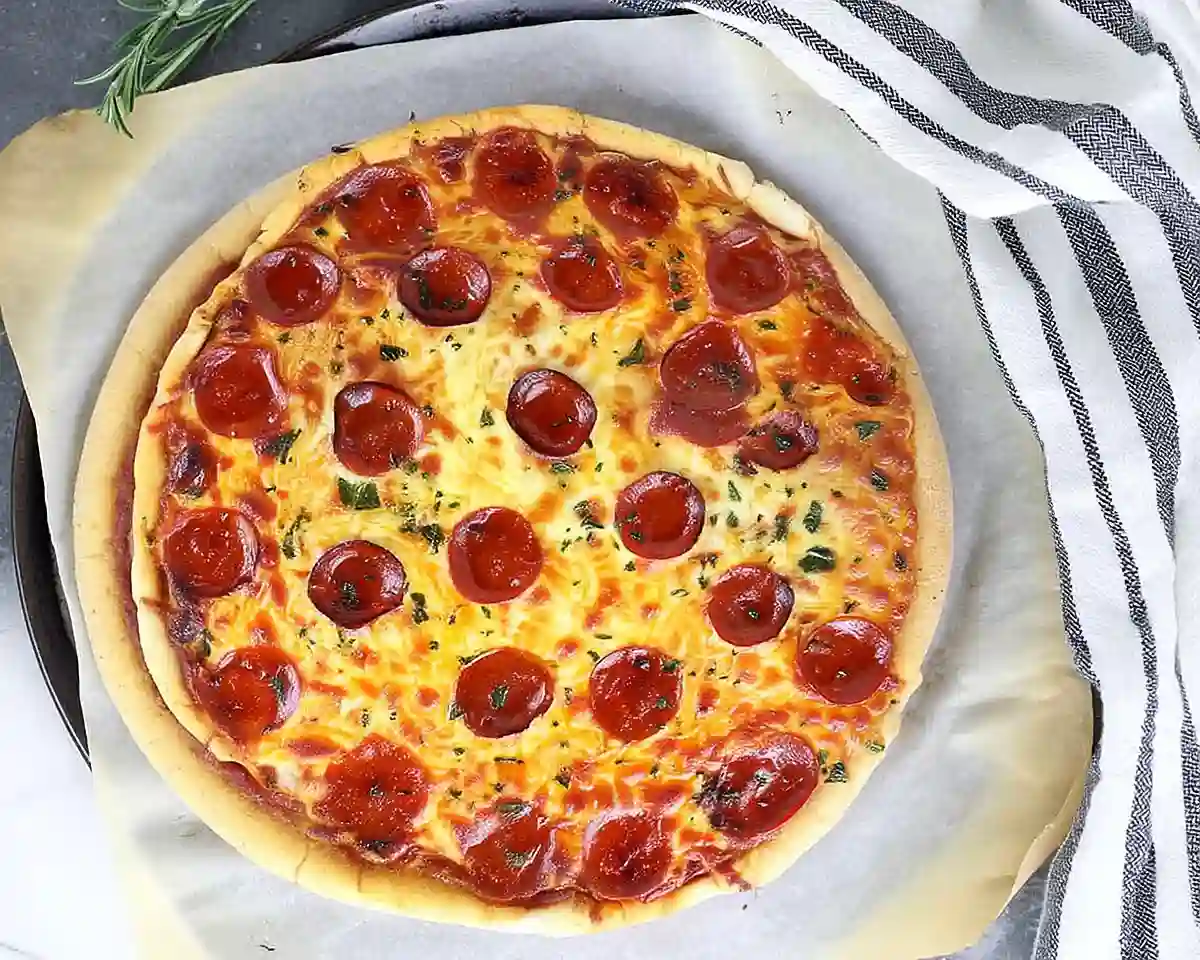
Gluten-Free Pizza Dough Recipe
Make delicious gluten-free pizza dough at home with this foolproof recipe. No yeast stress, crispy crust, ready in minutes. Perfect for busy families!
You know that moment when you’re scrolling through dinner ideas at 5 p.m., and your family’s unanimous vote is pizza? Well, I get it—pizza nights are sacred in our house too. The thing is, finding a gluten-free pizza dough that doesn’t taste like cardboard used to feel impossible until I nailed this recipe.
This gluten-free pizza dough comes together in about 30 minutes, and here’s my favorite part: you don’t need any fancy equipment or mysterious ingredients. Just a measuring cup, a bowl, and a little patience while the yeast does its magic.
I’ve been making this easy gluten-free pizza crust for years now, and it’s survived countless family dinners, friend hangouts, and yes, even my experimental topping phases (looking at you, pineapple debate).
Whether you’re new to gluten-free cooking or you’ve been at it for a while, this gluten free pizza crust no yeast wouldn’t work doesn’t require you to be a baking expert. The best part? This dough bakes up golden and crispy on the edges with a tender center—basically, it’s the pizza dough redemption story you’ve been waiting for.
Table of Contents
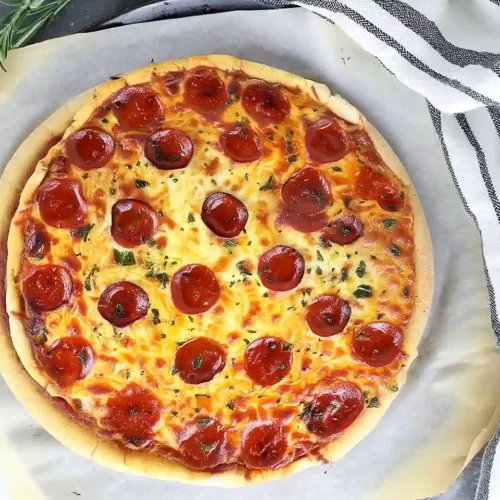
Easy Gluten-Free Pizza Dough Recipe
Equipment
- Measuring cup
- Large mixing bowl
- Whisk
- Rubber spatula or wooden spoon
- 16-inch pizza pan
- Parchment paper
- Oven
Ingredients
Dry Ingredients
- 1 cup Warm water 110°F
- 2¼ teaspoons Active dry yeast or 1 packet instant yeast
- 1 teaspoon Sugar
- 1 tablespoon Olive oil
- 2½ cups Bob’s Red Mill Gluten Free 1-to-1 Baking Flour or alternative gluten-free flour blend with xanthan gum
- 1 teaspoon Salt
Instructions
- Preheat your oven to 425°F and line a 16-inch pizza pan with parchment paper. This small step saves you so much cleanup later, and your gluten-free pizza dough won’t stick.
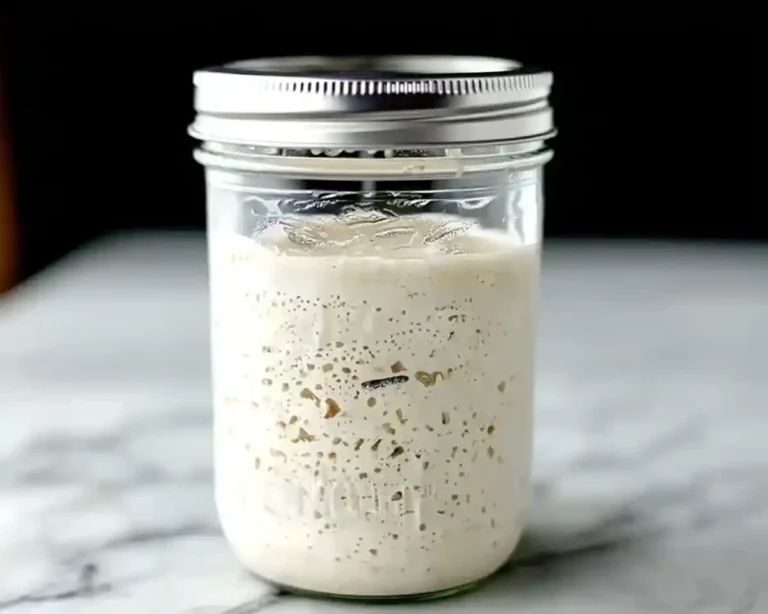
- In a measuring cup, combine the warm water, yeast, sugar, and olive oil. Stir gently and let it sit for 8 to 10 minutes. You’ll see the yeast bloom and the top become foamy, which means your yeast is alive and ready to work. If it doesn’t bloom, your yeast may be expired—grab a fresh packet.
- While waiting for the yeast to bloom, grab a large bowl and whisk together the gluten-free flour and salt. This helps distribute the salt evenly throughout your dough and prevents any surprise salty bites.
- Once the yeast mixture looks beautifully foamy, pour it into your flour mixture. Using a rubber spatula or wooden spoon, stir everything together until a shaggy dough forms. You’re aiming for a texture that comes together, even if it looks rough at this stage.
- Turn the dough out onto your prepared parchment paper and gently form a ball. Slowly press and stretch the dough, rotating your pan as you go, until it spreads into a large flat disc that covers most of the pan. Create a slightly thicker edge for that satisfying pizza-crust bite. Don’t stress about perfection—rustic is charming.
- Add your favorite sauce, cheese, veggies, and toppings. Pop the whole thing into your 425°F oven and bake for 10 to 12 minutes for a tender crust, or go longer (15 minutes) if you prefer it extra crispy. The edges will turn golden brown, and you’ll smell that incredible yeasty aroma.
Notes
Ingredients
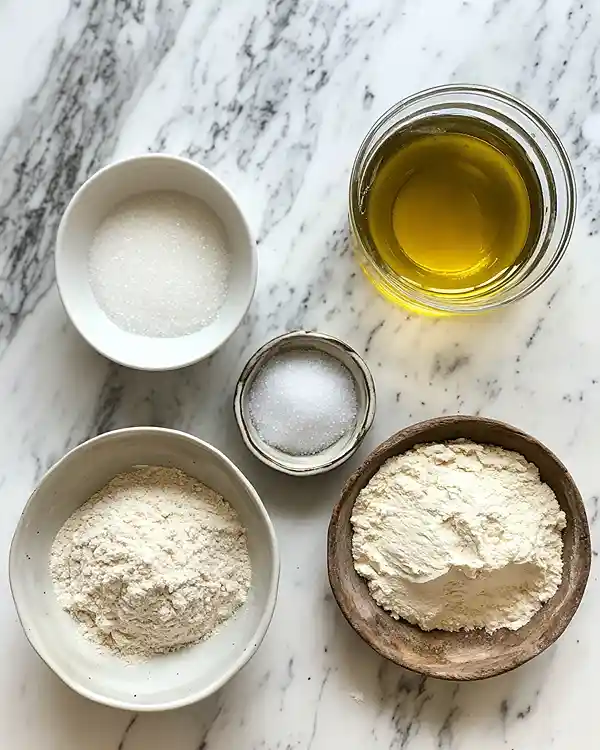
| Ingredient | Amount |
|---|---|
| Warm water (110°F) | 1 cup |
| Active dry yeast or instant yeast | 2¼ teaspoons (1 packet) |
| Sugar | 1 teaspoon |
| Olive oil | 1 tablespoon |
| Bob’s Red Mill Gluten Free 1-to-1 Baking Flour | 2½ cups |
| Salt | 1 teaspoon |
Instructions
Step 1: Prep Your Pan
Preheat your oven to 425°F and line a 16-inch pizza pan with parchment paper. This small step saves you so much cleanup later, and your gluten-free pizza dough won’t stick—trust me on this one.
Step 2: Activate the Yeast
In a measuring cup, combine the warm water, yeast, sugar, and olive oil. Stir gently and let it sit for 8 to 10 minutes—this is where the magic happens. You’ll see the yeast bloom and the top become foamy, which means your yeast is alive and ready to work.
If it doesn’t bloom or looks flat after 10 minutes, your yeast might be expired. Grab a fresh packet and try again; there’s no point in moving forward with sleepy yeast.
Step 3: Combine Your Dry Ingredients
While waiting for the yeast to bloom, grab a large bowl and whisk together the gluten-free flour and salt. This helps distribute the salt evenly throughout your gluten-free pizza dough and prevents any surprise salty bites.
Step 4: Mix It Together
Once the yeast mixture looks beautifully foamy, pour it into your flour mixture. Using a rubber spatula or wooden spoon, stir everything together until a shaggy dough forms. You’re aiming for a texture that comes together, even if it looks a bit rough at this stage.
Step 5: Shape Your Crust
Turn the dough out onto your prepared parchment paper and gently form a ball. Now comes the fun part—slowly press and stretch the dough, rotating your pan as you go, until it spreads into a large flat disc that covers most of the pan. Create a slightly thicker edge for that satisfying pizza-crust bite.
Don’t stress about perfection here; rustic is charming, and honestly, nobody judges homemade pizza crust edges.
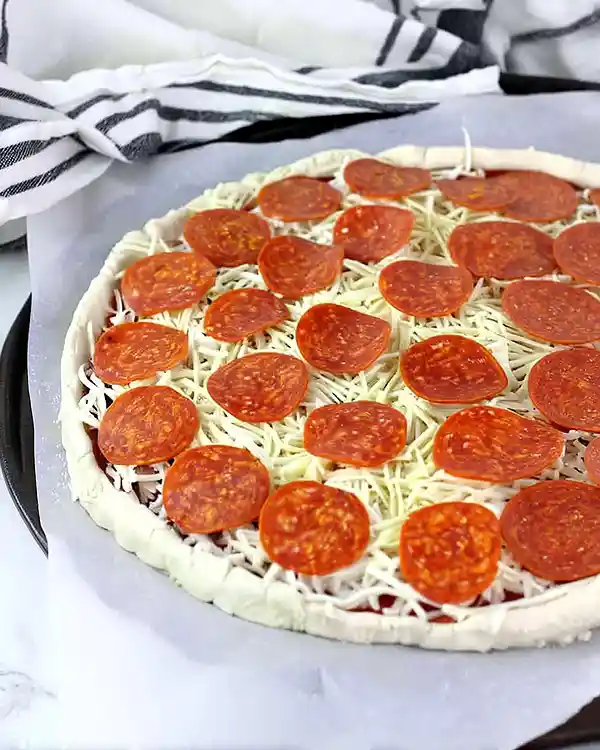
Step 6: Top and Bake
Add your favorite sauce, cheese, veggies, and toppings. Pop the whole thing into your 425°F oven and bake for 10 to 12 minutes for a tender crust, or go longer (15 minutes) if you prefer it extra crispy.
The edges will turn golden brown, and you’ll smell that incredible yeasty aroma filling your kitchen. That’s how you know it’s perfect.
Substitutions for Your Gluten-Free Pizza Dough
Different Gluten-Free Flour Blends
Not everyone has Bob’s Red Mill on hand, and that’s totally okay! Other quality gluten-free flour blends like King Arthur or Krusteaz work beautifully in this easy gluten-free pizza crust recipe. Just make sure your blend includes xanthan gum for that binding power, or your dough might feel too crumbly.
Instant Yeast vs. Active Dry Yeast
You can swap instant yeast (also called bread machine yeast) for active dry yeast in equal amounts—just know that instant yeast works slightly faster. If you’re using instant yeast, your gluten-free pizza dough might be ready to stretch a minute or two earlier than expected.
Honey Instead of Sugar
Want to use honey? Go for it! Use ¾ teaspoon of honey instead of the sugar in your gluten-free pizza dough. The bloom time might be the same, and your crust will have a subtle sweetness that makes it extra delicious.
Dairy-Free or Vegan Version
This recipe is already dairy-free since we’re using olive oil instead of butter. If you’re making this for a vegan friend or family member, just confirm your yeast is vegan—most brands are, but it’s worth double-checking!
Troubleshooting Your Gluten-Free Pizza Dough
Yeast Didn’t Bloom
If your yeast mixture stayed flat and sad after 10 minutes, the water was probably too hot or too cold. Yeast is picky—it wants that sweet spot around 110°F, just warm to the touch. If your water was hotter, it may have killed the yeast; too cold, and nothing happens.
Dough Is Too Sticky
Gluten-free dough is naturally stickier than regular dough, but if yours feels more like batter, try dusting with a little extra gluten-free flour as you stretch it. You’re not looking for dry dough—just something you can handle without it sticking to everything.
Crust Turned Out Cakey
This usually means either the oven wasn’t hot enough or the dough went in before fully proofing. Make sure your oven is fully preheated to 425°F, and give that yeast mixture the full 8 to 10 minutes to bloom beautifully.
Crust Didn’t Rise Enough
Gluten-free pizza dough rises less dramatically than wheat-based dough, which is totally normal. If you’re craving more height, let the shaped dough rest for 5 minutes on the pan before topping—this gives it a little extra boost in the oven.
Storage and Meal Prep
Storing Baked Crust
Once your gluten-free pizza dough bakes and cools, wrap the whole pizza or leftover slices in foil or an airtight container. It’ll keep beautifully for 3 to 4 days in the fridge, and reheating in a 350°F oven for 5 to 7 minutes brings back that crispy-tender texture.
Freezing Options
Want to get ahead? You can freeze unbaked dough balls wrapped tightly in plastic wrap for up to 2 months. When you’re ready to use it, let it thaw on the counter for about 30 minutes, then press it onto your pan and bake as usual.
Make-Ahead Dough
Mix up this gluten-free pizza dough the night before and store it in the fridge in an oiled bowl covered with plastic wrap. Let it come to room temperature for 15 minutes before shaping—this actually deepens the flavor a bit, which is a nice bonus.
Serving Suggestions and Pairings
Pizza Night Sides
Pair your homemade gluten-free pizza dough creation with a simple green salad tossed in lemon vinaigrette or garlic bread made from our easy dairy-free dessert ideas. A cold glass of sparkling water with lemon feels like the perfect companion too.
Topping Ideas That Work
Go classic with marinara and mozzarella, or have fun with white sauce, roasted veggies, and fresh basil. The beauty of making your own gluten-free pizza crust is that you control everything—no weird mystery ingredients, just real food.
Holiday Pizza Nights
This gluten-free pizza dough is perfect for holiday gatherings or game-day parties. You can make it in batches, and everyone gets exactly what they want on their slice. Way easier than coordinating orders from three different restaurants!
Variations and Dietary Adjustments
Kid-Friendly Veggie Pizza
Let the littles help stretch the dough—they love being involved in dinner prep. Then, let them choose their own toppings. Even the pickiest eaters tend to dig into pizza they helped make, and this gluten-free pizza crust provides the perfect canvas for their creativity.
Caulipower Gluten-Free Crust
If you want to sneak in extra veggies, you can replace up to ½ cup of the gluten-free flour with finely riced cauliflower. Your easy gluten-free pizza crust will be slightly denser but packed with nutrients—and honestly, nobody notices when the cheese is on top.
Herb-Infused Version
Man, oh man, adding 1 teaspoon of Italian seasoning or dried oregano to your dry ingredients gives this gluten-free pizza dough such incredible flavor. It’s like a fancy pizzeria trick, but you’re doing it at home for practically nothing.
FAQs About Gluten-Free Pizza Dough
Can I make this gluten-free pizza dough without yeast?
Not really—the yeast is what gives this dough its rise and airy texture. If you’re looking for a gluten free pizza crust no yeast option, you’d need to use baking soda and vinegar instead, which creates a totally different (and less pizza-like) result.
How do I know when my gluten-free pizza dough is ready to bake?
Once you’ve shaped it on the pan, it should look like a flat disc with slightly thicker edges. You don’t need to let it rise again after shaping—just top it and bake. If it feels dense and cold, let it sit for 5 minutes at room temperature.
What’s the best gluten-free flour for pizza dough?
Bob’s Red Mill 1-to-1 works amazing for this recipe, but King Arthur and Krusteaz are solid alternatives. Look for blends that include xanthan gum, which gives your gluten-free pizza dough better structure and chew.
Why is my dough so sticky compared to regular pizza dough?
Gluten-free doughs naturally absorb moisture differently than wheat dough. This sticky texture is actually what makes this easy gluten-free pizza crust work so well—it creates that tender interior. A little extra flour on your hands helps with stretching.
Best way to reheat leftover pizza?
Preheat your oven to 350°F, pop slices on a baking sheet, and warm for 5 to 7 minutes. This keeps the crust crispy instead of rubbery, which microwave reheating tends to do. Your gluten-free pizza dough deserves the oven treatment.
Can I double this recipe?
Absolutely! Double everything and make two pizzas—or freeze half the dough for later. More pizza is never a bad idea, and batch-making this gluten-free pizza dough saves time on busy weeknights.
More Gluten-Free Recipes to Try
Once you’ve mastered this gluten-free pizza dough, explore our collection of other easy recipes. Check out our complete gluten-free cookie collection for sweet treats that satisfy, or try our beginner-friendly baking tips for more kitchen confidence.
Looking for dessert after pizza night? Our creamy dairy-free pumpkin pie is a showstopper that works year-round and pairs beautifully with a gluten-free lifestyle.
Final Thoughts
Well, here’s the thing about homemade gluten-free pizza dough—once you make it once, you’ll never want to go back. Your kitchen will smell incredible, your family will gather around before it’s even out of the oven, and you’ll get those proud-cook feelings that make cooking worthwhile.
This easy gluten-free pizza crust takes the stress out of pizza night and puts the joy back in. No more wondering what’s in your dough, no more dry crusts, and no more feeling like you’re missing out. You’ve got this, and I can’t wait for you to see how amazing your homemade gluten-free pizza dough turns out.