Gluten-Free Polvorones
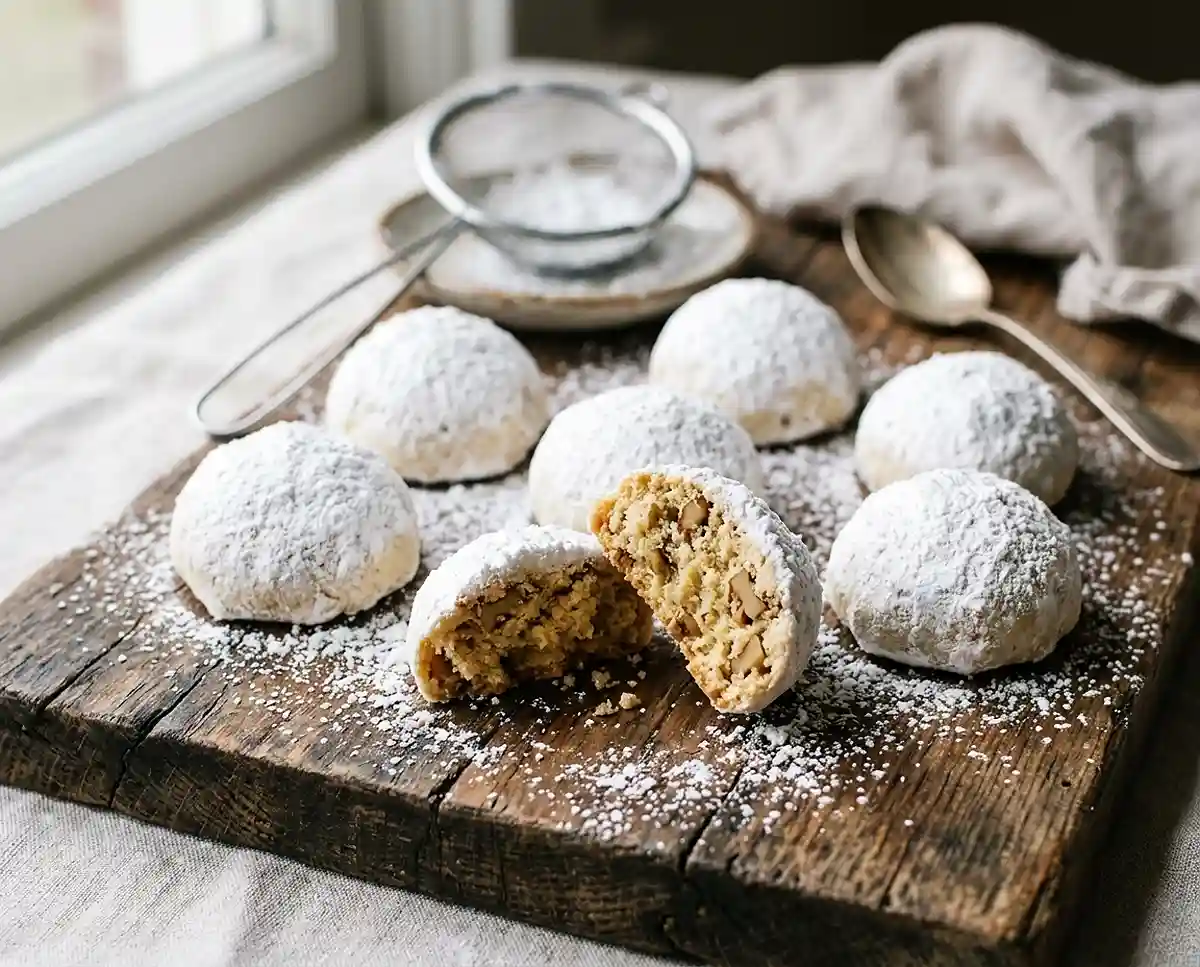
These Gluten-Free Polvorones are tender, buttery Mexican wedding cookies rolled in powdered sugar. Traditional flavor with easy technique—ready in 30 minutes!
The first time I tried making polvorones after going gluten-free, they spread into flat, greasy puddles that stuck to the pan like cement. I’d assumed these delicate Mexican wedding cookies would be simple—butter, sugar, flour, nuts—but gluten-free flour behaves differently, and my attempt was humbling.
These Gluten-Free Polvorones capture everything magical about the traditional cookie: that signature sandy, melt-in-your-mouth texture that dissolves on your tongue in a cloud of powdered sugar and toasted walnut flavor. The combination of ground walnuts and almond extract creates depth that makes these impossible to eat just one.
Table of Contents
Why You’ll Love These Gluten-Free Polvorones
- Authentically tender texture: Ground walnuts and proper technique create that signature sandy crumb that defines perfect polvorones
- Simple pantry ingredients: Butter, sugar, flour, and nuts—nothing complicated or hard to find for these Mexican cookies
- Make-ahead friendly: These actually improve after a day as the flavors meld, perfect for holiday baking
- Stunning presentation: The snowy powdered sugar coating makes these look as beautiful as they taste
The Secret to Perfect Gluten-Free Polvorones
Room temperature butter is essential. Cold butter won’t cream properly, and melted butter changes the texture entirely. Your butter should be soft enough to indent easily with your finger but not greasy or shiny. This creates the light, fluffy base that makes these Mexican wedding cookies tender.
Ground walnuts add structure and flavor. Grinding a portion of the walnuts into powder serves double duty—it provides structure that gluten-free flour sometimes lacks while intensifying that nutty, toasted flavor. According to trusted gluten-free baking guidance from King Arthur Baking, nut flours help create tender, crumbly textures in shortbread-style cookies.
Two extracts create complexity. Vanilla alone is lovely, but adding almond extract gives polvorones that distinctive, almost-marzipan quality that sets them apart from ordinary sugar cookies. The combination is traditional and irreplaceable for authentic flavor.
Double-coating ensures the signature look. Rolling the cookies in powdered sugar while still warm allows some to absorb and melt, creating a base layer. The second coating after cooling creates that beautiful, snowy finish that makes these cookies iconic.
Ingredients
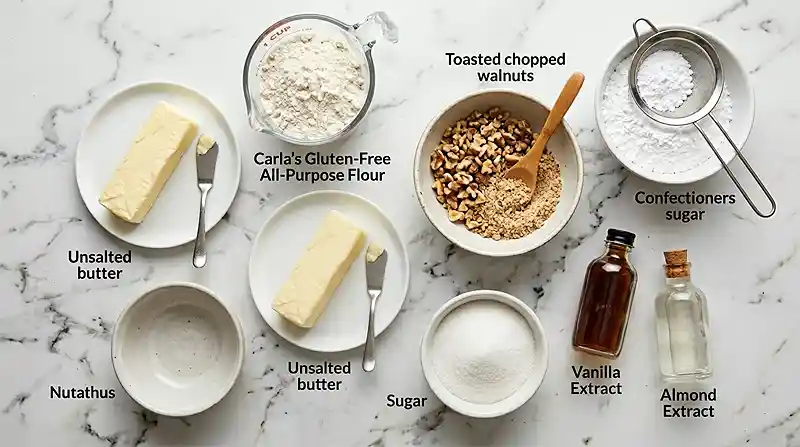
| Ingredient | Amount | Notes |
|---|---|---|
| Unsalted butter | ½ cup (1 stick) | At room temperature |
| Granulated sugar | ¼ cup | |
| Gluten-free all-purpose flour | 1 cup | Quality blend recommended |
| Chopped walnuts | ¾ cup | Divided |
| Pure vanilla extract | 1 teaspoon | |
| Almond extract | ½ teaspoon | Or more vanilla |
| Confectioners’ sugar | ¼ cup | Plus more for serving |
Yields: 12 cookies
Step-by-Step Instructions
Preparing the Dough
Step 1: Cream the butter.
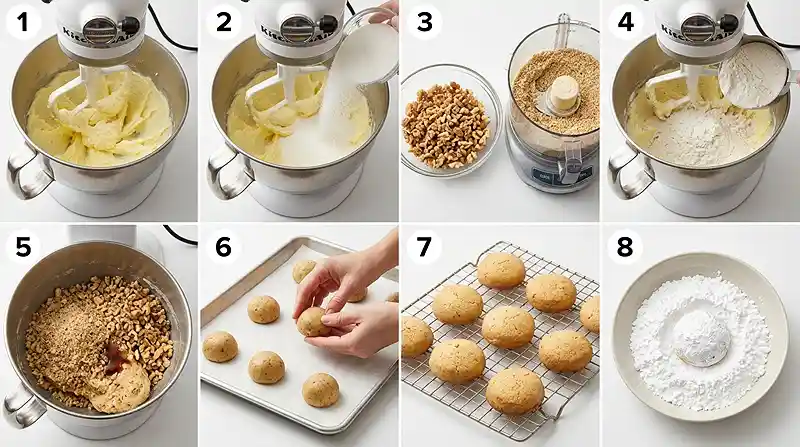
In the bowl of your electric mixer fitted with the paddle attachment, beat the butter until fluffy—about 2-3 minutes on medium-high speed. The butter should become noticeably lighter in color and increased in volume.
Step 2: Add the sugar.
Add the granulated sugar and beat until thoroughly combined, scraping down the sides of the bowl as needed. The mixture should be light and creamy, not grainy.
Step 3: Incorporate the flour.
Slowly beat in the gluten-free flour on low speed, mixing just until combined. Overmixing can make the cookies tough, even without gluten—the goal is a cohesive dough, not an overworked one.
Preparing the Walnuts
Step 4: Grind a portion of the nuts.
Grind a third of the walnuts (about ¼ cup) into a fine powder using a coffee grinder or small food processor. Be careful not to over-grind, or you’ll end up with walnut butter instead of walnut flour. Man, oh man, this ground nut powder is the secret to that incredible melt-in-your-mouth texture.
Pro Tip: Many bags of chopped walnuts contain walnut dust at the bottom—use this as part of your ground portion for even easier prep.
Step 5: Add walnuts and extracts.
Add the ground walnut powder, remaining chopped walnuts, vanilla extract, and almond extract to the dough. Mix on low speed until just combined and the nuts are evenly distributed throughout.
Shaping and Baking
Step 6: Chill if needed.
If your dough feels too soft to shape (this depends on your kitchen temperature and flour blend), refrigerate for 15-20 minutes until firm enough to handle. The dough should be pliable but not sticky.
Step 7: Shape the cookies.
Preheat your oven to 325°F and line a baking sheet with parchment paper. Scoop about 1 tablespoon of dough per cookie and roll into balls, then shape into crescents or leave as rounds—traditional Gluten-Free Polvorones can be either shape. Place 1 inch apart on the prepared sheet.
Step 8: Bake until just set.
Bake for 15-18 minutes until the cookies are set but not browned—they should look pale with just barely golden edges. These cookies continue cooking on the hot pan after removal, so don’t wait for them to look “done.”
Coating in Sugar
Step 9: First sugar coating.
While the cookies are still warm (but cool enough to handle, about 5 minutes), gently roll each one in the confectioners’ sugar. The warmth helps the sugar adhere and creates a base layer. Well, some will crack or crumble at this stage—that’s normal for these delicate Mexican wedding cookies.
Pro Tip: Work gently—these cookies are fragile when warm. If one breaks, press it back together and continue coating.
Step 10: Second coating after cooling.
Once the cookies have cooled completely (about 20 minutes), roll them again in fresh confectioners’ sugar for that beautiful, thick coating that makes polvorones so visually stunning. Shake off excess gently.
Make It Your Own
Pecan variation: Swap the walnuts for pecans to create a nuttier, more Southern-influenced cookie. Toast the pecans lightly before grinding for even deeper flavor in your Mexican wedding cookies.
Chocolate-dipped version: You know what makes these extra special? Dip half of each cooled cookie in melted dark chocolate before the final sugar coating. Let the chocolate set completely, then dust the undipped half with powdered sugar.
Cinnamon spice twist: Add ¼ teaspoon of ground cinnamon to the dough for a warmer, more aromatic cookie that pairs beautifully with gluten-free Mexican hot chocolate.
Lemon zest brightness: Add 1 teaspoon of finely grated lemon zest to the dough for a citrusy variation that’s particularly refreshing in spring and summer.
Dairy-free adaptation: Replace the butter with high-quality vegan butter (like Miyoko’s) at the same weight. The texture will be slightly different but still delicious for those avoiding dairy.
Common Problems & Solutions
Problem: My cookies spread too much and are flat.
The butter was too soft or partially melted, or the dough was too warm when baked. Solution: Make sure butter is at proper room temperature (soft but not shiny), and chill the dough 15-20 minutes before shaping if your kitchen is warm.
Problem: The cookies are hard instead of tender.
You overmixed the dough after adding flour, or overbaked them. Solution: Mix just until combined—stop as soon as you don’t see dry flour. Pull cookies from the oven when pale, not golden, for perfect Gluten-Free Polvorones.
Problem: They crumble apart when I try to coat them.
The cookies weren’t cooled enough before the first coating, or you’re handling them too roughly. Solution: Wait a full 5 minutes after removing from the oven, and handle with a very gentle touch. Some breakage is normal with these delicate cookies.
Problem: The powdered sugar coating looks patchy.
The first coating absorbed completely, or you didn’t apply enough. Solution: Always do two coatings—the first while warm, the second after complete cooling. Be generous with the sugar for that signature snowy appearance.
Problem: I can taste the gluten-free flour.
Some gluten-free blends have a noticeable aftertaste. Solution: Use a high-quality flour blend, and consider adding an extra ⅛ teaspoon almond extract to mask any off-flavors. The nuts and extracts help tremendously.
Storage & Meal Prep
| Method | Duration | Notes |
|---|---|---|
| Counter | Up to 1 week | Airtight container, layered with parchment |
| Fridge | Not recommended | Sugar coating absorbs moisture |
| Freezer (unbaked dough) | Up to 3 months | Shape first, freeze on sheet, then bag |
| Freezer (baked, uncoated) | Up to 2 months | Coat after thawing |
These Mexican wedding cookies actually improve after a day or two as the flavors meld and the texture settles. Store in a single layer if possible, or separate layers with parchment paper to prevent the delicate coating from rubbing off.
For holiday baking, make the dough up to 3 days ahead and refrigerate, or freeze shaped dough balls for up to 3 months. Bake directly from frozen, adding 2-3 minutes to baking time. Coat in sugar only after baking.
Your Questions Answered
What flour is best for polvoron?
For traditional wheat-based polvorones, all-purpose flour is standard. For gluten-free versions, a quality all-purpose gluten-free blend that contains xanthan gum works best. The addition of ground nuts helps create the tender, crumbly texture these Gluten-Free Polvorones are known for.
What can you replace flour with for gluten-free?
A 1:1 gluten-free all-purpose flour blend works as a direct substitute in this recipe. Look for blends containing rice flour, tapioca starch, and xanthan gum. The ground walnuts in this recipe also contribute to structure, making it more forgiving than some gluten-free cookies.
What is the difference between Mexican and Filipino polvorones?
Mexican polvorones (also called Mexican wedding cookies) are buttery, nut-studded cookies coated in powdered sugar. Filipino polvoron is quite different—a powdery, crumbly candy made from toasted flour, powdered milk, sugar, and butter, often shaped in molds. Both are delicious but distinctly different treats.
What do you call polvoron in English?
Polvorones are commonly called Mexican wedding cookies, snowball cookies, or Russian tea cakes in English. The name “polvorón” comes from the Spanish word “polvo” meaning dust or powder, referring to their powdery, crumbly texture and generous powdered sugar coating.
Are polvorones healthy?
Like most cookies, polvorones are a treat rather than health food. However, the walnuts provide healthy fats and protein, and homemade versions let you control ingredients. These Gluten-Free Polvorones can fit into a balanced diet when enjoyed in moderation.
Serving Suggestions
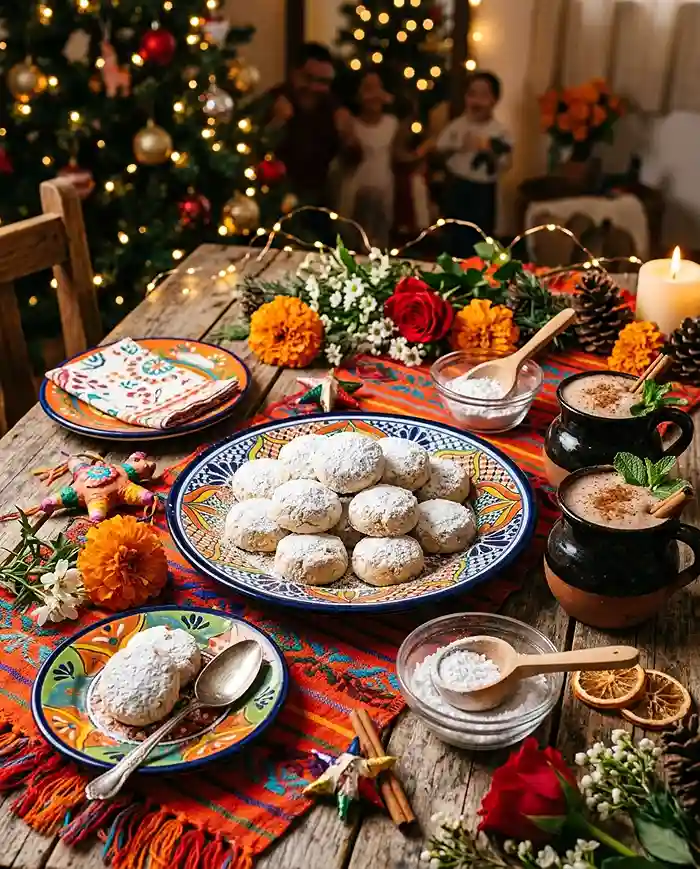
These Gluten-Free Polvorones are the perfect addition to a Mexican celebration dessert spread, arranged on a colorful platter alongside gluten-free sopapilla cheesecake bars and gluten-free tres leches cupcakes. The snowy cookies provide beautiful contrast against richer, darker desserts.
For a complete Cinco de Mayo menu, start with savory gluten-free guacamole deviled eggs, then finish the evening with these tender cookies and Mexican coffee. They’re equally perfect for Christmas cookie exchanges, wedding favors, or any celebration that calls for something special.
Each cookie dissolves on your tongue like sweet, nutty clouds dusted with snow—delicate, buttery, and completely irresistible in a way that makes the cookie jar empty far too quickly.
Ready to Bake?
These Gluten-Free Polvorones have reclaimed a beloved tradition I thought I’d lost forever, and they’ve become the most requested cookie in my holiday rotation. The tender, nutty crumb and snowy coating transport me straight to my grandmother’s kitchen with every bite.
I’d love to hear about your polvorones! Drop a comment below sharing your favorite variation or family tradition, and please rate this recipe if these become your new celebration essential. Save it to Pinterest so you’ll have these Mexican wedding cookies ready whenever the occasion calls for something special.
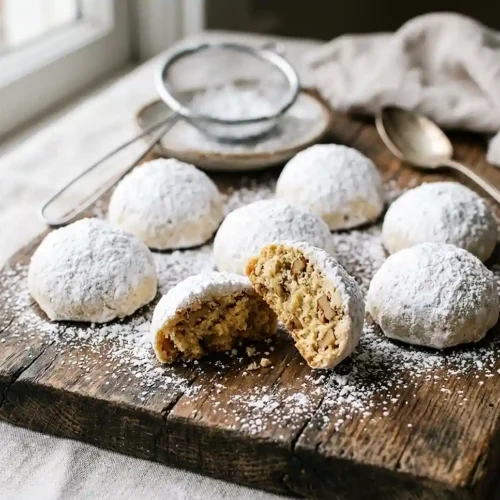
Gluten-Free Polvorones
Equipment
- Electric mixer with paddle attachment
- Coffee grinder or small food processor
- Baking sheet
- Parchment paper
- Shallow bowl for coating
Ingredients
- ½ cup unsalted butter 1 stick, at room temperature
- ¼ cup granulated sugar
- 1 cup gluten-free all-purpose flour quality blend recommended
- ¾ cup chopped walnuts divided
- 1 teaspoon pure vanilla extract
- ½ teaspoon almond extract or more vanilla
- ¼ cup confectioners’ sugar plus more for serving
Instructions
- In the bowl of your electric mixer fitted with the paddle attachment, beat the butter until fluffy, about 2-3 minutes on medium-high speed. The butter should become noticeably lighter in color.
- Add the granulated sugar and beat until thoroughly combined, scraping down the sides of the bowl as needed. The mixture should be light and creamy.
- Slowly beat in the gluten-free flour on low speed, mixing just until combined. Do not overmix.
- Grind a third of the walnuts (about 1/4 cup) into a fine powder using a coffee grinder or small food processor. Be careful not to over-grind or it will turn into walnut butter.
- Add the ground walnut powder, remaining chopped walnuts, vanilla extract, and almond extract to the dough. Mix on low speed until just combined and nuts are evenly distributed.
- If dough feels too soft to shape, refrigerate for 15-20 minutes until firm enough to handle.
- Preheat oven to 325°F and line a baking sheet with parchment paper. Scoop about 1 tablespoon of dough per cookie, roll into balls, then shape into crescents or leave as rounds. Place 1 inch apart on prepared sheet.
- Bake for 15-18 minutes until cookies are set but not browned—they should look pale with just barely golden edges.
- While cookies are still warm (but cool enough to handle, about 5 minutes), gently roll each one in confectioners’ sugar. Handle carefully as they are fragile.
- Once cookies have cooled completely (about 20 minutes), roll them again in fresh confectioners’ sugar for a beautiful thick coating. Shake off excess gently.