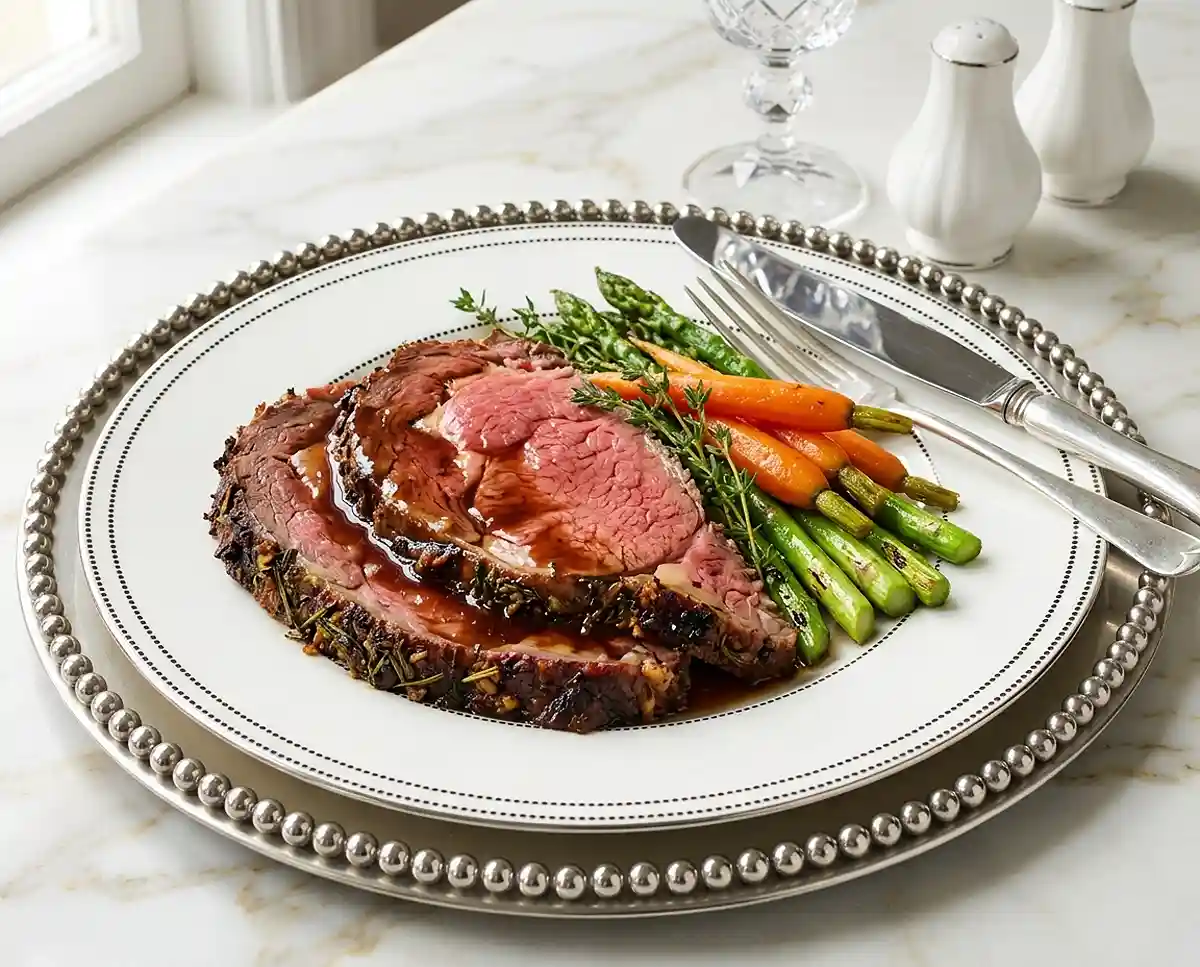
Gluten-Free Prime Rib Roast
Meta Description: This gluten-free prime rib roast uses a foolproof closed-oven method for perfectly pink, juicy roast beef every time. Ideal for Easter dinner or any special occasion!
The first time I attempted prime rib for Christmas dinner, I nervously checked the oven every ten minutes. By the time I served it, the exterior was grey, the interior was overdone, and my confidence was completely shattered. Twenty dollars per pound, straight into the disappointment pile.
Well… that disaster led me to discover the closed-oven method, and it genuinely changed my holiday cooking forever. You roast at high heat, turn off the oven, and walk away for two hours. No thermometer anxiety, no constant basting, no opening the door to peek.
This gluten-free prime rib roast delivers restaurant-quality results with minimal hands-on time. What could be better than a show-stopping Easter dinner centerpiece that practically cooks itself?
Table of Contents
Why You’ll Love This Gluten-Free Prime Rib Roast
Naturally gluten-free without any modifications – prime rib needs no flour coating or breadcrumb crust, making it inherently safe for gluten-free diets.
Closed-oven method eliminates guesswork – no meat thermometer required, no constant monitoring, just trust the process and enjoy perfectly pink slices.
Impressive presentation with minimal active time – spend 15 minutes prepping, then let the oven do the work while you focus on side dishes.
Red wine jus elevates the whole experience – a simple reduction sauce that tastes like you trained in a French kitchen.
The Secret to Perfect Roast Beef
Room temperature meat cooks more evenly. A cold roast straight from the refrigerator will have an overcooked exterior and raw center. Pull your prime rib out 2-3 hours before cooking—this single step makes the biggest difference in your final results.
High initial heat creates that coveted crust. The 500°F blast renders the fat cap and develops deep browning through the Maillard reaction. According to Serious Eats’ meat science guide, this searing step locks in flavor compounds that low-and-slow methods simply can’t replicate.
The closed-oven resting period is pure magic. Turning off the heat and keeping the door sealed allows residual heat to gently finish cooking the interior while the temperature slowly drops. The result is edge-to-edge pink perfection.
Resting before carving is non-negotiable. Cutting into meat immediately releases all those precious juices onto your cutting board instead of staying in each slice. A 15-20 minute rest after removing from the oven redistributes moisture throughout.
Ingredients
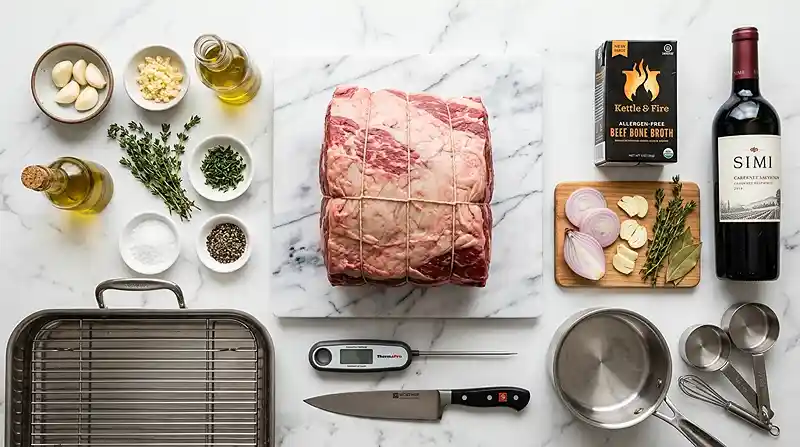
Prime Rib Roast
- 1 three-rib prime roast, trimmed and tied (ask your butcher)
- 4 cloves garlic, minced
- 1/2 cup (120 mL) fresh thyme leaves, finely chopped
- 1/4 cup (60 mL) olive oil
- Salt and pepper to taste
Red Wine Jus
- 4 cups (950 mL) beef stock (look for allergen-free brand)
- 2 cups (475 mL) red wine (or substitute equal amount allergen-free beef stock)
- 2 shallots, sliced
- 4 cloves garlic, sliced
- 1 tablespoon fresh thyme leaves
- 2 bay leaves
Equipment You’ll Need
A heavy roasting pan with low sides allows maximum heat circulation around the meat. Avoid deep pans that steam rather than roast. You’ll also need a medium saucepan for the jus, a small mixing bowl for the herb rub, kitchen twine if your butcher didn’t tie the roast, and a sharp carving knife.
Pro Tip: A roasting rack elevates the meat, but if you don’t have one, create a makeshift rack by placing the roast on a bed of thick-cut onion rounds. They’ll caramelize beautifully and can be discarded or added to the jus.
Step-by-Step Instructions
Prepare the Roast
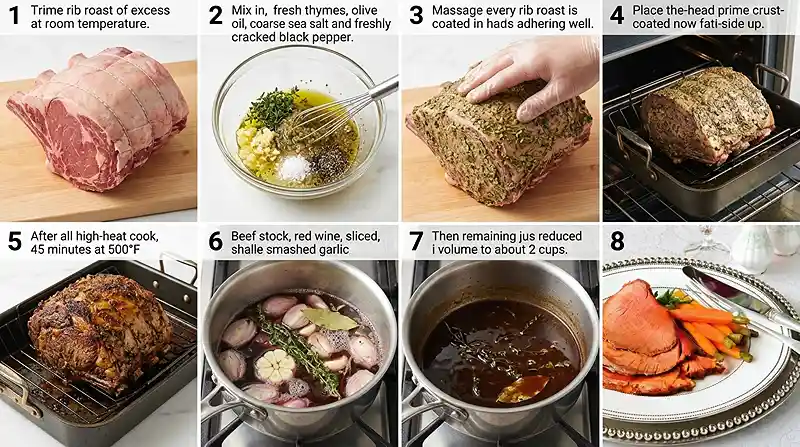
Remove your prime rib from the refrigerator 2-3 hours before cooking. This seems like a long time, but a three-rib roast is substantial and needs adequate time to lose its chill. Place it on a rimmed baking sheet and loosely tent with foil.
While the meat tempers, combine the minced garlic, chopped thyme, olive oil, salt, and pepper in a small bowl. The mixture should form a loose paste—add more oil if it seems too dry.
Pro Tip: Be generous with the salt. A roast this size can handle 1-2 tablespoons of kosher salt. The exterior develops a savory crust while the interior stays perfectly seasoned.
Apply the Herb Rub
Pat the roast completely dry with paper towels. Moisture is the enemy of browning—any surface wetness will steam instead of sear.
Rub the herb mixture all over the roast, coating every surface thoroughly. Pay special attention to the fat cap on top and the ends where the bones are exposed. The oil helps the seasonings adhere and promotes even browning.
Place the beef fat-side up in your roasting pan. The fat cap bastes the meat as it renders during cooking.
The High-Heat Sear
Preheat your oven to 500°F (260°C). Yes, this sounds alarmingly hot—that’s the point. Make sure your oven is fully preheated before the roast goes in.
Roast at 500°F for exactly 45 minutes. Your kitchen will fill with the most incredible aroma of browning meat and roasted garlic. The exterior will develop a deeply browned, almost crusty surface.
You know… this is the moment your smoke detector might test your commitment. Ensure your ventilation is working and consider cracking a window.
The Closed-Oven Magic
After 45 minutes, turn the oven completely off. Do not open the door—this is absolutely critical. The residual heat trapped inside continues cooking the roast gently and evenly.
Leave the roast undisturbed for exactly 2 hours. No peeking, no checking, no thermometer insertion. Trust the process. The temperature inside your oven will gradually decrease from 500°F to approximately 140°F over this time, perfectly finishing the interior to medium-rare.
Pro Tip: Set a timer and leave the kitchen. The temptation to peek is real, but every door opening releases precious heat and disrupts the cooking process.
Prepare the Red Wine Jus
While the roast rests in the closed oven, prepare your jus. Combine the beef stock, red wine (or additional stock), sliced shallots, sliced garlic, thyme leaves, and bay leaves in a medium saucepan.
Bring to a boil over high heat, then reduce to a vigorous simmer. Cook until the liquid reduces to approximately 2 cups—this takes 25-35 minutes depending on your pan width and heat level.
The jus should coat a spoon lightly and taste deeply beefy with subtle wine complexity. Remove the bay leaves before serving. You can strain out the shallots and garlic for a smoother sauce, or leave them in for rustic appeal.
Man, oh man… if you’re avoiding alcohol entirely, the all-stock version still tastes wonderful. Add a splash of balsamic vinegar for acidity that mimics wine’s brightness.
Rest and Carve
After the 2-hour closed-oven period, remove the roast and let it rest on a cutting board for 15-20 minutes. This additional resting period allows the juices to redistribute fully.
Remove the kitchen twine. Carve between the bones for thick, impressive rib steaks, or slice across the grain for thinner portions. A three-rib roast typically yields 4-6 generous servings depending on appetite and slice thickness.
Serve immediately with the warm red wine jus drizzled over or passed alongside.
Make It Your Own
Horseradish crust adds sinus-clearing punch. Mix 1/4 cup prepared horseradish into the herb rub for a classic steakhouse flavor profile. The heat mellows during cooking but leaves a pleasant warmth.
Coffee and cocoa create an unexpected depth. Add 2 tablespoons espresso powder and 1 tablespoon unsweetened cocoa to your rub. This doesn’t make the beef taste like coffee—it amplifies the savory, roasted notes in surprising ways.
Fresh rosemary substitutes beautifully for thyme. Use equal amounts, or try a combination of both herbs. Rosemary’s piney intensity pairs particularly well with the richness of prime rib.
Compound butter makes an elegant finishing touch. Well… blend softened butter with roasted garlic, fresh herbs, and a pinch of flaky salt. Place a coin of compound butter on each hot slice and watch it melt into golden pools.
Yorkshire pudding is the traditional British accompaniment. While classic recipes contain wheat flour, many gluten-free flour blends produce acceptable results. The beef drippings from this roast provide the essential fat for proper pudding puff.
Common Problems & Solutions
Problem: The roast came out more well-done than expected.
Your oven may run hot, or the roast wasn’t fully room temperature before cooking. Use an oven thermometer to verify accuracy, and ensure the meat sits out for the full 2-3 hours next time. Smaller roasts also cook faster—adjust initial roasting time to 35-40 minutes for a two-rib roast.
Problem: The exterior didn’t brown properly.
Surface moisture prevented the Maillard reaction. Pat the roast aggressively dry before applying the rub, and make sure your oven reached 500°F before inserting the meat. A convection setting helps if available.
Problem: The jus tastes too winey or acidic.
The sauce didn’t reduce enough, leaving harsh alcohol notes. Continue simmering until it reaches 2 cups volume—this concentrates flavors and cooks off raw wine taste. Adding a teaspoon of butter at the end rounds out acidity beautifully.
Problem: The meat is tough or chewy.
This typically indicates an overcooked roast or one that wasn’t rested properly. The closed-oven method works best for medium-rare to medium doneness. Also ensure you’re carving against the grain—cutting with the grain produces stringy, tough slices.
Problem: I opened the oven door during the resting period.
If you peeked early (it happens!), close the door immediately and add 15-20 extra minutes to the resting time. One quick peek won’t ruin the roast, but repeated door openings will result in undercooking.
Storage & Meal Prep
| Method | Duration | Notes |
|---|---|---|
| Counter | 2 hours max | Tent loosely with foil |
| Refrigerator | 4-5 days | Wrap tightly or store in airtight container |
| Freezer | 2-3 months | Wrap in plastic, then foil; slice before freezing for easier thawing |
Leftover prime rib makes incredible sandwiches, beef hash, or stroganoff. Slice thinly and reheat gently in warm jus to prevent overcooking—30 seconds in simmering liquid is plenty.
The jus stores separately in the refrigerator for up to 1 week or freezes for 3 months. Reheat gently and whisk to re-emulsify before serving.
For the best make-ahead approach, prepare and apply the herb rub the night before, then refrigerate uncovered. This seasons the meat more deeply and slightly dries the surface for better browning. Pull it out 3 hours before cooking.
FAQs About Gluten-Free Prime Rib Roast
Is prime rib naturally gluten-free?
Yes, plain prime rib contains no gluten. The potential risks come from seasonings, sauces, and cross-contamination. This recipe uses only naturally gluten-free ingredients—just verify your beef stock is certified gluten-free, as some brands contain hidden wheat.
What’s the difference between prime rib and standing rib roast?
They’re the same cut of beef. “Prime rib” refers to the classic preparation method, while “standing rib roast” describes the bone-in configuration that allows it to stand in the roasting pan. The word “prime” doesn’t necessarily indicate USDA Prime grade, though Prime-grade beef will produce superior results.
Can I use this method for a larger roast?
Absolutely. For a four or five-rib roast, increase the initial high-heat roasting time to 55-60 minutes, keeping the 2-hour closed-oven period the same. The larger mass retains more heat and continues cooking proportionally.
Why can’t I open the oven door?
Opening the door releases the trapped heat that gently finishes cooking the roast. The closed-oven method relies on gradually decreasing temperature to produce even doneness. Each peek drops the internal temperature significantly and disrupts this precise process.
What temperature will the roast reach using this method?
A properly tempered three-rib roast cooked at 500°F for 45 minutes, then rested for 2 hours in the closed oven, typically reaches 130-135°F (medium-rare). Variables include starting temperature, oven accuracy, and roast thickness.
Serving Suggestions
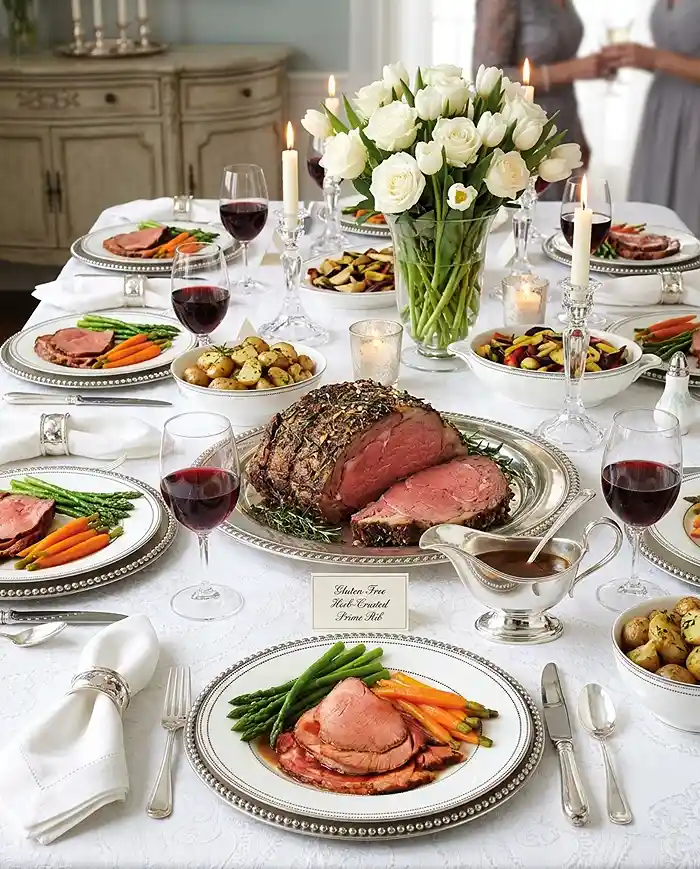
This gluten-free prime rib roast deserves center stage at your Easter dinner table. Present it whole on a cutting board for dramatic tableside carving, or pre-slice and fan the pieces on a warm platter drizzled with jus.
Classic accompaniments include creamy horseradish sauce, roasted root vegetables, and Yorkshire pudding (using gluten-free flour). For a complete special occasion menu, start with an elegant appetizer like gluten-free whole roast duck for smaller gatherings, or balance the richness with something sweet like gluten-free Easter basket cupcakes or gluten-free Cadbury egg brownies for dessert.
A bold red wine—Cabernet Sauvignon, Malbec, or Côtes du Rhône—pairs beautifully with the beefy richness. For non-drinkers, sparkling apple cider or a robust black tea complement the savory flavors.
Let’s Get Roasting!
There’s something deeply satisfying about presenting a perfect prime rib to your family. The collective gasp when you pull back the foil, the anticipation as you carve through that gorgeous crust—these are the moments that make holiday cooking worthwhile.
I’d love to hear how your roast turns out! Share your photos on Pinterest and drop a comment below with any questions or modifications you tried. Did you go with the wine jus or the all-stock version? Your experiences help other home cooks tackle this impressive cut with confidence.
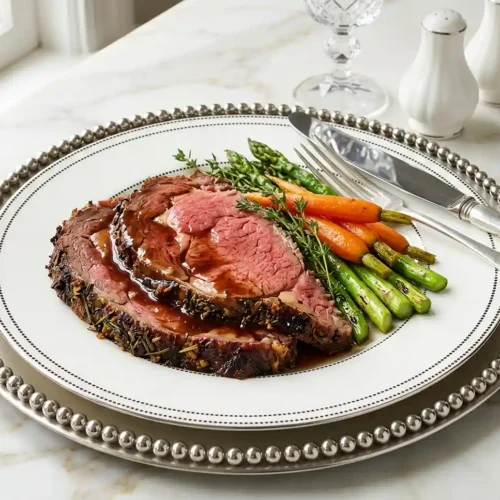
Gluten-Free Prime Rib Roast
Equipment
- Heavy roasting pan
- Medium saucepan
- Small mixing bowl
- Sharp carving knife
- Cutting board
- Kitchen twine (if not pre-tied)
Ingredients
Prime Rib Roast
- 1 three-rib prime roast trimmed and tied (ask butcher)
- 4 cloves garlic minced
- ½ cup fresh thyme leaves finely chopped (120 mL)
- ¼ cup olive oil 60 mL
- salt and pepper to taste
Red Wine Jus
- 4 cups beef stock 950 mL, look for allergen-free brand
- 2 cups red wine 475 mL, or substitute equal amount beef stock
- 2 shallots sliced
- 4 cloves garlic sliced
- 1 tablespoon fresh thyme leaves
- 2 bay leaves
Instructions
- Remove the prime rib from the refrigerator 2-3 hours before cooking to bring it to room temperature. This ensures even cooking throughout.
- Preheat your oven to 500°F (260°C). In a small bowl, combine the minced garlic, chopped thyme, olive oil, salt, and pepper to form a loose paste.
- Pat the roast completely dry with paper towels. Rub the herb mixture all over the roast, coating every surface thoroughly including the fat cap.
- Place the beef fat-side up in your roasting pan. Roast at 500°F for exactly 45 minutes until deeply browned.
- Turn the oven completely off. Do not open the oven door for 2 hours. The residual heat will gently finish cooking the roast to perfect medium-rare.
- While the roast rests, prepare the jus. Combine the beef stock, red wine, sliced shallots, sliced garlic, thyme leaves, and bay leaves in a medium saucepan.
- Bring to a boil, then reduce heat and simmer until reduced to approximately 2 cups, about 25-35 minutes. Remove bay leaves before serving.
- After the 2-hour closed-oven period, remove the roast and let it rest on a cutting board for 15-20 minutes before carving.
- Remove the kitchen twine and carve between the bones for thick rib steaks, or slice across the grain for thinner portions. Serve with the warm red wine jus.