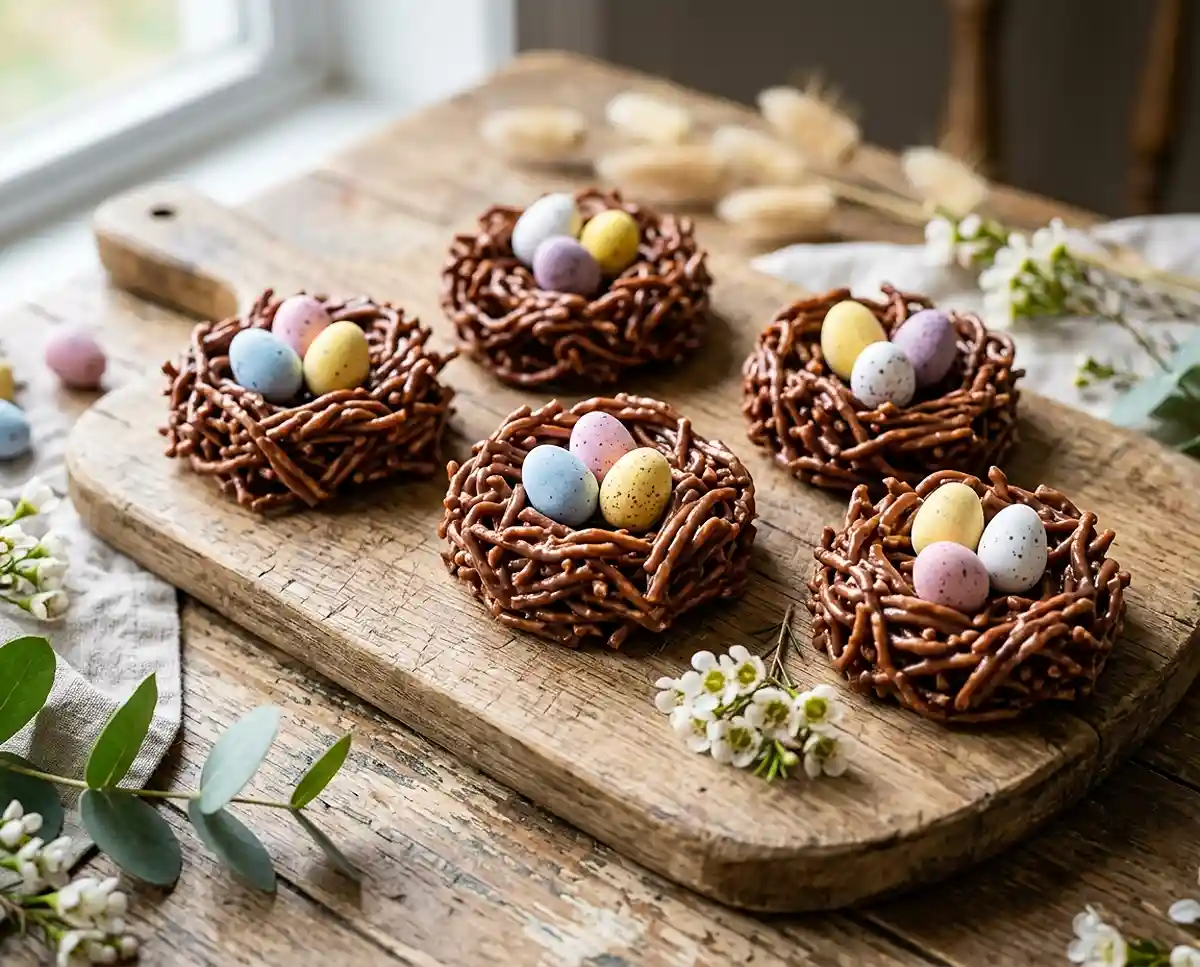
Gluten-Free Robin’s Egg Nest Cookies
Gluten-Free Robin’s Egg Nest Cookies made with melted chocolate, crunchy chow mein noodles, and pastel mini eggs. No baking required—ready in 45 minutes!
Last Easter, my daughter asked if we could make “those bird nest cookies” she’d seen at a friend’s house. Well… I’ll be honest—my first batch turned into a sticky, impossible-to-move mess because I didn’t wait for the chocolate to cool.
The noodles tasted burnt and bitter, and the whole thing slid apart when I tried to lift them off the paper. But after testing (okay, eating) three more batches, I figured out the secret: patience. These gluten-free robin’s egg nest cookies are now our go-to Easter dessert, and they actually hold their shape without any baking at all.
You know… there’s something magical about a recipe that requires zero oven time during spring when you’d rather be outside. These coconut nest treats (you can swap in shredded coconut if you prefer!) are as foolproof as they come—if I can rescue them from disaster, anyone can.
Why You’ll Love These Gluten-Free Robin’s Egg Nest Cookies
- Texture magic: Crispy, crunchy chow mein noodles stay firm inside smooth, creamy chocolate—like a homemade Crunch bar shaped into adorable nests
- Beginner-friendly: No mixing bowls full of flour, no rolling, no baking—just melt, stir, scoop, and chill
- Allergen-adaptable: Naturally gluten-free and can be made dairy-free by using dairy-free chocolate chips and butterscotch alternatives
- Perfect for: Easter baskets, spring potlucks, classroom parties, or any time you need a show-stopping dessert without turning on the oven
The Secret to Perfect Robins Egg Cookies Gluten Free
Why this recipe works when others fail:
- Two-chocolate blend: Baking chocolate melts smoothly and sets firm, while butterscotch chips add a subtle caramel sweetness that balances the bitterness—using chocolate chips alone can make them too hard to bite.
- Temperature control: Letting the melted mixture cool to warm (not hot) prevents the noodles from absorbing too much heat, which can make them taste stale or burnt. Understanding why chocolate seizes is crucial for success with any no-bake chocolate recipe.
- Chow mein structure: Gluten-free fine chow mein noodles hold their crispy texture better than gluten-free pretzels or rice cereal because they’re denser and absorb less moisture.
- Refrigerator finish: A quick 30-minute chill in the fridge locks everything in place so you can stack, store, and transport them without breakage—countertop cooling alone won’t get them firm enough.
Table of Contents
Ingredients
| Ingredient | Amount | Notes |
|---|---|---|
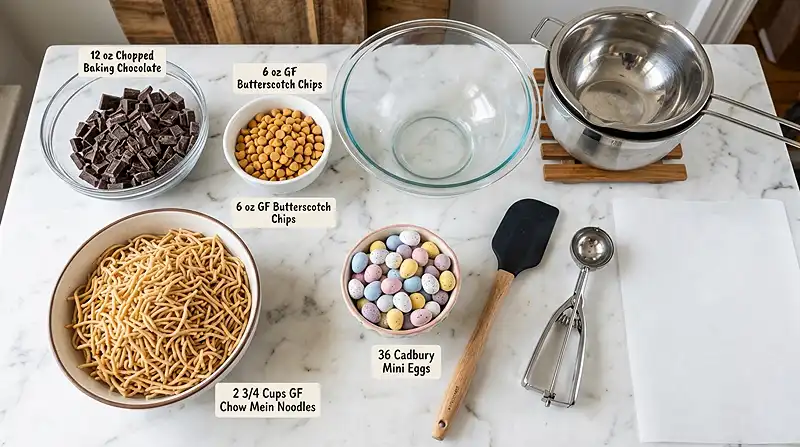
| Baking chocolate | 12 oz, chopped | Use your favorite brand; chocolate chips work too |
| Gluten-free butterscotch chips | 6 oz | Or substitute white chocolate or peanut butter chips |
| Gluten-free fine chow mein noodles | 2¾ cups (7.7 oz) | Check label for certified gluten-free; La Choy makes a GF version |
| Cadbury mini eggs | 36 pieces | Or use large jelly beans for a fun twist |
Step-by-Step Instructions
1. Prep your workspace.
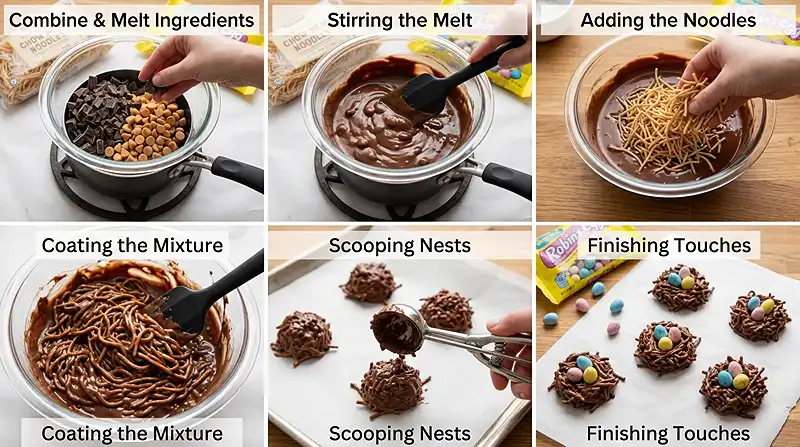
Line a large flat surface—a baking sheet or cutting board works perfectly—with parchment paper and set it aside. This keeps cleanup easy and prevents sticking. You’ll thank yourself later when these robins egg cookies gluten free pop right off without a fight.
2. Melt the chocolate mixture.
Place the chopped baking chocolate and butterscotch chips in a medium-size heat-safe (or microwave-safe) bowl. Melt the mixture either over a double boiler, stirring frequently, or in short bursts of about 20 seconds each in the microwave, stirring in between. The flavored chips will take longer to melt than baking chocolate, and even longer than chocolate chips if you’re using those instead of baking chocolate. Don’t rush and use too much heat, or the chocolate will seize into a grainy, unusable mess.
Pro Tip: The mixture is ready when it’s glossy and completely smooth—no lumps—and flows like warm honey off your spatula.
3. Cool the mixture.
Let the melted mixture sit, stirring frequently, until no longer hot to the touch. This step is non-negotiable. Otherwise, the noodles may taste stale or even slightly burnt, and the chocolate won’t set properly. It should feel warm but comfortable if you dip a clean finger in—think bathwater, not coffee.
4. Add the chow mein noodles.
Place the gluten-free chow mein noodles on top of the melted chocolate mixture. Using a silicone spatula, turn the mixture over gently to coat every piece evenly. You want each strand surrounded by chocolate, but don’t overmix or the noodles can break.
Sensory cue: The bowl will smell like a candy shop—rich, sweet, and slightly nutty from the butterscotch.
5. Scoop into portions.
Using a medium-size spring-loaded ice cream scoop (about 2 tablespoons) or two spoons, scoop the mixture into 10 equal portions. Release each mound onto the parchment paper, leaving about 2 inches between them so they don’t touch as they spread slightly.
Pro Tip: Dip your scoop in warm water between scoops to prevent sticking—this makes clean, uniform easter nest cookies every time.
6. Add the candy “eggs.”
Place 3 Cadbury mini eggs in the center of each mound and press gently to help them adhere. Don’t push too hard or they’ll sink completely—you want them nestled on top like real eggs in a nest.
Sensory cue: The pastel colors against the dark chocolate look as beautiful as spring flowers—perfect for Instagram and Easter tables alike.
7. Chill until set.
Allow the cookies to stand at room temperature until no longer warm at all (about 15 minutes), then place them—still on the paper and flat surface—in the refrigerator to chill until fully set (about 30 minutes). When they’re fully set, they will no longer be shiny at all and can be moved easily off the paper without bending or breaking.
Pro Tip: If you’re in a hurry, pop them in the freezer for 10-15 minutes instead—they’ll set faster and taste just as good.
Make It Your Own: Substitutions & Variations
Swap the butterscotch chips for white chocolate chips if you want a sweeter, creamier flavor, or try peanut butter chips for a Reese’s-inspired twist. White chocolate makes the base lighter in color, which some people prefer for a more “nest-like” look.
Use dairy-free chocolate and dairy-free butterscotch (or skip the butterscotch entirely and use all chocolate) to make these coconut nest treats completely dairy-free. Enjoy Life and Hu Kitchen both make excellent allergen-friendly chips that melt beautifully.
Try different candies if you can’t find Cadbury mini eggs—large jelly beans, Sixlets, or even malted milk balls work great. Just make sure whatever you choose is gluten-free and fits the pastel Easter vibe if that’s your goal.
Man, oh man… you can also fold in ½ cup of shredded sweetened coconut along with the noodles for extra texture and a hint of tropical flavor. It turns these into true coconut nest treats and adds a chewy contrast to the crunchy noodles.
Common Problems & Solutions
Problem: My chocolate seized and turned grainy.
Solution: Stop heating immediately and stir in 1 teaspoon of coconut oil or vegetable shortening.
Explanation: Water or steam in the bowl can cause chocolate to seize. Using short microwave bursts and a completely dry bowl prevents this, but if it happens, the added fat can sometimes save it.
Problem: The cookies won’t hold their shape.
Solution: Make sure you let the melted mixture cool to warm before adding the noodles, and refrigerate the finished cookies for the full 30 minutes.
Explanation: If the chocolate is too hot, it won’t set properly. If you skip the fridge, they’ll stay soft and sticky instead of firm and snackable.
Problem: The noodles taste stale or burnt.
Solution: Always cool the melted mixture until it’s just warm to the touch before mixing in the noodles.
Explanation: Hot chocolate can partially cook the noodles, drawing out moisture and leaving them with an off flavor. Patience is everything here.
Problem: The candies won’t stick.
Solution: Press them in gently right after scooping while the chocolate is still soft, and make sure you haven’t over-chilled the mixture before assembling.
Explanation: If the chocolate hardens too much before you add the eggs, they’ll just roll off. Work quickly once you start scooping.
Storage & Meal Prep
| Method | Duration | Notes |
|---|---|---|
| Counter | 2-3 days | Store in an airtight container; avoid heat or they’ll soften |
| Fridge | 1 week | Best texture when stored chilled; let sit 5 minutes before serving |
| Freezer | 2 months | Layer between parchment to prevent sticking; thaw 10 minutes before eating |
These gluten-free robin’s egg nest cookies actually taste better after a day in the fridge—the flavors meld and the chocolate gets even firmer. If you’re making them for a party, prep up to three days ahead and store them in a single layer in a covered container. No reheating needed—just grab and go.
Gluten-Free Robin’s Egg Nest Cookies FAQs
Can I use regular chow mein noodles instead of gluten-free?
Yes, if gluten isn’t a concern. Regular chow mein noodles work exactly the same way, but always check the label if you’re serving anyone with celiac disease or gluten sensitivity—cross-contamination can happen in manufacturing.
What’s the best gluten-free chow mein noodle brand?
La Choy makes a certified gluten-free version that’s easy to find in most grocery stores. You can also use gluten-free crispy rice noodles if chow mein isn’t available—they’ll give a slightly lighter, airier texture but still work beautifully in these easter nest cookies.
How do I keep the chocolate from melting during warm weather?
Store them in the fridge until just before serving, and if you’re transporting them, use a cooler with an ice pack. These coconut nest treats can soften at room temperature above 75°F, so plan accordingly for outdoor spring events.
Can I make these ahead for Easter?
Absolutely. Make them up to two weeks in advance and freeze them in an airtight container with parchment between layers. Thaw in the fridge the night before or on the counter for 15-20 minutes before serving—they’ll taste freshly made.
Why did my cookies turn out too hard?
You likely used all baking chocolate without any butterscotch or flavored chips. Baking chocolate has less sugar and fat, so it sets rock-hard. The butterscotch (or white chocolate or peanut butter chips) keeps the texture softer and more bite-friendly.
Serving Suggestions
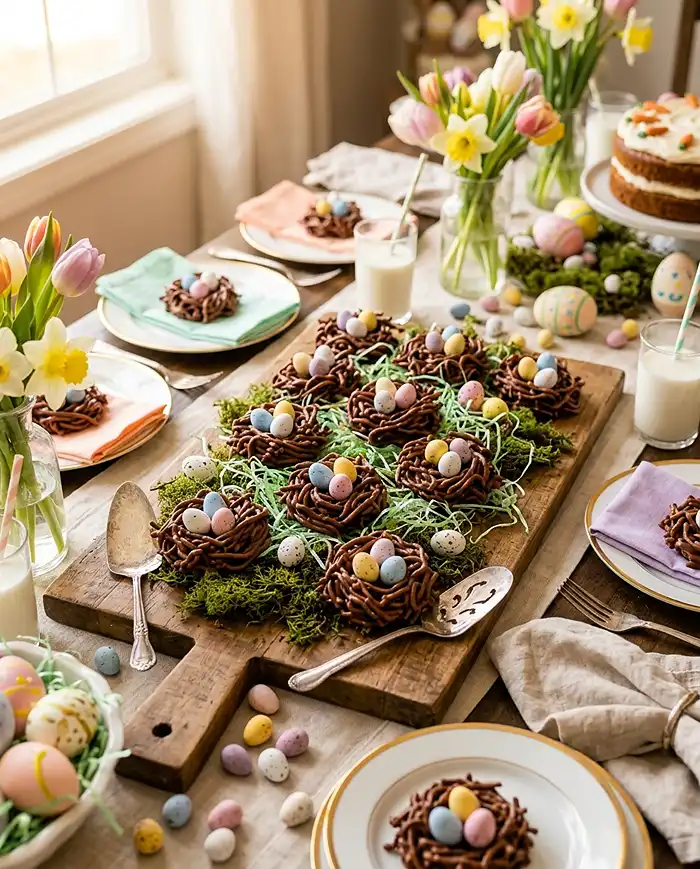
These gluten-free robin’s egg nest cookies are perfect for Easter brunch alongside fluffy gluten-free lemon poppy seed cake and a bowl of fresh berries. Arrange them on a pastel platter with some gluten-free coconut whipped cream on the side for dipping (trust me, it’s amazing), or tuck them into Easter baskets for a homemade touch that beats store-bought candy any day. They’re also a hit at spring potlucks—I’ve watched kids and adults alike grab seconds before the savory dishes even get touched.
If you’re planning a full holiday menu, pair these with something savory like gluten-free lemon herb lamb chops to balance the sweetness. The bright, herbaceous flavors of the lamb cut through the rich chocolate and make the whole meal feel special without being fussy.
Let’s Hear From You!
Give these robins egg cookies gluten free a try this spring and let me know how they turn out! Did you swap in a different candy or add shredded coconut? I’d love to hear your twists in the comments below. And if you love them as much as my family does, please pin this recipe on Pinterest so you can find it again next Easter (and so your friends can discover it, too!). Happy nesting!
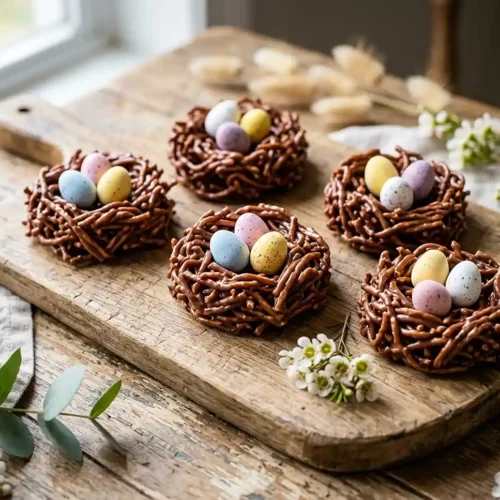
Gluten-Free Robin’s Egg Nest Cookies
Equipment
- Parchment paper
- Medium heat-safe bowl
- Double boiler or microwave
- Silicone spatula
- Medium spring-loaded ice cream scoop (2 tablespoons)
- Baking sheet or flat surface
Ingredients
- 12 ounces baking chocolate chopped (you can use chocolate chips, too)
- 6 ounces gluten-free butterscotch chips or white chocolate or peanut butter chips
- 2¾ cups gluten-free fine chow mein noodles 7.7 ounces; check label for certified gluten-free
- 36 Cadbury mini eggs or large jelly beans
Instructions
- Line a large flat surface with parchment paper and set it aside. This keeps cleanup easy and prevents sticking.
- Place the chopped baking chocolate and butterscotch chips in a medium-size heat-safe (or microwave-safe) bowl. Melt the mixture either over a double boiler, stirring frequently, or in short bursts of about 20 seconds each in the microwave, stirring in between. The flavored chips will take longer to melt than baking chocolate. Don’t rush and use too much heat, or the chocolate will seize into a grainy, unusable mess. The mixture is ready when it’s glossy and completely smooth—no lumps—and flows like warm honey off your spatula.
- Let the melted mixture sit, stirring frequently, until no longer hot to the touch. This step is non-negotiable. Otherwise, the noodles may taste stale or even slightly burnt, and the chocolate won’t set properly. It should feel warm but comfortable if you dip a clean finger in—think bathwater, not coffee.
- Place the gluten-free chow mein noodles on top of the melted chocolate mixture. Using a silicone spatula, turn the mixture over gently to coat every piece evenly. You want each strand surrounded by chocolate, but don’t overmix or the noodles can break. The bowl will smell like a candy shop—rich, sweet, and slightly nutty from the butterscotch.
- Using a medium-size spring-loaded ice cream scoop (about 2 tablespoons) or two spoons, scoop the mixture into 10 equal portions. Release each mound onto the parchment paper, leaving about 2 inches between them so they don’t touch as they spread slightly. Dip your scoop in warm water between scoops to prevent sticking—this makes clean, uniform cookies every time.
- Place 3 Cadbury mini eggs in the center of each mound and press gently to help them adhere. Don’t push too hard or they’ll sink completely—you want them nestled on top like real eggs in a nest. The pastel colors against the dark chocolate look as beautiful as spring flowers—perfect for Instagram and Easter tables alike.
- Allow the cookies to stand at room temperature until no longer warm at all (about 15 minutes), then place them—still on the paper and flat surface—in the refrigerator to chill until fully set (about 30 minutes). When they’re fully set, they will no longer be shiny at all and can be moved easily off the paper without bending or breaking. If you’re in a hurry, pop them in the freezer for 10-15 minutes instead.