Gluten-Free Sheet Pan Salmon and Asparagus
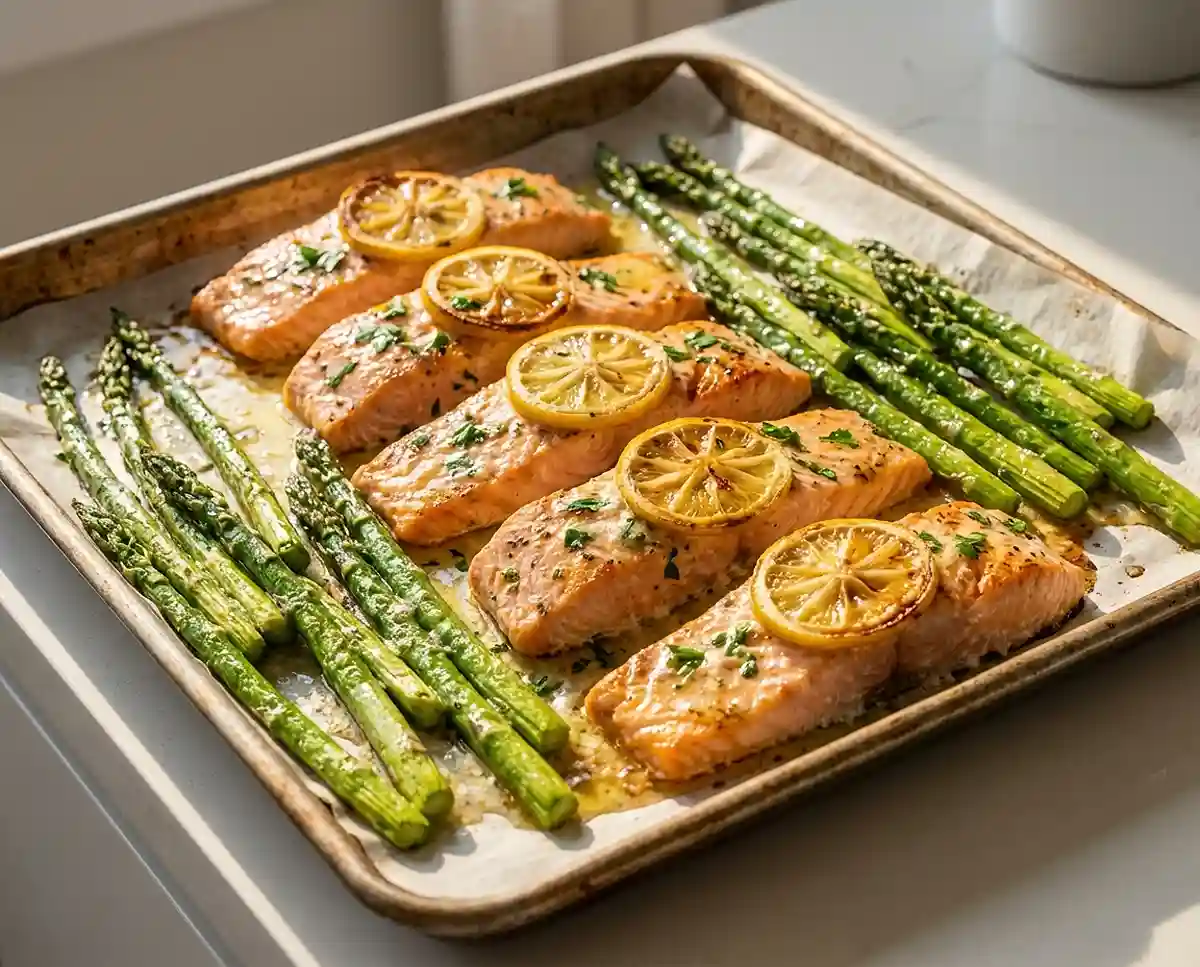
Gluten-Free Sheet Pan Salmon and Asparagus with lemon-garlic-herb butter. One pan, 20 minutes, naturally gluten-free—perfect for busy weeknights!
Three years ago, I tried making sheet pan salmon for a dinner party and ended up with dry, overcooked fish on one end and undercooked asparagus on the other because I didn’t arrange everything properly or pay attention to thickness.
After that embarrassing meal, I spent weeks testing different oven temps, rack positions, and timing until I cracked the code: high heat (450°F), top rack placement, and a quick broiler finish give you perfectly flaky salmon with caramelized edges and tender-crisp asparagus every single time.
Why You’ll Love This Sheet Pan Salmon
- Naturally gluten-free with zero substitutions: Fresh salmon, asparagus, butter, lemon, and herbs—no sneaky gluten hiding anywhere
- One-pan wonder that’s beginner-friendly: Arrange everything on a sheet pan, slather with flavored butter, bake for 12 minutes, and you’re done—no special skills required
- Restaurant-quality results at home: The lemon-garlic-herb butter tastes like something from a fancy steakhouse, and the quick broiler step gives the salmon those gorgeous golden edges
- Perfect for spring and summer dinners: Fresh asparagus and bright lemon make this feel light and seasonal, ideal for Easter, Mother’s Day, or any night you want something special without the fuss
The Secret to Perfect Gluten-Free Sheet Pan Salmon and Asparagus
High heat (450°F) on the top rack cooks everything evenly and fast. Positioning the pan close to the top heating element ensures the salmon gets a beautiful caramelized crust while the interior stays moist and flaky. According to trusted seafood cooking guidelines from the USDA, salmon is perfectly cooked at an internal temperature of 145°F, which takes just 10-12 minutes at this temperature.
Arranging salmon down the center with asparagus on the sides ensures even cooking. Salmon is thicker and denser than asparagus, so placing it in the middle (where heat circulates best) prevents the fish from being undercooked while the vegetables turn mushy. The asparagus gets just enough heat on the edges of the pan to become tender-crisp with lightly charred tips.
Lemon-garlic-herb butter does all the flavor work for you. Softened butter mixed with fresh lemon juice, minced garlic, and parsley creates a rich, tangy glaze that bastes the salmon as it bakes and pools around the asparagus for extra flavor. The butter also helps the salmon skin (if you leave it on) crisp up beautifully under the broiler.
A 2-3 minute broiler finish caramelizes the top without overcooking. Once the salmon hits 145°F internally, switching to broil for just a couple of minutes gives you those restaurant-style golden-brown edges and a slightly crispy herb crust. Watch it closely—broilers vary in intensity, and you want a light golden glow, not blackened char.
Table of Contents
Ingredients
For the Salmon and Asparagus
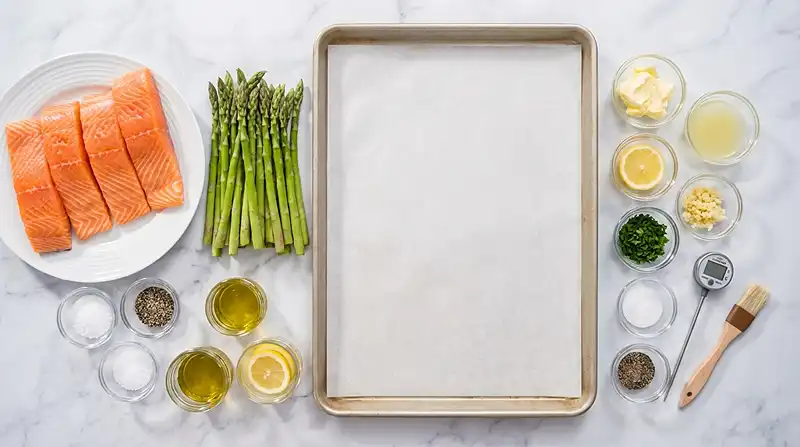
| Ingredient | Amount | Notes |
|---|---|---|
| Salmon fillet | 2 lbs | Cut into six 6-oz portions; skin-on or skinless |
| Asparagus | 2 lbs | Fibrous ends removed (snap or trim) |
| Salt and black pepper | To taste | Season generously before baking |
| Olive oil | 1 tbsp | For coating the asparagus |
| Small lemon | 1 | Sliced into rings for garnish |
For the Lemon-Garlic-Herb Butter
| Ingredient | Amount | Notes |
|---|---|---|
| Unsalted butter | 6 tbsp | Softened to room temperature |
| Fresh lemon juice | 2 tbsp | From 1 small lemon, freshly squeezed |
| Garlic cloves | 2 | Pressed or finely minced |
| Fresh parsley | 2 tbsp | Finely chopped; do not use dried |
| Salt | 1 tsp | Sea salt or kosher salt |
| Black pepper | ¼ tsp | Freshly ground if possible |
Step-by-Step Instructions
Step 1: Prep Your Oven and Pan
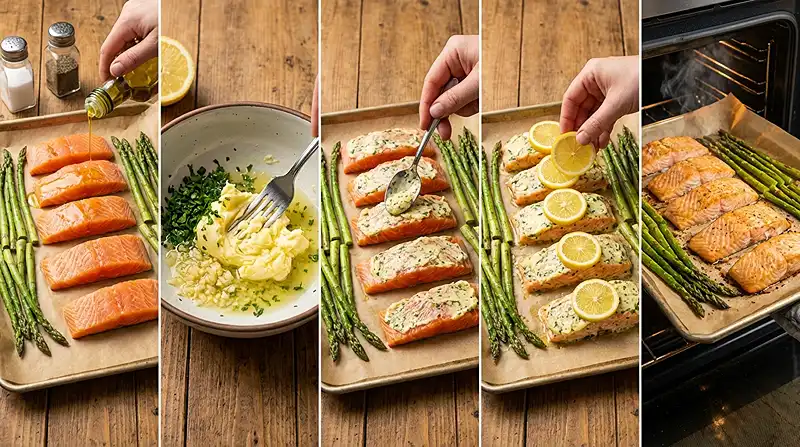
Preheat your oven to 450°F and position the oven rack in the top third of the oven—this puts the sheet pan close to the top heating element for better browning. Line a large rimmed baking sheet with parchment paper, trimming the edges so the paper sits flush with the pan and doesn’t hang over (overhanging parchment can char and smoke under the broiler). This step ensures easy cleanup and prevents the salmon from sticking.
Pro Tip: If you don’t have parchment, lightly grease the pan with cooking spray or olive oil—the salmon may stick slightly, but it’ll still cook beautifully.
Step 2: Arrange the Salmon and Asparagus
Place the six 6-oz salmon portions in a single row down the center of your lined baking sheet, leaving a little space between each piece. Arrange the trimmed asparagus spears on both sides of the salmon, spreading them out so they’re not piled on top of each other (overcrowded asparagus steams instead of roasting). Drizzle the asparagus lightly with 1 tbsp olive oil and roll the spears gently to coat them evenly. Sprinkle both the salmon and asparagus generously with salt and black pepper—don’t be shy here, as the seasoning brings out the natural flavors.
Pro Tip: If your asparagus spears vary in thickness, place the thicker ones toward the edges of the pan where they’ll get slightly more heat, and the thinner ones closer to the salmon.
Step 3: Make the Lemon-Garlic-Herb Butter
In a medium bowl, combine 6 tbsp softened unsalted butter, 2 tbsp fresh lemon juice, 2 minced or pressed garlic cloves, 2 tbsp finely chopped fresh parsley, 1 tsp salt, and ¼ tsp black pepper. Use a fork to mash and stir everything together for about 2-3 minutes—it’ll look broken and clumpy at first, but keep mashing and the butter will absorb the lemon juice and turn into a smooth, creamy, fragrant mixture that smells like a Mediterranean herb garden. If you prefer, you can pulse everything in a food processor for 15-20 seconds until well blended.
Pro Tip: If your butter isn’t soft enough, microwave it for 5-10 seconds (not until melted, just until it’s squishy) to make mashing easier.
Step 4: Slather with Flavored Butter
Spoon about ¾ of your lemon-garlic-herb butter over the six salmon portions, dividing it roughly evenly and spreading it across the top of each piece with the back of the spoon—it doesn’t need to be perfect, just a generous coating that covers most of the surface. Dab the remaining butter mixture over the asparagus spears, focusing on the tips and thicker stalks. The butter will melt as it bakes, creating a rich, tangy glaze that bastes everything and pools on the pan.
Step 5: Top with Lemon and Bake
Place one thin lemon slice on top of each salmon portion (this looks beautiful and infuses subtle citrus flavor into the fish). Slide the sheet pan into the preheated oven on the top rack and bake uncovered for 10-12 minutes—use the shorter time for thinner fillets (around 1 inch thick) and the longer time for thicker cuts (1.5 inches or more). The salmon is done when it flakes easily when you insert a fork and the internal temperature reads 145°F on an instant-read thermometer inserted into the thickest part.
Pro Tip: If you don’t have a thermometer, look for the salmon to turn from translucent to opaque and feel firm but still slightly springy when you press gently on the top.
Step 6: Broil for a Golden Finish
Once the salmon reaches 145°F, switch your oven setting to BROIL (high if you have the option) and bake for an additional 2-3 minutes. Watch closely—broilers can go from golden to burnt in seconds. You’re looking for the butter on top of the salmon to bubble and turn lightly golden, and the asparagus tips to develop a few charred spots. When you see that beautiful caramelization and smell the nutty, toasted aroma, pull the pan out immediately.
Pro Tip: If your broiler is very powerful, crack the oven door slightly or reduce the time to 1-2 minutes to avoid burning.
Step 7: Serve Immediately
Transfer the salmon and asparagus to a serving platter or individual plates. Spoon any melted butter and juices from the pan over the top—this is liquid gold packed with lemon, garlic, and herb flavor. Garnish with extra fresh parsley or lemon wedges if you want to make it look extra fancy.
Make It Your Own
Swap the asparagus for other spring vegetables. Well… green beans, snap peas, or sliced zucchini all work beautifully and cook in the same timeframe. Broccolini is another great option—just trim the thick stems and toss them with olive oil and salt like you would the asparagus.
Try different herbs in the flavored butter. Fresh dill is a classic pairing with salmon and gives the dish a bright, slightly sweet flavor. Basil, thyme, or chives also work well—use the same 2 tbsp measurement and finely chop them before mixing into the butter.
Make it dairy-free with a simple swap. Replace the butter with dairy-free butter (like Earth Balance or Miyoko’s) or use olive oil mixed with the lemon juice, garlic, parsley, salt, and pepper. The texture won’t be quite as rich and creamy, but the flavor will still be vibrant and tangy.
Add a kick with red pepper flakes or Dijon mustard. Stir ¼ tsp red pepper flakes or 1 tsp Dijon mustard into the lemon-garlic-herb butter for a subtle heat or tangy depth that pairs beautifully with the richness of the salmon.
Common Problems & Solutions
Problem: The salmon is overcooked and dry.
Solution: You baked it for too long or at too high a temperature for its thickness. Thinner fillets (around 1 inch) need only 10 minutes at 450°F, while thicker cuts (1.5 inches) can go 12 minutes. Use an instant-read thermometer and pull the salmon at exactly 145°F—it will continue cooking slightly from residual heat, so err on the side of undercooking rather than overcooking.
Problem: The asparagus is mushy and overcooked.
Solution: You likely used very thin asparagus spears that cook faster than thicker ones. Choose medium to thick asparagus (about the diameter of a pencil) for this recipe, or reduce the baking time by 2-3 minutes if you’re using thin spears. You can also pull the asparagus off the pan a minute or two before the salmon is done if they’re cooking faster.
Problem: The parchment paper burned or smoked under the broiler.
Solution: Man, oh man, this happens when the parchment extends beyond the edges of the pan and gets too close to the broiler element. Always trim the parchment so it sits flush with the pan, or use aluminum foil instead (which doesn’t burn). If you see smoke, immediately pull the pan out and remove the charred parchment before continuing.
Problem: The lemon-garlic-herb butter won’t come together.
Solution: Your butter isn’t soft enough. Let it sit at room temperature for 15-20 minutes, or microwave it for 5-10 seconds until it’s soft and squishy but not melted. Once it’s truly softened, the lemon juice will emulsify into the butter with a little mashing instead of sitting in pools.
Storage & Meal Prep
| Method | Duration | Notes |
|---|---|---|
| Counter | 2 hours max | Only if serving immediately |
| Fridge | 2-3 days | Airtight container; salmon texture best within 48 hours |
| Freezer | 1 month | Salmon only; asparagus doesn’t freeze well |
Reheat gently to avoid drying out the salmon. Warm leftovers in a 300°F oven for 8-10 minutes, or microwave on 50% power in 30-second intervals until just heated through. You can also flake the leftover salmon and toss it into salads, grain bowls, or gluten-free pasta for an easy lunch.
Meal prep the flavored butter ahead of time. Make a double or triple batch of the lemon-garlic-herb butter and store it in the fridge for up to a week or freeze it for up to 3 months. Use it on grilled chicken, steamed vegetables, gluten-free bread, or tossed with hot pasta for an instant flavor boost.
Gluten-Free Sheet Pan Salmon and Asparagus FAQs
Can I use frozen salmon for this recipe?
Yes, but thaw it completely first for even cooking.
What’s the best type of salmon to use?
Wild-caught salmon (like sockeye or coho) has the best flavor, but farmed Atlantic salmon works too.
Can I leave the skin on the salmon?
Absolutely—skin-on salmon crisps up beautifully and helps hold the fillet together.
How do I know when the asparagus is done?
It should be tender-crisp with slightly charred tips.
Can I double this recipe for a crowd?
Yes, but use two sheet pans and bake them on separate racks, rotating halfway through.
Serving Suggestions
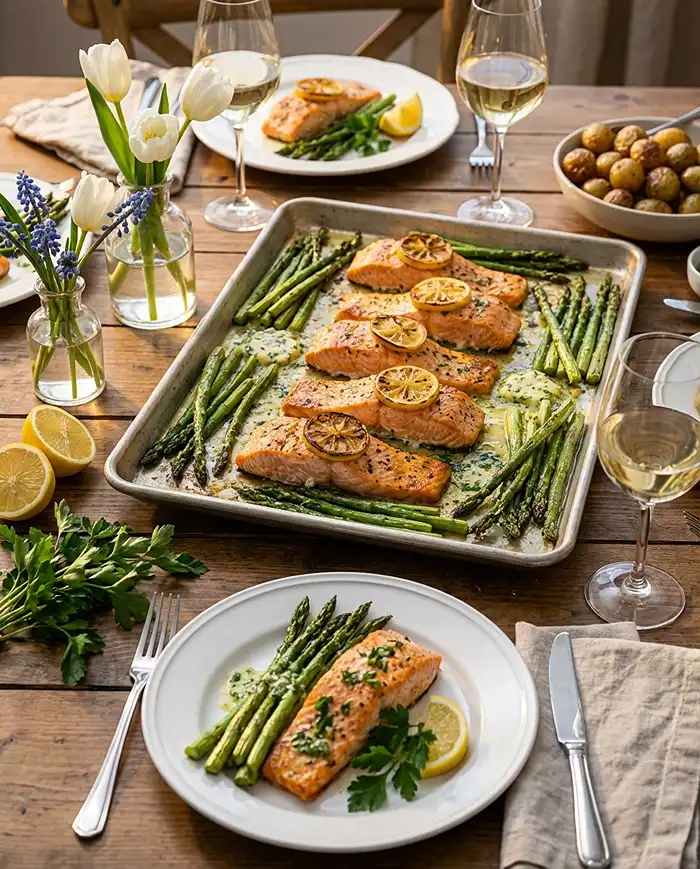
Serve this Gluten-Free Sheet Pan Salmon and Asparagus with simple sides like fluffy white rice, gluten-free quinoa, or roasted baby potatoes to soak up all that lemon-garlic butter. It’s my go-to for Easter dinner, Mother’s Day brunch, or any spring or summer gathering when you want to impress without spending hours in the kitchen. The bright green asparagus and golden salmon look stunning on a platter, and guests always ask for the recipe.
Pair it with Gluten-Free Lemon Ricotta Pancakes for a festive brunch spread, or serve it alongside Gluten-Free Rhubarb Crisp Bars for a sweet-tart dessert that celebrates spring produce. For a dairy-free drizzle over leftover salmon, try Dairy-Free Cashew Cream Sauce blended with fresh dill and lemon juice.
Give this Gluten-Free Sheet Pan Salmon and Asparagus a try this week and discover how easy it is to make a restaurant-quality dinner at home with minimal effort and maximum flavor. If you swap in different vegetables or herbs, drop a comment below—I’d love to hear your creative twists! Pin this recipe on Pinterest so you never lose it, and don’t forget to rate it if it becomes your new weeknight staple.
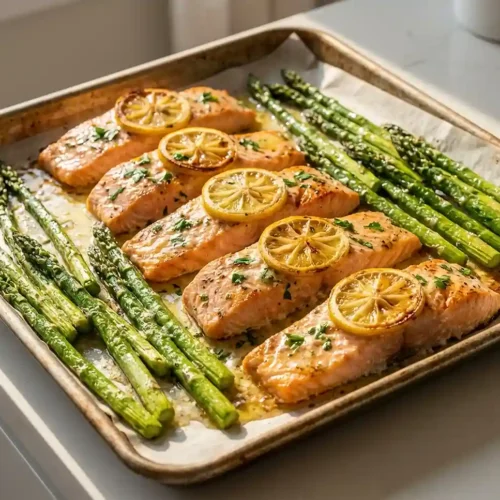
Gluten-Free Sheet Pan Salmon and Asparagus
Equipment
- Large rimmed baking sheet
- Parchment paper
- Medium mixing bowl
- Fork or food processor
- Instant-read thermometer (optional)
- Spoon
- Knife and cutting board
Ingredients
For the Salmon and Asparagus
- 2 lbs salmon fillet cut into six 6-oz portions; skin-on or skinless
- 2 lbs asparagus fibrous ends removed (snap or trim)
- salt and black pepper to taste, season generously
- 1 tbsp olive oil for coating the asparagus
- 1 small lemon sliced into rings for garnish
For the Lemon-Garlic-Herb Butter
- 6 tbsp unsalted butter softened to room temperature
- 2 tbsp fresh lemon juice from 1 small lemon, freshly squeezed
- 2 cloves garlic pressed or finely minced
- 2 tbsp fresh parsley finely chopped; do not use dried
- 1 tsp salt sea salt or kosher salt
- ¼ tsp black pepper freshly ground if possible
Instructions
- Step 1: Prep Your Oven and Pan
Preheat your oven to 450°F and position the oven rack in the top third of the oven—this puts the sheet pan close to the top heating element for better browning. Line a large rimmed baking sheet with parchment paper, trimming the edges so the paper sits flush with the pan and doesn’t hang over (overhanging parchment can char and smoke under the broiler). This step ensures easy cleanup and prevents the salmon from sticking.
Pro Tip: If you don’t have parchment, lightly grease the pan with cooking spray or olive oil—the salmon may stick slightly, but it’ll still cook beautifully. - Step 2: Arrange the Salmon and Asparagus
Place the six 6-oz salmon portions in a single row down the center of your lined baking sheet, leaving a little space between each piece. Arrange the trimmed asparagus spears on both sides of the salmon, spreading them out so they’re not piled on top of each other (overcrowded asparagus steams instead of roasting). Drizzle the asparagus lightly with 1 tbsp olive oil and roll the spears gently to coat them evenly. Sprinkle both the salmon and asparagus generously with salt and black pepper—don’t be shy here, as the seasoning brings out the natural flavors.
Pro Tip: If your asparagus spears vary in thickness, place the thicker ones toward the edges of the pan where they’ll get slightly more heat, and the thinner ones closer to the salmon. - Step 3: Make the Lemon-Garlic-Herb Butter
In a medium bowl, combine 6 tbsp softened unsalted butter, 2 tbsp fresh lemon juice, 2 minced or pressed garlic cloves, 2 tbsp finely chopped fresh parsley, 1 tsp salt, and ¼ tsp black pepper. Use a fork to mash and stir everything together for about 2-3 minutes—it’ll look broken and clumpy at first, but keep mashing and the butter will absorb the lemon juice and turn into a smooth, creamy, fragrant mixture that smells like a Mediterranean herb garden. If you prefer, you can pulse everything in a food processor for 15-20 seconds until well blended.
Pro Tip: If your butter isn’t soft enough, microwave it for 5-10 seconds (not until melted, just until it’s squishy) to make mashing easier. - Step 4: Slather with Flavored Butter
Spoon about ¾ of your lemon-garlic-herb butter over the six salmon portions, dividing it roughly evenly and spreading it across the top of each piece with the back of the spoon—it doesn’t need to be perfect, just a generous coating that covers most of the surface. Dab the remaining butter mixture over the asparagus spears, focusing on the tips and thicker stalks. The butter will melt as it bakes, creating a rich, tangy glaze that bastes everything and pools on the pan. - Step 5: Top with Lemon and Bake
Place one thin lemon slice on top of each salmon portion (this looks beautiful and infuses subtle citrus flavor into the fish). Slide the sheet pan into the preheated oven on the top rack and bake uncovered for 10-12 minutes—use the shorter time for thinner fillets (around 1 inch thick) and the longer time for thicker cuts (1.5 inches or more). The salmon is done when it flakes easily when you insert a fork and the internal temperature reads 145°F on an instant-read thermometer inserted into the thickest part.
Pro Tip: If you don’t have a thermometer, look for the salmon to turn from translucent to opaque and feel firm but still slightly springy when you press gently on the top. - Step 6: Broil for a Golden Finish
Once the salmon reaches 145°F, switch your oven setting to BROIL (high if you have the option) and bake for an additional 2-3 minutes. Watch closely—broilers can go from golden to burnt in seconds. You’re looking for the butter on top of the salmon to bubble and turn lightly golden, and the asparagus tips to develop a few charred spots. When you see that beautiful caramelization and smell the nutty, toasted aroma, pull the pan out immediately.
Pro Tip: If your broiler is very powerful, crack the oven door slightly or reduce the time to 1-2 minutes to avoid burning. - Step 7: Serve Immediately
Transfer the salmon and asparagus to a serving platter or individual plates. Spoon any melted butter and juices from the pan over the top—this is liquid gold packed with lemon, garlic, and herb flavor. Garnish with extra fresh parsley or lemon wedges if you want to make it look extra fancy.