Gluten Free Sourdough Bread
Learn how to make gluten free sourdough bread with this foolproof recipe. Perfect crusty exterior, soft interior, and naturally fermented flavor—easier than you think!
I’ll never forget the first time I tried making gluten free sourdough bread. I stood in my kitchen at 6 am, staring at what looked like a science experiment gone wrong, wondering if I’d ever taste that tangy, crusty perfection again.
Well… here’s the truth: learning how to make gluten free sourdough bread changed everything for my family. After my daughter’s celiac diagnosis, I thought artisan bread was off the table forever. But this recipe? It brings back that nostalgic aroma filling your kitchen on a cozy Sunday morning.
The secret isn’t fancy equipment or bakery skills—it’s understanding that gf sourdough bread works a little differently than wheat-based loaves. You’re not developing gluten strands here, but with the right technique and a bit of patience, you’ll create a loaf with a beautiful golden crust and tender crumb that’ll make you forget you’re eating gluten-free.
Table of Contents
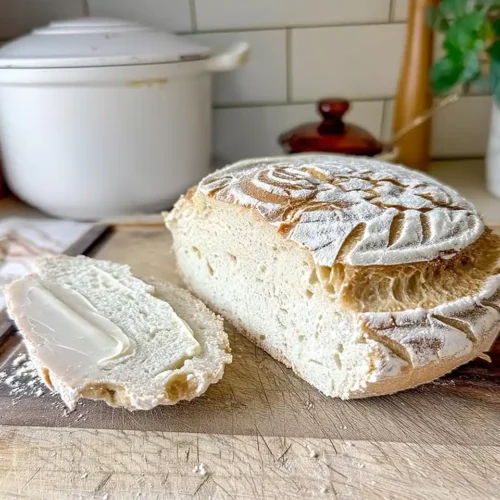
Gluten Free Sourdough Bread
Equipment
- Large mixing bowl
- Banneton basket or medium glass bowl
- Dutch oven with lid
- Parchment paper
- Sharp knife or bread lame
- Instant-read thermometer
- Stand mixer with dough hook (optional)
Ingredients
Dry Ingredients
- 460 grams King Arthur’s Gluten-free Measure for Measure Flour or 3¾ cups
- 20 grams Whole Psyllium Husk or 2 Tablespoons + 2 tsp (If using psyllium husk powder, use only 16 grams)
- 12 grams Sea salt or 1 Tablespoon
Wet Ingredients
- 90 grams Gluten Free Sourdough Starter Recently fed, or a little less than ⅓ cup
- 500-575 grams Purified water or about 17-20 ounces. Start with 500 grams and work up if needed
- 14 grams Olive Oil optional, about 1 Tablespoon
For Dusting
- Additional Gluten Free Flour or Rice Flour for dusting surfaces
Instructions
- Start with an active, recently fed gluten free sourdough starter at its peak of activity—you want to catch it when it’s risen but hasn’t fallen yet. Feed your starter around 5-6 pm when you’re making dinner, ensuring it’s thick and paste-like.
- In a large mixing bowl, stir together the King Arthur’s gluten-free flour (460g), psyllium husk (20g), and sea salt (12g) until evenly combined.
- Add the gluten-free sourdough starter (90g), water (500g), and optional olive oil (14g) to the dry mixture. Stir briskly to combine everything, working quickly before the psyllium husk starts thickening the dough. Let it rest for 5-10 minutes so the gluten free flours can fully hydrate.
- Sprinkle a little gluten free flour or rice flour onto your countertop to prevent sticking. Gently turn the dough out onto the floured surface and knead by hand for about 3 minutes, gathering and working the dough to evenly hydrate the flours.
- To close any seams on the bottom, gently cup the sides of the dough with your hands and rotate it in small circular motions on the counter to create surface tension.
- Lightly dust a banneton basket (or medium glass bowl lined with a floured tea towel) with rice flour or gluten free flour blend. Place the gluten free sourdough loaf upside down in the basket so any seams face upward.
- Cover the banneton basket with plastic wrap to retain moisture, and lay a tea towel over the top for extra coverage. Let rest overnight at room temperature.
- The next morning, your dough should look slightly expanded and feel a bit puffy with gentle spring when pressed. Place your Dutch oven (with lid) on the middle rack and preheat your oven to 450°F (232°C) for a full 45 minutes.
- After the 45-minute preheat, carefully turn your gluten free sourdough loaf onto a piece of parchment paper. Using a sharp knife or bread lame, score a pattern into the top of your loaf to allow steam to escape during baking.
- Carefully remove the hot Dutch oven from your oven using heavy-duty oven mitts. Gently lower the scored loaf (still on its parchment paper) into the Dutch oven, cover with the lid, and return to the oven.
- Bake covered for 50 minutes. Then carefully remove the lid and continue baking uncovered for 10 more minutes to deepen the crust color and create a crispy exterior.
- Check the internal temperature with an instant-read thermometer—it should reach at least 210°F (99°C) to ensure the bread is fully baked through and prevent a gummy center.
- Once the internal temperature hits 210°F or higher, remove your bread from the oven and let it cool completely—ideally for a few hours—before slicing. Gluten-free bread needs time to set and firm up as it cools.
Notes
Ingredients
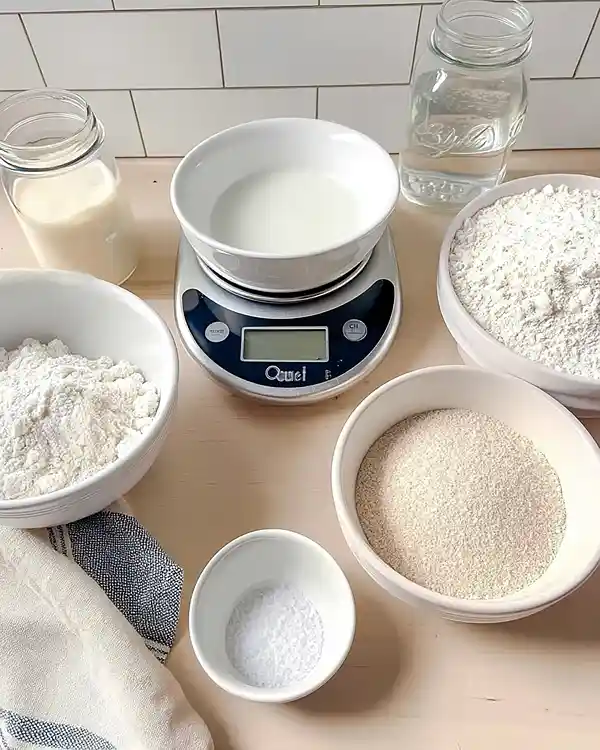
| Ingredient | Amount | Notes |
|---|---|---|
| King Arthur’s Gluten-free Measure for Measure Flour | 460 grams (3¾ cups) | Essential for structure |
| Whole Psyllium Husk | 20 grams (2 Tbsp + 2 tsp) | Use 16g if using powder |
| Sea Salt | 12 grams (1 Tbsp) | Enhances flavor |
| Gluten Free Sourdough Starter | 90 grams (⅓ cup) | Recently fed and active |
| Purified Water | 500-575 grams (17-20 oz) | Start with 500g, adjust as needed |
| Olive Oil (optional) | 14 grams (1 Tbsp) | Adds tenderness |
| Additional GF Flour or Rice Flour | For dusting | Prevents sticking |
Instructions
Mix the Gluten Free Sourdough Bread Dough
Timing Tip: I usually feed my gluten free sourdough starter around 5-6 pm when I’m already in the kitchen making dinner. Make sure it’s thick and paste-like, ready to work its magic overnight.
Start with an active, recently fed gluten free sourdough starter at its peak of activity—you want to catch it when it’s risen but hasn’t fallen yet. This is when those wild yeasts are most energetic and ready to transform your dough.
In a large mixing bowl, stir together the King Arthur’s gluten-free flour, psyllium husk, and sea salt until evenly combined. This dry mix creates the foundation for your easy gf sourdough bread recipe.
Add your gluten-free sourdough starter, water, and optional olive oil to the dry mixture. The oil isn’t required, but it does add a lovely tenderness to the final crumb.
Stir briskly to combine everything, working quickly before the psyllium husk starts thickening the dough. Then let it rest for 5-10 minutes so the gluten free flours can fully hydrate and absorb the moisture.
Sprinkle a little gluten free flour or rice flour onto your countertop to prevent sticking. Gently turn the dough out onto this floured surface—it should feel cohesive but still slightly tacky.
Gather and knead the dough by hand for about 3 minutes. You’re not developing gluten strands here like traditional sourdough, but this step helps evenly hydrate the flours and brings everything together into a smooth, workable dough.
Note: A stand mixer fitted with a dough hook also works beautifully for this step. Just mix on low speed until fully combined, then shape into a round loaf.
To close any seams on the bottom, gently cup the sides of the dough with your hands. Rotate it in small circular motions on the counter—this creates surface tension and helps your loaf hold its shape during the long rest.
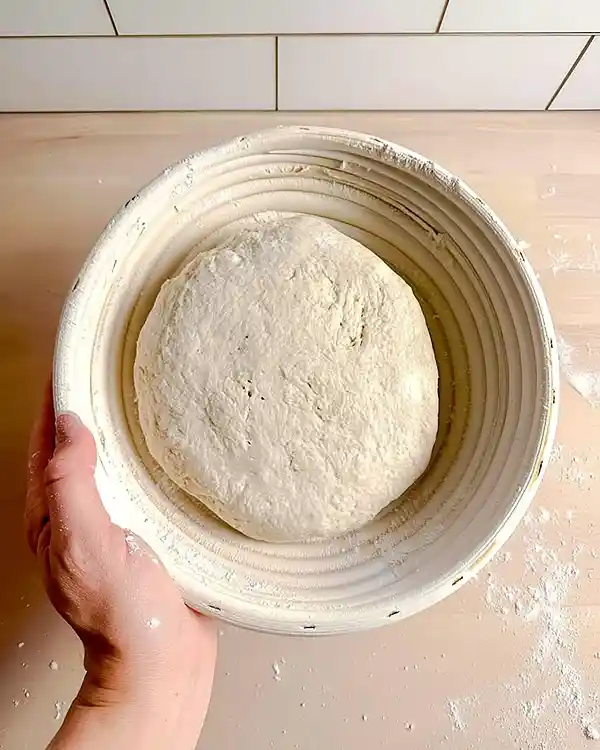
Lightly dust a banneton basket with rice flour or your gluten free flour blend. If you don’t have a banneton basket, a medium-sized glass bowl lined with a well-floured tea towel works perfectly.
Place your gluten free vegan sourdough bread (if you’ve skipped the oil) or regular version upside down in the banneton basket so any seams face upward. This positioning helps create a smooth top surface once you flip it for baking.
Cover the banneton basket with plastic wrap to retain moisture during the overnight rest. Since plastic wrap doesn’t cling well to wicker baskets, I also lay a tea towel over the top for extra insurance against drying out.
The Next Day
In the morning, your dough should look slightly expanded and feel a bit puffy with gentle spring when pressed. It won’t double in size like wheat-based bread, but that subtle puffiness tells you the natural fermentation has done its job overnight.
Place your Dutch oven (with lid) on the middle rack and preheat your oven to 450°F (232°C) for a full 45 minutes. This extended preheat ensures your Dutch oven is thoroughly heated, creating that bakery-style steam environment.
Tip: If you’ve battled with an overly tough bottom crust before, try placing a baking sheet on the rack below the Dutch oven. It diffuses the intense bottom heat and creates a more evenly baked loaf.
After the 45-minute preheat, carefully turn your gluten free sourdough loaf onto a piece of parchment paper. Handle it gently—dropping it can knock out the precious air pockets from your overnight proof.
Using a sharp knife or bread lame, score a pattern into the top of your loaf. This isn’t just decorative—it allows steam to escape and controls how your bread expands in the oven.
Carefully remove the scorching hot Dutch oven from your oven using heavy-duty oven mitts. Gently lower the scored loaf (still on its parchment paper) into the Dutch oven, then cover with the lid.
Return the covered Dutch oven to the hot oven and bake for 50 minutes. During this covered phase, trapped steam helps the loaf rise and develop that gorgeous crust you’re after.
Carefully remove the lid from the Dutch oven—the loaf should be lightly golden and starting to form a firm crust. You know what? This is when your kitchen starts smelling absolutely incredible.
Set your timer for 10 more minutes and continue baking uncovered. This final phase deepens the crust color and creates that satisfying crackly exterior.
Check the internal temperature with an instant-read thermometer—it should reach at least 210°F (99°C). This ensures your bread is fully baked through and prevents that dreaded gummy center that can happen with gluten-free baking.
Once the internal temperature hits 210°F or higher, remove your beautiful gf sourdough bread from the oven. Let it cool completely—ideally for a few hours—before slicing.
Patience is key here! Gluten-free bread needs time to set and firm up as it cools. Cutting into it too soon results in a gummy, underdeveloped crumb that doesn’t do your hard work justice.
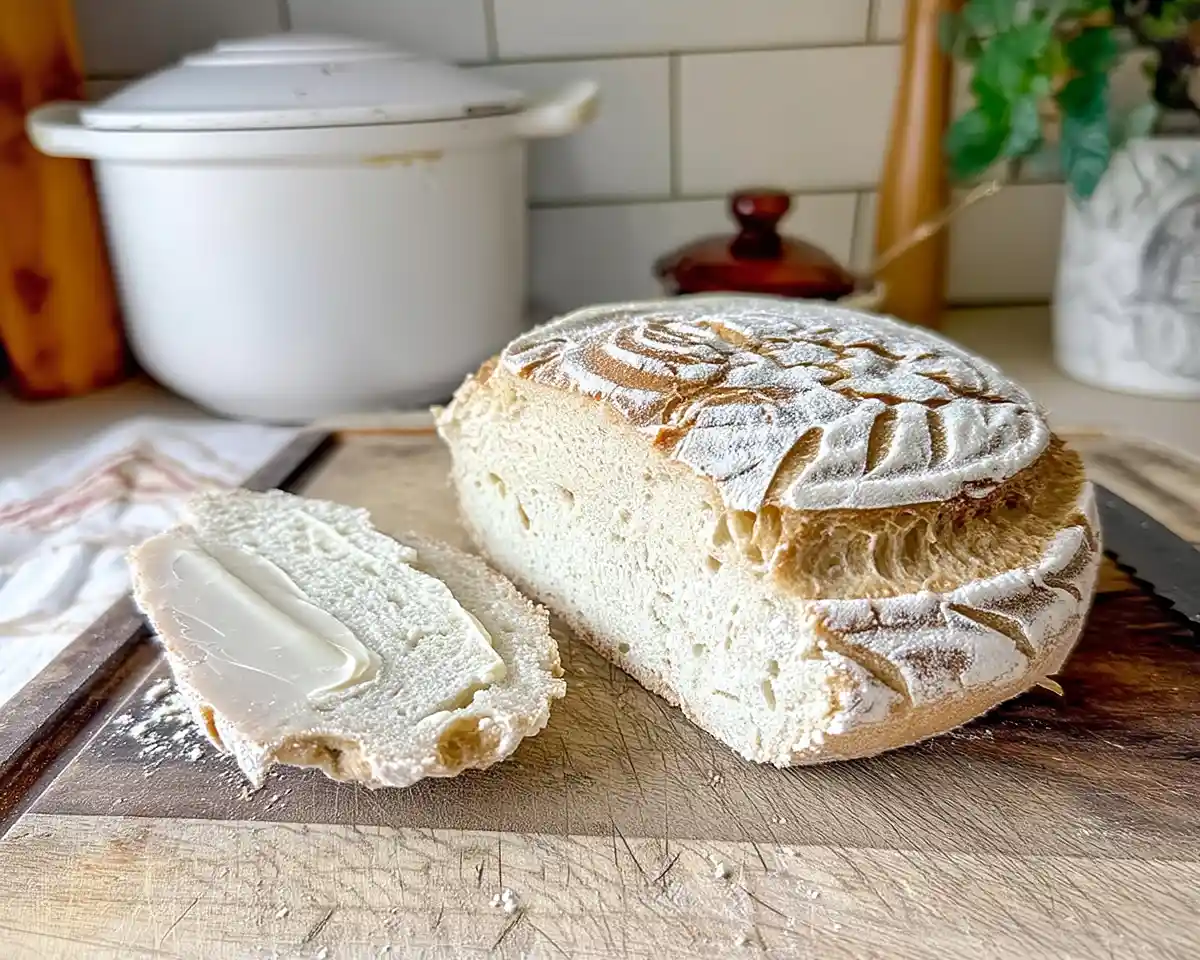
Once your gluten free sourdough loaf has cooled completely, slice in and enjoy! The interior will be slightly sticky (that’s normal for gluten-free sourdough), but toasting brings out the best texture and flavor.
Substitutions
Flour Alternatives: While King Arthur’s Measure for Measure works beautifully for this easy gf sourdough bread recipe, you can experiment with other all-purpose gluten-free blends. Just make sure your blend contains xanthan gum or another binding agent, as these help replace gluten’s structure.
Psyllium Husk Powder: If you’re using psyllium husk powder instead of whole husks, reduce the amount to 16 grams. The powder absorbs liquid more aggressively than whole husks, so this adjustment prevents your dough from becoming too thick.
Dairy-Free Option: This recipe is naturally dairy-free, making it perfect for those following a gluten free vegan sourdough bread approach. The optional olive oil can be replaced with any neutral-tasting oil or simply omitted altogether.
Water Adjustments: Different gluten-free flour blends absorb moisture differently. Start with 500 grams of water and add more (up to 575 grams) if your dough feels too stiff—it should be tacky but holdable.
Troubleshooting
Gummy Center: If your loaf’s interior is gummy or underbaked, the internal temperature likely didn’t reach 210°F. Always use a thermometer to verify doneness—relying on color alone doesn’t work as reliably with gluten free sourdough bread.
Dense Texture: This usually means your starter wasn’t active enough when you mixed the dough. Make sure you’re using your starter at its peak rise, when it’s bubbly and has doubled—this <a href=”https://www.kingarthurbaking.com/learn/guides/sourdough” target=”_blank” rel=”noopener”>authoritative guide to sourdough fermentation</a> explains the science beautifully.
Tough Bottom Crust: An overly thick or tough bottom often happens from excessive bottom heat. Try placing a baking sheet on the rack below your Dutch oven to diffuse that intense heat.
Loaf Spreading: If your dough spreads outward instead of rising up, it might be overhydrated or underproofed. Next time, reduce the water slightly or let it proof a bit longer until you see that telltale puffiness.
Storage
Store your cooled gluten free sourdough bread in an airtight container or resealable bag at room temperature for up to 3 days. The crust will soften during storage, but a quick toast revives that crispy exterior perfectly.
For longer storage, slice the loaf and freeze individual slices in a freezer-safe bag for up to 3 months. This way, you can pull out just what you need for quick breakfasts or sandwiches without thawing the entire loaf.
Serving Suggestions
This gf sourdough bread is absolutely divine toasted with butter and jam for a simple breakfast. The tangy sourdough flavor pairs beautifully with sweet spreads, and toasting eliminates any slight stickiness in the crumb.
Try it as the base for your Thanksgiving stuffing or holiday French toast casserole—the sturdy texture holds up wonderfully to moisture without falling apart. It also makes incredible grilled cheese sandwiches with that perfect balance of crispy exterior and tender interior.
Serve thick slices alongside your favorite soup or stew, or use it for gourmet avocado toast. Man, oh man, once you taste homemade gluten free sourdough bread, store-bought versions just don’t compare.
Variations
Seeded Version: Fold in 2-3 tablespoons of sunflower seeds, pumpkin seeds, or sesame seeds during the kneading stage. This adds delightful texture and extra nutrition to your easy gf sourdough bread recipe.
Herbed Loaf: Mix in 1-2 tablespoons of dried herbs like rosemary, thyme, or Italian seasoning for a savory twist. This variation is phenomenal with pasta dishes or as part of a cheese board.
Kid-Friendly Sweet Version: Add 2 tablespoons of honey and 1 teaspoon of cinnamon to the dough for a slightly sweet loaf that kids adore. It’s perfect for morning toast or packed lunches.
Smaller Loaves: Divide the dough in half and bake two smaller loaves instead of one large one. Reduce the covered baking time to 35 minutes and the uncovered time to 8 minutes for perfectly sized personal loaves.
Gluten Free Sourdough Bread FAQs
Can I make sourdough bread without gluten?
Absolutely! This recipe proves you can create authentic sourdough flavor and texture without any wheat or gluten. The key is using a gluten free sourdough starter and understanding that the dough behaves differently—it won’t rise as dramatically, but the results are still incredibly satisfying.
What is the best gluten-free flour for sourdough bread?
King Arthur’s Measure for Measure flour consistently delivers excellent results for how to make gluten free sourdough bread. It contains a balanced blend of rice flours and starches plus xanthan gum, which provides structure without gluten.
How does sourdough bread become gluten-free?
Traditional sourdough relies on wheat flour, which contains gluten. To make it gluten-free, you replace wheat flour with gluten-free alternatives and use a starter cultivated from gluten-free flour—this trusted resource on celiac disease explains why this distinction matters for those with gluten sensitivities.
Can I feed my sourdough with gluten-free flour?
Yes! You’ll need to create and maintain a gluten free sourdough starter by feeding it exclusively with gluten-free flour blends. The fermentation process works the same way—wild yeasts and beneficial bacteria colonize the flour and create that signature tangy flavor.
What are common problems with gluten-free sourdough?
The most frequent issues include gummy centers (from underbaking), dense texture (from inactive starter), and spreading loaves (from overhydration). Following the temperature guidelines and using your starter at peak activity solves most of these challenges with gf sourdough bread.
Related Recipes You’ll Love
Looking for more gluten-free baking inspiration? Try this delicious cinnamon swirl banana bread for a naturally sweet breakfast treat.
If you’re craving something moist and nutritious, this wholesome banana bread recipe uses simple ingredients your family will love.
Need a reliable everyday loaf? Check out our beginner-friendly sandwich bread guide that’s perfect for meal prep and packed lunches.
Mastering how to make gluten free sourdough bread takes practice, but each loaf teaches you something new about timing, hydration, and fermentation. Don’t get discouraged if your first attempt isn’t perfect—even experienced bakers adjust their technique based on humidity, flour brands, and starter activity. The reward of slicing into a crusty, tangy loaf you made yourself? That’s worth every bit of the learning curve!