Gluten-Free Spring Pea Risotto
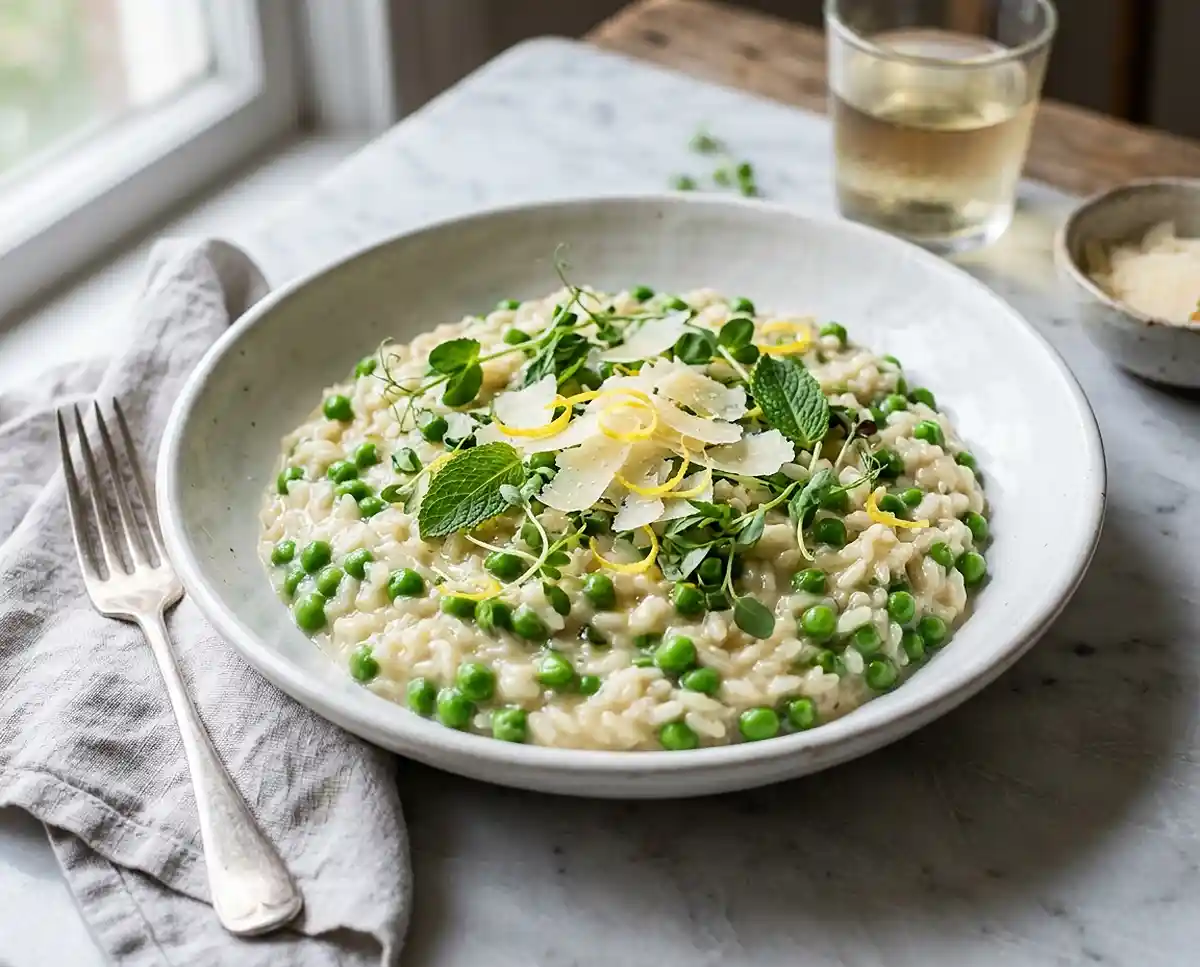
This Gluten-Free Spring Pea Risotto is a creamy, elegant fresh pea dinner with Parmesan and lemon. Classic italian rice made simple and naturally gluten-free!
I’ll be honest—risotto intimidated me for years. I’d heard all the warnings about constant stirring, precise timing, and the supposed difficulty of achieving that perfect creamy consistency. Then one spring evening, with a bowl of fresh peas from the farmers market and nothing to lose, I finally attempted it.
This Gluten-Free Spring Pea Risotto captures everything magical about the classic Italian dish—the luxurious creaminess, the subtle wine notes, the way each grain of rice is perfectly al dente while surrounded by velvety sauce. The fresh peas add sweetness and that gorgeous pop of spring color, while lemon zest and mint bring brightness that keeps each bite interesting.
Table of Contents
Why You’ll Love This Gluten-Free Spring Pea Risotto
- Naturally gluten-free: Arborio rice contains no gluten, making this creamy risotto safe for celiac guests without any substitutions
- Impressive yet achievable: The technique sounds fancy but becomes intuitive after the first batch—perfect for impressing guests or treating yourself
- Celebrates spring produce: Fresh peas are the star here, showcasing seasonal vegetables at their peak sweetness
- One-pot elegance: Despite its restaurant-quality results, this fresh pea dinner comes together in a single skillet
The Secret to Perfect Gluten-Free Spring Pea Risotto
Blanching keeps peas vibrant. The quick boil followed by an ice bath stops the cooking process, preserving that brilliant green color and crisp-tender texture. Adding raw peas directly would result in dull, mushy vegetables that disappear into the rice.
Warm stock is non-negotiable. Cold liquid shocks the rice and disrupts the cooking process, resulting in unevenly cooked grains. Keeping your stock warm ensures consistent temperature and proper starch release for that signature creamy risotto texture.
Toasting the rice builds flavor. Those two minutes of stirring the dry rice in butter coat each grain and begin the starch breakdown that creates creaminess. According to trusted Italian cooking guidance from Serious Eats, this step also adds a subtle nutty flavor that distinguishes great risotto from mediocre.
Gradual liquid addition creates creaminess. Adding stock half a cup at a time and stirring until absorbed allows the rice to release its starch slowly, building that luxurious sauce without any cream or flour. This technique is the heart of authentic italian rice preparation.
Ingredients
| Ingredient | Amount | Notes |
|---|---|---|
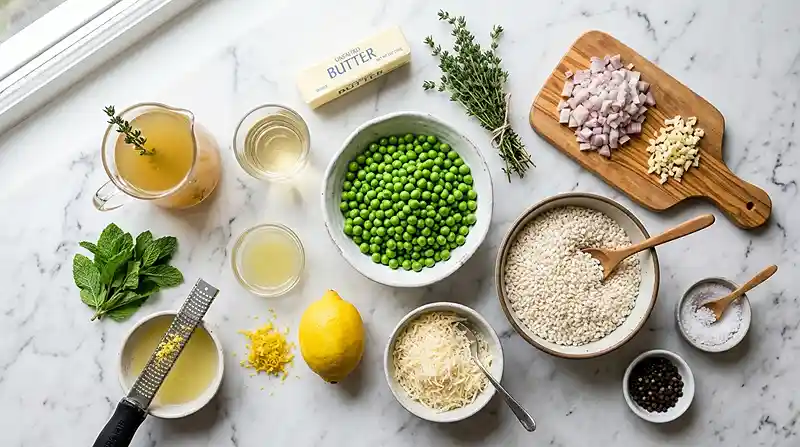
| Fresh peas | 1½ cups | Shelled |
| Unsalted butter | 2 tablespoons | |
| Large shallot | 1 | Diced |
| Garlic cloves | 2 | Minced |
| Arborio rice | 1 cup | |
| White cooking wine | ½ cup | |
| Fresh thyme | 1 teaspoon | |
| Vegetable stock | 4 cups | Or chicken stock or water |
| Parmesan cheese | ½ cup | Shredded |
| Lemon zest | 1 tablespoon | |
| Lemon juice | 2 teaspoons | |
| Fresh mint | 1 tablespoon | Or basil |
| Salt and pepper | To taste |
Serves: 4
Step-by-Step Instructions
Blanching the Peas
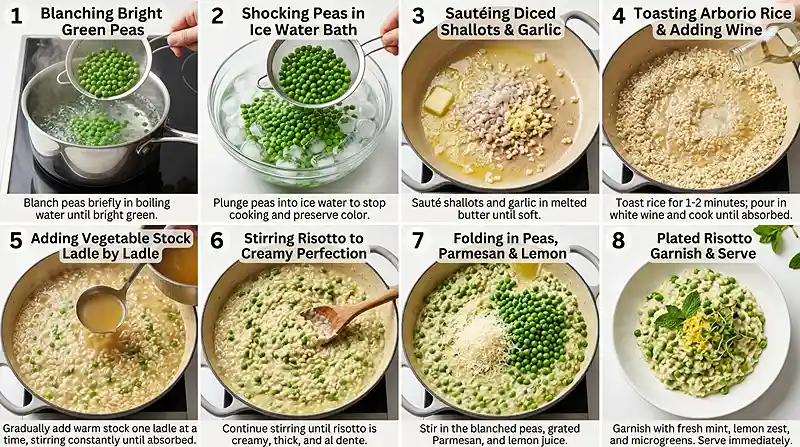
Step 1: Prepare the ice bath.
Fill a large bowl with ice and cover with cold water. Set aside near your stove. This ice bath is essential for stopping the cooking process and preserving that gorgeous spring green color.
Step 2: Blanch the peas.
Bring a large pot of salted water to a rolling boil. Drop the fresh peas into the boiling water and blanch for 1-2 minutes—just until they turn bright green and are barely tender.
Step 3: Shock in ice water.
Remove the peas immediately and immerse them in the ice bath for about 20 seconds. Drain promptly and set aside. Man, oh man, do NOT leave the peas sitting in water or they’ll get soggy and lose their perfect texture.
Preparing the Stock
Step 4: Warm your stock.
In a medium pot, heat your vegetable stock over medium heat until simmering. Remove from heat and set aside, keeping it warm. You can also use a microwave if you prefer—the key is having warm liquid ready to add to your Gluten-Free Spring Pea Risotto.
Building the Risotto Base
Step 5: Sauté the aromatics.
In a large skillet or stockpot, melt the butter over medium heat. Add the diced shallots and minced garlic, sautéing for about 5 minutes until soft and fragrant. The shallots should be translucent but not browned.
Step 6: Toast the rice.
Add the arborio rice to the pan and toast, stirring frequently, for about 2 minutes. Each grain should be coated in butter and slightly translucent around the edges—this step builds flavor and begins the starch release.
Step 7: Deglaze with wine.
Pour in the white wine to deglaze the pan, scraping up any browned bits from the bottom. Stir until the wine is almost completely absorbed. The alcohol will cook off, leaving behind subtle acidity that brightens the dish.
The Risotto Technique
Step 8: Add stock gradually.
Add ½ cup of the warmed vegetable stock and the fresh thyme. Stir the risotto until the liquid is completely absorbed, then add another ½ cup and repeat. Continue adding stock ½ cup at a time, stirring frequently, until it’s all absorbed and the rice is fully cooked—about 18-20 minutes total.
Pro Tip: Well, patience during this stage separates good risotto from great. Each addition of stock should be almost completely absorbed before adding more, creating that creamy risotto texture without being soupy or gluey.
Step 9: Test for doneness.
The rice should be al dente—tender but with a slight bite in the center. If you’ve used all the stock and the rice isn’t quite done, add warm water ¼ cup at a time until it reaches the perfect texture.
Finishing Touches
Step 10: Add the final ingredients.
Remove from heat and stir in the Parmesan cheese, blanched peas, and lemon juice. The residual heat will melt the cheese and warm the peas without overcooking them. Taste and add salt and pepper as needed.
Step 11: Garnish and serve.
Divide among bowls and garnish with fresh mint (or basil), lemon zest, and a few extra spring peas and microgreens if desired. Serve immediately—this fresh pea dinner waits for no one and is best enjoyed right away.
Make It Your Own
Asparagus addition: Add 1 cup of blanched, chopped asparagus along with the peas for an even more spring-forward italian rice dish. The asparagus provides complementary flavor and gorgeous color variation.
Bacon or pancetta: Crisp 4 ounces of diced bacon or pancetta before sautéing the shallots, then use the rendered fat in place of some butter. The smokiness adds incredible depth to this Gluten-Free Spring Pea Risotto.
Dairy-free version: You know what works surprisingly well? Replace the butter with olive oil and omit the Parmesan, or use a dairy-free Parmesan alternative. Add extra lemon juice to compensate for the missing tang—the risotto will still be creamy from the rice starch.
Lemon herb variations: Adding fresh basil, chives, or tarragon instead of mint creates different flavor profiles while maintaining that fresh spring essence.
Protein boost: Top with seared shrimp, grilled chicken, or pan-seared scallops to transform this side dish into a complete meal. The creamy risotto base pairs beautifully with simply seasoned proteins.
Common Problems & Solutions
Problem: My risotto is gummy or gluey.
You stirred too aggressively or cooked at too high a temperature. Solution: Stir gently and frequently rather than vigorously and constantly. Keep heat at medium to allow proper absorption without breaking down the rice completely.
Problem: The rice is still hard in the center.
You didn’t use enough liquid, or added it too quickly. Solution: Add more warm stock or water ¼ cup at a time and continue cooking. The rice should be al dente, not crunchy, when your creamy risotto is done.
Problem: My risotto is too soupy.
You added stock before the previous addition was absorbed, or didn’t cook long enough. Solution: Continue cooking and stirring over medium heat until the liquid reduces and the risotto achieves a creamy, not watery, consistency.
Problem: The peas turned brown and mushy.
They weren’t blanched properly, or were added too early. Solution: Always blanch and shock peas before using, and add them only at the very end—just stirring to warm through, not to cook further.
Problem: It doesn’t taste like much.
Under-seasoned, or you skipped the wine step. Solution: Risotto needs generous seasoning—taste and adjust salt and pepper at the end. The wine adds essential acidity that brightens all the flavors in your fresh pea dinner.
Storage & Meal Prep
| Method | Duration | Notes |
|---|---|---|
| Counter | 2 hours max | Per food safety |
| Fridge | 3-4 days | Store without garnish |
| Freezer | Not recommended | Texture degrades significantly |
Risotto is honestly best fresh, but leftovers can be transformed into delicious arancini (Italian rice balls). Mix cold risotto with a beaten egg, form into balls, coat in gluten-free breadcrumbs, and fry until golden. The transformation from leftover to crispy appetizer is magical.
To reheat refrigerated risotto, add a splash of stock or water and warm gently over medium-low heat, stirring frequently. The texture won’t be quite as silky as fresh, but it’s still delicious. Add fresh peas and herbs just before serving to brighten the reheated dish.
Your Questions Answered
Is arborio rice gluten-free?
Yes, arborio rice is naturally gluten-free—it’s simply a short-grain Italian rice variety with high starch content that creates risotto’s signature creaminess. Always check that your rice hasn’t been processed on shared equipment if you have celiac disease, though cross-contamination with rice is rare.
Can I use frozen peas instead of fresh?
Absolutely! Frozen peas are actually picked and frozen at peak freshness, making them excellent for this recipe. No need to blanch—just thaw briefly and add at the end. Fresh peas have slightly better texture, but frozen are a great year-round option for this Gluten-Free Spring Pea Risotto.
Why do I need to keep stirring?
Stirring releases starch from the rice grains, which creates the creamy sauce without adding cream. You don’t need to stir constantly—frequent stirring every minute or so is sufficient. The agitation is what makes creamy risotto possible.
Can I make this ahead of time?
Risotto is best served immediately, but you can partially cook it (stop after adding about ¾ of the stock), spread on a sheet pan to cool quickly, and refrigerate. Finish with the remaining stock and final ingredients just before serving for nearly-fresh results.
What can I substitute for white wine?
Replace with an equal amount of additional stock plus 1 teaspoon of white wine vinegar or lemon juice. The wine adds acidity that brightens the dish, so the vinegar helps compensate. The flavor will be slightly different but still delicious in your italian rice.
Serving Suggestions
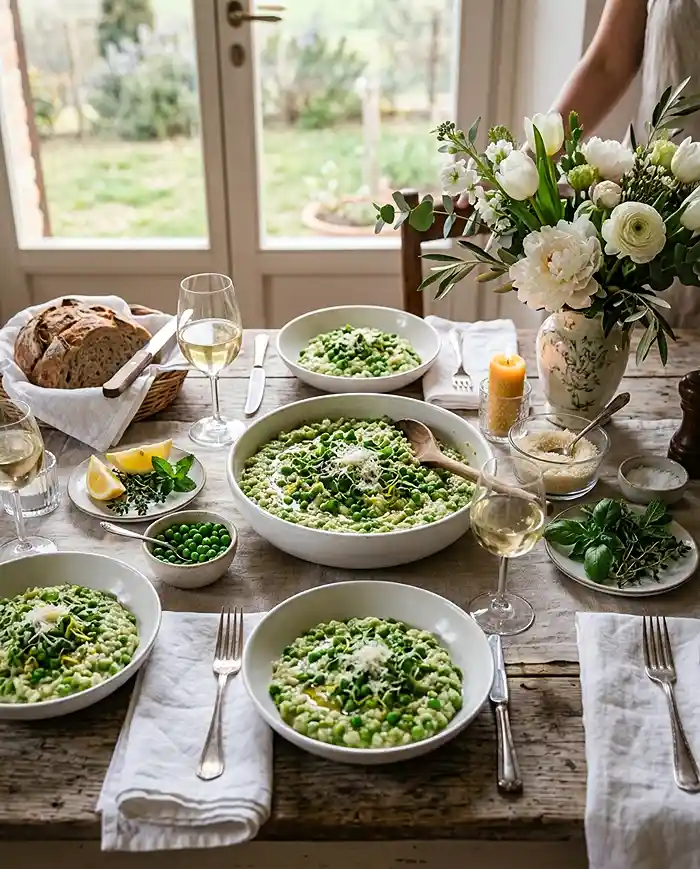
This Gluten-Free Spring Pea Risotto is elegant enough for dinner parties, served as a first course before a simple roasted chicken or fish. The pale green, herb-flecked presentation creates an impressive start to any special meal.
For a complete spring celebration menu, serve this creamy risotto alongside a bright salad and finish with gluten-free strawberry shortcake cookies for dessert. Or keep the evening cozy with warm gluten-free Mexican hot chocolate and gluten-free polvorones to end the meal.
Each spoonful is like velvet studded with emeralds—impossibly smooth rice punctuated by sweet, bright peas that pop against the rich Parmesan backdrop. It’s spring captured in a bowl.
Ready to Stir?
This Gluten-Free Spring Pea Risotto has become my go-to impressive dinner for everything from date nights to holiday gatherings. Once you master the simple rhythm of stirring and adding stock, you’ll understand why Italians have cherished this dish for centuries.
I’d love to hear about your risotto adventures! Drop a comment below with your favorite variations or any questions that come up while cooking. Please rate this recipe if it earns a spot in your spring rotation, and save it to Pinterest so you’ll have this fresh pea dinner ready when the season arrives.
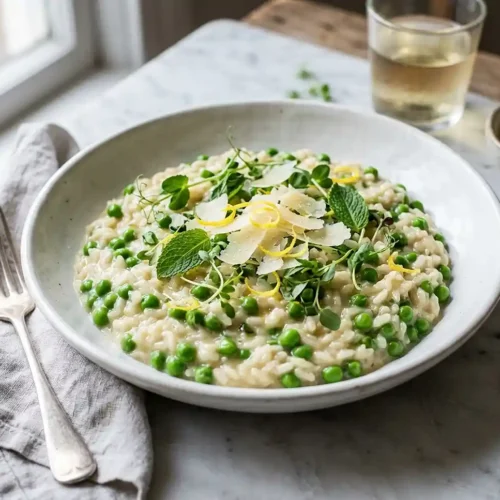
Gluten-Free Spring Pea Risotto
Equipment
- Large pot for blanching
- Large bowl for ice bath
- Medium pot for stock
- Large skillet or stockpot
- Wooden spoon
Ingredients
- 1 ½ cups fresh peas shelled
- 2 tablespoons unsalted butter
- 1 large shallot diced
- 2 cloves garlic minced
- 1 cup arborio rice
- ½ cup white cooking wine
- 1 teaspoon fresh thyme
- 4 cups vegetable stock can substitute chicken stock or water
- ½ cup parmesan cheese shredded
- 1 tablespoon lemon zest
- 2 teaspoons lemon juice
- 1 tablespoon fresh mint can substitute basil or other fresh herbs
- salt and pepper to taste
Instructions
- Fill a large bowl with ice and cover with cold water to create an ice bath. Set aside near your stove.
- Bring a large pot of salted water to a rolling boil. Drop the fresh peas into the boiling water and blanch for 1-2 minutes until bright green and barely tender.
- Remove the peas immediately and immerse in the ice bath for about 20 seconds. Drain promptly and set aside. Do NOT leave peas in water or they will get soggy.
- In a medium pot, heat your vegetable stock over medium heat until simmering. Remove from heat and set aside, keeping it warm. You can also use a microwave.
- In a large skillet or stockpot, melt the butter over medium heat. Add the diced shallots and minced garlic, sautéing for about 5 minutes until soft and fragrant.
- Add the arborio rice and toast, stirring frequently, for about 2 minutes until each grain is coated in butter and slightly translucent around the edges.
- Pour in the white wine to deglaze the pan, scraping up any browned bits from the bottom. Stir until the wine is almost completely absorbed.
- Add 1/2 cup of the warmed vegetable stock and the fresh thyme. Stir until completely absorbed, then add another 1/2 cup and repeat. Continue adding stock 1/2 cup at a time until it’s all absorbed and the rice is fully cooked, about 18-20 minutes total.
- Remove from heat and stir in the Parmesan cheese, blanched peas, and lemon juice. Taste and add salt and pepper as needed.
- Divide among bowls and garnish with fresh mint (or basil), lemon zest, and extra spring peas or microgreens if desired. Serve immediately.