Gluten-Free Spring Vegetable Frittata
Meta Description: This gluten-free spring vegetable frittata features tender asparagus, sweet peas, and fresh tarragon. A light brunch eggs dish ready in just 25 minutes!
The first time I attempted a frittata, I ended up with rubbery eggs swimming in water from my vegetables. Not exactly the elegant spring brunch I’d pictured for my family’s Easter gathering.
Well… after years of testing, I finally cracked the code on making a gluten-free spring vegetable frittata that’s actually impressive. The secret? Proper vegetable prep and knowing exactly when to pull it from the oven.
This asparagus eggs dish comes together in under 30 minutes and feeds two hungry people with minimal cleanup. What’s not to love about a one-pan meal that looks like you spent hours in the kitchen?
Table of Contents
Why You’ll Love This Gluten-Free Spring Vegetable Frittata
Naturally gluten-free without any special flour blends – eggs, vegetables, and cheese are all you need for this protein-packed brunch.
Beginner-friendly with forgiving technique – even if your timing is slightly off, you’ll still end up with something delicious.
Easily adaptable for dairy-free diets – swap goat cheese for cashew cheese or skip it entirely.
Perfect for Easter brunch, Mother’s Day, or any spring weekend – elegant enough for guests but simple enough for a Tuesday morning.
The Secret to Perfect Asparagus Eggs
Pre-cooking the vegetables prevents a watery frittata. Raw vegetables release moisture as they bake, creating that soggy texture nobody wants. A quick 3-minute sauté drives off excess water while keeping everything tender-crisp.
Room temperature eggs set more evenly. Cold eggs straight from the fridge can cause the center to remain runny while the edges overcook. Pull your eggs out 15-20 minutes before cooking.
The skillet size matters more than you’d think. An 8-inch pan creates the ideal thickness for two servings. Too large, and you’ll have a thin, dry frittata. Too small, and the center won’t cook through.
Residual heat finishes the job. According to the USDA’s egg safety guidelines, eggs continue cooking after leaving the oven. Pull your frittata when the center has the slightest jiggle—it’ll firm up as it rests.
Ingredients
Egg Base
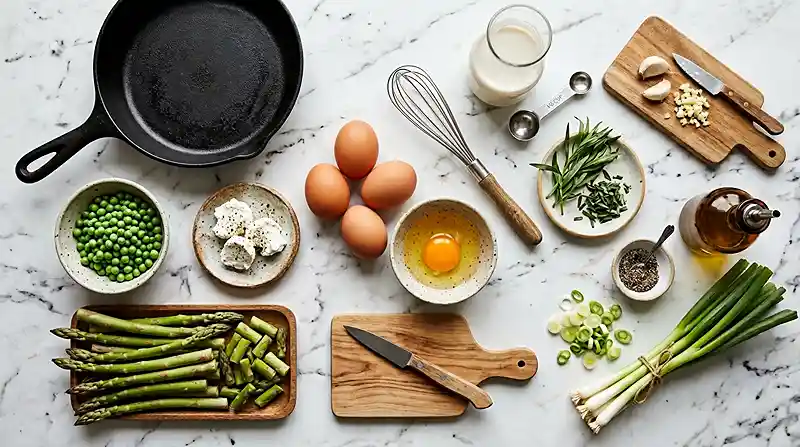
- 4 large pastured eggs
- 3 tablespoons unsweetened almond milk (or any milk)
- 1-2 garlic cloves, minced
- 1 tablespoon chopped fresh tarragon leaves (or 1 teaspoon dried)
- 1/4 teaspoon Celtic sea salt, plus more for serving
- Pinch freshly ground black pepper
Vegetables
- 1/2 tablespoon olive oil
- 3 spring onions or scallions, thinly sliced
- 1/2 cup asparagus, tender top parts cut into 1-inch pieces
- 1/4 cup frozen peas, thawed
Optional Topping
- 3 tablespoons goat cheese or cashew cheese
Step-by-Step Instructions
Prep Your Oven and Eggs
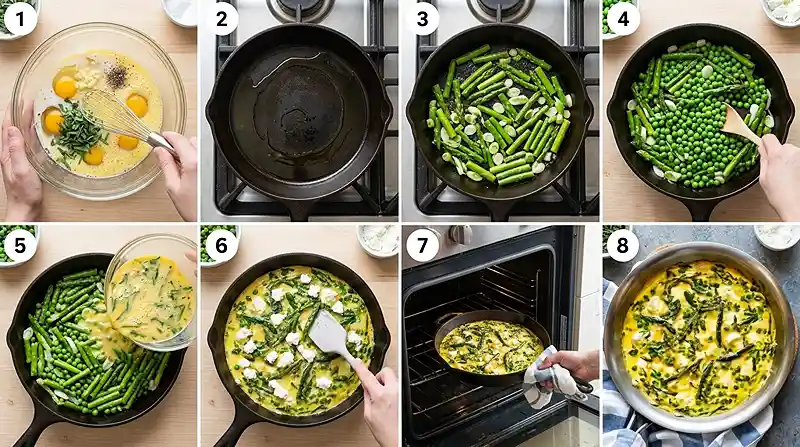
Preheat your oven to 400°F. While it heats, whisk the eggs, almond milk, garlic, tarragon, salt, and pepper in a medium bowl until everything is well combined and slightly frothy. Set this aside while you work on the vegetables.
Sauté the Spring Vegetables
Heat 1/2 tablespoon olive oil in an 8-inch oven-safe skillet or cast iron pan over medium heat. Add the scallions, asparagus pieces, and a pinch of salt and pepper.
Cook, stirring occasionally, until the asparagus turns tender but stays bright green—about 3 minutes. You want a slight bite remaining since they’ll continue cooking in the oven.
Pro Tip: Listen for a gentle sizzle. If your pan is smoking, it’s too hot and will brown the vegetables before they soften.
Build the Frittata
Add the thawed peas and stir to combine evenly with the other vegetables. Spread everything into a single layer across the bottom of the pan.
Pour the egg mixture over the vegetables and gently tilt the pan to distribute everything evenly. The eggs should flow around and under the vegetables, filling all the gaps.
Dot the surface with small pieces of goat cheese, if using. Press them gently into the eggs so they don’t slide around.
Bake Until Just Set
Transfer the skillet to your preheated oven. Bake for 10-12 minutes until the eggs are set but not dried out.
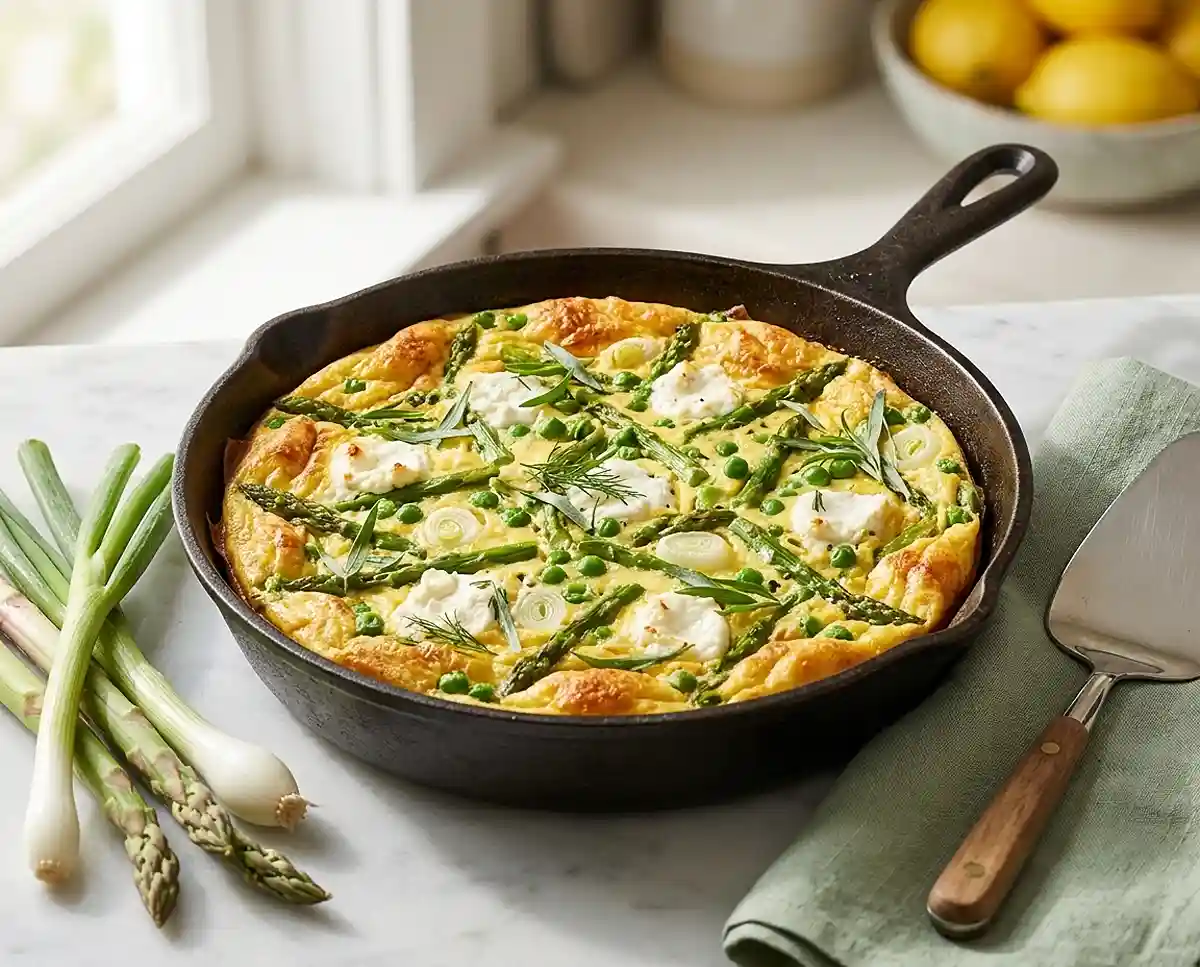
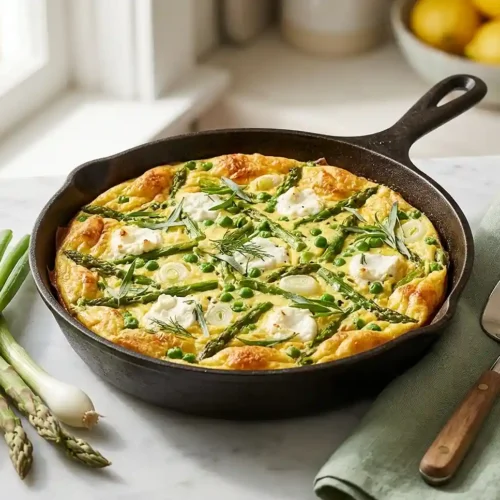
The frittata is done when the edges pull away slightly from the pan and the center no longer jiggles when you give it a gentle shake. It should look like a soft golden pillow—as fluffy as a spring cloud floating over your stove.
Rest and Serve
Remove from the oven and let it rest for 2-3 minutes. Sprinkle with additional salt and pepper to taste. Slice into wedges and serve directly from the pan.
Make It Your Own
Cheese variations open up endless possibilities. Crumbled feta adds a tangy punch that pairs beautifully with the sweet peas. Shredded gruyère creates a more sophisticated, nutty flavor profile. For dairy-free, cashew cheese melts surprisingly well and adds creaminess without the goat cheese tang.
Swap the vegetables based on what’s fresh. You know… spring vegetables are incredibly interchangeable here. Try sugar snap peas instead of frozen peas, or add a handful of baby spinach that wilts right into the eggs. Cherry tomatoes work wonderfully but should be halved and patted dry first.
Herb substitutions change the whole personality. Fresh dill gives you a more Eastern European vibe, while basil takes things Mediterranean. Chives offer a milder onion flavor if tarragon feels too licorice-forward for your taste.
Add protein for a heartier meal. Crumbled cooked bacon, diced ham, or smoked salmon turn this into a complete breakfast. Just fold them in with the vegetables before adding the eggs.
Common Problems & Solutions
Problem: The center is still runny but the edges are overcooked.
Your oven likely runs hot, or your skillet is too large. Try reducing the temperature to 375°F and using an 8-inch pan. The eggs need even, gentle heat to set uniformly.
Problem: The frittata is rubbery and tough.
Man, oh man… this happens when eggs are overbaked or cooked at too high a temperature. Remember that eggs continue cooking from residual heat. Pull the frittata when the center still has a tiny wobble—it’ll firm up within 2 minutes of resting.
Problem: There’s water pooling on top or around the edges.
Your vegetables released too much moisture. Next time, sauté them a minute longer and make sure frozen peas are thoroughly thawed and patted dry before adding.
Problem: The frittata stuck to my pan.
Cast iron needs proper seasoning, and stainless steel needs more oil. For guaranteed release, use a well-seasoned cast iron or nonstick oven-safe skillet. A light coating of oil on the sides helps too.
Problem: It tastes bland even though I added salt.
Season at multiple stages—once in the egg mixture, once while sautéing vegetables, and again after baking. Eggs absorb salt differently when raw versus cooked, so that final sprinkle really wakes everything up.
Storage & Meal Prep
| Method | Duration | Notes |
|---|---|---|
| Counter | 2 hours max | Food safety limit for eggs |
| Refrigerator | 3-4 days | Store covered or in airtight container |
| Freezer | 1-2 months | Wrap individual slices tightly |
To reheat, warm slices in a 300°F oven for 8-10 minutes or microwave at 50% power for 60-90 seconds. The oven method preserves the texture better, while microwaving works for quick weekday breakfasts.
Leftover frittata makes an excellent sandwich filling. Tuck a cold wedge between gluten-free bread with some arugula and a smear of mayo for an easy lunch.
FAQs About Gluten-Free Spring Vegetable Frittata
Can I make this gluten-free spring vegetable frittata ahead of time?
Yes, frittatas actually taste great at room temperature or cold. Prepare it the night before, refrigerate, and serve cold or bring to room temperature for brunch. The flavors meld beautifully overnight.
Why did my frittata deflate after baking?
Some deflation is completely normal and doesn’t affect taste or texture. Frittatas puff from steam and air expanding during baking, then settle as they cool. If it deflates dramatically, you may have overbeaten the eggs, incorporating too much air.
What’s the best pan for making brunch eggs like this?
A well-seasoned cast iron skillet is ideal because it retains heat evenly and transitions seamlessly from stovetop to oven. An 8-inch size creates the perfect thickness for two servings. If using nonstick, make sure it’s rated for oven temperatures up to 400°F.
How do I know when the asparagus eggs are fully cooked?
The edges should be set and slightly pulled away from the pan, while the center has the tiniest jiggle when shaken. It should not look wet or glossy on top. Trust the shake test—if it ripples like water, it needs more time.
Can I double this recipe for more servings?
Absolutely. Use a 10-inch skillet and increase baking time to 15-18 minutes. Check for doneness starting at 15 minutes. The larger volume takes longer to set through the center.
Serving Suggestions
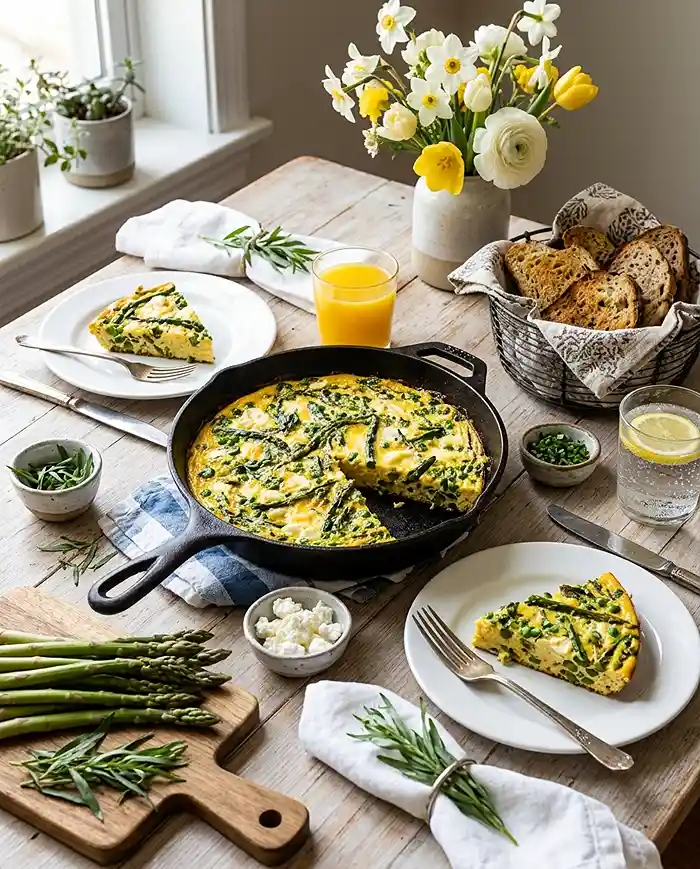
This spring brunch dish pairs beautifully with a simple side salad dressed in lemon vinaigrette. For a heartier Easter spread, serve alongside gluten-free resurrection rolls and honey glazed carrots.
Looking for a complete gluten-free Easter menu? Add tender lamb meatballs as a protein-packed appetizer that complements the fresh vegetable flavors in this frittata.
Fresh fruit, crispy bacon, and a glass of fresh-squeezed orange juice round out the perfect spring brunch table.
Let’s Get Cooking!
I’d love to hear how your gluten-free spring vegetable frittata turns out! Snap a photo and share it on Pinterest, or leave a comment below with any modifications you tried.
Did you swap the vegetables or try a different cheese? Your tips help other readers discover new variations. Happy cooking, friend!
Gluten-Free Spring Vegetable Frittata
Equipment
- 8-inch oven-safe skillet or cast iron pan
- Medium mixing bowl
- Whisk
- Spatula
Ingredients
Egg Base
- 4 large pastured eggs
- 3 tablespoons unsweetened almond milk or any milk
- 1-2 garlic cloves minced
- 1 tablespoon chopped fresh tarragon leaves or 1 teaspoon dried
- ¼ teaspoon Celtic sea salt plus more for serving
- pinch freshly ground black pepper
Vegetables
- ½ tablespoon olive oil
- 3 spring onions or scallions thinly sliced
- ½ cup asparagus tender top parts cut into 1-inch pieces
- ¼ cup frozen peas thawed
Optional Topping
- 3 tablespoons goat cheese or cashew cheese optional
Instructions
- Preheat your oven to 400°F. While it heats, whisk the eggs, almond milk, garlic, tarragon, salt, and pepper in a medium bowl until everything is well combined and slightly frothy. Set this aside while you work on the vegetables.
- Heat 1/2 tablespoon olive oil in an 8-inch oven-safe skillet or cast iron pan over medium heat. Add the scallions, asparagus pieces, and a pinch of salt and pepper.
- Cook, stirring occasionally, until the asparagus turns tender but stays bright green—about 3 minutes. You want a slight bite remaining since they’ll continue cooking in the oven.
- Add the thawed peas and stir to combine evenly with the other vegetables. Spread everything into a single layer across the bottom of the pan.
- Pour the egg mixture over the vegetables and gently tilt the pan to distribute everything evenly. The eggs should flow around and under the vegetables, filling all the gaps.
- Dot the surface with small pieces of goat cheese, if using. Press them gently into the eggs so they don’t slide around.
- Transfer the skillet to your preheated oven. Bake for 10-12 minutes until the eggs are set but not dried out. The frittata is done when the edges pull away slightly from the pan and the center no longer jiggles when you give it a gentle shake.
- Remove from the oven and let it rest for 2-3 minutes. Sprinkle with additional salt and pepper to taste. Slice into wedges and serve directly from the pan.