Gluten-Free Strawberry Rhubarb Pie
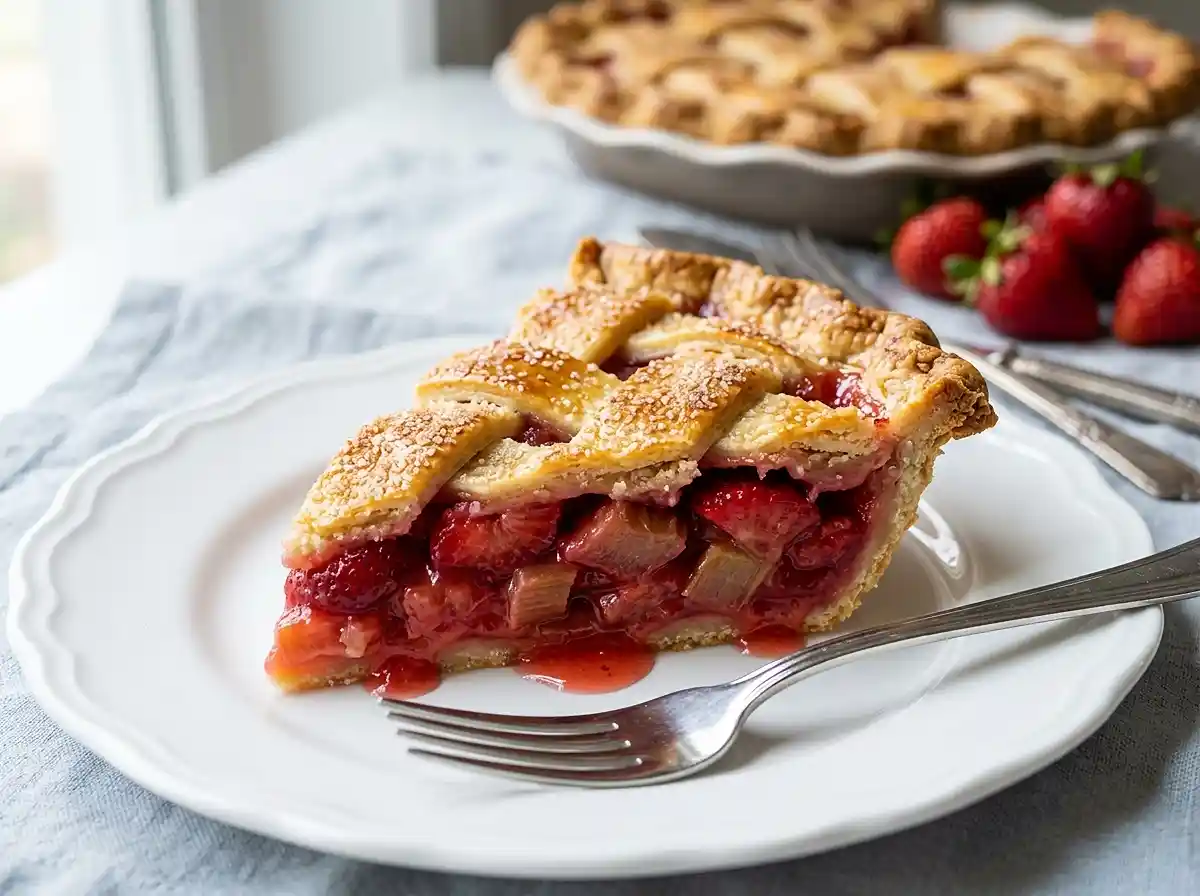
This gluten-free strawberry rhubarb pie features caramelized rhubarb, fresh strawberries, and a stunning lattice crust. The perfect seasonal fruit dessert for spring!
My grandmother kept a rhubarb patch behind her farmhouse that seemed ancient even when I was a child. Every May, she’d hand me a stalk still warm from the sun, dip it in sugar, and watch me pucker at that first tart bite. “Wait until you taste the pie,” she’d promise. And she was right—nothing compared to her strawberry rhubarb pie, with its jammy filling bubbling through a golden lattice.
Well… recreating that memory after going gluten-free felt impossible for years. Every attempt produced crusts that crumbled to dust or turned tough as cardboard. The filling was never the problem—it was always that elusive, flaky pastry.
This recipe finally cracked the code. The lattice crust weaves and bakes beautifully, the caramelized rhubarb adds depth you won’t find in simpler recipes, and that seasonal fruit filling strikes the perfect balance between sweet and tart. Isn’t it time you experienced a proper spring pie without compromising on texture or taste?
Table of Contents
Why You’ll Love This Gluten-Free Strawberry Rhubarb Pie
Caramelized rhubarb elevates the entire filling – sautéing the rhubarb in butter and brown sugar creates a toffee-like depth that raw preparations simply can’t achieve.
Lattice crust that actually weaves and holds – this dough handles beautifully, bending without cracking and baking to golden perfection.
Classic spring flavor combination – the tartness of rhubarb balances the sweetness of strawberries in that iconic way that defines the season.
Orange zest adds unexpected brightness – a subtle citrus note lifts all the flavors without being identifiable, making people wonder what your secret ingredient is.
The Secret to Perfect Seasonal Fruit Pie
Cooking the rhubarb first prevents a watery filling. Raw rhubarb releases tremendous liquid during baking, creating a soupy mess beneath your beautiful lattice. Sautéing it first drives off excess moisture while caramelizing the sugars for deeper flavor. According to Serious Eats’ pie science guide, pre-cooking high-moisture fruits produces significantly better texture.
Tapioca starch creates the clearest, glossiest filling. Unlike flour, which can turn cloudy and pasty, tapioca starch produces a jewel-like sheen that showcases the ruby-red fruit. It also thickens at lower temperatures and holds up better when the pie cools and is reheated.
Cold dough is essential for lattice work. Gluten-free pie dough becomes sticky and unmanageable when warm. Chilling between every step—after mixing, after rolling, after cutting strips—ensures the lattice weaves cleanly and maintains its shape during baking.
The filling must cool completely before assembling. Hot filling will melt the butter in your crust, resulting in a tough, shrunk shell. Patience here pays dividends in both texture and appearance.
Ingredients
Caramelized Rhubarb Filling
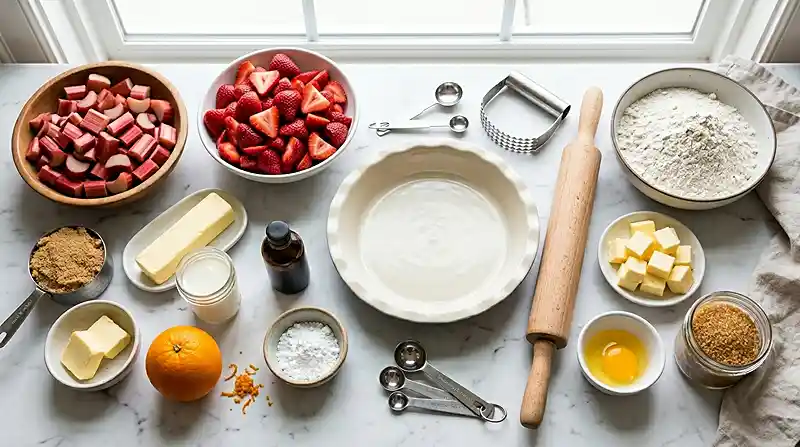
- 4 tablespoons (56 g) butter
- 1 pound (454 g) rhubarb, chopped into 1/2-inch slices
- 1 cup (220 g) firmly packed brown sugar
- 1/4 cup (60 g) heavy cream
- 1 tablespoon vanilla extract
- Zest of one orange
- 1/4 cup (40 g) tapioca starch (cornstarch or arrowroot may be substituted)
- 2 pounds (908 g) strawberries, hulled and sliced
Crust
- 1 recipe gluten-free pie crust (double crust)
- Egg wash (1 egg whisked with 1 tablespoon water and a pinch of salt)
- Turbinado, demerara, or sparkling sugar for sprinkling (optional)
Equipment You’ll Need
A 9-inch pie plate is essential—glass or ceramic both work beautifully and allow you to monitor browning on the bottom crust. You’ll also need a large sauté pan for the rhubarb, a rolling pin, parchment paper for rolling the dough, a sharp knife or pastry wheel for cutting lattice strips, a pastry brush for egg wash, and a large mixing bowl for combining the filling.
Pro Tip: A Microplane zester produces the finest orange zest, which distributes evenly throughout the filling without leaving noticeable pieces.
Step-by-Step Instructions
Prepare the Caramelized Rhubarb
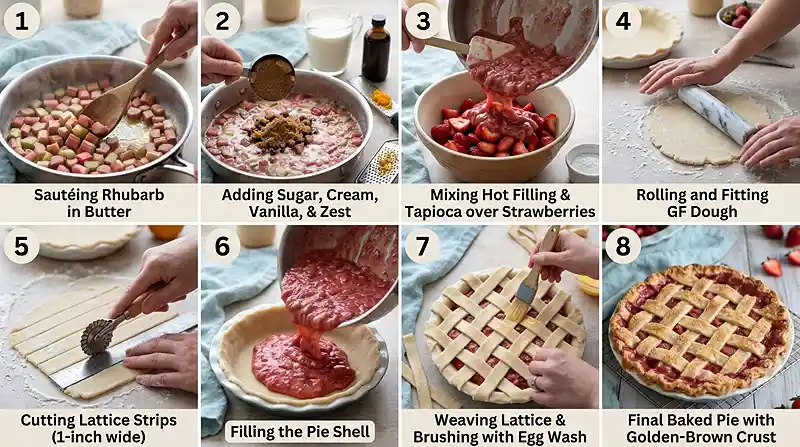
In a large sauté pan, melt the butter over medium heat. The butter should foam and turn slightly golden—this adds nutty depth to the final filling.
Add the sliced rhubarb and sauté until softened, about 5 minutes. Stir occasionally, watching the pieces transform from firm and pale to slightly translucent and tender.
Add the brown sugar, heavy cream, vanilla extract, and orange zest. Stir continuously until the sugar melts completely and the mixture turns bubbly and syrupy. The kitchen will smell absolutely incredible at this point—like toffee meeting springtime.
Remove from heat and pour the hot rhubarb mixture over the sliced strawberries in a large bowl. The residual heat will slightly soften the strawberries while they absorb that caramelized goodness.
Add the tapioca starch and toss everything together until the fruit is evenly coated. Set aside to cool completely—this takes about 30-45 minutes at room temperature, or 15-20 minutes in the refrigerator.
Prepare the Bottom Crust
Roll out one half of your gluten-free pie dough between two sheets of parchment paper into a round at least 11 inches in diameter. The parchment prevents sticking without adding extra flour that can toughen the crust.
Carefully transfer the rolled dough to a 9-inch pie plate, pressing gently into the corners and up the sides. Allow the edges to hang over the rim—you’ll trim these later.
Refrigerate the lined pie plate for 20 minutes. You know… this chilling step is tempting to skip, but it firms the butter back up and helps the crust hold its shape during baking.
Create the Lattice Strips
Roll out the remaining half of the dough into a rough rectangle approximately 11 inches long by 8-10 inches wide. Don’t stress about perfect edges—you’re cutting strips anyway.
Using a sharp knife or pastry wheel, cut 8-10 strips of dough, each about one inch wide. A pizza cutter works beautifully here. If you want decorative edges, use a fluted pastry wheel.
Transfer the strips to a parchment-lined baking sheet and refrigerate while you assemble the pie. Cold strips are infinitely easier to weave than warm, floppy ones.
Assemble the Pie
Pour the cooled filling into the chilled pie shell, mounding slightly in the center. Use a spatula to even out the top so your lattice lies flat.
Now for the weaving. Lay half the strips across the pie in one direction, spacing them evenly. Fold back every other strip and lay one perpendicular strip across the center. Unfold the folded strips over it. Now fold back the alternate strips and lay another perpendicular strip. Continue this pattern until the lattice is complete.
Man, oh man… the first lattice attempt can feel clumsy, but it gets easier with practice. Even imperfect lattices bake up beautifully, so don’t stress perfection.
Trim the overhanging edges of both the bottom crust and lattice strips, leaving about 1/2 inch. Fold the edges under themselves and crimp decoratively using a fork or your fingers.
Add the Finishing Touches
Preheat your oven to 350°F (175°C) while you finish the assembly.
Brush the entire lattice and crimped edges with the egg wash. This creates that gorgeous golden sheen and helps the sugar stick.
Sprinkle generously with turbinado, demerara, or sparkling sugar. The large crystals add sparkle and a slight crunch that contrasts beautifully with the jammy filling.
Bake to Bubbling Perfection
Place the pie on a rimmed baking sheet to catch any drips. Bake at 350°F for 50-55 minutes, rotating the pie halfway through for even browning.
The pie is done when the filling bubbles visibly between the lattice strips and the crust has turned deep golden brown. Those bubbles indicate the tapioca starch has activated and will thicken properly as the pie cools.
Pro Tip: If the edges brown too quickly, shield them with strips of foil for the final 15-20 minutes.
Cool Before Slicing
This is crucial: let the pie cool for at least 2-3 hours before slicing. The filling needs this time to set; cutting too early releases all that gorgeous jammy texture as a runny puddle.
Serve at room temperature or slightly warm, with vanilla ice cream or whipped cream if desired.
Make It Your Own
Add warming spices for autumn depth. Well… 1/2 teaspoon cinnamon and 1/4 teaspoon ginger transform this spring pie into something cozier. Add them to the rhubarb while sautéing.
Swap the cream for coconut cream for dairy-free. Use full-fat coconut cream from a can (not coconut milk) and dairy-free butter. The filling remains rich and luscious without any dairy.
Almond extract creates a different flavor profile. Replace the vanilla with 1/2 teaspoon almond extract for a more traditional European taste. The almond complements both fruits beautifully.
Lemon zest works if you’re out of oranges. The citrus brightness remains, though with a sharper, more assertive character. Use the zest of one small lemon.
Make a full top crust instead of lattice. If weaving intimidates you, roll the second crust into a full round, drape it over the filling, and cut decorative vents. Still gorgeous, slightly easier.
Add fresh ginger for unexpected zing. Grate 1 tablespoon fresh ginger into the sautéing rhubarb. The warmth pairs surprisingly well with the tart fruit.
Common Problems & Solutions
Problem: The filling is too runny even after cooling.
The tapioca starch didn’t fully activate, usually because the pie was underbaked. Next time, bake until you see vigorous bubbling through the lattice—not just around the edges, but in the center. Alternatively, you may have used too little starch; measure carefully.
Problem: The lattice strips cracked while weaving.
The dough was too warm or too thin. Keep strips refrigerated until the moment you weave, and roll dough to at least 1/8-inch thickness. If cracks appear, simply press them together—they’ll heal during baking.
Problem: The bottom crust is soggy.
Pre-cooking the rhubarb helps prevent this, but you can also blind bake the bottom crust for 10 minutes before adding filling. Make sure filling cooled completely before assembly, and bake on the lowest oven rack for extra bottom heat.
Problem: The edges burned before the filling bubbled.
Your oven runs hot, or the pie plate was positioned too high. Shield edges with foil earlier, move the rack down, or reduce temperature by 25°F. Darker metal pans also cause faster browning than glass or ceramic.
Problem: The rhubarb turned to mush in the filling.
You sautéed too long or cut pieces too small. Remove from heat when the rhubarb is just fork-tender but still holds its shape. Larger chunks (closer to 3/4 inch) maintain more texture.
Storage & Meal Prep
| Method | Duration | Notes |
|---|---|---|
| Counter | 2 days | Cover loosely after cooling completely |
| Refrigerator | 4-5 days | Wrap tightly; bring to room temp or warm before serving |
| Freezer (unbaked) | 2-3 months | Freeze assembled pie, bake from frozen adding 15-20 minutes |
| Freezer (baked) | 1-2 months | Thaw overnight in refrigerator, warm in 350°F oven |
For best results, bake this pie the same day you plan to serve it—the crust stays crispest within the first 24 hours. If making ahead, the assembled unbaked pie freezes beautifully. Wrap tightly in plastic then foil, and bake directly from frozen, adding extra time.
To refresh a refrigerated pie, warm it uncovered in a 350°F oven for 10-15 minutes until the filling bubbles gently.
Your Questions Answered
Does rhubarb contain gluten?
No, rhubarb is a naturally gluten-free vegetable (though we treat it like a fruit in baking). Fresh rhubarb stalks contain only fiber, vitamins, and that characteristic tartness. The only gluten concerns come from what you pair it with—specifically, traditional pie crusts made with wheat flour.
What are the ingredients in rhubarb pie?
Classic rhubarb pie contains rhubarb stalks, sugar (to balance the tartness), a thickener like tapioca or cornstarch, and sometimes butter or cream for richness. This recipe adds strawberries for sweetness and complexity, plus orange zest for brightness. The crust is a separate component made from flour, fat, and minimal liquid.
Can pies be gluten-free?
Absolutely. The filling of most fruit pies is naturally gluten-free—the crust is the only component requiring modification. With quality gluten-free flour blends and proper technique, you can create flaky, tender pie crusts indistinguishable from traditional versions. This recipe proves that gluten-free lattice work is entirely achievable.
Are strawberries naturally gluten-free?
Yes, all fresh strawberries are naturally gluten-free. Concerns only arise with processed strawberry products like some pie fillings, jams, or dried strawberries that may contain gluten-based additives or be processed on shared equipment. Fresh strawberries from the produce section are always safe.
Is rhubarb a wheat?
Not at all—rhubarb is a perennial vegetable related to buckwheat and sorrel, despite how differently we use it. The edible stalks grow from a root crown and contain no grains whatsoever. The leaves are toxic and should never be eaten, but the stalks are completely safe and naturally gluten-free.
What food has hidden gluten?
Many surprising products contain gluten: soy sauce, some oat products, imitation crab, beer, certain candies and chocolates, processed meats, flavored chips, some medications, and even certain lipsticks. For pie-making specifically, watch for gluten in pre-made pie crusts, some pie fillings, certain thickeners, and flavored extracts. Always verify that your gluten-free flour blend, tapioca starch, and vanilla extract are certified gluten-free.
Serving Suggestions
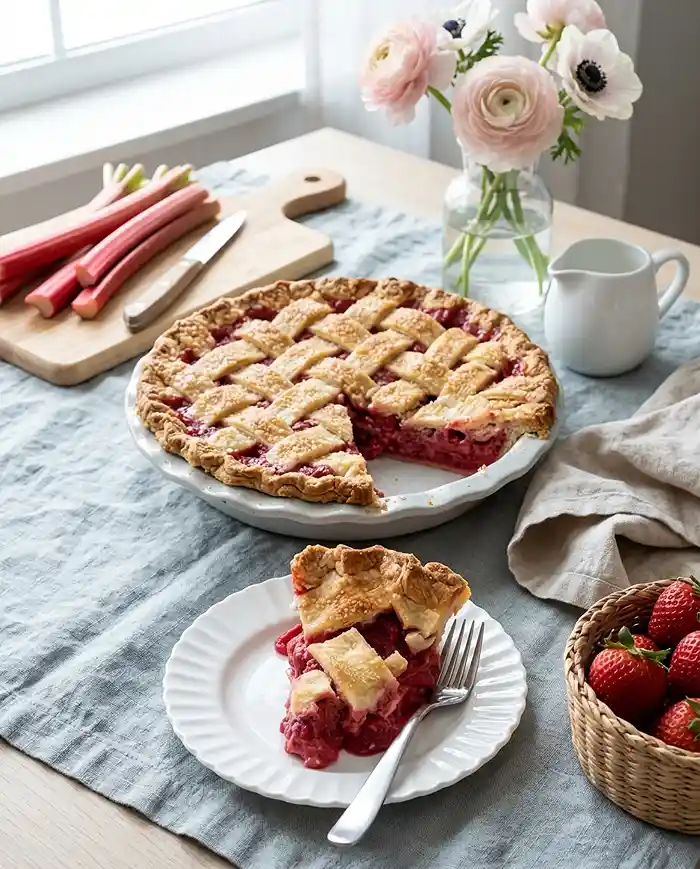
This gluten-free strawberry rhubarb pie deserves the spotlight at any spring gathering. The jewel-toned filling visible through the lattice makes a stunning presentation, and that first slice reveals the perfect fruit-to-crust ratio.
Serve warm with a generous scoop of vanilla bean ice cream—the cold creaminess against warm, jammy filling creates textural magic. Unsweetened whipped cream offers a lighter alternative that lets the fruit flavors shine.
For a complete spring celebration, pair this pie with other seasonal dishes like gluten-free Italian Easter bread for brunch. Balance the sweetness with savory options like gluten-free cauliflower steaks or a colorful gluten-free rainbow rice Buddha bowl.
This spring pie also makes a thoughtful contribution to potlucks, Mother’s Day celebrations, or any occasion where seasonal fruit deserves center stage.
Let’s Get Baking!
There’s something deeply satisfying about pulling a lattice-topped pie from the oven—those golden strips woven over bubbling ruby fruit represent real baking accomplishment. The fact that it’s entirely gluten-free just makes it sweeter.
I’d love to see your strawberry rhubarb creations! Share your photos on Pinterest and tell me in the comments how your lattice turned out. Did you try the ginger variation? Add extra orange zest? Your experiences help other bakers tackle this gorgeous seasonal fruit pie with confidence.
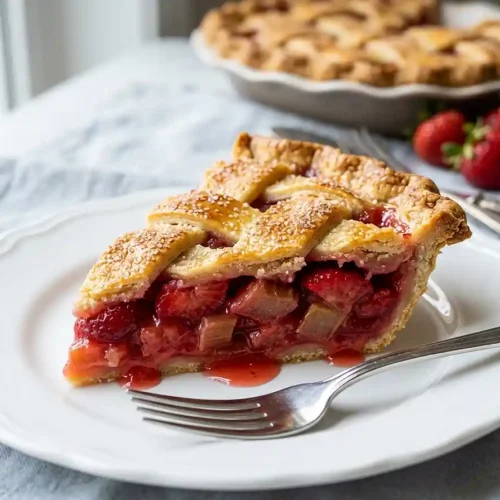
Gluten-Free Strawberry Rhubarb Pie
Equipment
- 9-inch pie plate
- Large sauté pan
- Rolling Pin
- Parchment paper
- Sharp knife or pastry wheel
- Pastry brush
- Large mixing bowl
- Rimmed baking sheet
- Microplane zester
Ingredients
Caramelized Rhubarb Filling
- 4 tablespoons butter 56 g
- 1 pound rhubarb 454 g, chopped into 1/2-inch slices
- 1 cup firmly packed brown sugar 220 g
- ¼ cup heavy cream 60 g
- 1 tablespoon vanilla extract
- zest of one orange
- ¼ cup tapioca starch 40 g, cornstarch or arrowroot may be substituted
- 2 pounds strawberries 908 g, hulled and sliced
Crust
- 1 recipe gluten-free pie crust double crust recipe
- 1 egg for egg wash, whisked with 1 tablespoon water and pinch of salt
- turbinado, demerara, or sparkling sugar for sprinkling, optional
Instructions
- In a large sauté pan, melt the butter over medium heat. Add the sliced rhubarb and sauté until softened, about 5 minutes.
- Add the brown sugar, cream, vanilla extract, and orange zest. Stir until the sugar melts completely and the mixture is bubbly.
- Remove from heat and pour the rhubarb mixture over the sliced strawberries in a large bowl. Add the tapioca starch and toss to coat well. Set aside to cool completely.
- Roll out one half of the pie dough into a round at least 11 inches in diameter and transfer to a 9-inch pie plate. Allow edges to hang over the sides and refrigerate for 20 minutes.
- Roll out the remaining dough into a rough rectangle about 11 inches long by 8-10 inches wide. Cut 8-10 strips of dough about one inch wide each.
- Preheat the oven to 350°F (175°C). Pour the cooled filling into the chilled pie shell and even out the top.
- Weave the dough strips over the filling into a lattice pattern. Trim edges and crimp decoratively.
- Brush the lattice with egg wash and sprinkle generously with turbinado, demerara, or sparkling sugar.
- Place pie on a rimmed baking sheet and bake for 50-55 minutes, or until the filling is bubbling between the lattice and the crust has browned.
- Cool completely for at least 2-3 hours before slicing to allow the filling to set properly.