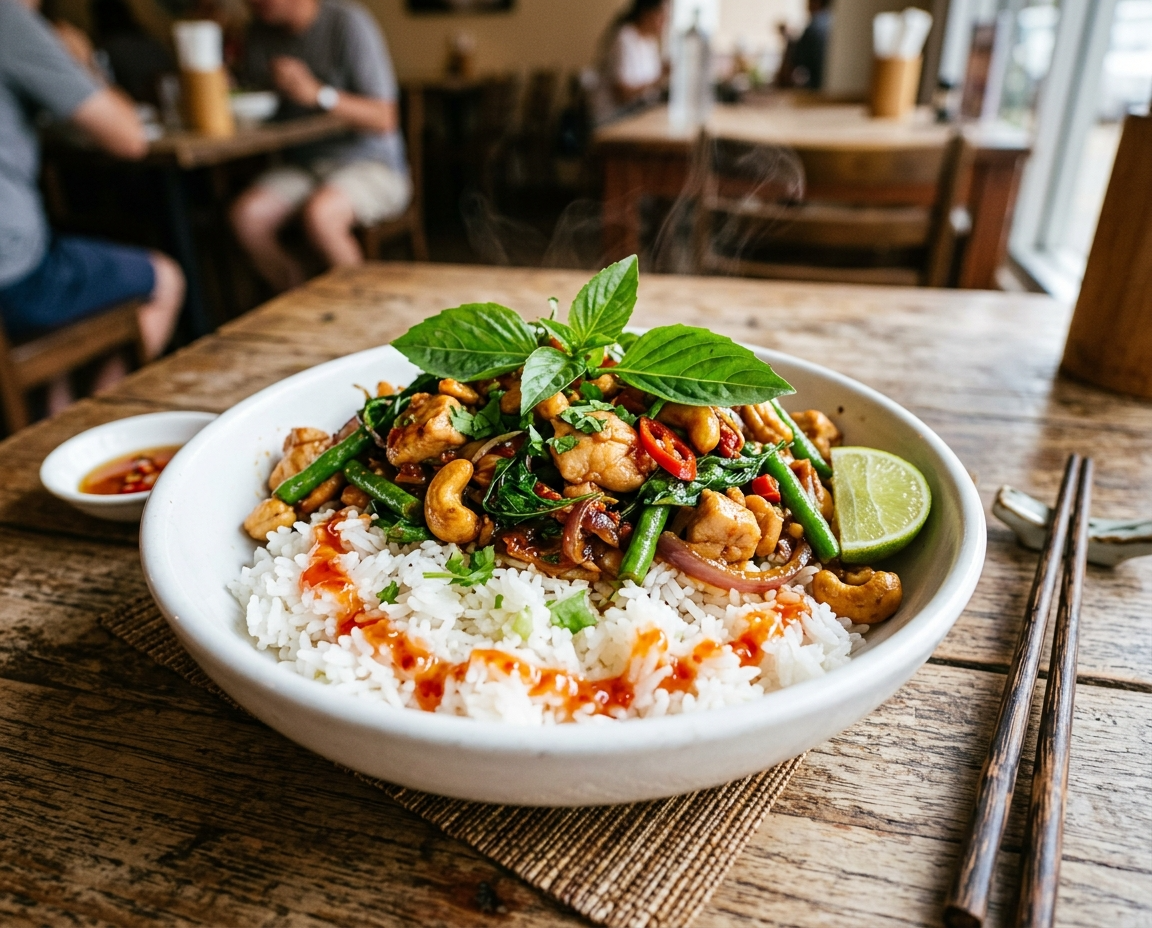
Gluten-Free Thai Basil Chicken
Gluten-Free Thai Basil Chicken with savory tamari, red curry & fresh basil—ready in 15 minutes for an authentic weeknight stir-fry.
Three years ago, I ordered pad krapow at my favorite Thai restaurant and spent the next two days sick because I forgot to ask if the soy sauce was gluten-free. That miserable experience pushed me to perfect this gluten-free Thai basil chicken at home, and honestly, it’s become my most-requested weeknight dinner—my kids actually cheer when they see me pull out the Thai basil.
The beauty of this gluten-free pad krapow is that swapping regular soy sauce for tamari (naturally gluten-free soy sauce) takes exactly zero effort, while the combination of red curry paste, fresh basil, and crunchy cashews delivers that bold, aromatic flavor you crave from takeout. And can you really beat a dinner that goes from cutting board to table in just 15 minutes?
Why You’ll Love This Gluten-Free Thai Basil Chicken
- Explosive flavor in under 20 minutes: The red curry paste and tamari create a savory-spicy base that coats every piece of chicken and vegetable—as bold as your favorite Thai restaurant but ready faster than delivery.
- Beginner-friendly stir-fry: No fancy wok techniques or hard-to-find ingredients—just a shallow pan, high heat, and simple ingredient additions that build flavor step by step.
- Naturally gluten-free with one swap: Traditional pad krapow uses soy sauce (which contains wheat), but substituting tamari makes this dish safe for celiacs without changing the authentic taste at all.
- Protein-packed and veggie-loaded: Two chicken breasts, green beans, and cashew nuts deliver a balanced meal that keeps you full without weighing you down—perfect for weeknight dinners or meal prep.
The Secret to Perfect Gluten-Free Thai Basil Chicken
Tamari replaces regular soy sauce seamlessly: Tamari is traditionally brewed Japanese soy sauce made without wheat, giving you the exact umami depth and saltiness that pad krapow needs. According to trusted gluten-free ingredient research, always check labels for “gluten-free” certification since some tamari brands still process wheat in their facilities.
Frying curry paste in oil blooms the spices: Starting by frying the red Thai curry paste and garlic in hot oil for a couple of minutes releases the aromatic oils from lemongrass, galangal, and chilies—this technique (called “blooming”) intensifies the flavor and prevents the paste from tasting raw or bitter.
High heat creates restaurant-quality sear: Cooking the chicken and vegetables over medium-high heat in a shallow pan (rather than crowding them) allows the edges to caramelize slightly, adding that smoky, charred flavor you get from restaurant woks. Well, you don’t need a wok to get authentic Thai stir-fry results—just a hot pan and quick movements.
Fresh Thai basil makes all the difference: Thai basil (also called holy basil or krapow) has a slightly spicy, anise-like flavor that sets pad krapow apart from other stir-fries. If you can only find regular Italian basil, it’ll still taste great—just with a sweeter, more herbal profile instead of that authentic peppery kick.
Table of Contents
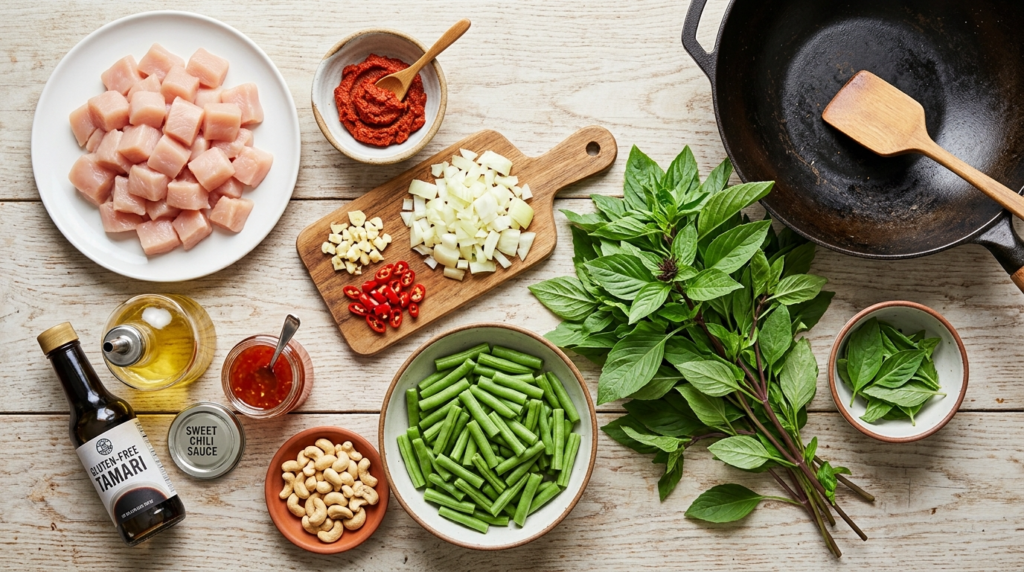
Ingredients
Main Ingredients:
- 1 tablespoon cooking oil (vegetable, canola, or peanut oil work best)
- 2 chicken breasts, diced into bite-sized pieces
- 1 tablespoon red Thai curry paste
- 1 onion, chopped
- 1 garlic clove, minced
- Large handful of diced green beans (about 1 cup/100g)
- 2 tablespoons cashew nuts (raw or roasted, unsalted preferred)
- 2 tablespoons tamari (gluten-free soy sauce)
- 6 Thai basil leaves (or substitute regular basil)
- 2 tablespoons sweet chilli sauce, optional for serving
Note: Make sure your red curry paste is certified gluten-free—most Thai brands like Mae Ploy are naturally gluten-free, but always check the label since some contain shrimp paste processed with wheat. Tamari brands like San-J and Kikkoman offer gluten-free certified options.
Step-by-Step Instructions
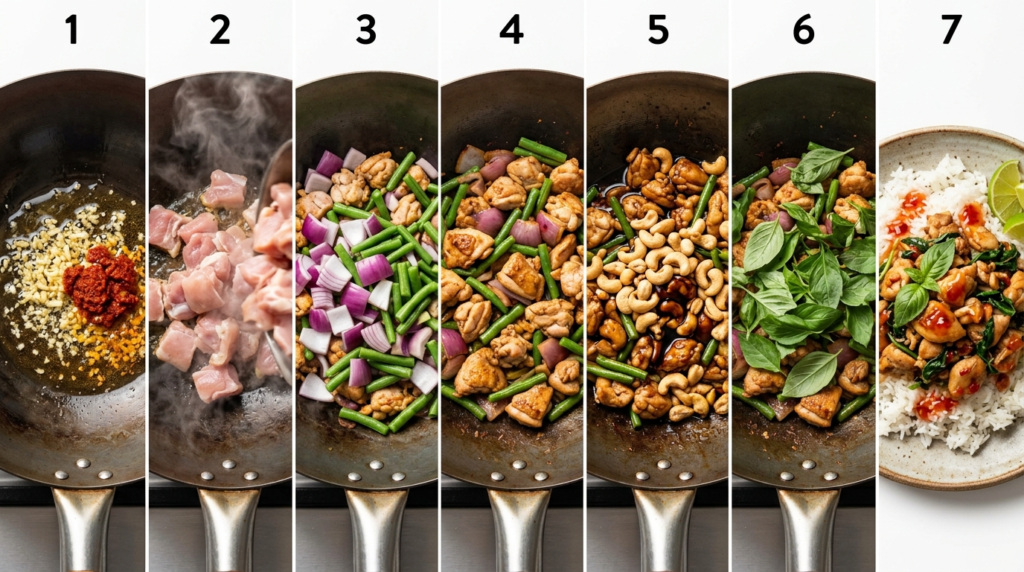
1. Heat the oil
Add 1 tablespoon cooking oil to a shallow pan (or large skillet) and place over medium heat. Let the oil heat for about 1 minute until it shimmers and spreads easily across the pan—this ensures the curry paste won’t stick.
2. Bloom the aromatics
Add the 1 minced garlic clove and 1 tablespoon red Thai curry paste to the hot oil. Fry for 2 minutes, stirring constantly, until the mixture becomes fragrant and the curry paste darkens slightly—you’ll smell the lemongrass and spices bloom, and the oil will turn reddish-orange.
3. Cook the chicken and vegetables
Stir in the 2 diced chicken breasts, 1 chopped onion, and large handful of diced green beans. Sauté for 10 minutes over medium-high heat, stirring every minute or so, until the chicken is cooked through (no pink remains) and the green beans are tender-crisp with some golden brown spots.
4. Add final flavors
Stir in the 2 tablespoons cashew nuts, 2 tablespoons tamari, and 6 Thai basil leaves (torn if they’re large). Stir-fry for 2 more minutes, tossing everything constantly, until the basil wilts and turns bright green, and the cashews warm through—the tamari will coat everything in a glossy, savory glaze.
5. Serve immediately
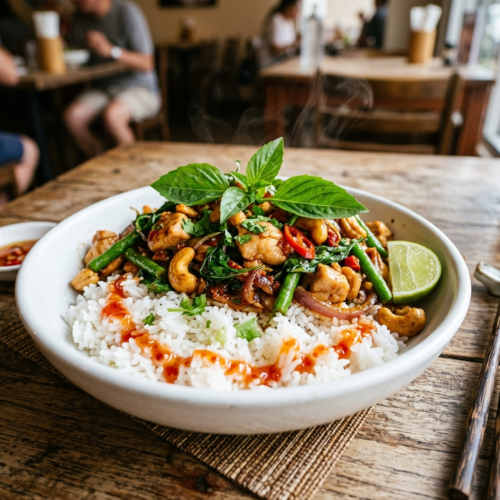
Divide the stir-fry between two plates over steamed jasmine rice or cauliflower rice. Drizzle with 2 tablespoons sweet chilli sauce if you like extra sweetness and heat, and serve immediately while the basil is still vibrant.
Pro Tip: For extra heat, add 1-2 fresh Thai bird’s eye chilies (sliced) along with the garlic in step 2—these tiny chilies pack serious punch and are traditional in authentic pad krapow.
Make It Your Own
Swap the protein: Use diced pork, shrimp (peeled and deveined), or extra-firm tofu (pressed and cubed) instead of chicken—all cook in about the same time. Ground chicken or ground turkey also work beautifully and are actually more traditional for pad krapow gai, creating a different texture that clings to the rice.
Add more vegetables: Stir in sliced bell peppers, snap peas, baby corn, or thinly sliced carrots along with the green beans for extra crunch and color. You know, adding a handful of baby spinach or bok choy in the last minute of cooking bumps up the greens without changing the flavor profile.
Make it spicier or milder: Double the red curry paste for serious heat lovers, or use just 1-2 teaspoons for a mild version that kids will eat. You can also swap red curry paste for green curry paste (which is hotter and more herbaceous) or yellow curry paste (which is milder and more turmeric-forward).
Go nut-free: Skip the cashew nuts entirely or replace them with roasted sunflower seeds or pumpkin seeds for a similar crunchy texture without tree nuts. The dish is still delicious without them—the nuts are more about texture than essential flavor.
Create a pad krapow bowl: Serve the stir-fry over a base of mixed greens or shredded cabbage with a fried egg on top (the runny yolk mixing with the rice and sauce is absolutely heavenly), plus a squeeze of fresh lime juice for extra brightness.
Common Problems & Solutions
Chicken is rubbery or overcooked
Cut the chicken breasts into uniform ½-inch pieces so they cook evenly, and don’t cook longer than 10 minutes total—overcooking makes chicken tough and dry. If you’re worried about undercooking, use a meat thermometer to check for 165°F internal temperature, but with small diced pieces, 10 minutes over medium-high heat is usually perfect.
Curry paste tastes bitter or burnt
This happens when the pan is too hot or the curry paste cooks too long before you add liquid ingredients. Keep the heat at medium (not high) during step 2, and make sure you add the chicken and vegetables within 2 minutes of adding the curry paste—the moisture from these ingredients stops the burning process.
Green beans are mushy instead of crisp-tender
You added too much liquid or cooked them too long. Man, oh man, green beans should still have a slight snap when you bite them—aim for tender-crisp, not soft. If your beans are thick, slice them in half lengthwise so they cook faster and more evenly.
Dish is too salty
Your tamari brand may be saltier than expected, or the curry paste contained extra salt. Next time, start with just 1 tablespoon tamari, taste after step 4, and add the second tablespoon only if needed. You can also balance excess salt by adding 1 teaspoon of sugar or an extra splash of sweet chilli sauce.
Basil turns black instead of staying green
Fresh basil oxidizes quickly when exposed to heat and air. Add the basil in the very last 2 minutes of cooking and remove the pan from heat immediately after—don’t let it sit in the hot pan or the leaves will darken and lose their fresh flavor.
Storage & Meal Prep
| Method | Duration | Notes |
|---|---|---|
| Counter | Up to 2 hours | Covered; best served fresh |
| Refrigerator | 3-4 days | Store in airtight container; reheat gently |
| Freezer | Up to 2 months | Freeze without basil; add fresh basil after reheating |
Reheating tips: Reheat refrigerated thai basil chicken in a skillet over medium heat with a splash of water or chicken broth to prevent drying out—microwave reheating works but can make the chicken rubbery. If you froze the dish, thaw overnight in the fridge, then reheat in a pan and stir in fresh basil leaves at the end.
Meal-prep strategy: Double or triple the recipe and portion it into individual containers with cooked rice for grab-and-go lunches all week. The flavors actually improve after a day in the fridge as everything melds together—just add a handful of fresh basil when reheating to brighten it up.
Gluten-Free Thai Basil Chicken FAQs
Can I use regular soy sauce instead of tamari?
No, regular soy sauce contains wheat and is not gluten-free—it will cause reactions in people with celiac disease or gluten sensitivity. Tamari is the only safe gluten-free soy sauce option, though you can also use coconut aminos (which are soy-free and gluten-free but taste slightly sweeter and less savory).
How do I know if my curry paste is gluten-free?
Check the ingredient label for wheat, barley, or modified food starch (which can be wheat-based)—most authentic Thai curry pastes like Mae Ploy, Thai Kitchen, and Maesri are naturally gluten-free since they’re made from chilies, garlic, lemongrass, and spices. When in doubt, look for “certified gluten-free” labels or contact the manufacturer.
What’s the difference between Thai basil and regular basil?
Thai basil (also called holy basil or krapow) has a spicier, more licorice-like flavor with purple stems and slightly pointed leaves, while Italian sweet basil is milder and more herbaceous. Thai basil holds up better to high-heat cooking without turning black, but regular basil works in a pinch—the dish will just taste a bit sweeter and less authentically Thai.
Can I make this dish ahead for a dinner party?
You can prep all the ingredients (dice chicken, chop vegetables, mince garlic) up to 1 day ahead and store them separately in the fridge, but the actual stir-frying should happen just before serving for the best texture. Stir-fries lose their fresh crunch and vibrant color when they sit around, so aim to cook this dish within 15 minutes of when you want to eat.
Why did my stir-fry turn out watery instead of glossy?
You either added too much liquid, cooked it over heat that was too low (which causes vegetables to steam and release water), or you crowded the pan. Make sure your pan is hot enough that ingredients sizzle when they hit it, work in batches if your pan is small, and don’t add extra water or broth—the tamari and curry paste provide all the sauce you need.
Serving Suggestions
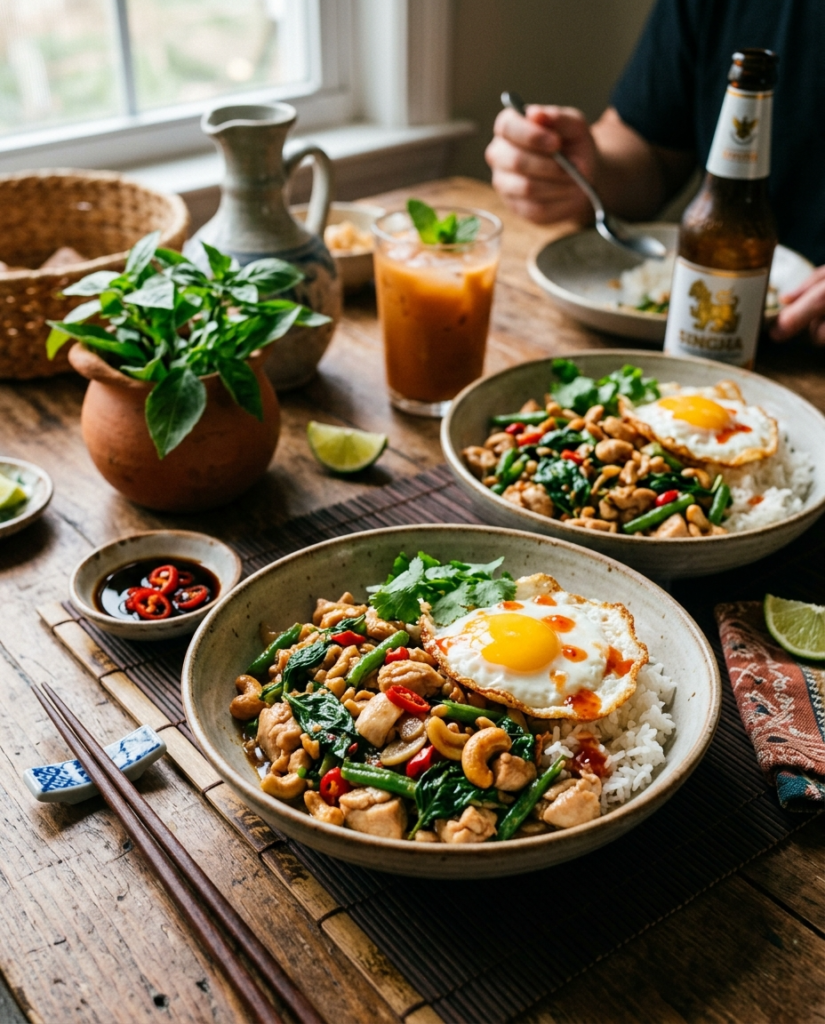
Serve this gluten-free Thai basil chicken over steamed jasmine rice with a side of gluten-free mango salsa for a tropical twist, or pair it with gluten-free grilled teriyaki salmon for an Asian-inspired feast that’s perfect for summer cookouts. The combination of savory stir-fry and sweet-tangy mango creates a restaurant-quality meal that impresses guests without hours of work.
For a complete Thai-themed dinner party, serve the pad krapow with Thai cucumber salad, coconut rice, and finish with gluten-free dairy-free panna cotta topped with fresh mango—it’s a menu that feels special enough for birthdays or anniversaries but easy enough for a busy Tuesday night.
Bring Thai Takeout Home Tonight
Give this gluten-free Thai basil chicken a try this week and let me know if it becomes your new favorite weeknight dinner like it did for my family! Pin this recipe for those nights when you need bold flavors fast, and drop a comment below about your favorite Thai dish to make at home.
Rate the recipe after you make it, and share photos of your stir-fry with the community—I love seeing everyone’s variations. This dish proves that eating gluten-free doesn’t mean giving up the restaurant flavors you crave most.
Gluten-Free Thai Basil Chicken
Equipment
- Shallow pan or large skillet
- Wooden spoon or spatula
- Knife and cutting board
- Measuring spoons
Ingredients
Main Ingredients
- 1 tablespoon Cooking oil vegetable, canola, or peanut oil
- 2 Chicken breasts diced into bite-sized pieces
- 1 tablespoon Red Thai curry paste certified gluten-free
- 1 Onion chopped
- 1 Garlic clove minced
- 1 cup Green beans diced, about 100g
- 2 tablespoons Cashew nuts raw or roasted, unsalted preferred
- 2 tablespoons Tamari gluten-free soy sauce
- 6 Thai basil leaves or substitute regular basil
- 2 tablespoons Sweet chilli sauce optional for serving
Instructions
- Add 1 tablespoon cooking oil to a shallow pan (or large skillet) and place over medium heat. Let the oil heat for about 1 minute until it shimmers and spreads easily across the pan—this ensures the curry paste won’t stick.
- Add the 1 minced garlic clove and 1 tablespoon red Thai curry paste to the hot oil. Fry for 2 minutes, stirring constantly, until the mixture becomes fragrant and the curry paste darkens slightly—you’ll smell the lemongrass and spices bloom, and the oil will turn reddish-orange.
- Stir in the 2 diced chicken breasts, 1 chopped onion, and large handful of diced green beans. Sauté for 10 minutes over medium-high heat, stirring every minute or so, until the chicken is cooked through (no pink remains) and the green beans are tender-crisp with some golden brown spots.
- Stir in the 2 tablespoons cashew nuts, 2 tablespoons tamari, and 6 Thai basil leaves (torn if they’re large). Stir-fry for 2 more minutes, tossing everything constantly, until the basil wilts and turns bright green, and the cashews warm through—the tamari will coat everything in a glossy, savory glaze.
- Divide the stir-fry between two plates over steamed jasmine rice or cauliflower rice. Drizzle with 2 tablespoons sweet chilli sauce if you like extra sweetness and heat, and serve immediately while the basil is still vibrant.