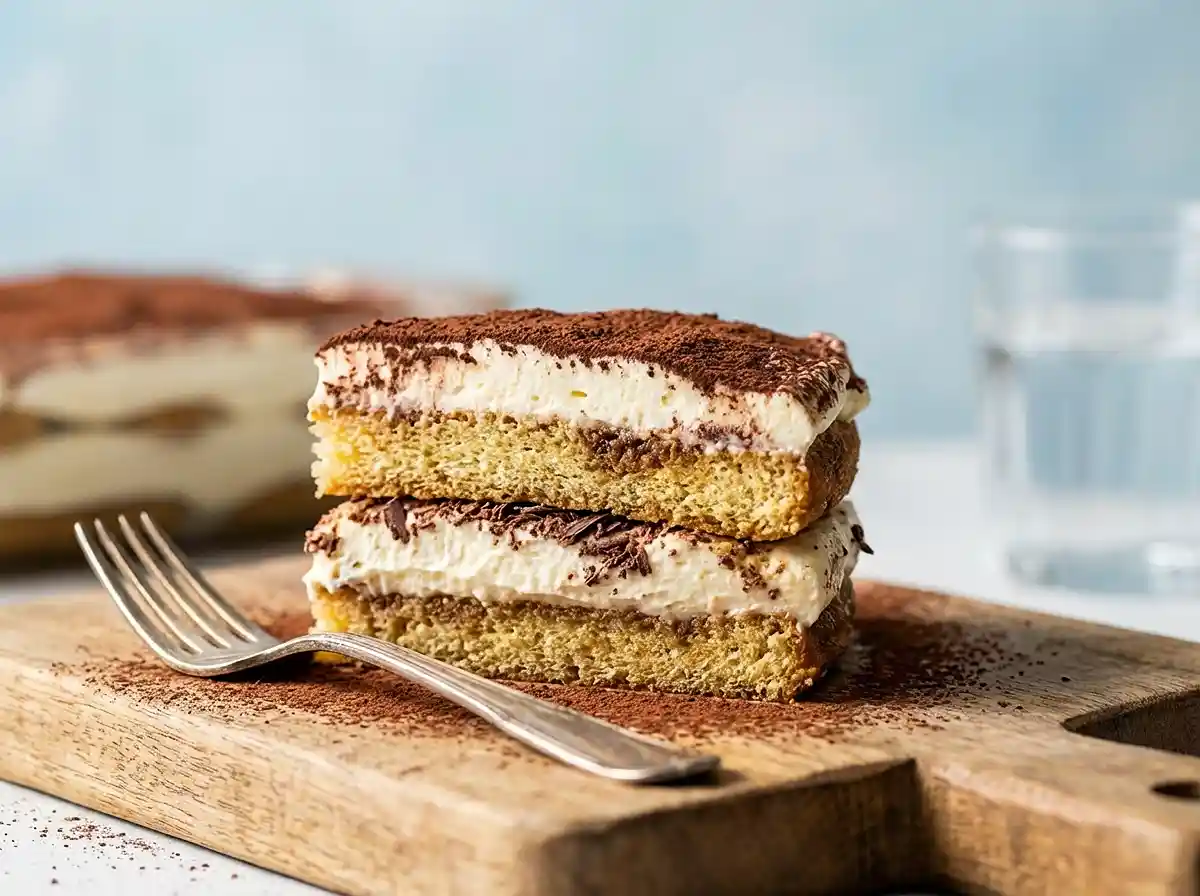
Gluten-Free Tiramisu
This Gluten-Free Tiramisu is creamy, coffee-soaked, and absolutely authentic. A stunning gluten free italian dessert for special occasions and everyday indulgence!
I’ll never forget the look on my mother-in-law’s face the first time I set this gluten-free tiramisu on the table after Christmas dinner. She grew up in an Italian household, and tiramisu is practically sacred territory. She took one bite, paused, and then quietly asked for seconds. That’s when I knew this recipe was something truly special.
Well… here’s the honest truth — for the longest time, I thought a proper tiramisu was off-limits once I went gluten-free. Those delicate ladyfinger biscuits, that pillowy mascarpone cream, the deep espresso soak — could it really all work without regular flour? It absolutely can, and this gluten free italian dessert proves it with every luscious, coffee-scented spoonful.
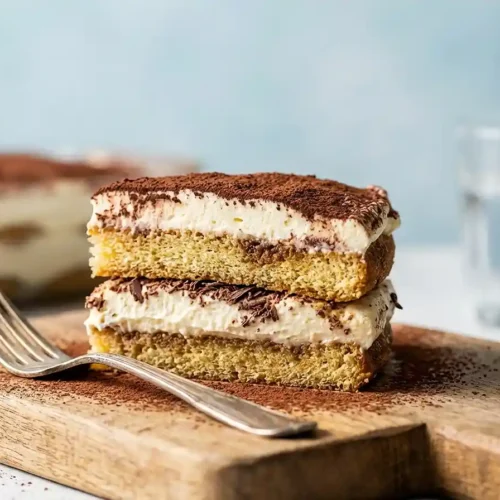
Whether you’re preparing a showpiece for a dinner party or simply craving something elegant on a quiet Saturday evening, this gluten-free tiramisu delivers. Layers of espresso-dipped savoiardi, silky mascarpone custard, dark chocolate shavings, and a dusting of cocoa — who could possibly resist that? It’s the kind of dessert that makes the whole gluten-free journey feel not just manageable, but genuinely exciting.
Table of Contents
Why This Gluten-Free Tiramisu Tastes Completely Authentic
Traditional tiramisu relies on technique more than complicated ingredients, which is exactly why it adapts so beautifully to gluten-free baking. The star of this dessert is the mascarpone custard — egg yolks whipped with sugar until thick and pale, folded with airy meringue for a cream that’s as light and ethereal as a summer cloud drifting overhead.
The gluten-free savoiardi biscuits do the heavy lifting on texture. They absorb the cold espresso and Marsala just like their wheat-based counterparts, softening into those signature coffee-soaked layers that make every forkful of this gluten free italian dessert swoon-worthy. According to King Arthur Baking’s comprehensive guide to gluten-free flour blends, the right gluten-free flour combination can replicate the structure of traditional baked goods remarkably well — and ladyfingers are a perfect example.
The real beauty of this gluten-free tiramisu is that it tastes better the longer it chills. The flavours meld, the biscuits soften into the custard, and everything becomes one unified, dreamy experience. Patience is genuinely rewarded here.
Ingredients for Gluten-Free Tiramisu
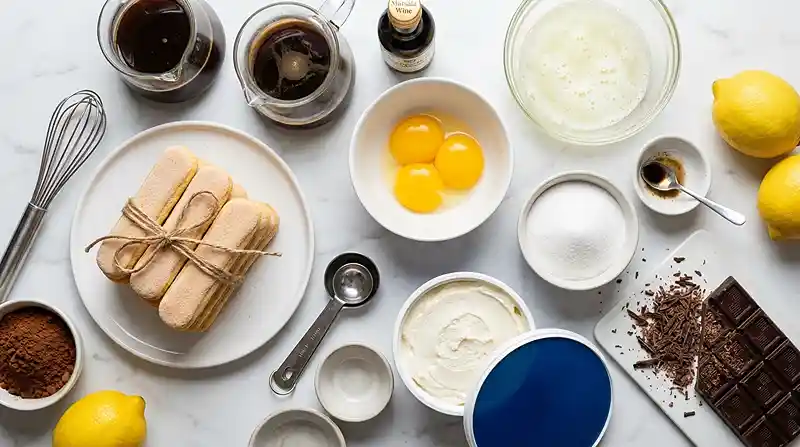
Mascarpone Custard & Assembly
| Ingredient | Amount | Notes |
|---|---|---|
| Savoiardi biscuits (ladyfingers) | 300 g (about 28–30) | Gluten-free, homemade or store-bought |
| Strong coffee (espresso strength) | 300 ml | Cooled completely, chilled if possible |
| Marsala wine | 2–3 tbsp | Or dark rum, Madeira, Sherry, or Tia Maria (optional) |
| Large egg yolks | 4 (approx 75–90 g) | Very fresh, room temperature |
| Caster sugar (superfine) | 120 g | Split into two 60 g portions |
| Mascarpone cheese | 500 g | Drain off any liquid from the top |
| Vanilla paste or powder | 1 tsp | Optional |
| Egg whites | 2–3 (approx 100 g) | Very fresh, room temperature |
| Dark chocolate, finely grated | 110 g | |
| Cocoa powder (Dutch processed) | 25–30 g | For dusting |
Additional
- Lemon juice — for cleaning bowl and whisk heads before whisking egg whites
Instructions: How to Make Gluten-Free Tiramisu
Step 1 — Prepare the Savoiardi Biscuits
Make or purchase your gluten-free savoiardi biscuits ahead of time and ensure they’re completely cool before assembling. They can be prepared several days in advance and stored in an airtight container — slightly stale ladyfingers actually work beautifully here because they absorb the coffee without falling apart.
Step 2 — Prepare the Coffee
Brew strong espresso coffee and allow it to cool completely. For the best flavour, chill it in the fridge before using. Once cold, stir in the Marsala wine (or your chosen alternative) if using — this adds a subtle warmth and depth to every layer of the gluten-free tiramisu.
Step 3 — Separate the Eggs
Very carefully separate the egg yolks from the whites, placing them into separate large mixing bowls. Make absolutely sure the bowl for the egg whites is spotlessly clean and free of any grease — wipe it with a solution of warm water and a little lemon juice, then let it air dry completely. Even the tiniest trace of oil will prevent the whites from reaching stiff peaks.
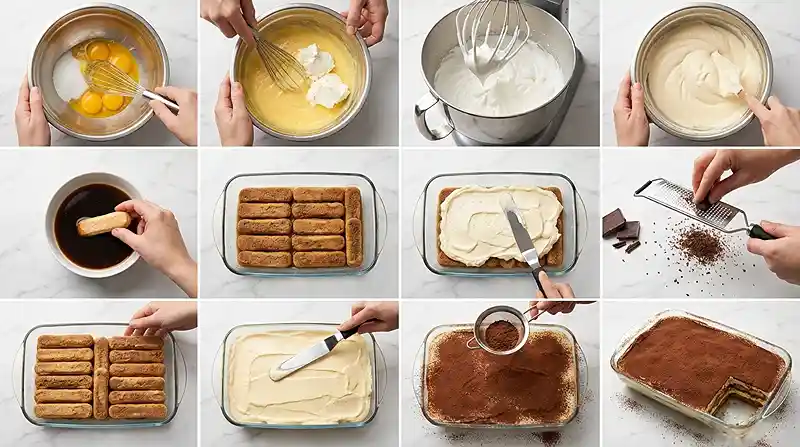
Step 4 — Whip the Egg Yolks
Using an electric whisk, beat the egg yolks with 60 g of caster sugar on high speed for at least 5 minutes, scraping down the bowl halfway through. The mixture should become very thick, pale, and creamy — it’ll nearly triple in volume and fall from the whisk in thick, slow ribbons.
Step 5 — Build the Mascarpone Cream
Add the vanilla paste (if using) and the mascarpone cheese a little at a time, beating well between each addition. Continue mixing on high speed for up to 10 minutes until you have a thick, luxurious cream that holds its shape like softly whipped cream. The texture at this stage should be silky and billowy — this is the heart of your gluten free italian dessert. Set the bowl aside in the fridge.
Step 6 — Whisk the Egg Whites
Thoroughly clean your whisk heads by dipping them into very hot water with a drop of lemon juice and allowing them to air dry. Whisk the egg whites until foamy, then gradually add the remaining 60 g of caster sugar a little at a time. Continue whisking until you have a glossy meringue with stiff, gleaming peaks.
Step 7 — Fold the Meringue into the Custard
Add a generous spoonful of the whipped egg whites to the yolk and mascarpone mixture and stir through with a spatula to loosen. Then gently fold in the remaining whisked whites, using a large circular motion from bottom to top. Move slowly and deliberately — you want to keep as much air as possible trapped in the cream. This is what gives the gluten-free tiramisu its signature light, mousse-like texture.
Step 8 — Begin Layering
Spoon a generous amount of the mascarpone custard into the base of a large serving dish and spread it into a thin, even layer across the bottom. This first layer prevents the biscuits from sitting directly on the dish and creates a creamy foundation for everything above.
Step 9 — Dip and Layer the First Biscuits
One at a time, quickly dip each savoiardi biscuit into the cold coffee — one side, then flip to the other. Don’t soak them or they’ll disintegrate; a quick dip on each side is all you need. Arrange the coffee-kissed biscuits closely together in a single layer across the custard base.
Step 10 — Add the First Custard and Chocolate Layer
Spread about half of the remaining mascarpone custard evenly over the biscuit layer. Top this with a generous layer of finely grated dark chocolate, reserving a small amount for the final garnish if you’d like. The chocolate melts ever so slightly into the cream, creating little pockets of bittersweet richness throughout your gluten-free tiramisu.
Step 11 — Build the Second Layer
Repeat the coffee-dipping process with the remaining savoiardi biscuits and arrange them in a second layer over the chocolate and custard. Top with the rest of the mascarpone cream and spread it gently into a smooth, even surface.
Step 12 — Finish and Chill
Dust the top generously with sifted Dutch-processed cocoa powder — the deep, earthy aroma that rises up is absolutely intoxicating. Add any remaining grated dark chocolate on top for an elegant finish. Cover and chill in the fridge for 4–5 hours, or ideally overnight, to allow the layers to set and the flavours to fully meld together in this gluten free italian dessert.
Substitutions for Gluten-Free Tiramisu
Marsala Wine: If you prefer to skip the alcohol entirely, it won’t compromise the overall flavour — the espresso does most of the heavy lifting. You could also add an extra teaspoon of vanilla extract or a tablespoon of coffee liqueur syrup (non-alcoholic) for extra depth in this gluten-free tiramisu.
Mascarpone Cheese: In a pinch, a mixture of equal parts cream cheese and heavy whipping cream, beaten until smooth, approximates mascarpone’s richness. The texture will be slightly denser but still delicious for this gluten free italian dessert.
Caster Sugar: Regular granulated sugar works if you whisk it longer to fully dissolve. Coconut sugar is another option, though it’ll give the custard a warmer, caramel-toned colour and a slightly deeper flavour.
Egg Concerns: Since this recipe uses raw egg yolks and whites, freshness is critical for food safety. According to the FDA’s guidance on safe egg handling, pasteurized eggs are the safest choice for recipes that don’t involve cooking the eggs. This is especially important if you’re serving this to young children, elderly family members, or anyone immunocompromised.
Cocoa Powder: Dutch-processed cocoa gives the smoothest, least bitter dusting for the top. Natural unsweetened cocoa works too but will have a sharper, slightly more acidic edge. For more ideas on navigating ingredient swaps, our elegant coconut mango panna cotta showcases how simple substitutions can create something truly beautiful.
Troubleshooting Your Gluten-Free Tiramisu
The mascarpone custard is too runny. This usually means the mascarpone was added too quickly or the eggs weren’t whipped long enough. Beat the yolk mixture for a full 5 minutes until genuinely thick and pale before adding the mascarpone gradually. The egg whites must reach true stiff peaks with a glossy sheen — under-whipped whites won’t provide enough structure.
My ladyfingers turned to mush. You know… this is the most common mistake, and it comes down to soaking them too long in the coffee. A quick dip — literally one to two seconds per side — is all you need. The biscuits continue absorbing moisture from the custard as the gluten-free tiramisu chills, so they’ll soften perfectly over time without turning soggy.
The layers are sliding apart. Make sure your serving dish has enough depth to hold all the layers securely. Chilling for the full 4–5 hours (overnight is even better) allows everything to firm up and set together. Slicing with a sharp, clean knife dipped in hot water also helps keep the layers neat.
The egg whites won’t stiffen. Even a tiny trace of yolk or grease in the bowl will prevent egg whites from whipping properly. That lemon juice cleaning step isn’t optional — it’s the secret to pristine, oil-free equipment. Make sure your eggs are truly at room temperature, which helps them reach full volume during whipping.
It doesn’t taste “coffee-forward” enough. Use the strongest espresso you can manage — weak coffee gets lost among the rich mascarpone and chocolate. Chilling the coffee thoroughly also helps it absorb more efficiently into the biscuits of this gluten free italian dessert.
How to Store Gluten-Free Tiramisu
Cover the assembled tiramisu tightly with plastic wrap or a fitted lid and keep it refrigerated. This gluten-free tiramisu stays beautifully fresh in the fridge for 3–4 days, and honestly it reaches peak flavour on day two when everything has melded together completely. Always keep it chilled — the raw egg components mean room temperature storage isn’t safe.
Make-Ahead Tips
This is one of the most make-ahead-friendly desserts you’ll ever encounter. Assemble the entire thing up to 48 hours before you plan to serve it — just hold off on the final cocoa dusting until right before presenting. The overnight chill actually improves the texture, making the layers more cohesive and the biscuits perfectly tender. This makes it an ideal prepare-ahead dessert for Thanksgiving, holiday dinners, or any gathering where you’d rather spend the day with your guests than in the kitchen.
This gluten free italian dessert is not recommended for freezing, as the mascarpone custard can become grainy and the savoiardi biscuits lose their texture when thawed.
Serving Suggestions & Pairings
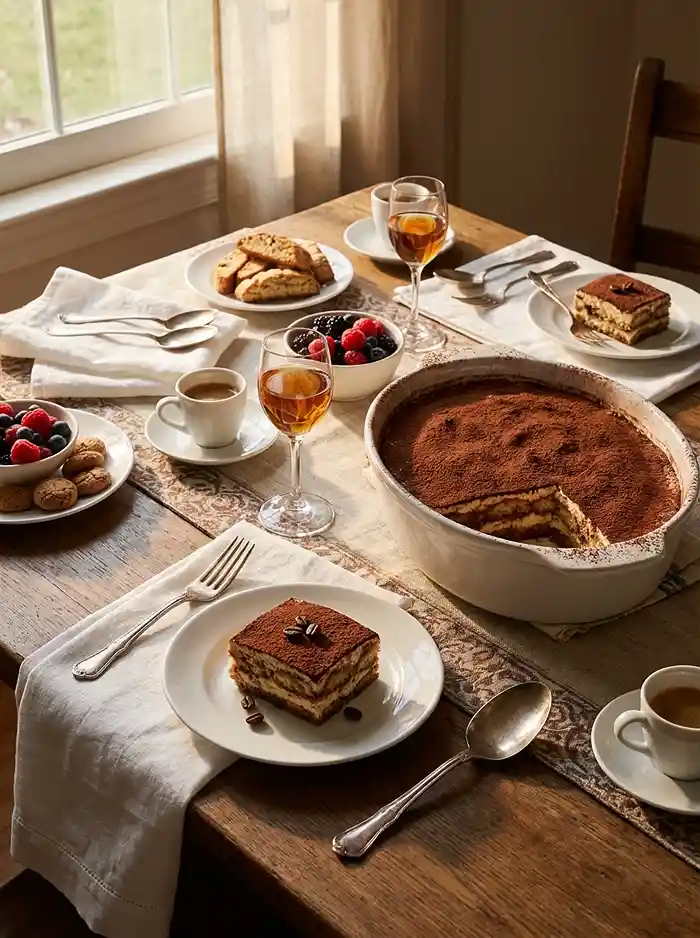
Present this gluten-free tiramisu straight from the fridge in its serving dish — it looks absolutely stunning with that cocoa-dusted top and dark chocolate shavings. Use a large spoon to scoop generous portions, or if you’ve assembled it in a square dish, slice it into clean rectangles for a more formal presentation.
A small cup of espresso alongside is the most classic pairing and echoes the coffee flavour running through every layer. A dessert wine like Vin Santo or a splash of Marsala in a tiny glass also complements this gluten free italian dessert beautifully.
For a lighter counterpoint, serve fresh berries — raspberries or strawberries — on the side. Their bright acidity cuts through the richness of the mascarpone perfectly. If you’re building a full dessert spread, our creamy stuffed mini peppers make a gorgeous savoury contrast to start the evening before this sweet finale.
Variations & Dietary Adjustments
Dairy-Free Tiramisu: Swap the mascarpone for a high-quality cashew-based cream cheese blended with full-fat coconut cream until smooth and thick. Use dairy-free ladyfingers and dairy-free dark chocolate. The result is a lovely dairy-free tiramisu that still delivers that characteristic creamy richness — it’s closer to the original than you might expect.
Vegan Tiramisu: For a fully vegan tiramisu, replace the eggs with aquafaba (the liquid from canned chickpeas) — about 3 tablespoons of aquafaba equals one egg white and whips into surprisingly sturdy peaks. Combine this with the dairy-free cream approach above, and you’ve got a plant-based version of this gluten-free tiramisu that’s genuinely impressive.
Kid-Friendly Version: Man, oh man… kids adore this dessert when you make a couple of small tweaks. Skip the Marsala wine and coffee entirely, and soak the biscuits in warm chocolate milk or a mild hot chocolate instead. The layers stay gorgeously soft, the chocolate flavour takes centre stage, and little ones get their own special version of this gluten free italian dessert.
Chocolate Lover’s Twist: Double the grated dark chocolate between the layers and add 2 tablespoons of cocoa powder directly into the mascarpone custard for a deeper, more intensely chocolatey experience. A drizzle of melted dark chocolate over the top before the final cocoa dusting makes this baked cheese — er, this unbaked beauty — absolutely showstopping.
Individual Portions: Layer everything in small mason jars or glass cups for a gorgeous single-serving presentation. These portable portions are perfect for dinner parties where you want each guest to have their own gluten-free tiramisu. They also travel well if you’re bringing dessert to a friend’s house — just keep them chilled. For another stunning individual dessert idea, our silky coconut mango panna cotta is equally impressive in small glasses.
FAQs About Gluten-Free Tiramisu
Can I make gluten-free tiramisu without alcohol?
Absolutely — simply leave out the Marsala wine and the dessert will still be delicious. The espresso provides plenty of depth and flavour on its own. You can add an extra splash of vanilla extract or a tablespoon of non-alcoholic coffee syrup if you’d like a little extra complexity.
How long does this gluten free italian dessert need to chill?
A minimum of 4–5 hours gives the layers time to set properly, but overnight is ideal. The longer it sits, the more the biscuits soften and the flavours marry together into something truly extraordinary. Don’t rush this step — the wait is genuinely worth it.
What’s the best way to get clean slices of tiramisu?
Use a sharp knife dipped in hot water and wiped clean between each cut. Alternatively, assemble the tiramisu in a square or rectangular dish rather than a round one — straight edges are much easier to portion neatly. Chilling overnight also firms everything up for cleaner cuts.
Why do the egg whites need a grease-free bowl?
Even a microscopic amount of oil or fat prevents egg whites from trapping air and reaching stiff peaks. The lemon juice wash removes invisible residue that soap alone can miss. This step takes 30 seconds and makes the difference between flat whites and a beautiful, billowy meringue for your gluten-free tiramisu.
Can I use instant coffee instead of espresso?
Yes — dissolve 2–3 tablespoons of quality instant coffee or espresso powder in 300 ml of hot water, then cool completely before using. The flavour won’t be quite as nuanced as fresh espresso, but it works well and is much more convenient. Just make sure the concentration is strong enough so the coffee flavour holds its own against the rich mascarpone.
Best way to transport this dessert to a gathering?
Keep the dish covered and level in a cooler bag with ice packs during transport. Add the cocoa powder dusting after you arrive so it looks fresh and pristine. Individual jar portions are even easier to transport and eliminate the need for slicing at the destination.
Final Thoughts
This gluten-free tiramisu is the kind of dessert that turns an ordinary evening into something truly memorable. Every coffee-soaked, chocolate-dusted spoonful is proof that going gluten-free doesn’t mean giving up the recipes you love most.
I hope this one brings as much joy to your table as it’s brought to mine — tag us on Pinterest or Instagram when you make it. I’d love to see your beautiful, layered creations!
Gluten-Free Tiramisu
Equipment
- Large mixing bowls
- electric whisk or stand mixer
- large serving dish
- Spatula
- Fine-mesh sieve
- shallow dish for coffee dipping
Ingredients
Mascarpone Custard & Assembly
- 300 g savoiardi biscuits (ladyfingers) gluten-free, about 28–30 biscuits
- 300 ml strong coffee espresso strength, cooled completely
- 2-3 tbsp Marsala wine or dark rum, Madeira, Sherry, or Tia Maria (optional)
- 4 large egg yolks approx 75–90g, very fresh, room temperature
- 120 g caster sugar (superfine sugar) split into two 60g portions
- 500 g mascarpone cheese drain off any liquid from the top
- 1 tsp vanilla paste or powder optional
- 2-3 egg whites approx 100g, very fresh, room temperature
- 110 g dark chocolate finely grated
- 25-30 g cocoa powder Dutch processed, for dusting
Additional
- lemon juice for cleaning bowl and whisk heads before whisking egg whites
Instructions
- Prepare the gluten-free savoiardi biscuits ahead of time (homemade or store-bought) and ensure they are completely cool before using. They can be made several days in advance and stored in an airtight container — slightly stale ladyfingers work beautifully.
- Brew strong espresso coffee and allow it to cool completely. For the best flavour, chill it in the fridge before using. Once cold, stir in the Marsala wine or your chosen alternative if using.
- Very carefully separate the egg yolks from the whites, placing them into separate large mixing bowls. Ensure the bowl for the egg whites is spotlessly clean by wiping with a solution of warm water and a little lemon juice, then allow to air dry completely.
- Using an electric whisk, beat the egg yolks with 60g of caster sugar on high speed for at least 5 minutes, scraping down the bowl halfway through, until very thick, pale, and creamy.
- Add the vanilla paste (if using) and the mascarpone cheese a little at a time, beating well between each addition. Continue mixing on high speed for up to 10 minutes until the mixture has the consistency of whipped cream and holds its shape. Set aside in the fridge.
- Thoroughly wash the whisk heads and dip into very hot water with a drop of lemon juice to remove any residual grease. Allow to air dry. Whisk the egg whites until foamy, then gradually add the remaining 60g caster sugar a little at a time until you have a glossy meringue with stiff peaks.
- Add a generous spoonful of the whipped egg whites to the yolk mixture and stir through with a spatula to loosen. Gently fold the remaining whisked whites into the yolk mix using a large circular motion from bottom to top, maintaining as much air as possible.
- Spoon a generous amount of the mascarpone custard into the base of a large serving dish and spread to form a thin layer across the bottom.
- One at a time, quickly dip the savoiardi biscuits in the cold coffee (one side then the other) and layer closely together across the custard layer in the base of the dish.
- Spread about half of the remaining mascarpone custard evenly over the biscuit layer. Top with a generous layer of finely grated dark chocolate, optionally reserving a small amount for the final garnish.
- Add a second layer of coffee-dipped savoiardi biscuits, repeating the quick dipping process as before.
- Top with the remaining mascarpone custard and spread into a smooth, even surface.
- Dust the top generously with sifted Dutch-processed cocoa powder and any remaining grated dark chocolate. Cover and chill in the fridge for 4–5 hours or overnight to set before serving.