Homemade Gluten-Free Bagels
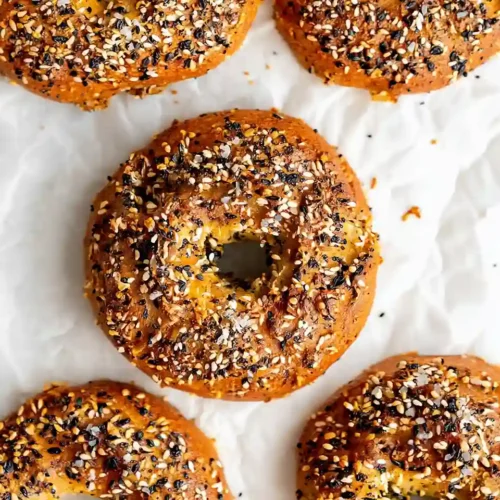
Master homemade gluten-free bagels with this foolproof recipe. Chewy centers, crispy edges, and endless topping options. Make a batch today!
There’s something almost magical about biting into a fresh bagel—that perfect chew, the way it holds all your toppings without falling apart. For years, I thought that experience was off-limits when we went gluten-free, until I figured out the trick to making gluten-free bagels that actually taste like the real deal.
I still remember the morning my daughter took her first bite of one I’d made. She looked shocked, then said, “Mom, this tastes like a regular bagel!” If you’ve been missing that authentic bagel texture or wondering if homemade gluten-free bagels are actually possible, I’ve got news for you: they absolutely are, and they’re easier than you’d think.
The secret isn’t some fancy trick—it’s understanding how gluten-free flour behaves and giving your dough the time it needs to shine. Trust me, once you master this, you’ll be making gluten-free bagels every weekend.
Table of Contents
Homemade Gluten-Free Bagels
Equipment
- Stand mixer with dough hook
- Large mixing bowl
- Microwave (for warming water)
- Baking tray
- Parchment paper
- Slotted spoon
- Large pot
- Oven
- Damp kitchen towel
Ingredients
Dry Ingredients
- 16 oz (1 bag) Bob’s Red Mill gluten-free bread flour
- 1 packet Instant yeast
- 1 Tbsp Granulated sugar
- 1 tsp Kosher salt
- 1.5 tsp Baking powder
Wet Ingredients
- 1 cup Warm water about 110°F
- 2 Tbsp Olive oil
- 2 large Eggs
- 1 tsp Apple cider vinegar
For Boiling
- 8 cups Water
- 2 Tbsp Honey
- 2 tsp Baking soda
Optional Toppings
- Optional Sesame seeds, everything bagel seasoning, or poppy seeds
Instructions
- Mix the Dry Base: Add the flour, sugar, yeast, baking powder, and salt to a stand mixer bowl fitted with a dough hook. Having these mixed before the wet ingredients helps the yeast distribute evenly throughout your gluten-free bagels dough.
- Warm Your Water: Microwave the water until it reaches about 110°F—it should feel like a warm bath water on your wrist, not hot. This temperature activates the yeast without killing it, which is crucial for proper rising.
- Combine Wet & Dry: Pour in the warm water, olive oil, eggs, and vinegar. Mix on medium-low speed for about 5 minutes, scraping down the sides and bottom of the bowl as you go to ensure everything blends smoothly.
- Adjust Dough Consistency: If the dough looks too dry, add 1–2 more tablespoons of water one at a time until you reach a slightly sticky but workable texture. The dough should feel like soft play-dough, not stiff.
- First Rise: Cover the bowl with a damp kitchen towel and let the dough rise at room temperature for 30 minutes. You’ll notice it becomes slightly puffier and more cohesive—this is exactly what you want.
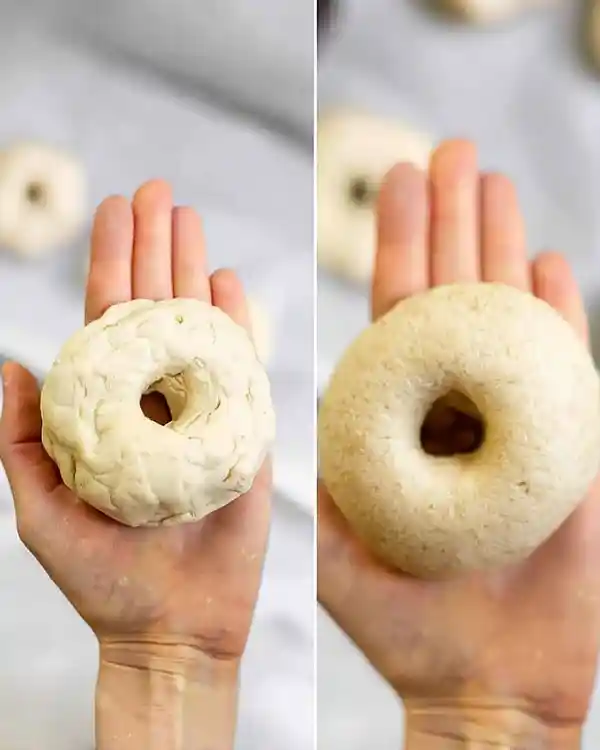
- Shape into Bagels: Divide the dough into 6 equal portions (about 145 grams each if you’re weighing). Flour your hands to prevent sticking, then roll each piece into a ball and use your finger to poke a hole through the center, creating that signature bagel shape.
- Second Rise: Place the shaped homemade gluten-free bagels on a parchment-lined baking tray, brush the tops lightly with olive oil, and move them to a cool, dark place like an unheated oven or a drawer. Let them rise for 60 minutes—they won’t double in size but should puff up noticeably.
- Preheat the Oven: About 15 minutes before the second rise finishes, preheat your oven to 400°F. If your bagels are rising in the oven, carefully remove them first. You’ll know they’re ready when they feel pillowy and a gentle poke bounces back slightly.
- Prepare the Boiling Water: While the bagels finish rising, bring 8 cups of water to a rolling boil with the honey and baking soda. This special bath gives your gluten-free bagels that characteristic chewy exterior and shiny crust.
- Boil the Bagels: Once the water is rapidly boiling, carefully add 1–2 bagels at a time and boil for 30 seconds on each side. Use a slotted spoon to gently remove them and return them to the baking sheet. Work carefully here—the dough is delicate and tender.
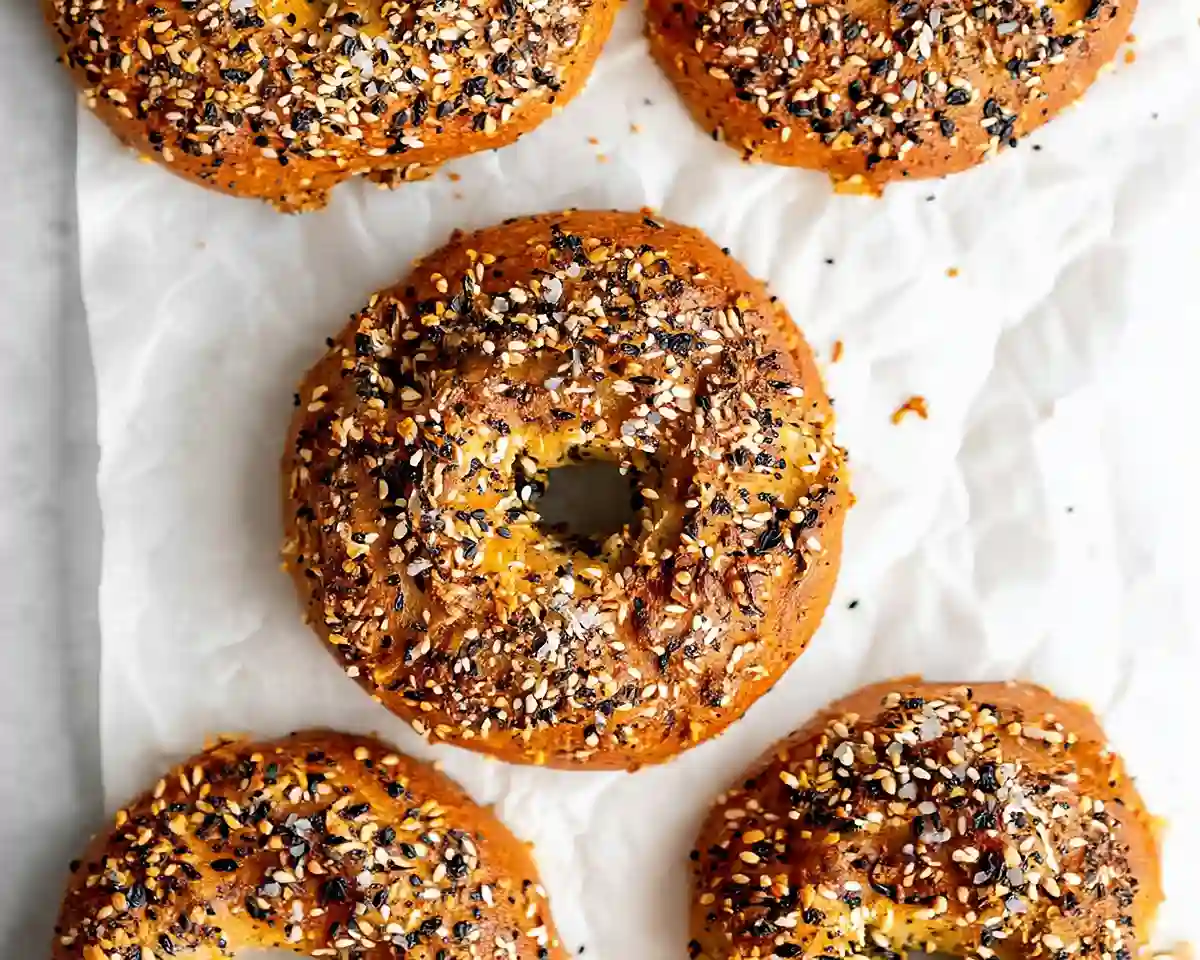
- Season & Bake: Sprinkle your desired toppings—sesame seeds, everything bagel seasoning, poppy seeds, or just a pinch of salt—onto each boiled bagel. Bake for 20 minutes until the tops turn golden brown, then turn the oven off and let them sit inside for another 5–10 minutes to firm up.
- Cool Completely: Remove from the oven and let cool for at least 30 minutes before slicing. This resting time lets the internal structure set properly, preventing that crumbly texture you get from cutting too early. Toast if desired, spread with your favorite cream cheese or topping, and enjoy!
Notes
Ingredients For Gluten-Free Bagels
| Ingredient | Amount |
|---|---|
| Bob’s Red Mill gluten-free bread flour | 16 oz (1 bag) |
| Instant yeast | 1 packet |
| Granulated sugar | 1 Tbsp |
| Kosher salt | 1 tsp |
| Baking powder | 1½ tsp |
| Warm water (about 110°F) | 1 cup |
| Olive oil | 2 Tbsp |
| Eggs | 2 large |
| Apple cider vinegar | 1 tsp |
| For Boiling Water: | |
| Water | 8 cups |
| Honey | 2 Tbsp |
| Baking soda | 2 tsp |
| For Topping (optional): | |
| Sesame seeds, everything bagel seasoning, or poppy seeds | As desired |
Instructions For Gluten-Free Bagels
Step 1: Mix the Dry Base
Add the flour, sugar, yeast, baking powder, and salt to a stand mixer bowl fitted with a dough hook. Having these mixed before the wet ingredients helps the yeast distribute evenly throughout your gluten-free bagels dough.
Step 2: Warm Your Water
Microwave the water until it reaches about 110°F—it should feel like a warm bath water on your wrist, not hot. This temperature activates the yeast without killing it, which is crucial for proper rising.
Step 3: Combine Wet & Dry
Pour in the warm water, olive oil, eggs, and vinegar. Mix on medium-low speed for about 5 minutes, scraping down the sides and bottom of the bowl as you go to ensure everything blends smoothly.
Step 4: Adjust Dough Consistency
If the dough looks too dry, add 1–2 more tablespoons of water one at a time until you reach a slightly sticky but workable texture. The dough should feel like soft play-dough, not stiff.
Step 5: First Rise
Cover the bowl with a damp kitchen towel and let the dough rise at room temperature for 30 minutes. You’ll notice it becomes slightly puffier and more cohesive—this is exactly what you want.
Step 6: Shape into Bagels
Divide the dough into 6 equal portions (about 145 grams each if you’re weighing). Flour your hands to prevent sticking, then roll each piece into a ball and use your finger to poke a hole through the center, creating that signature bagel shape.
Step 7: Second Rise
Place the shaped homemade gluten-free bagels on a parchment-lined baking tray, brush the tops lightly with olive oil, and move them to a cool, dark place like an unheated oven or a drawer. Let them rise for 60 minutes—they won’t double in size but should puff up noticeably.
Step 8: Preheat the Oven
About 15 minutes before the second rise finishes, preheat your oven to 400°F. If your bagels are rising in the oven, carefully remove them first. You’ll know they’re ready when they feel pillowy and a gentle poke bounces back slightly.
Step 9: Prepare the Boiling Water
While the bagels finish rising, bring 8 cups of water to a rolling boil with the honey and baking soda. This special bath gives your gluten-free bagels that characteristic chewy exterior and shiny crust.
Step 10: Boil the Bagels
Once the water is rapidly boiling, carefully add 1–2 bagels at a time and boil for 30 seconds on each side. Use a slotted spoon to gently remove them and return them to the baking sheet. Work carefully here—the dough is delicate and tender.
Step 11: Season & Bake
Sprinkle your desired toppings—sesame seeds, everything bagel seasoning, poppy seeds, or just a pinch of salt—onto each boiled bagel. Bake for 20 minutes until the tops turn golden brown, then turn the oven off and let them sit inside for another 5–10 minutes to firm up.
Step 12: Cool Completely
Remove from the oven and let cool for at least 30 minutes before slicing. This resting time lets the internal structure set properly, preventing that crumbly texture you get from cutting too early. Toast if desired, spread with your favorite cream cheese or topping, and enjoy!
Substitutions & Flavor Options
Don’t Have Bob’s Red Mill Bread Flour?
King Arthur Baking Company gluten-free bread flour works beautifully and has similar performance. The key is using a bread flour blend rather than all-purpose, as the extra protein helps create that chewy bagel texture.
Skip the Yeast?
If you’re avoiding instant yeast, you can use active dry yeast at the same measurement—just mix it with the dry ingredients as instructed. The rise time might be slightly longer, so give it an extra 10–15 minutes if needed.
Make Everything Bagels
Mix 1 tablespoon of everything bagel seasoning directly into the dough before the first rise, then top with more seasoning before baking. This gives you flavor throughout, not just on the surface.
Dairy-Free Cream Cheese Topping
Pair your gluten-free bagels with dairy-free cream cheese or cashew-based spreads for a completely plant-based breakfast. These toppings are just as delicious and creamy as the traditional version.
Troubleshooting Tips For Your Gluten-Free Bagels
The Dough Broke When I Poked the Hole
Gluten-free dough is more delicate than wheat dough, so poke gently! If it tears, you can pinch it back together gently or reshape it. The dough will still rise beautifully despite minor imperfections.
My Bagels Turned Out Dense Instead of Chewy
This usually means the dough didn’t rise long enough or your oven temperature was off. Make sure both rise periods are complete, and check your oven temperature with an oven thermometer—accuracy matters here.
They Stuck to the Parchment Paper
Parchment paper should prevent sticking, but you can add a very light dusting of cornstarch or extra gluten-free flour to the paper beforehand. Transfer bagels carefully with a thin spatula if they’ve stuck slightly.
The Boiled Bagels Fell Apart
Your water might have been too hot or the bagels didn’t rise enough before boiling. Ensure your bagels feel pillowy before boiling, and use a gentle hand with the slotted spoon—treat them like the delicate treasures they are.
Storage & Make-Ahead Tips
Storing Fresh Bagels
Keep cooled gluten-free bagels in an airtight container at room temperature for up to 3 days, or slice and freeze them individually in freezer bags for up to 2 months. Toast from frozen for a quick breakfast anytime.
Prep Ahead Strategy
You can prepare the dough the night before, refrigerate it, then shape and boil the next day. Cold dough is actually easier to work with! Just allow an extra 15–20 minutes for the bagels to come to room temperature before boiling.
Serving Suggestions & Pairings
Top your warm gluten-free bagels with creamy spreads like cream cheese, butter, or almond butter for a classic approach. You can also get creative with smoked salmon, fresh dill, capers, or even scrambled eggs and avocado for a heartier brunch option.
For something sweeter, spread with jam, honey, or Nutella—these bagels are versatile enough to go from savory breakfast to casual dessert. They pair beautifully with a strong coffee or a cold glass of milk, making them perfect for any time of day.
Variations for Gluten-Free Bagels No Yeast
Kid-Friendly Mini Bagels
Divide your dough into 12 smaller portions instead of 6 for kid-sized bagels that are easier for little hands to hold. Reduce boiling time to 15 seconds per side and bake for about 15 minutes total. Well, that’s a game-changer for school lunches!
Whole Grain Boost
Replace half of the Bob’s Red Mill flour with Bob’s Red Mill gluten-free whole grain flour blend for added fiber and nuttiness. Your homemade gluten-free bagels will have a heartier flavor while still maintaining that chewy texture.
Cinnamon Raisin Version
Add 1½ teaspoons of ground cinnamon and ½ cup of raisins to the dough during mixing. You know, this is my favorite variation for weekend mornings when the whole family’s gathered around the table.
Dairy-Free Everything Bagels
Use dairy-free spreads and skip any butter in the topping prep. These bagels are naturally nearly dairy-free (except for the eggs), making them perfect for families with multiple dietary needs.
FAQs About Gluten-Free Bagels
Can I use regular all-purpose gluten-free flour instead of bread flour?
You can, but bread flour gives better structure and chew. All-purpose gluten-free flour will work, though your bagels might be slightly less dense and chewy than traditional versions.
How do I know if my yeast is still active?
Mix a pinch of yeast with warm water and a pinch of sugar, then wait 5 minutes. If it gets foamy and smells yeasty, you’re good to go! If nothing happens, your yeast has expired and needs replacing.
What’s the difference between boiling in honey-water versus plain water?
The honey adds subtle sweetness and helps create a glossier crust on your gluten-free bagels. The baking soda is what actually gives you that chewy, bagel-like texture.
Can I make these without a stand mixer?
Absolutely—use a sturdy wooden spoon and work the dough by hand for about 10 minutes. It takes more elbow grease, but the results are identical. Just go slow and steady.
Why do my bagels taste slightly different from store-bought ones?
Homemade bagels will taste fresher and often less sweet than commercial versions, which contain more sugar and additives. Many people actually prefer the cleaner flavor of homemade gluten-free bagels.
Can I use this dough for other bread shapes?
Yes! You can shape it into a round loaf, bake it as rolls, or even pipe it into breadsticks. Just skip the boiling step and bake directly for about 25 minutes at 400°F.
The Joy of Homemade
Man, oh man, there’s something special about pulling warm bagels from your own kitchen. Your family will smell that fresh-baked aroma and come running—I guarantee it.
These gluten-free bagels prove that you don’t need to miss out on any of your favorite foods when you go gluten-free. With a little patience and the right technique, you can recreate the bagels of your dreams, one chewy, perfect bite at a time.
If you’re looking for more cozy gluten-free breakfast and brunch ideas, explore our complete collection of gluten-free French pastries and cakes. For something on the sweeter side, our creamy dairy-free pumpkin pie with oat milk is a beautiful choice for holiday gatherings and weekend dinners.
According to trusted nutritional science on whole grains and digestion, switching to properly prepared gluten-free baked goods can support digestive health while maintaining the joy of traditional comfort foods—which is exactly what gluten-free bagels deliver.
Final Thoughts
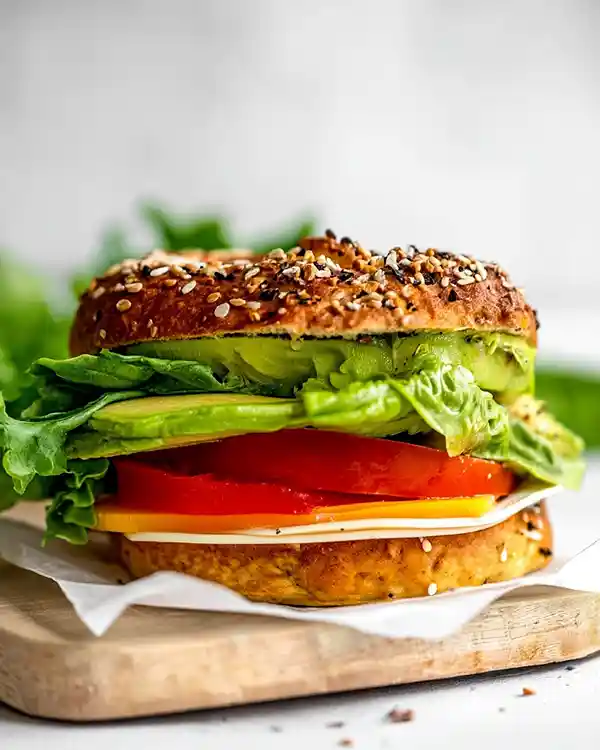
Starting your own gluten-free bagel tradition is easier than you think, and the payoff is huge—both in taste and in the confidence boost that comes from mastering a classic recipe. Whether you’re celebrating a special Sunday morning, packing them for the week ahead, or simply craving that authentic bagel experience, this recipe has you covered.
You’ve got this, and your family is going to be so grateful for these homemade treasures.