Homemade Gluten Free Hummus
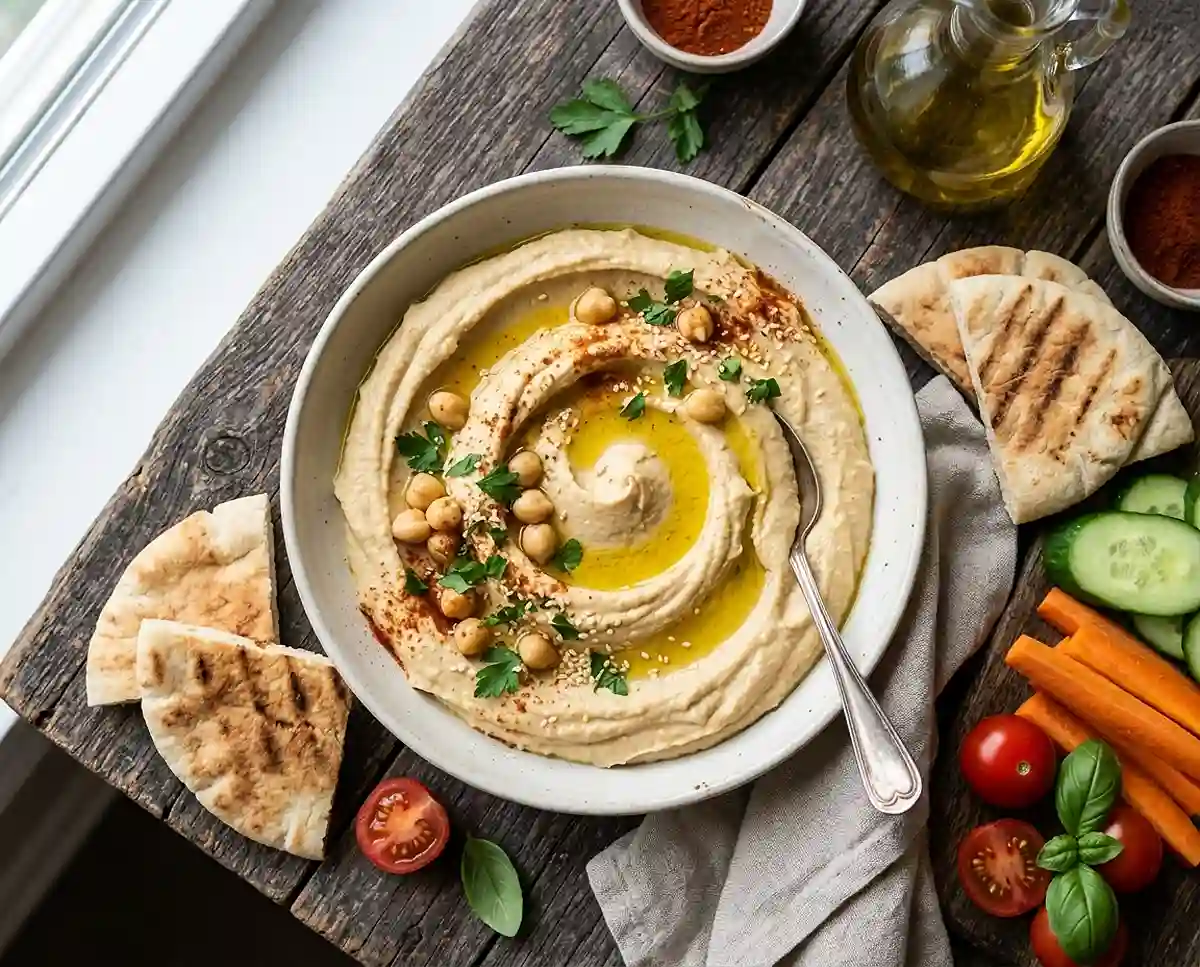
This Homemade Gluten Free Hummus is silky, flavourful, and ready in 10 minutes. The perfect healthy snack and mediterranean dip for easy entertaining!
I used to buy hummus from the store without thinking twice — until the day I read the ingredients label and realized not all commercial brands are actually gluten-free. Some contain hidden additives or are processed on shared lines with wheat products. That was the nudge I needed to start making my own, and honestly? I’ve never gone back. This homemade gluten free hummus is so much fresher, creamier, and more flavourful than anything from a tub.
Well… here’s the beautiful reality of this chickpea dip: it takes about 10 minutes from start to finish, uses a handful of pantry staples, and requires nothing more than a food processor. You toss everything in, press a button, and out comes this impossibly silky, garlicky, lemony spread that’s ready for whatever you want to dip, spread, or drizzle it on.
Whether you’re prepping snacks for the week, building a gorgeous appetizer board for a weekend gathering, or just need a quick healthy snack that actually tastes incredible, this mediterranean dip has your back. Can a recipe really get any simpler than blending chickpeas with tahini and calling it a masterpiece? This one proves it can.
Table of Contents
Why Homemade Gluten Free Hummus Tastes So Much Better
Store-bought hummus often sacrifices freshness for shelf stability, adding preservatives and extra oils that dull the flavour. When you make it from scratch, every ingredient shines — the bright tang of lemon, the nutty warmth of tahini, the mellow richness of garlic all hit your palate without anything getting in the way.
The texture is the other revelation. Processed properly, this chickpea dip turns out as smooth and velvety as whipped silk — no graininess, no chunky bits, just pure, scoopable creaminess. The trick is running the food processor long enough and adding water gradually until you reach that perfect consistency.
According to the Harvard T.H. Chan School of Public Health’s overview of legumes and health, chickpeas are an excellent source of plant-based protein, fibre, and essential minerals including folate and iron. So this homemade gluten free hummus isn’t just delicious — it’s genuinely nourishing as a regular part of your snacking routine.
Ingredients
| Ingredient | Amount | Notes |
|---|---|---|
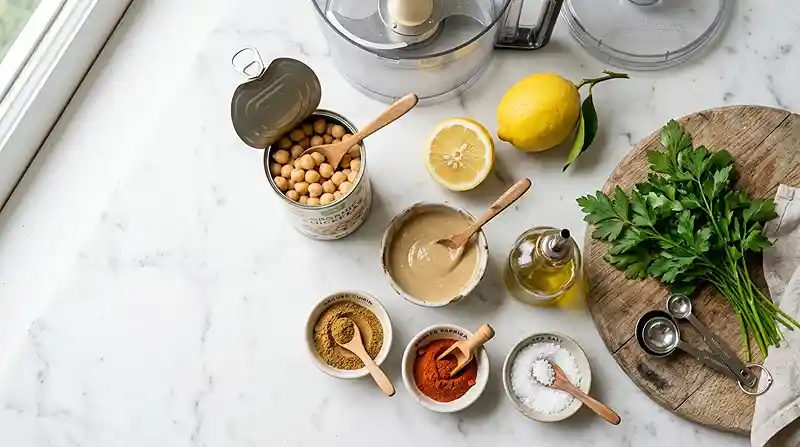
| Chickpeas (garbanzo beans) | 2 cans (15 oz each) | Drained and rinsed |
| Tahini | ⅓ cup | Well-stirred before measuring |
| Fresh lemon juice | 3 tablespoons | About 1 large lemon |
| Garlic cloves | 2 | Peeled |
| Extra virgin olive oil | 2 tablespoons | Plus extra for drizzling |
| Ground cumin | ½ teaspoon | |
| Salt | ¾ teaspoon | Adjust to taste |
| Ice water | 3–4 tablespoons | Added gradually for texture |
Optional Garnishes
- Extra virgin olive oil drizzle
- Smoked paprika
- Fresh parsley, chopped
- Whole chickpeas
- Toasted sesame seeds
Instructions
Step 1 — Process the Garlic
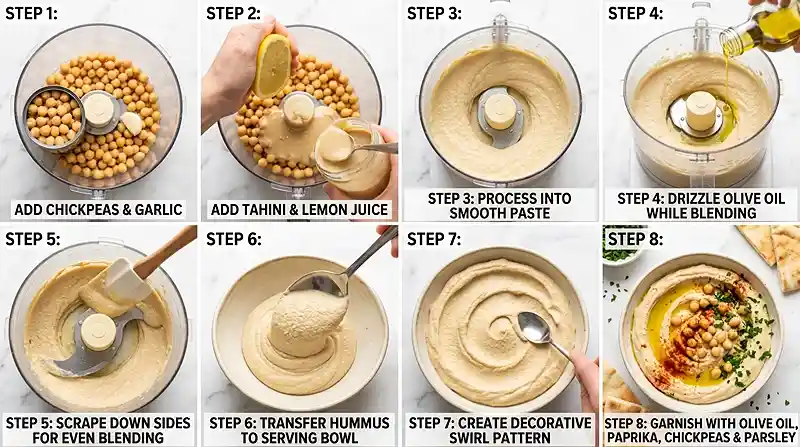
Drop the peeled garlic cloves into the food processor with the motor running. Let it process for about 10 seconds until the garlic is finely minced and fragrant, then turn the motor off. This step ensures the garlic distributes evenly throughout the dip rather than leaving you with unexpected raw garlic chunks in your mediterranean dip.
Step 2 — Add the Remaining Ingredients
Add the drained chickpeas, tahini, lemon juice, olive oil, cumin, and salt to the food processor. Process continuously for about 2 minutes — the mixture will start out chunky but quickly begin to transform into a thick, smooth paste. The aroma at this stage is warm, nutty, and wonderfully inviting.
Step 3 — Scrape Down and Process Again
Stop the processor and scrape down the sides and bottom of the bowl with a spatula — there’s always some mixture hiding in the corners that hasn’t been fully blended. Process for another 2–3 minutes, gradually adding ice water a tablespoon at a time through the feed tube until you reach your desired consistency. The finished chickpea dip should be incredibly smooth — keep processing until it’s as silky and light as whipped cream.
Step 4 — Taste and Adjust
Stop the machine and taste for seasoning. Add more salt, an extra squeeze of lemon, or another drizzle of olive oil as needed. This is your homemade gluten free hummus — make it exactly the way you love it. Everyone’s perfect balance of tangy, garlicky, and salty is slightly different.
Step 5 — Serve
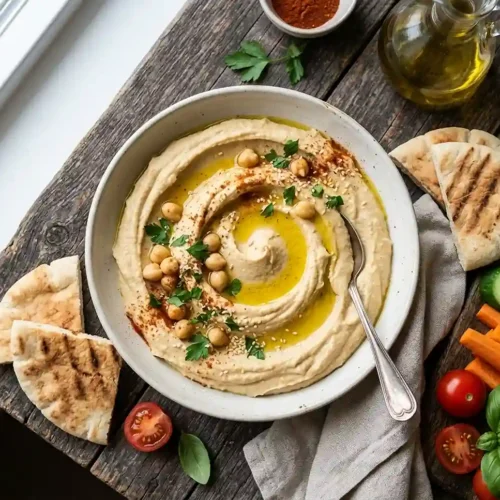
Transfer the hummus to a shallow bowl or plate, creating a swooping well in the centre with the back of a spoon. Drizzle with extra virgin olive oil, dust with smoked paprika, and scatter fresh parsley or whole chickpeas on top. Serve this healthy snack with raw vegetables, gluten-free pita, or crackers and dive in.
Substitutions
Tahini-Free Option: If you’re out of tahini or have a sesame allergy, sunflower seed butter is an excellent 1:1 substitute that keeps this mediterranean dip creamy and rich. Cashew butter also works beautifully, lending a slightly sweeter, milder flavour. The consistency stays just as smooth without tahini.
Canned vs. Dried Chickpeas: Canned chickpeas are perfectly fine for this recipe and save significant time. If you prefer using dried chickpeas, soak them overnight and cook until very tender — overcooked is actually ideal for the smoothest homemade gluten free hummus. Save the cooking liquid (aquafaba) to use as your blending liquid instead of water for extra creaminess.
Lemon Juice Swap: Fresh lemon juice is always best, but bottled 100% lemon juice works in a pinch. Lime juice offers a slightly different citrus profile that’s lovely if you’re planning a Southwest-inspired chickpea dip variation. For the most authentic flavour in this healthy snack, fresh is worth the squeeze.
Olive Oil Alternatives: Avocado oil is a neutral-flavoured substitute that works seamlessly in the blending process. For the finishing drizzle, a flavoured olive oil (garlic-infused or chili-infused) can add an extra layer of interest to these mediterranean dip bowls. The oil helps create that signature smooth texture, so don’t skip it entirely.
Garlic Adjustment: For a milder dip, use just one clove instead of two — raw garlic intensifies as it sits. Roasting a whole garlic head and using 4–5 roasted cloves instead gives this homemade gluten free hummus a sweeter, mellower depth that’s absolutely gorgeous. Our creamy gluten-free spinach artichoke dip takes a similar approach with garlic for a warm, comforting result.
Troubleshooting
The hummus is too thick or heavy. You know… this is the most common issue, and it’s the easiest to fix. Add ice water one tablespoon at a time and continue processing — the cold water helps create an incredibly light, airy texture. Keep the processor running for a full 3–4 minutes; most people don’t blend long enough for truly silky results.
It tastes bitter. Bitter hummus almost always comes from the tahini. Some tahini brands are made from unhulled sesame seeds, which produce a more astringent flavour. If yours tastes off, add an extra tablespoon of lemon juice and a pinch more salt — acidity and salt both counteract bitterness in this chickpea dip.
The texture is grainy, not smooth. Processing time is everything. Run the food processor for a minimum of 4–5 minutes total for the smoothest result. According to Serious Eats’ detailed hummus technique guide, removing the skins from canned chickpeas before blending produces an even smoother texture — it’s an optional step, but worthwhile if silkiness is your priority.
It doesn’t taste like much. Under-seasoning is usually the culprit. Be generous with the salt and lemon juice — both are flavour amplifiers that bring everything together. Taste after every adjustment and remember that this homemade gluten free hummus will mellow slightly as it chills in the fridge.
How to Store Homemade Gluten Free Hummus
Transfer the hummus to an airtight container, smooth the surface flat, and pour a thin layer of olive oil on top to seal in moisture. Stored this way in the fridge, your healthy snack stays fresh and creamy for 7–10 days. Give it a good stir before serving to reincorporate the oil.
Make-Ahead & Batch Prep Tips
This mediterranean dip is a meal-prep champion — make a big batch on Sunday and you’ll have snacks, sandwich spreads, and appetisers covered for the entire week. The flavours actually deepen and improve after a day in the fridge, so it tastes even better on day two. Double the recipe for party prep, since homemade gluten free hummus disappears fast at gatherings.
For freezing, portion into small containers and freeze for up to 4 months — thaw overnight in the fridge and stir well before serving.
Serving Suggestions & Pairings

Spread this homemade gluten free hummus into a shallow bowl, create an artistic swirl with the back of a spoon, and finish with olive oil, paprika, and fresh herbs for a presentation that’s effortlessly Pinterest-worthy. Surround it with sliced cucumbers, bell pepper strips, cherry tomatoes, carrot sticks, and celery for a colourful crudité platter.
Gluten-free pita chips, rice crackers, and seed crackers are all perfect for scooping this chickpea dip. Warm gluten-free naan or flatbread torn into pieces makes the experience feel a little more special — especially for a Super Bowl spread or casual dinner party appetiser.
This healthy snack works beautifully as a sandwich spread on gluten-free bread, a drizzle inside wraps, or a dollop on grain bowls and roasted vegetables. It also makes a gorgeous base layer on a mezze platter alongside olives, feta, and roasted red peppers. For a heartier pairing, our flavourful gluten-free honey garlic chicken pairs wonderfully with a side of hummus and warm rice.
Variations & Dietary Adjustments
Roasted Red Pepper Hummus: Add ½ cup of drained roasted red peppers to the food processor with the chickpeas for a gorgeous coral-coloured dip with a sweet, smoky depth. It’s one of the most popular variations of this homemade gluten free hummus for good reason — the colour alone stops people in their tracks. Garnish with extra diced red pepper on top.
Roasted Garlic Version: Replace the raw garlic with 6–8 cloves of roasted garlic for a mellower, caramelized sweetness that’s incredibly kid-friendly. Roasted garlic blends into the chickpea dip seamlessly and makes the flavour profile much gentler and more approachable for sensitive palates.
Man, oh man… the Spicy Harissa Version: Stir 1–2 tablespoons of harissa paste into the finished hummus for a smoky, fiery kick that’ll have heat lovers hovering around the bowl. A drizzle of chili oil and a scatter of Aleppo pepper flakes on top makes this mediterranean dip absolutely stunning. It’s the variation that disappears fastest at our house.
Everything Bagel Hummus: Sprinkle 2 tablespoons of everything bagel seasoning over the finished dip just before serving. The onion, garlic, sesame, and poppy seed blend adds incredible crunch and flavour contrast to the smooth chickpea base. This healthy snack variation is dangerously snackable and perfect for casual entertaining.
Lemon Herb Brightened: Add ¼ cup of fresh herbs — parsley, cilantro, or dill — directly into the food processor during the final blending stage. The herbs make this homemade gluten free hummus taste incredibly fresh and vibrant, almost like a green goddess dip. It’s our favourite summertime variation. For a sweet finish after all those savoury bites, our delightful gluten-free peanut butter blossoms make a perfect cookie pairing.
FAQs About Homemade Gluten Free Hummus
Can I make this chickpea dip without a food processor?
A high-speed blender works very well — you may need to stop and scrape the sides more frequently and add water a bit sooner to get things moving. An immersion blender in a tall, narrow container can also do the job, though the texture may be slightly less airy. The food processor produces the smoothest results for this homemade gluten free hummus.
How do I know if store-bought hummus is gluten-free?
Always check for a certified gluten-free label, since some brands process on shared equipment with wheat products or include additives that contain gluten. Making your own is the safest and most delicious option. Classic hummus ingredients — chickpeas, tahini, lemon, garlic, olive oil — are all naturally gluten-free.
What’s the best way to get extra-smooth hummus?
Blend for longer than you think — a full 4–5 minutes in the food processor produces noticeably silkier results. Using ice water instead of room-temperature water helps the tahini emulsify more smoothly. For the absolute smoothest mediterranean dip, peel the skins off the canned chickpeas before processing.
Why does my hummus taste different every time?
Tahini brands vary significantly in flavour and consistency — some are bitter, some are mild, and some are incredibly creamy. Lemon acidity also fluctuates depending on the fruit. Taste and adjust after each batch of this healthy snack, and you’ll find your perfect balance over a few rounds.
Can I freeze homemade gluten free hummus?
Yes — portion it into airtight containers, leaving a little room for expansion, and freeze for up to 4 months. Thaw overnight in the refrigerator and give it a vigorous stir to recombine before serving. The texture may be slightly less airy after freezing, but a drizzle of olive oil and a quick stir brings this chickpea dip back to life.
Final Thoughts
This homemade gluten free hummus is the kind of simple, nourishing recipe that earns a permanent place in your fridge — endlessly versatile, incredibly easy, and always satisfying. I hope it becomes your go-to snack the way it’s become mine. Tag us on Pinterest or Instagram when you make it — I’d love to see your gorgeous, swirly, beautifully garnished creations!
Homemade Gluten-Free Hummus
Equipment
- Food processor
- Spatula
- Serving bowl
Ingredients
Hummus
- 2 cans (15 oz each) chickpeas (garbanzo beans) drained and rinsed
- ⅓ cup tahini well-stirred before measuring
- 3 tablespoons fresh lemon juice about 1 large lemon
- 2 garlic cloves peeled
- 2 tablespoons extra virgin olive oil plus extra for drizzling
- ½ teaspoon ground cumin
- ¾ teaspoon salt adjust to taste
- 3-4 tablespoons ice water added gradually for texture
Optional Garnishes
- extra virgin olive oil for drizzling
- smoked paprika
- fresh parsley chopped
- whole chickpeas for garnish
- toasted sesame seeds
Instructions
- Drop the peeled garlic cloves into the food processor with the motor running. Process for about 10 seconds until finely minced, then turn off the motor.
- Add the drained chickpeas, tahini, lemon juice, olive oil, cumin, and salt to the food processor. Process continuously for about 2 minutes until the mixture begins to form a thick, smooth paste.
- Stop the processor and scrape down the sides and bottom of the bowl with a spatula. Process for another 2–3 minutes, gradually adding ice water a tablespoon at a time through the feed tube until you reach your desired consistency — the hummus should be incredibly smooth and silky.
- Taste for salt and adjust seasoning as needed. Add more lemon juice, salt, or olive oil to suit your preference.
- Transfer to a shallow serving bowl, create a swirl with the back of a spoon, and drizzle with olive oil. Garnish with smoked paprika, fresh parsley, whole chickpeas, or sesame seeds. Serve with raw vegetables, gluten-free pita, or crackers.