
Potato & Asparagus Frittata
This Potato & Asparagus Frittata is naturally gluten-free, packed with spring vegetables, and ready in 30 minutes. Perfect for brunch or meal prep!
You know what I love most about spring mornings? That moment when I peek into my fridge and spot those gorgeous green asparagus spears just waiting to be turned into something wonderful. Last weekend, I threw together this Potato & Asparagus Frittata for my sister’s baby shower brunch, and honestly? It disappeared faster than I could snap a photo.
Here’s the thing about frittatas—they’re basically the Swiss Army knife of gluten-free cooking. This Asparagus Potato Frittata works for breakfast, lunch, dinner, or that awkward 3 PM moment when you’re starving but dinner feels too far away. Plus, it’s naturally gluten-free, which means one less thing to worry about when you’re feeding a crowd.
I’m talking fluffy eggs studded with tender potatoes, vibrant asparagus, and tangy goat cheese that gets all golden and bubbly under the broiler. The whole thing comes together in about 30 minutes, and you only need one skillet. Well… technically you need a pot for the potatoes, but let’s not split hairs here.
Table of Contents
Ingredients
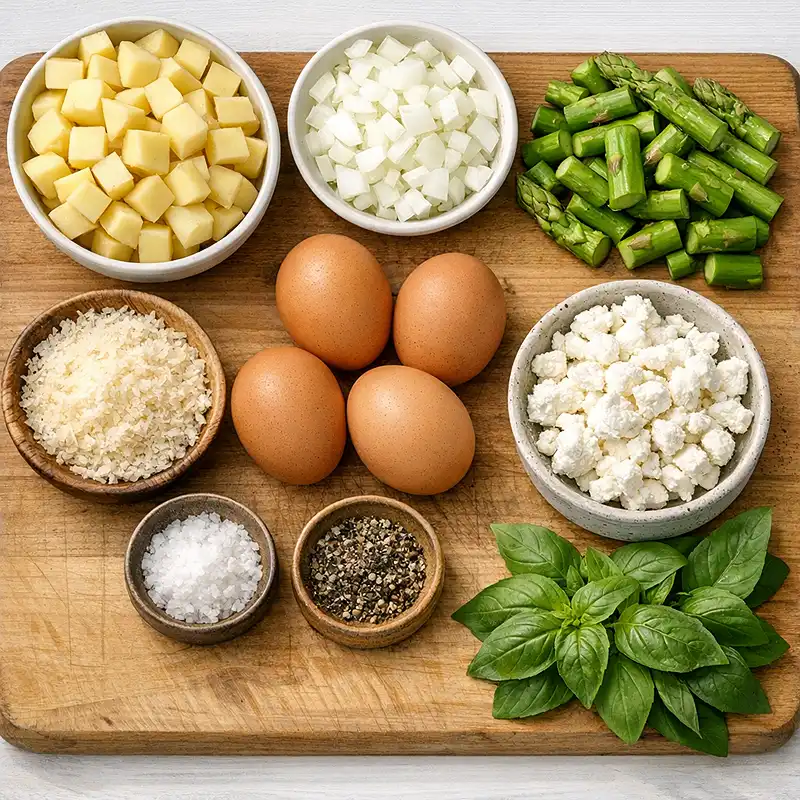
| Ingredient | Amount | Notes |
|---|---|---|
| Potatoes, diced into small cubes | 1/2 cup (115 grams) | Yukon Gold or russet work great |
| Extra virgin olive oil | 1 tablespoon | For sautéing |
| White onion, chopped | 1/2 onion | Yellow onion works too |
| Asparagus, cut into 1-inch pieces | 1/4 pound (100 grams) | Fresh, with woody ends trimmed |
| Whole eggs | 6 eggs | Room temperature preferred |
| Parmesan cheese, grated | 1/4 cup | Freshly grated tastes best |
| Salt | 3/4 teaspoon | Or to taste |
| Freshly ground black pepper | 1/2 teaspoon | |
| Goat cheese, crumbled | 2 oz | Feta is a great swap |
| Fresh basil, chopped | 2 tablespoons | Adds bright flavor |
Potato & Asparagus Frittata Instructions
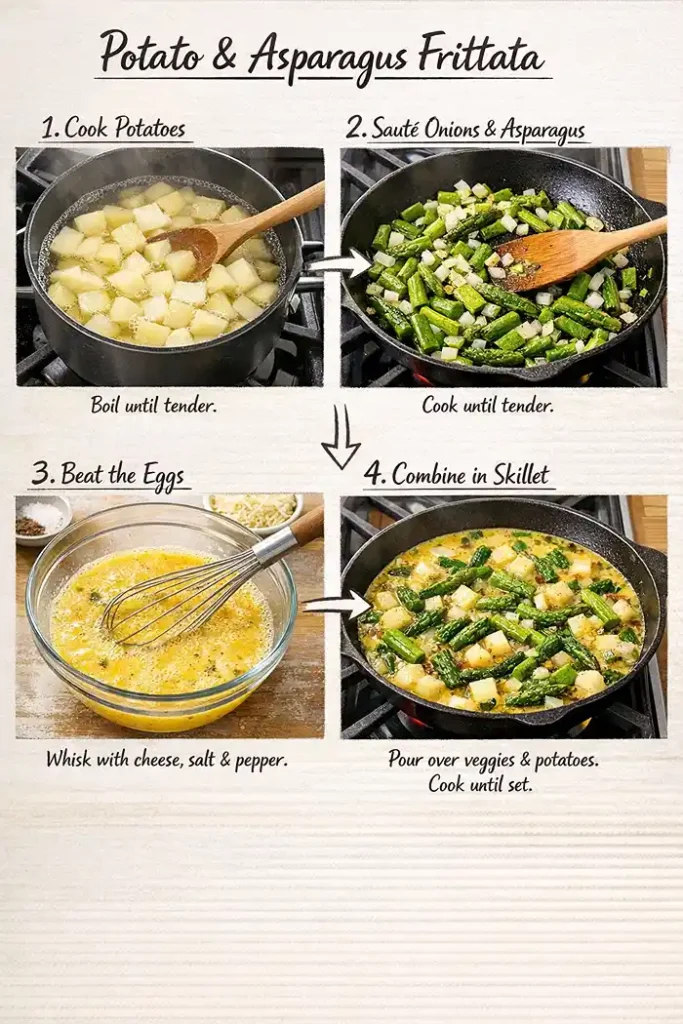
Step 1: Add the chopped potatoes to a small cooking pot and cover them completely with cold water. Bring to a boil over medium-high heat, then cook for 6-8 minutes until the potatoes are fork-tender but not mushy. Drain thoroughly and pat them dry with a clean kitchen towel—this step prevents a watery frittata.
Step 2: While the potatoes are cooling slightly, preheat your oven to broil and position the rack about 5-7 inches from the heating element. Make sure your skillet is oven-safe (no plastic or wooden handles!).
Step 3: Heat the olive oil in a large 10-inch oven-safe skillet over medium-high heat until it shimmers. Add the chopped onion, sprinkle with a pinch of salt and pepper, and cook for about 5 minutes, stirring occasionally until the onion turns soft and translucent. The kitchen should smell amazing right about now.
Step 4: Toss in the asparagus pieces and your drained, dried potatoes. Sauté everything together for 2-3 minutes until the asparagus turns bright green and slightly tender. Give the pan a good shake to distribute the vegetables evenly across the bottom.
Step 5: While the veggies are cooking, crack the eggs into a mixing bowl or large measuring jug and beat them until smooth and uniform. Stir in the salt, pepper, and grated parmesan cheese until everything’s well combined—the mixture should look pale yellow and slightly creamy.
Step 6: Pour the egg mixture evenly over the vegetables in the skillet, using a spatula to gently nudge any ingredients that aren’t submerged. Immediately sprinkle the crumbled goat cheese and fresh basil over the top, distributing them evenly so every slice gets some.
Step 7: Let the Spring Asparagus Frittata with Potatoes cook completely undisturbed for 7-10 minutes on the stovetop. You’ll know it’s ready when the edges are set and the center is just barely jiggly—like a custard that’s almost done.
Step 8: Carefully transfer the skillet to your preheated oven (use oven mitts on both hands!). Broil for 2-3 minutes until the eggs puff up beautifully and the cheese turns golden brown with crispy edges. Watch it closely during this step—broilers work fast and you don’t want it to burn.
Step 9: Remove from the oven and let the frittata rest for 2-3 minutes before slicing. This helps it set completely and makes slicing cleaner. Serve hot, warm, or even at room temperature—it’s delicious at any temperature!
Substitutions
Can’t find asparagus or it’s not in season? Swap it for the same amount of chopped broccoli, zucchini, or bell peppers. Just adjust the cooking time slightly—heartier vegetables like broccoli might need an extra minute to soften.
If goat cheese isn’t your thing (I know it can be polarizing!), try crumbled feta, shredded mozzarella, or even sharp cheddar instead. The Homemade Potato Asparagus Frittata will still turn out wonderfully creamy and flavorful.
Need to make this dairy-free? Skip the parmesan and goat cheese entirely, or use your favorite dairy-free cheese alternatives. I’ve had great success with cashew-based alternatives that melt beautifully under the broiler.
Don’t have fresh basil on hand? Use 2 teaspoons of dried basil, or swap in fresh parsley, chives, or even a sprinkle of dried oregano for a different flavor profile.
Troubleshooting
If your frittata turns out watery, you probably didn’t dry those boiled potatoes thoroughly enough. Next time, really pat them down and let them sit for a minute—expert gluten-free cooking techniques emphasize proper moisture management for the best texture.
Is the bottom burning before the top sets? Your heat’s too high. Drop it to medium or even medium-low and give it a few extra minutes to cook through gently. Patience is key with egg dishes!
Man, oh man, if the center stays liquidy even after broiling, your skillet might be too large and the eggs are spread too thin. Use a smaller pan (8-9 inches) or increase the egg count to 8 for a thicker, more custardy frittata.
Eggs puffing up too much and deflating when you take them out? That’s totally normal! Frittatas naturally deflate slightly as they cool. It doesn’t affect the taste one bit—promise.
Storage & Meal Prep
Store leftover Potato and Asparagus Frittata in an airtight container in the refrigerator for up to 4 days. I like to cut it into wedges first, which makes grabbing a quick breakfast or lunch so much easier. It reheats beautifully in the microwave for 30-45 seconds or in a 300°F oven for about 10 minutes.
Want to meal prep for the week? This frittata is absolutely perfect for that. Make it on Sunday evening, portion it out, and you’ve got protein-packed breakfasts ready to go. According to nutritional research on egg-based meals, eggs provide high-quality protein that keeps you satisfied for hours.
You can also freeze individual slices wrapped in plastic wrap and stored in a freezer bag for up to 2 months. Thaw overnight in the fridge and reheat as usual. The texture stays remarkably good!
Serving Suggestions
Serve this gorgeous frittata with a simple side salad dressed in lemon vinaigrette for a light lunch. The acidity cuts through the richness of the eggs and cheese perfectly. I also love it alongside roasted cherry tomatoes or a handful of mixed greens.
For a heartier brunch spread, pair it with some crispy potato leek turkey hash and fresh fruit. Toast up some gluten-free bread if you want something to soak up all that delicious runny yolk (if you like your eggs slightly underdone in the center).
This also makes an unexpectedly perfect dinner when you’re too tired to think. Just add a crusty gluten-free baguette and maybe some soup—like this creamy wild rice mushroom soup—and call it a cozy night in.
Variations
Kid-Friendly Version: Skip the goat cheese and use mild cheddar instead. Kids tend to prefer familiar flavors, and you can even let them sprinkle the cheese on top themselves. Cut the frittata into fun shapes with cookie cutters after it cools slightly.
Dairy-Free Adaptation: Eliminate both cheeses and add a tablespoon of nutritional yeast to the egg mixture for a savory, cheesy flavor without any dairy. Increase the salt slightly to compensate for the missing cheese’s saltiness. You won’t even miss it!
Loaded Veggie Version: Add sautéed mushrooms, spinach, or diced bell peppers along with the asparagus. Just don’t overload the pan or you’ll have trouble fitting all the eggs in. A little extra cheese never hurts either when you’re packing in more vegetables.
Meat-Lover’s Twist: Toss in some cooked, crumbled bacon, diced ham, or Italian sausage with the vegetables. If you’re using this approach, check out my one pot ground beef and broccoli for more hearty gluten-free meal ideas.
Potato & Asparagus Frittata FAQs
Can I make this frittata ahead of time for brunch guests?
Absolutely! You can prep it the night before, store it in the fridge, and serve it at room temperature or reheat it gently in a 300°F oven for about 10 minutes. It’s actually one of my favorite make-ahead dishes for Easter or Mother’s Day brunch.
How do I know when the frittata is fully cooked?
The edges should be completely set and pulling away slightly from the pan, while the center should jiggle just a tiny bit—think barely-set custard. After broiling, the top will be golden and puffy. A toothpick inserted in the center should come out mostly clean with maybe a few moist crumbs.
What’s the best type of potato to use?
Yukon Gold potatoes are my top choice because they’re naturally creamy and hold their shape beautifully. Russet potatoes work too but can get a bit crumbly. Avoid waxy red potatoes—they tend to stay too firm in this recipe.
Why do I need to boil the potatoes separately?
Raw potatoes take much longer to cook than eggs, so boiling them first ensures everything finishes at the same time. Plus, pre-cooking prevents crunchy potato surprises in your otherwise silky frittata. Trust me, it’s worth the extra pot!
Best way to reheat leftover frittata without drying it out?
Cover it loosely with a damp paper towel and microwave for 30-45 seconds, or reheat in a 300°F oven covered with foil for 10 minutes. The moisture from the paper towel or foil covering keeps the eggs from getting rubbery.
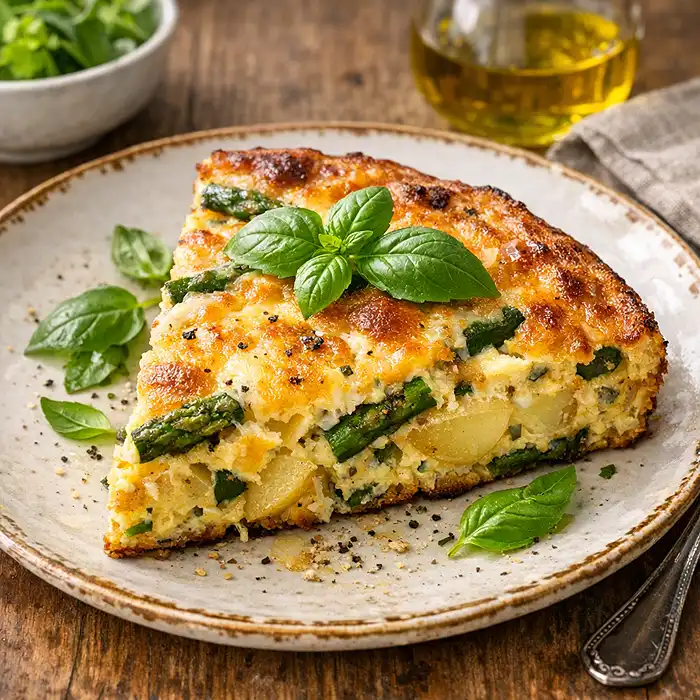
This Potato & Asparagus Frittata has become my go-to recipe whenever I need something impressive but effortless. It’s naturally gluten-free, endlessly adaptable, and tastes like you spent way more time on it than you actually did. Whether you’re feeding your family on a busy Tuesday or hosting a fancy weekend brunch, this frittata delivers every single time.
The combination of fluffy eggs, creamy potatoes, and bright spring vegetables feels both comforting and sophisticated—like wearing your favorite jeans with a silk blouse. And honestly? That’s exactly the kind of cooking I love most. Simple, nourishing, and absolutely delicious.

Potato & Asparagus Frittata
Equipment
- Small cooking pot
- 10-inch oven-safe skillet
- Mixing bowl or large measuring jug
- Whisk or fork
- Spatula
- Oven mitts
Ingredients
- ½ cup potatoes, diced into small cubes 115 grams; Yukon Gold or russet work great
- 1 tablespoon extra virgin olive oil
- ½ white onion, chopped yellow onion works too
- ¼ pound asparagus, cut into 1-inch pieces 100 grams; fresh, with woody ends trimmed
- 6 whole eggs room temperature preferred
- ¼ cup parmesan cheese, grated freshly grated tastes best
- ¾ teaspoon salt or to taste
- ½ teaspoon freshly ground black pepper
- 2 oz goat cheese, crumbled feta is a great swap
- 2 tablespoons fresh basil, chopped
Instructions
- Add the chopped potatoes to a small cooking pot and cover them completely with cold water. Bring to a boil over medium-high heat, then cook for 6-8 minutes until the potatoes are fork-tender but not mushy. Drain thoroughly and pat them dry with a clean kitchen towel—this step prevents a watery frittata.
- While the potatoes are cooling slightly, preheat your oven to broil and position the rack about 5-7 inches from the heating element. Make sure your skillet is oven-safe (no plastic or wooden handles!).
- Heat the olive oil in a large 10-inch oven-safe skillet over medium-high heat until it shimmers. Add the chopped onion, sprinkle with a pinch of salt and pepper, and cook for about 5 minutes, stirring occasionally until the onion turns soft and translucent. The kitchen should smell amazing right about now.
- Toss in the asparagus pieces and your drained, dried potatoes. Sauté everything together for 2-3 minutes until the asparagus turns bright green and slightly tender. Give the pan a good shake to distribute the vegetables evenly across the bottom.
- While the veggies are cooking, crack the eggs into a mixing bowl or large measuring jug and beat them until smooth and uniform. Stir in the salt, pepper, and grated parmesan cheese until everything’s well combined—the mixture should look pale yellow and slightly creamy.
- Pour the egg mixture evenly over the vegetables in the skillet, using a spatula to gently nudge any ingredients that aren’t submerged. Immediately sprinkle the crumbled goat cheese and fresh basil over the top, distributing them evenly so every slice gets some.
- Let the frittata cook completely undisturbed for 7-10 minutes on the stovetop. You’ll know it’s ready when the edges are set and the center is just barely jiggly—like a custard that’s almost done.
- Carefully transfer the skillet to your preheated oven (use oven mitts on both hands!). Broil for 2-3 minutes until the eggs puff up beautifully and the cheese turns golden brown with crispy edges. Watch it closely during this step—broilers work fast and you don’t want it to burn.
- Remove from the oven and let the frittata rest for 2-3 minutes before slicing. This helps it set completely and makes slicing cleaner. Serve hot, warm, or even at room temperature—it’s delicious at any temperature!