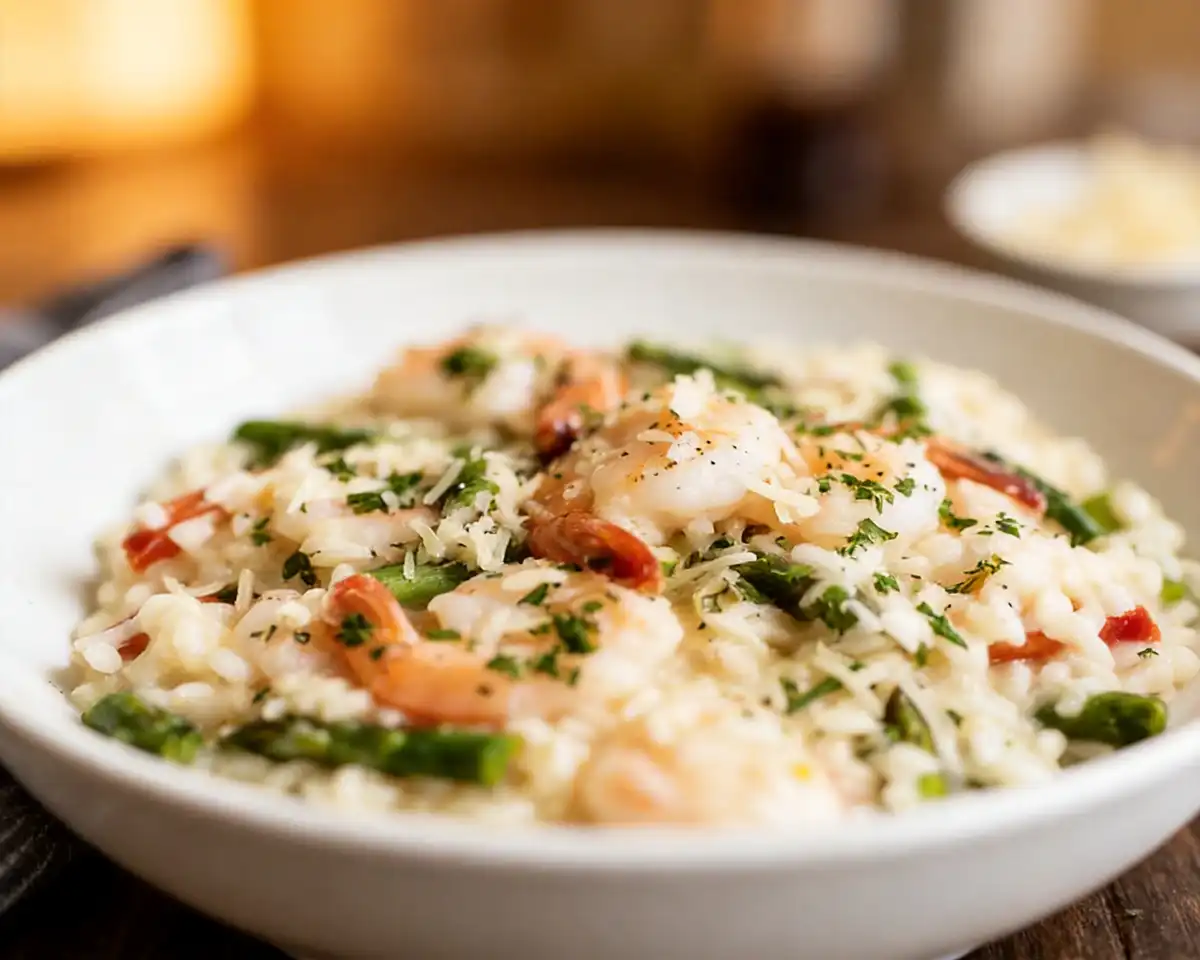
Shrimp and Asparagus Risotto
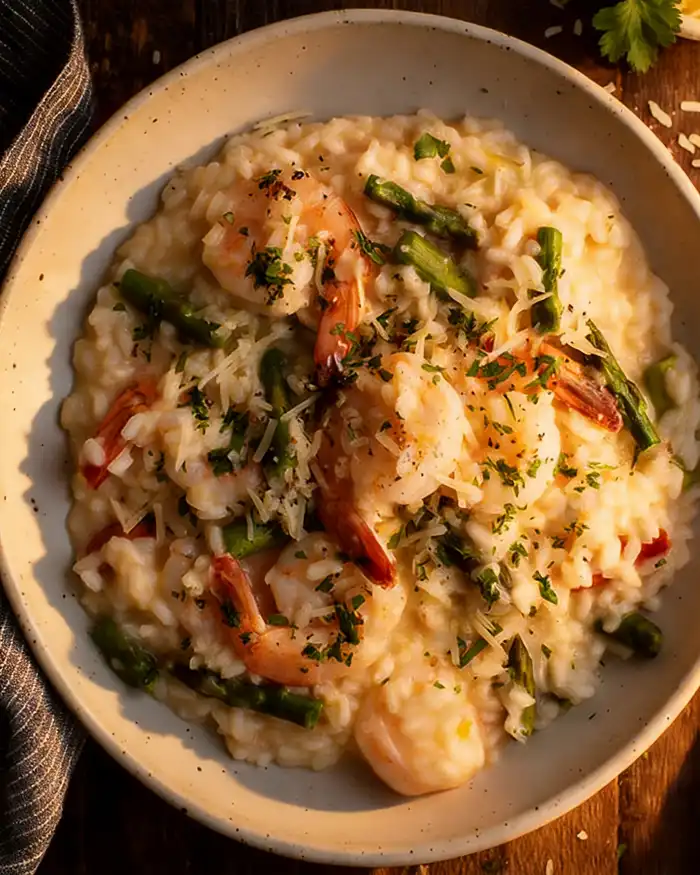
Make this restaurant-quality Shrimp and Asparagus Risotto at home! Naturally gluten-free, fool-proof, and creamy enough to impress any dinner guest.
Creamy, savory, and completely gluten-free! Try this easy gluten-free seafood recipes for more flavorful dinner ideas.
Can I tell you about the first time I made risotto from scratch? I was convinced I’d need a culinary degree, a lot of patience, and maybe a small miracle. But this Shrimp and Asparagus Risotto proved me so wonderfully wrong. It’s creamy, restaurant-quality, and — best of all — naturally gluten-free without any swaps or workarounds needed.
Whether you’re new to the gluten-free lifestyle or a seasoned pro looking for a creamy spring-forward dish that impresses without the stress, this recipe is your new go-to. The process is meditative, the results are gorgeous, and it’s more fool-proof than risotto’s reputation would have you believe. Let’s get into it.
Looking for another elegant gluten-free dinner? Try this slow-cooked white wine braised chicken — it pairs beautifully with risotto nights.
Why You’ll Love This Shrimp and Asparagus Risotto
This Shrimp and Asparagus Risotto hits every note you want from a restaurant-quality dinner at home. It’s rich without being heavy, elegant without being fussy, and the whole thing comes together in one pan in about 40 minutes.
Arborio rice is naturally gluten-free, which means no flour, no substitutions, and zero compromise on texture. According to Celiac.org’s gluten-free food guide, plain rice is one of the safest naturally gluten-free staples — so you can stir away with total peace of mind.
Well… I should also mention it’s an absolute crowd-pleaser. Whether it’s a cozy Valentine’s Day dinner for two or a spring dinner party with friends, this creamy, fool-proof risotto earns compliments every single time.
Table of Contents
Ingredients
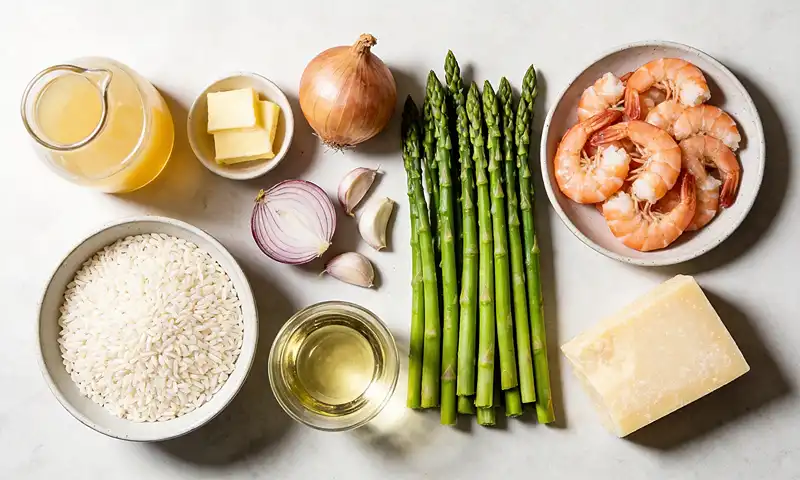
Here’s everything you need for this Shrimp and Asparagus Risotto. Simple ingredients, spectacular results.
| Ingredient | Amount |
|---|---|
| Chicken stock | 6 cups |
| Butter | 4 tablespoons |
| Shallot, minced | 1 |
| Garlic cloves, pressed or minced | 4 |
| Arborio rice | 1½ cups |
| Dry white wine (pinot grigio or sauvignon blanc) | ½ cup |
| Asparagus, chopped into 1″ pieces | 1 cup |
| Jumbo shrimp (16/20 count), peeled and deveined | 1 lb |
| Freshly grated parmesan cheese | 1 cup |
| Salt and freshly cracked black pepper | To taste |
💡 Tip: Using freshly grated parmesan (not the shelf-stable kind) makes a huge difference in this restaurant-quality risotto. It melts seamlessly into the rice instead of clumping.
How to Make Shrimp and Asparagus Risotto
Don’t let anyone tell you risotto is hard. This fool-proof risotto method is all about gentle stirring and patience — and I promise you, the end result is so worth every lovely minute of it.
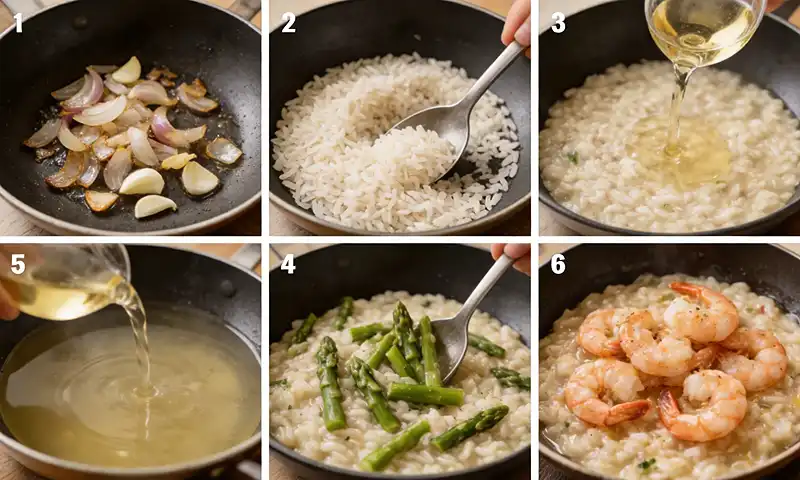
- Heat your stock. Bring chicken stock to a full boil in a medium saucepan over high heat, then turn off the heat and place a lid on top. Keeping the stock hot is the secret to even, creamy cooking — cold stock shocks the rice and disrupts that gorgeous texture you’re after.
- Build your flavor base. Melt the butter in a large 11–12″ skillet over medium heat. Add the minced shallot and sauté until soft and translucent, about 2–3 minutes. Add the garlic and cook for 1 more minute until wonderfully fragrant — your kitchen will smell incredible right about now.
- Toast the rice and add the wine. Add the arborio rice to the pan and stir to coat every grain in the buttery mixture, cooking for about 1 minute. Pour in the white wine and stir slowly and continuously until it’s nearly fully absorbed — this happens faster than you’d expect, so stay close! The wine adds a subtle brightness that takes this creamy spring-forward dish to the next level.
- Add stock, ladle by ladle. Add ½ cup (one ladleful) of hot chicken stock and stir slowly and continuously until it’s nearly absorbed by the rice. Keep adding stock ½ cup at a time, stirring gently between each addition, and waiting until the liquid is almost absorbed before adding the next ladle. This is the heart of fool-proof risotto: patience and consistent stirring. The rice will gradually become thick, creamy, and deeply flavorful — like velvet in a bowl.
- Add the asparagus, then the shrimp. When you have about 4 ladles of stock remaining, add the asparagus pieces and continue stirring. When you’re down to about 2 ladles of stock, nestle in the jumbo shrimp and keep stirring until the shrimp is pink and opaque and the rice is perfectly tender. The whole process, from first ladle to last, takes 35–40 minutes. If the rice is tender before all the stock is used — that’s totally fine! You might not need every last drop.
- Finish and serve. Turn off the heat and stir in the freshly grated parmesan cheese until it melts into a gorgeous, silky sauce. Taste and season with salt and freshly cracked black pepper. Serve your Shrimp and Asparagus Risotto immediately while it’s at peak creaminess — it waits for no one, and honestly, it shouldn’t have to!
Substitutions
This Shrimp and Asparagus Risotto is already naturally gluten-free, but here are a few easy swaps to fit different needs and pantry situations.
Chicken stock → Vegetable stock: Swap in vegetable broth for a lighter, plant-based version of this creamy spring-forward dish. The flavor will be slightly more delicate but still absolutely delicious. Keep it heated just the same!
Butter → Olive oil or dairy-free butter: For a dairy-free-friendly base, use a good-quality olive oil or your favorite vegan butter. It’ll still give you that rich, restaurant-quality start to the risotto without missing a beat.
White wine → Extra stock: Skip the wine entirely and just use an extra ½ cup of warm chicken stock. The result is a slightly milder flavor profile but still a completely fool-proof risotto from start to finish.
Shrimp → Scallops or chicken: Jumbo scallops work beautifully here — add them at the same point you’d add shrimp and sear until golden. You could also use bite-sized pieces of cooked chicken for a heartier, family-style version of this creamy spring-forward dish.
Parmesan → Pecorino Romano or nutritional yeast: Pecorino adds a slightly saltier, sharper note that’s just as mouthwatering. For a fully dairy-free finish, stir in 2–3 tablespoons of nutritional yeast — it brings a savory, cheesy quality that’s surprisingly close to the real thing.
Troubleshooting Your Risotto
Man, oh man — even the most relaxed cooks can hit a small snag with risotto. Here’s how to handle the most common hiccups so your Shrimp and Asparagus Risotto turns out perfectly every single time.
The risotto is too thick: Simply stir in a splash more warm stock or even a little hot water, a tablespoon at a time, until you reach that ideal creamy, pourable consistency. Risotto naturally thickens as it sits, so err on the slightly looser side when you plate it.
The rice is still crunchy after all the stock is gone: Heat another cup of stock and continue adding it in small amounts, stirring as usual. The rice might just need a few more minutes — different stovetops run at different temperatures, and that’s completely normal for a fool-proof risotto.
The shrimp turned rubbery: This usually means the shrimp went in too early or the heat was too high. Add them later in the process (with just 2 ladles of stock left) and keep the heat at medium — they only need a few minutes to turn pink and perfectly cooked, so watch them closely.
The parmesan clumped instead of melting: Pre-shredded or shelf-stable parmesan is often coated with anti-caking agents that resist melting. For the best restaurant-quality result, always grate fresh parmesan from a block — it melts like a dream. As the food science team at Serious Eats explains, freshly grated hard cheese incorporates far more smoothly into hot liquids than pre-packaged alternatives.
Storage & Meal Prep
Storage: Store leftover Shrimp and Asparagus Risotto in an airtight container in the refrigerator for up to 2 days. Reheat gently on the stovetop over low heat with a splash of warm stock or water, stirring until creamy again. Avoid the microwave if you can — it tends to dry it out and toughen the shrimp.
Meal prep: Risotto is honestly best made fresh, but you can save time by prepping the shrimp (peel and devein them ahead), mincing the shallot and garlic, and chopping the asparagus up to 24 hours in advance. Store each ingredient separately in the fridge so everything’s ready to go when it’s time to cook your fool-proof risotto. That 40-minute cook time flies by when your prep is already done!
Serving Suggestions
This Shrimp and Asparagus Risotto is a complete meal on its own, but a few simple additions can really make the table feel special. A crisp green salad with lemon vinaigrette is all you need alongside this creamy spring-forward dish — the acidity balances the richness beautifully.
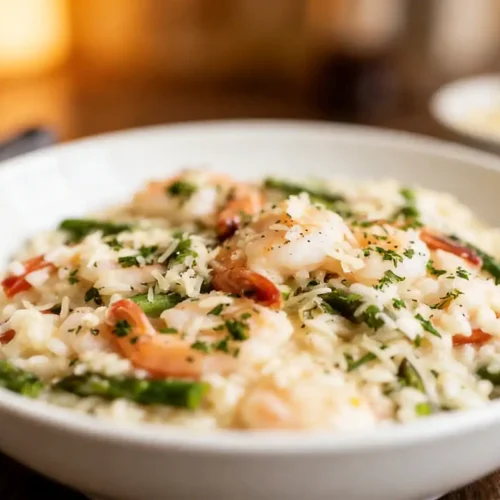
For a restaurant-quality presentation, ladle the risotto into warm shallow bowls and finish with an extra snowfall of freshly grated parmesan, a twist of cracked black pepper, and a few asparagus tips arranged on top. A glass of the same white wine you used in cooking — pinot grigio or sauvignon blanc — is the perfect pairing.
You know, this dish is also stunning as a centerpiece for a spring dinner party or a Mother’s Day celebration. It looks like it took all day, and only you’ll know how surprisingly easy it actually was.
Want a showstopping gluten-free dessert to follow? Our gluten-free arctic roll is a classic British showstopper that’s surprisingly simple to make at home.
Variations & Dietary Adjustments
Kid-friendly version: Leave out the white wine (replace with extra stock) and use smaller shrimp cut into bite-sized pieces. Kids tend to love the creamy, cheesy texture of this fool-proof risotto — and sneaking in those asparagus pieces is a great way to add greens without any protest.
Dairy-free version: Use dairy-free butter for the base and stir in 2–3 tablespoons of nutritional yeast at the end instead of parmesan. A drizzle of good olive oil at the finish adds the richness that makes this Shrimp and Asparagus Risotto feel indulgent even without any cheese.
Extra-veggie version: Double the asparagus and add a handful of frozen peas or sliced zucchini in the last few minutes of cooking. It turns this already vibrant, creamy spring-forward dish into a full garden celebration — and the colors are just gorgeous.
Lemon herb version: Stir in the zest of one lemon and a handful of fresh chopped parsley or chives right before serving. The brightness cuts through the richness of the risotto and gives the whole dish a fresh, herby lift that feels completely new. Restaurant-quality with a homegrown twist!
Shrimp and Asparagus Risotto FAQs
Is Shrimp and Asparagus Risotto naturally gluten-free?
Yes! Arborio rice, the base of all risotto, is naturally gluten-free. As long as you use gluten-free certified chicken stock and check your parmesan label, this entire dish is safe for gluten-free eaters without any special modifications. It’s one of the reasons this creamy spring-forward dish is such a reliable crowd-pleaser.
Can I make risotto without wine?
Absolutely — just replace the ½ cup of white wine with an equal amount of warm chicken stock. The wine adds a lovely depth and subtle tang, but the risotto will still be wonderfully creamy and flavorful without it. Many fool-proof risotto recipes work perfectly either way.x
How do I know when the risotto is done?
The rice should be tender with just a slight bite (al dente) and the overall texture should be loose and creamy — almost like a thick, silky porridge. If you tilt the pan, it should slowly spread. If it holds a stiff shape, stir in a little more warm stock and give it another minute or two.
What’s the best rice to use for Shrimp and Asparagus Risotto?
Arborio is the classic choice and the most widely available. Carnaroli and Vialone Nano are also excellent options if you can find them — both are naturally gluten-free and produce an even creamier restaurant-quality result. Avoid long-grain rice like basmati; it won’t release the right starch for a proper creamy texture.
Why does my risotto turn gluey instead of creamy?
The most common culprit is over-stirring at very high heat, which can break down the starch too aggressively. Keep your heat at a steady medium and stir gently — not frantically. This fool-proof risotto method is all about calm, consistent movement rather than aggressive beating.
More Gluten-Free Comfort on GrainlessLife.com
If this Shrimp and Asparagus Risotto hit the spot, you’re going to love exploring more restaurant-quality, naturally gluten-free meals. Our tender white wine braised chicken uses the same slow, flavor-building approach as risotto and is one of our most-made weeknight dinners.
On colder evenings, this warming five-spice chicken noodle soup is an absolute soul-soother — a gluten-free twist on a classic that’s deeply cozy and ready in under an hour.
And if you’re hunting for a stunning dessert to follow your risotto dinner, our gluten-free arctic roll recipe is a show-stopping, freezer-friendly treat that’s perfect for spring entertaining.
Shrimp and Asparagus Risotto
Equipment
- Medium saucepan
- Large skillet (11–12 inch)
- Ladle
- Box grater
Ingredients
Risotto Base
- 6 cups chicken stock kept hot
- 4 tablespoons butter
- 1 shallot minced
- 4 cloves garlic pressed or minced
- 1.5 cups arborio rice
- 0.5 cup dry white wine pinot grigio or sauvignon blanc recommended
Add-Ins
- 1 cup asparagus chopped into 1-inch pieces
- 1 lb jumbo shrimp 16/20 count, peeled and deveined
Finishing
- 1 cup parmesan cheese freshly grated
- salt and freshly cracked black pepper to taste
Instructions
- Bring chicken stock to a boil in a medium saucepan over high heat, then turn off the heat and place a lid on top to keep the stock hot. Hot stock is essential for even, creamy cooking throughout the risotto process.
- Melt butter in a large 11–12 inch skillet over medium heat. Add the minced shallot and sauté until softened and translucent, about 2–3 minutes. Add the garlic and cook for 1 more minute until very fragrant.
- Add the arborio rice and stir to coat every grain in the butter mixture. Cook while stirring for 1 minute. Pour in the white wine and stir slowly and continuously until it is nearly fully absorbed by the rice — this happens quickly, so stay attentive.
- Add ½ cup (one ladleful) of hot chicken stock and stir slowly and continuously until nearly absorbed. Continue adding stock ½ cup at a time, stirring gently and waiting until each addition is nearly absorbed before adding the next. This gradual process builds the creamy texture risotto is known for.
- When approximately 4 ladles of stock remain, add the asparagus pieces and continue stirring and cooking. When approximately 2 ladles of stock remain, add the shrimp and continue to stir and cook until the rice is tender and the shrimp are pink and cooked through. The entire process should take 35–40 minutes. If the rice is tender before all stock is used, stop adding — you may not need every last drop.
- Turn off the heat and stir in the freshly grated parmesan cheese until fully melted and silky. Season with salt and freshly cracked black pepper to taste. Serve the risotto immediately for best texture and creaminess.