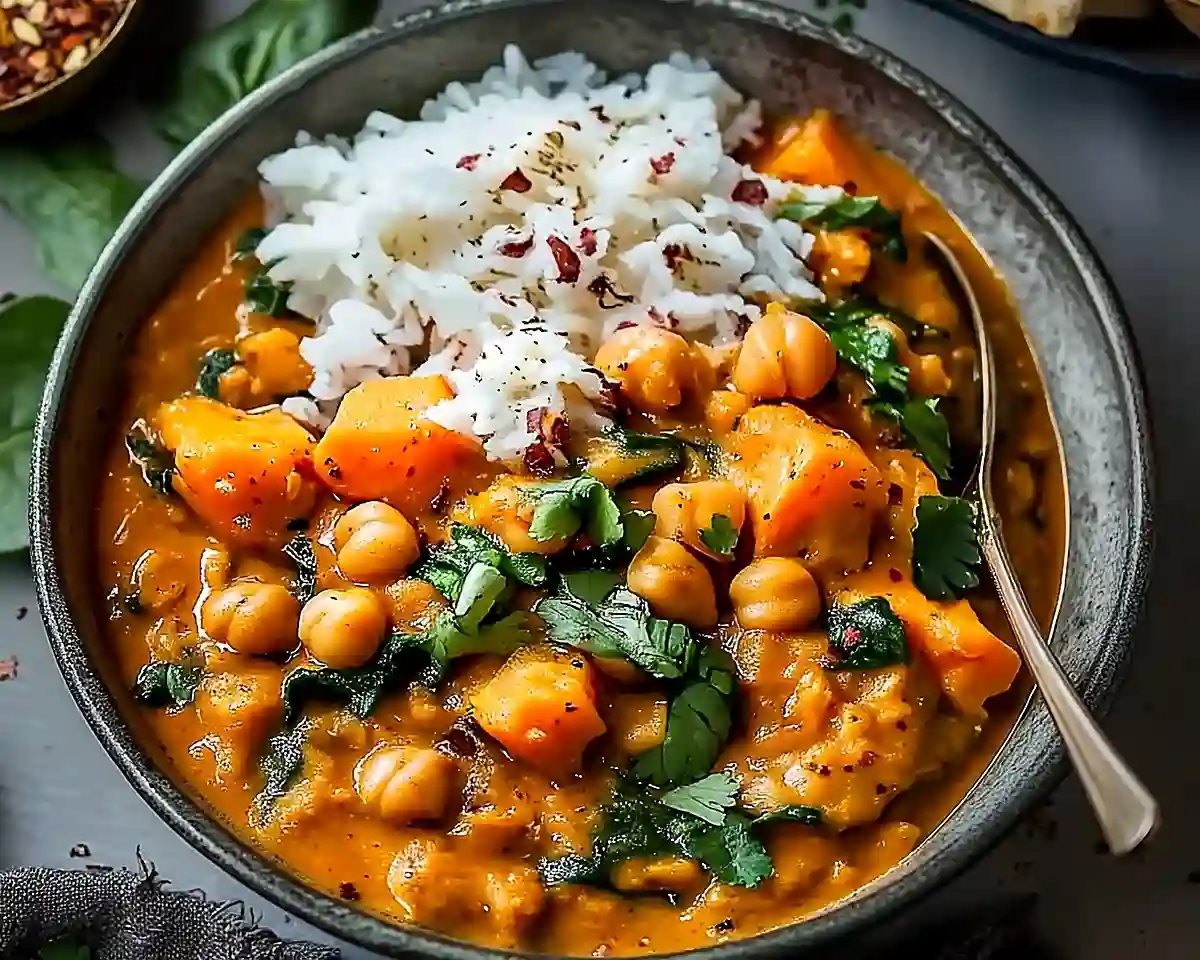
Sweet Potato and Chickpea Curry
Easy sweet potato and chickpea curry recipe—naturally gluten-free, vegan-friendly Indian vegetarian meal. Ready in 30 minutes with coconut milk and warm spices. Perfect for busy families!
You know that feeling when you want something genuinely nourishing but don’t have hours to spend cooking? This sweet potato and chickpea curry is my answer to those weeknight moments when comfort food needs to happen fast.
I discovered this combination on a chilly October evening when I was craving something warm but had zero energy for complicated steps, and honestly, it’s become a regular rotation in our kitchen ever since.
What makes this Indian vegetarian meal so special is that it feels indulgent without requiring a grocery list that’s longer than your arm. The sweet potato and chickpea curry brings together creamy coconut milk, golden spices, and vegetables that transform into something genuinely magical as they simmer together.
Table of Contents
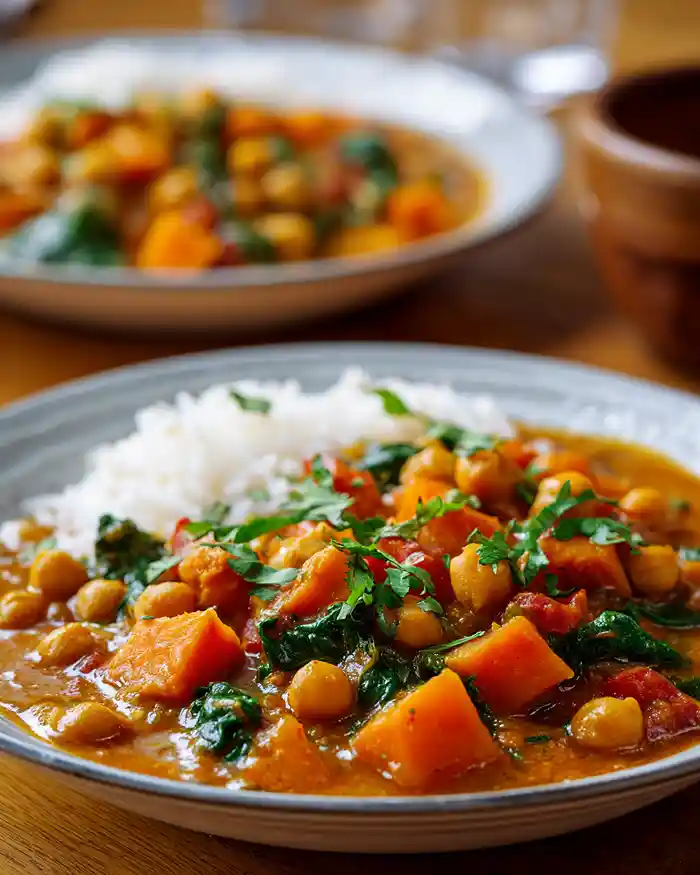
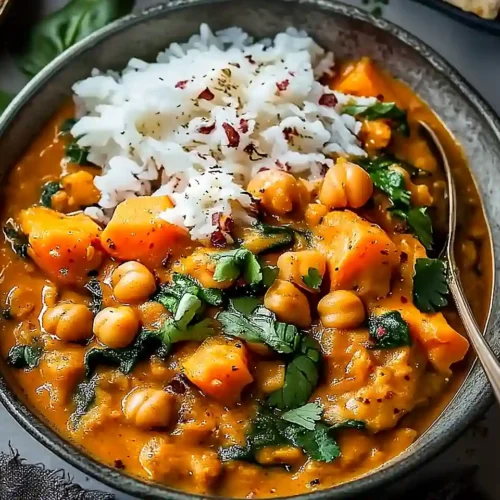
Sweet Potato and Chickpea Curry
Equipment
- Large pot
- Cutting board
- Chef’s knife
- Measuring spoons
- Measuring cups
- Wooden spoon
- Grater
- Can opener
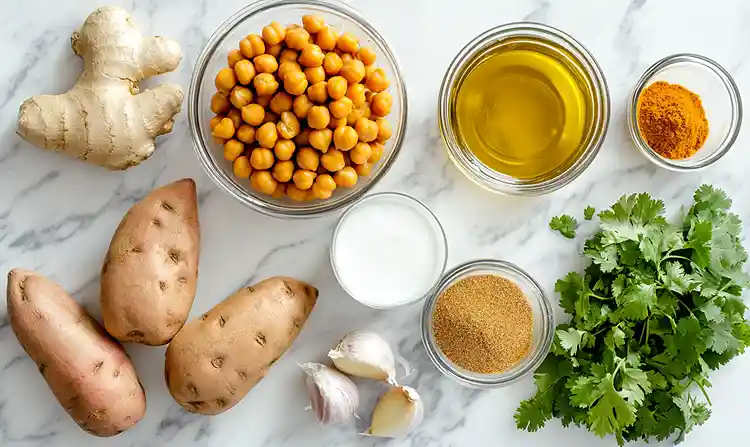
Ingredients
Vegetables & Base
- 2 large Sweet potatoes, peeled and cubed
- 1 can (15 oz) Chickpeas, drained and rinsed
- 1 Onion, finely chopped
- 3 cloves Garlic, minced
- 1 tbsp Fresh ginger, grated
Spices & Liquids
- 1 can (14 oz) Coconut milk
- 2 tbsp Curry powder
- 1 tsp Turmeric
- 1 tsp Cumin
- 2 tbsp Vegetable oil
- To taste Salt and pepper
- As desired Fresh cilantro, for garnish
Instructions
- Heat the vegetable oil in a large pot over medium heat. Add the chopped onion and sauté until it turns translucent and soft, about 5 minutes.
- Add the minced garlic and grated ginger to the pot, stirring constantly for another minute until the kitchen fills with gorgeous, aromatic fragrance.
- Stir in the curry powder, turmeric, and cumin, toasting the spices for about 30 seconds to wake up their flavors.
- Add the cubed sweet potatoes and chickpeas to the pot, stirring gently to coat everything in the spiced oil. Make sure every piece touches the fragrant spices.
- Pour in the coconut milk and add enough water to just cover the vegetables. Bring the mixture to a boil, then reduce the heat and let it simmer gently for 15–20 minutes until the sweet potatoes are fork-tender.
- Taste the curry and season with salt and pepper until it hits that perfect balance for your palate. Remember, you can always add more seasoning, but you can’t take it out.
- Ladle the curry into bowls and garnish generously with fresh cilantro. Serve alongside rice, quinoa, or warm naan bread for a complete meal.
Notes
Ingredients
| Ingredient | Amount |
|---|---|
| Large sweet potatoes, peeled and cubed | 2 |
| Chickpeas, drained and rinsed | 1 can (15 oz) |
| Onion, finely chopped | 1 |
| Garlic cloves, minced | 3 |
| Fresh ginger, grated | 1 tbsp |
| Coconut milk | 1 can (14 oz) |
| Curry powder | 2 tbsp |
| Turmeric | 1 tsp |
| Cumin | 1 tsp |
| Vegetable oil | 2 tbsp |
| Salt and pepper | To taste |
| Fresh cilantro, for garnish | As desired |
Instructions
Step 1: Heat the vegetable oil in a large pot over medium heat. Add the chopped onion and sauté until it turns translucent and soft, about 5 minutes—you’ll notice it becomes sweeter as it cooks.
Step 2: Add the minced garlic and grated ginger to the pot, stirring constantly for another minute until the kitchen fills with that gorgeous, aromatic fragrance. This is where the flavor foundation gets built.
Step 3: Stir in the curry powder, turmeric, and cumin, toasting the spices for about 30 seconds to wake up their flavors. You’ll see the spices deepen in color and release their essential oils into the oil.
Step 4: Add the cubed sweet potatoes and chickpeas to the pot, stirring gently to coat everything in the spiced oil. Make sure every piece gets a chance to touch those fragrant spices.
Step 5: Pour in the coconut milk and add enough water to just cover the vegetables. Bring the mixture to a boil, then reduce the heat and let it simmer gently for 15–20 minutes until the sweet potatoes are fork-tender.
Step 6: Taste the curry and season with salt and pepper until it hits that perfect balance for your palate. Remember, you can always add more seasoning, but you can’t take it out.
Step 7: Ladle the curry into bowls and garnish generously with fresh cilantro. Serve alongside rice, quinoa, or warm naan bread for a complete Indian vegetarian meal.
Substitutions for Your Vegan Curry Rice Recipes
Using Canned Tomatoes Instead of Coconut Milk
If you want a lighter vegan chickpea and rice recipe, swap the coconut milk for one 14-ounce can of diced tomatoes plus ½ cup vegetable broth. The result is less creamy but still deeply satisfying, and it works beautifully if you’re avoiding coconut or looking for a different flavor profile.
Adding Spinach or Other Greens
Want to boost the nutrition in your Indian vegetarian meal with rice? Stir in 2–3 cups of fresh spinach or kale during the last 5 minutes of cooking. The greens wilt right in and add beautiful color plus extra nutrients without changing the curry’s warm, spiced character.
Tofu Instead of Chickpeas
If you prefer vegetarian tofu curry dish variations, press and cube 14 ounces of firm tofu and add it to the pot at the same time as the sweet potatoes. Tofu absorbs the spices beautifully while keeping the dish light and protein-packed.
Brown Rice or Quinoa as Your Base
Instead of serving over white rice, pair this sweet potato and chickpea curry with brown rice or quinoa for extra fiber and minerals. Both options complement the warm spices without overwhelming the delicate sweetness of the vegetables.
Troubleshooting Your Sweet Potato and Chickpea Curry
Curry Tastes Flat or Underseasoned
If your vegan curry rice recipe needs more depth, you might need more spice rather than more salt. Add another ½ teaspoon of curry powder or a pinch more turmeric, tasting as you go. Sometimes the spices need time to fully bloom—simmer for an extra 5 minutes and taste again.
Sweet Potatoes Still Hard After 20 Minutes
This usually means your heat was too high initially, which sealed the vegetables before they could soften. Cut your sweet potato cubes into smaller pieces (about 1-inch) for faster cooking, and aim for a gentle simmer rather than a rolling boil.
Curry Is Too Thin or Watery
If your Indian vegetarian meal looks more like soup than curry, simply simmer uncovered for another 5–10 minutes to let excess liquid evaporate. Alternatively, mix 1 tablespoon cornstarch with 2 tablespoons water, stir it in, and simmer for another 2 minutes to thicken.
Coconut Milk Flavor Feels Overwhelming
Not everyone loves intense coconut flavor, and that’s completely okay. Replace half the coconut milk with vegetable broth or cashew cream for a more balanced, subtle richness. You’ll still get creaminess without the coconut dominating the dish.

Storage & Meal Prep
Refrigerator Storage
Store your sweet potato and chickpea curry in an airtight container in the refrigerator for up to 5 days. The flavors actually deepen and improve as it sits—day two or three tastes even better than day one, which makes this the perfect vegan chickpea and rice recipe for meal prep.
Freezer Storage & Make-Ahead Strategy
This Indian vegetarian meal freezes beautifully for up to 3 months in freezer-safe containers or bags. Thaw overnight in the refrigerator and reheat gently on the stovetop with a splash of water to restore the creamy consistency. You can even freeze portions individually for grab-and-go lunches throughout the month.
Serving Suggestions & Pairings
Over Rice or Grains
Serve your sweet potato and chickpea curry over fluffy basmati rice, jasmine rice, quinoa, or millet for a complete meal. The creamy sauce mingles beautifully with the grain, creating those perfect bites where everything comes together.
With Warm Flatbread
Pair this Indian vegetarian meal with warm naan, pita, or our easy homemade cottage cheese flatbread for scooping up every last drop of that golden, spiced sauce. Flatbread transforms the curry into something almost handheld and deeply satisfying.
Alongside Fresh Sides
Serve your vegan curry rice recipe with cooling cucumber raita, fresh lime wedges, and a bright salad of shredded cabbage and carrots. These fresh, crisp elements balance the warmth of the spices beautifully.
Variations & Dietary Adjustments
Kid-Friendly Sweet Potato and Chickpea Curry
Kids often love the natural sweetness of sweet potatoes paired with mild spices. Start with just 1 tablespoon of curry powder instead of 2, and reduce the ginger slightly—the chickpeas and carrots add plenty of flavor. Serve with plain rice on the side so little ones can control how much sauce they want.
Extra Protein-Boosted Version
Well, if you want to turn this into a heartier vegetarian tofu curry dish or boost the protein even more, add both the chickpeas and ½ block of crumbled tofu, or stir in a handful of red lentils at the beginning. Either way, you’ll get a denser, more filling meal that keeps you satisfied longer.
Creamy Cashew Variation
For a different kind of richness, soak 1 cup of raw cashews in hot water for 15 minutes, then blend with ½ cup water to create cashew cream. Replace half the coconut milk with this cashew cream for a lighter yet equally luscious vegan chickpea and rice recipe.
FAQs About Sweet Potato and Chickpea Curry
Can I make this curry with frozen sweet potatoes?
Yes! Frozen sweet potatoes work, though they’ll break down slightly faster than fresh. Add them during the last 10 minutes of cooking instead of at the beginning to prevent mushiness. Your sweet potato and chickpea curry will still be delicious and just as convenient for busy weeknights.
How do I adjust this recipe for a slow cooker?
Brown the onions, garlic, and ginger in a skillet first, then transfer everything to your slow cooker with the spices, sweet potatoes, chickpeas, and coconut milk. Cook on low for 6–7 hours or high for 3–4 hours. This Indian vegetarian meal practically makes itself while you handle other things.
What if I don’t have fresh ginger on hand?
Substitute ½ teaspoon ground ginger for the 1 tablespoon fresh ginger—ground spices are more concentrated, so use less. Your vegan curry rice recipe will still taste warm and aromatic, though fresh ginger adds a brighter note that’s hard to replicate.
Is this naturally gluten-free?
Absolutely! Every ingredient in this sweet potato and chickpea curry is naturally gluten-free, making it perfect for anyone avoiding gluten. Just double-check your curry powder blend to ensure it hasn’t been processed in a facility with gluten-containing grains.
Can I make this vegetarian tofu curry dish instead?
Of course! Simply replace the chickpeas with cubed firm tofu and follow the same steps. The tofu will absorb the spiced coconut milk beautifully, creating a lighter yet equally satisfying Indian vegetarian meal.
Best way to reheat leftover curry?
Reheat gently on the stovetop over medium heat, stirring occasionally and adding a splash of water or broth if it’s thickened too much. Microwaving works, but stovetop heating keeps the flavors fresher and the texture creamier.