The Best Gluten-Free Stuffing
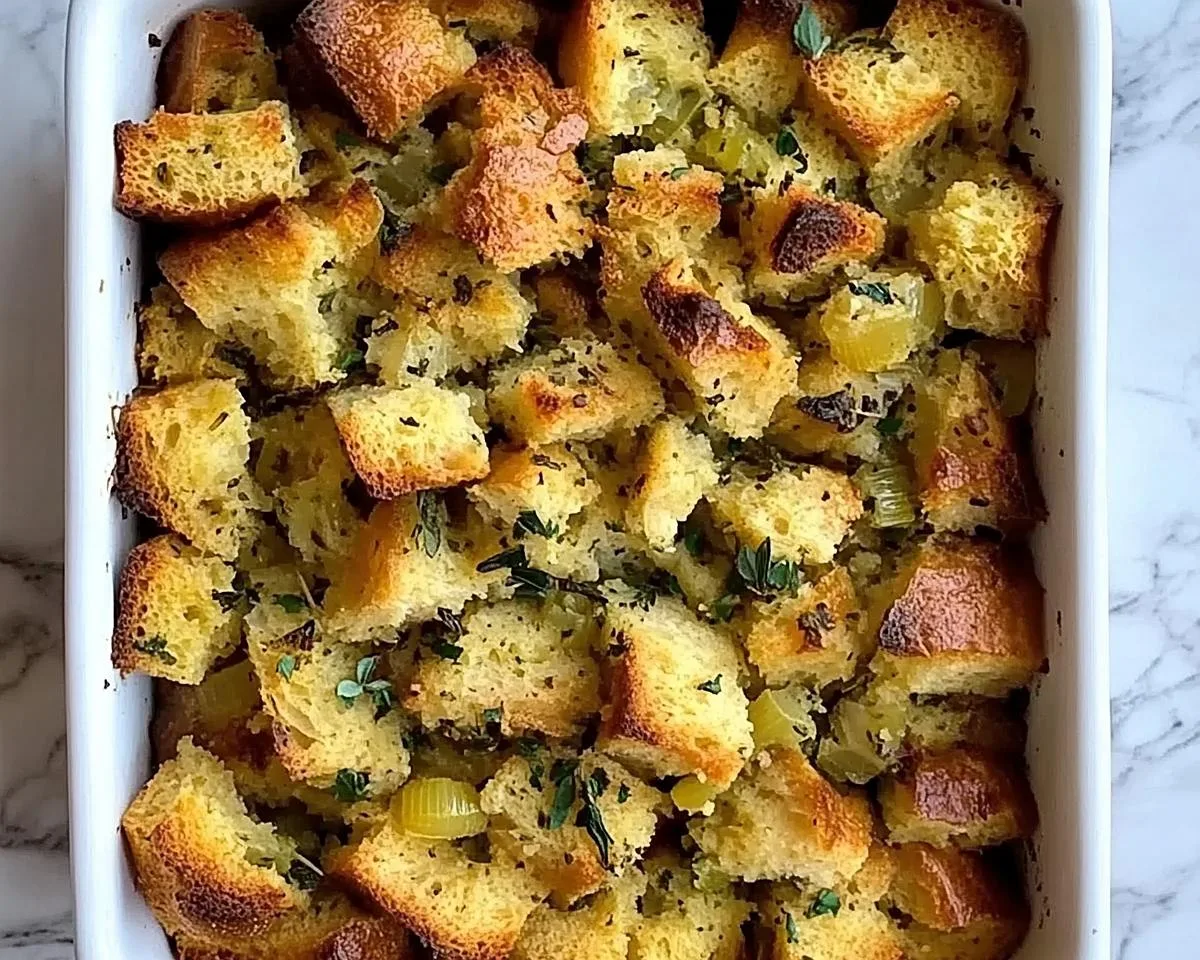
Master the best gluten-free stuffing with our foolproof recipe. Crispy, golden, and so delicious, nobody will miss the gluten. Perfect for Thanksgiving!
You know that moment when someone asks, “Is there anything gluten-free for me?” and you genuinely panic a little? Yeah, I get it. But here’s the thing—the best gluten-free stuffing doesn’t have to be stressful, and honestly, it might just become your favorite part of the whole meal.
I’ve made plenty of soggy, disappointing stuffing attempts (we don’t talk about those), but this approach changed everything for me. The secret? It’s all about prepping your bread the right way, which sounds fancy but isn’t.
Once you nail this technique, you’ll have a gluten-free stuffing recipe that’s crispy on top, perfectly moist inside, and so good that everyone—gluten-free or not—will be asking for seconds.
Whether you’re cooking for a big crowd or a cozy family dinner, this gluten free stuffing brings that classic comfort without any of the stress. Let’s make something delicious together.
The Magic Behind Great Gluten-Free Stuffing
Here’s what I’ve learned about making gluten free stuffing that actually works: bread texture matters way more than people think.
Regular white bread turns into mush, but when you take the time to dehydrate your gluten-free baguette first, you get something magical—crispy edges that stay that way through baking, combined with a tender interior that soaks up all those savory flavors.
According to King Arthur Baking’s guide to gluten-free bread baking, proper bread preparation and texture development are essential for achieving restaurant-quality results in gluten-free dishes.
The beauty of this recipe is that it respects what makes stuffing special in the first place. You’re not fighting against gluten-free bread; you’re working with it by treating it right from the start. The vegetables get sweet and soft, the broth becomes aromatic, and everything comes together in this cozy, nourishing dish that feels genuinely special.
Table of Contents
Ingredients
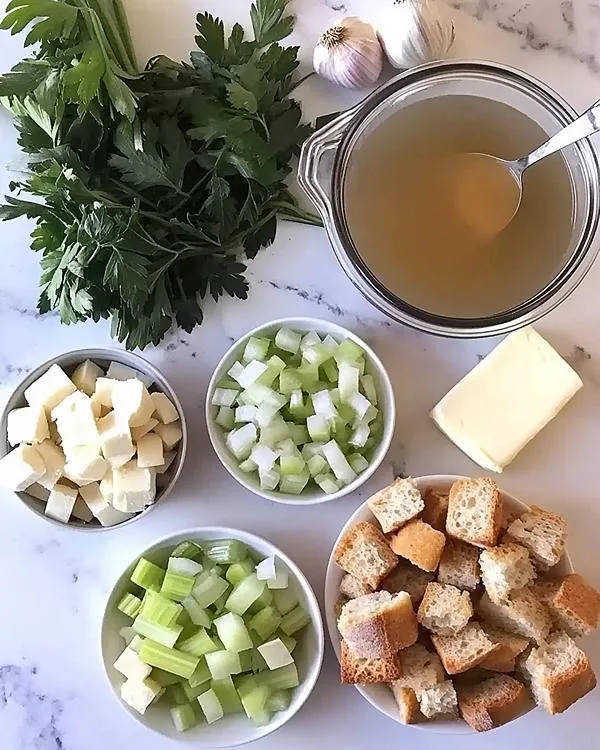
- 2 large gluten-free baguettes (we used Everybody Eats NYC, or about 10 heaping cups of cubed bread)
- 1 stick butter (or dairy-free butter)
- 2 cups onion, chopped
- 1½ cups celery, chopped
- 3–4 cloves garlic, minced
- Optional: sliced mushrooms (shitake and baby Bella mix work beautifully)
- ½ teaspoon pepper
- ¼ teaspoon garlic powder
- ¼–½ teaspoon salt (adjust to taste)
- 1¾ cups chicken or vegetable broth (add more if needed for moisture)
- 4 tablespoons fresh parsley, plus more for garnish
- 1 tablespoon fresh sage
Step-by-Step Instructions
Part 1: Dehydrate Your Bread (The Game-Changer)
Step 1: Preheat your oven to 200 degrees F and line two rimmed baking sheets with parchment paper. This gentle temperature is key—we’re drying, not toasting.
Step 2: Slice your gluten-free baguette into ½-inch thick slices, then cut each slice into quarters. You’re aiming for about 10 heaping cups of cubes. Don’t stress about perfection; just keep them roughly the same size so they bake evenly.
Step 3: Spread the bread cubes evenly across both baking sheets in a single layer.
Step 4: Bake for 40–50 minutes until the cubes are lightly crisped and feel a bit dry to the touch—think of that perfect crouton texture, but not browned. They’ll seem pretty firm when hot, and that’s exactly what you want.
Step 5: Cool completely, then transfer to a large bowl. Pro tip: you can totally do this a day or two ahead, which is perfect for busy Thanksgiving prep.
Part 2: Build Your Stuffing
Step 1: Preheat your oven to 350 degrees F and coat a 9×9 or 10×7 inch baking dish with cooking oil.
Step 2: Melt your butter in a large skillet over medium-low heat. This slow approach lets the flavors develop gently.
Step 3: Add the chopped onion and celery to the melted butter and sauté for about 5 minutes. Then sprinkle in your salt, pepper, and garlic powder, and keep sautéing for another 10–15 minutes, stirring every couple of minutes.
You’re looking for soft vegetables and translucent onions—that’s when you know the sweetness has really come through.
Step 4: Add your minced garlic and sauté for about 1 minute until it smells absolutely incredible. Seriously, stop and enjoy that aroma for a second.
Step 5: Pour this warm vegetable-butter mixture over your cooled bread cubes and gently toss everything together, making sure each cube gets coated. Be gentle here—we want to keep those cubes intact, not mush them into oblivion.
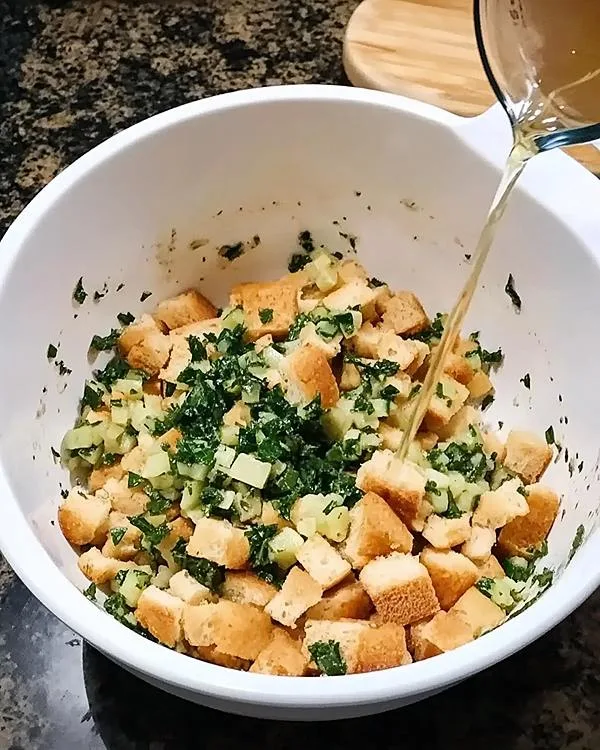
Step 6: Pour your broth over everything and fold gently until the bread is evenly moist. If it looks a bit dry or you prefer your stuffing extra tender, add a bit more broth. The key is even moisture without the bread falling apart.
Step 7: Add your fresh parsley and sage, and gently toss once more to distribute those herbs throughout.
Step 8: Taste and adjust salt and pepper as needed. This is your moment to make it exactly right.
Step 9: Transfer the whole mixture into your prepared baking dish.
Step 10: Cover tightly with aluminum foil and bake for 40 minutes. The foil traps steam, which keeps everything moist and tender.
Step 11: Remove the foil and bake for an additional 10 minutes so the top gets beautifully crispy. Garnish with extra fresh parsley if you’d like.
Substitutions for Your Gluten-Free Stuffing
For the bread: Any quality gluten-free baguette works here. We love using Everybody Eats NYC because it has great texture, but local gluten-free bakeries or even Bob’s Red Mill mixes (made into bread) are solid options. The key is choosing something sturdy enough to handle the dehydration process without crumbling.
For the butter: Dairy-free butter swaps in beautifully if you’re avoiding dairy. Use the same amount, and you’ll get the same rich, savory results in your gluten free stuffing balls or traditional loaf form.
For the broth: Either chicken or vegetable broth works perfectly. Vegetable broth keeps things plant-based and still tasty. If you’re using store-bought, look for low-sodium options so you can control the salt level yourself.
For fresh herbs: Can’t find fresh sage? Try thyme, poultry seasoning, or even a combination of both. Fresh parsley is pretty forgiving—dried works in a pinch (use about a third of the amount), but fresh really does shine here.
For mushrooms: These are totally optional, but if you love umami depth, sauté them with your onions and celery. Shitake brings earthiness, while baby Bellas add that meaty texture without any heaviness.
Troubleshooting Tips for Perfect Results
Your stuffing turned out too dry: This happens when your bread was already quite moist to start with, or you didn’t add enough broth. Next time, add more broth gradually—an extra ¼ to ½ cup makes a real difference. You can also make sure you’re covering the dish with foil for the full 40 minutes.
The top isn’t getting crispy: Make sure you’re removing that foil for the final 10 minutes of baking. If your oven runs cool, you might need those extra minutes to turn golden. Every oven is different, so trust your eyes and nose.
Your bread cubes are falling apart: You’re likely cutting them too small or letting them dehydrate too long. Aim for roughly 1-inch cubes, and stop baking when they’re just lightly crisped, not hard. Also, be super gentle when tossing with the broth—think folding, not stirring.
It tastes bland: Salt and pepper are your friends. Taste as you go, especially at the end. Also, make sure your garlic is going fully fragrant before moving on—that’s where so much flavor lives.
Storage and Make-Ahead Tips
This gluten-free stuffing recipe is surprisingly make-ahead friendly. You can dehydrate your bread cubes 1–2 days in advance and store them in an airtight container or sealed bag at room temperature. The night before, you can even prepare the vegetable mixture and keep it covered in the fridge.
On the day of, just combine everything as directed, transfer to your baking dish, cover, and refrigerate until you’re ready to bake. If baking from cold, add about 5–10 minutes to your cooking time and check for doneness.
Leftovers keep beautifully for 3–4 days in an airtight container in the fridge. Reheat gently at 325 degrees F for about 15–20 minutes, covered with foil, so it doesn’t dry out. Honestly, cold stuffing on toast the next morning is underrated.
Serving Suggestions and Pairings
Serve your best gluten-free stuffing alongside roasted turkey with all the trimmings, or pair it with roasted chicken for a simpler weeknight meal. It’s also amazing with glazed ham or as part of a vegetarian Thanksgiving spread.
Want to make it a full plate? Plate it alongside garlic mashed potatoes and roasted Brussels sprouts. A simple green salad with a light vinaigrette cuts through the richness beautifully. And don’t forget the cranberry sauce—that tart sweetness balances everything perfectly.
For a casual dinner, stuff it into a crusty gluten-free roll for a next-day sandwich. Seriously, it’s magic.
Variations and Dietary Adjustments
Kid-friendly version: If little ones are sensitive to texture, chop the bread cubes a bit smaller and add an extra ¼ cup of broth so everything is extra tender. You might also skip the mushrooms and use milder herbs.
Dairy-free gluten-free stuffing: Swap butter for dairy-free butter (same amount), and use vegetable broth instead of chicken broth. Everything else stays the same, and you’ll get results just as delicious.
Extra savory: Add ¼ cup of crispy bacon or sausage bits to the bread mixture before baking. Sauté them separately, then fold them in with the herbs.
Vegetable-packed: Double down on the mushrooms, or add diced zucchini, bell peppers, or carrots. Just sauté any harder vegetables (like carrots) with the onions to soften them first.
Gluten-free Thanksgiving desserts and other holiday sides? We’ve got plenty of recipes that pair beautifully with this stuffing, so your whole meal stays naturally gluten-free without feeling like you’re missing out.
The Best Gluten-Free Stuffing FAQs
Can I make this in a slow cooker?
Absolutely! After combining everything, transfer to a slow cooker, cover, and cook on low for 3–4 hours. You’ll skip the 40-minute oven step with foil, but keep the final 10 minutes in a 350-degree oven (or under the broiler) to crisp the top if you like. Alternatively, cook entirely on low without the crisping step for a more tender texture.
Can I make this in a slow cooker?
Absolutely! After combining everything, transfer to a slow cooker, cover, and cook on low for 3–4 hours. You’ll skip the 40-minute oven step with foil, but keep the final 10 minutes in a 350-degree oven (or under the broiler) to crisp the top if you like. Alternatively, cook entirely on low without the crisping step for a more tender texture.
How far ahead can I prep the ingredients?
Dehydrate your bread 1–2 days ahead. Prep your vegetables and store them in the fridge the morning of. Combine everything and refrigerate up to 4 hours before baking. This is perfect for Thanksgiving stress management.
Is there a way to make gluten free stuffing balls instead of a baking dish?
Yes! After combining everything, let it cool slightly, then scoop into muffin tins or shape into balls and place on a parchment-lined baking sheet. Bake at 350 degrees F for about 25–30 minutes until golden. These gluten free stuffing balls are great for portion control and look fancy on the plate.
What if my gluten-free bread is dense?
Dense bread actually dehydrates beautifully and absorbs broth better. You might need slightly less broth since the bread holds moisture differently. Add it gradually and adjust as needed.
Can I freeze this?
Yes! Bake it completely, cool it, then wrap tightly and freeze for up to 3 months. Thaw overnight in the fridge, then reheat covered at 325 degrees F until warmed through, about 20–25 minutes.
Why This Recipe Works for Gluten-Free Cooking
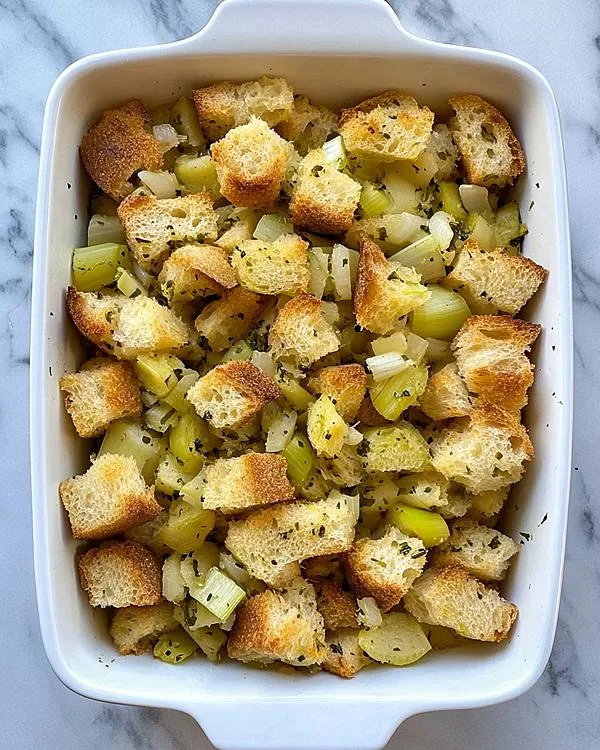
Learning to make the best gluten-free stuffing taught me something important: gluten-free cooking isn’t about replacing things or settling for less. It’s about understanding your ingredients and treating them with respect.
This recipe works because we’re not pretending gluten-free bread is regular bread. Instead, we’re celebrating what it can be—sturdy enough to hold up through dehydration, tender enough to absorb all those beautiful flavors, and perfect for creating something that tastes genuinely delicious.
If you’re new to gluten-free cooking, this is such a great recipe to build confidence. You’re learning technique (dehydrating bread changes everything), you’re building flavor slowly (those soft vegetables), and you’re ending up with something so good that people will actually want the recipe. That’s when you know you’ve nailed it.
Related GrainlessLife Recipes
Looking for more gluten-free sides and main dishes for your Thanksgiving table? Check out our easy gluten-free slow cooker mac and cheese for another crowd-pleaser, or try our gluten-free yogurt marinated chicken for a main dish that’s tender and flavorful.
And if you need something sweet to finish the meal, our easy frosted sugar cookie bars are always a hit.
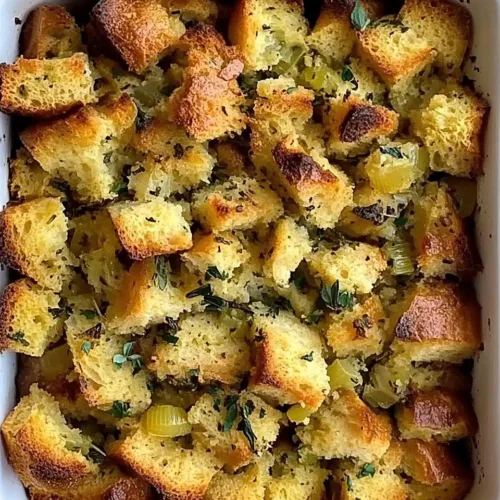
The Best Gluten-Free Stuffing
Equipment
- Rimmed baking sheets
- Parchment paper
- Large skillet
- Large bowl
- 9×9 or 10×7 inch baking dish
- Aluminum foil
Ingredients
Bread & Base
- 2 large Gluten-free baguettes Everybody Eats NYC brand or equivalent, or about 10 heaping cups of cubed bread
- 1 stick Butter or dairy-free butter
Vegetables & Aromatics
- 2 cups Onion chopped
- 1.5 cups Celery chopped
- 3 cloves Garlic minced
- Optional Mushrooms sliced mix of shiitake and baby Bella
Seasonings & Liquid
- 0.5 teaspoon Pepper
- 0.25 teaspoon Garlic powder
- 0.25 teaspoon Salt to 0.5 teaspoon, adjust to taste
- 1.75 cups Chicken or vegetable broth add more if needed for moisture
Fresh Herbs & Garnish
- 4 tablespoons Fresh parsley plus more for garnish
- 1 tablespoon Fresh sage
Instructions
- Part 1: Dehydrate Your Bread Preheat your oven to 200 degrees F and line two rimmed baking sheets with parchment paper.
- Slice your gluten-free baguette into 1/2-inch thick slices, then cut each slice into quarters to create about 10 heaping cups of cubes. Keep them roughly the same size for even baking.
- Spread the bread cubes evenly across both baking sheets in a single layer.
- Bake for 40–50 minutes until the cubes are lightly crisped and feel dry to the touch with a crouton-like texture, but not browned.
- Cool completely, then transfer to a large bowl. Pro tip: you can do this a day or two ahead.
- Part 2: Build Your Stuffing Preheat your oven to 350 degrees F and coat a 9×9 or 10×7 inch baking dish with cooking oil.
- Melt your butter in a large skillet over medium-low heat.
- Add the chopped onion and celery to the melted butter and sauté for about 5 minutes, then sprinkle in salt, pepper, and garlic powder. Continue sautéing for another 10–15 minutes, stirring periodically, until vegetables are soft and onions are translucent.
- Add your minced garlic and sauté for about 1 minute until fragrant.
- Pour the warm vegetable-butter mixture over your cooled bread cubes and gently toss everything together, ensuring each cube gets coated. Be gentle to keep cubes intact.
- Pour your broth over everything and fold gently until the bread is evenly moist. Add additional broth if needed. Be careful not to break apart the bread.
- Add your fresh parsley and sage, and gently toss once more to distribute herbs throughout without breaking apart the bread.
- Taste and adjust salt and pepper as needed.
- Transfer the mixture into your prepared baking dish.
- Cover tightly with aluminum foil and bake for 40 minutes. The foil traps steam and keeps everything moist and tender.
- Remove the foil and bake for an additional 10 minutes so the top gets beautifully crispy. Garnish with extra fresh parsley if desired.