Vanilla Bean Pots de Crème
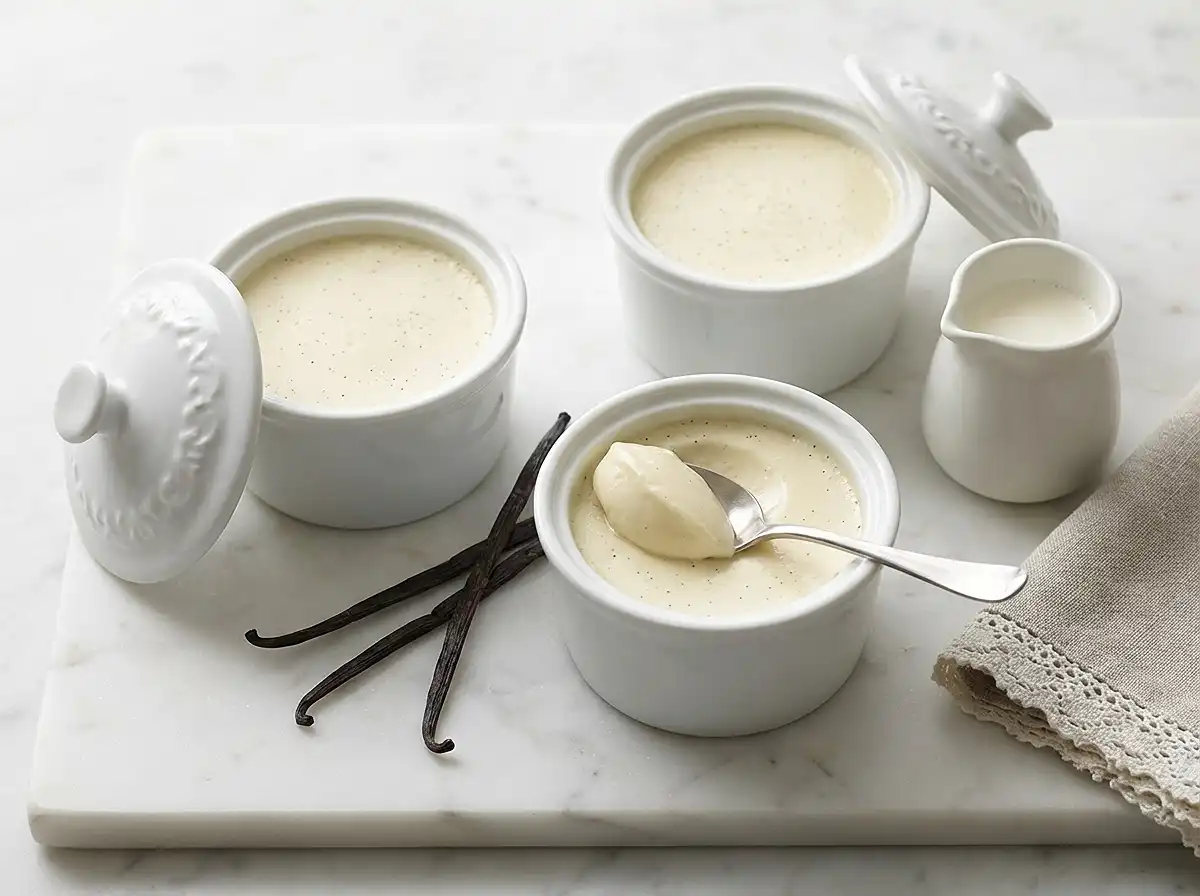
This Vanilla Bean Pots de Crème is silky, rich, and naturally gluten-free. A classic French custard with real vanilla bean — elegant enough for parties, easy enough for home!
I made my first batch of vanilla bean pots de crème on a particularly grey Sunday afternoon last November, mostly because I wanted an excuse to use the gorgeous vanilla beans I’d been hoarding in my pantry for months. The house smelled like a warm vanilla dream within minutes, and when I finally dipped a spoon into one of those little custard pots the next morning — cold, silky, barely trembling — I actually closed my eyes. It was that good.
Well… here’s what I love most about this dessert: it’s already gluten free. No flour swaps, no specialty ingredients, no worrying about whether your baking powder has wheat starch hiding in it. Vanilla bean pots de crème is one of those naturally elegant recipes that just happens to be safe for a gluten-free diet, which honestly feels like a gift.
Have you ever wanted a dessert fancy enough to serve at a dinner party but simple enough to make on a random weeknight? That’s exactly what this is. Five ingredients, a gentle bake in a water bath, and a long chill in the fridge — the result is a vegan custard-friendly base that can be adapted (more on that below) or enjoyed in its classic, cream-rich glory. It tastes like something from a French bistro, and nobody needs to know it took you about fifteen minutes of actual hands-on work.
Why This Classic Custard Deserves a Spot in Your Recipe Box
Pots de crème (literally “pots of cream” in French) is one of the oldest and most beloved custard desserts in European cooking. Unlike crème brûlée, there’s no torching involved, and unlike a baked cheesecake, there’s no crust to fuss over. The entire recipe relies on eggs, cream, sugar, and the fragrant depth of a real vanilla bean — ingredients that are inherently gluten free.
The magic of vanilla bean pots de crème is in its simplicity and patience. According to the Culinary Institute of America’s guide to custard science, egg yolk-based custards thicken through gentle, low-temperature cooking, which denatures the proteins slowly and creates that impossibly smooth, spoonable texture. Rush the process or crank the heat, and you get scrambled eggs. Go slow and low, and you get pure silk.
Ingredients
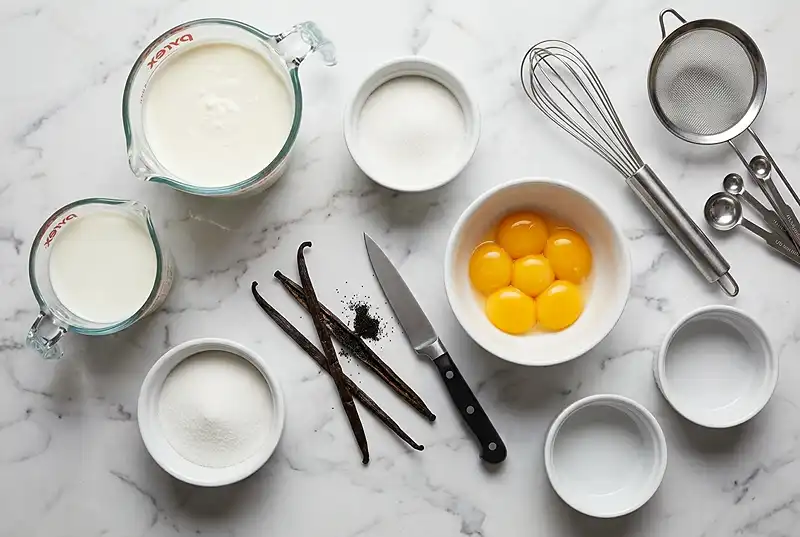
Just five beautifully simple ingredients for this vanilla bean pots de crème — nothing obscure, nothing complicated.
| Ingredient | Amount | Notes |
|---|---|---|
| Heavy cream | 2½ cups | Full-fat for the richest texture |
| Whole milk | ⅔ cup | |
| Granulated sugar | ½ cup plus 1 tablespoon | Divided |
| Vanilla bean | 1 whole | Split and scraped |
| Egg yolks | 6 large | Room temperature preferred |
A note on vanilla beans: A real vanilla bean makes an extraordinary difference here — those tiny black specks throughout the custard aren’t just pretty, they carry an intensity of flavor that extract simply can’t match. If you only splurge on vanilla beans once or twice a year, this vanilla bean pots de crème is the recipe to do it for. Save the scraped pod after steeping — it’s wonderful tucked into a jar of sugar to make vanilla sugar.
Instructions
Step 1: Steep the Vanilla Cream
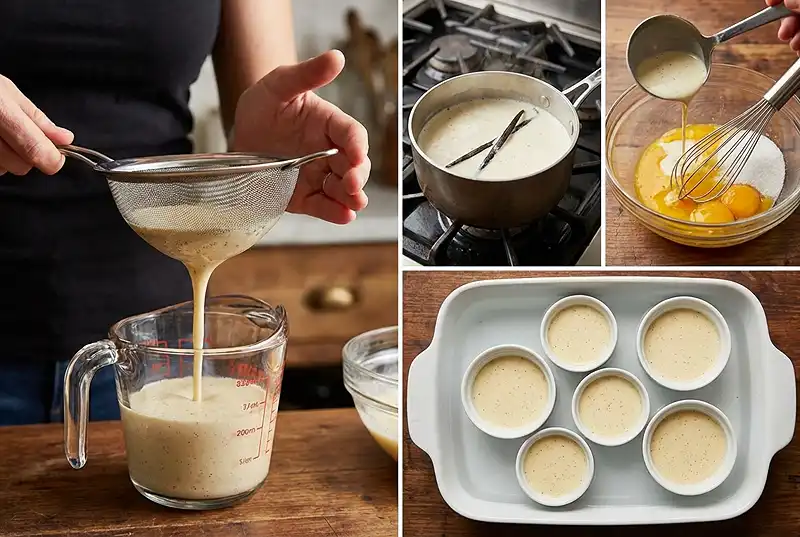
Combine the heavy cream, milk, and 5 tablespoons of sugar (that’s ¼ cup plus 1 tablespoon) in a medium saucepan. Split the vanilla bean in half lengthwise and use the back of your knife to scrape out all those beautiful, fragrant seeds — add both the seeds and the empty pod to the cream. Heat the mixture over medium heat until it’s hot to the touch and the sugar has fully dissolved, stirring occasionally. Remove the pan from the heat, cover with a lid, and let the vanilla steep for up to an hour if you have the time. This steeping step is where the deep, intoxicating aroma of real vanilla infuses every drop of your pots de crème base.
Step 2: Temper the Egg Yolks
In a separate bowl, whisk the 6 egg yolks with the remaining ¼ cup of sugar until smooth and slightly pale. Gently reheat the cream mixture until it’s just warm to the touch — not hot, just pleasantly warm. Slowly drizzle a small amount of the warm cream into the yolks while whisking constantly — this is the tempering step that prevents your eggs from scrambling.
Continue adding the warm cream gradually, whisking steadily, until all of it has been incorporated into the yolks. Strain the entire mixture through a fine-mesh sieve into a large pitcher or measuring cup, catching any bits of cooked egg or the vanilla pod. The custard base should be perfectly smooth and pourable — as silky and fluid as liquid satin. At this point, you can refrigerate the strained base for up to several days if you’d like to bake it later.
Step 3: Set Up the Water Bath
Place a rack in the center of your oven and preheat to 300°F — low and slow is the key to perfectly set vanilla bean pots de crème. Bring a full teapot or kettle of water to a boil. Arrange your pots de crème molds or ramekins inside a large, deep baking pan (a 9×13-inch pan fits most setups nicely). Set the entire baking pan onto a sheet pan for double insulation — this extra layer helps the custards cook gently and evenly.
Step 4: Fill and Bake
Give the custard base a gentle stir, then carefully pour it into each mold, filling them nearly to the top. Cover each mold with its lid if you have one, or simply leave ramekins uncovered — both methods work perfectly. Slide the pan partway into the oven, leaving a few inches sticking out so you have room to safely pour in the hot water.
Carefully pour the boiling water from your kettle into the baking pan, filling it to about halfway to two-thirds up the sides of the molds. Gently push the pan fully into the oven. Bake for 30 to 55 minutes — the timing varies depending on the size of your vessels and whether the custard base was cold from the fridge. To check doneness, use a tea towel to protect your hand and gently shake one of the molds. The vanilla bean pots de crème should be set around the edges but still jiggle softly in the center, like barely-set gelatin.
Step 5: Cool and Chill
Carefully remove the molds from the hot water bath and place them on a cooling rack. Let them come to room temperature gradually — rushing this step with the fridge can cause condensation on the surface. Once cooled, transfer to the refrigerator and chill for at least 8 hours (overnight is ideal). The custard firms up beautifully during this long chill, developing that signature dense, spoonable texture that makes pots de crème so special.
Smart Substitutions
Dairy free pots de creme version: Replace the heavy cream with full-fat coconut cream (two 13.5 oz cans, chilled and solids scooped out) and swap the whole milk for your favorite unsweetened non-dairy milk — oat milk or cashew milk both give a lovely richness. This transforms your vanilla bean pots de crème into a gorgeous dairy free option that’s still incredibly silky. The coconut flavor is subtle and pairs beautifully with real vanilla.
Vegan custard adaptation: For a fully vegan custard, replace the 6 egg yolks with a combination of cornstarch (about 3 tablespoons) and a can of full-fat coconut cream. You’ll cook the mixture on the stovetop rather than baking it, stirring constantly until it thickens. The texture is closer to a vanilla pudding dairy free style — slightly less dense than the baked version but still absolutely delicious.
Vanilla bean substitute: If vanilla beans aren’t available or fit your budget, 1½ tablespoons of high-quality pure vanilla extract is a reasonable stand-in. Add the extract after the cream has cooled slightly to preserve its flavor. You won’t get those gorgeous black specks, but the taste of your pots de crème will still be lovely.
Sugar swaps: Coconut sugar works as a one-to-one replacement, though it gives the custard a slightly deeper, amber-toned color and a gentle caramel undertone. Maple syrup (about ⅓ cup) can also replace the granulated sugar — reduce the milk by a tablespoon or two to compensate for the extra liquid. Both options keep your vanilla bean pots de crème naturally sweetened.
Troubleshooting Tips
The custard has tiny bubbles or a rough surface: Air bubbles in the custard base are the usual culprit. Make sure to strain the mixture thoroughly after tempering, and pour it gently into the molds without splashing. If you see bubbles on the surface before baking, a quick pass with a kitchen torch or a gentle blow across the top will pop them. This small step makes your vanilla bean pots de crème look bakery-perfect.
The custard is still liquid after an hour of baking: Your oven temperature may be running low, or the water bath didn’t come high enough up the sides of the molds. Check your oven with a thermometer — 300°F is the sweet spot for this dairy free pots de creme or classic version. Give it another 10 to 15 minutes and check again, looking for that telltale jiggle rather than a liquid slosh.
You know… the edges are cooked but the center is way too jiggly: This usually means the oven was too hot, creating uneven cooking. Double-check that you’re using the sheet-pan-under-baking-pan trick for extra insulation. The pots de crème should bake gently and uniformly — if the edges set long before the center, lower your oven by 10 to 15 degrees next time.
The custard curdled or has a grainy texture: The egg yolks were likely shocked by cream that was too hot during tempering. Always make sure the cream is just warm (not steaming or simmering) before whisking it into the yolks, and add it slowly in a thin stream. As the Kitchn’s detailed guide to silky custard technique explains, gentle, gradual tempering is the single most important step for smooth, lump-free custard.
Storage and Meal Prep
Storing Your Pots de Crème
Vanilla bean pots de crème stores beautifully in the refrigerator for up to 5 days — just keep the molds covered with lids or press plastic wrap gently onto the surface to prevent a skin from forming. The flavor actually deepens and becomes more complex after a day or two of chilling. Always keep them on a flat, stable shelf away from strong-smelling foods, since custard absorbs neighboring aromas easily.
Make-Ahead Strategy
This is one of the most make-ahead-friendly desserts you’ll ever encounter. You can prepare and strain the custard base up to 3 days before baking — simply refrigerate it in a covered pitcher and give it a gentle stir before pouring into molds. Or bake the entire batch days ahead and let them chill until you’re ready to serve. For Christmas dinner, Thanksgiving, or any holiday where you want an elegant dessert with zero last-minute stress, this vanilla bean pots de crème is your absolute best friend. Pair it with our show-stopping gluten-free tiramisu for a two-dessert spread that’ll make your guests feel incredibly spoiled.
Serving Suggestions and Pairings
Classic Elegant Presentation
Serve your vanilla bean pots de crème straight from their little pots or ramekins — no unmolding needed. A small dollop of softly whipped cream on top, a few fresh berries, and perhaps a single mint leaf is all you need. The simplicity is what makes it look so refined. These are gorgeous on a holiday dessert table alongside candles and linen napkins.
With Fruit and Texture
Fresh raspberries, sliced strawberries, or a spoonful of tart passion fruit curd draped over the top create a stunning contrast against the creamy vanilla custard. A sprinkle of toasted coconut flakes or crushed candied pecans adds a lovely crunch. For a homemade fruit pairing, our bright and tangy dairy-free lemon curd makes a beautiful ribbon swirled on top of each pot.
After a Savory Main Course
This dairy free pots de creme (or classic version) is the ideal light-yet-satisfying ending after a rich dinner. Its cool, creamy sweetness cleanses the palate beautifully without feeling heavy. Try serving it after our comforting gluten-free crack chicken for a complete meal that flows from hearty and savory to cool and elegant.
Delicious Variations and Dietary Tweaks
Chocolate Vanilla Swirl
Pour a thin layer of melted dark chocolate into the bottom of each mold before adding the vanilla custard for a gorgeous two-toned dessert. The chocolate sets into a firm layer beneath the creamy vanilla, and every spoonful gets a bit of both. This variation turns your vanilla bean pots de crème into something truly showstopping.
Espresso-Kissed Version
Dissolve 1 tablespoon of instant espresso powder into the cream mixture while it’s warm for a subtle coffee-vanilla fusion. The espresso doesn’t overpower — it deepens and rounds out the vanilla in the most beautiful way. Man, oh man… this version with a splash of bourbon-spiked whipped cream is an absolute dream for grown-up dinner parties.
Kid-Friendly Vanilla Pudding Cups
For younger eaters, portion the baked custard into small mason jars and top with rainbow sprinkles or crushed gluten-free cookies after chilling. Kids love having their own individual dessert jar, and the vanilla pudding dairy free version (using coconut cream) is a great option for little ones with dairy sensitivities. Let them help with the sprinkle topping — it makes dessert feel like a celebration.
Lavender Vanilla Pots de Crème
Add 1 tablespoon of dried culinary lavender to the cream along with the vanilla bean during the steeping step, then strain it all out together. The floral note is delicate and sophisticated — perfect for a spring brunch or Mother’s Day dessert. This variation of vanilla bean pots de crème is utterly beautiful garnished with a tiny sprig of fresh lavender and a dusting of powdered sugar.
Salted Caramel Topped
Drizzle a spoonful of homemade or store-bought salted caramel sauce over each chilled pot just before serving. The salty-sweet combination against the pure vanilla custard is absolutely addictive. A pinch of flaky Maldon sea salt on top finishes it off with a professional touch that takes about three seconds.
Vanilla Bean Pots de Crème FAQs
What exactly is pots de crème?
Pots de crème is a classic French baked custard dessert — the name literally translates to “pots of cream.” It’s richer and denser than crème brûlée, with a spoonable, silky texture that practically melts on your tongue. This vanilla bean pots de crème version uses real vanilla bean for deep, aromatic flavor.
Can I make this recipe dairy free?
Yes — swap the heavy cream for full-fat coconut cream and the milk for unsweetened oat or cashew milk. The resulting dairy free pots de creme is still incredibly rich and silky, with a subtle coconut undertone that pairs beautifully with vanilla. The technique stays exactly the same.
How far in advance can I make vanilla bean pots de crème?
You can prepare the custard base up to 3 days ahead (store strained in the fridge), or bake the finished pots de crème up to 5 days before serving. The flavor actually improves after a day or two of chilling. Just add toppings like whipped cream and berries right before serving.
Why did my custard turn out grainy?
Grainy texture usually means the eggs were tempered too quickly with cream that was too hot, causing small curds to form. Always ensure the cream is just warm — not hot or simmering — and add it to the yolks in a slow, thin stream while whisking constantly. Straining through a fine-mesh sieve catches any small bits and gives your vanilla bean pots de crème a perfectly smooth finish.
Best way to tell when pots de crème is done baking?
Gently shake one of the molds while it’s still in the oven — the custard should be set around the edges but still jiggle softly in the center, like barely-set gelatin. If the center looks completely liquid, give it another 5 to 10 minutes. Remember that vanilla bean pots de crème continues to firm up significantly during the 8-hour chill.
A Little Pot of Something Beautiful
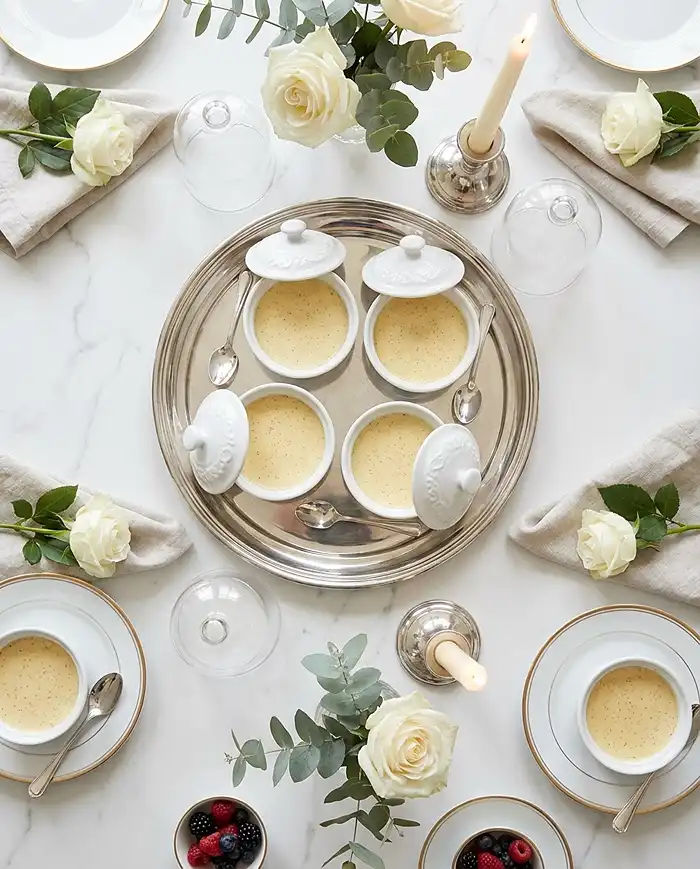
There’s a quiet luxury in setting a small pot of homemade custard in front of someone you love — no towering layers, no dramatic presentation, just pure, honest vanilla and cream transformed into something extraordinary by patience and a gentle oven.
This vanilla bean pots de crème is the kind of recipe that reminds you how few ingredients it takes to make something truly special. Five components, a bit of stirring, a long peaceful chill, and you’ve got a dessert that belongs in a French bistro window.
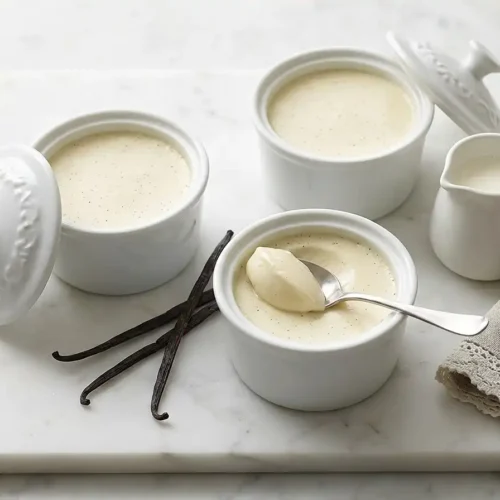
Vanilla Bean Pots de Crème
Equipment
- Medium saucepan
- Whisk
- Fine mesh strainer
- Pitcher or Large Measuring Cup
- Pots de Crème Molds or Ramekins
- 9×13-Inch Deep Baking Pan
- Sheet pan
- Teapot or Kettle
- Wire cooling rack
Ingredients
Vanilla Bean Pots de Crème
- 2 ½ cups heavy cream full-fat for richest texture
- ⅔ cup whole milk
- ½ cup plus 1 tbsp granulated sugar divided
- 1 vanilla bean split and scraped; save pod for steeping
- 6 egg yolks large, room temperature preferred
Instructions
- Combine the heavy cream, milk, and 5 tablespoons (¼ cup plus 1 tablespoon) of the sugar in a medium saucepan. Split the vanilla bean in half lengthwise, scrape out the seeds with the back of a knife, and add both the seeds and the empty pod to the cream. Heat over medium heat until the mixture is hot to the touch and the sugar has dissolved, stirring occasionally. Remove from heat, cover, and let steep for up to 1 hour to infuse the vanilla flavor deeply.
- In a separate bowl, whisk the 6 egg yolks with the remaining ¼ cup of sugar until smooth and slightly pale. Reheat the cream mixture until just warm to the touch — not hot. Slowly drizzle a small amount of the warm cream into the yolks while whisking constantly to temper them. Continue gradually adding the warm cream, whisking steadily, until fully incorporated. Strain the entire mixture through a fine-mesh sieve into a pitcher or large measuring cup. The custard base can be refrigerated at this point for up to several days.
- Place a rack in the center of your oven and preheat to 300°F. Bring a full kettle of water to a boil. Arrange your pots de crème molds or ramekins inside a large, deep baking pan (a 9×13-inch pan works well). Set the baking pan on top of a sheet pan for double insulation. Gently stir the custard base, then pour it into each mold, filling them nearly to the top. Cover molds with lids if available, or leave ramekins uncovered.
- Slide the pan partway into the oven, leaving a few inches sticking out. Carefully pour the boiling water into the baking pan to come halfway to two-thirds up the sides of the molds. Gently push the pan fully into the oven. Bake for 30 to 55 minutes — timing varies by vessel size and whether the custard base was refrigerated. To test doneness, gently shake one mold using a tea towel to protect your hand — the custard should be set around the edges but still jiggle softly in the center, like barely-set gelatin.
- Carefully remove the molds from the hot water bath and place on a wire cooling rack. Let cool to room temperature. Transfer to the refrigerator and chill for at least 8 hours or overnight before serving. The custard firms up beautifully during this long chill, developing a dense, silky, spoonable texture.